Click a page to open it — scroll or pinch to zoom, drag to move, arrow keys for the next page.
Full text
Text taken from the saved copy (where a page was only an image, it was machine-read and may contain errors — check against the page image before quoting). Copyright remains with the original publisher; kept for the historical record.
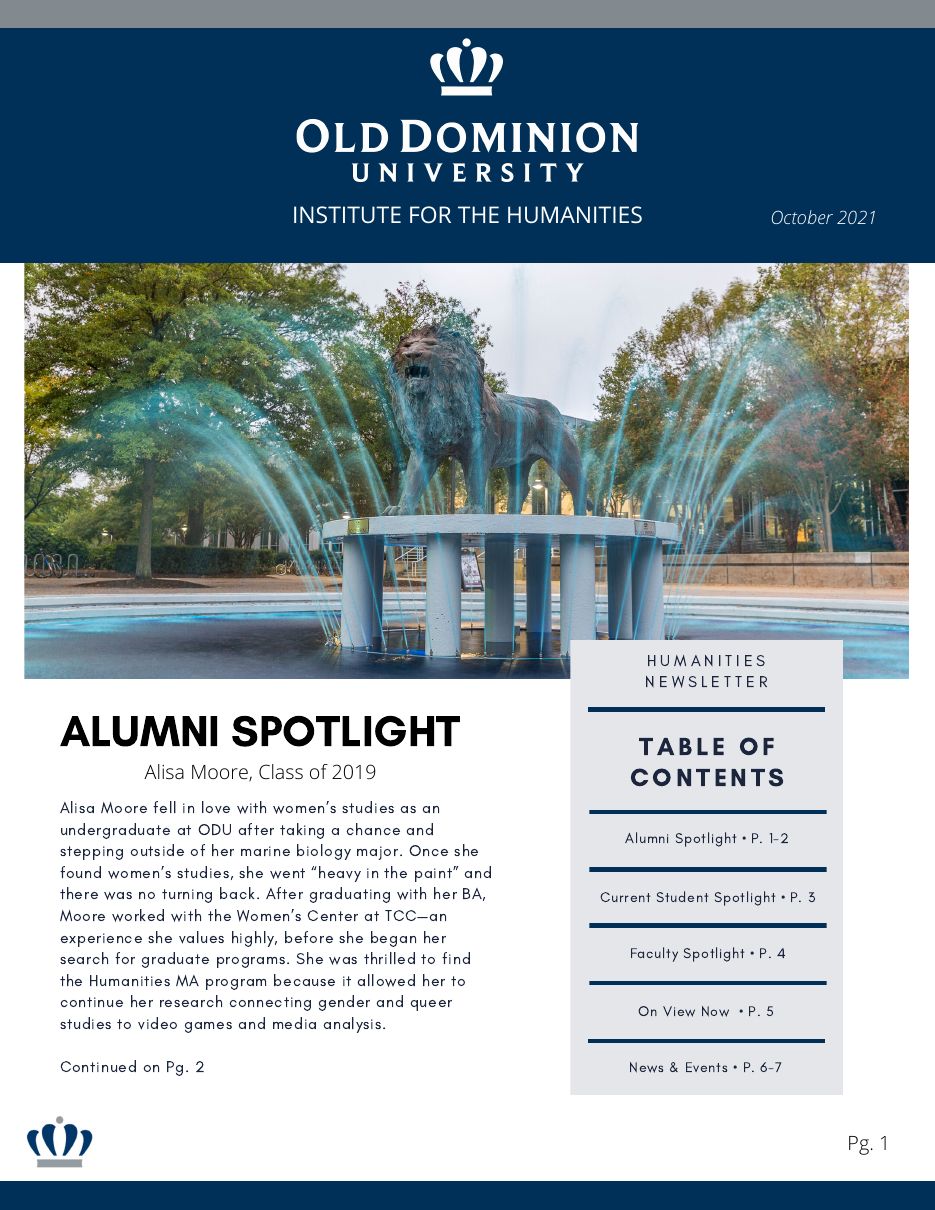
INSTITUTE FOR THE HUMANITIES
October 2021
H U M A N I T I E S
N E W S L E T T E R
ALUMNI SPOTLIGHT
Alisa Moore, Class of 2019
TABLE OF
CONTENTS
Alisa Moore fell in love with women’s studies as an
undergraduate at ODU after taking a chance and
Alumni Spotlight • P. 1-2
stepping outside of her marine biology major. Once she
found women’s studies, she went “heavy in the paint” and
there was no turning back. After graduating with her BA,
Current Student Spotlight • P. 3
Moore worked with the Women’s Center at TCC—an
experience she values highly, before she began her
search for graduate programs. She was thrilled to find
Faculty Spotlight • P. 4
the Humanities MA program because it allowed her to
continue her research connecting gender and queer
On View Now
• P. 5
studies to video games and media analysis.
Continued on Pg. 2
News & Events • P. 6-7
Pg. 1
ALUMNI SPOTLIGHT CONT.
Because the Humanities program is interdisciplinary, Moore
was able to branch out and take courses specifically in game
studies in addition to women’s studies, "What I really loved
about the Humanities program was that it was very
customizable. I was taking classes with folks who were
interested in looking at the culture of food and others who
were more interested in film studies or traditional studies, and
others who were more into the theoretical realm of things..."
“…BEING ABLE TO INTERACT WITH MY PEERS, WHO WERE
STUDYING VERY DIFFERENT THINGS FROM ME, AND
FINDING THE CONNECTIONS BETWEEN OUR DISCIPLINES—
EVEN THOUGH THEY WERE ON OPPOSITE ENDS OF THE
SPECTRUM, OR SOMETIMES ON COMPLETELY DIFFERENT
SPECTRUMS ALTOGETHER, I THINK IT’S A VERY VALUABLE
SKILL THAT I LEARNED.”
Alisa Moore is now the Assistant Communications Coordinator
at ODU Libraries. The ability to study different disciplines
prepared her for working with ODU Libraries, “Being able to
see connections between
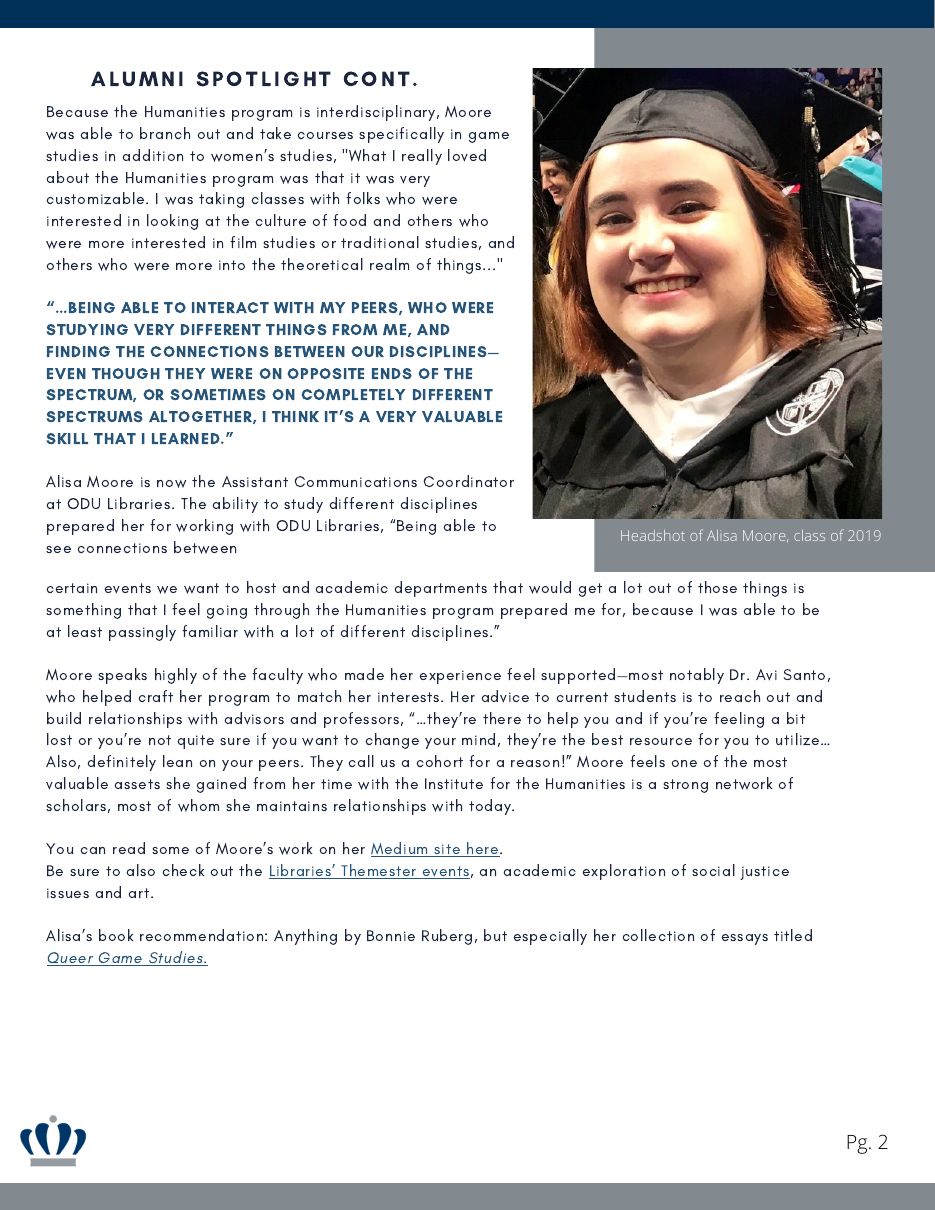
Headshot of Alisa Moore, class of 2019
certain events we want to host and academic departments that would get a lot out of those things is
something that I feel going through the Humanities program prepared me for, because I was able to be
at least passingly familiar with a lot of different disciplines.”
Moore speaks highly of the faculty who made her experience feel supported—most notably Dr. Avi Santo,
who helped craft her program to match her interests. Her advice to current students is to reach out and
build relationships with advisors and professors, “…they’re there to help you and if you’re feeling a bit
lost or you’re not quite sure if you want to change your mind, they’re the best resource for you to utilize…
Also, definitely lean on your peers. They call us a cohort for a reason!” Moore feels one of the most
valuable assets she gained from her time with the Institute for the Humanities is a strong network of
scholars, most of whom she maintains relationships with today.
You can read some of Moore’s work on her Medium site here.
Be sure to also check out the Libraries’ Themester events, an academic exploration of social justice
issues and art.
Alisa’s book recommendation: Anything by Bonnie Ruberg, but especially her collection of essays titled
Queer Game Studies.
Pg. 2
CURRENT STUDENT SPOTLIGHT
Ty'kara Turner, Class of 2022
During Ty’kara Turner’s time as an undergraduate, she double majored in psychology and women’s studies.
She was immediately drawn to the Humanities program at ODU because it afforded her the opportunity to
continue studying gender, sexuality, and women’s studies as well as acquire necessary skills to be a
successful scholar and teacher. She has had her eye on teaching since she was in high school,
“I WOULD LIKE TO SERVE IN WAYS THAT I CAN, AND TEACHING IS A GREAT WAY TO DO THAT.
KNOWING THAT I’M HELPING TO GIVE KNOWLEDGE TO ANOTHER GENERATION.”
Ty’kara knew she wanted to stay within the tight-knit Women’s Studies Program and community, and was
chosen to be a Graduate Assistant for Gay Cultural Studies.
In her second year of the Humanities program, Ty’kara’s thesis is coming along nicely. She is in the process
of creating a collection of eight zines that focus on social justice issues, such as misogynoir and
microaggressions. Ty’kara has a wealth of ODU faculty supporting and mentoring her through this endeavor,
and many of her courses have already informed her work. Ty’kara cites a Gender and Media course she took
with Dr. Groeneveld as impactful to her research, “[Dr. Groeneveld] focuses on popular culture through a
feminist lens, incorporating art. Her area of study is zines and magazines… it was really helpful to have
more examples of feminist media to help figure out what I want my thesis to look like.”
Ty’kara also speaks highly of Dr. Fish, “she’s a really great
professor, she’s really helped me throughout the years.” Dr. Fish
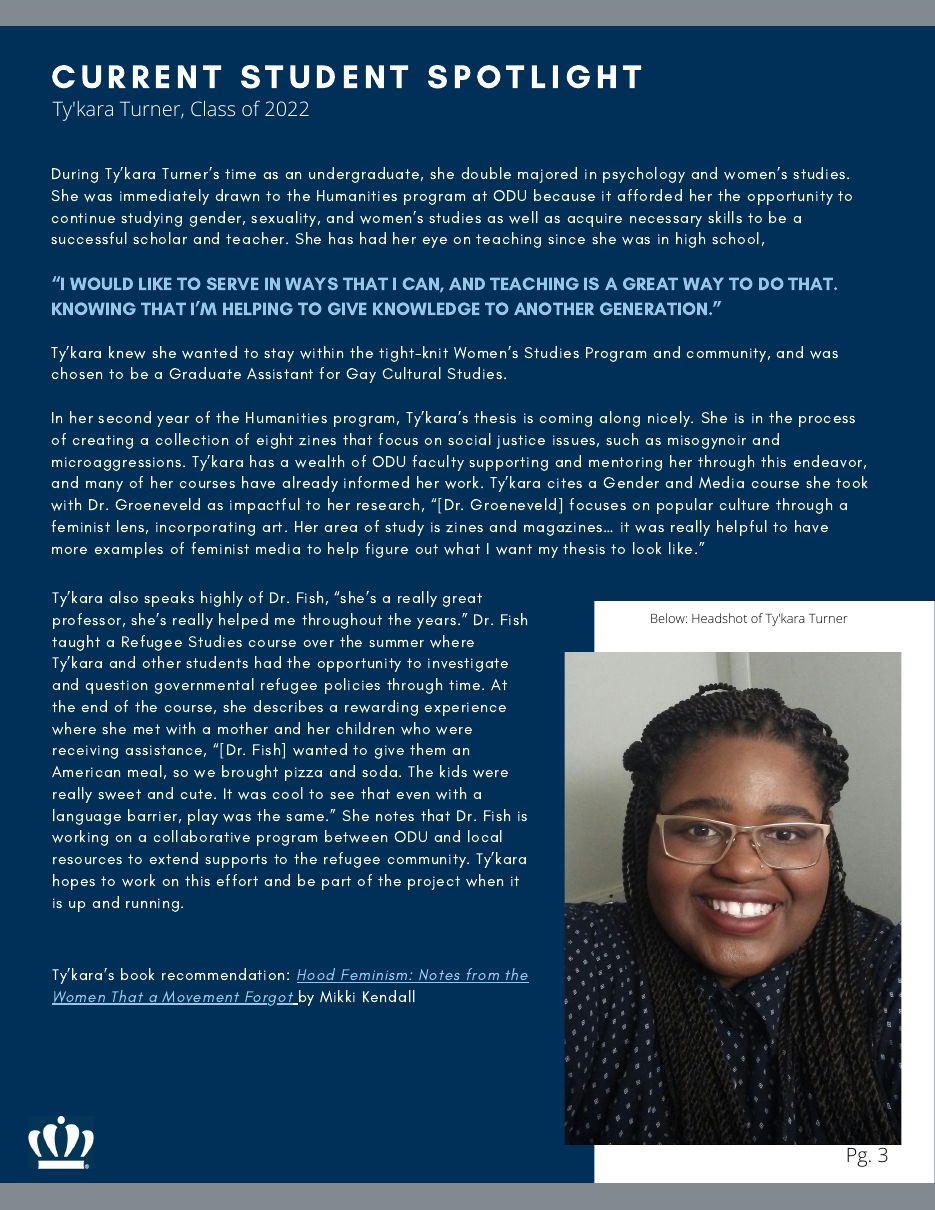
Below: Headshot of Ty'kara Turner
taught a Refugee Studies course over the summer where
Ty’kara and other students had the opportunity to investigate
and question governmental refugee policies through time. At
the end of the course, she describes a rewarding experience
where she met with a mother and her children who were
receiving assistance, “[Dr. Fish] wanted to give them an
American meal, so we brought pizza and soda. The kids were
really sweet and cute. It was cool to see that even with a
language barrier, play was the same.” She notes that Dr. Fish is
working on a collaborative program between ODU and local
resources to extend supports to the refugee community. Ty’kara
hopes to work on this effort and be part of the project when it
is up and running.
Ty’kara’s book recommendation: Hood Feminism: Notes from the
Women That a Movement Forgot by Mikki Kendall
Pg. 3
HUMANITIES FACULTY
SPOTLIGHT
Professor Greta Pratt, Department of Art
Greta Pratt has been a professor of photography at ODU
since 2007, and a photographer for more than thirty years.
She is concerned with issues surrounding national identity
and myth. Professor Pratt enjoys exploring America and
Americans through the lens of history and how Americans tell
their stories differently over time. This inspiration came from
the road trips she took as a kid with her family, visiting the
historic landmarks and statues. As she grew older she started
questioning the “truths” she was told as a child about
Americans' shared history.
Pratt’s 6-year-long project, A Glimpse of Something Shining,
is a portrait of the mythology of the west—which illustrates
historical themes of masculinity and violence. Her current
project, Tidewater, involves photographing the Tidewater
area to explore climate change. “More so than just the
climate issues, who are the people that live here? Because
some people consider this the birthplace of America.
Jamestown is here and an awful lot of things came through
that harbor—like the first slave ship. Today, we have a varied
mix of people here coming from a variety of backgrounds. So,
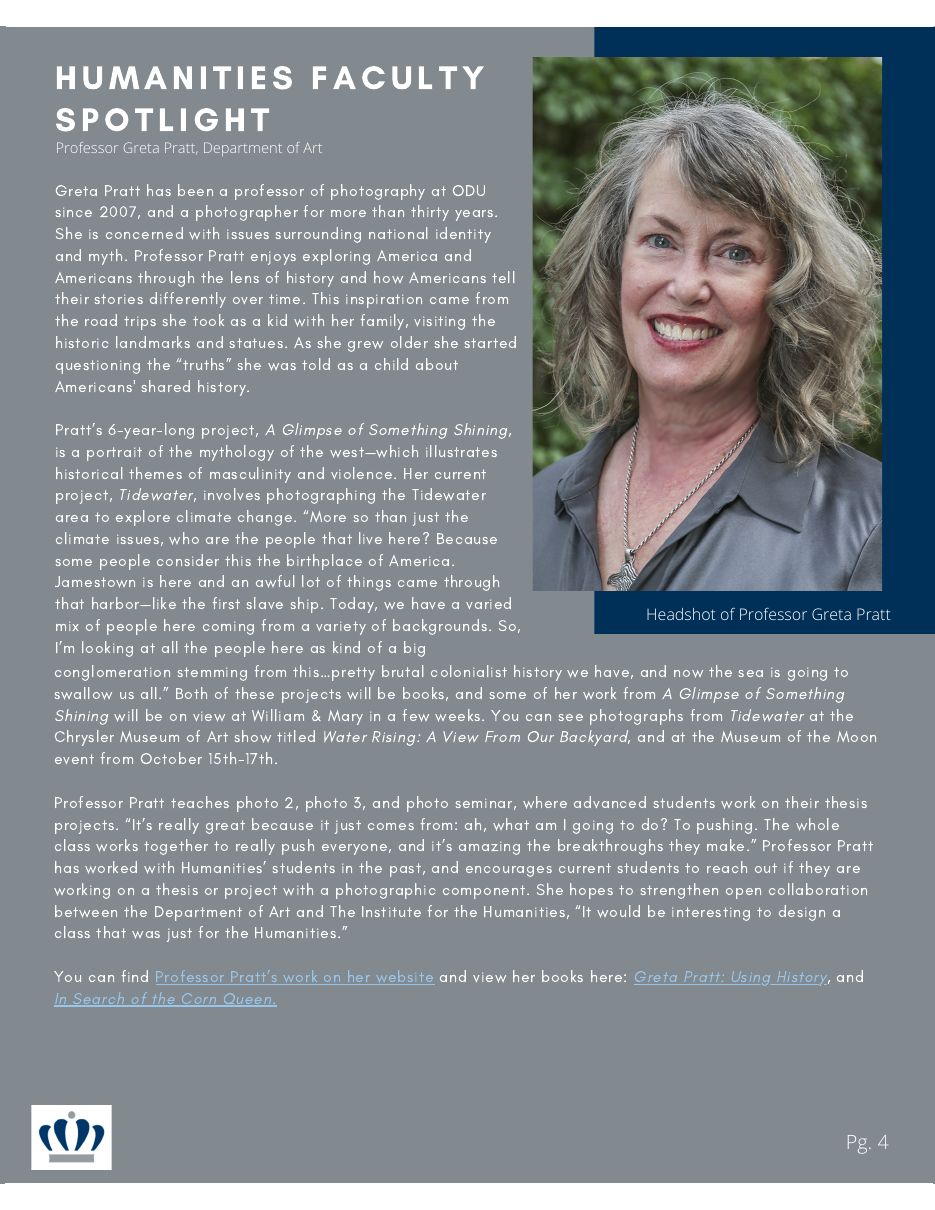
Headshot of Professor Greta Pratt
I’m looking at all the people here as kind of a big
conglomeration stemming from this…pretty brutal colonialist history we have, and now the sea is going to
swallow us all.” Both of these projects will be books, and some of her work from A Glimpse of Something
Shining will be on view at William & Mary in a few weeks. You can see photographs from Tidewater at the
Chrysler Museum of Art show titled Water Rising: A View From Our Backyard, and at the Museum of the Moon
event from October 15th-17th.
Professor Pratt teaches photo 2, photo 3, and photo seminar, where advanced students work on their thesis
projects. “It’s really great because it just comes from: ah, what am I going to do? To pushing. The whole
class works together to really push everyone, and it’s amazing the breakthroughs they make.” Professor Pratt
has worked with Humanities’ students in the past, and encourages current students to reach out if they are
working on a thesis or project with a photographic component. She hopes to strengthen open collaboration
between the Department of Art and The Institute for the Humanities, “It would be interesting to design a
class that was just for the Humanities.”
You can find Professor Pratt’s work on her website and view her books here: Greta Pratt: Using History, and
In Search of the Corn Queen.
Pg. 4
ON VIEW NOW
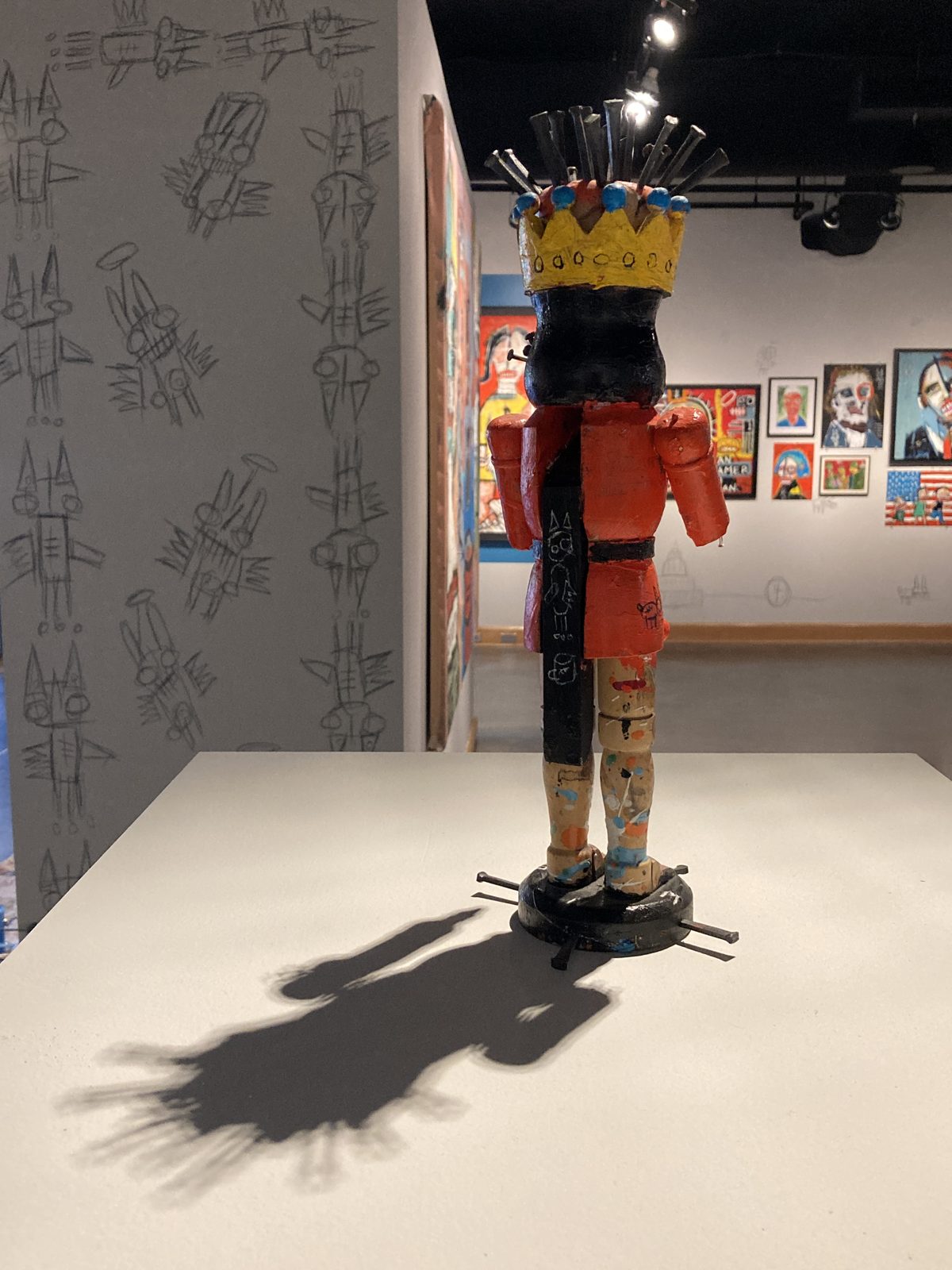
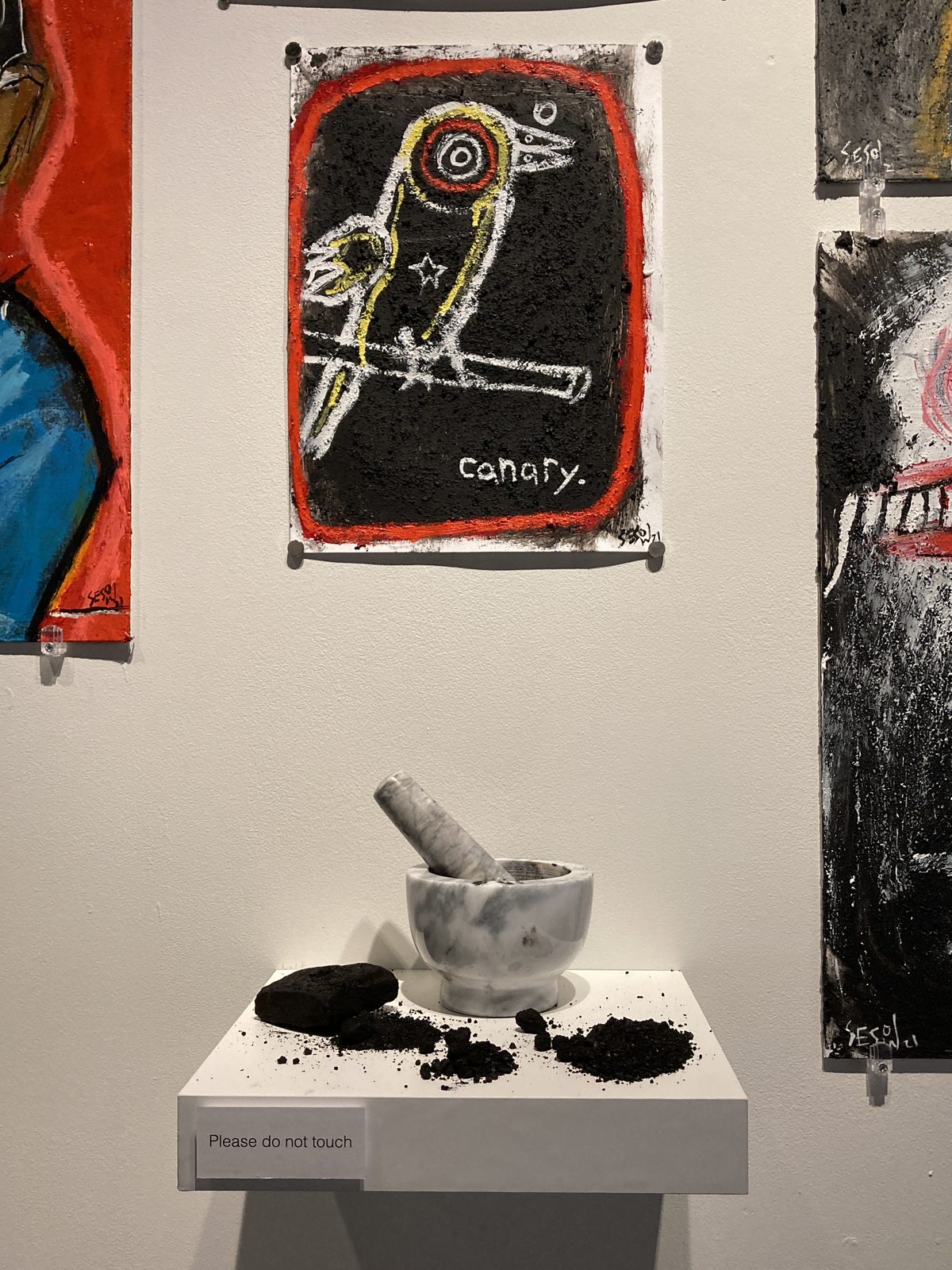
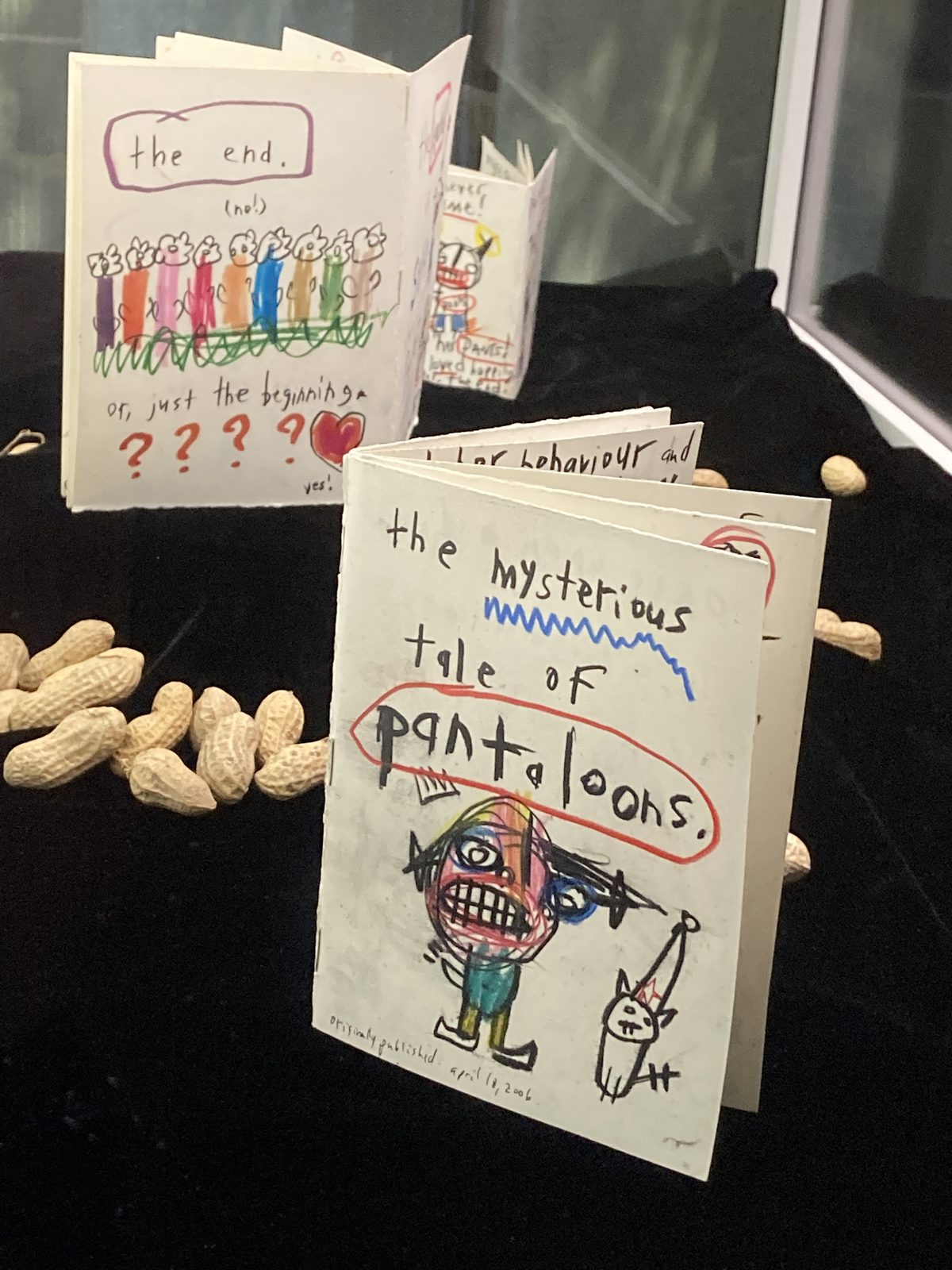
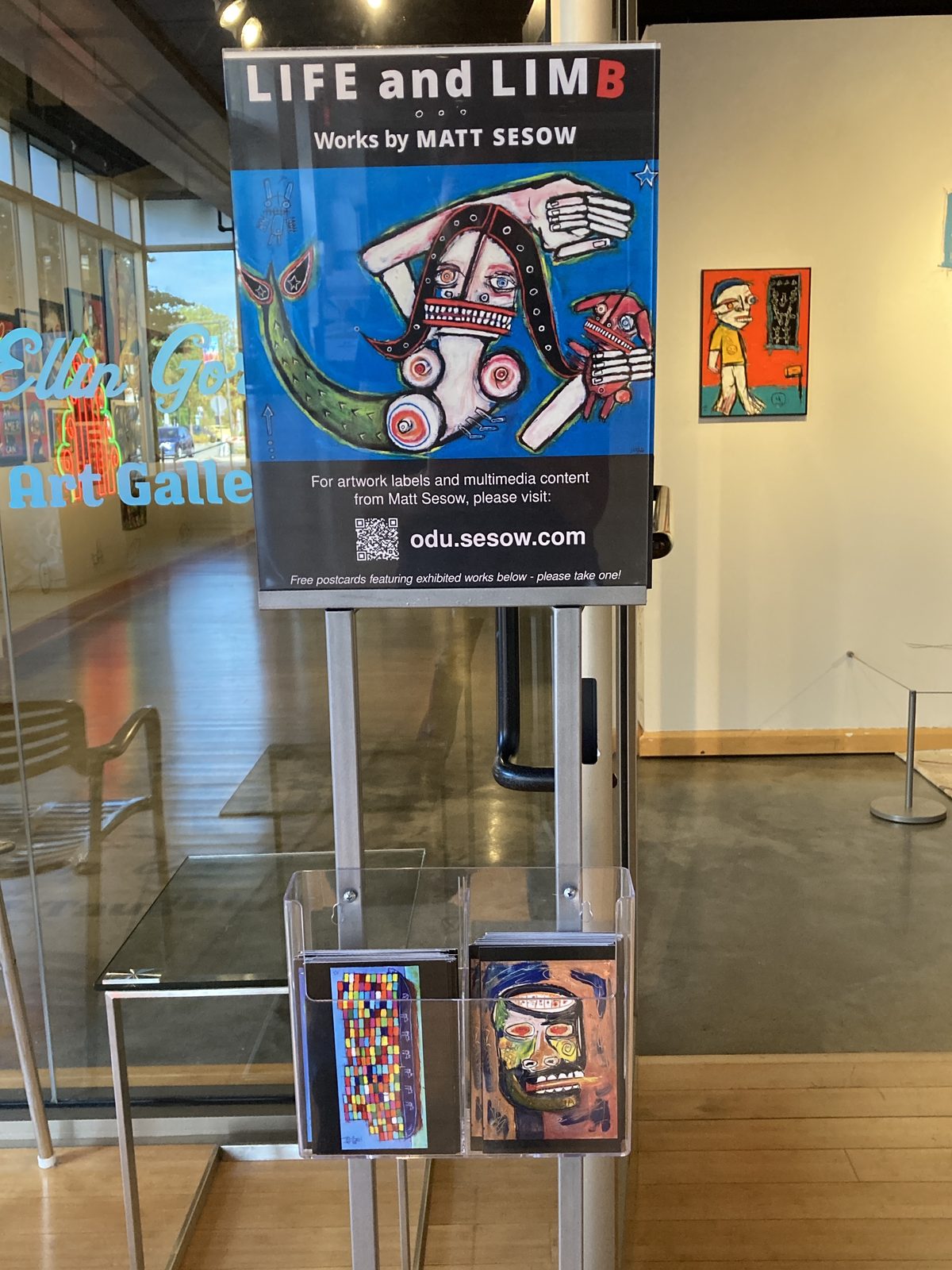
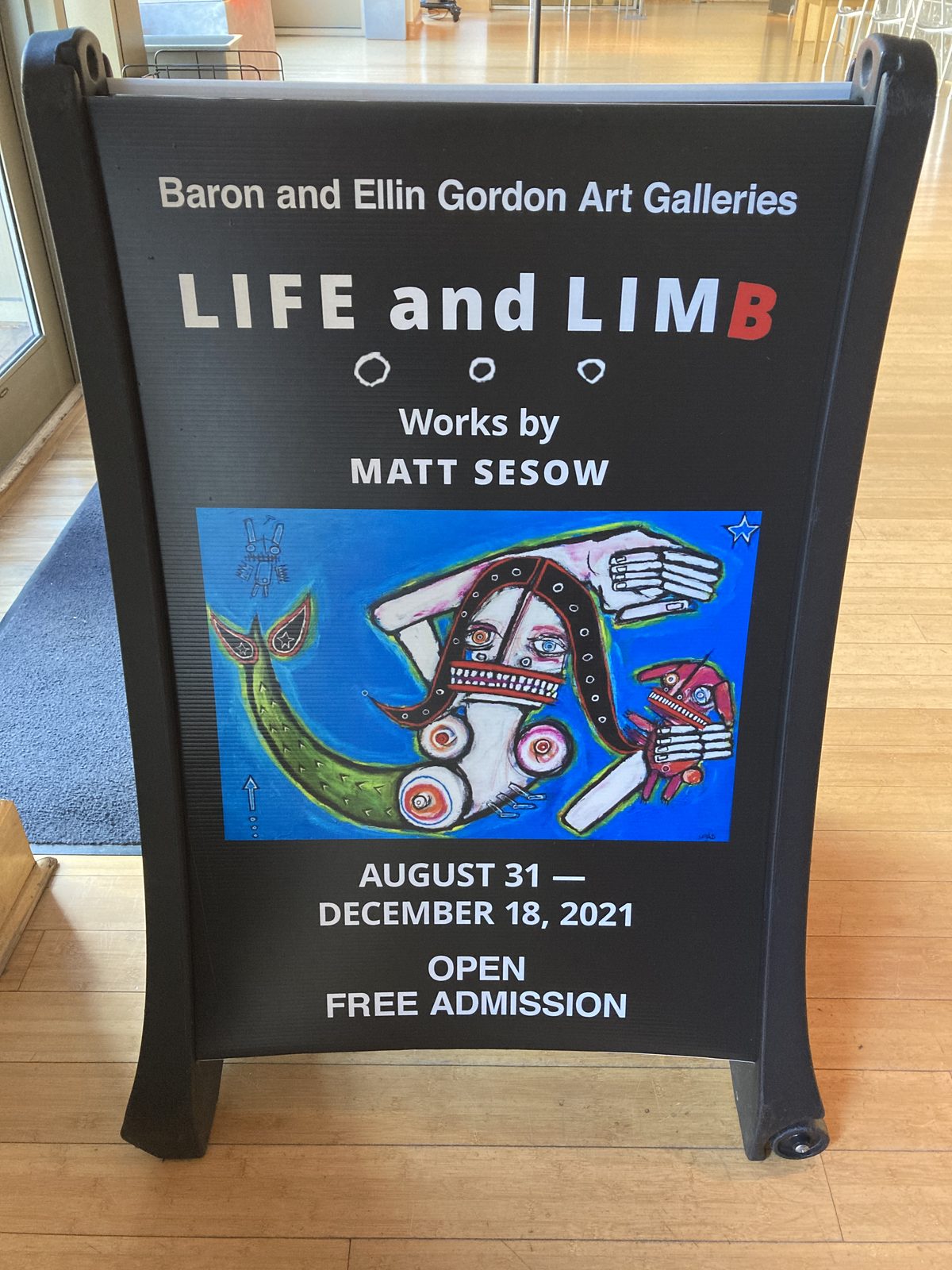
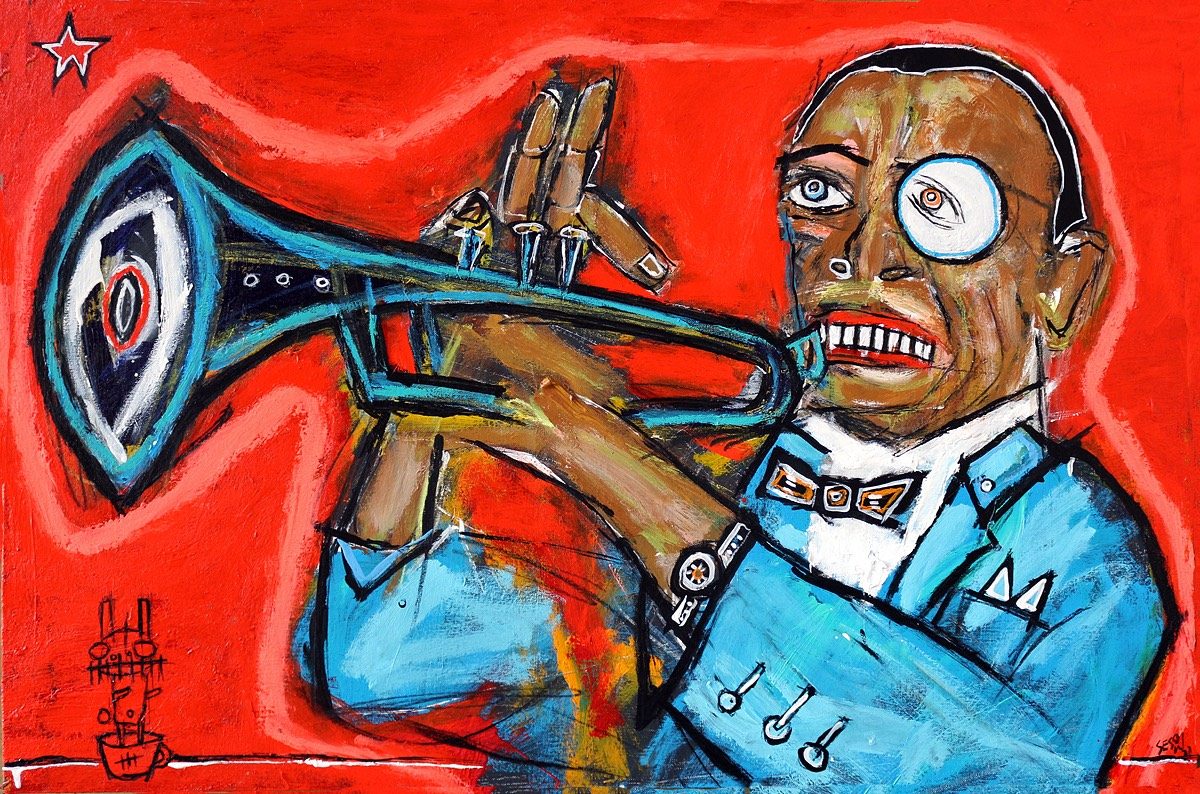
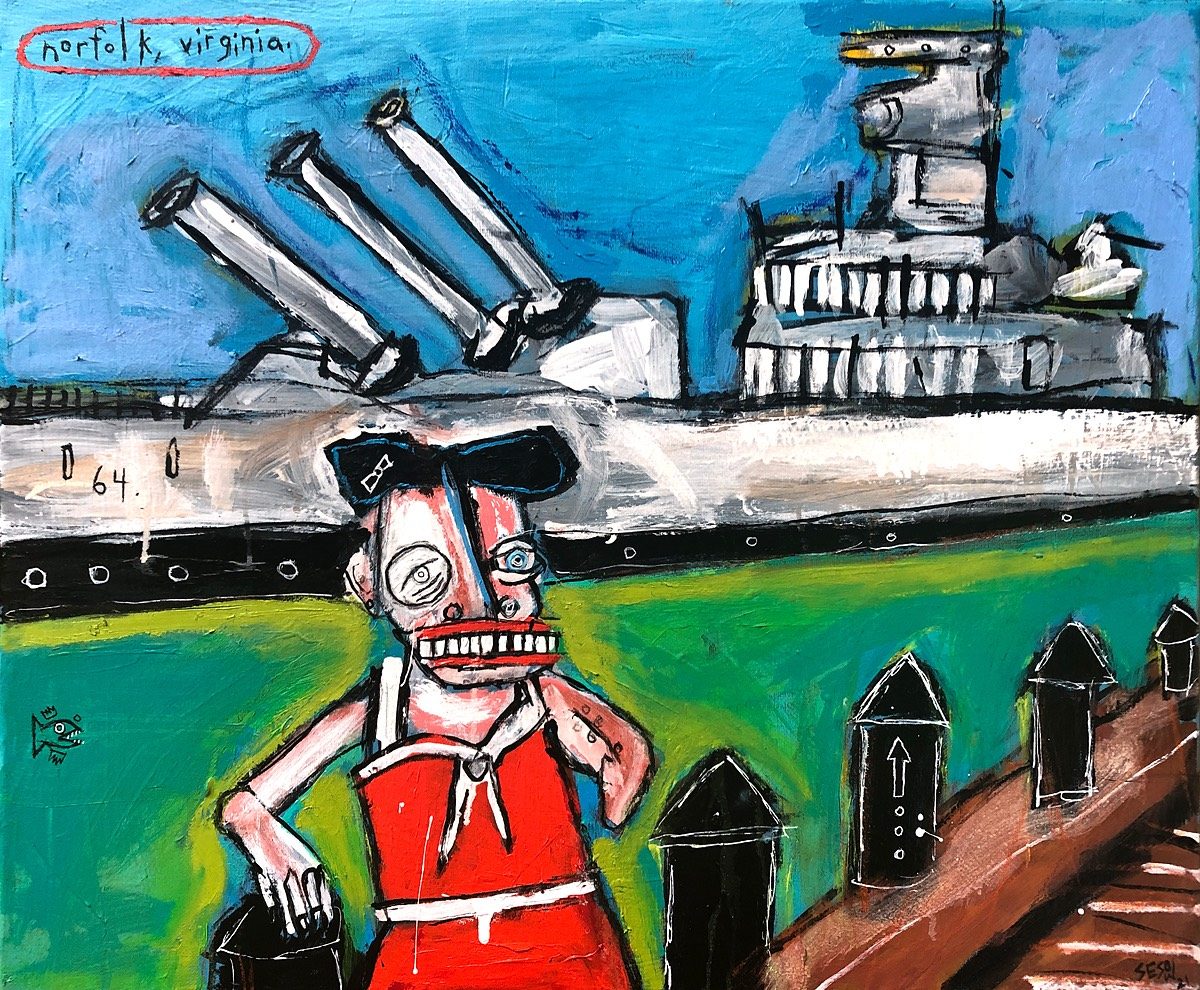
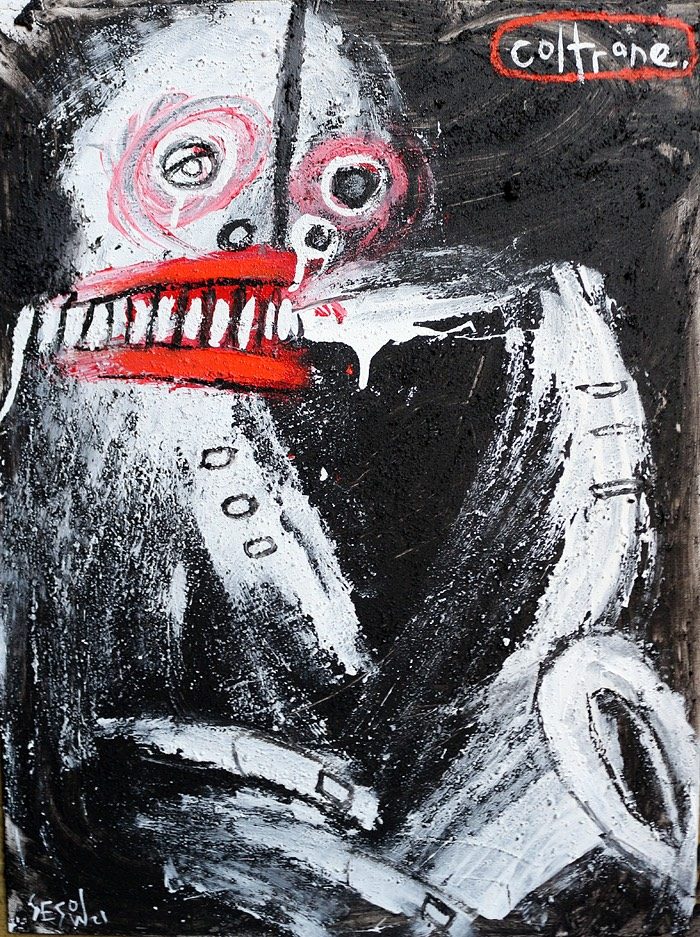
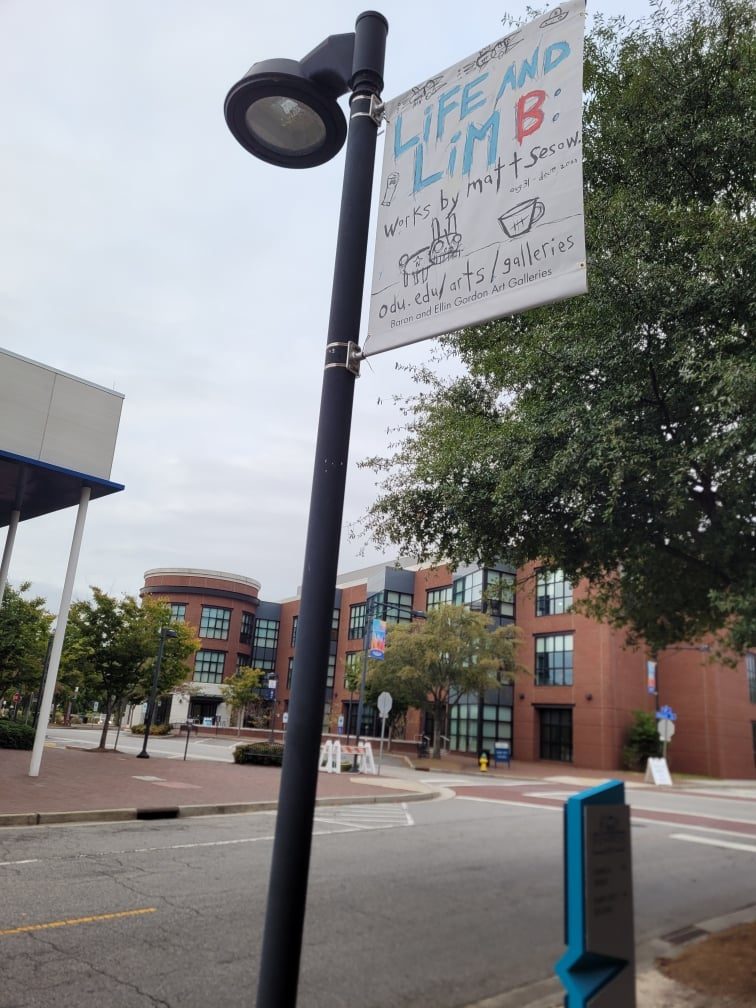
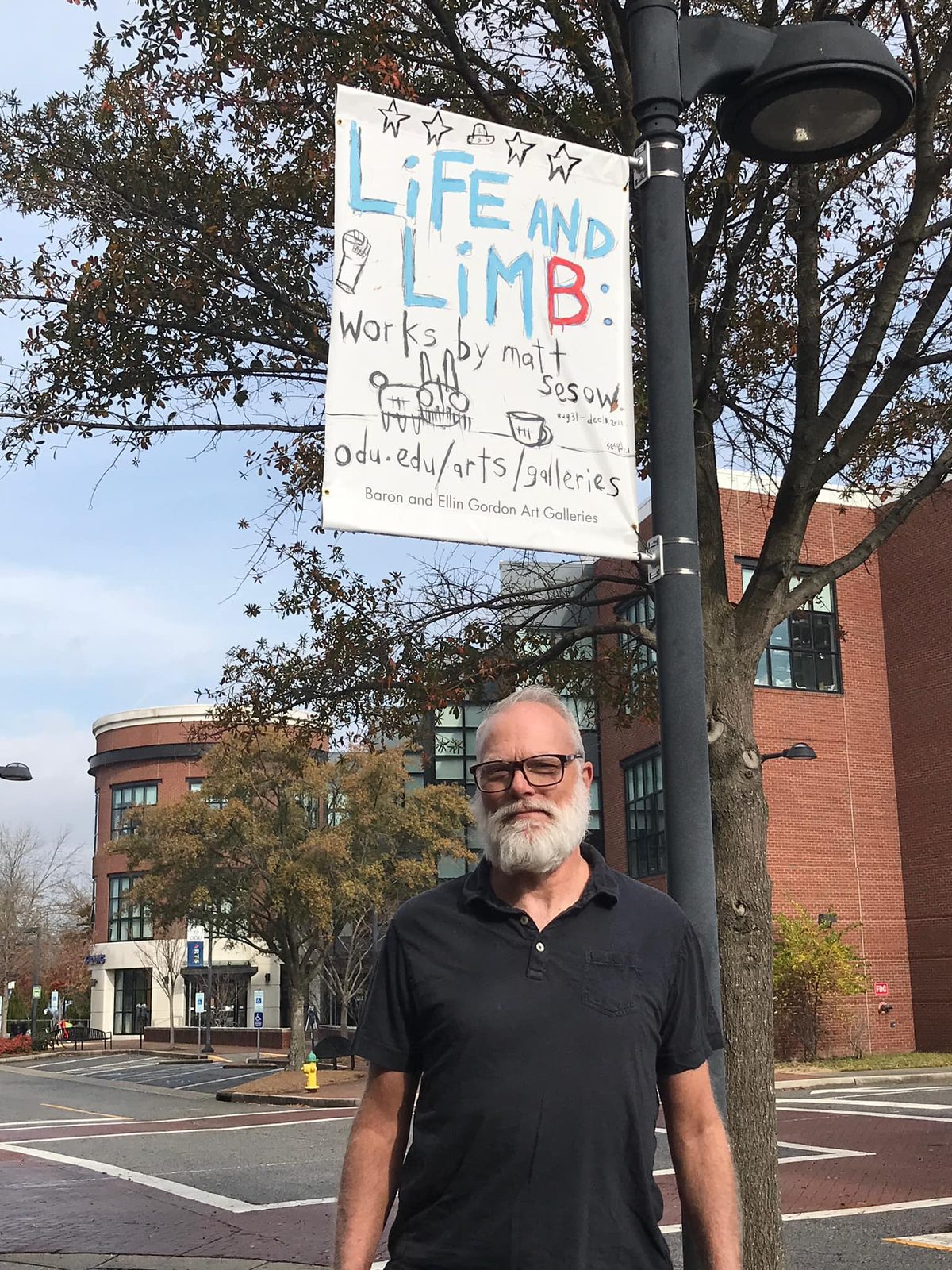
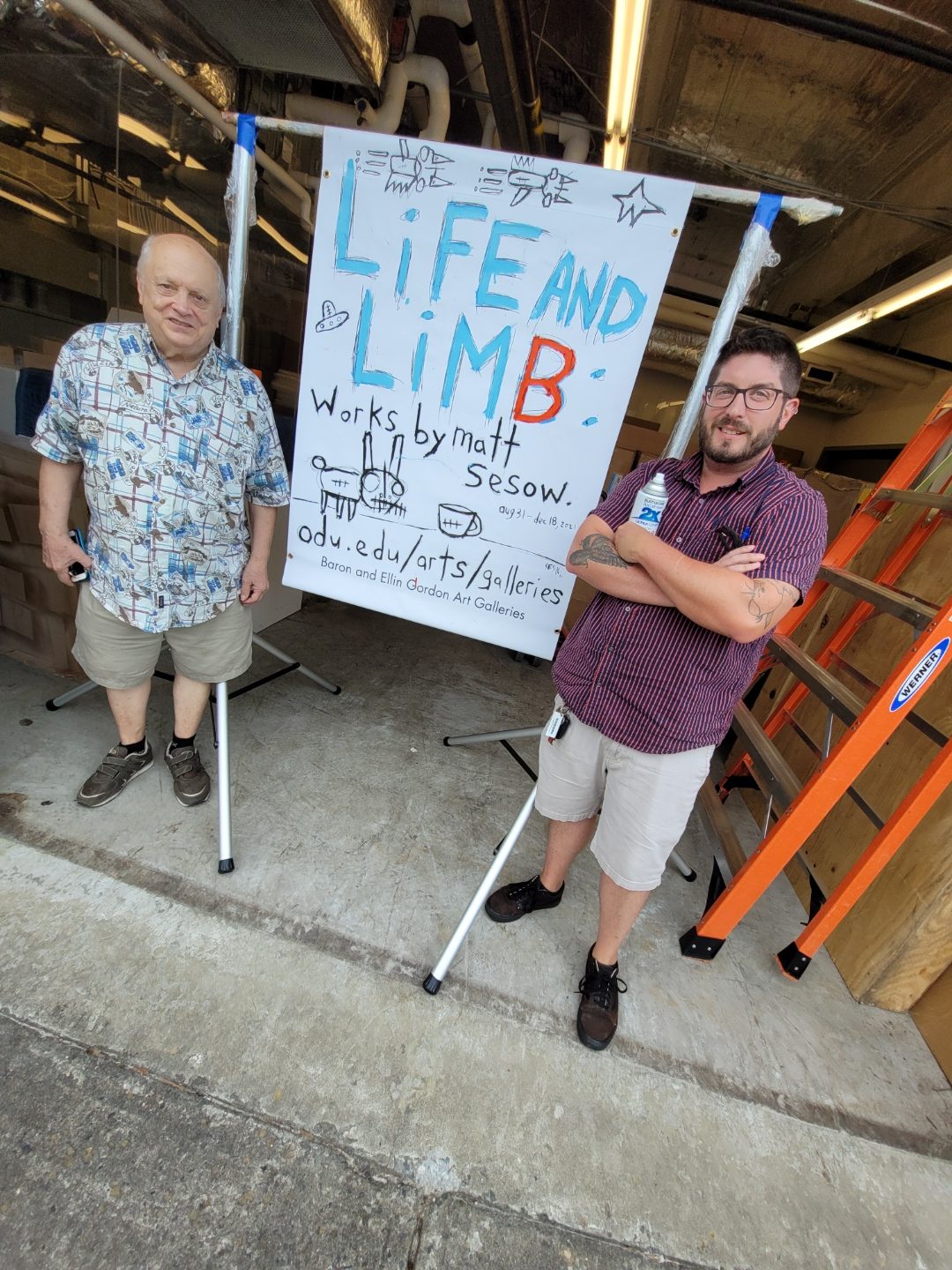
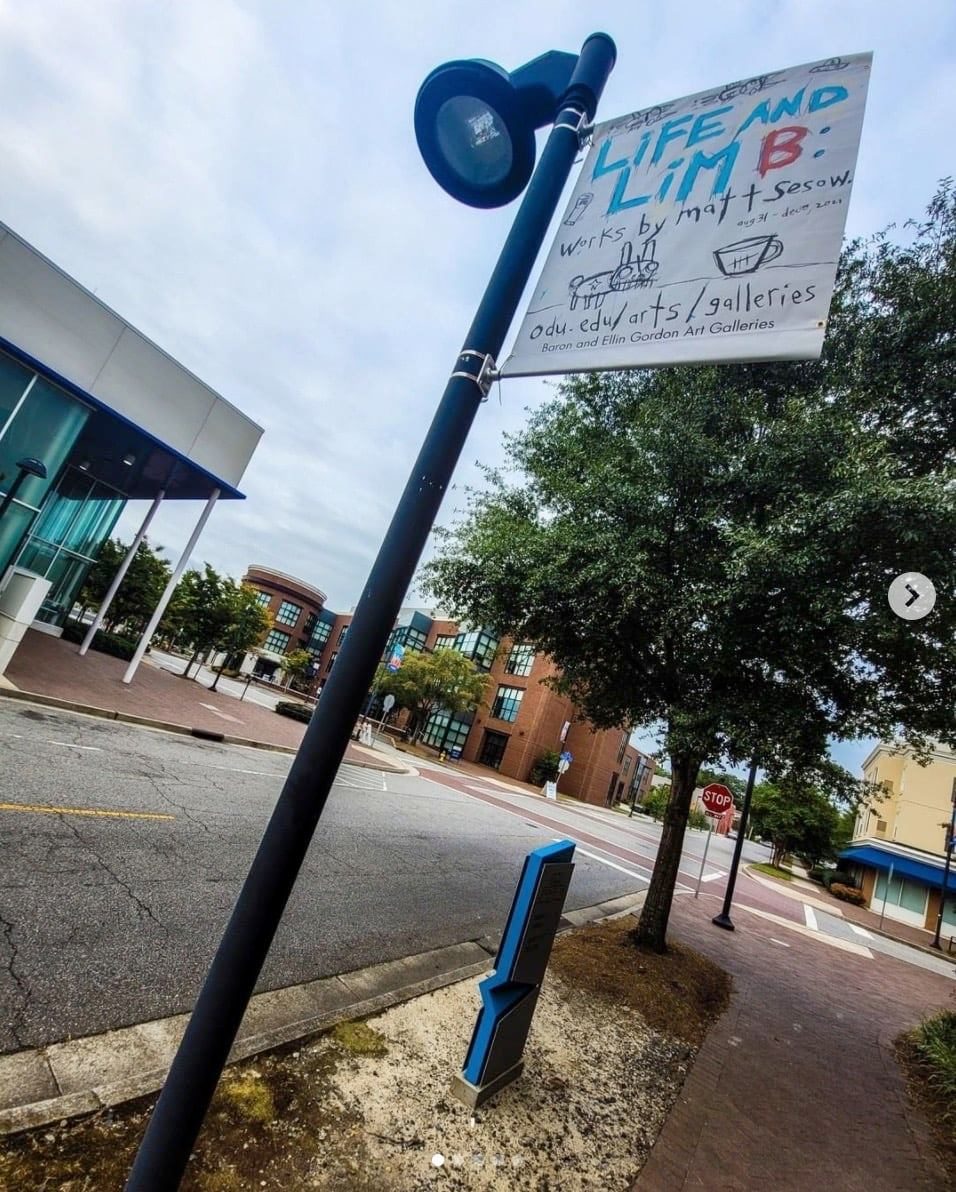
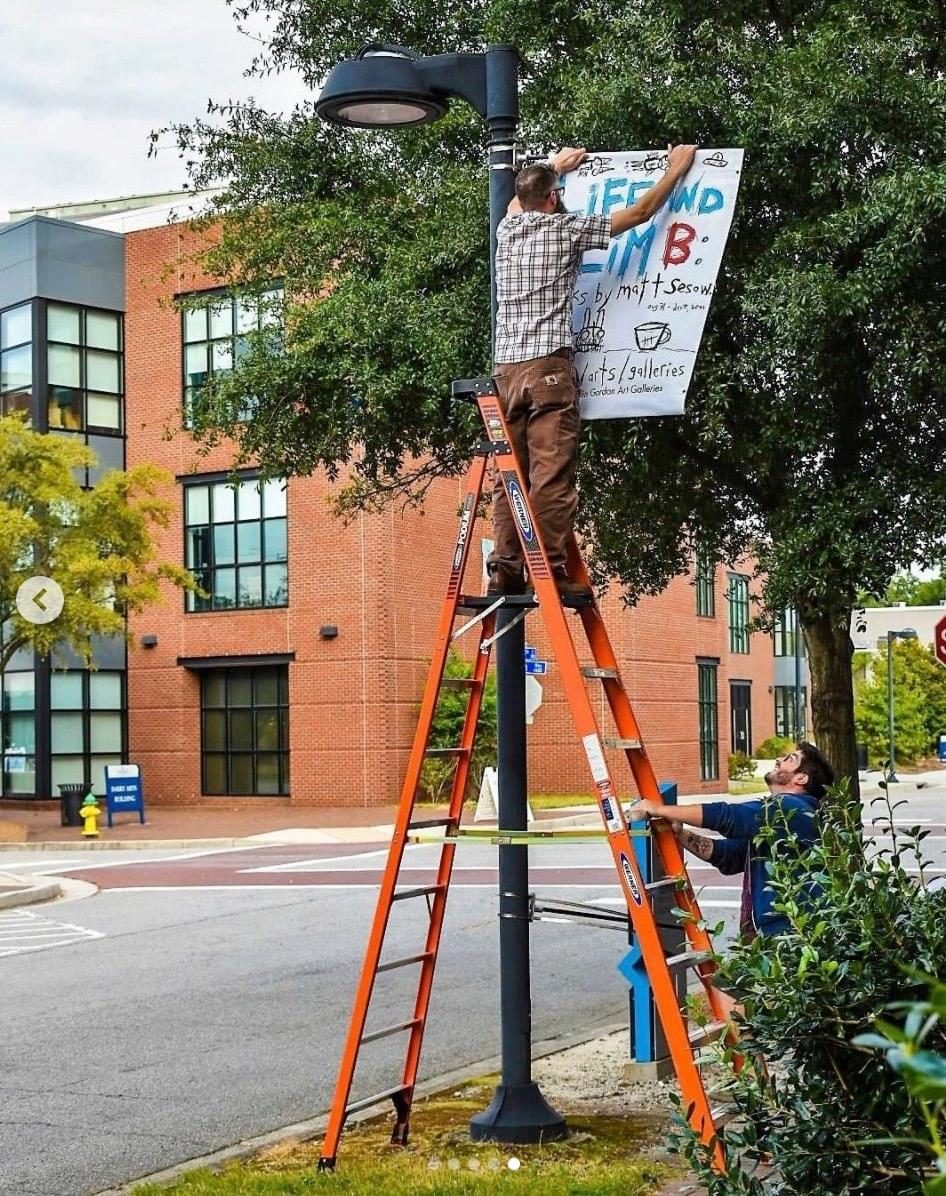
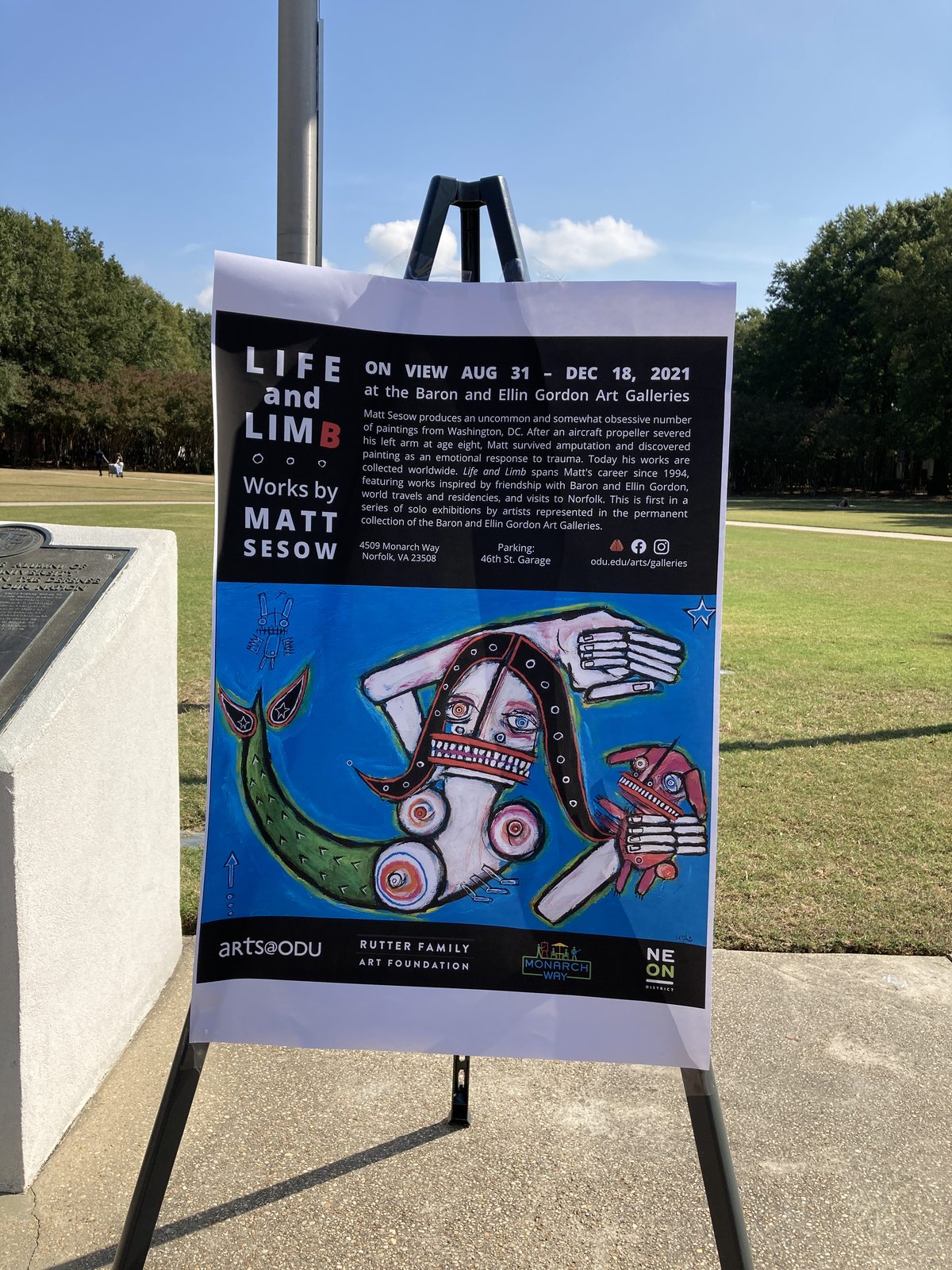
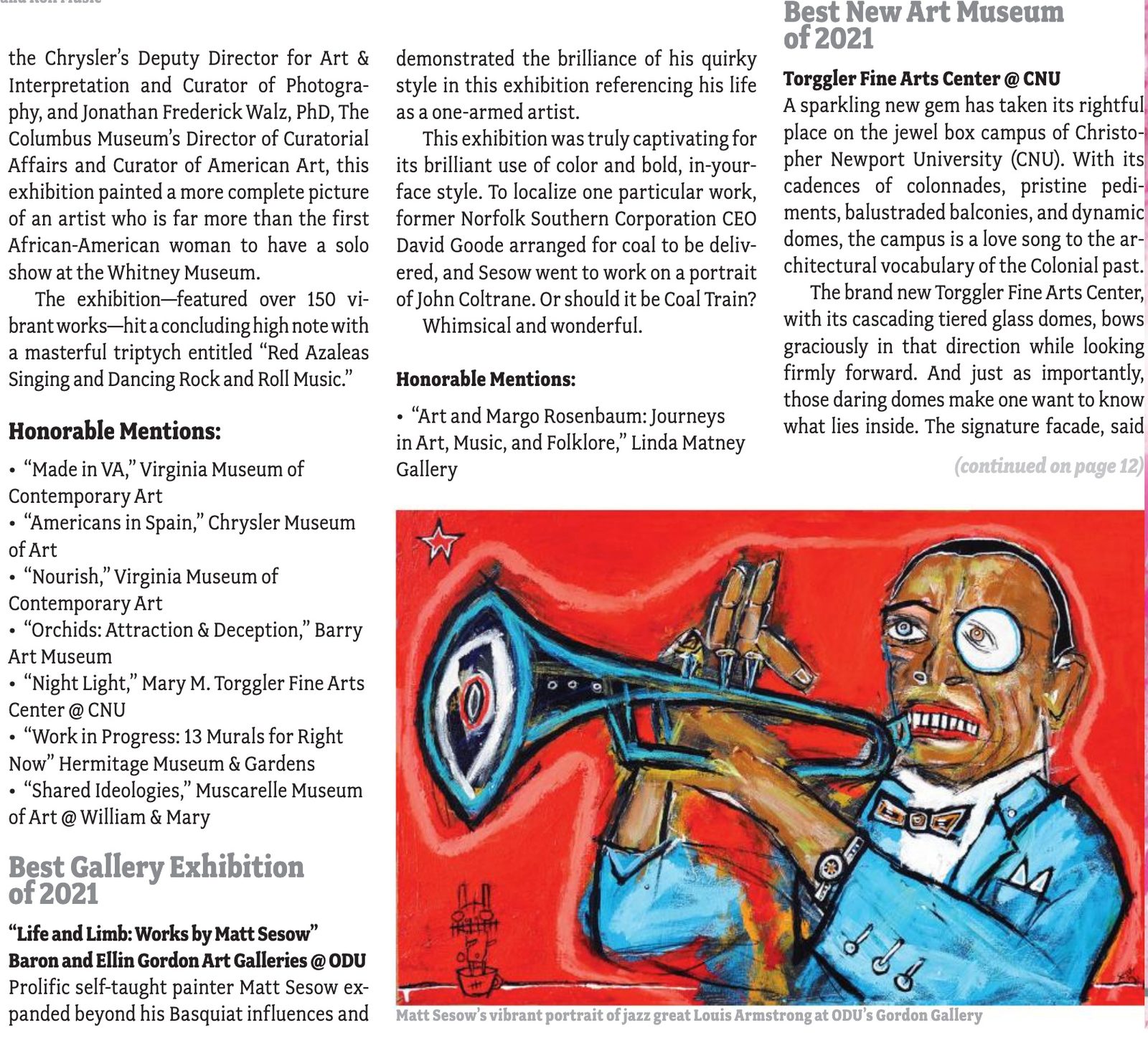
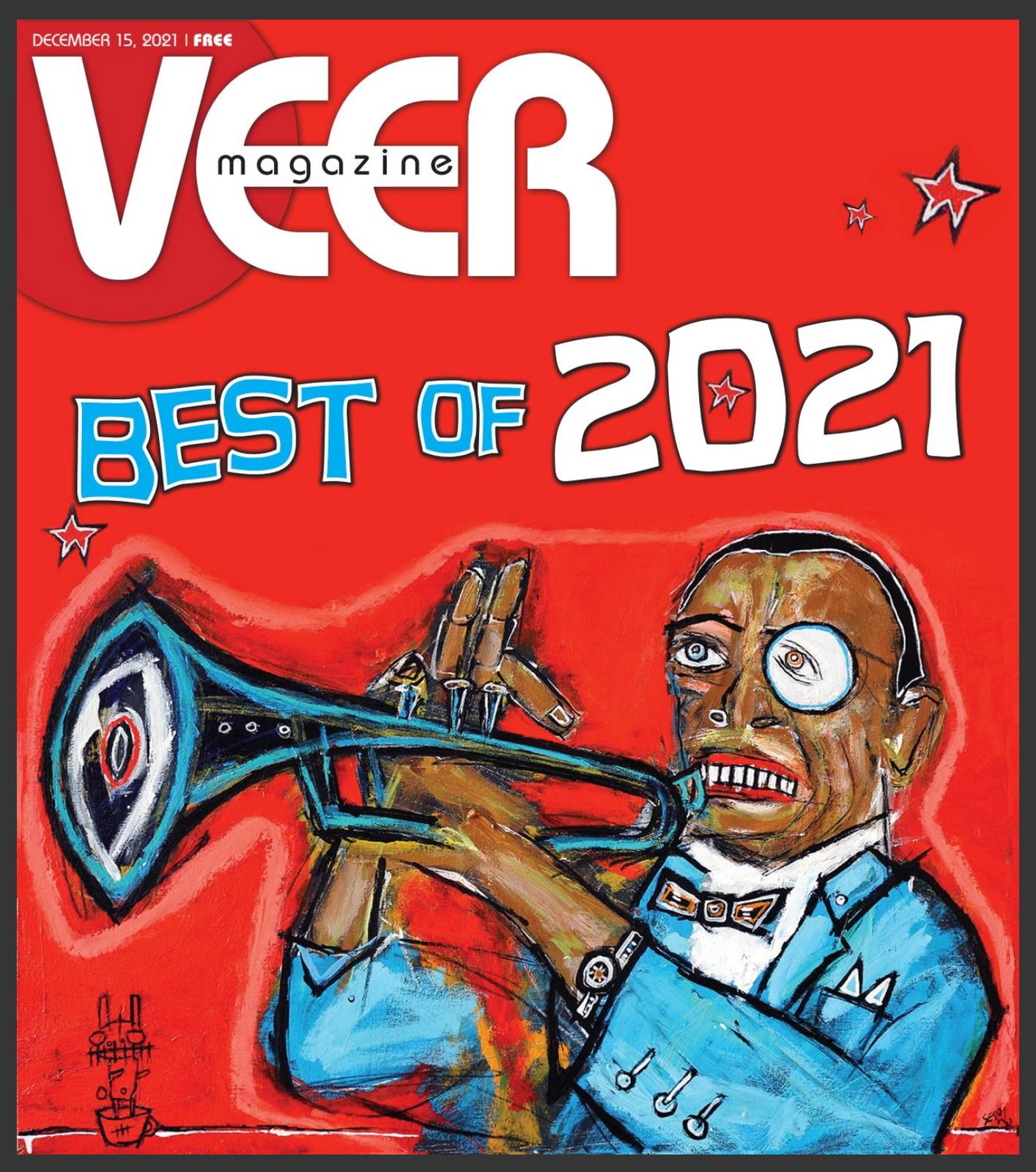
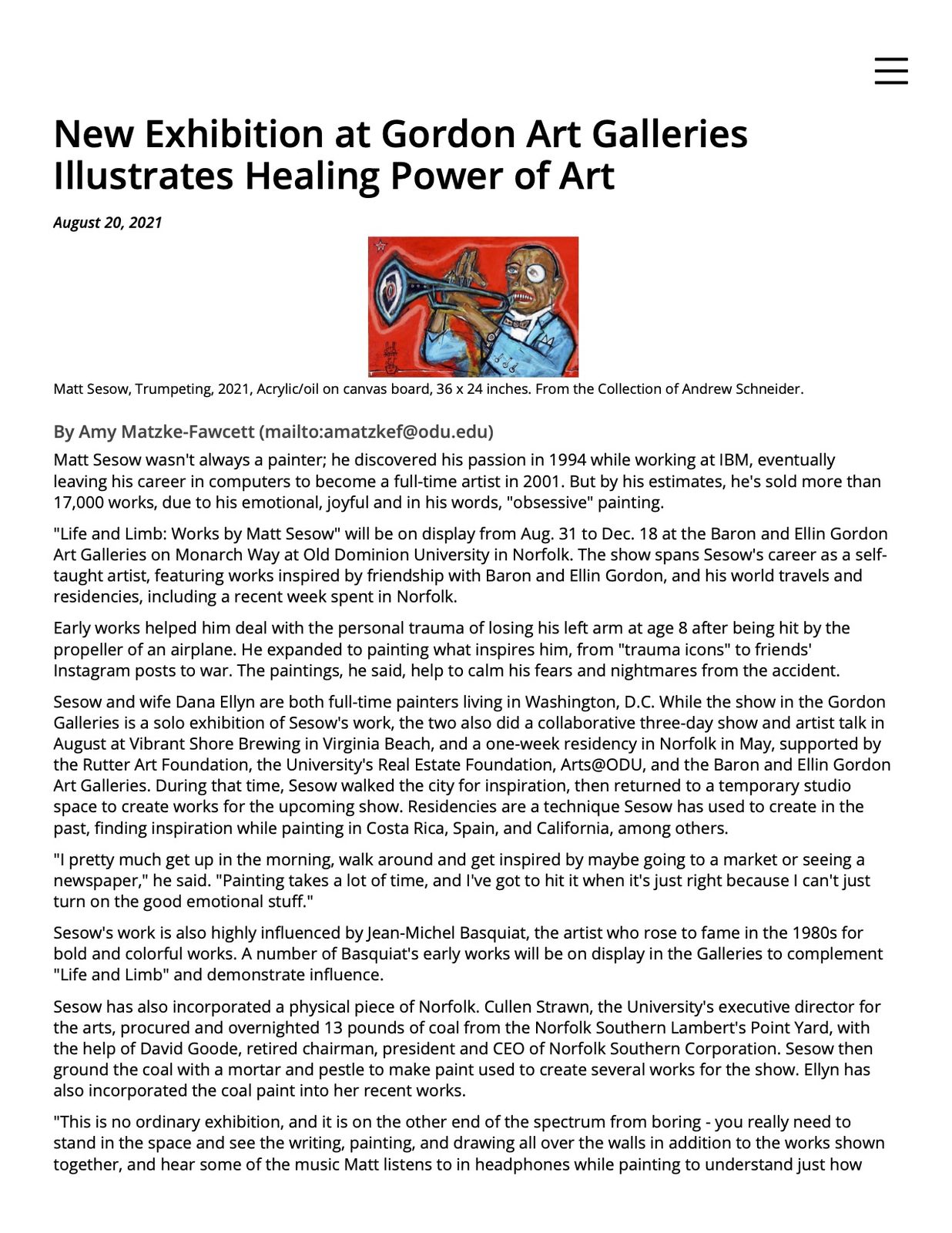
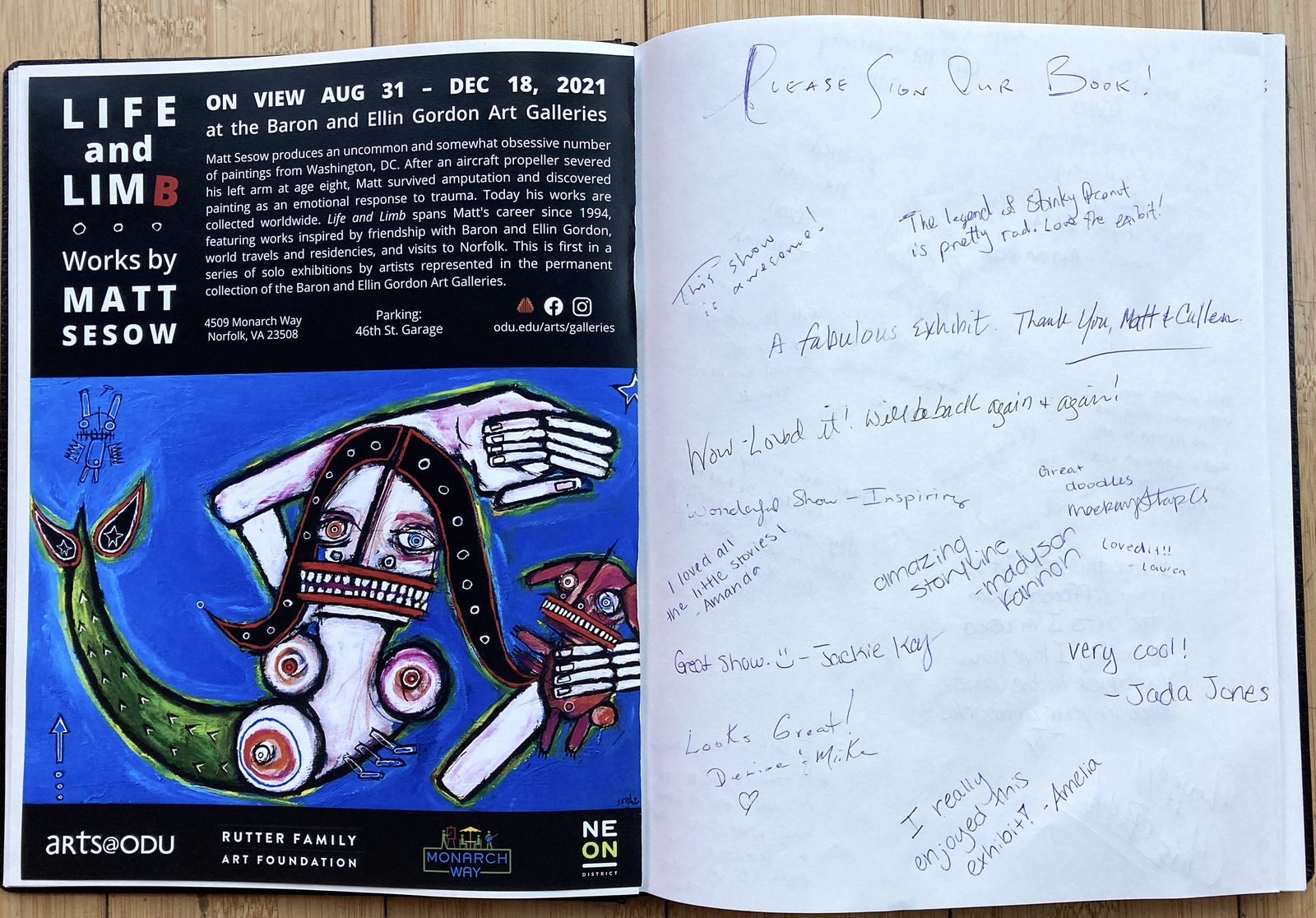
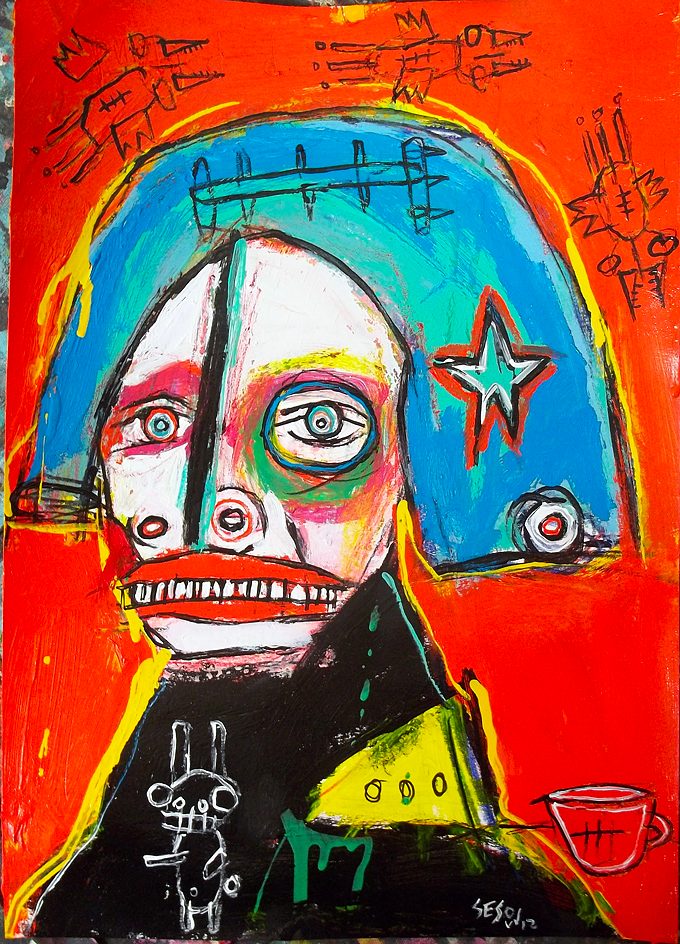
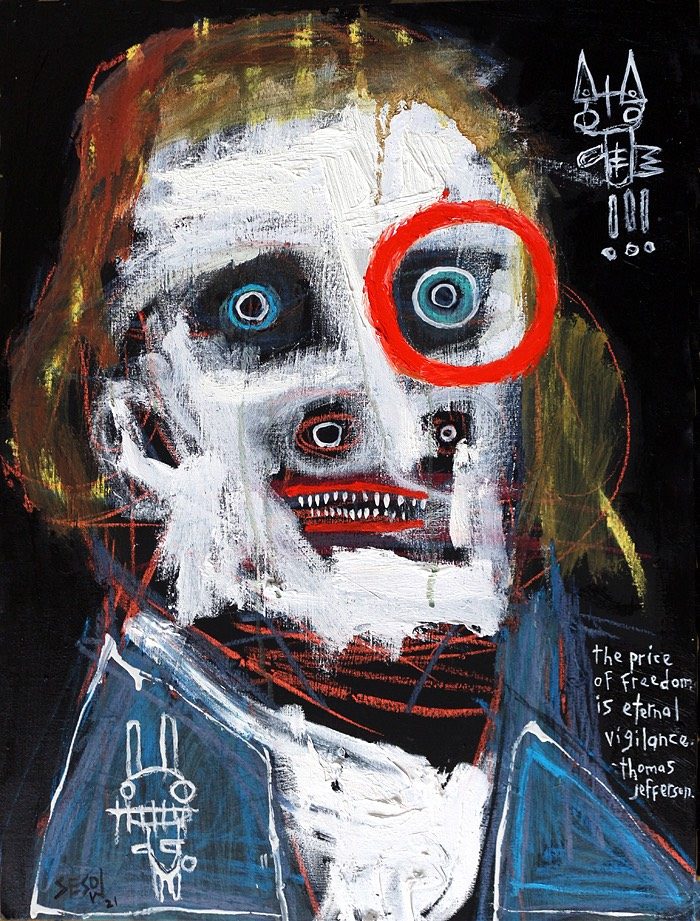
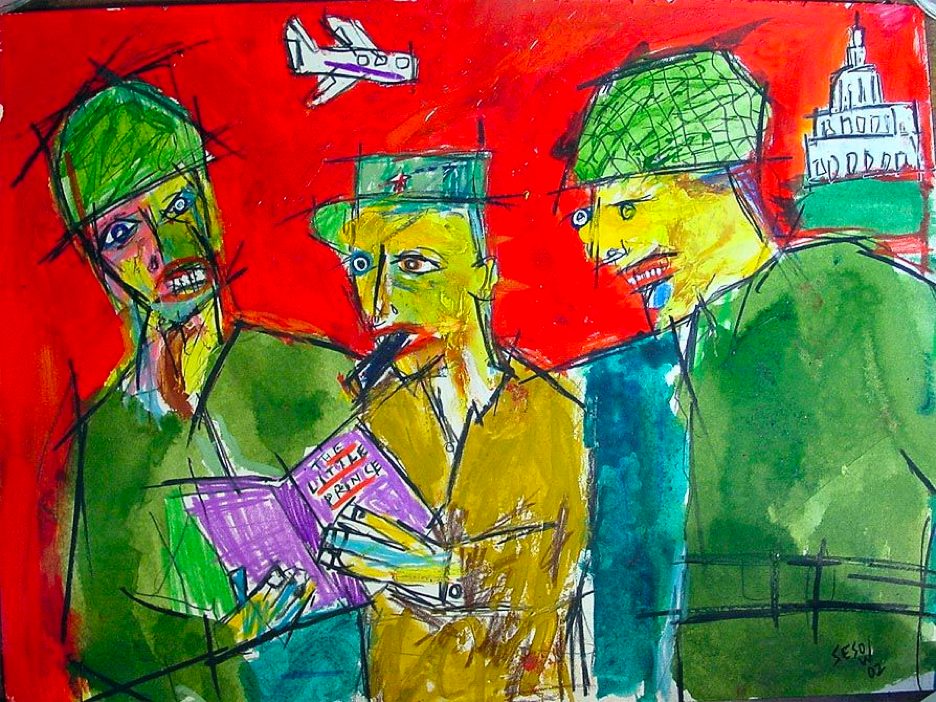
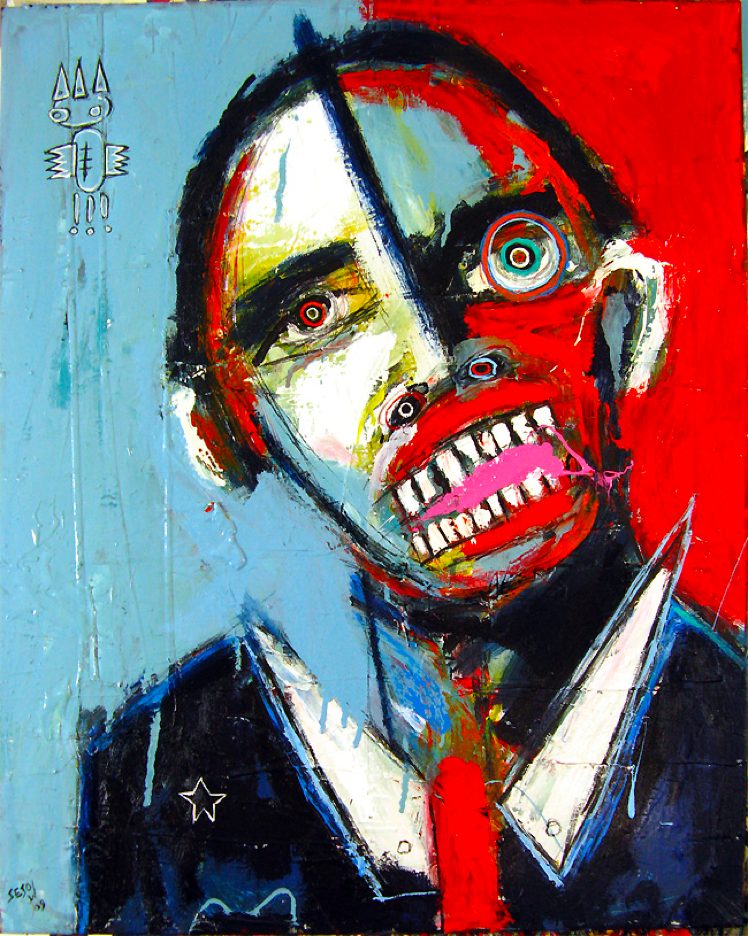
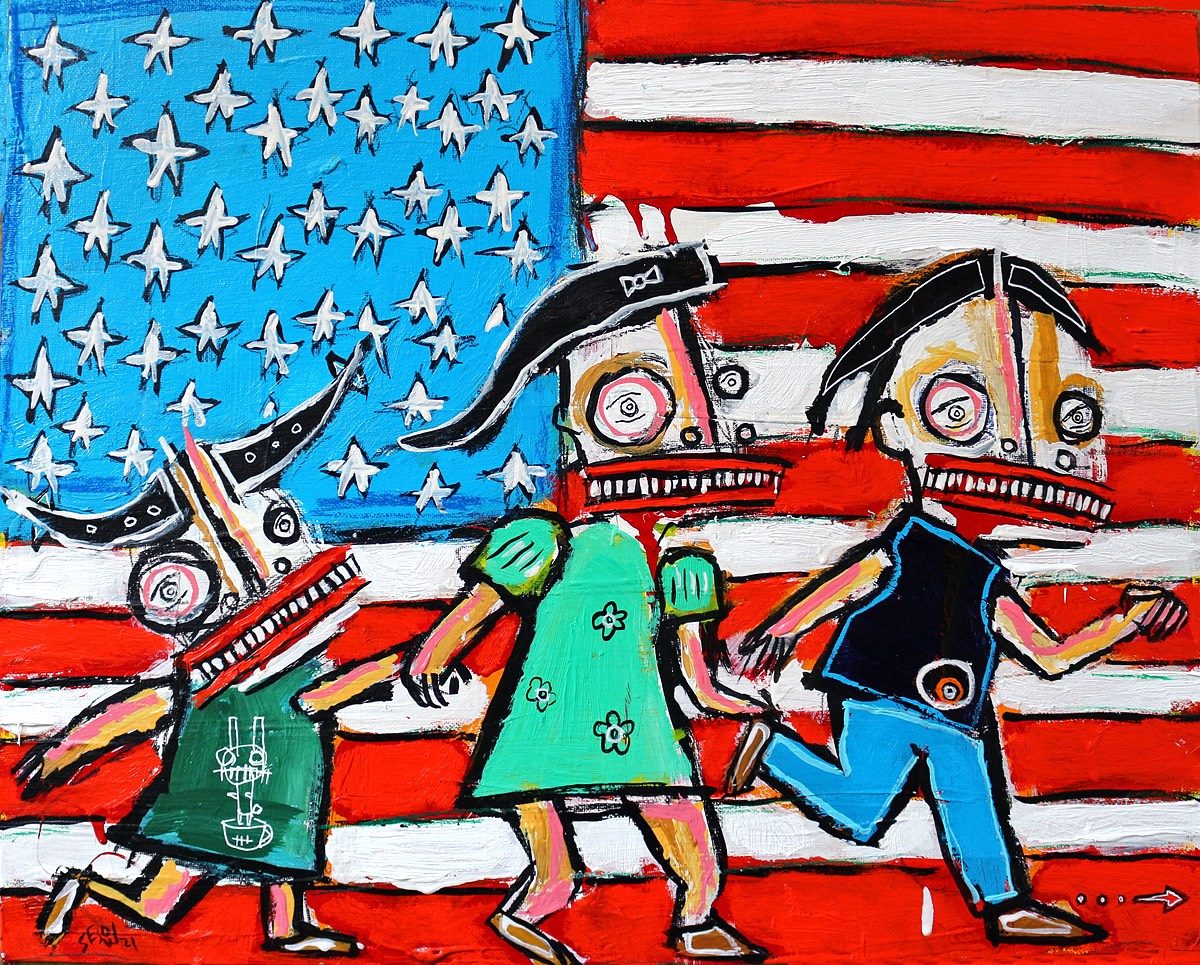
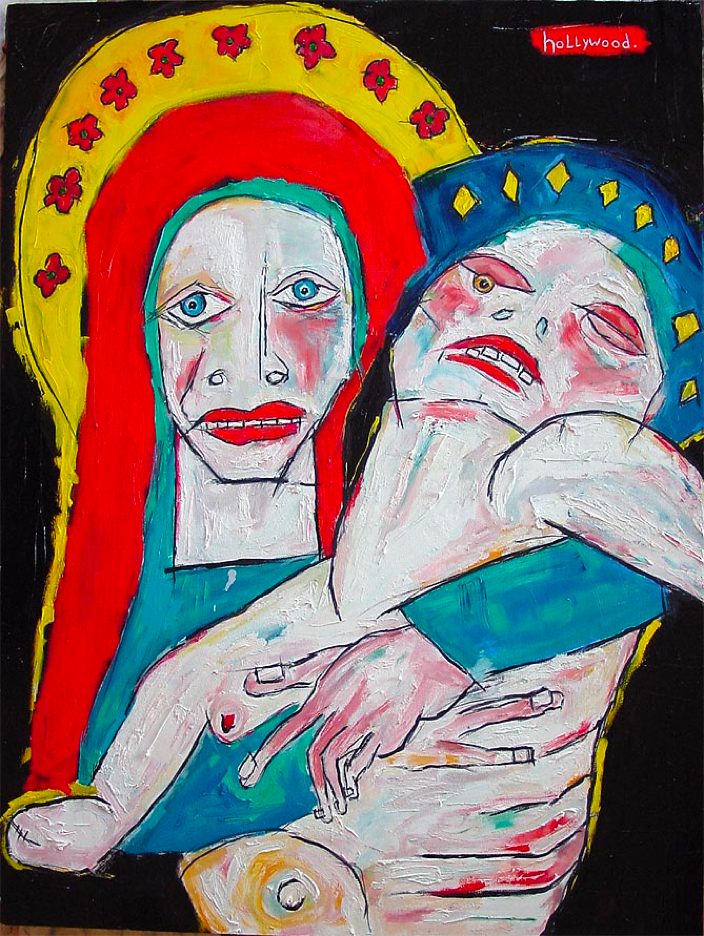
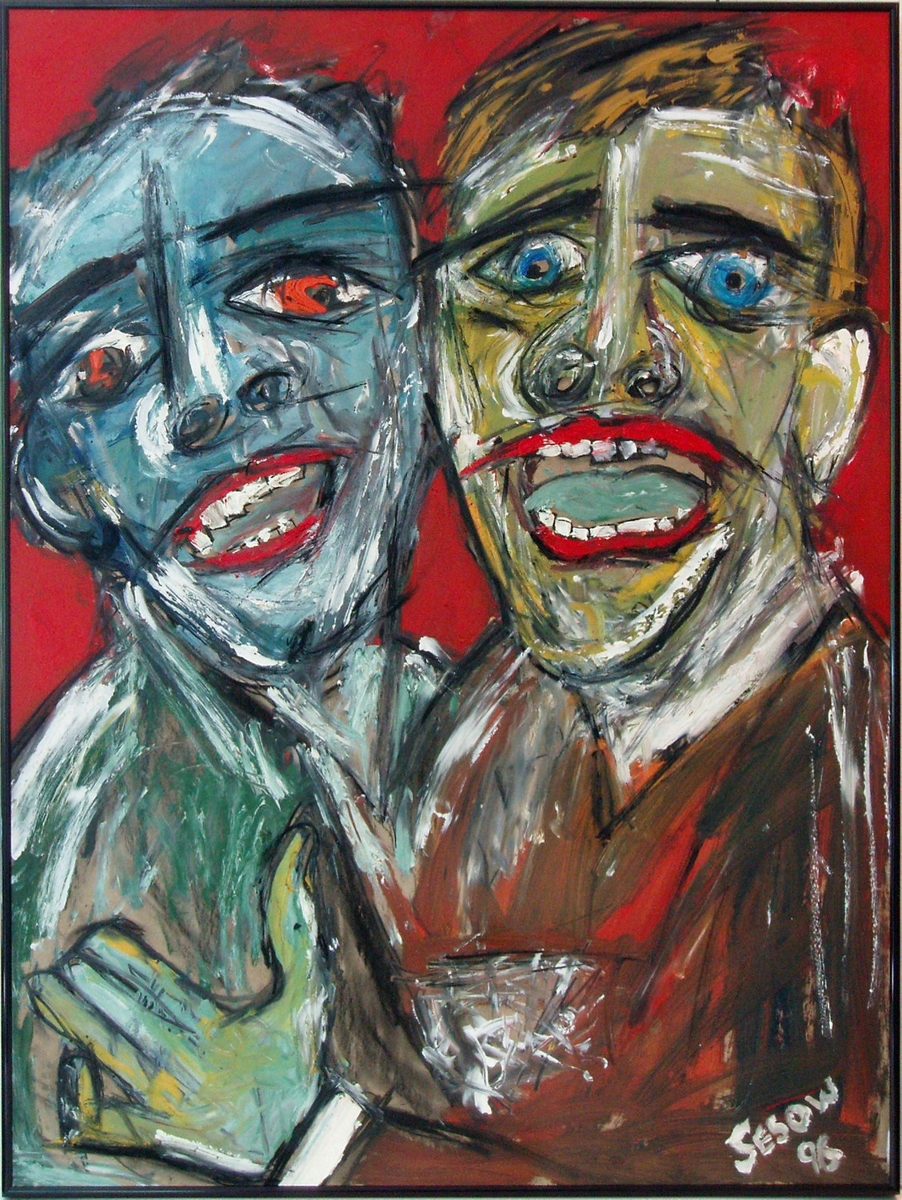
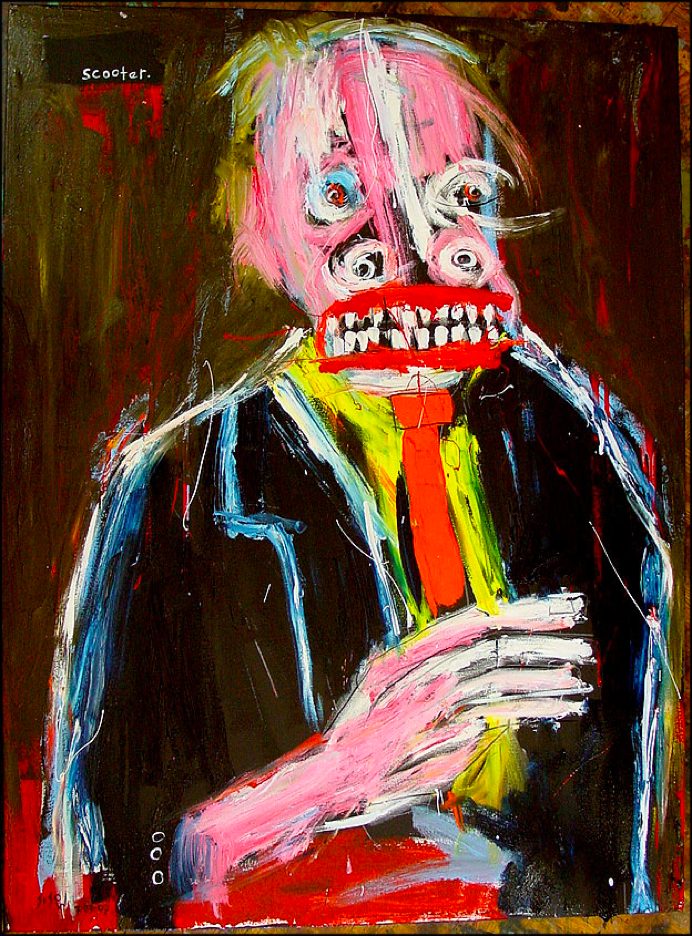
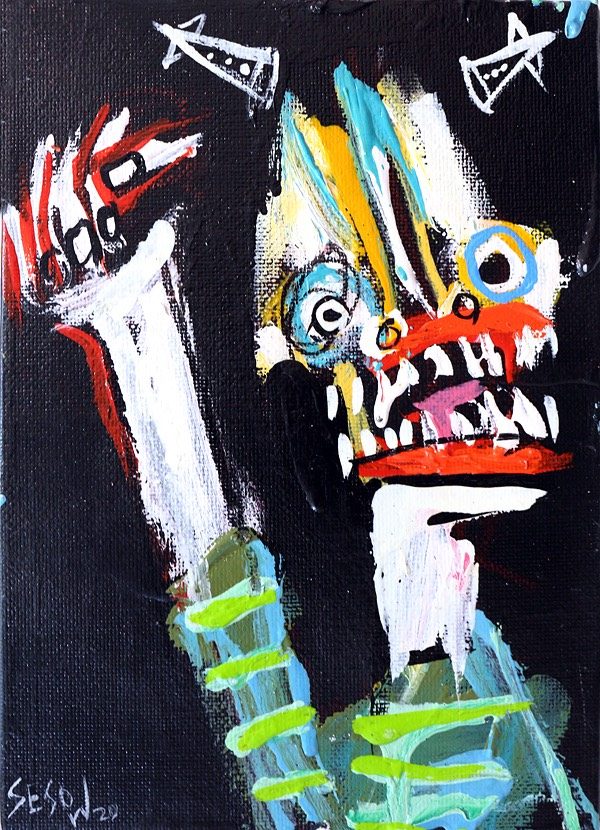
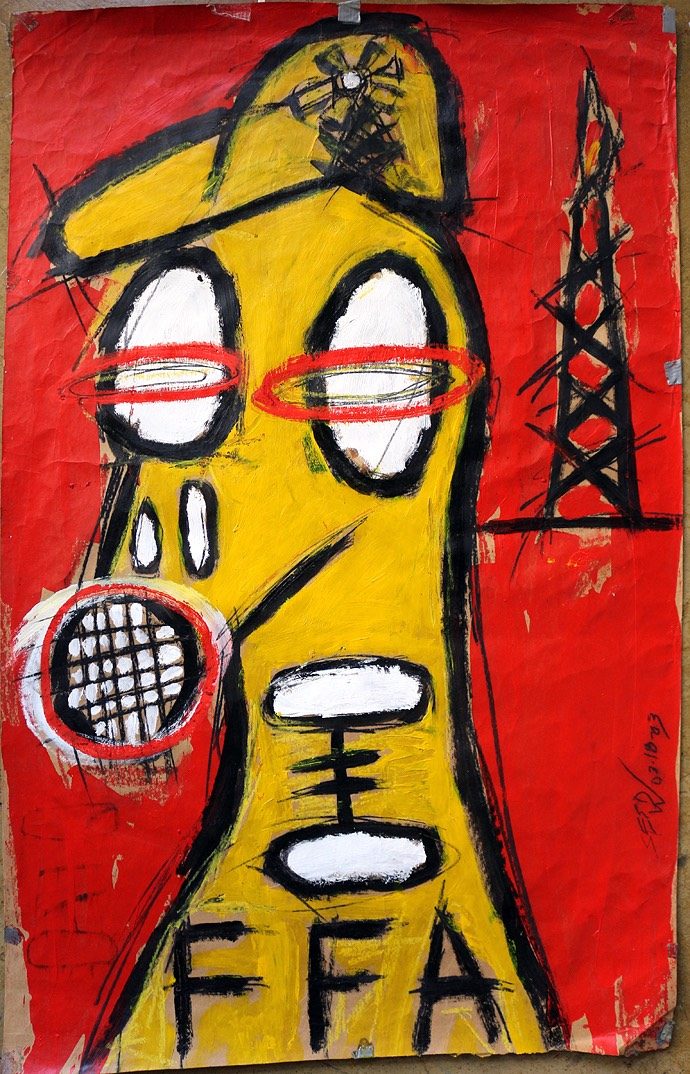
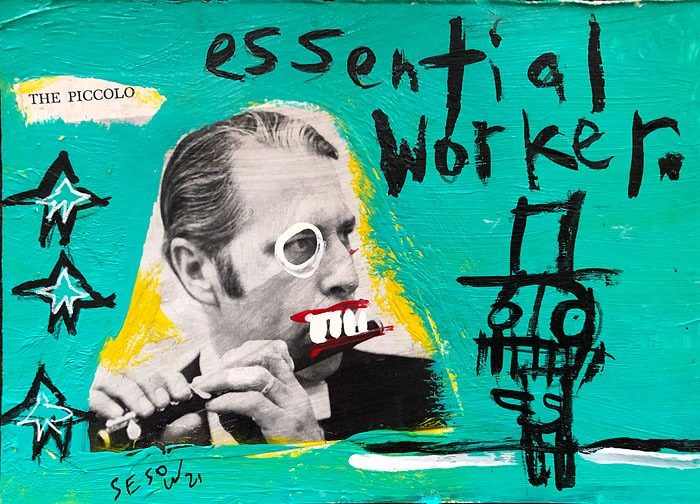
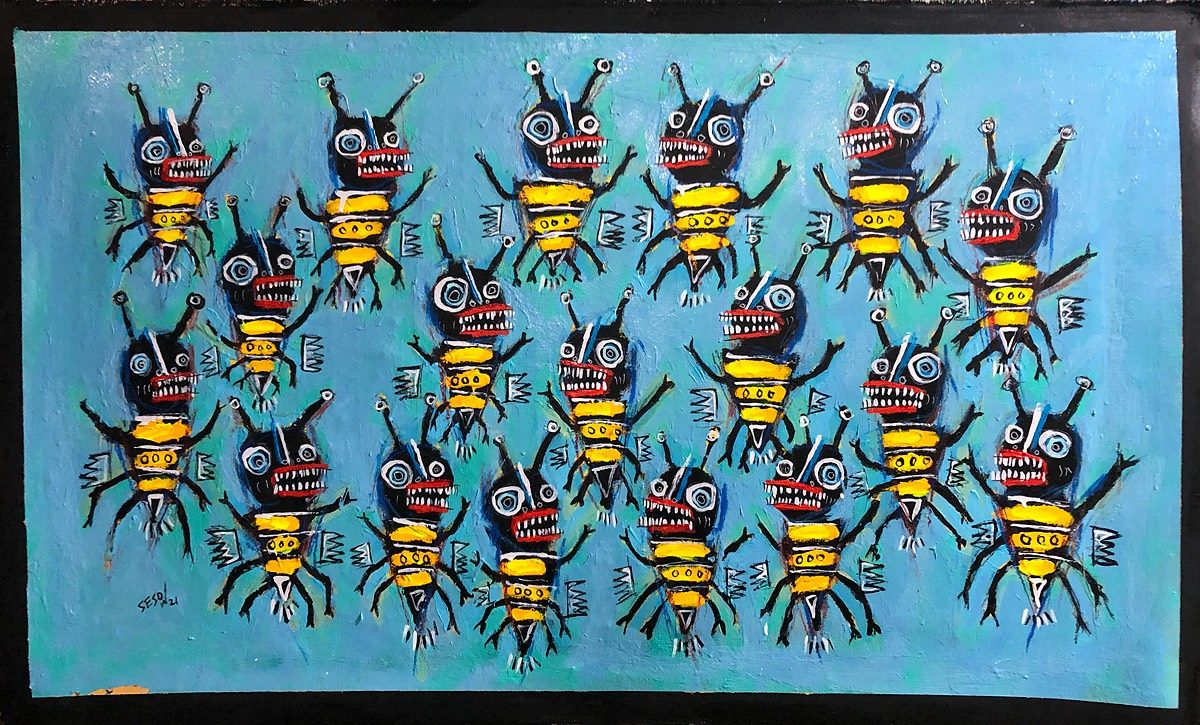
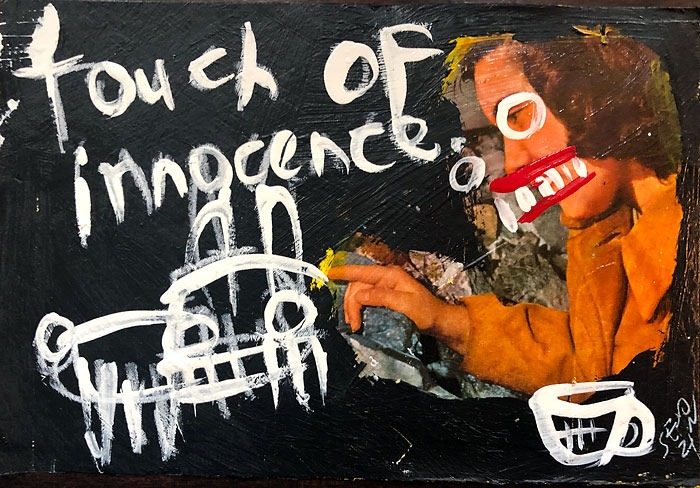
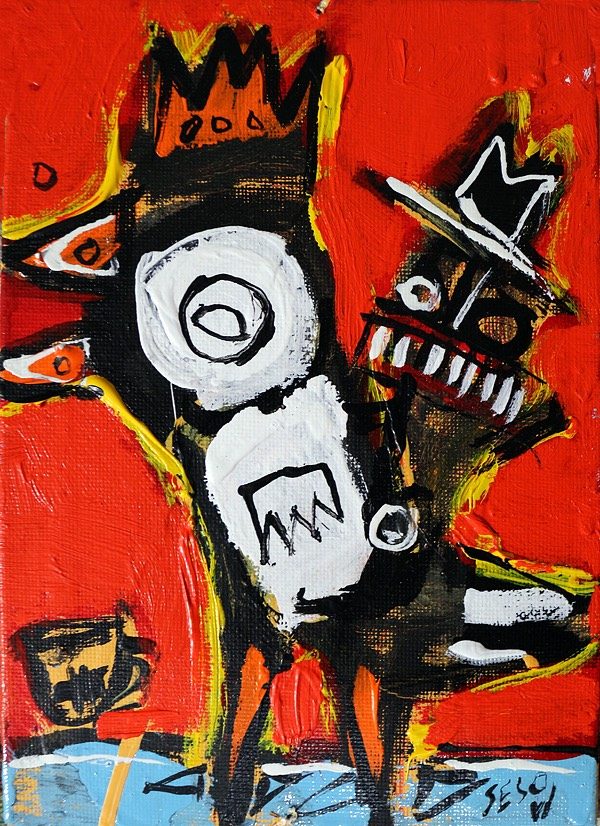
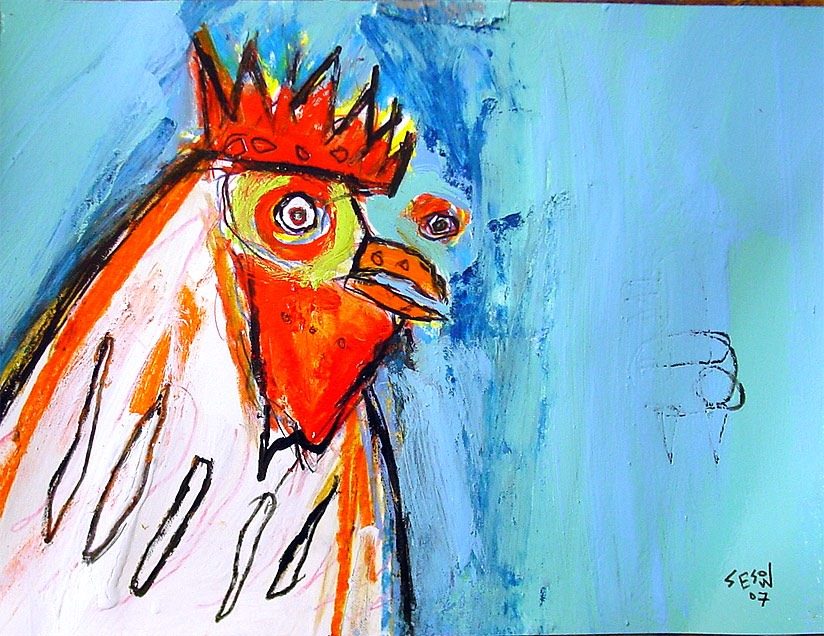
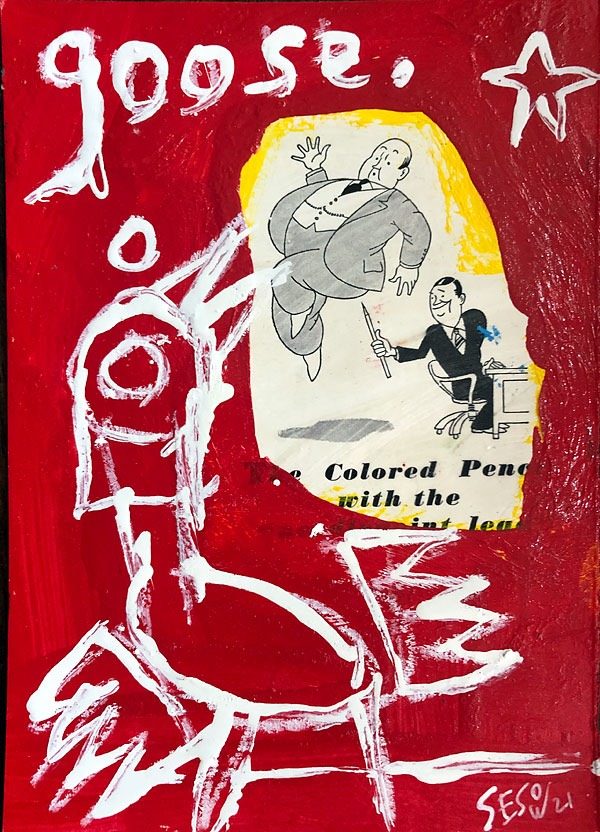
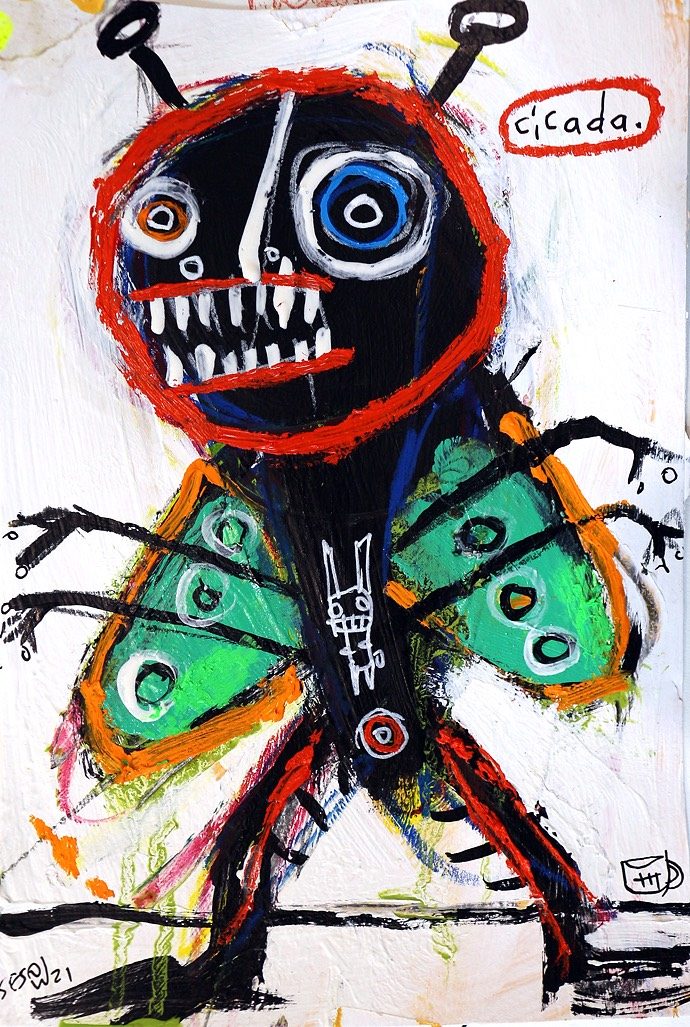
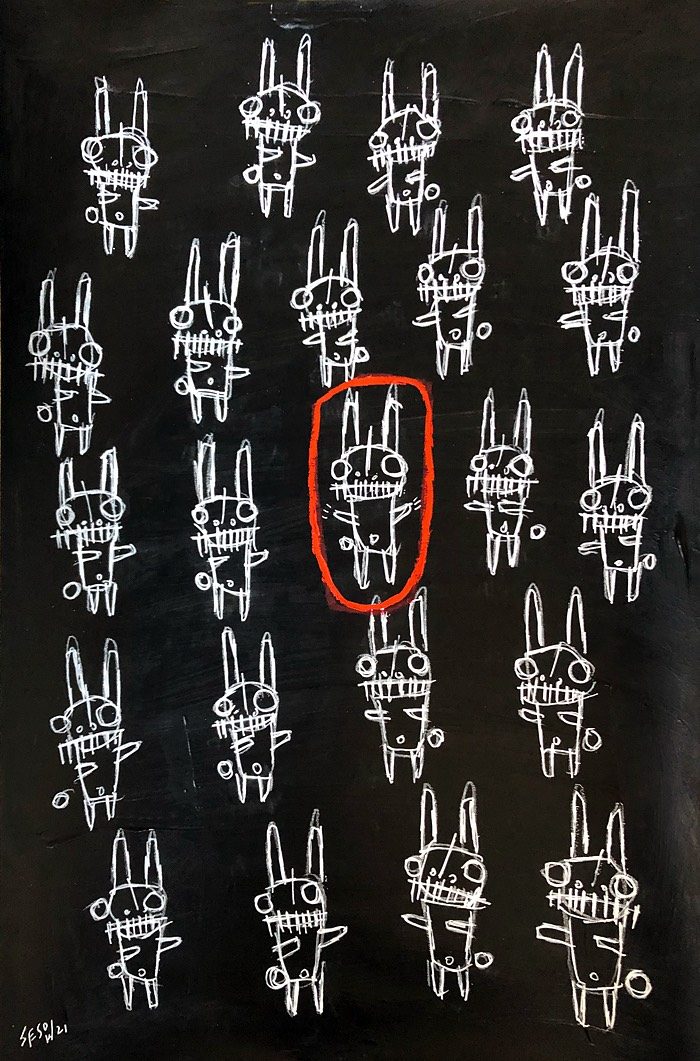
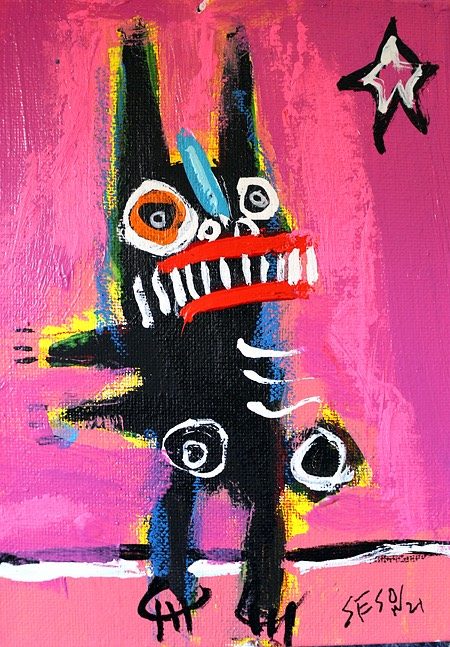
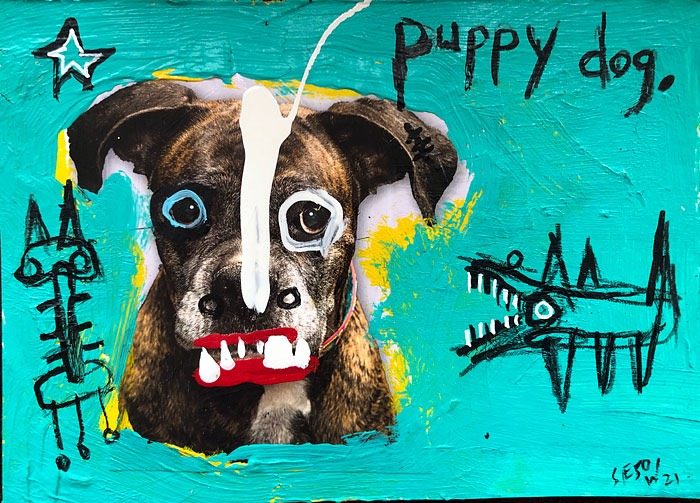
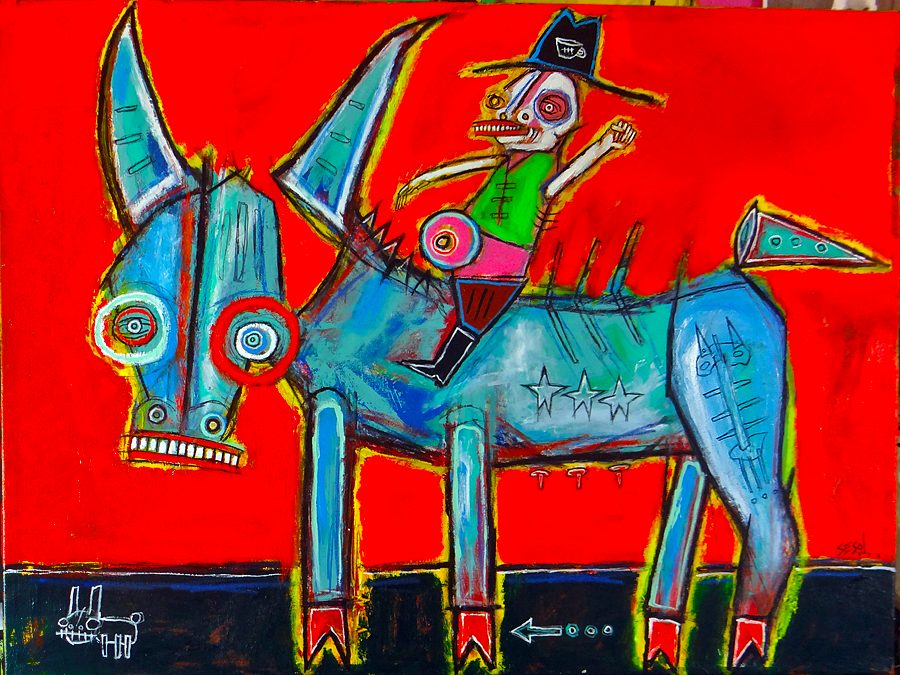
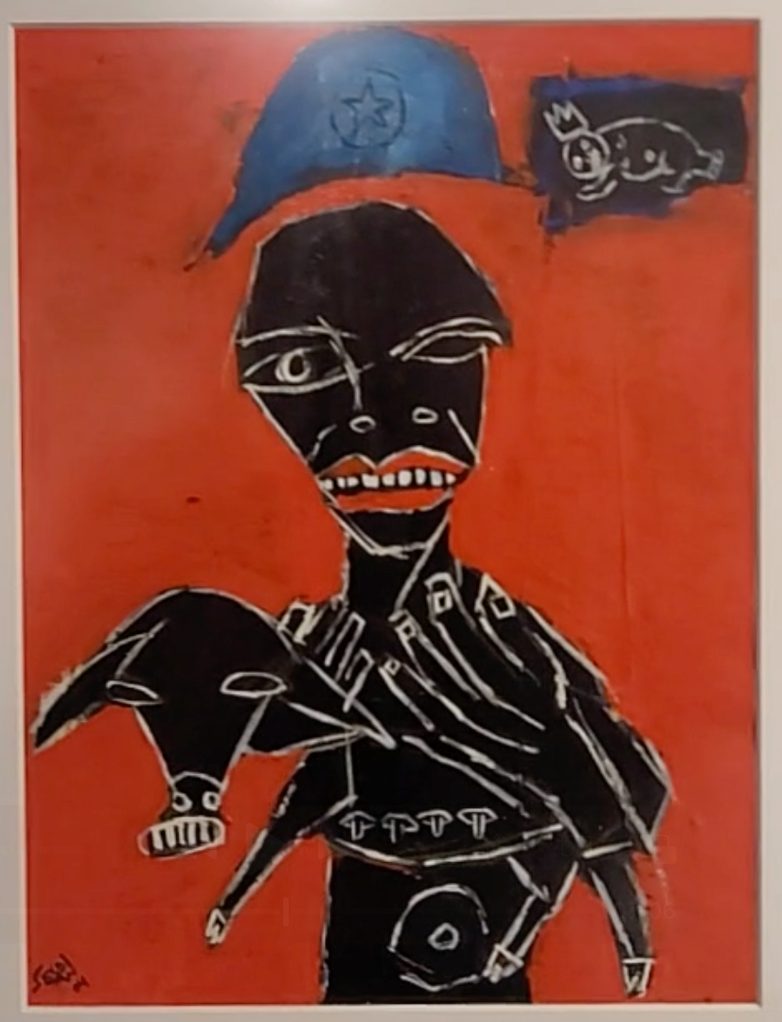
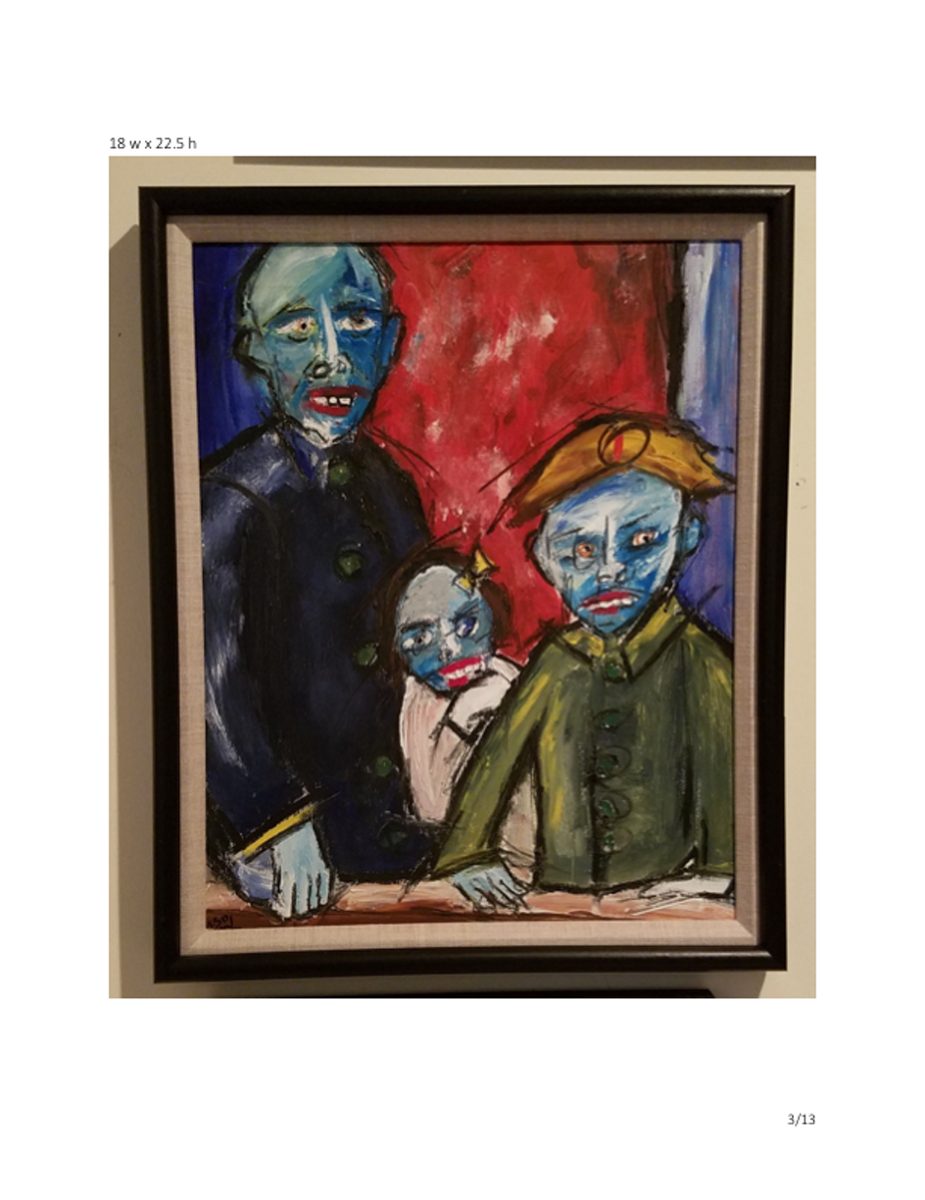
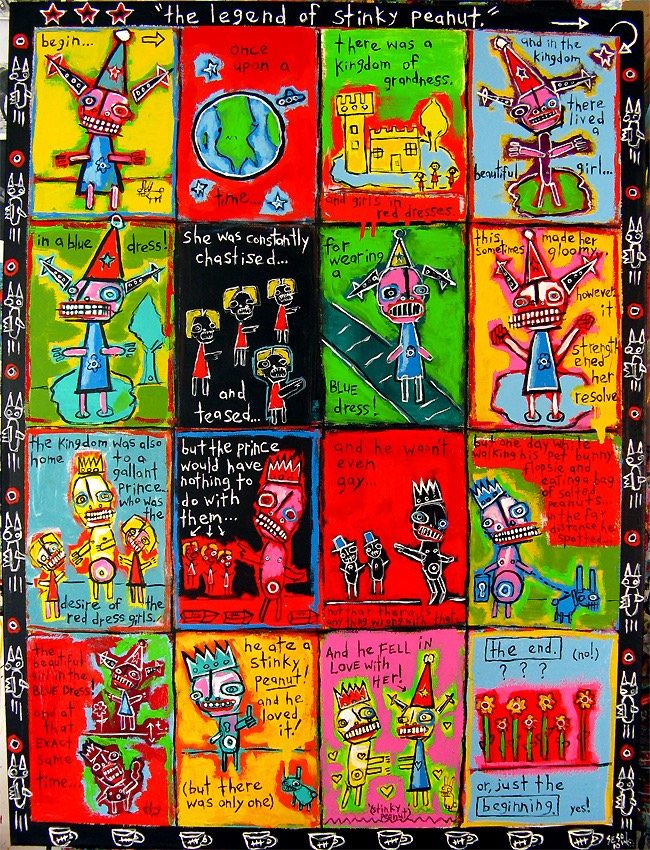
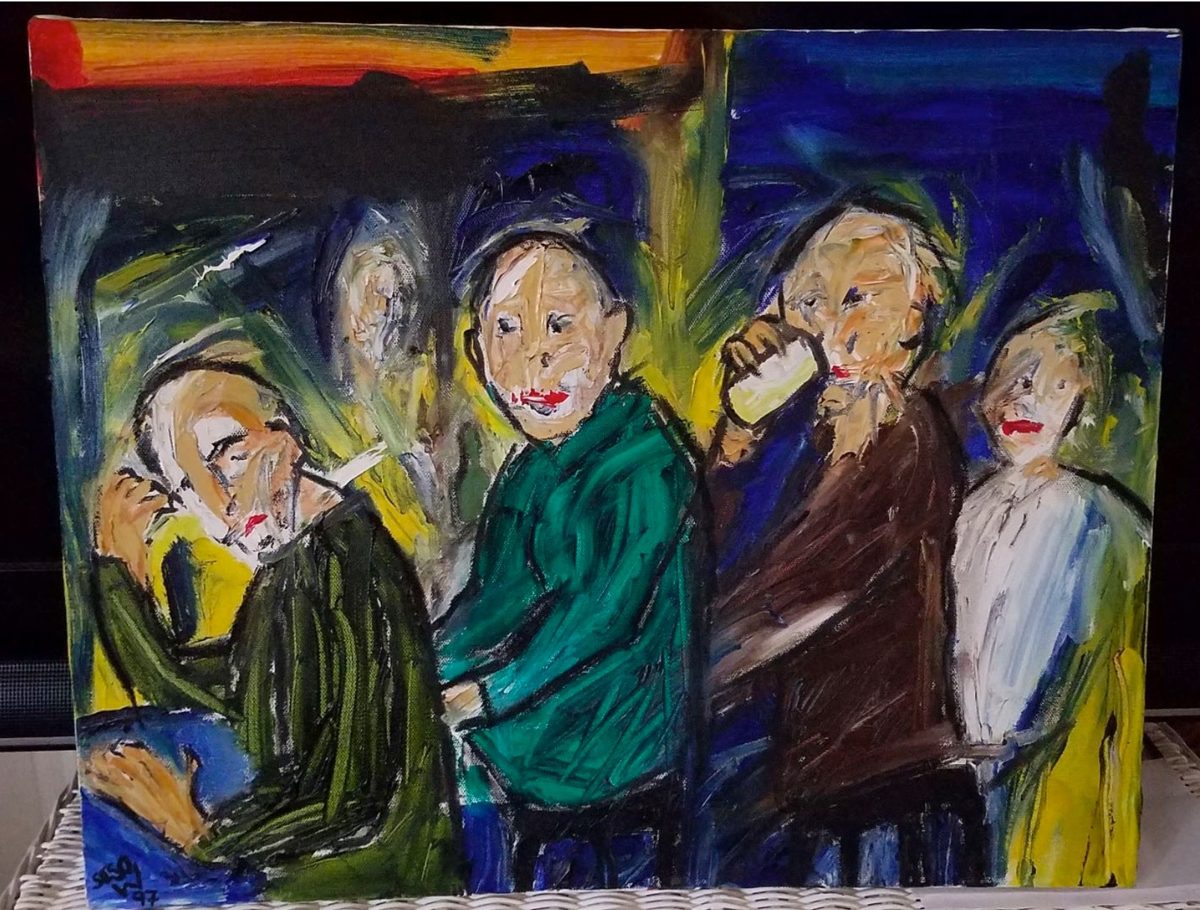
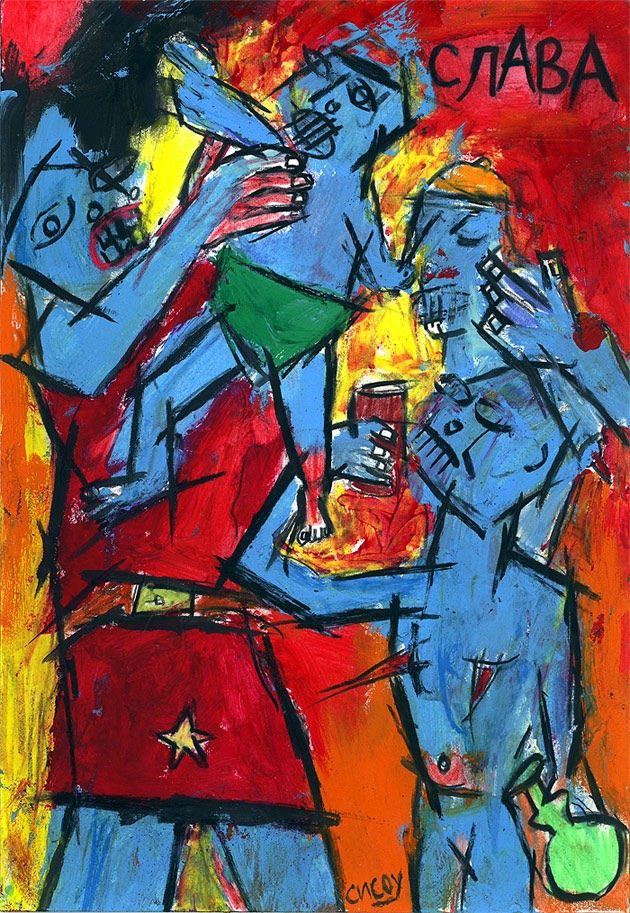
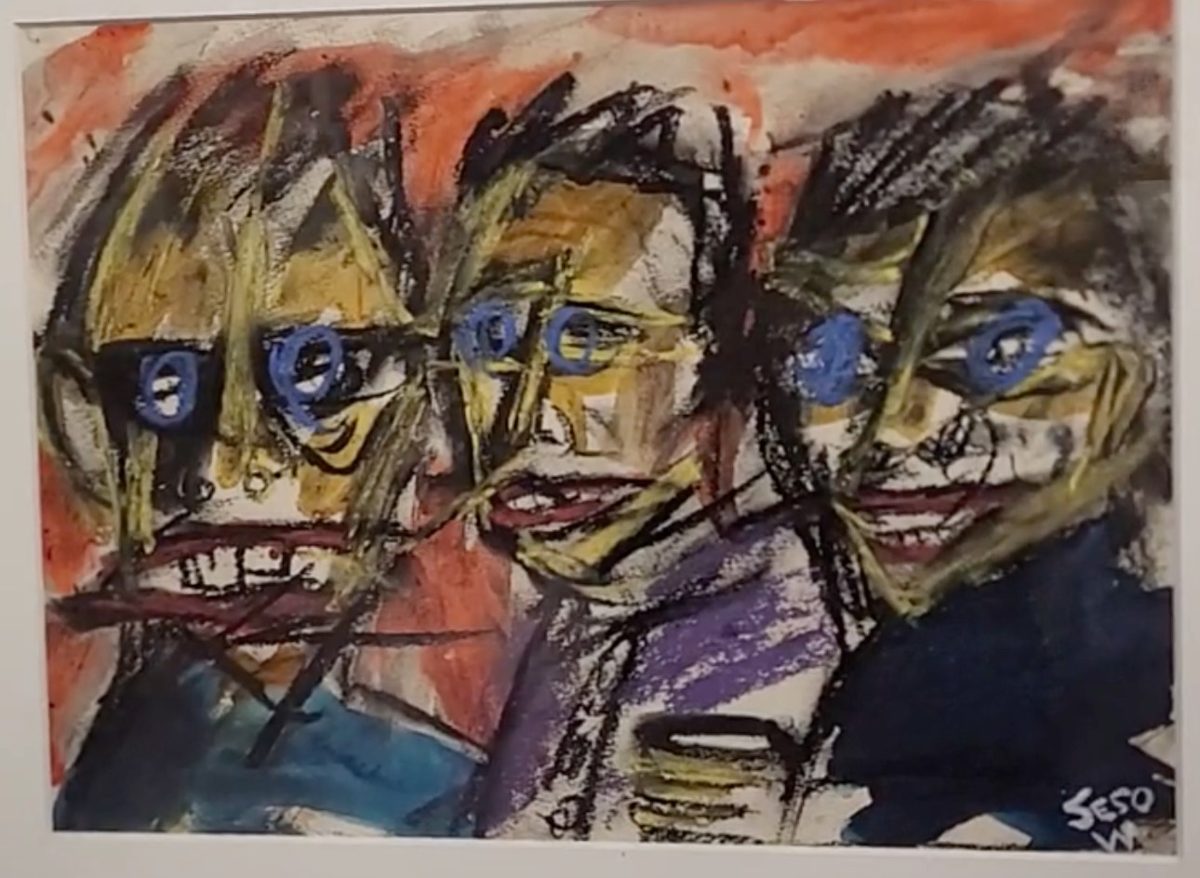
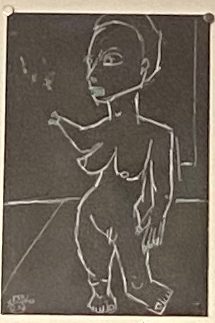
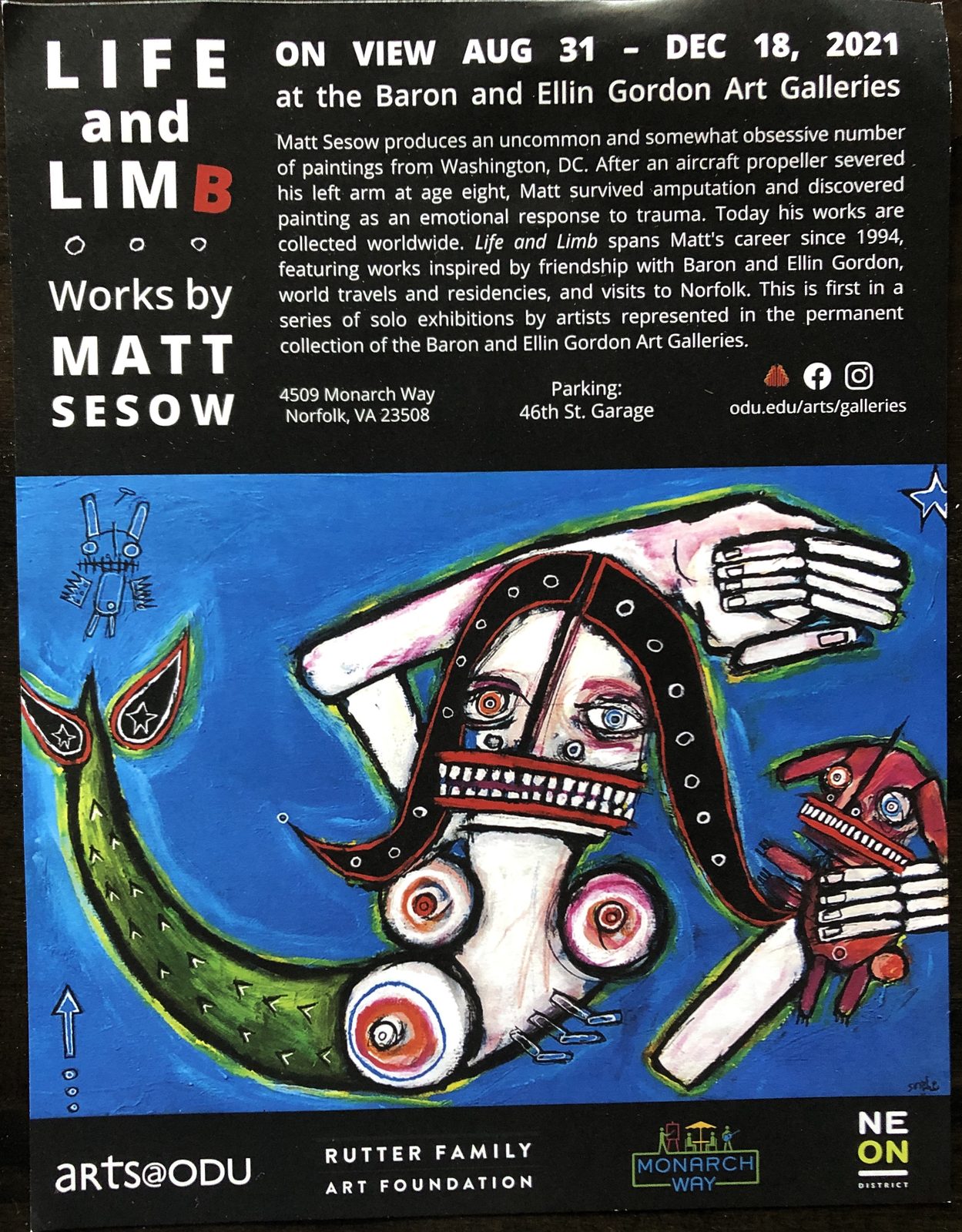
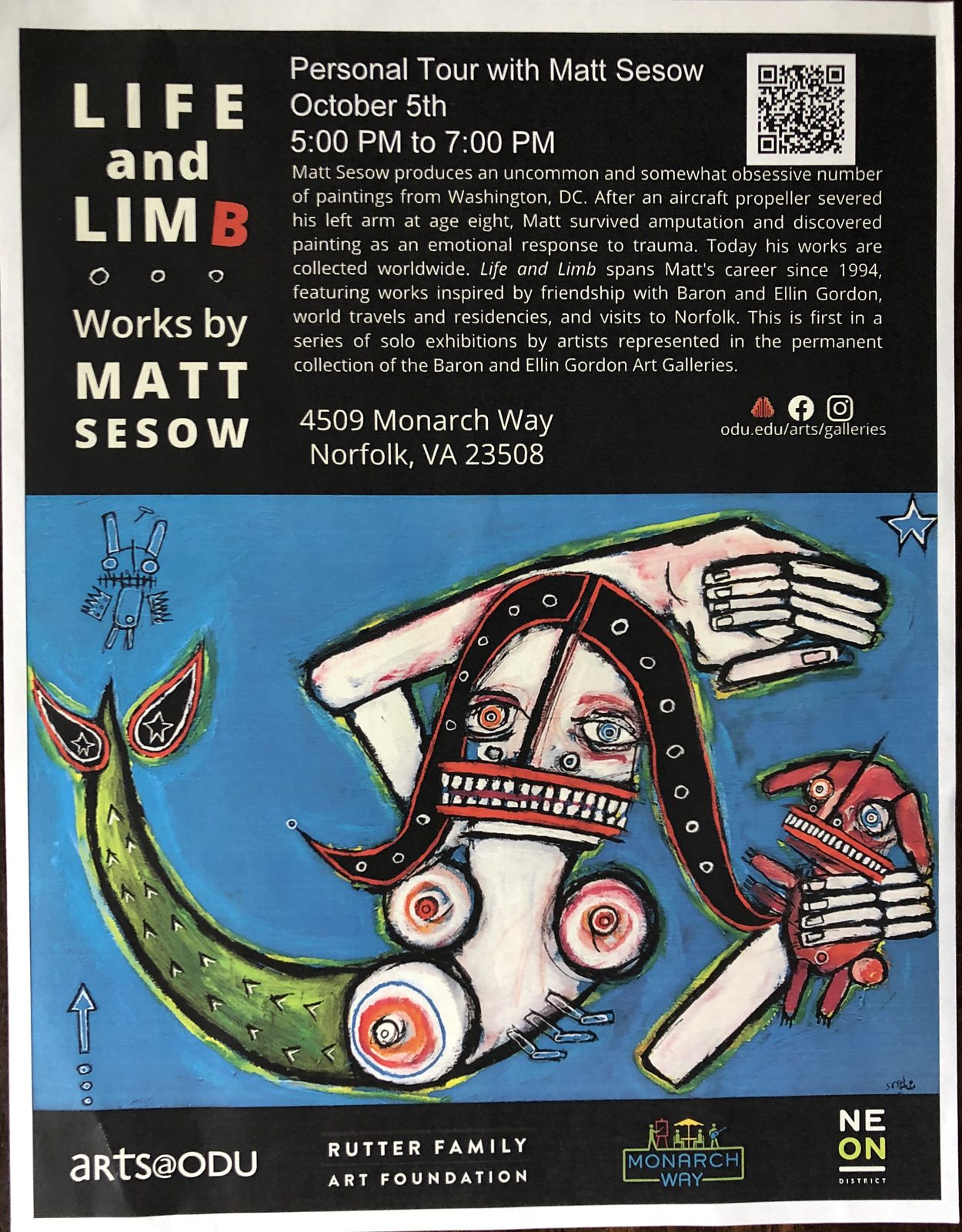
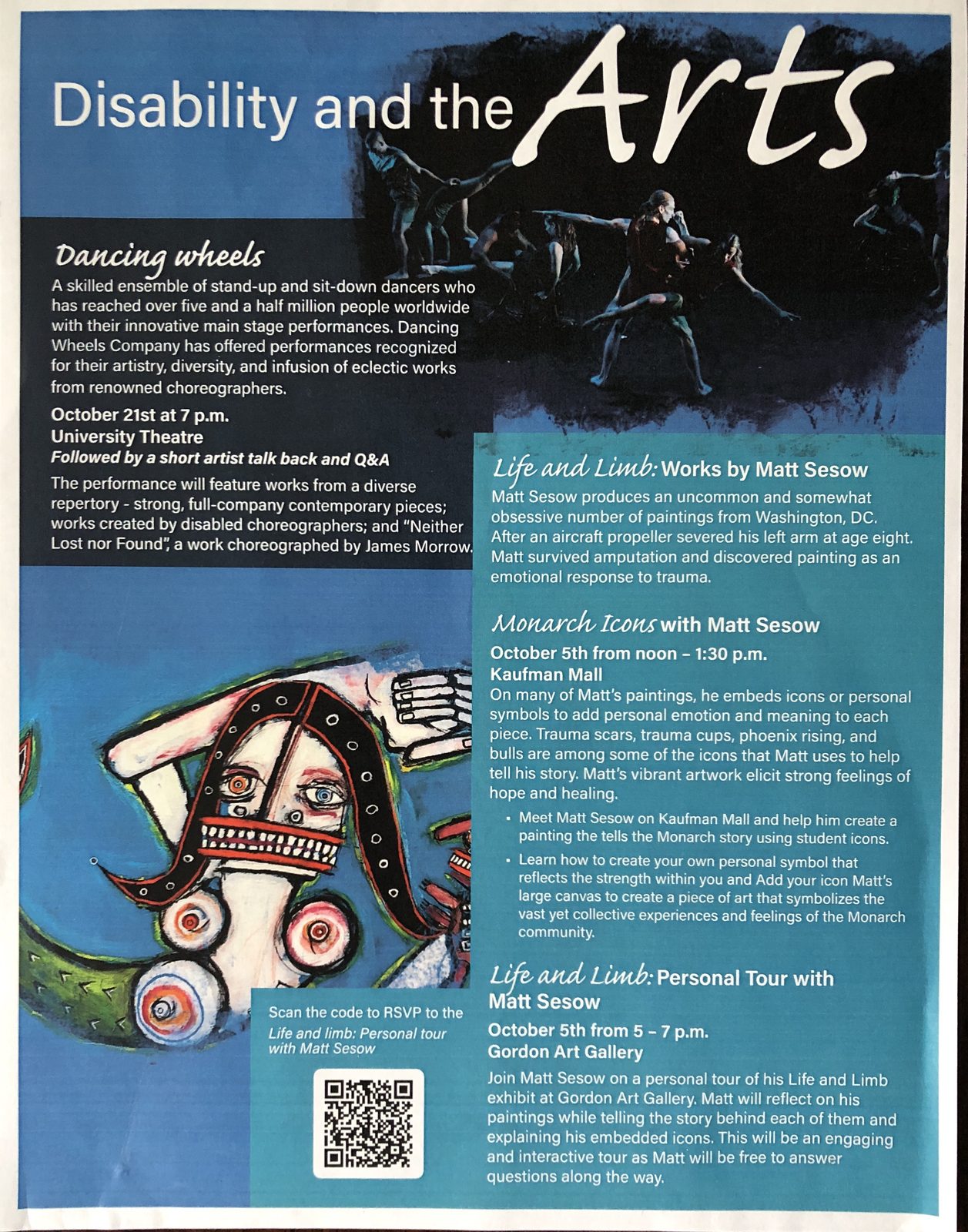
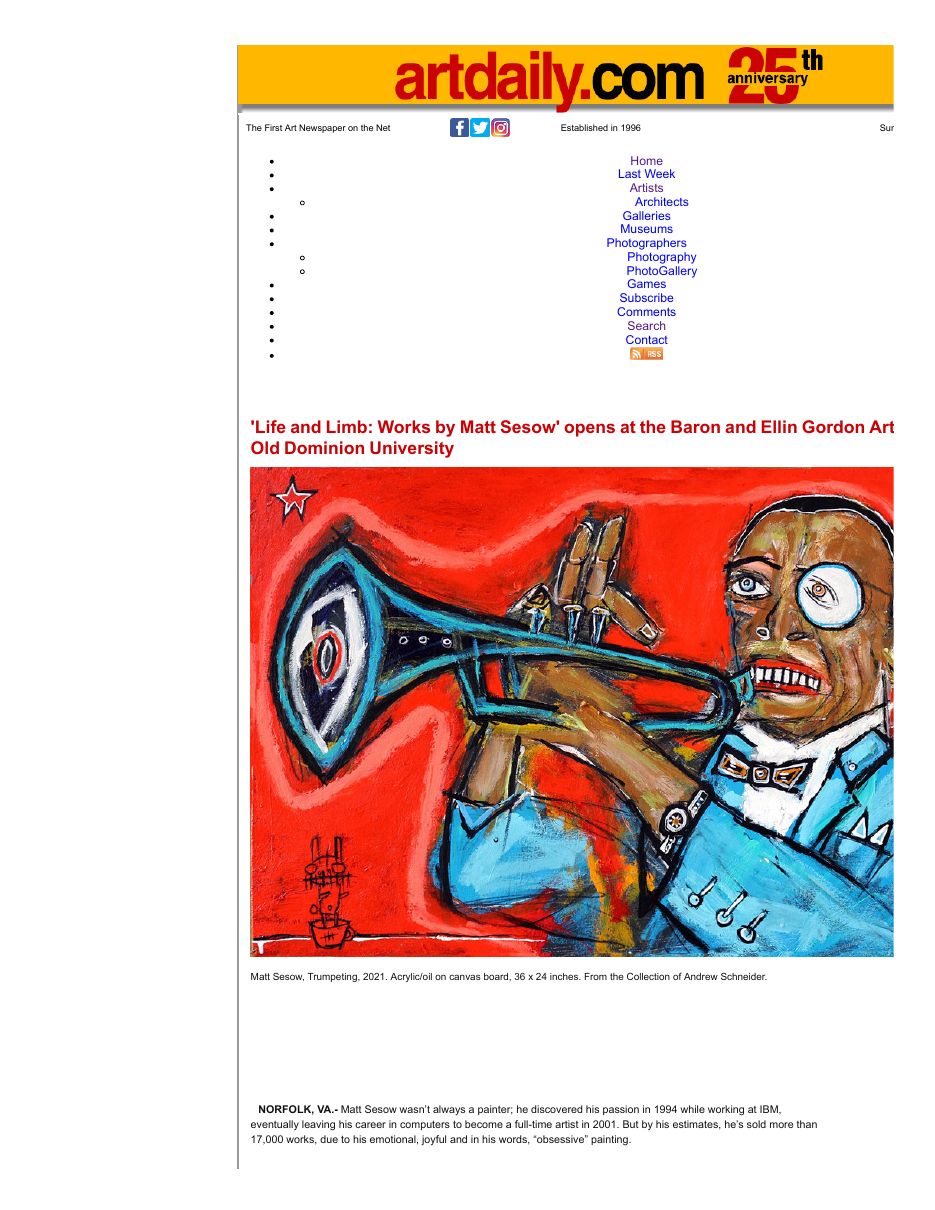
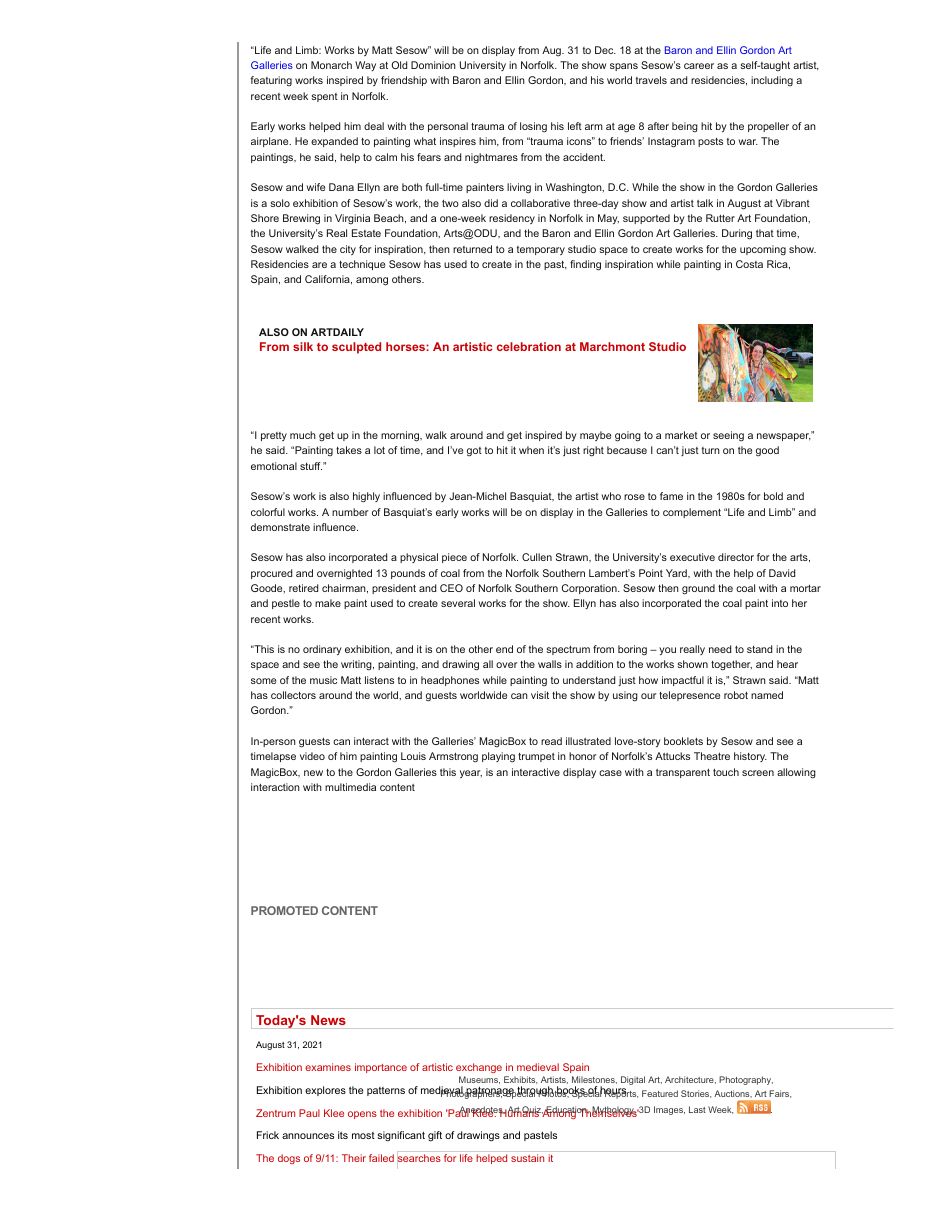
LIFE AND LIMB: WORKS BY MATT
SESOW
By: Brittany Haslem
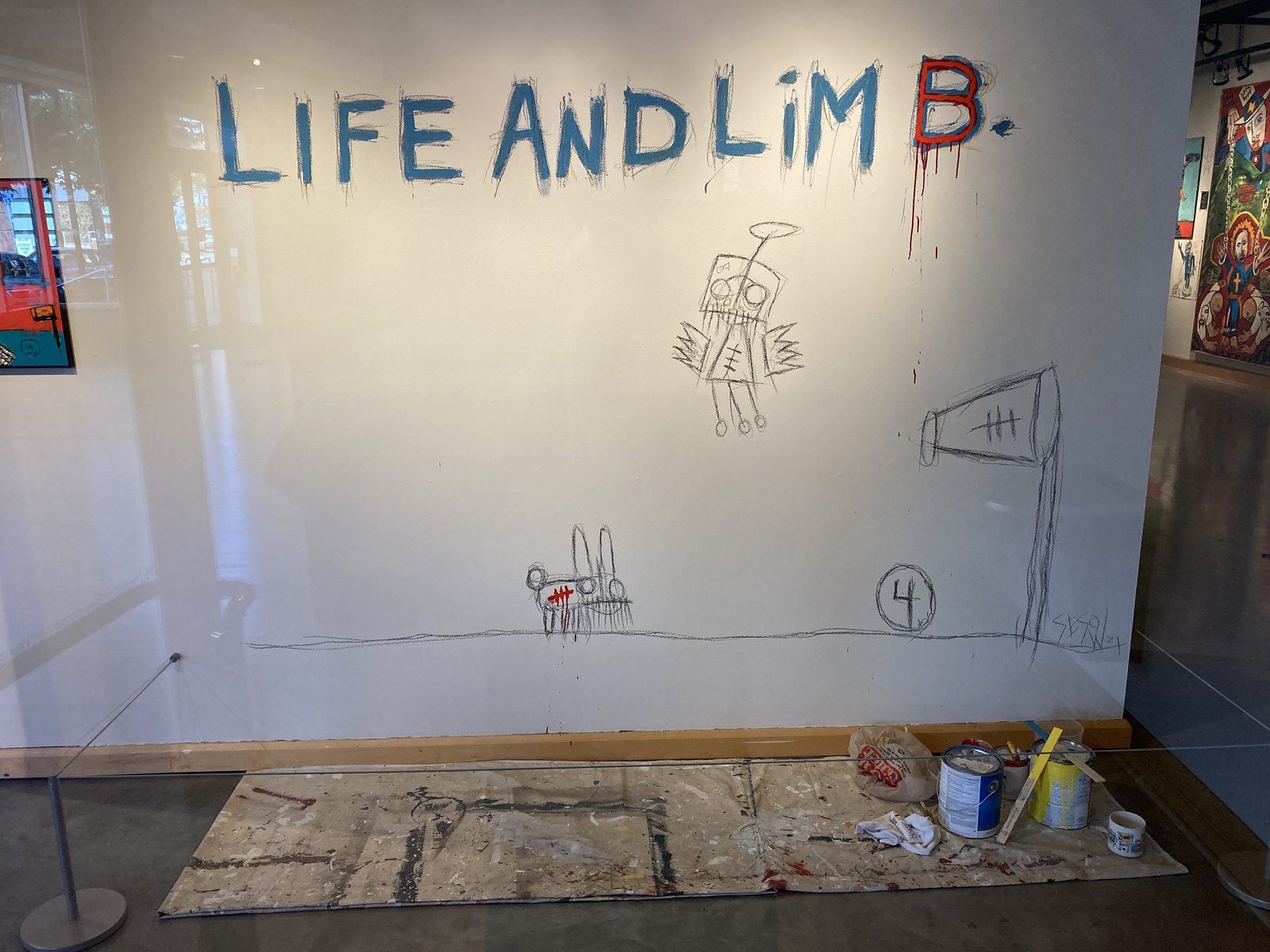
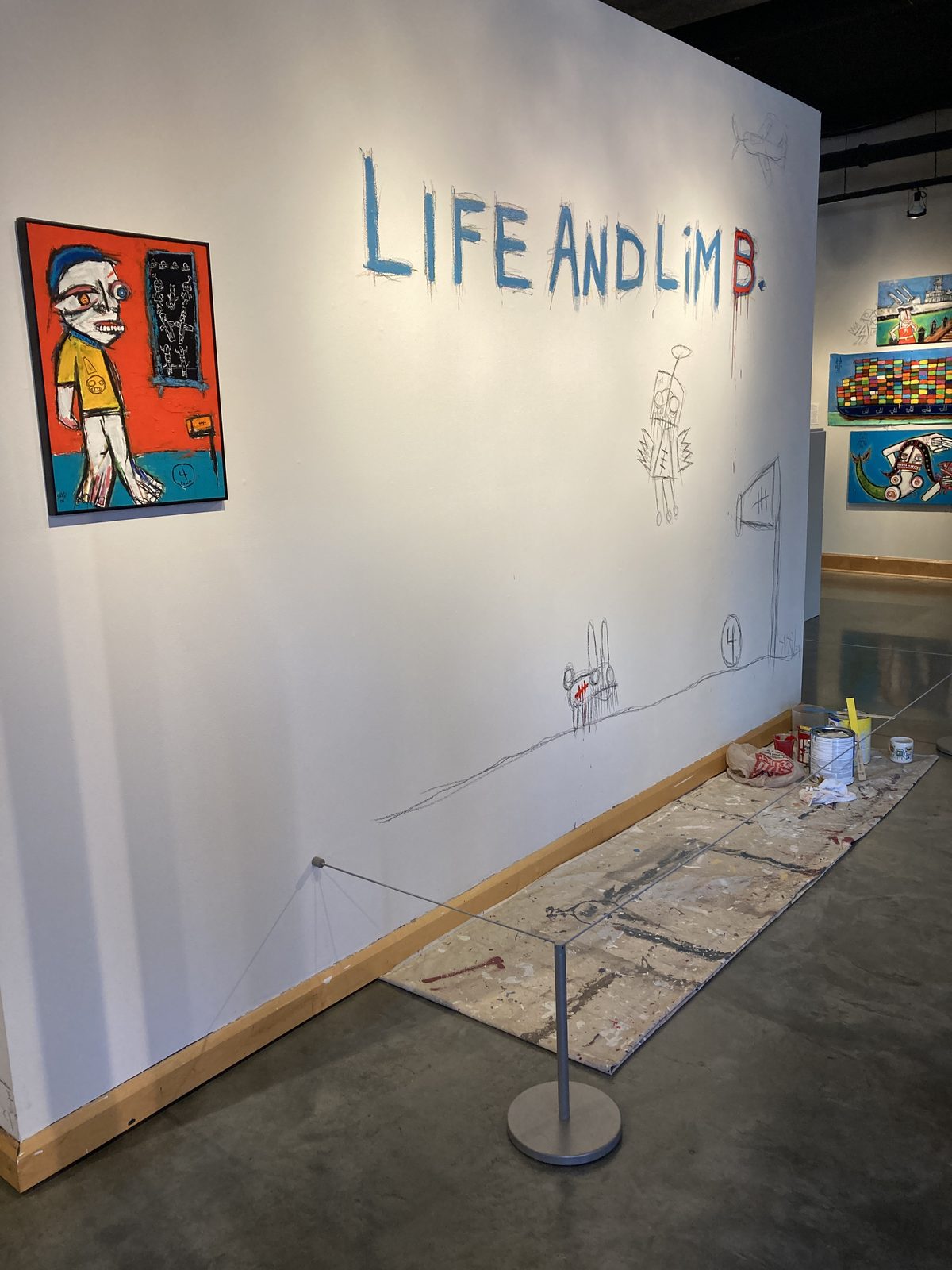
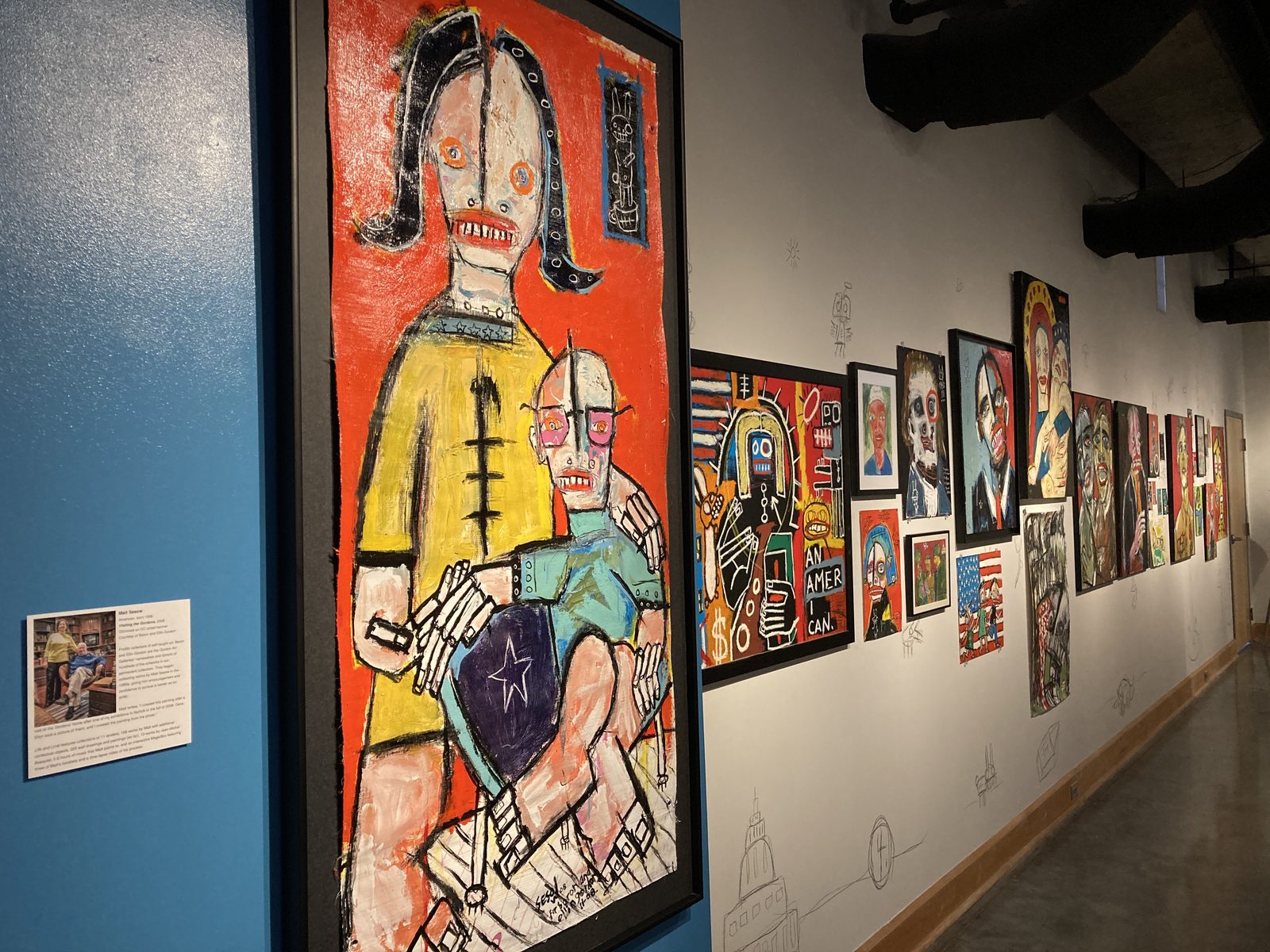
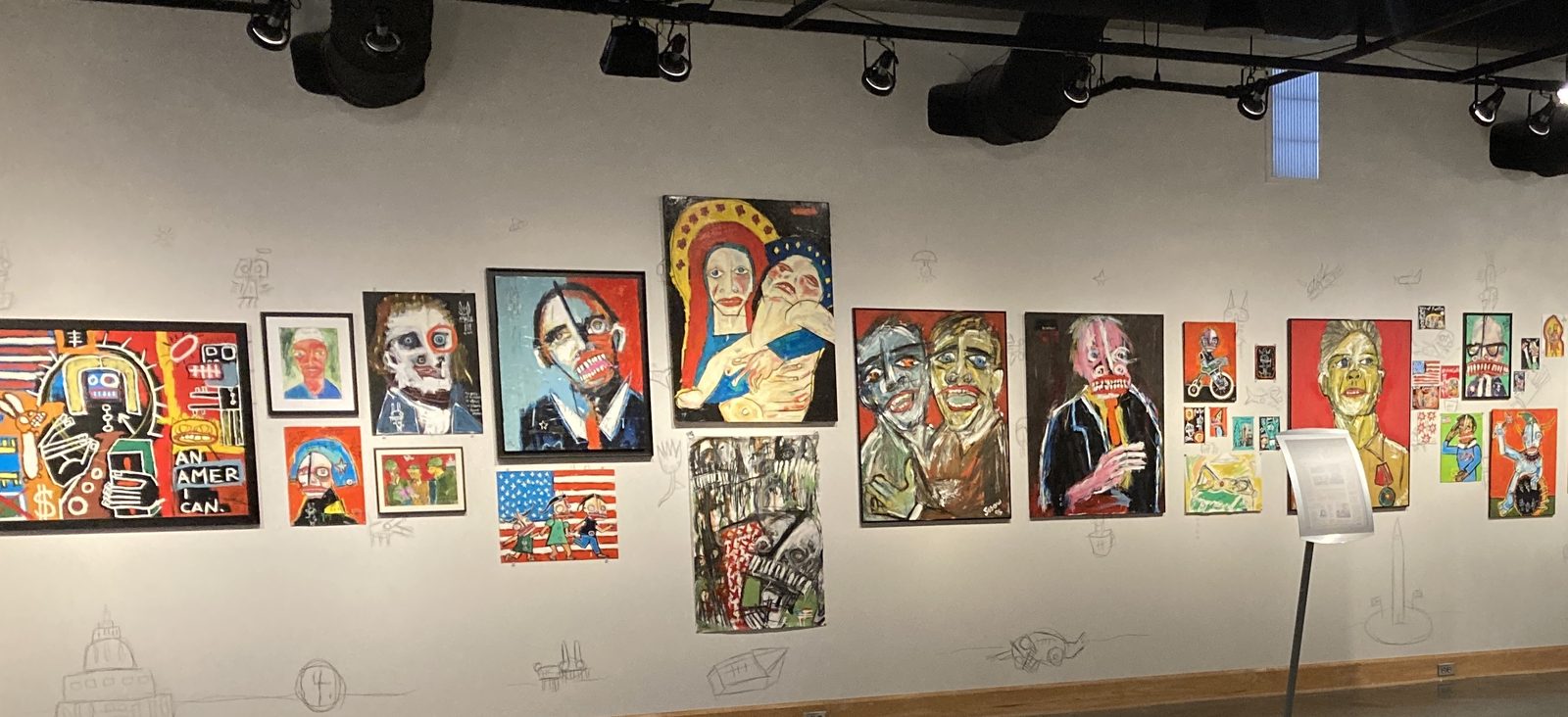
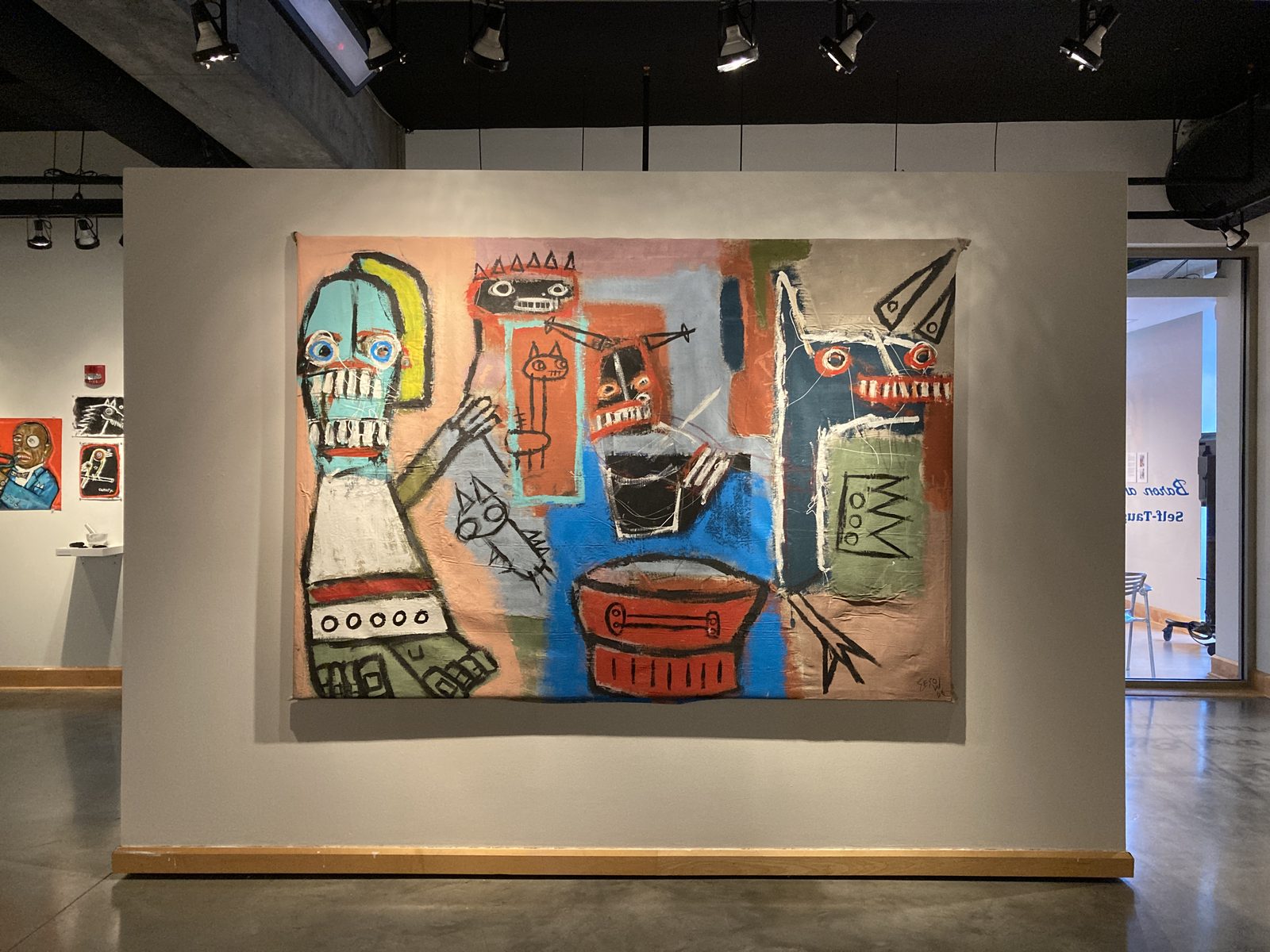
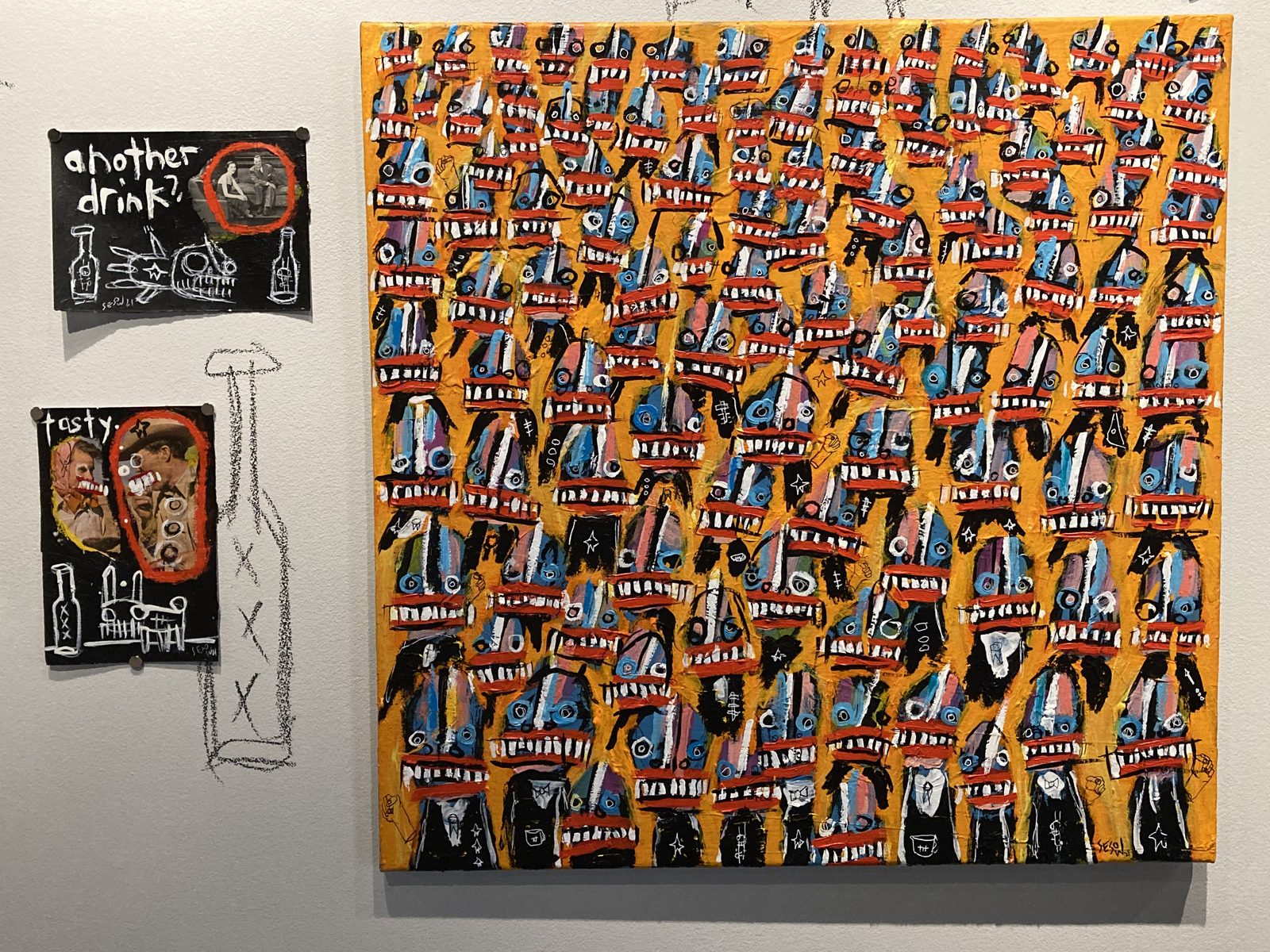
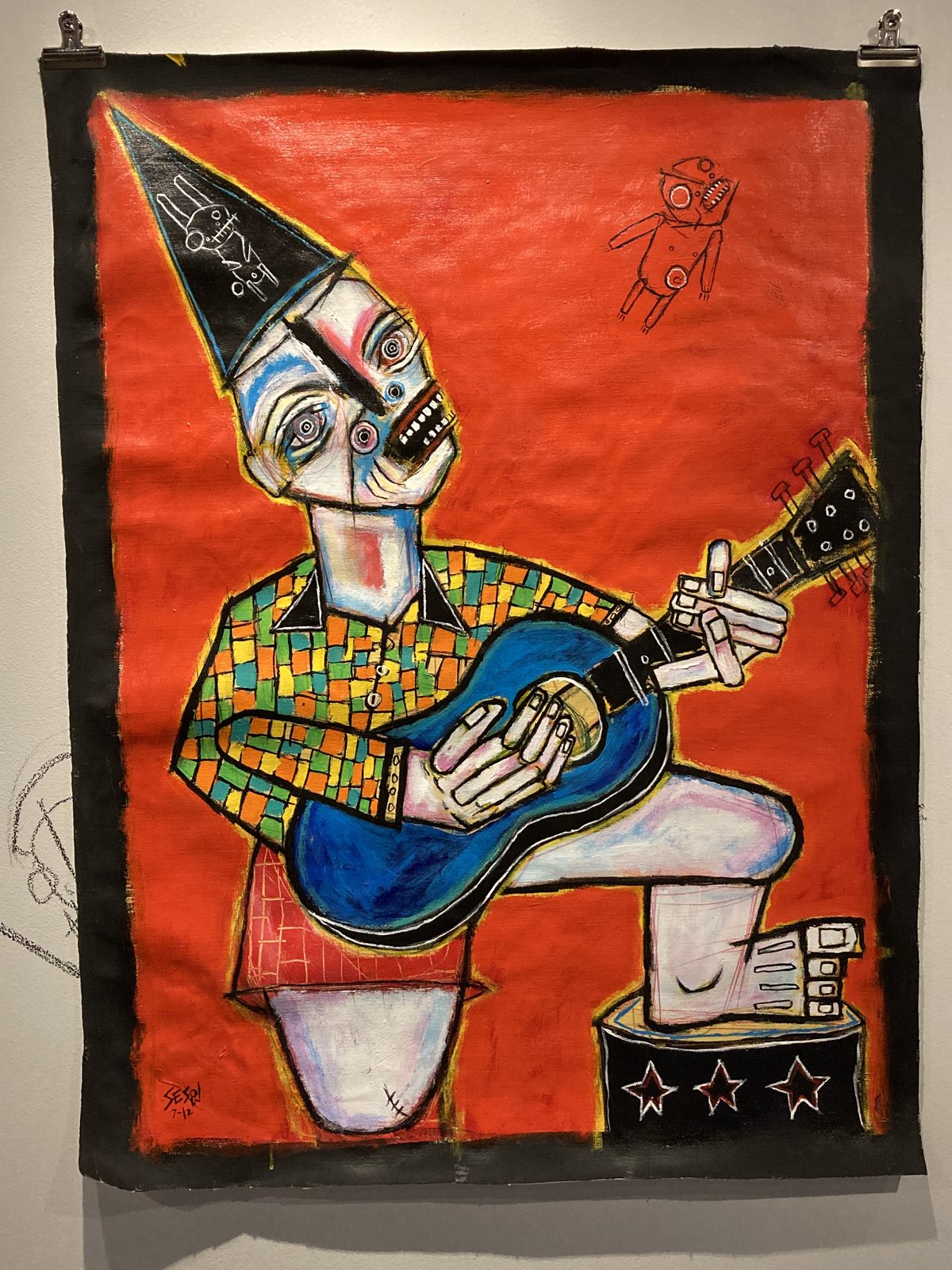
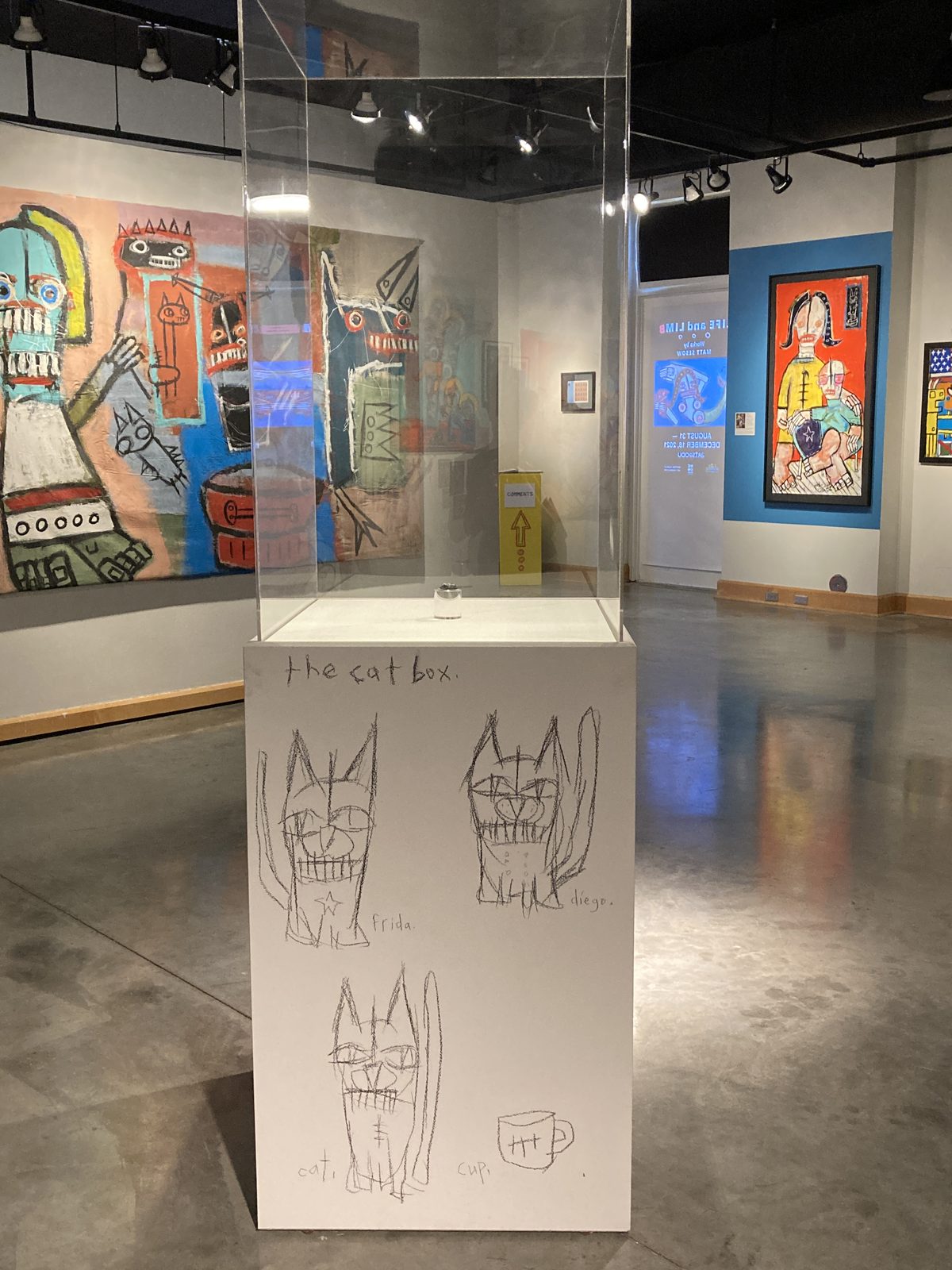
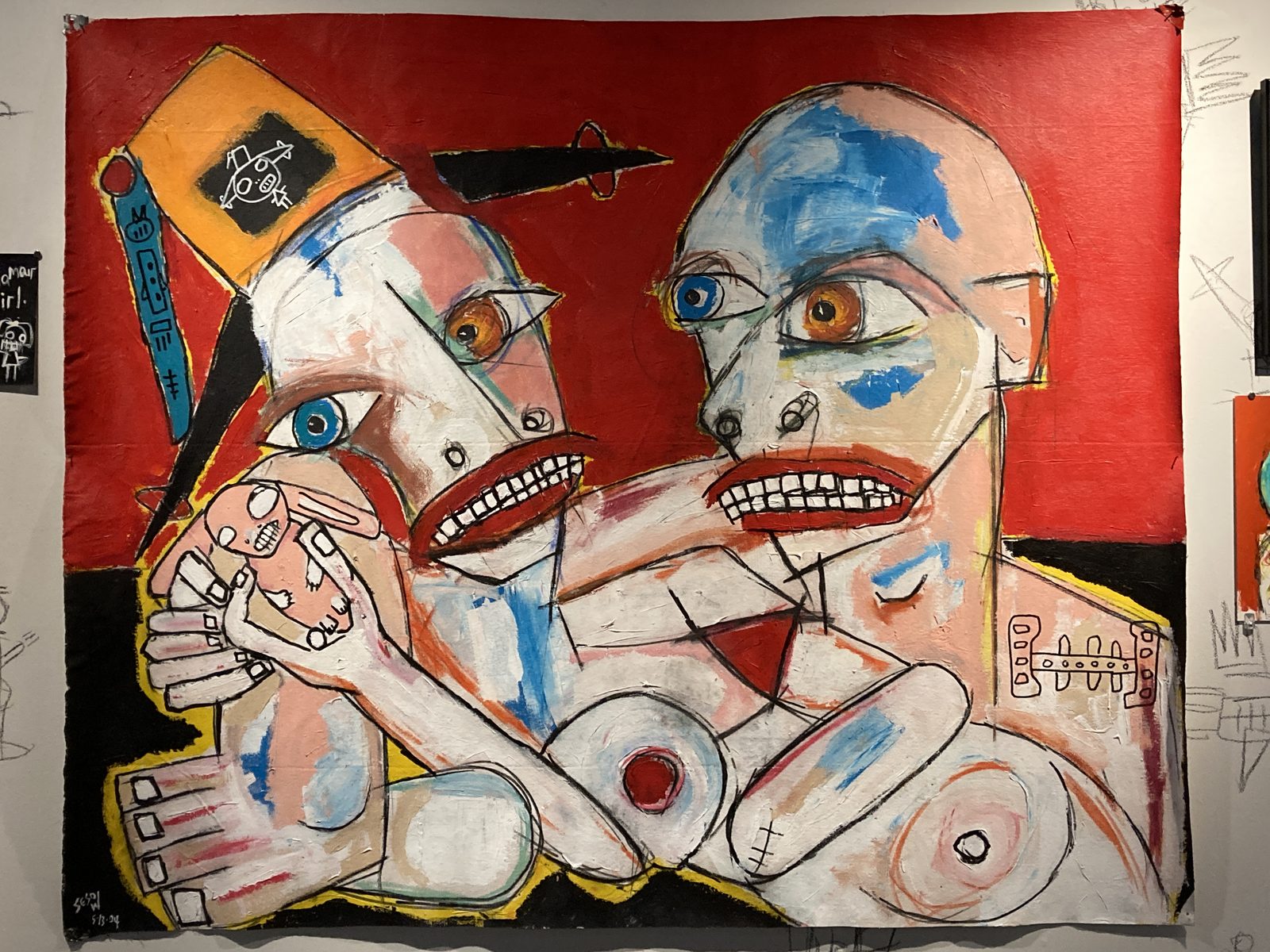
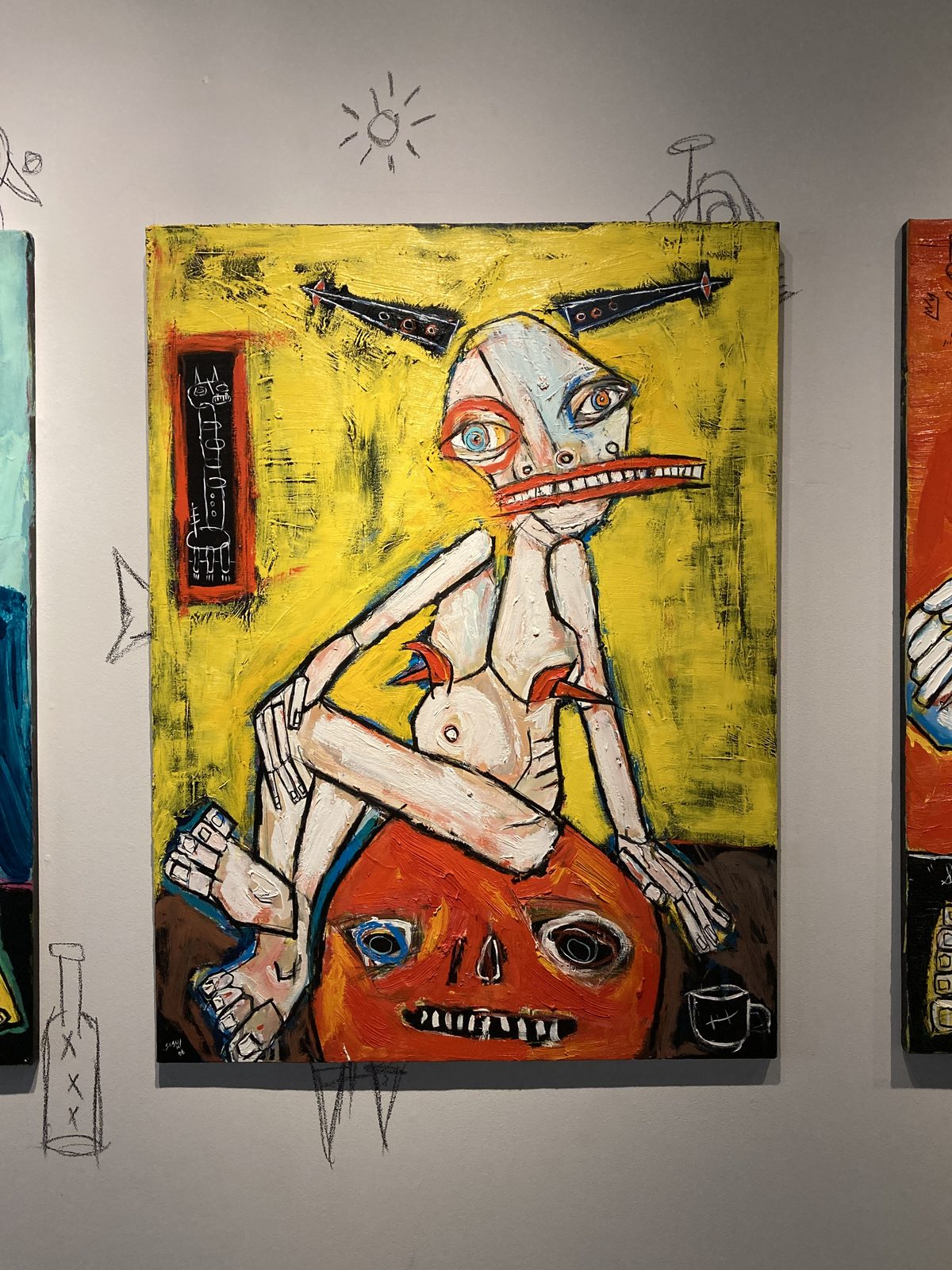
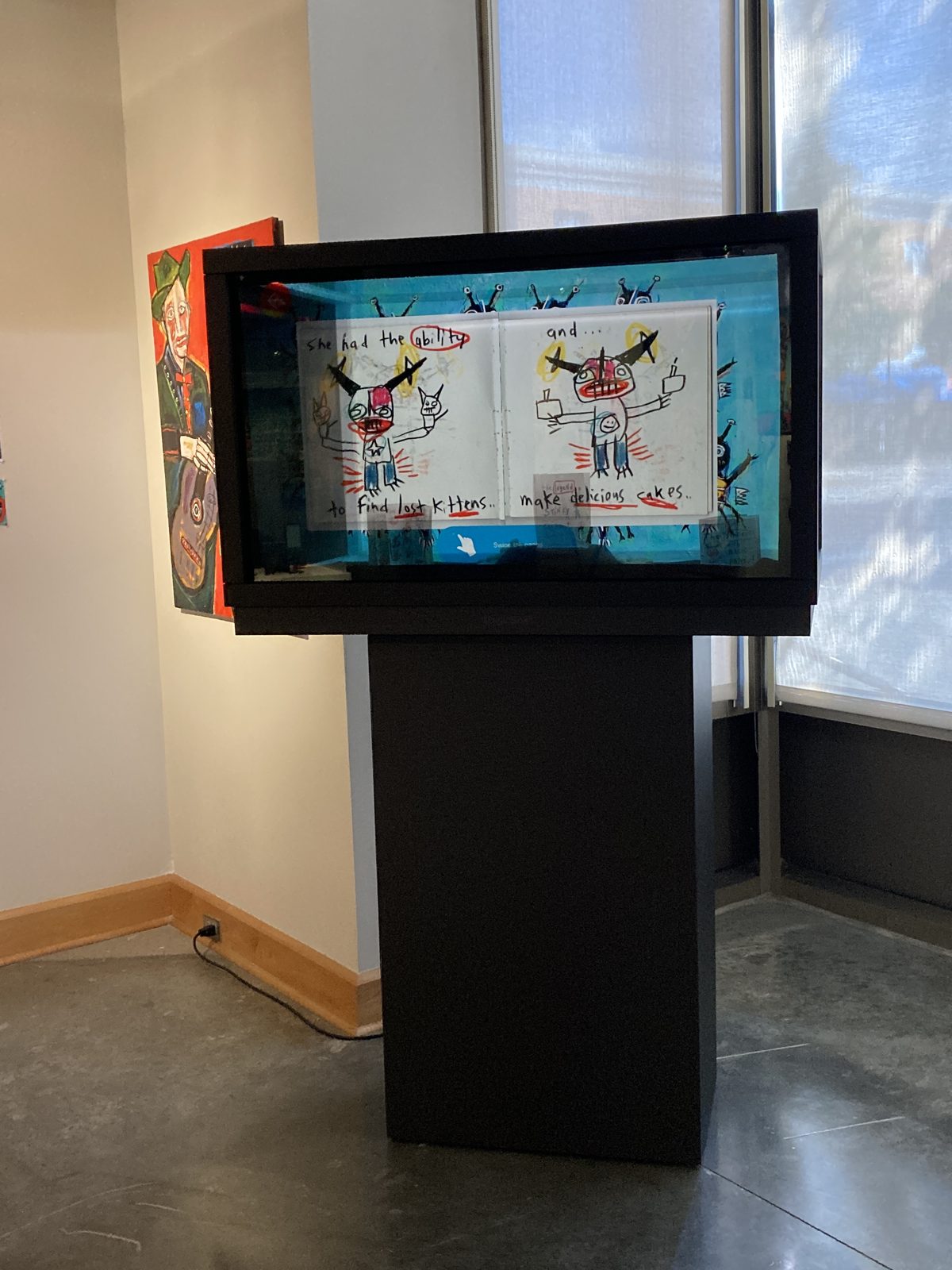
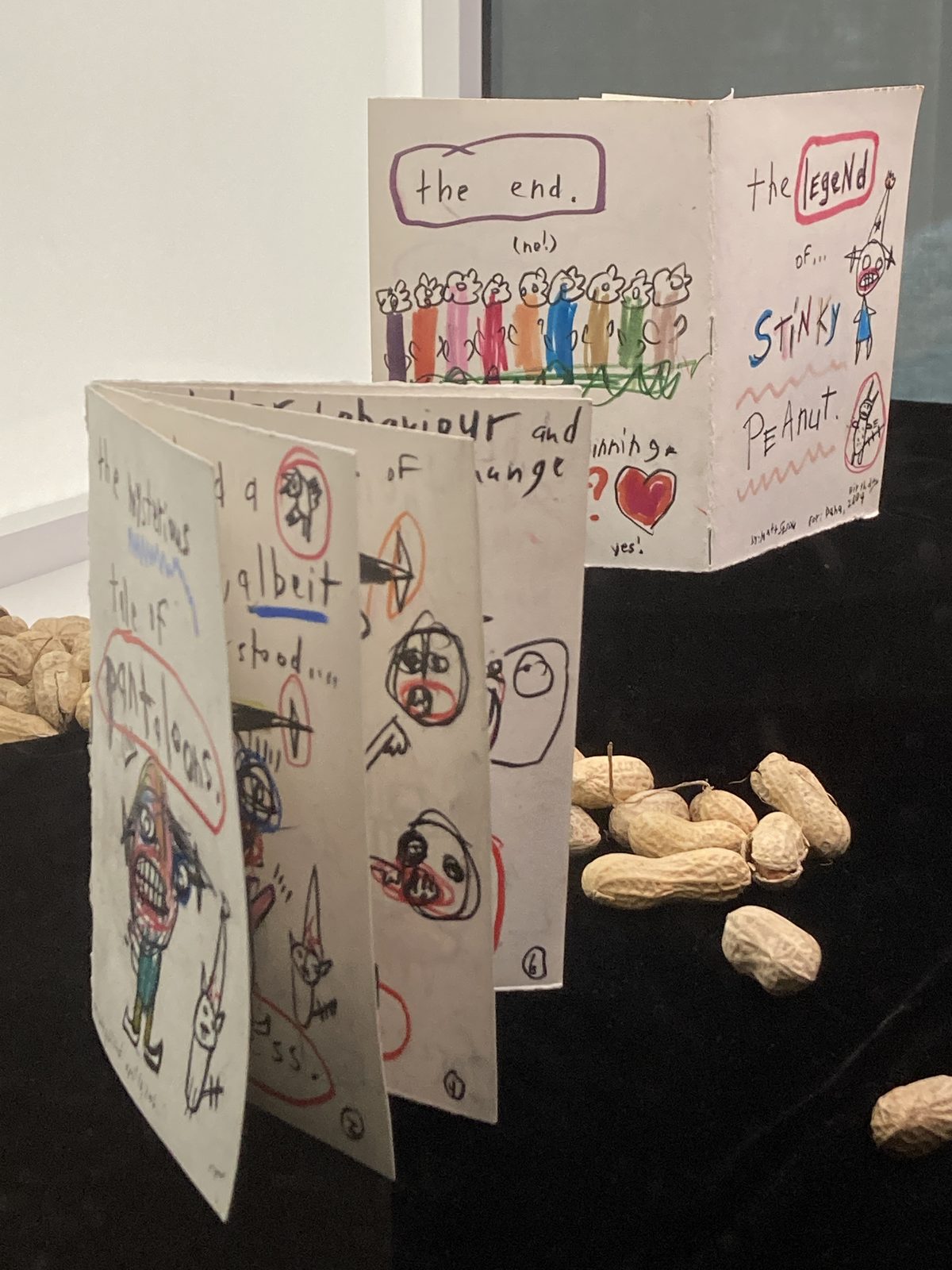
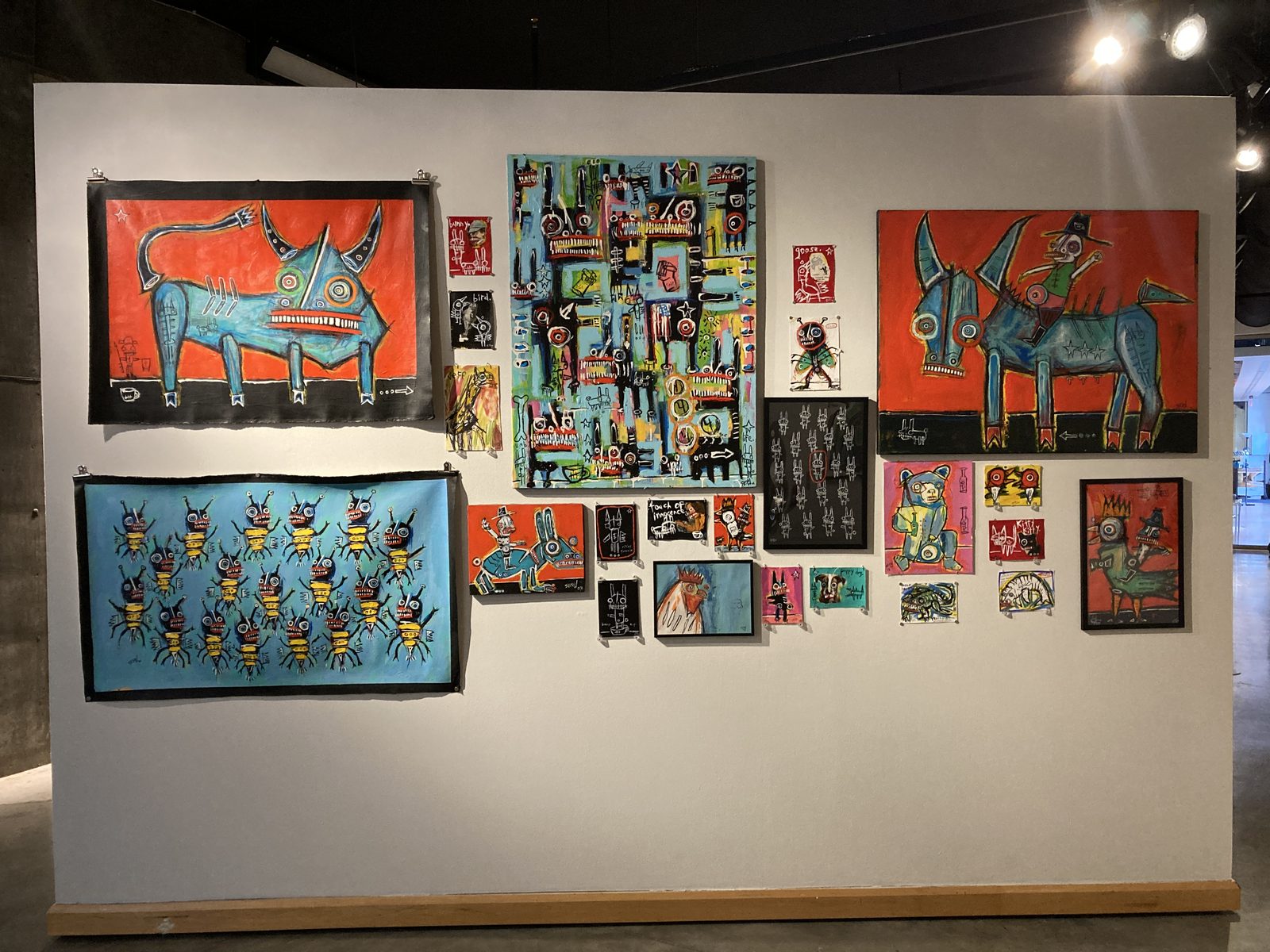
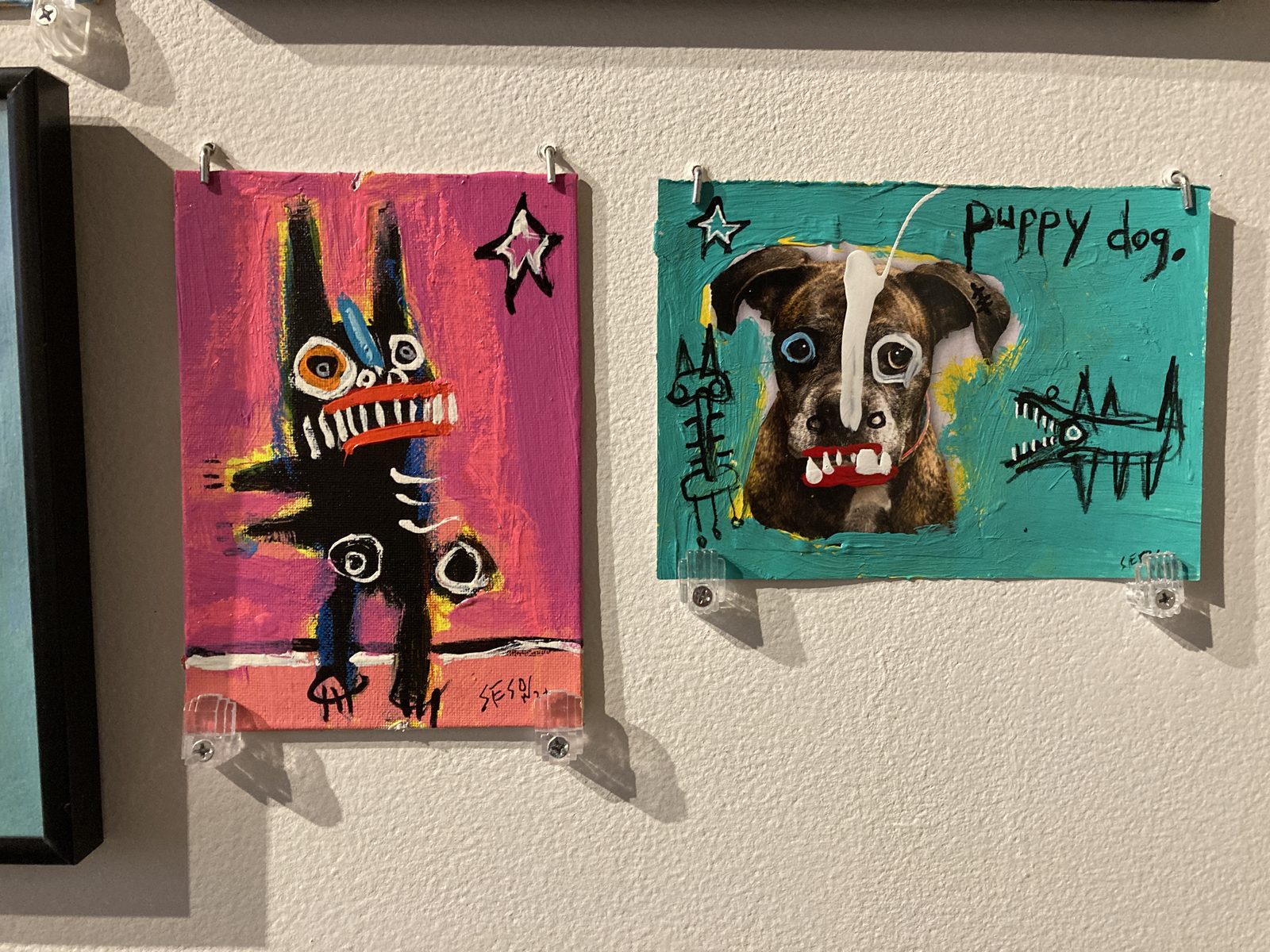
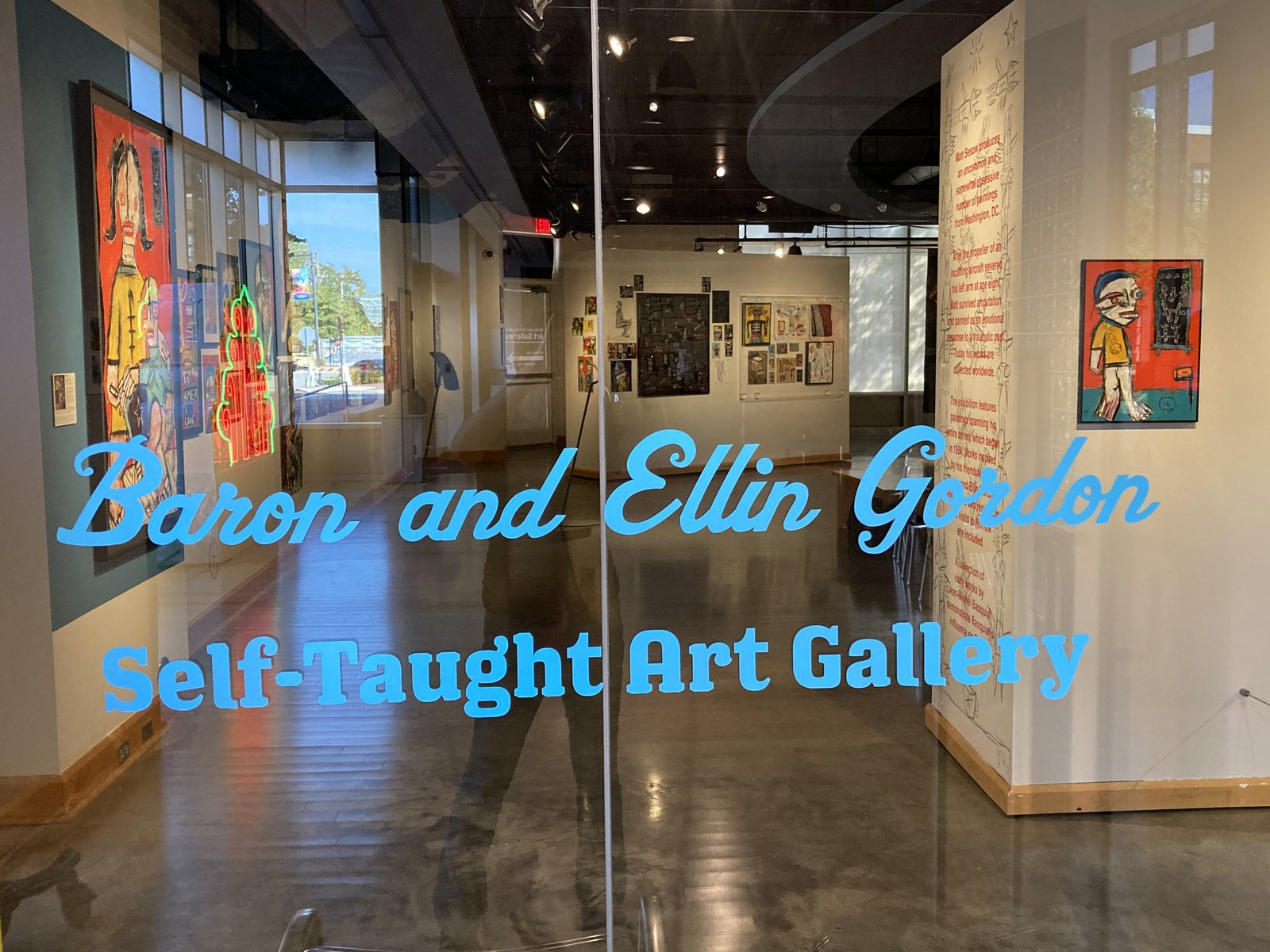
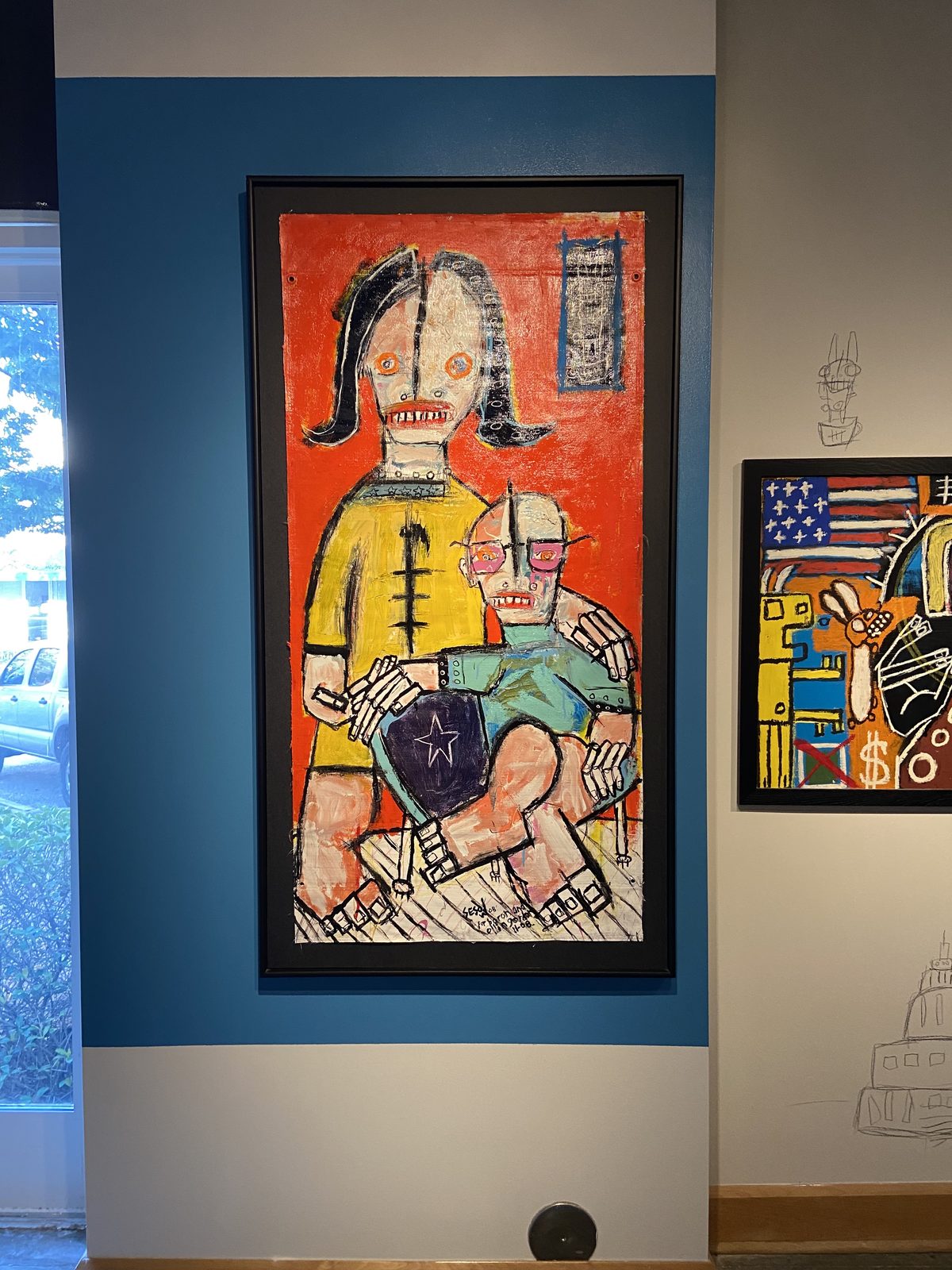
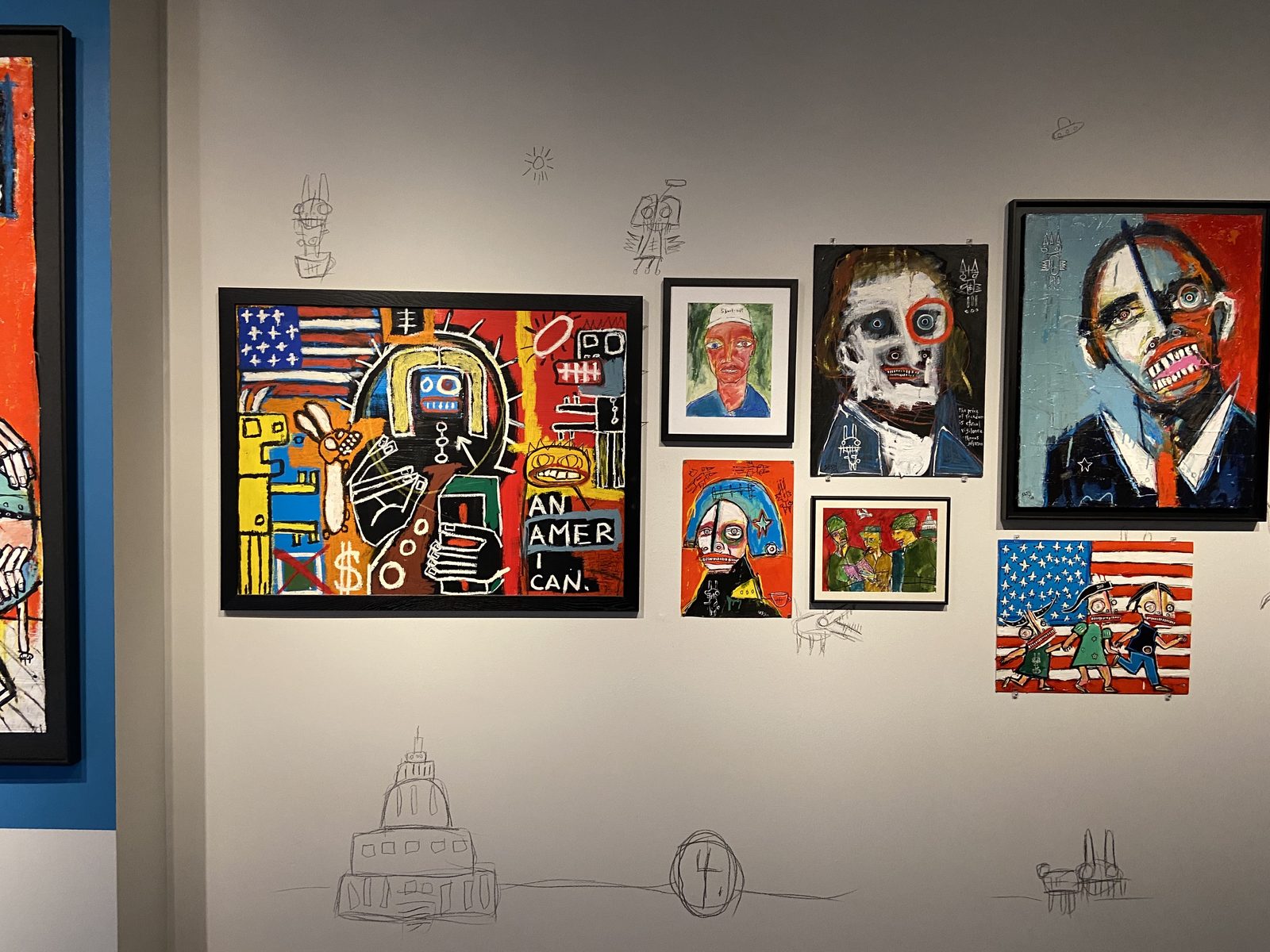
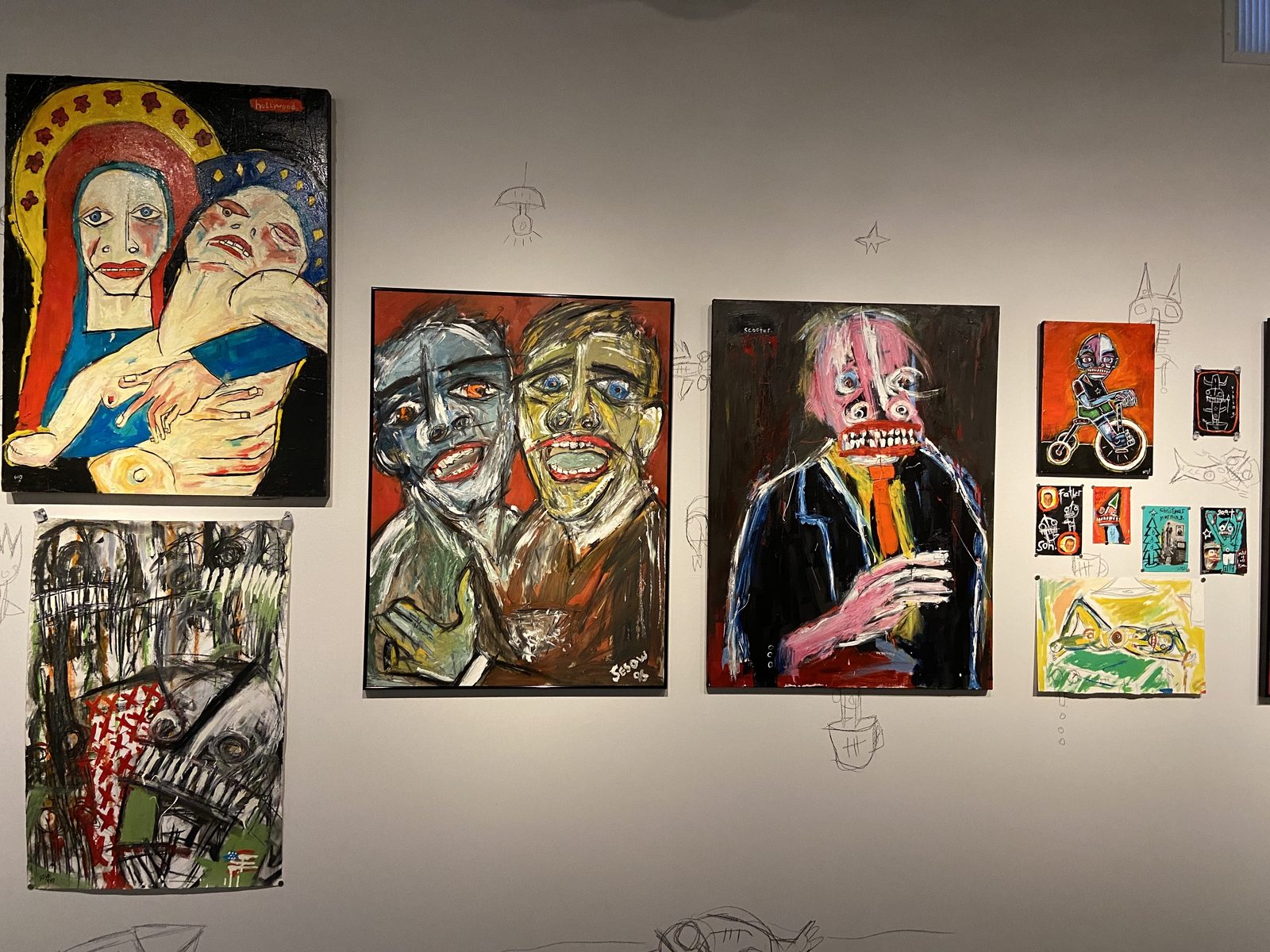
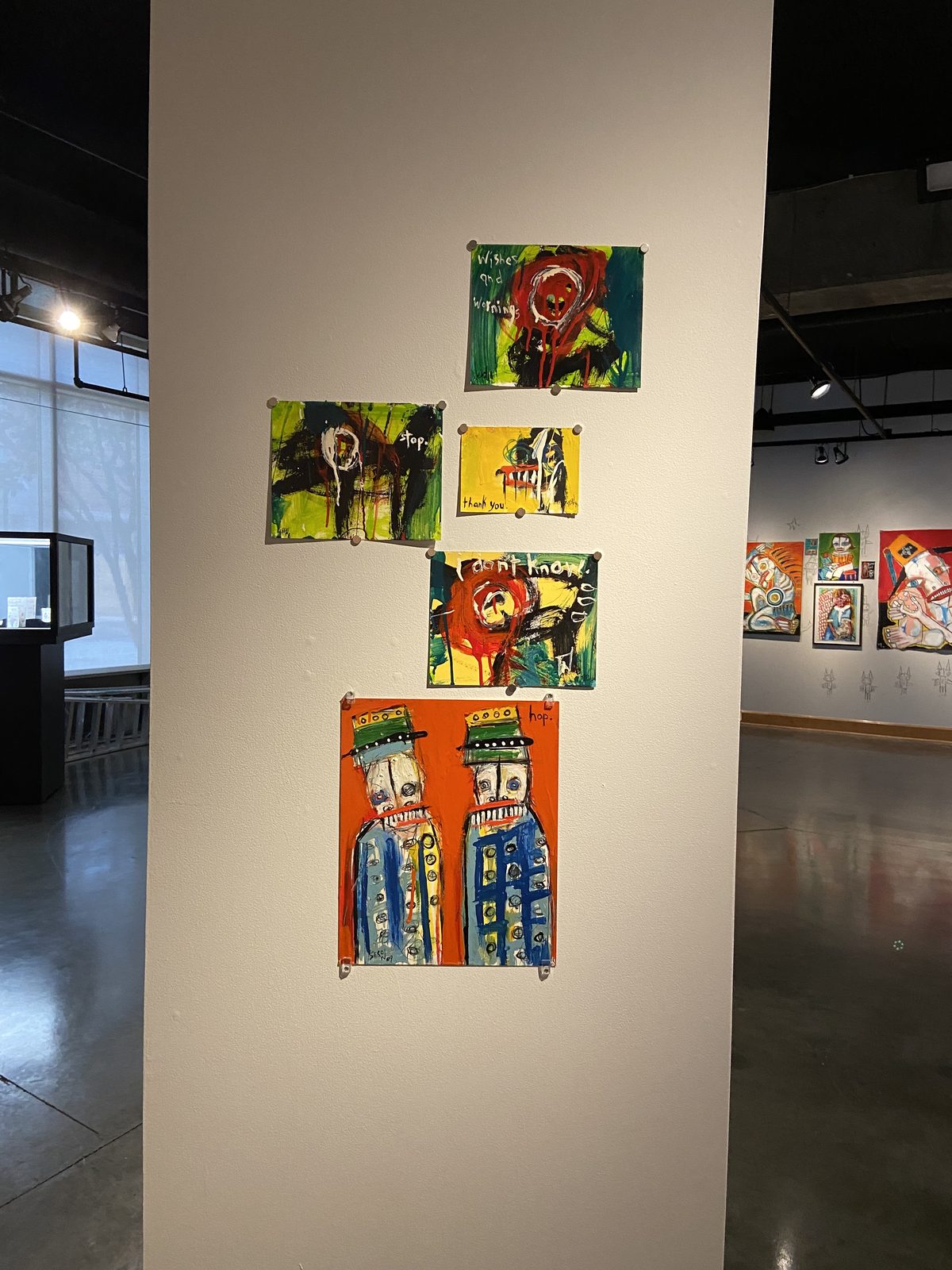
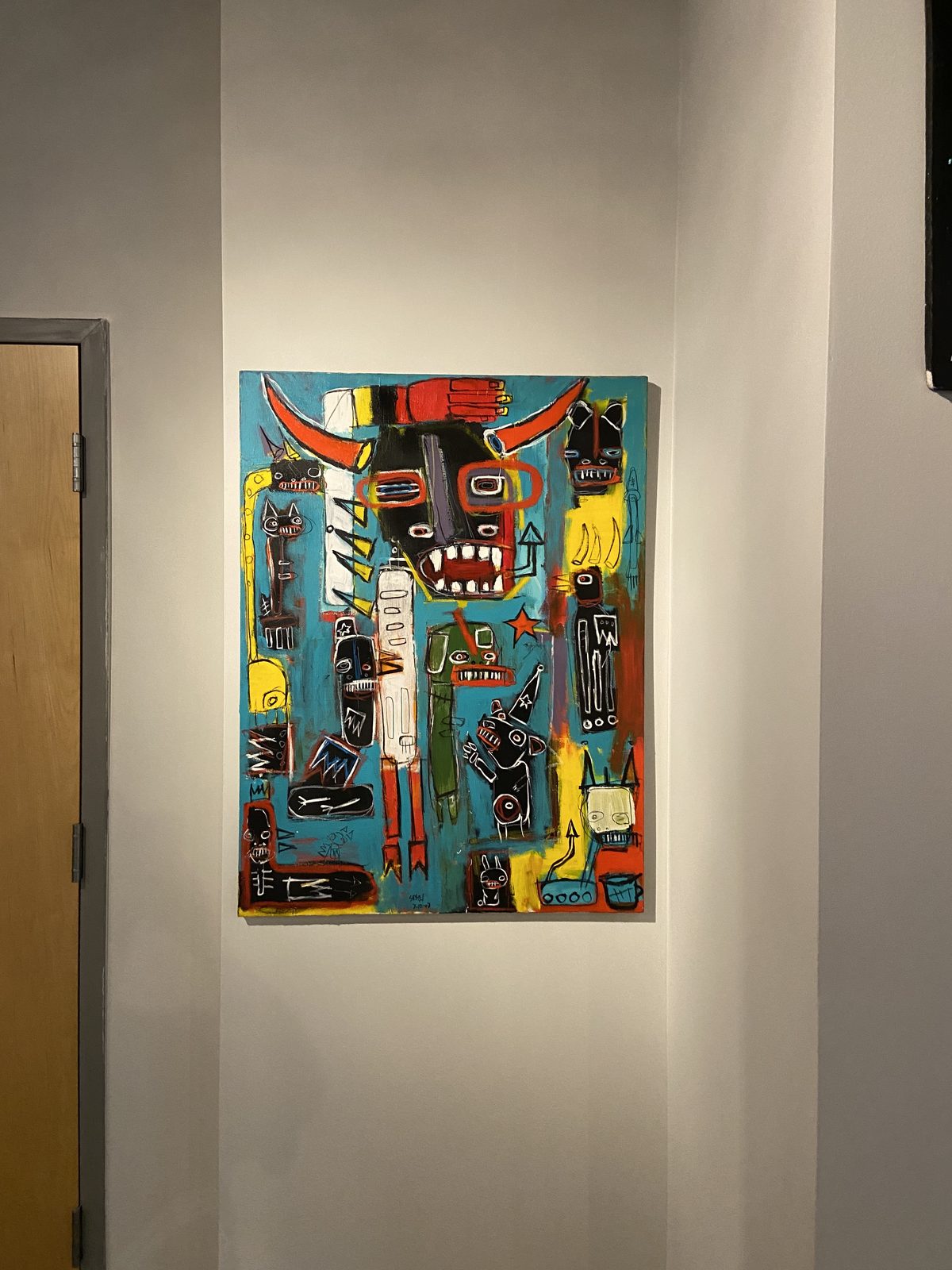
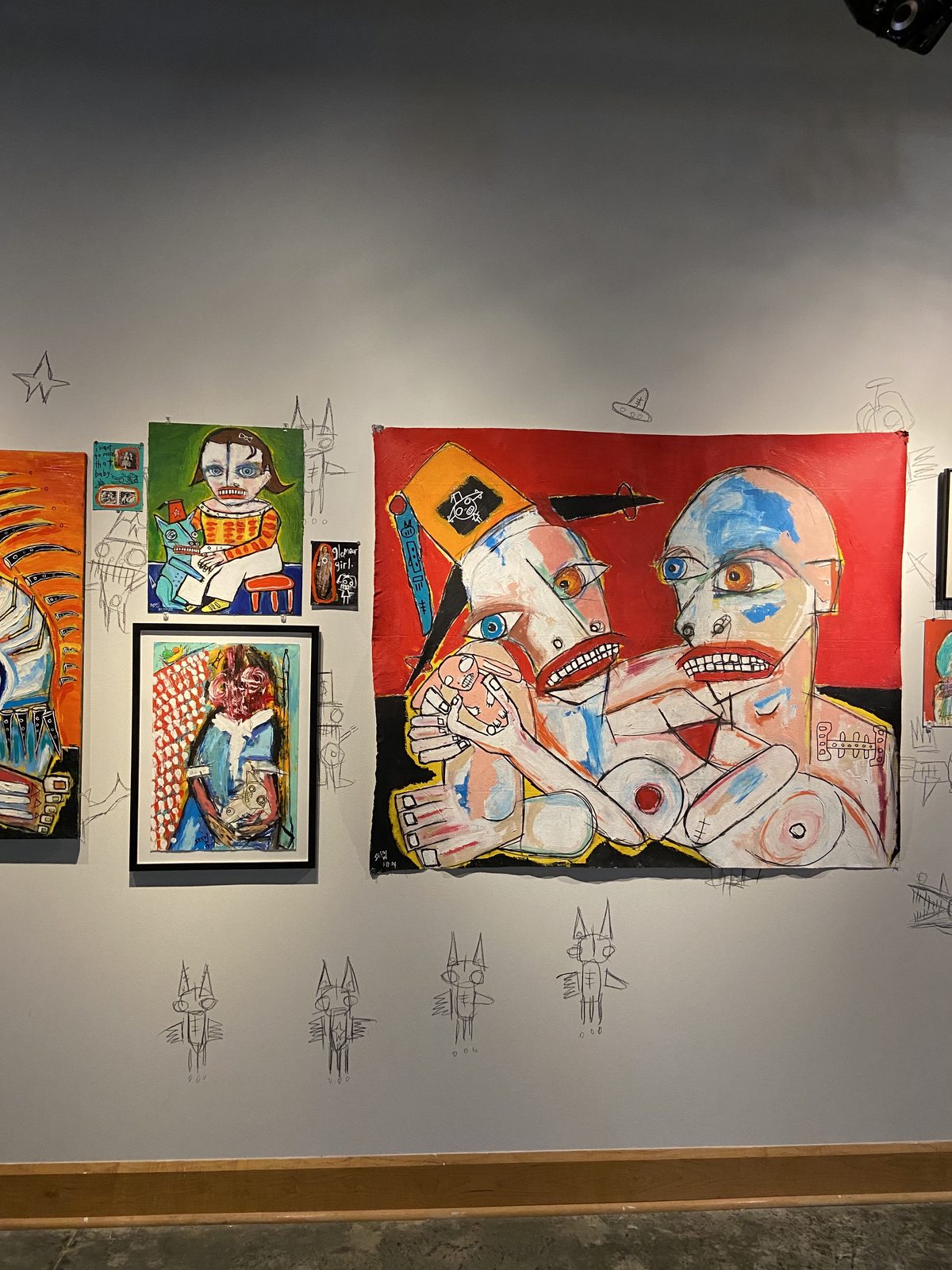
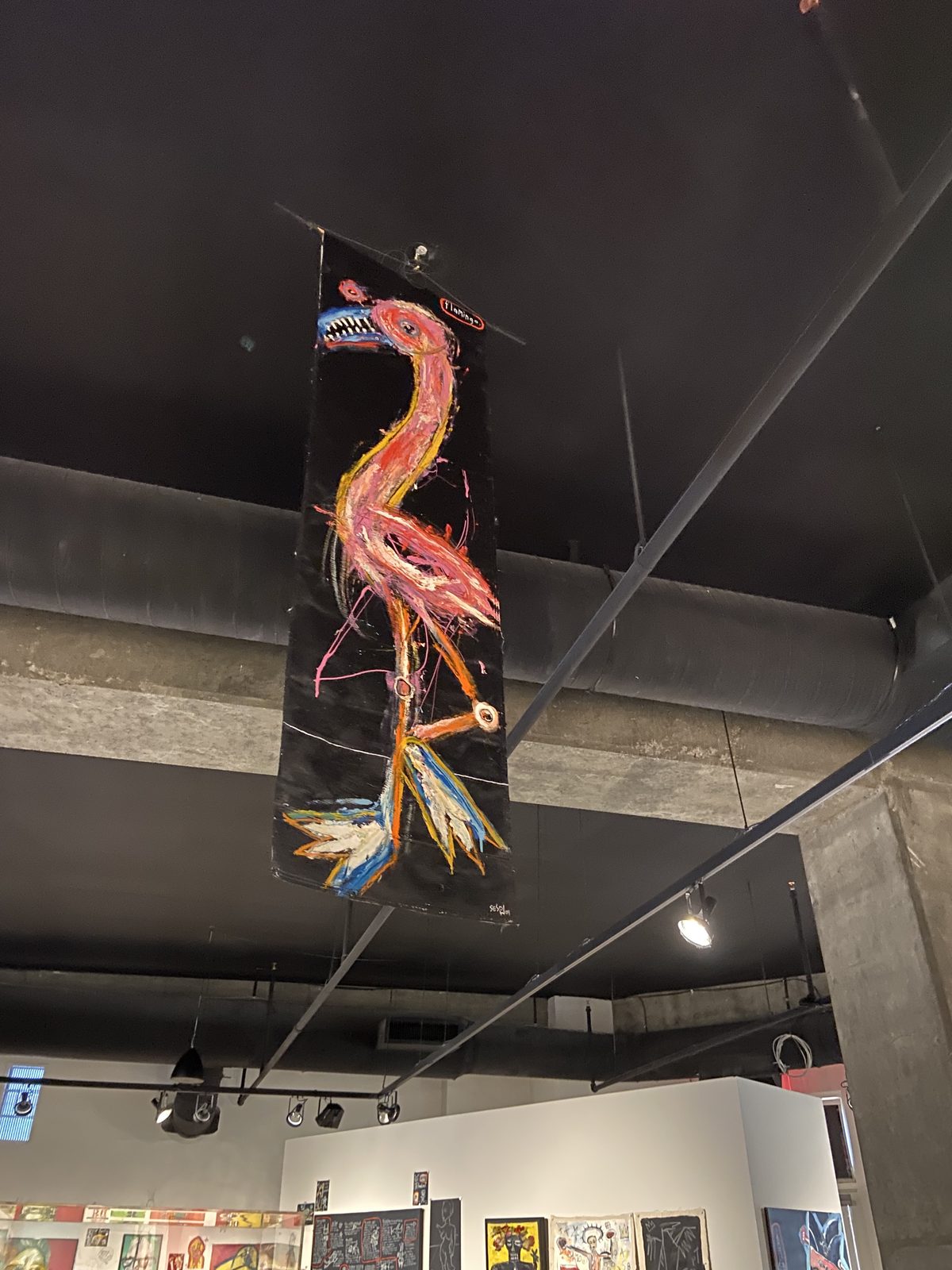
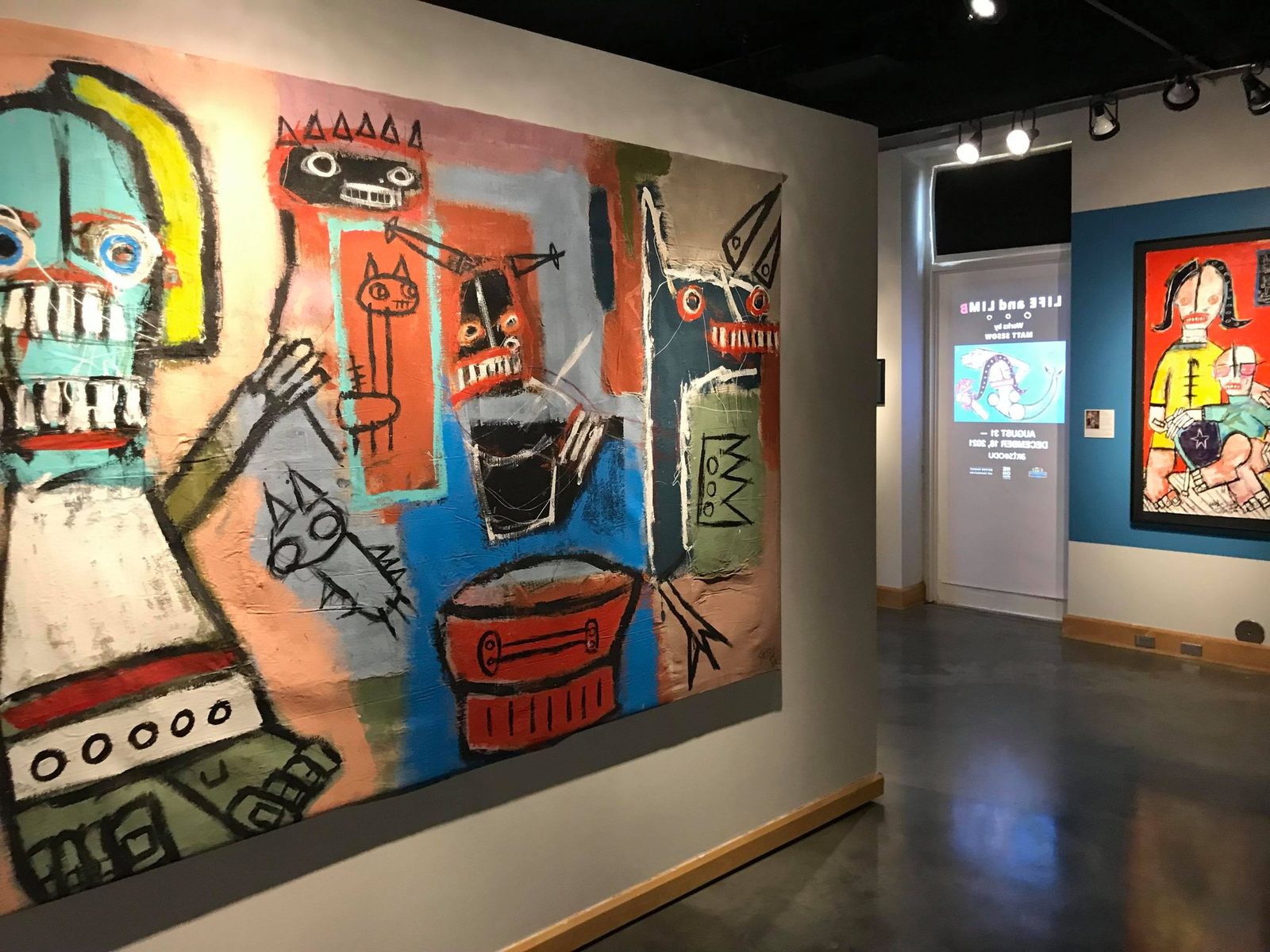
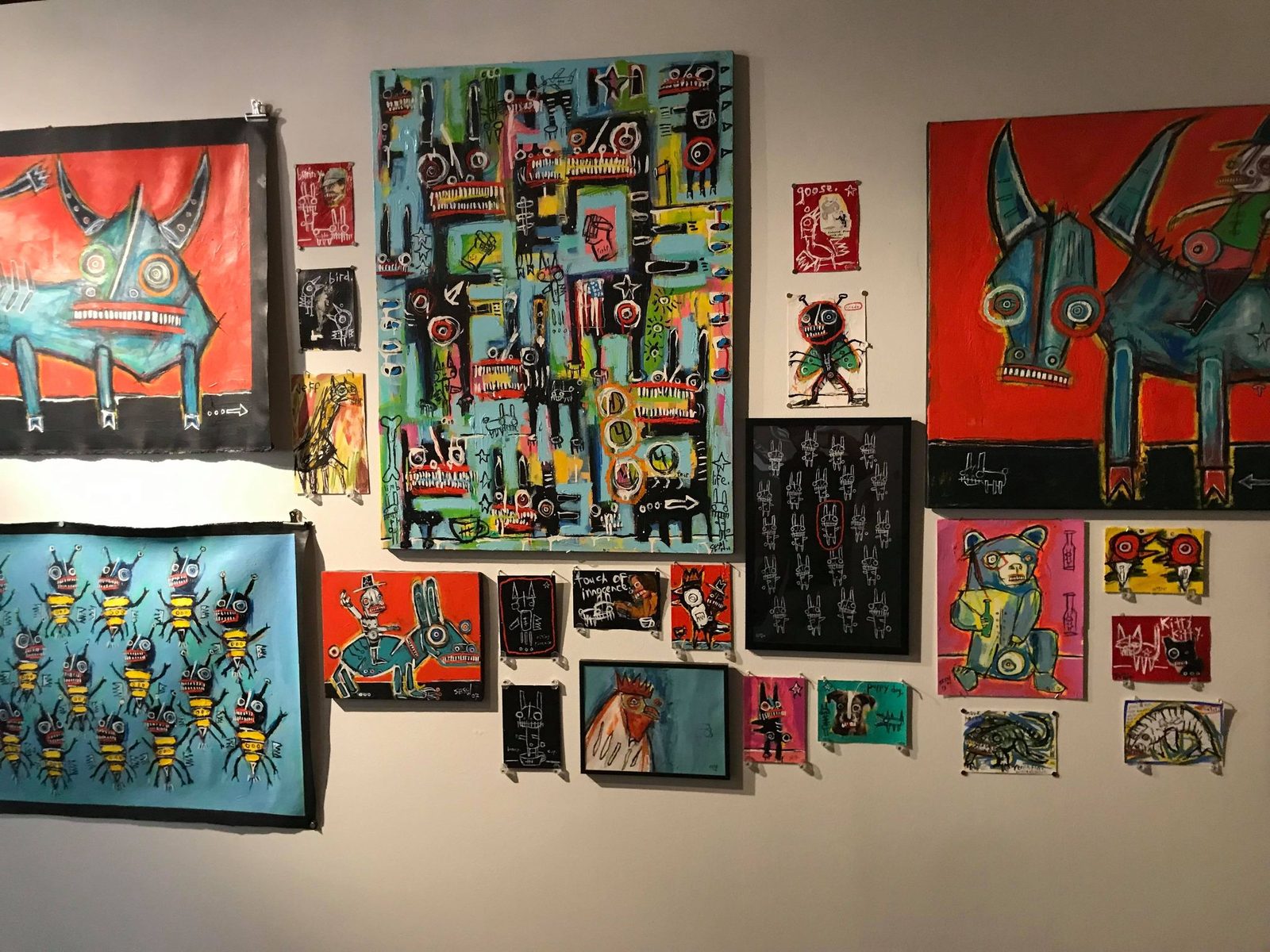
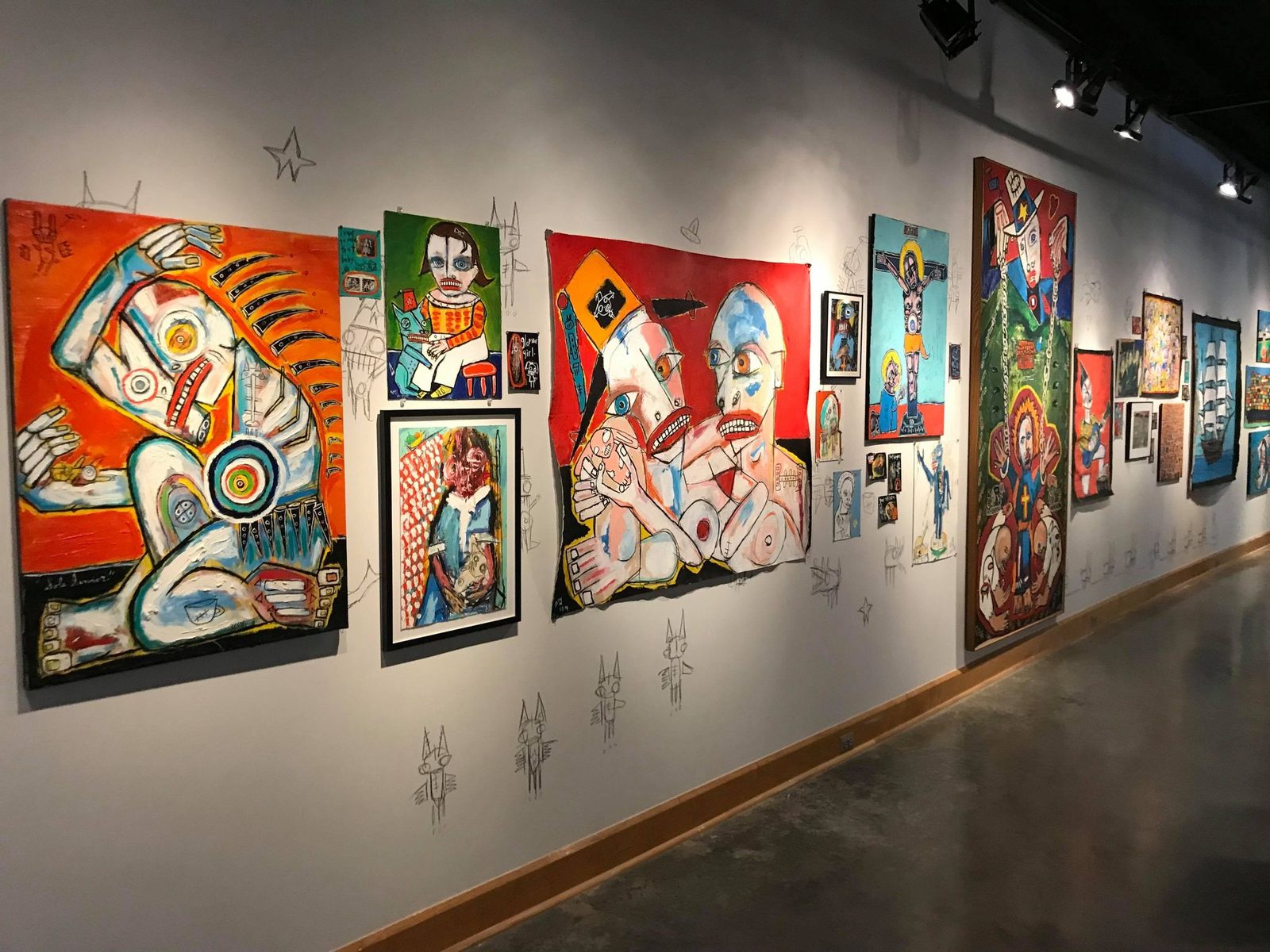
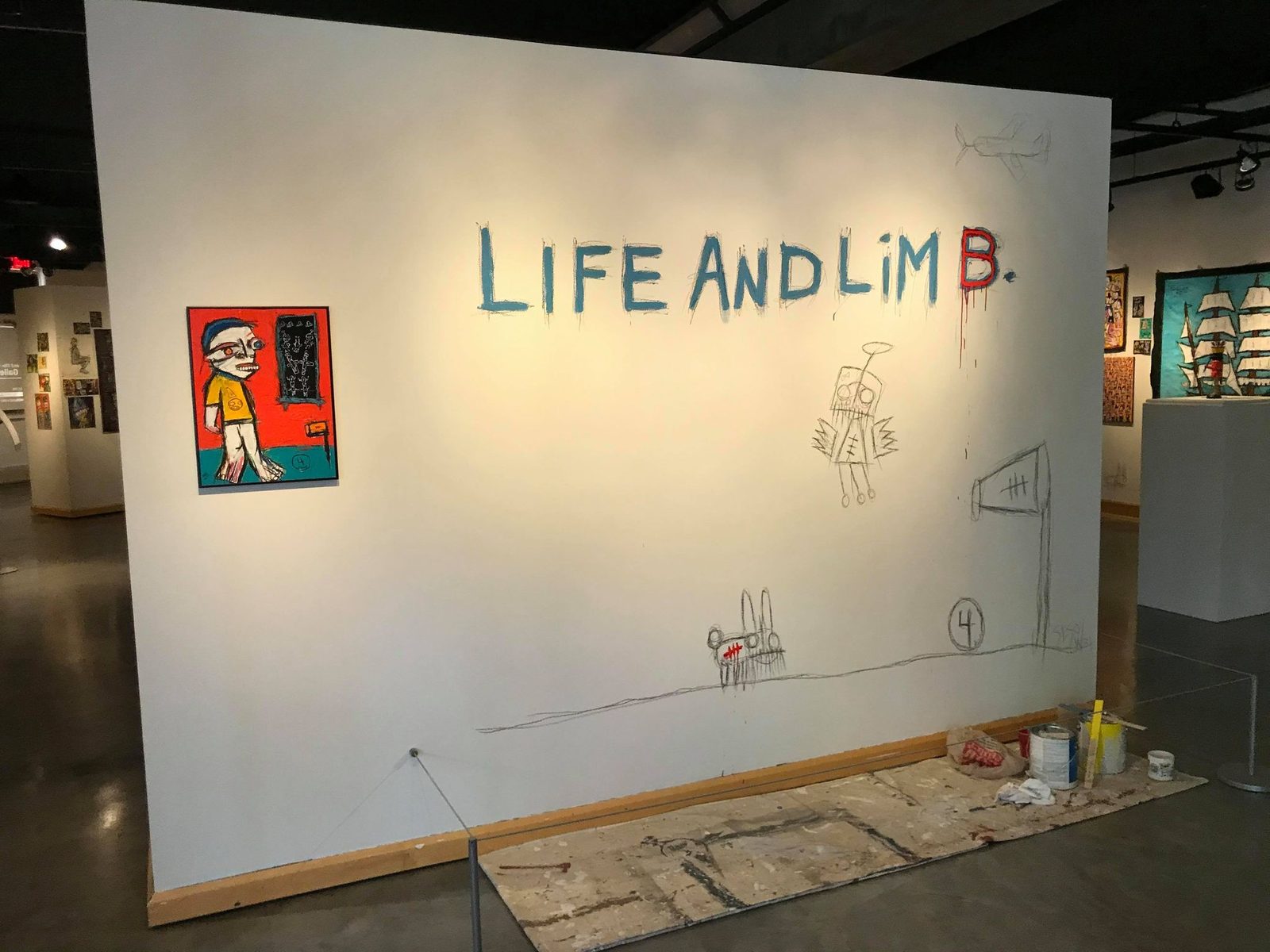
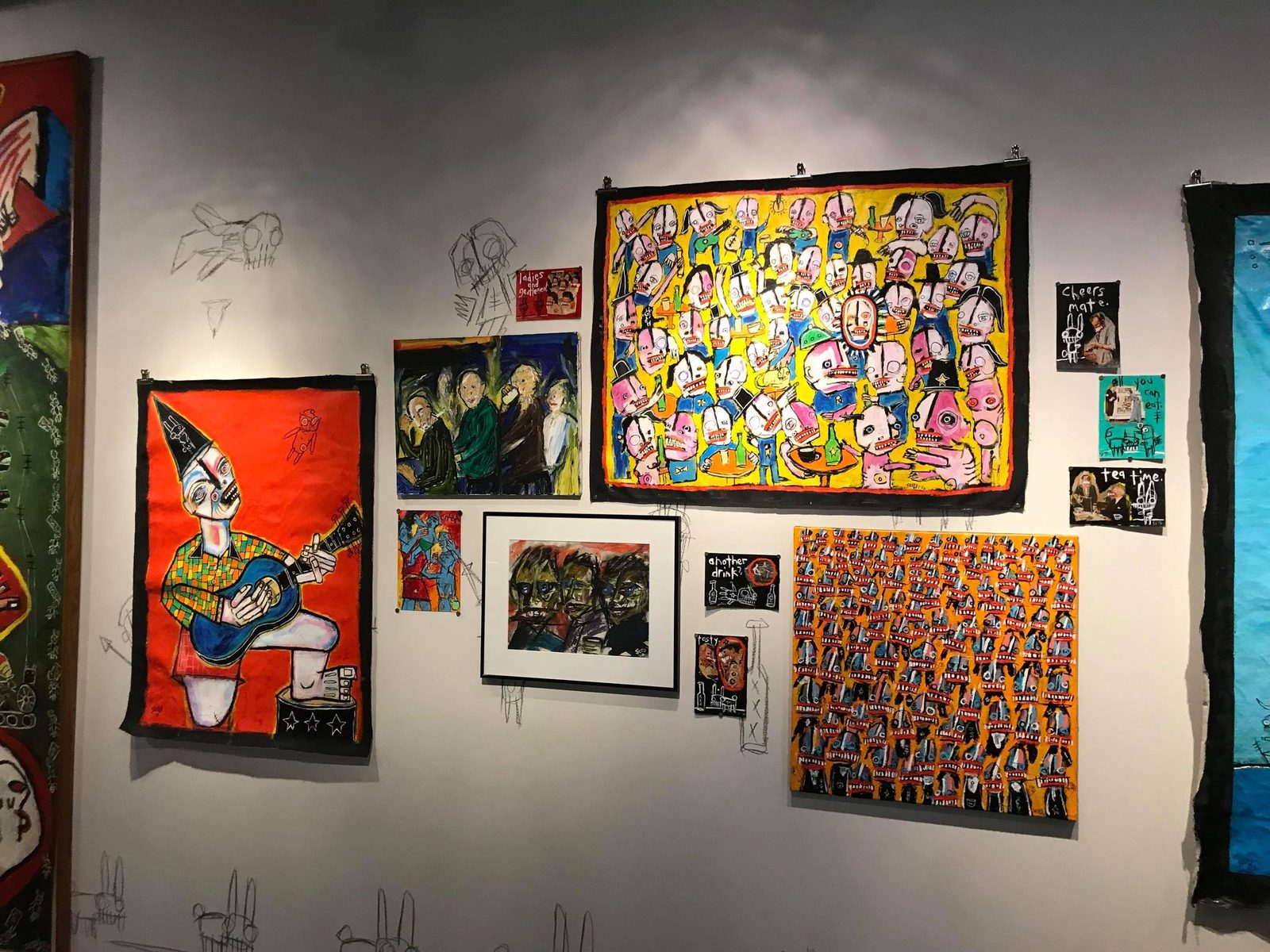
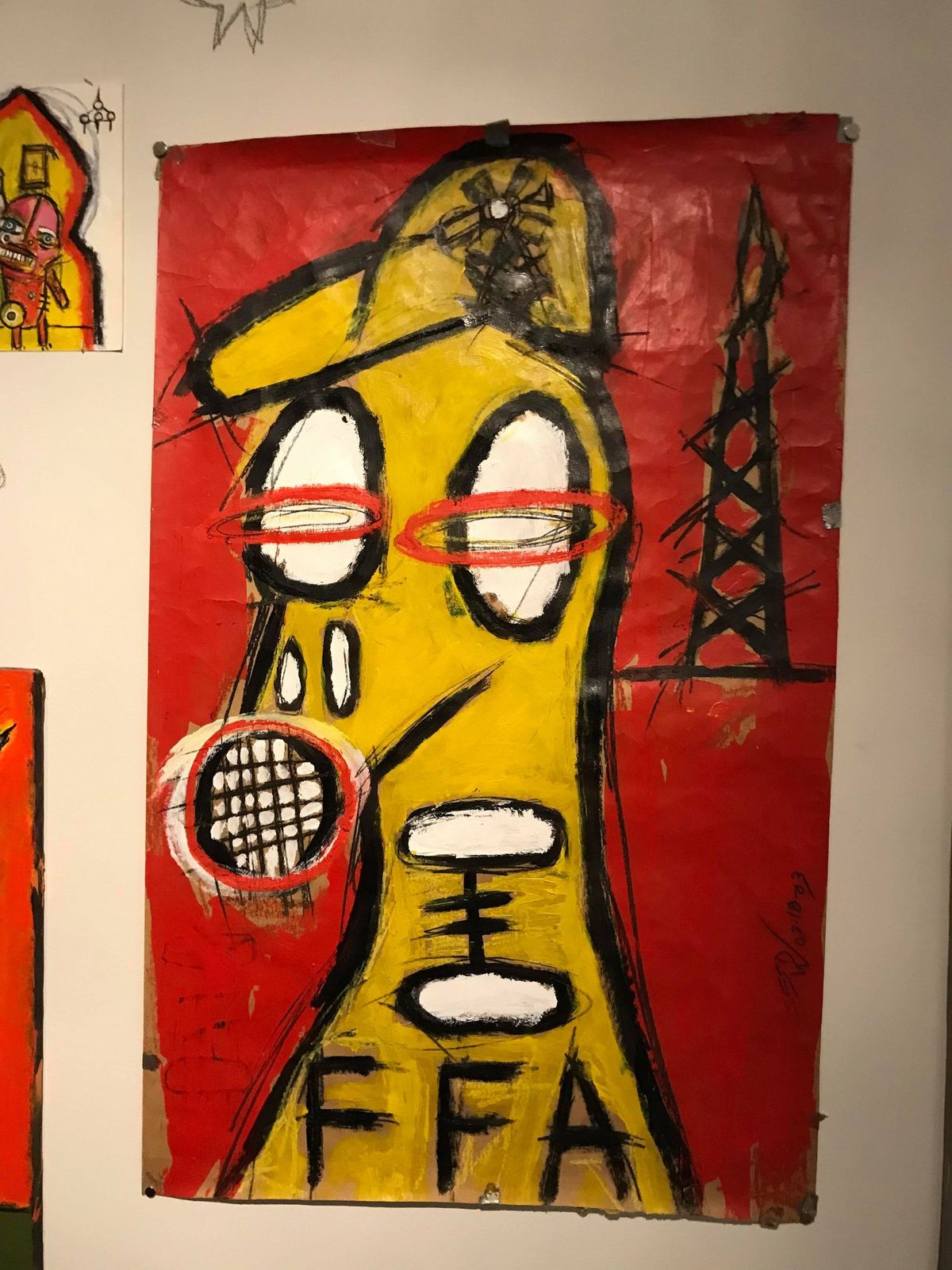
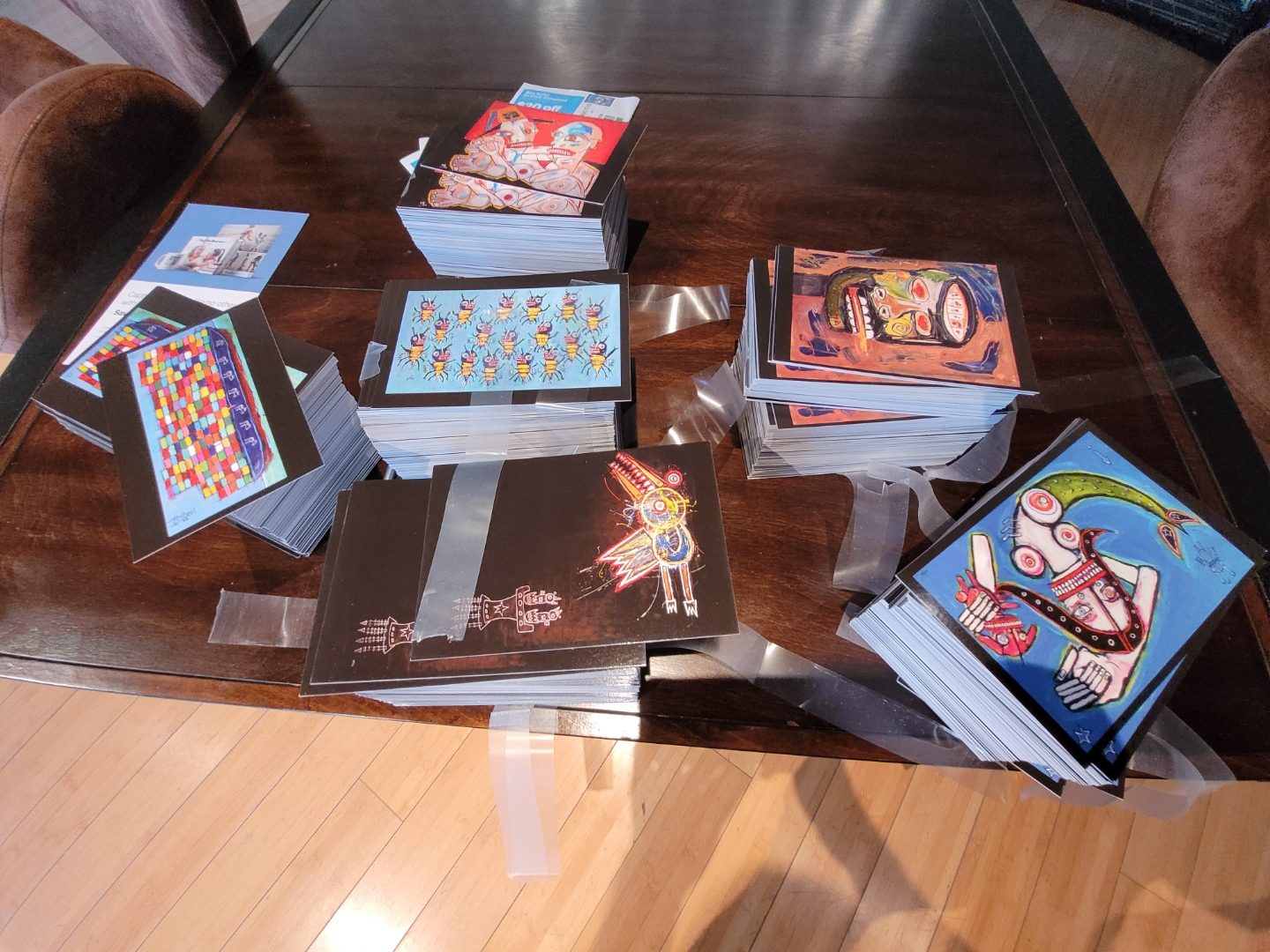
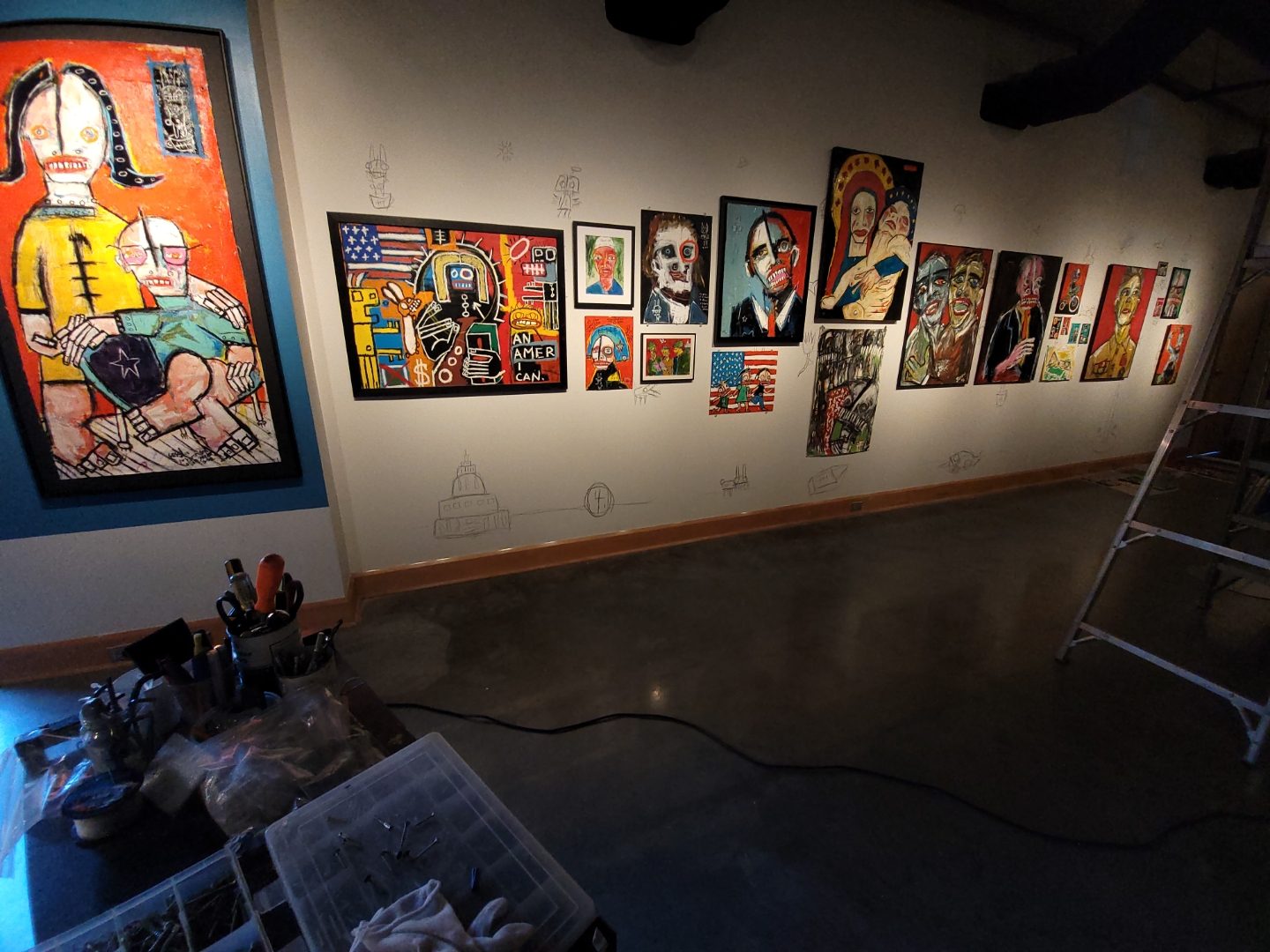
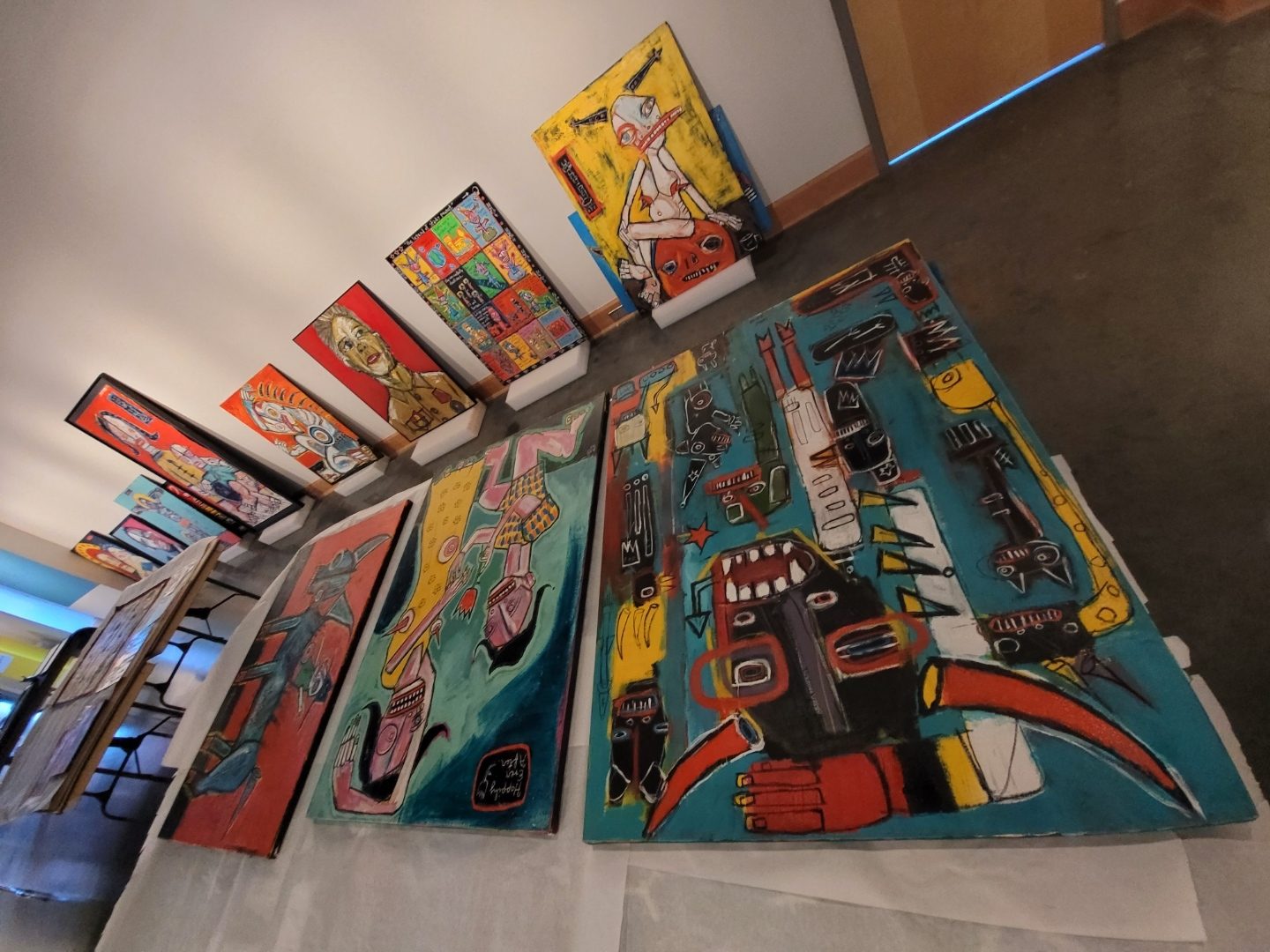
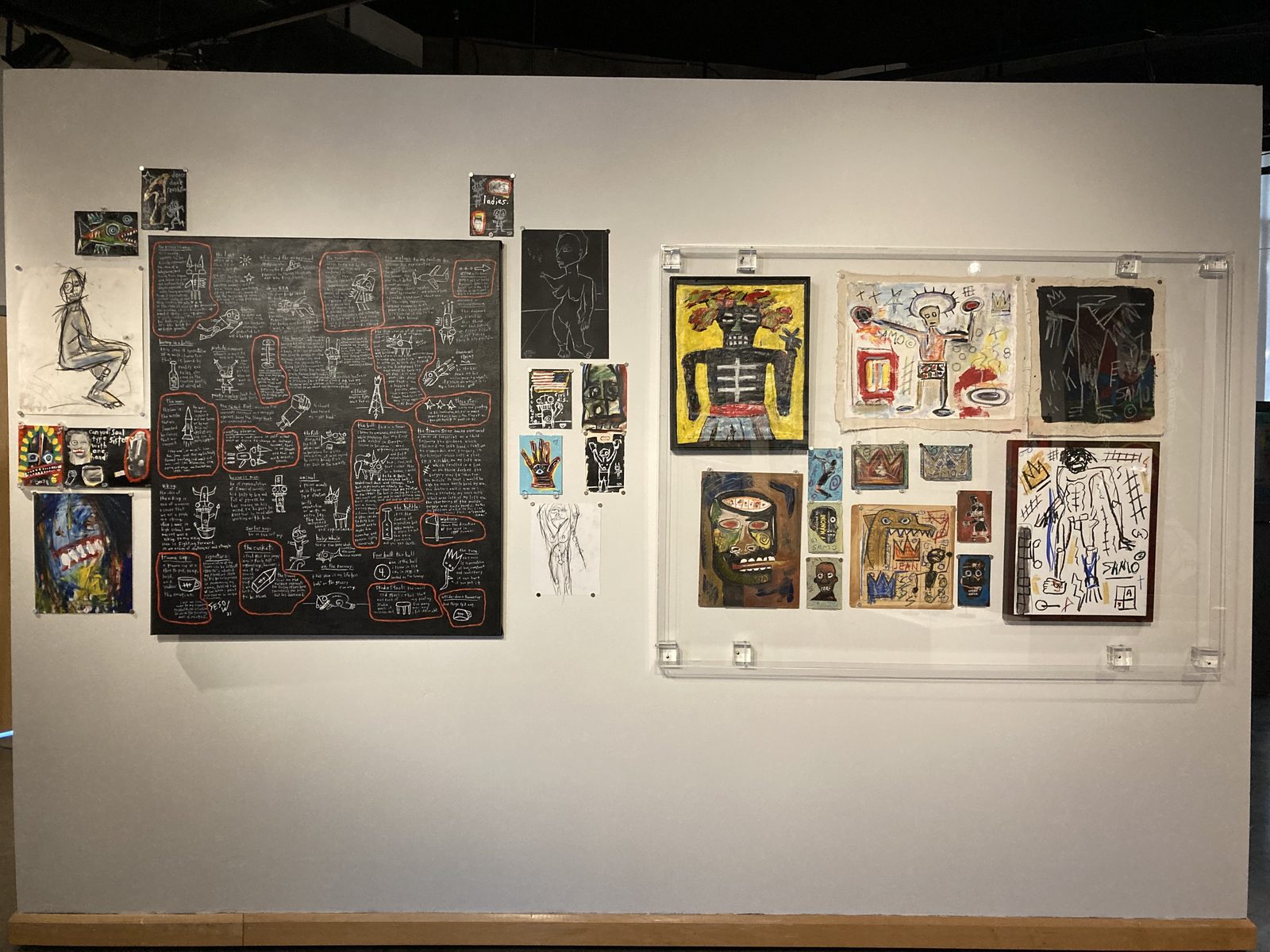
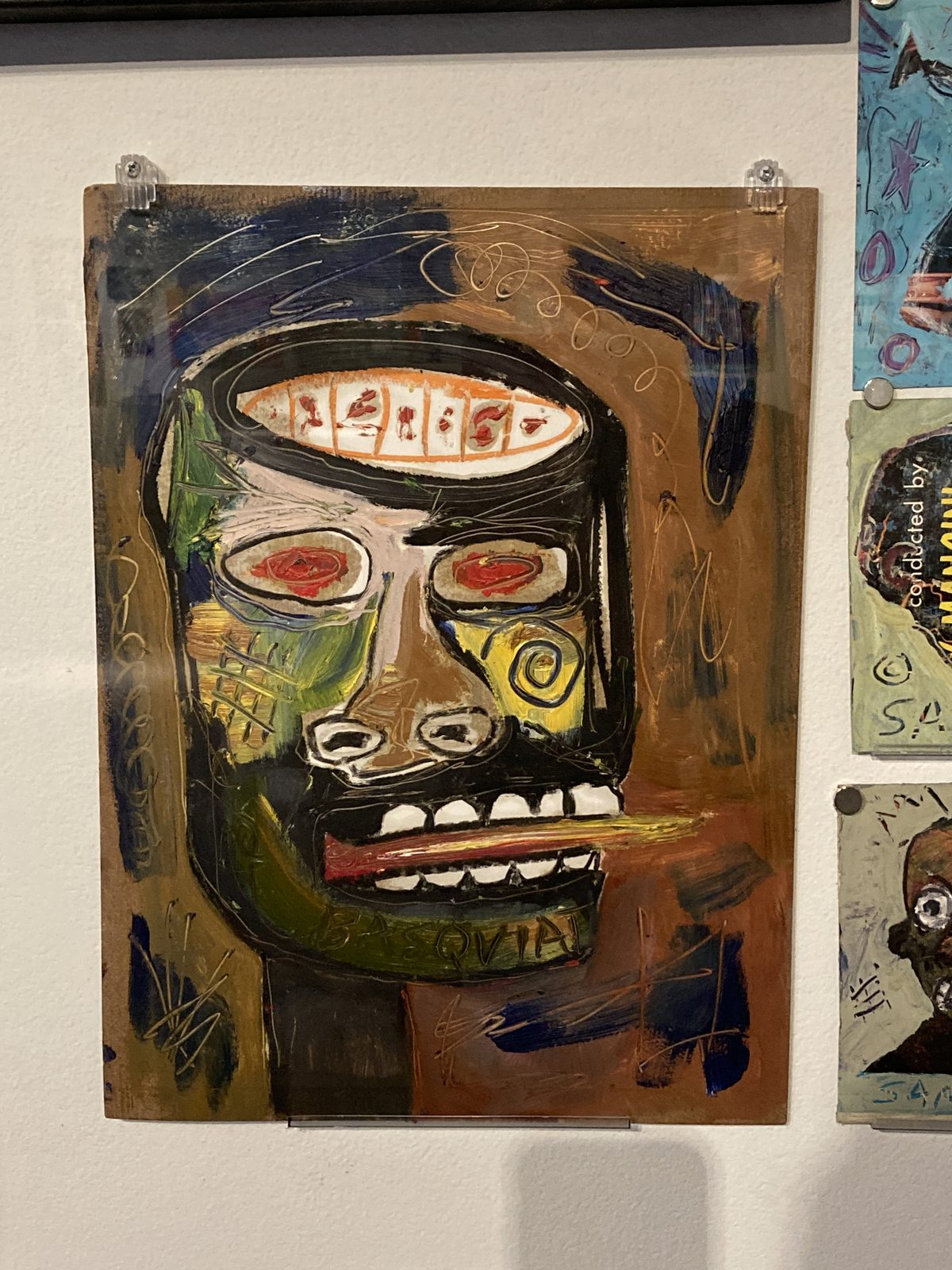
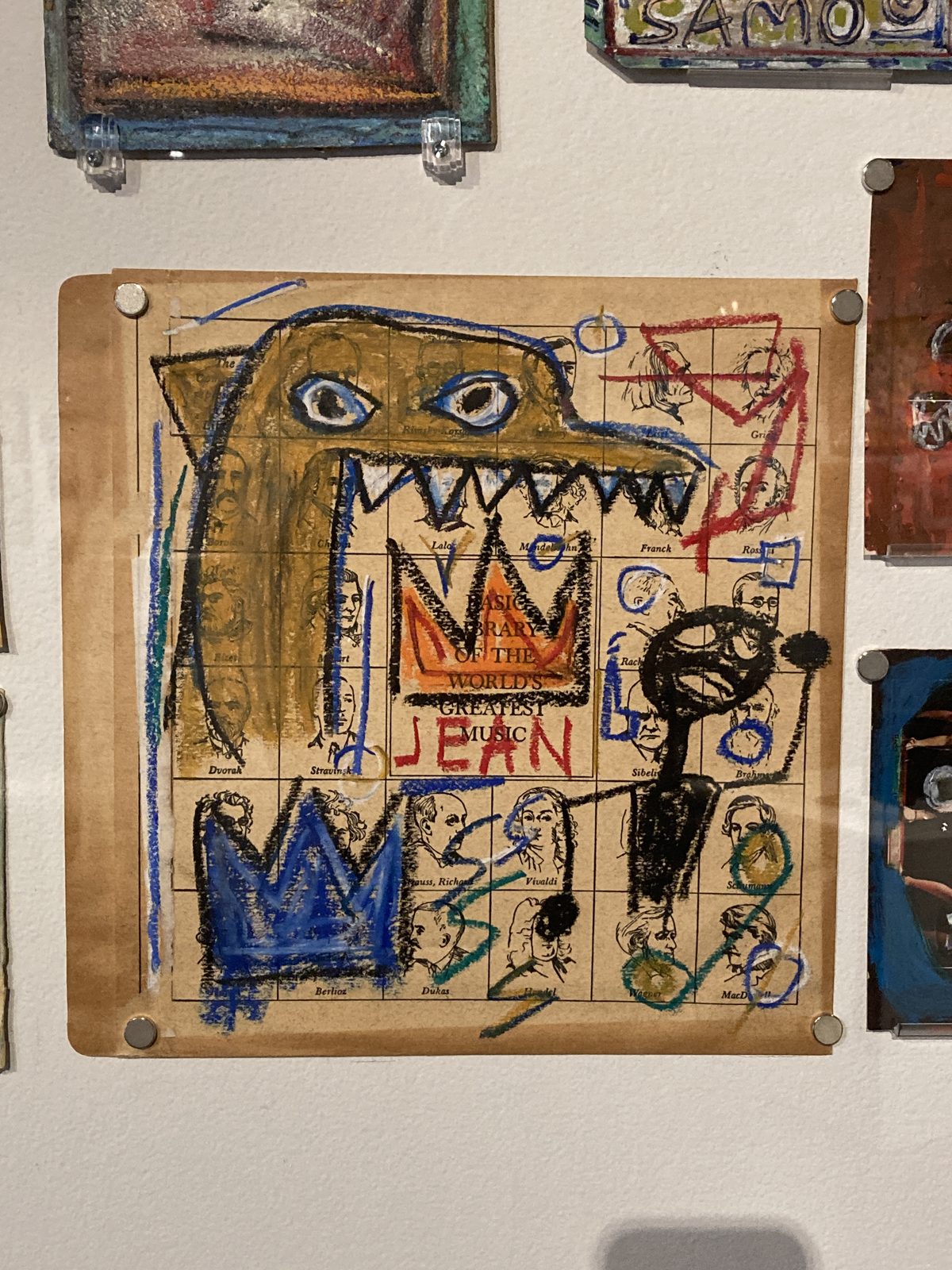
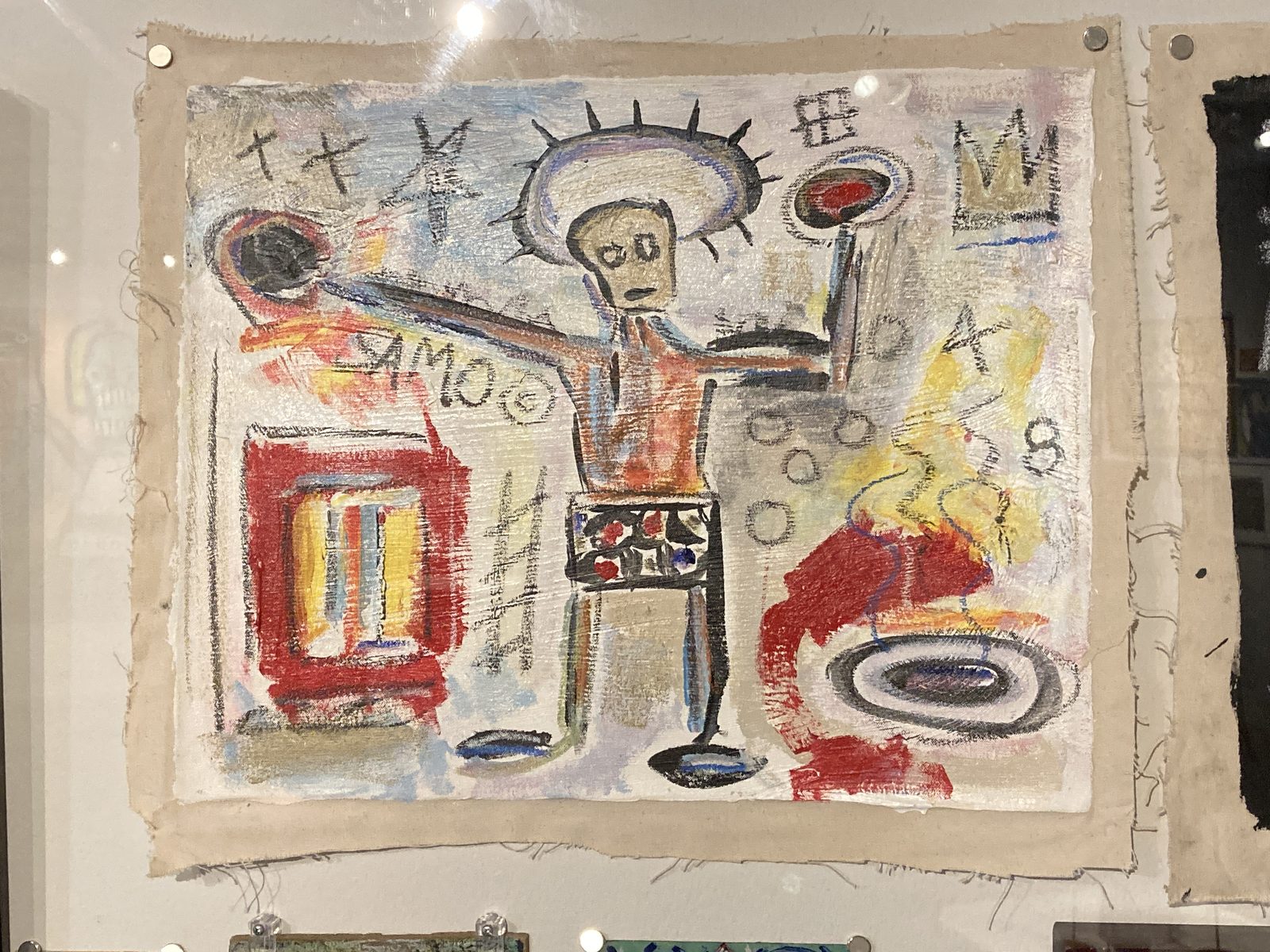
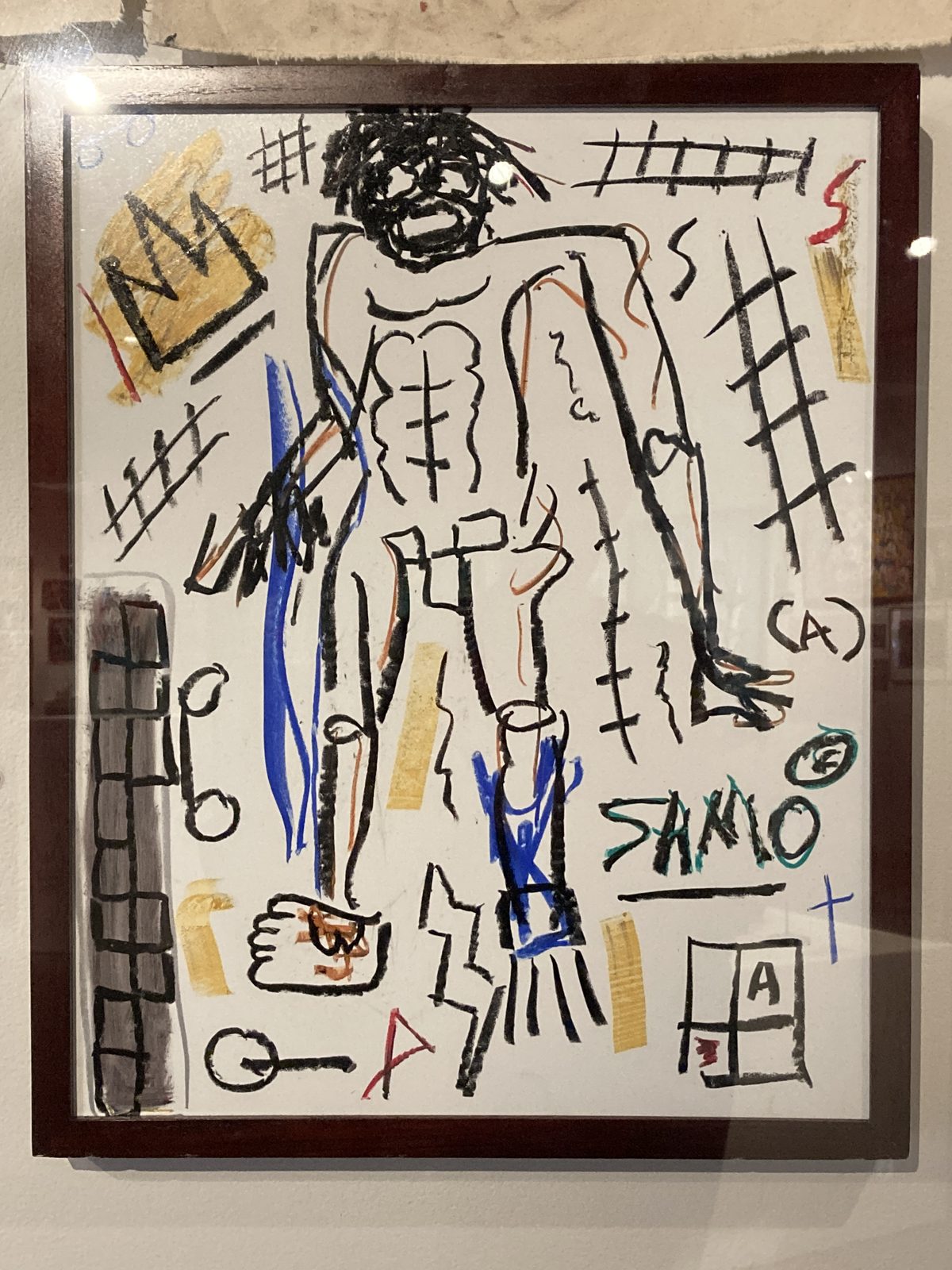
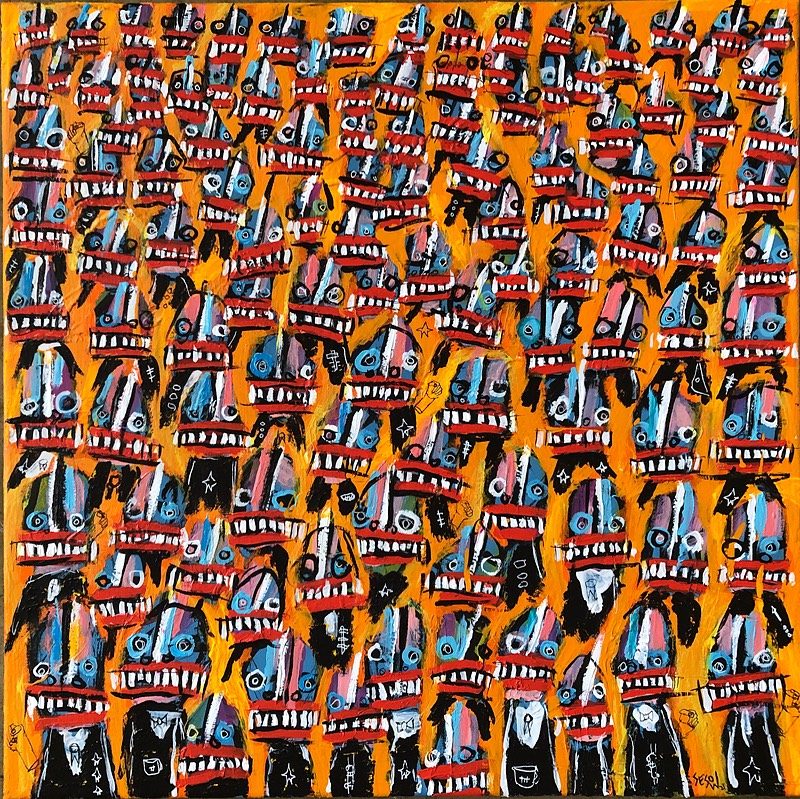
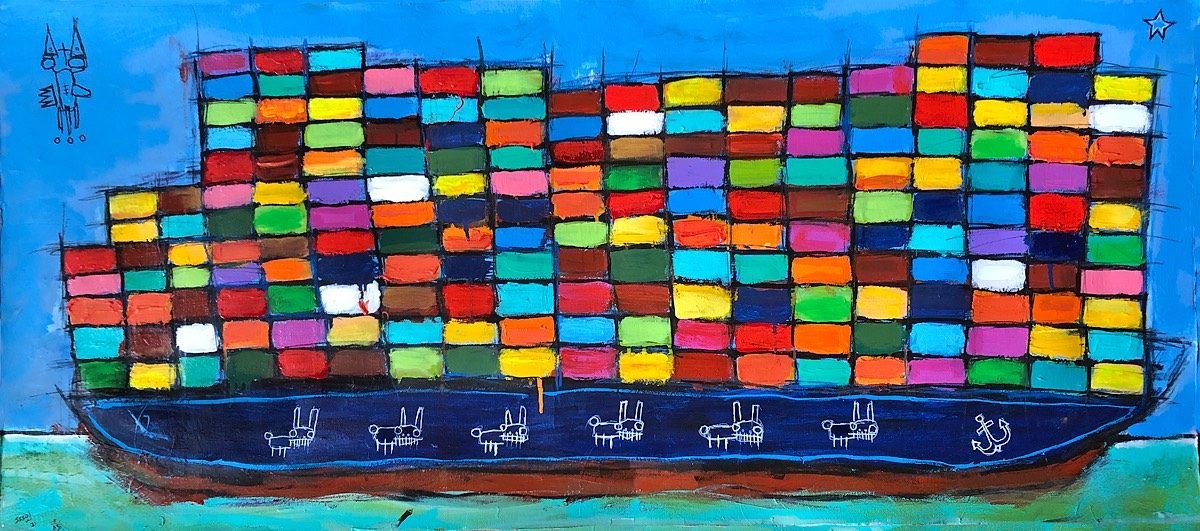
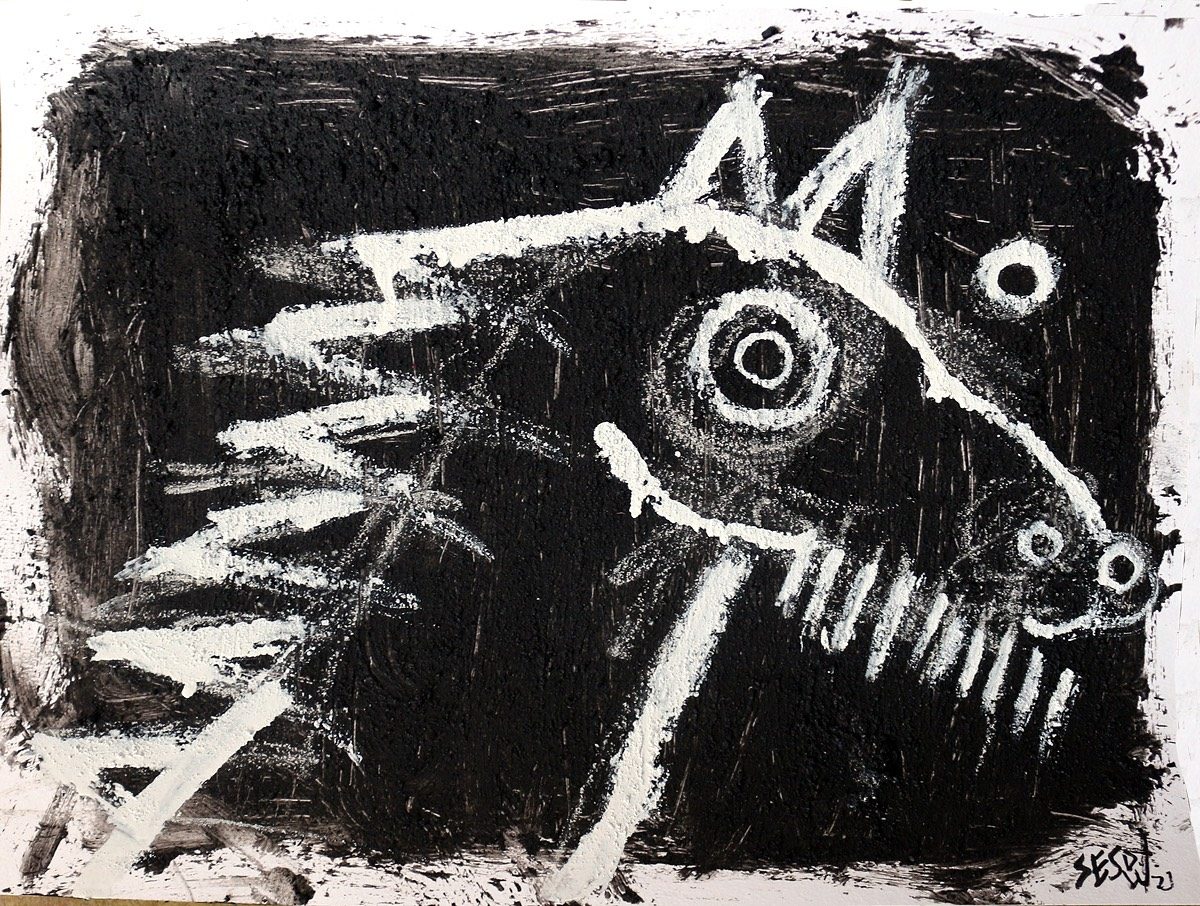
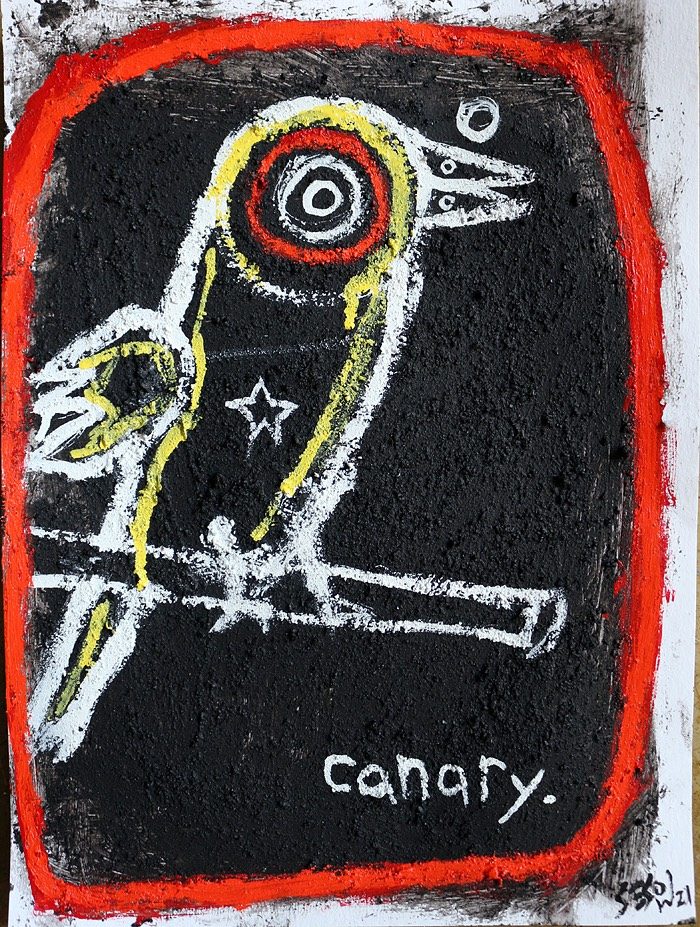
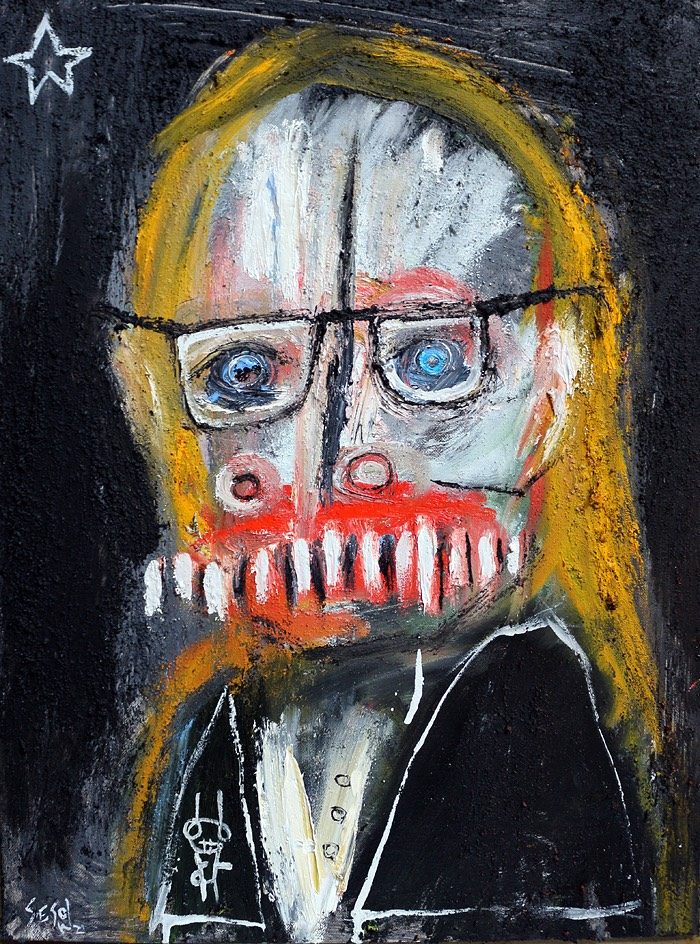
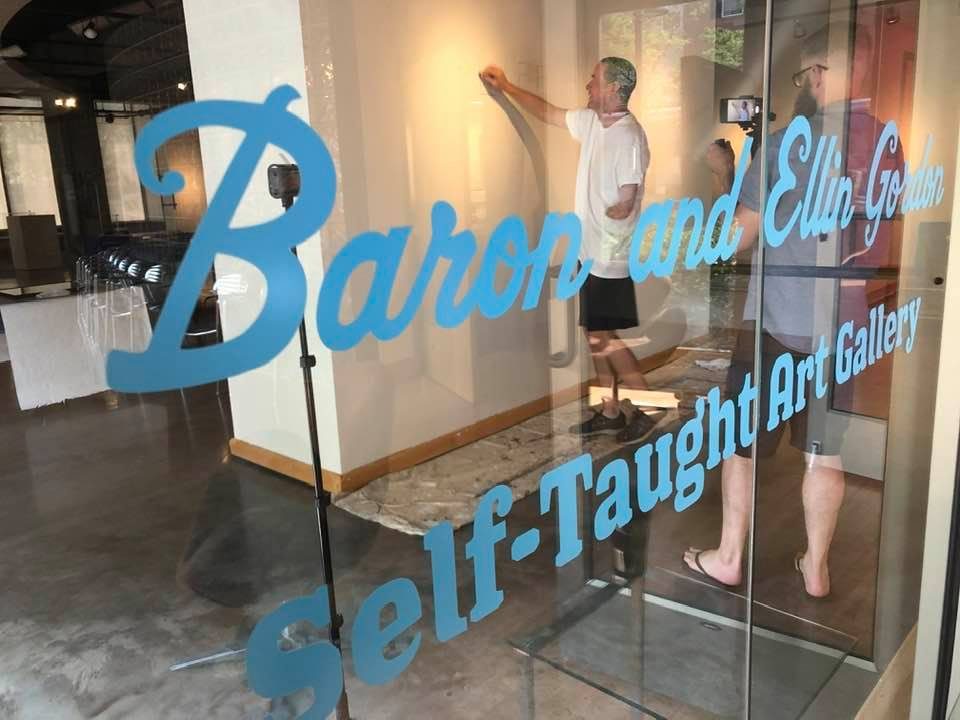
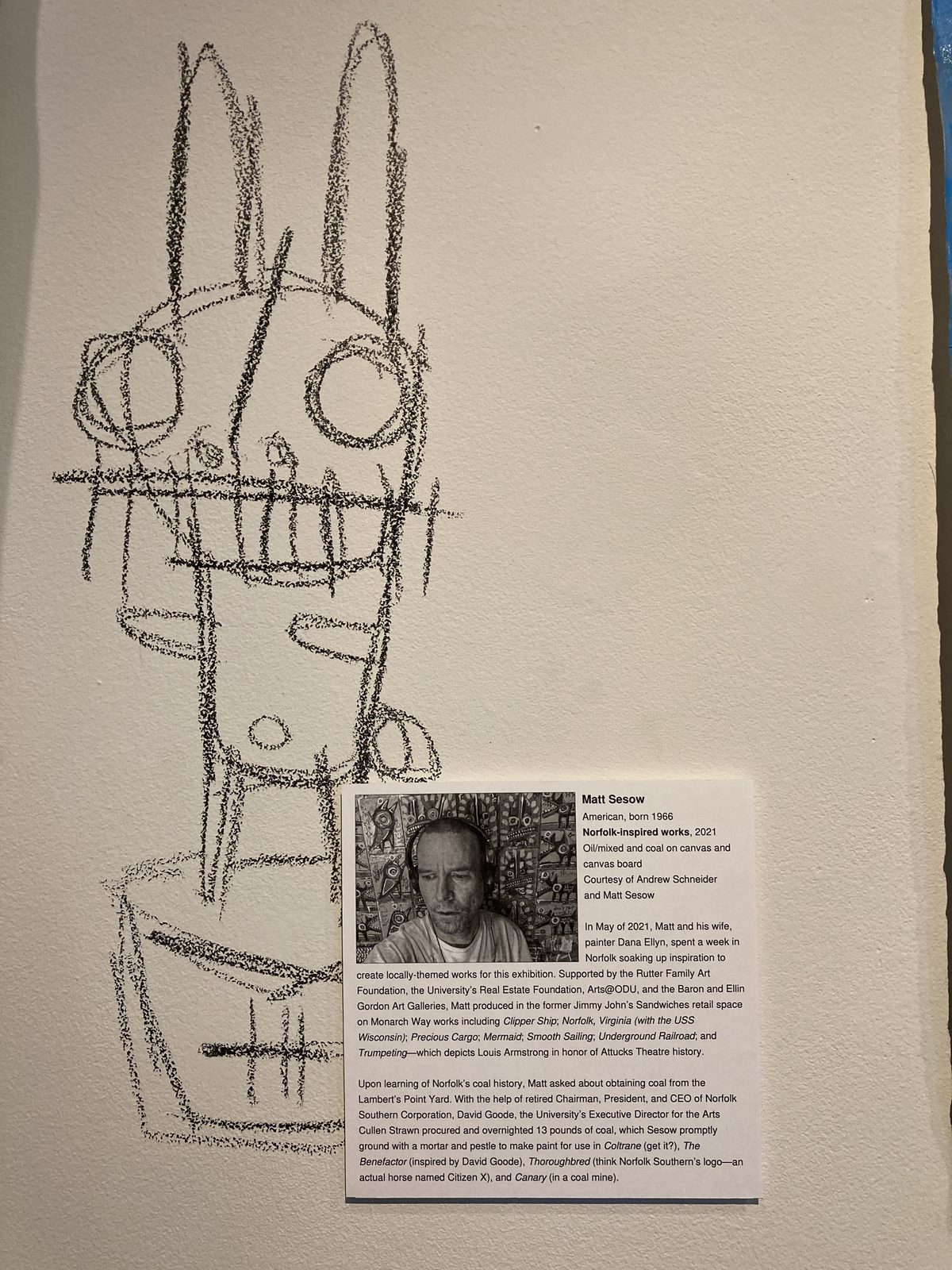
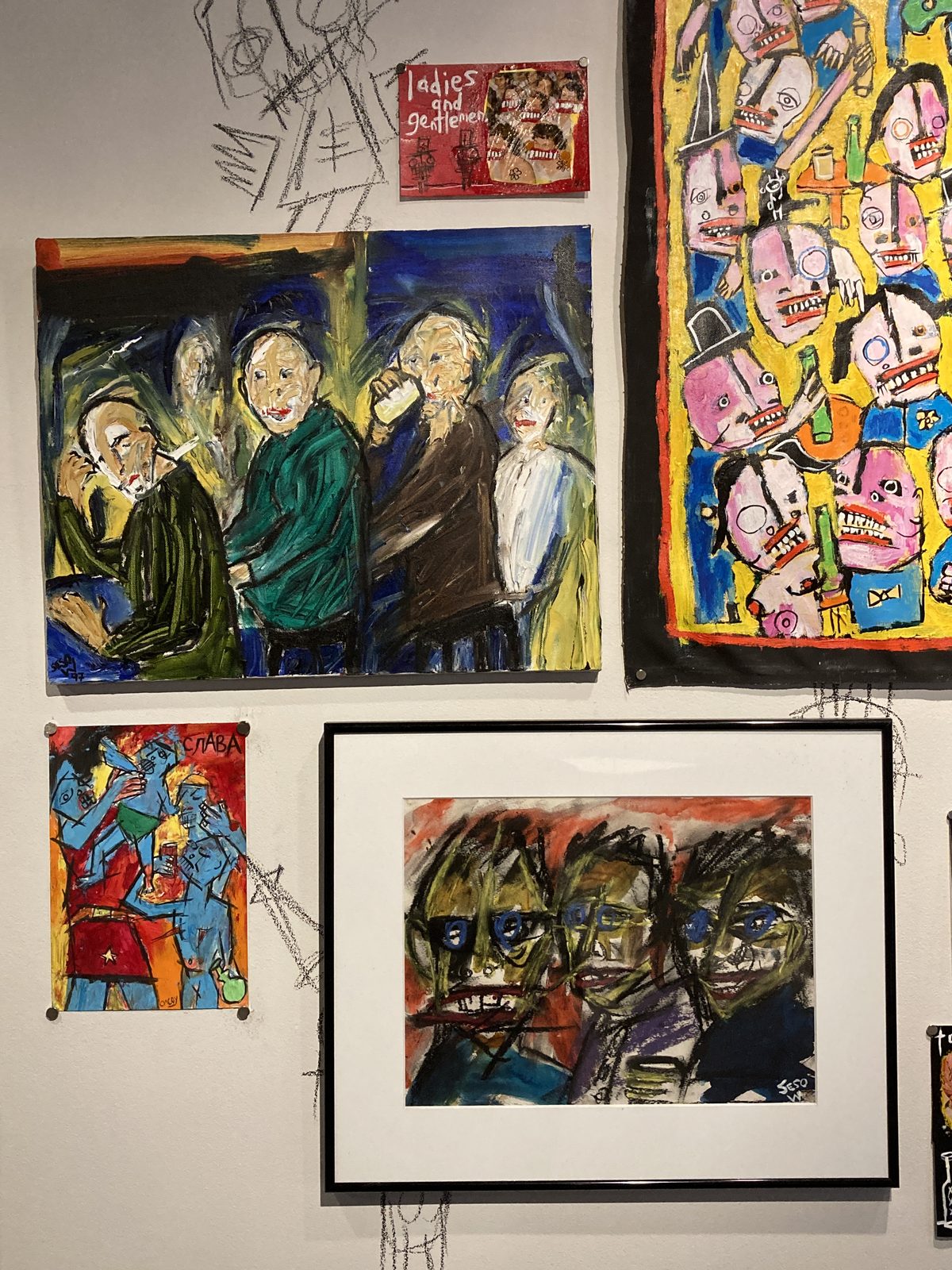
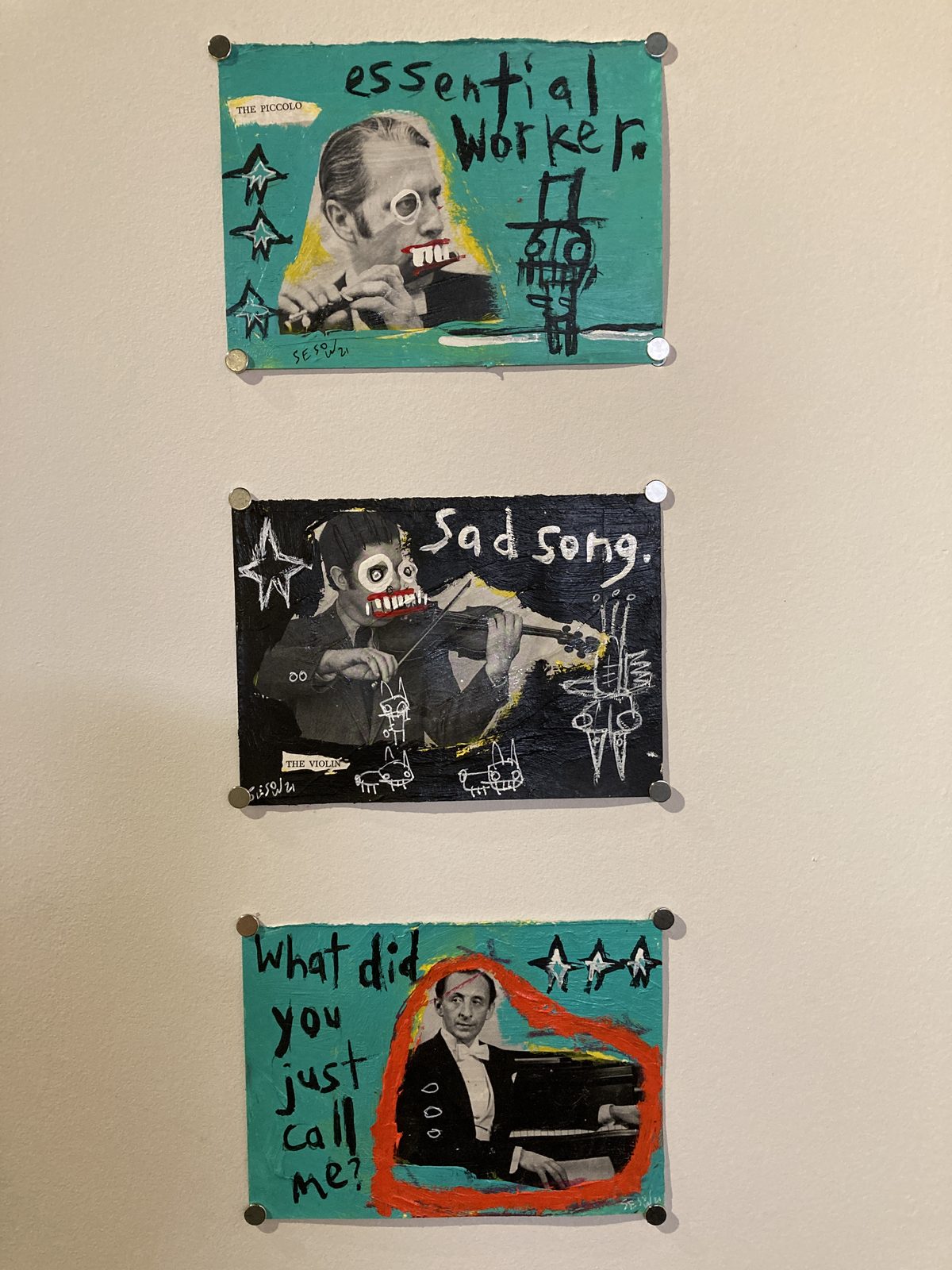
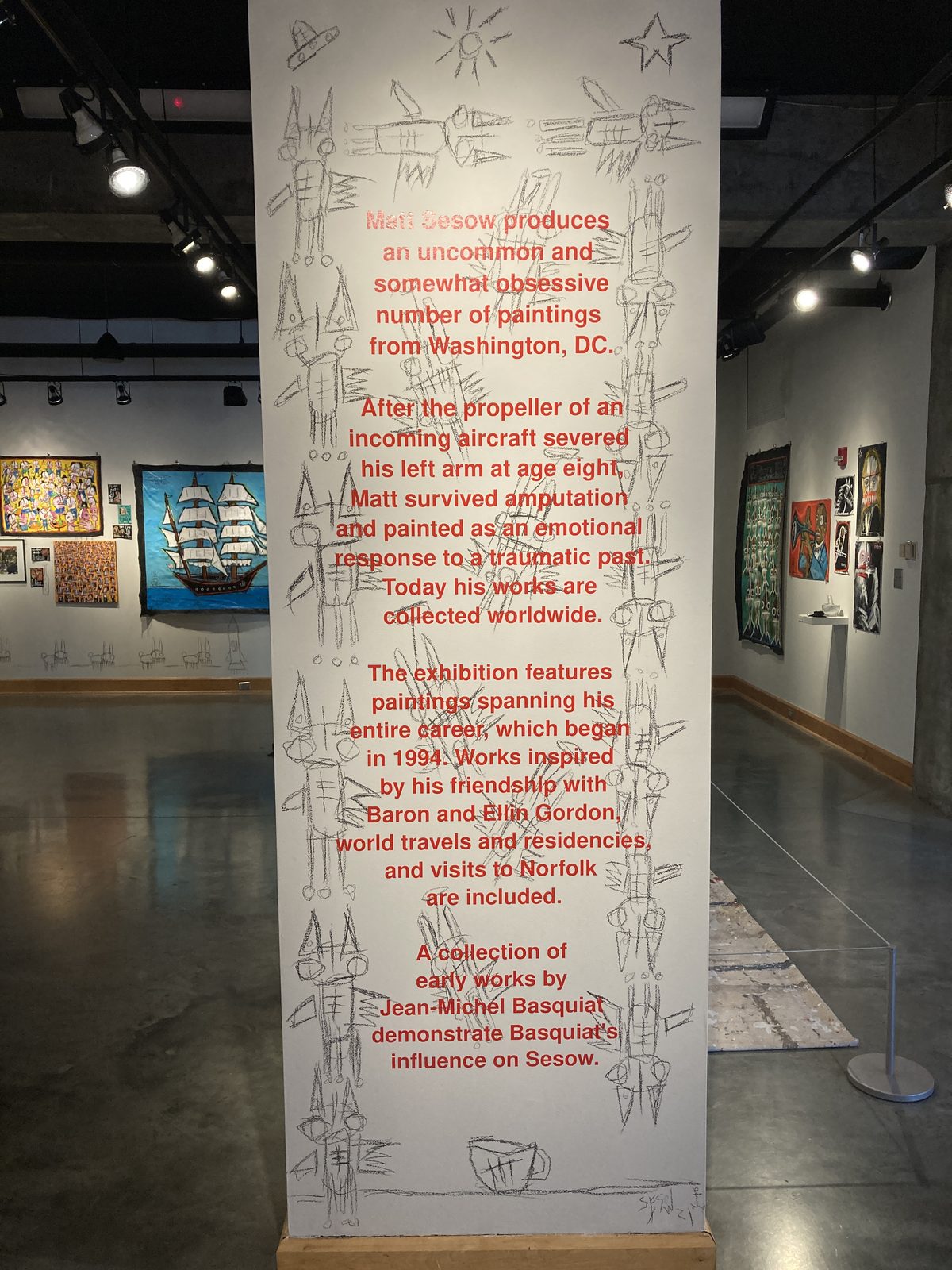
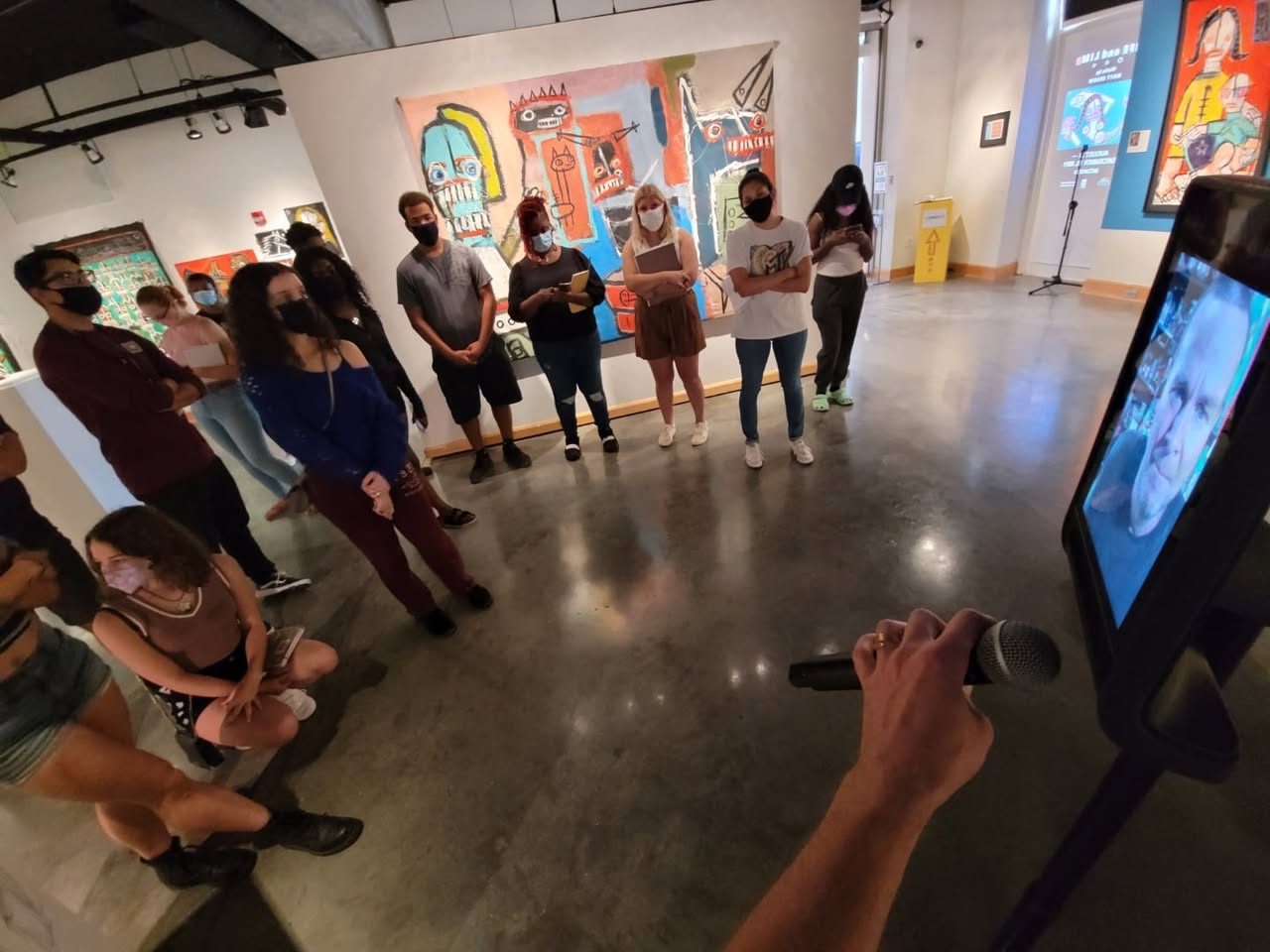
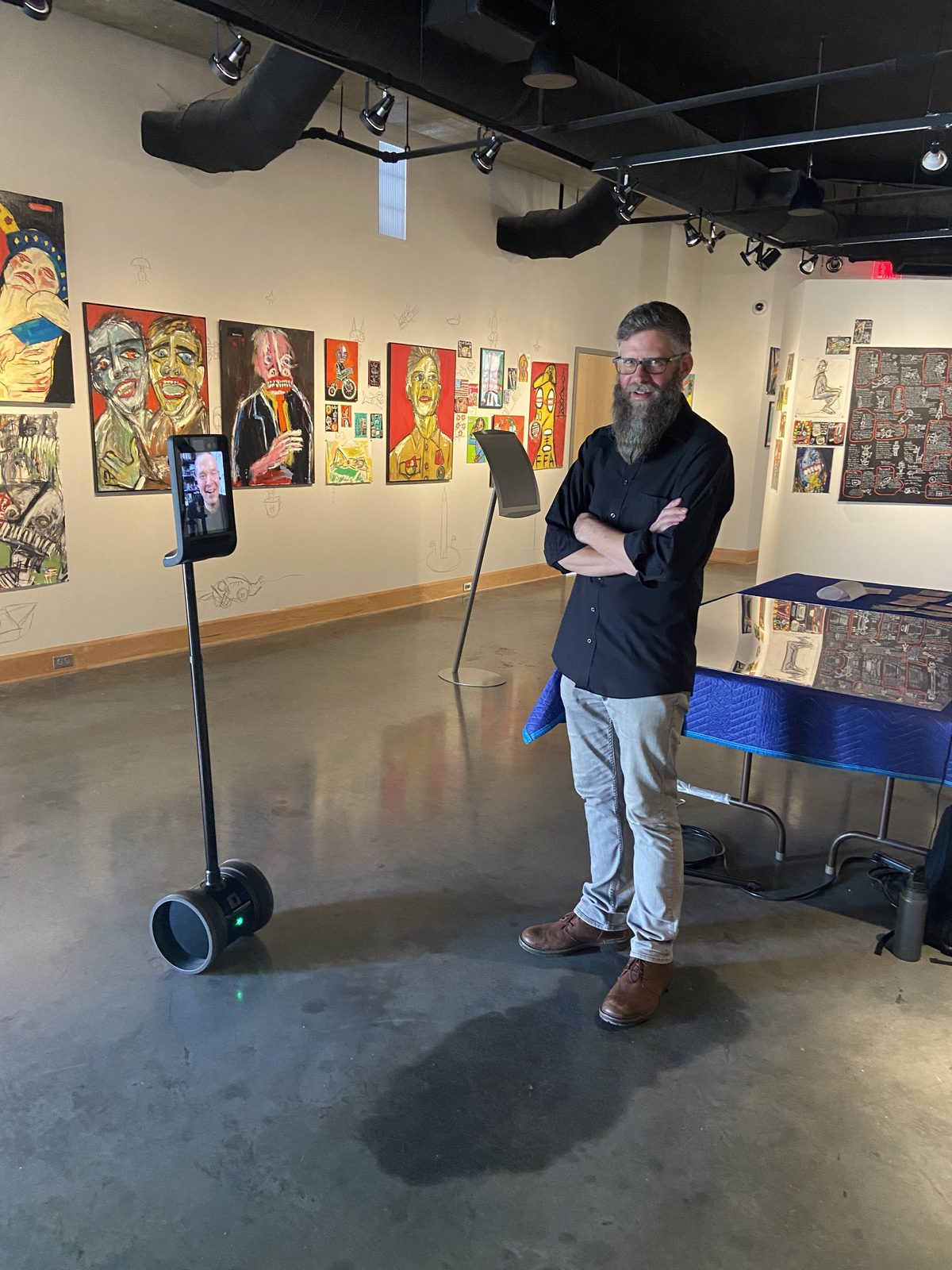
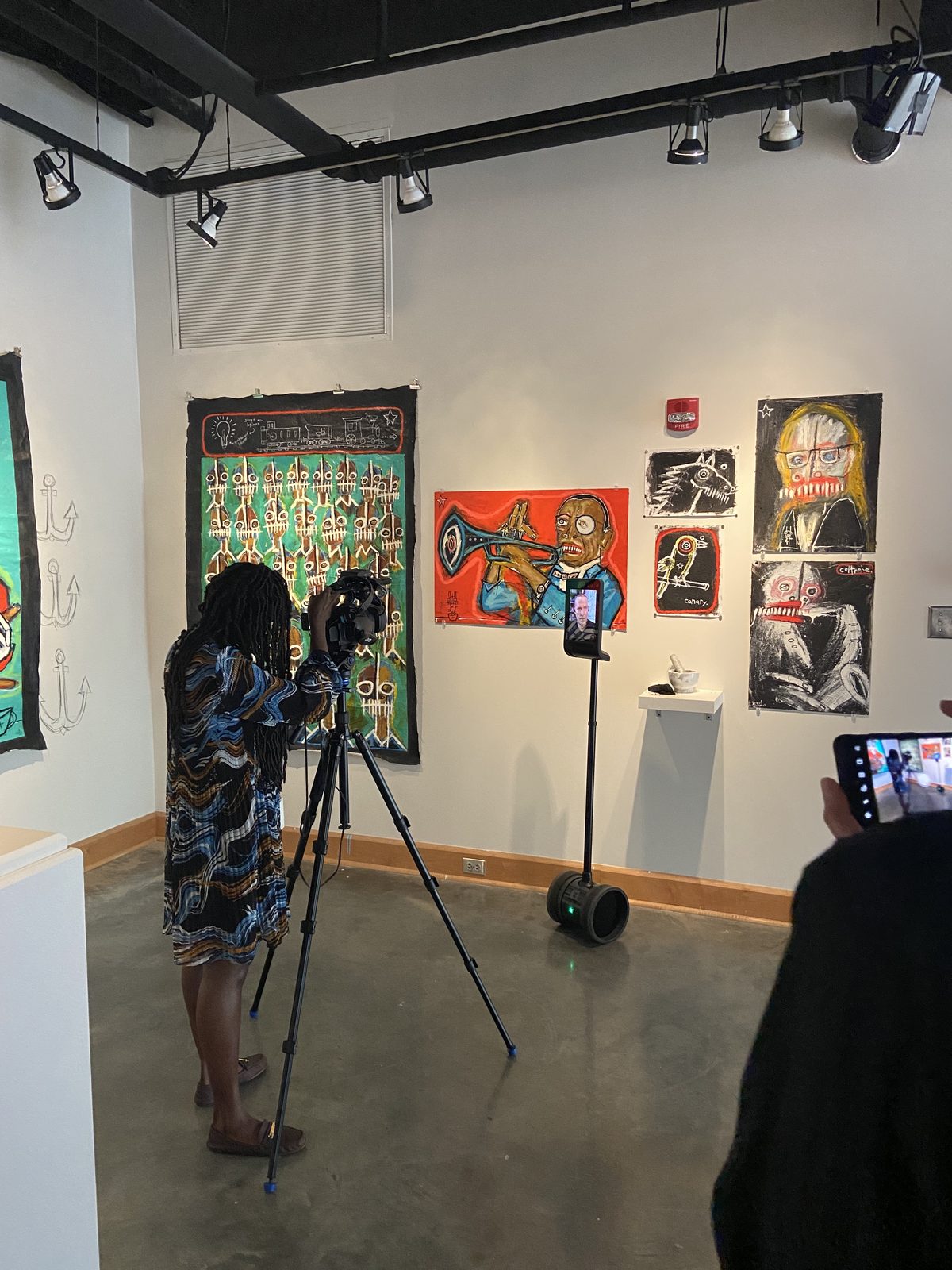
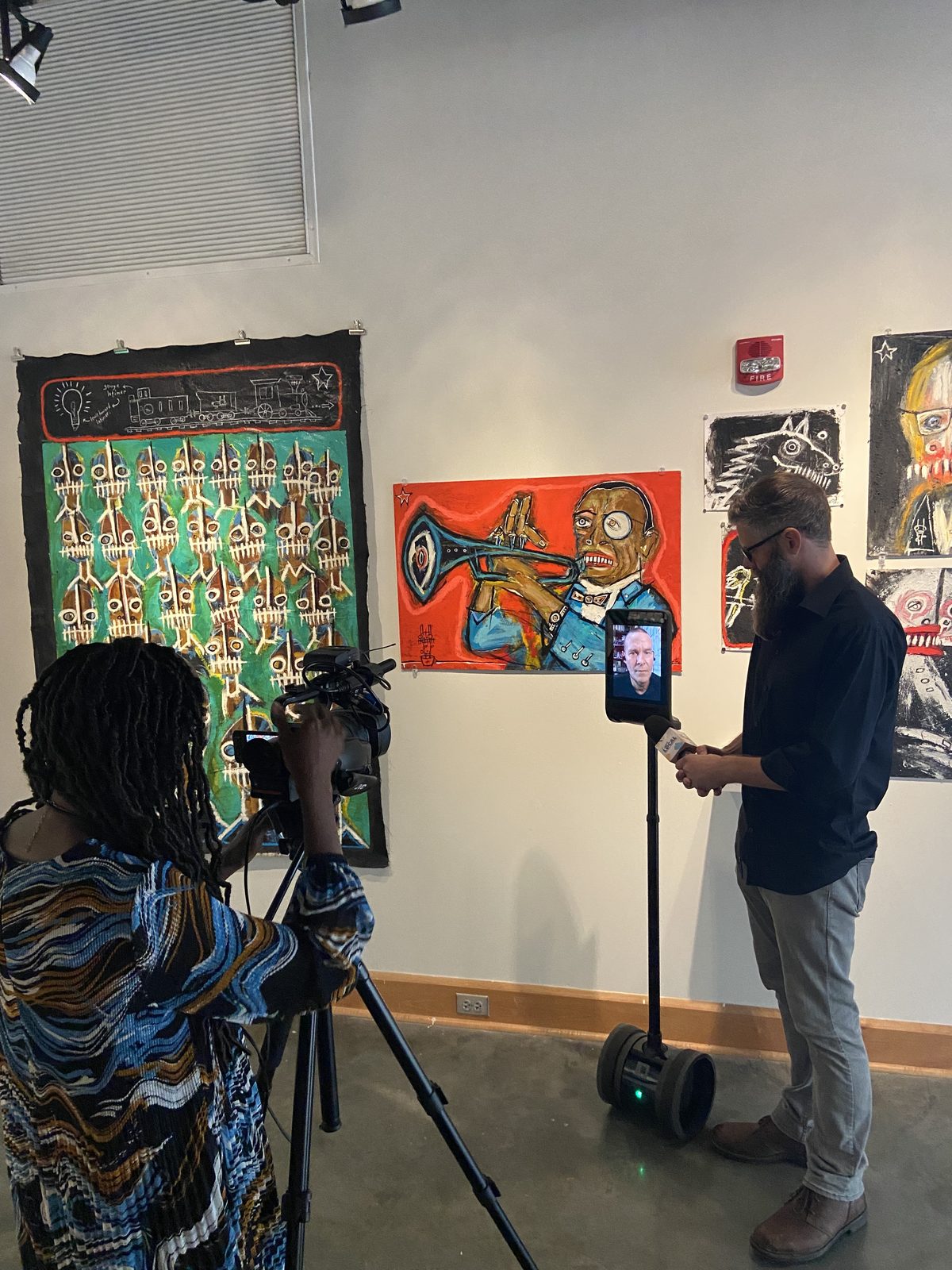
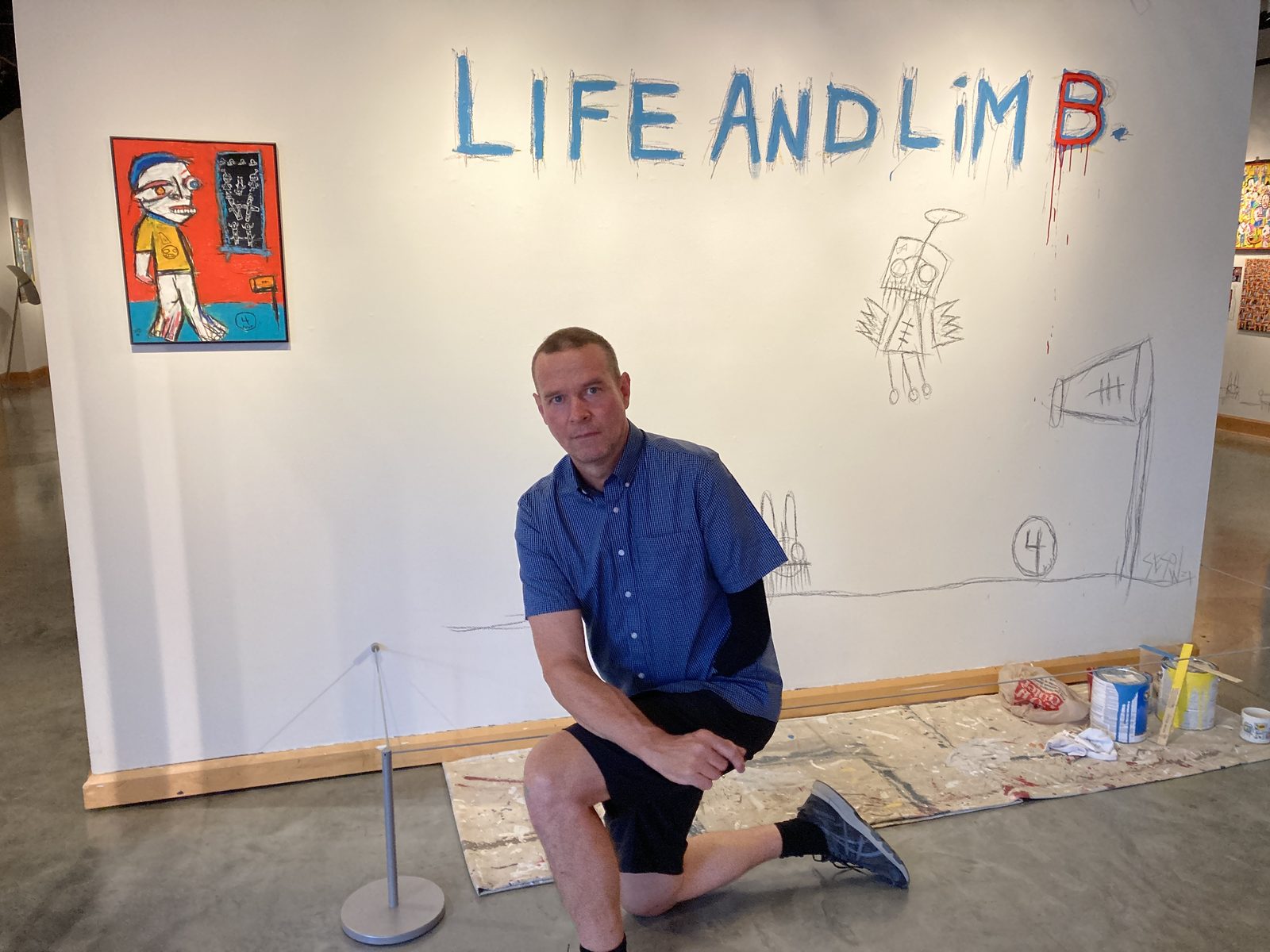
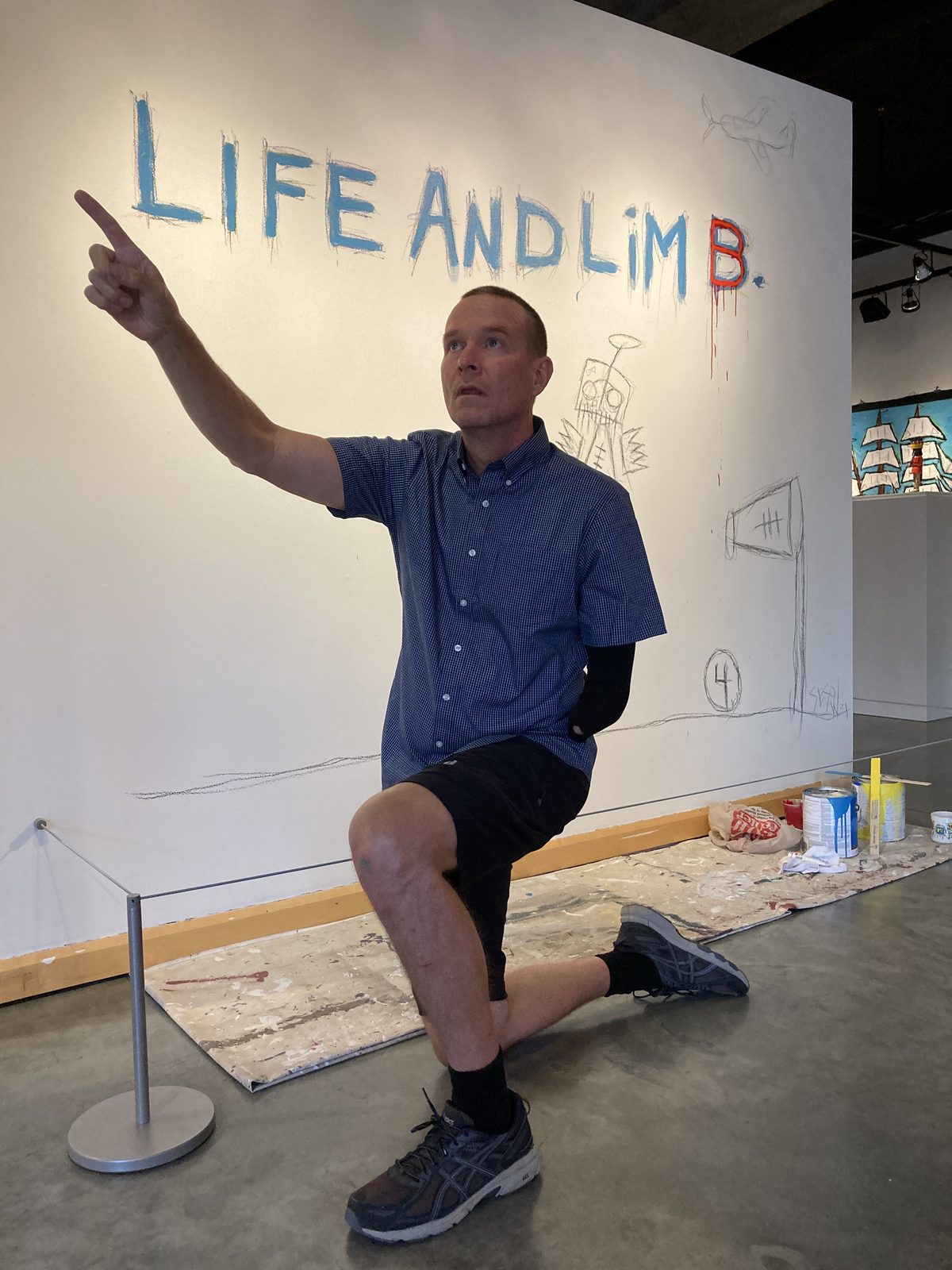
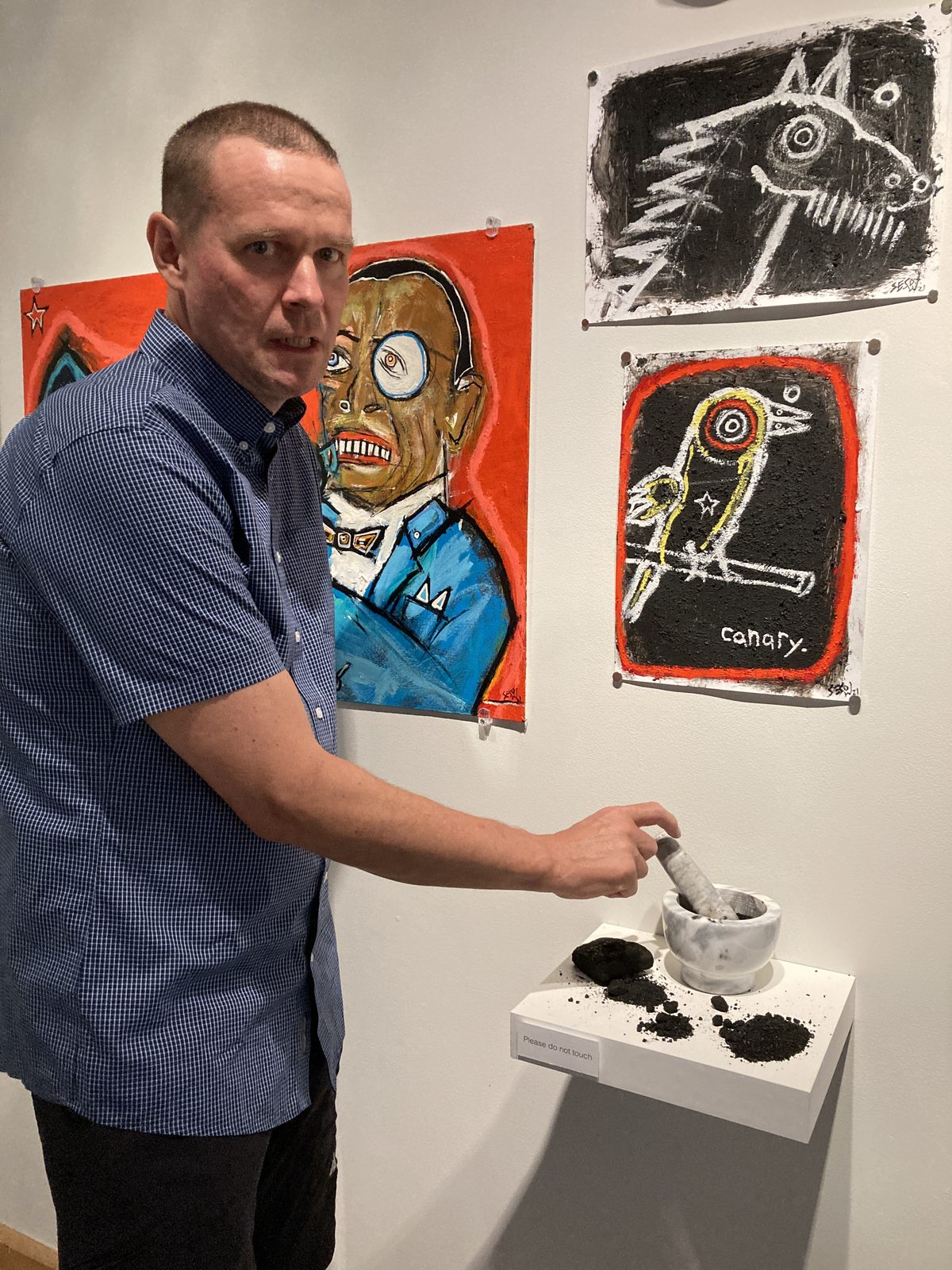
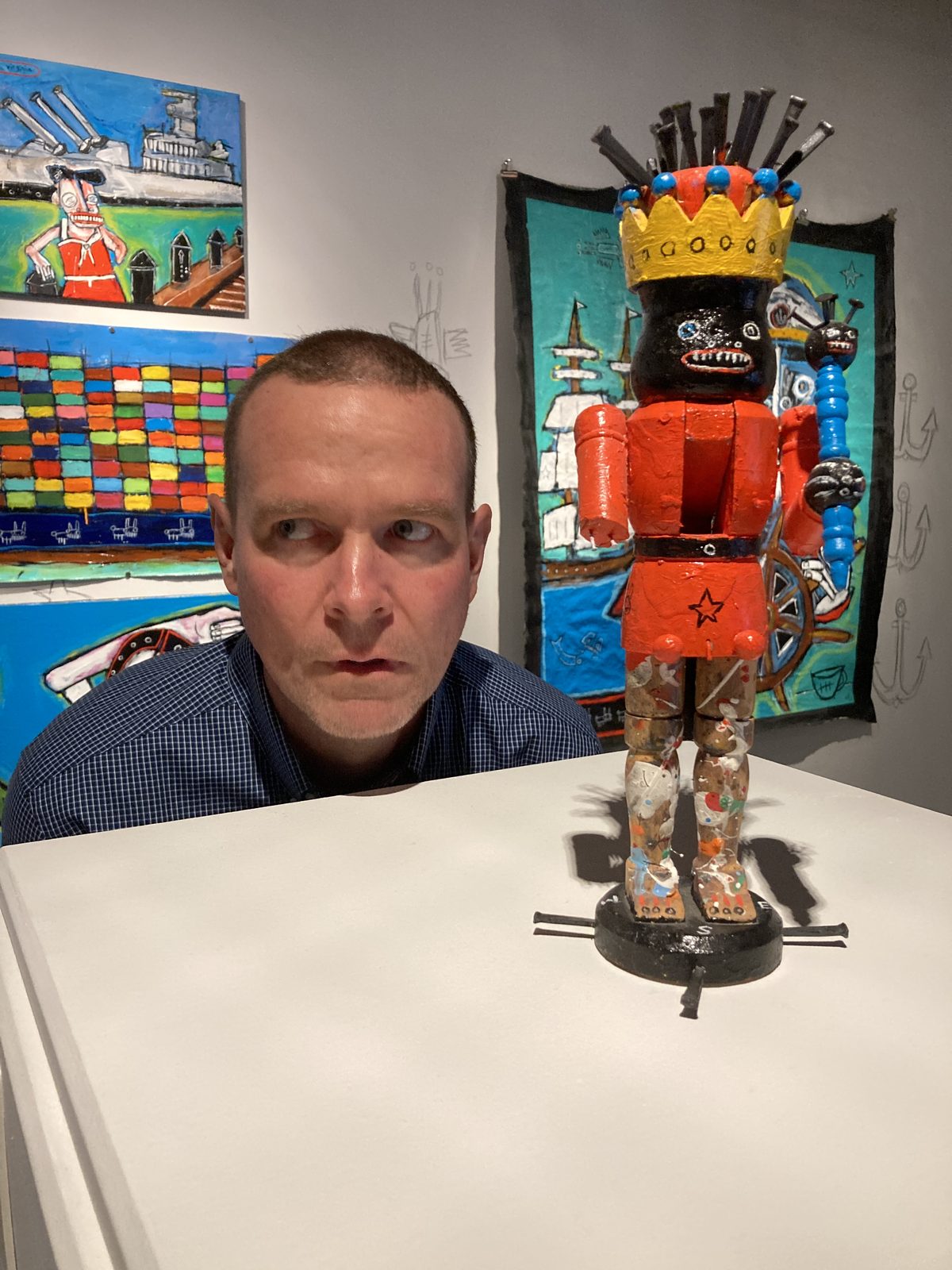
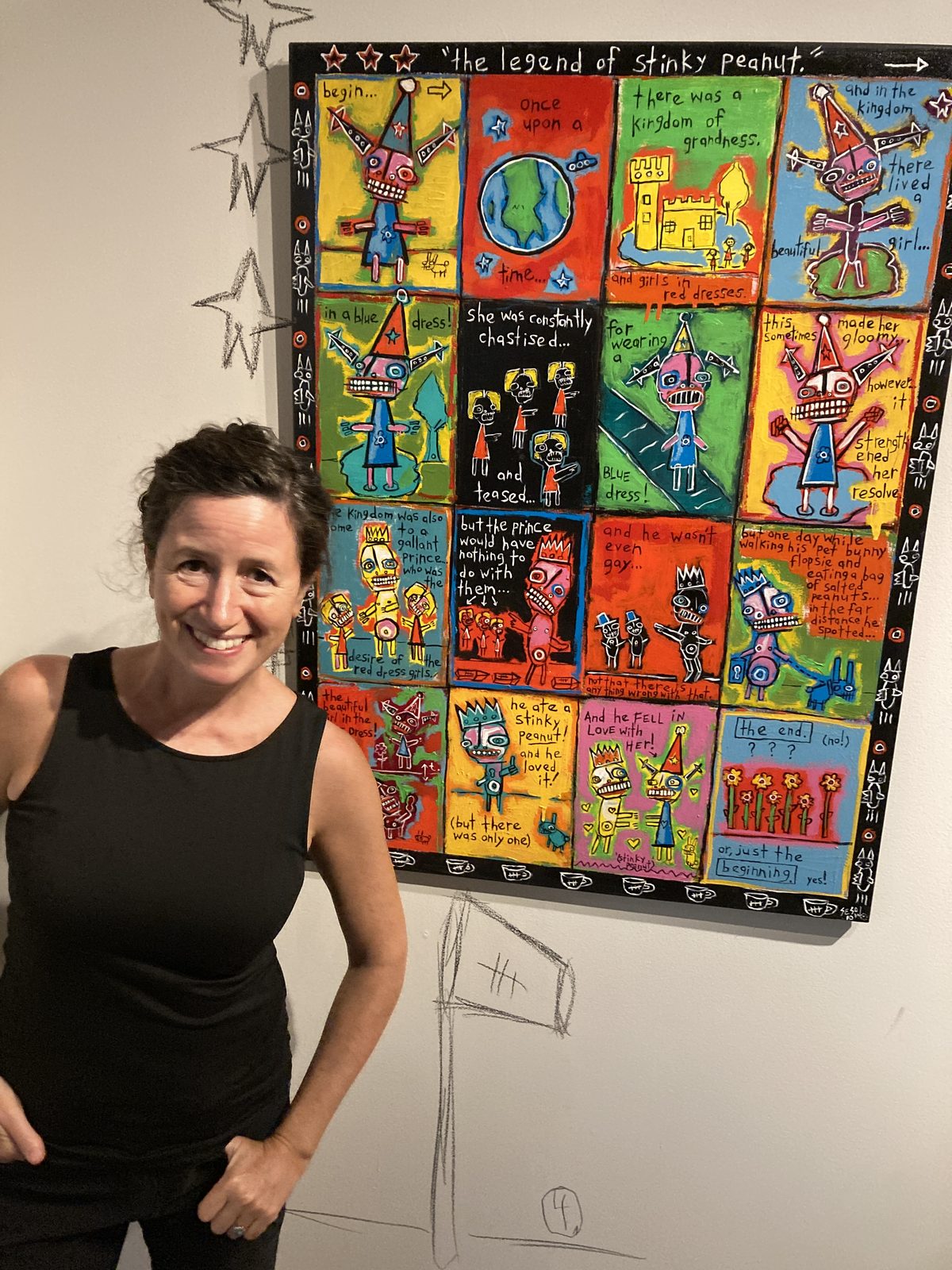
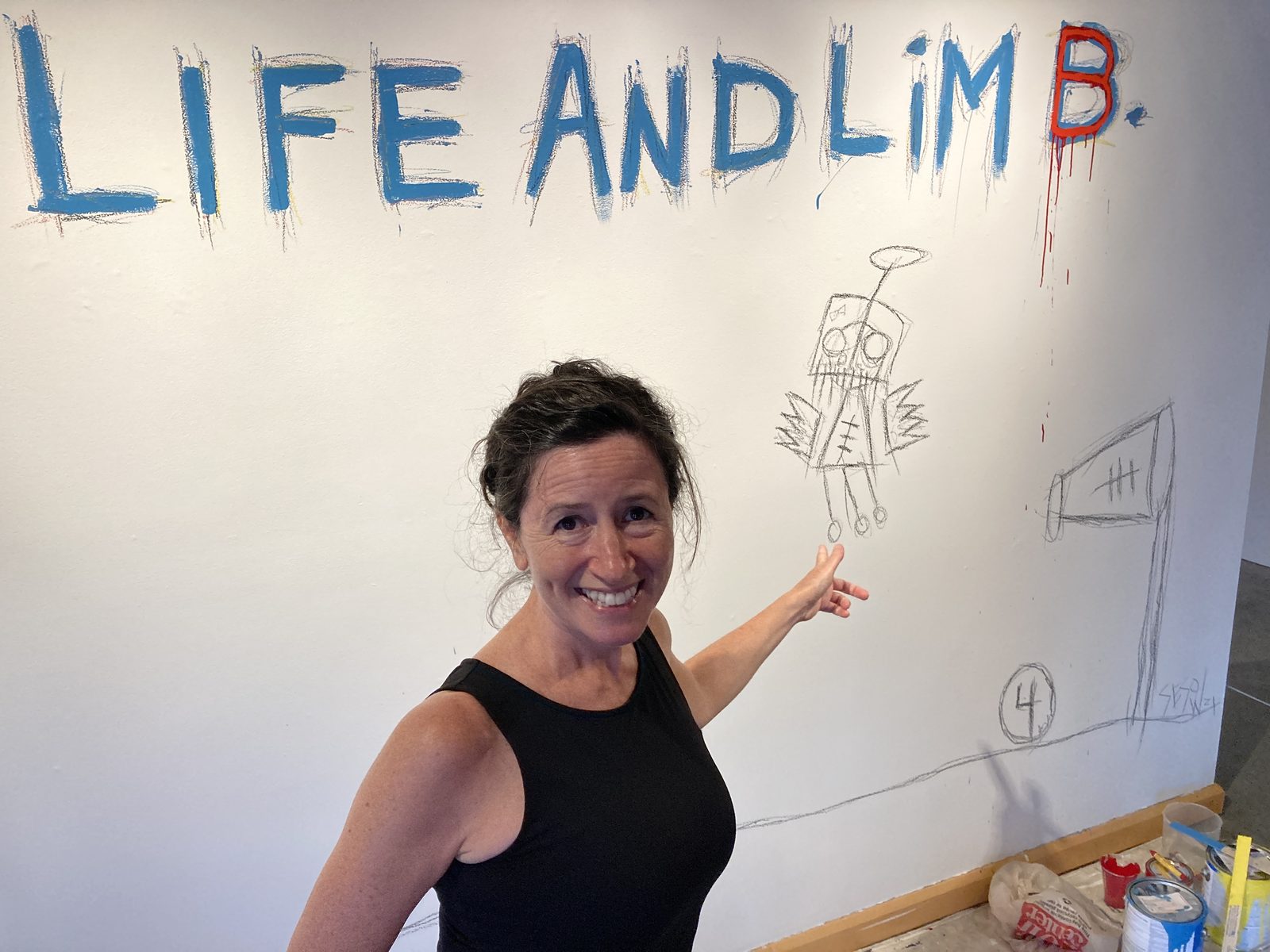
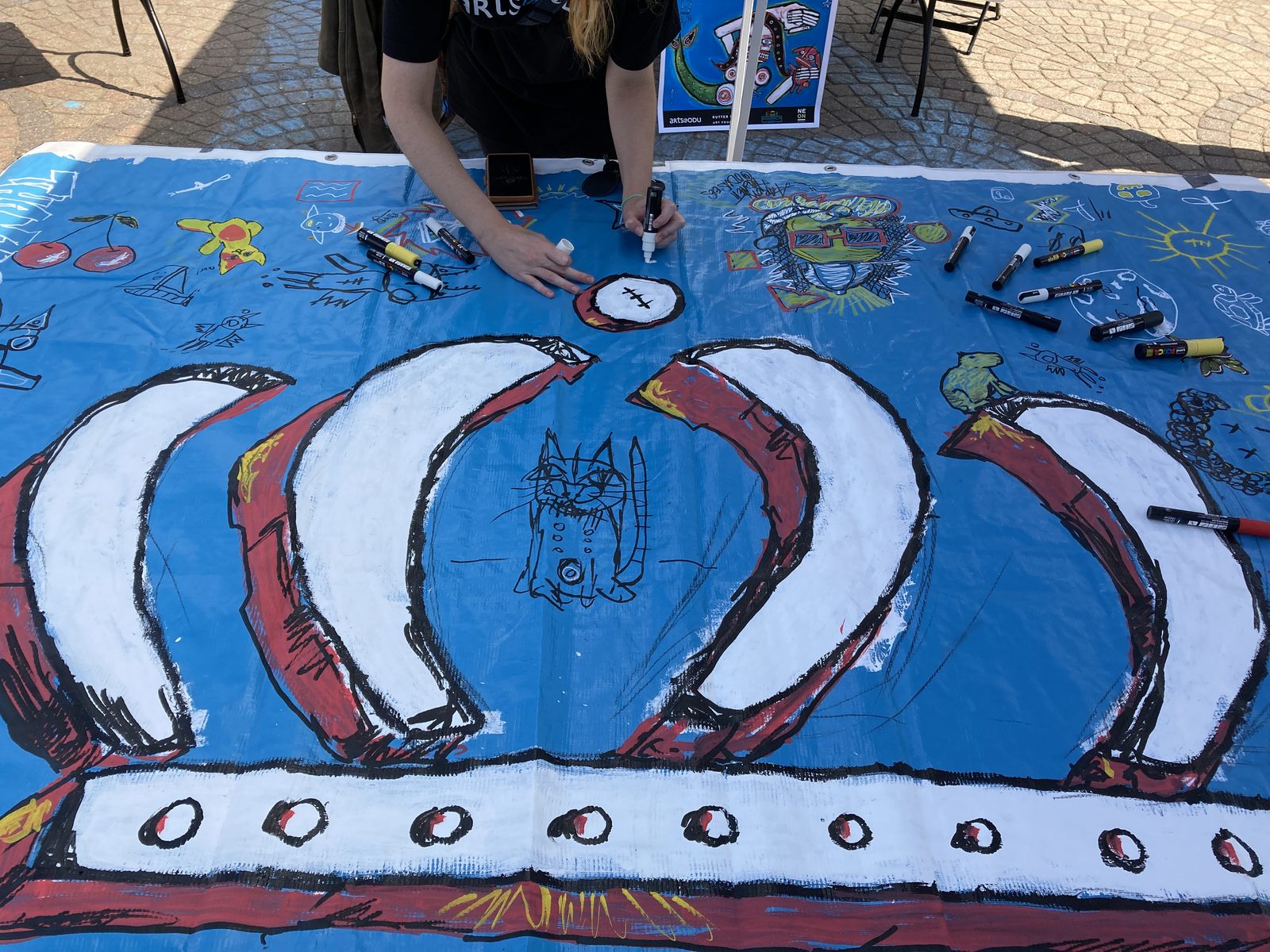
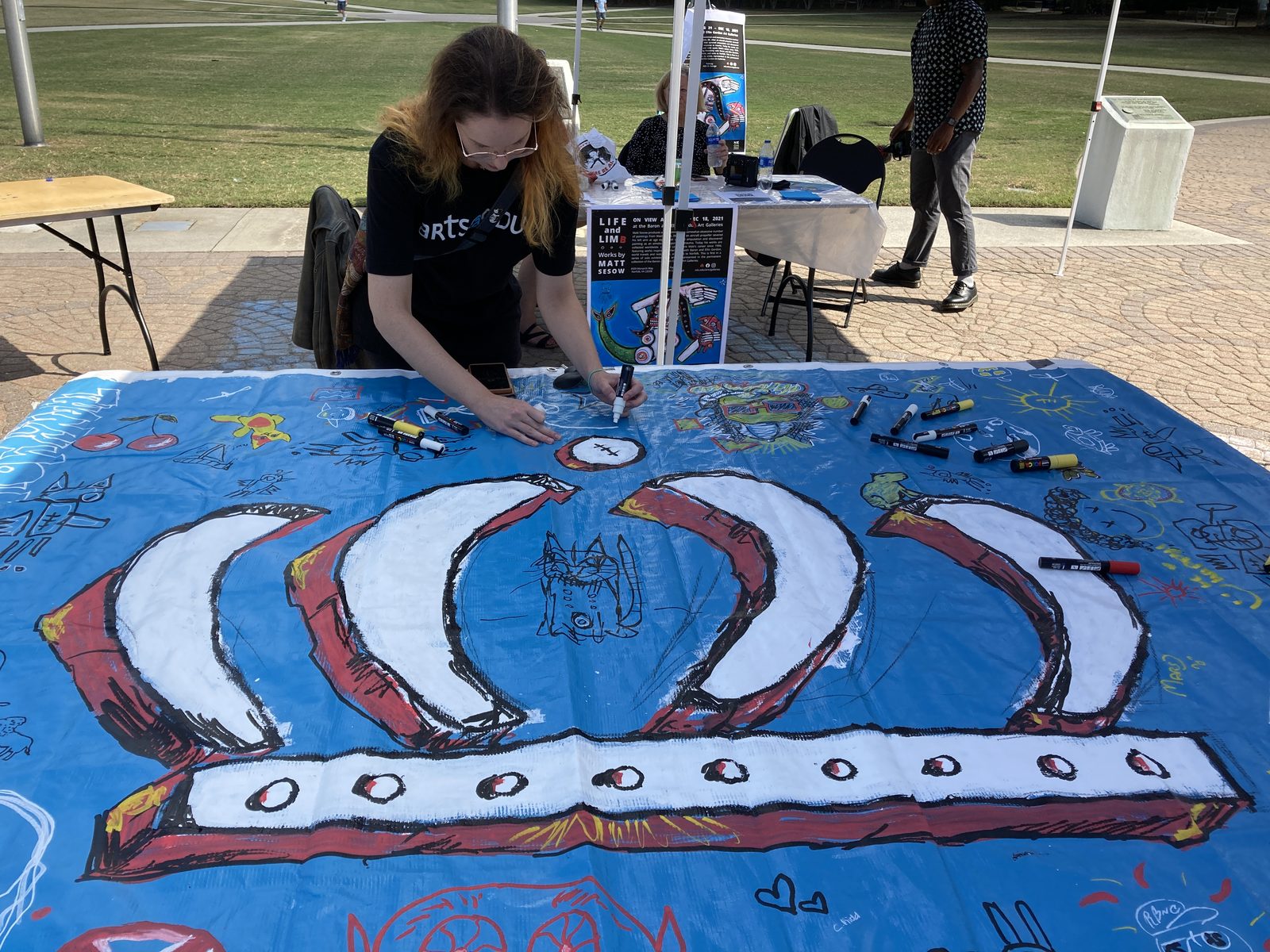
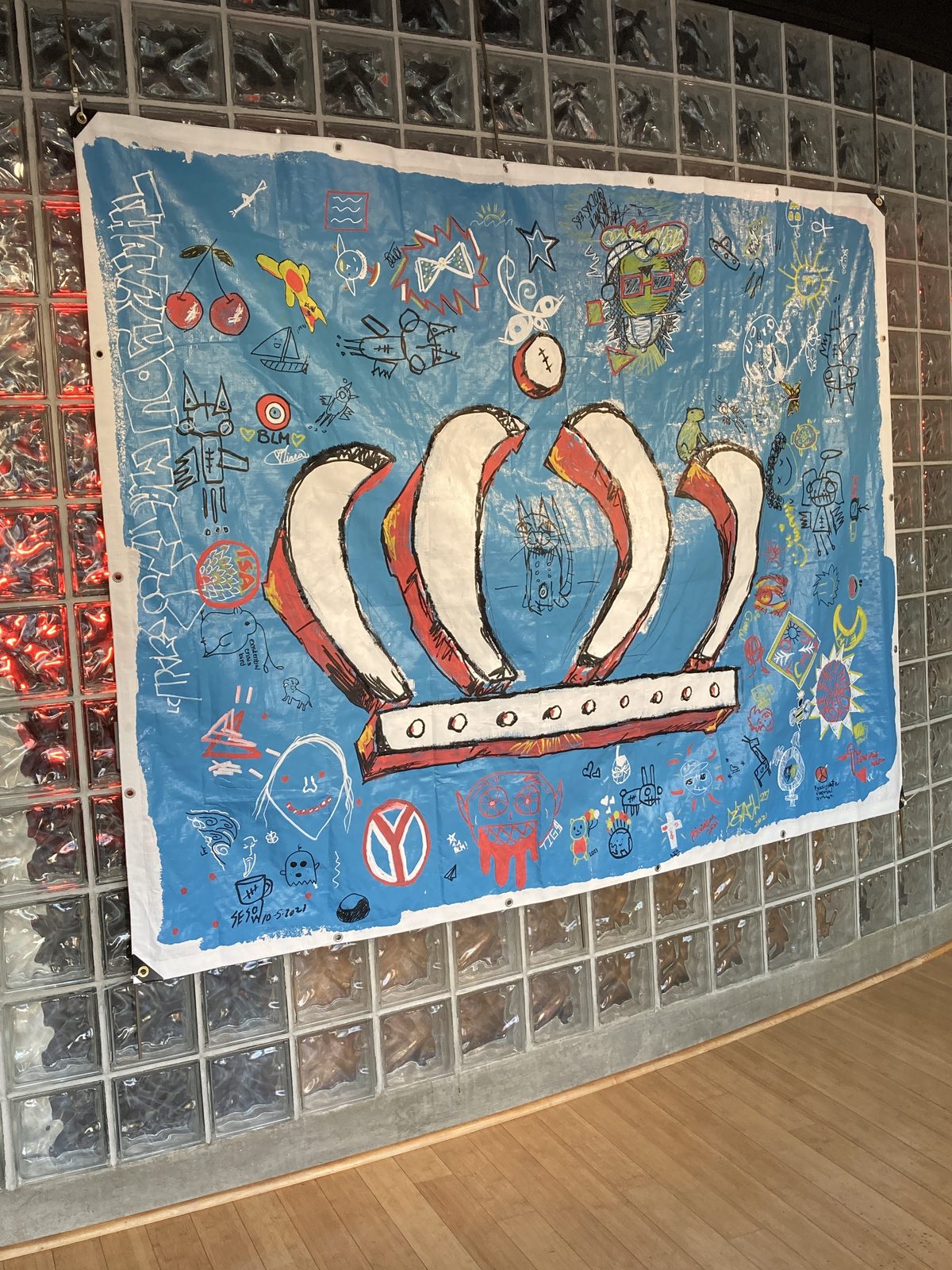
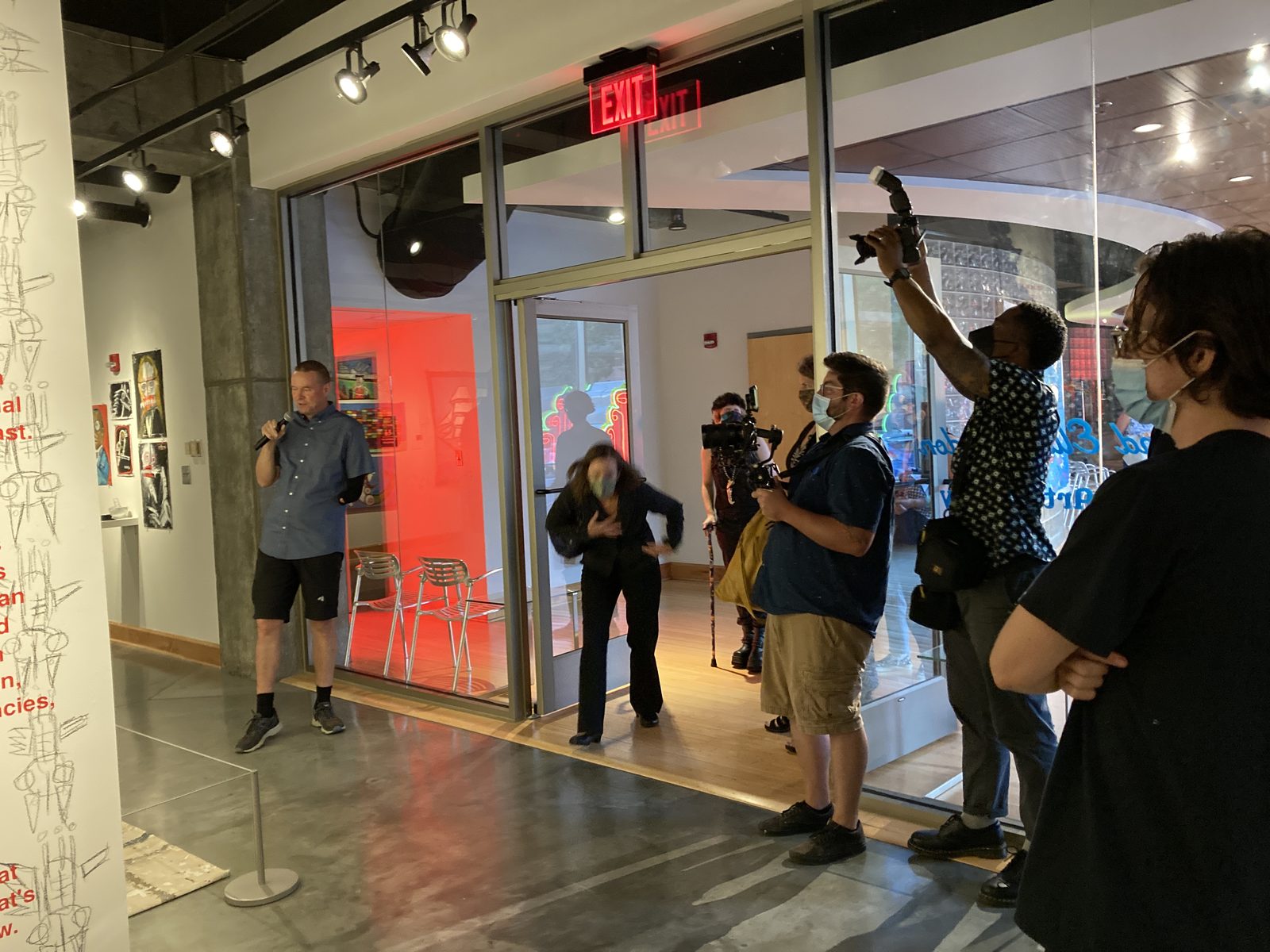
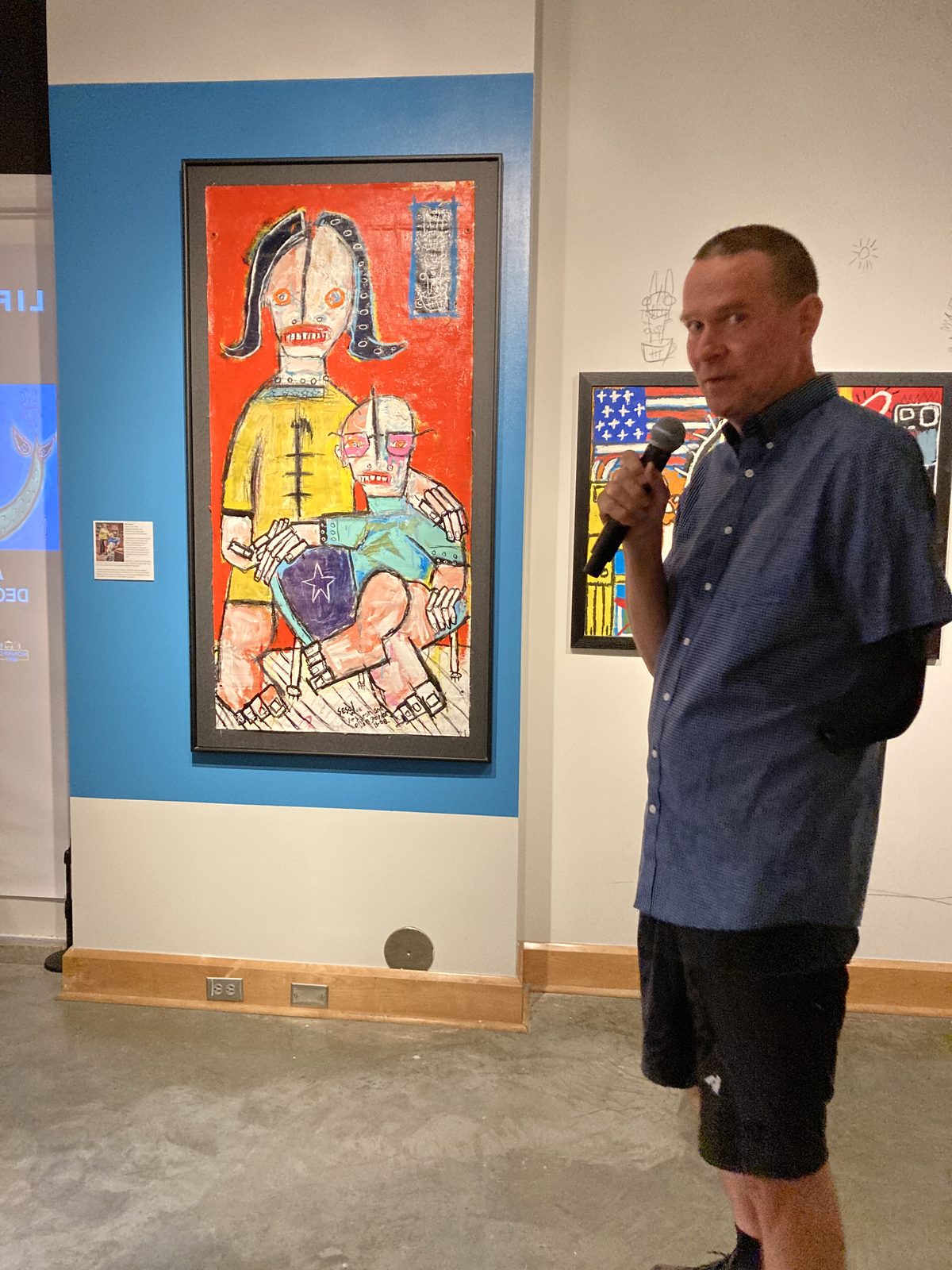
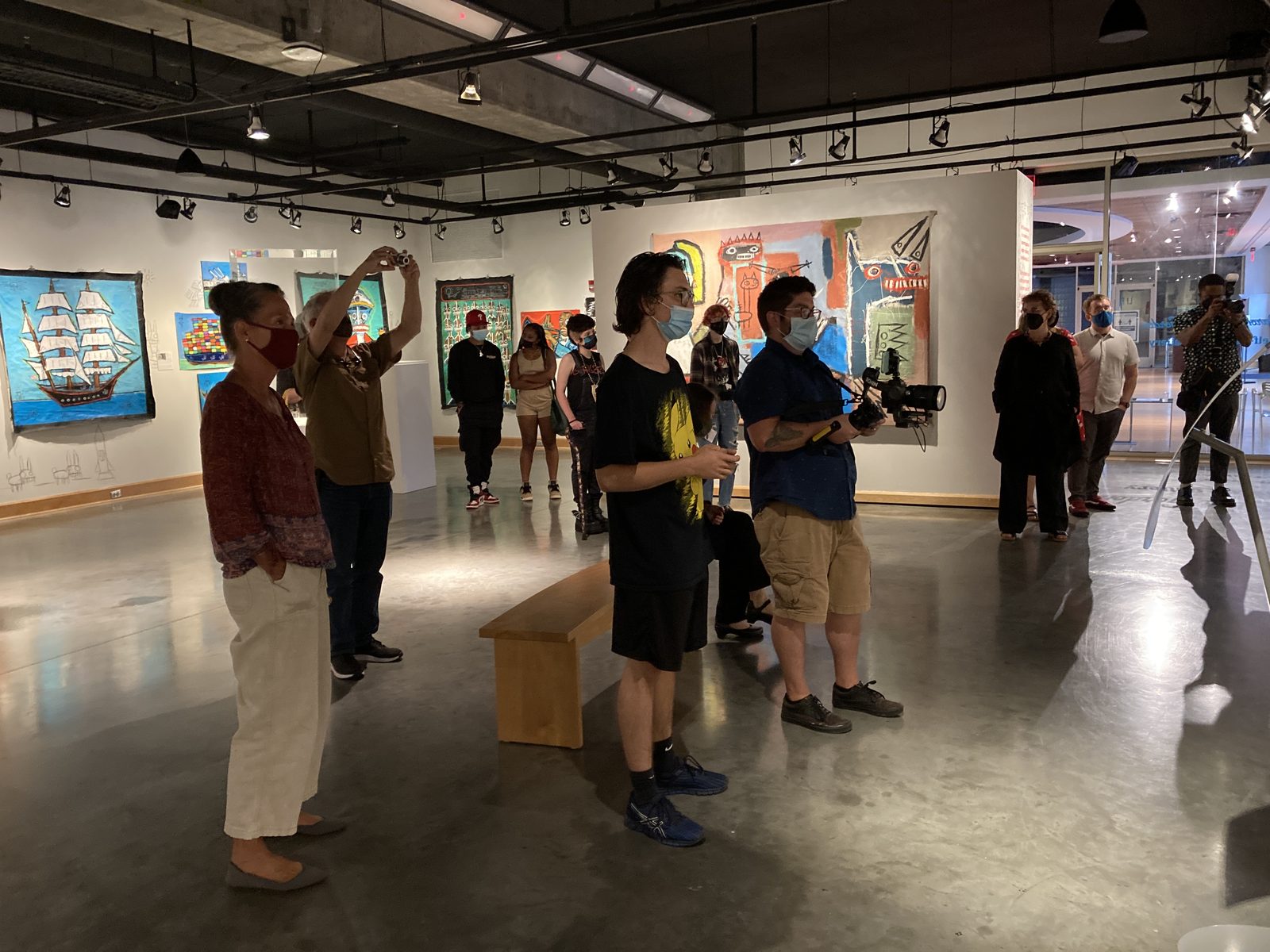
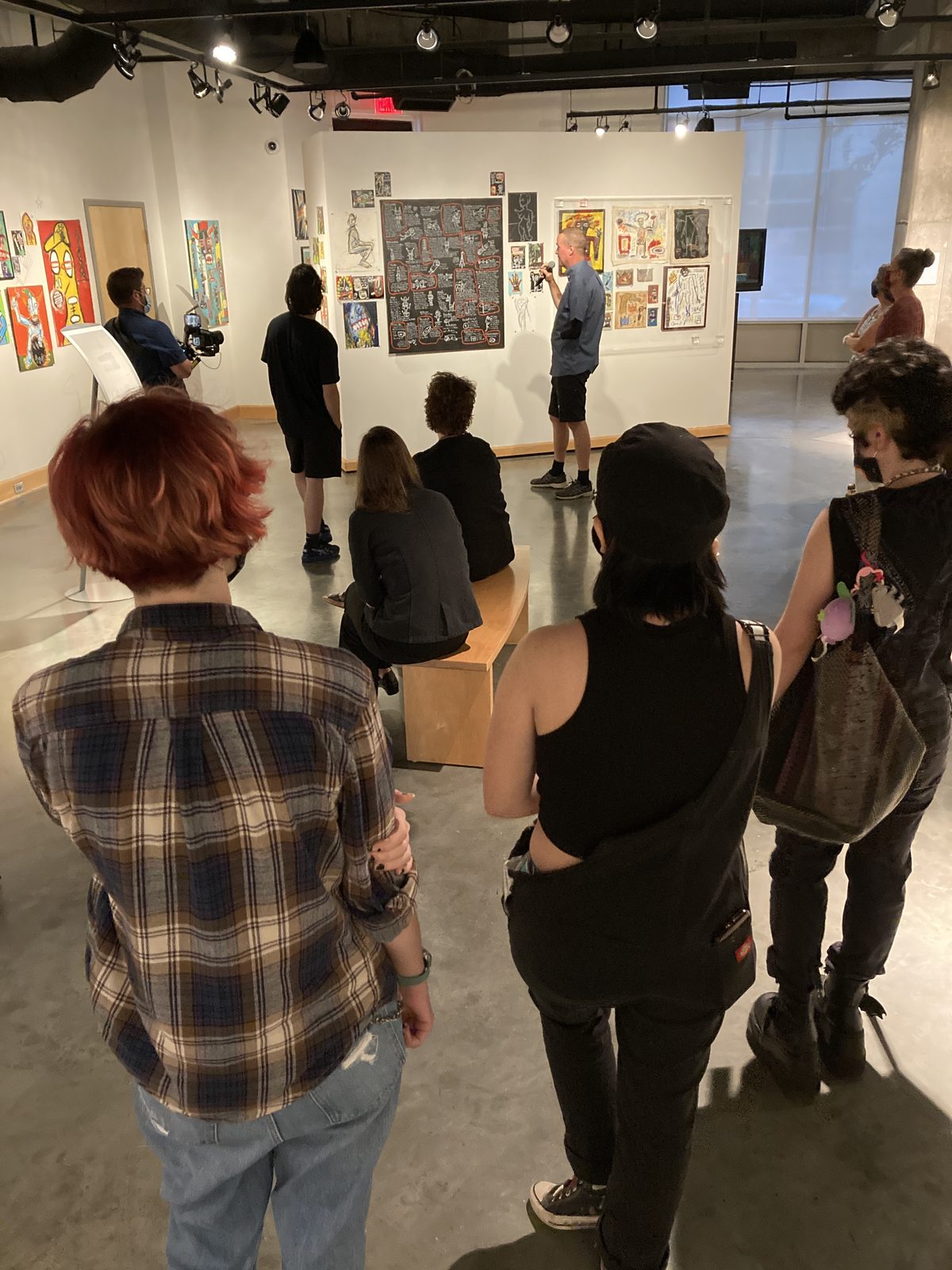
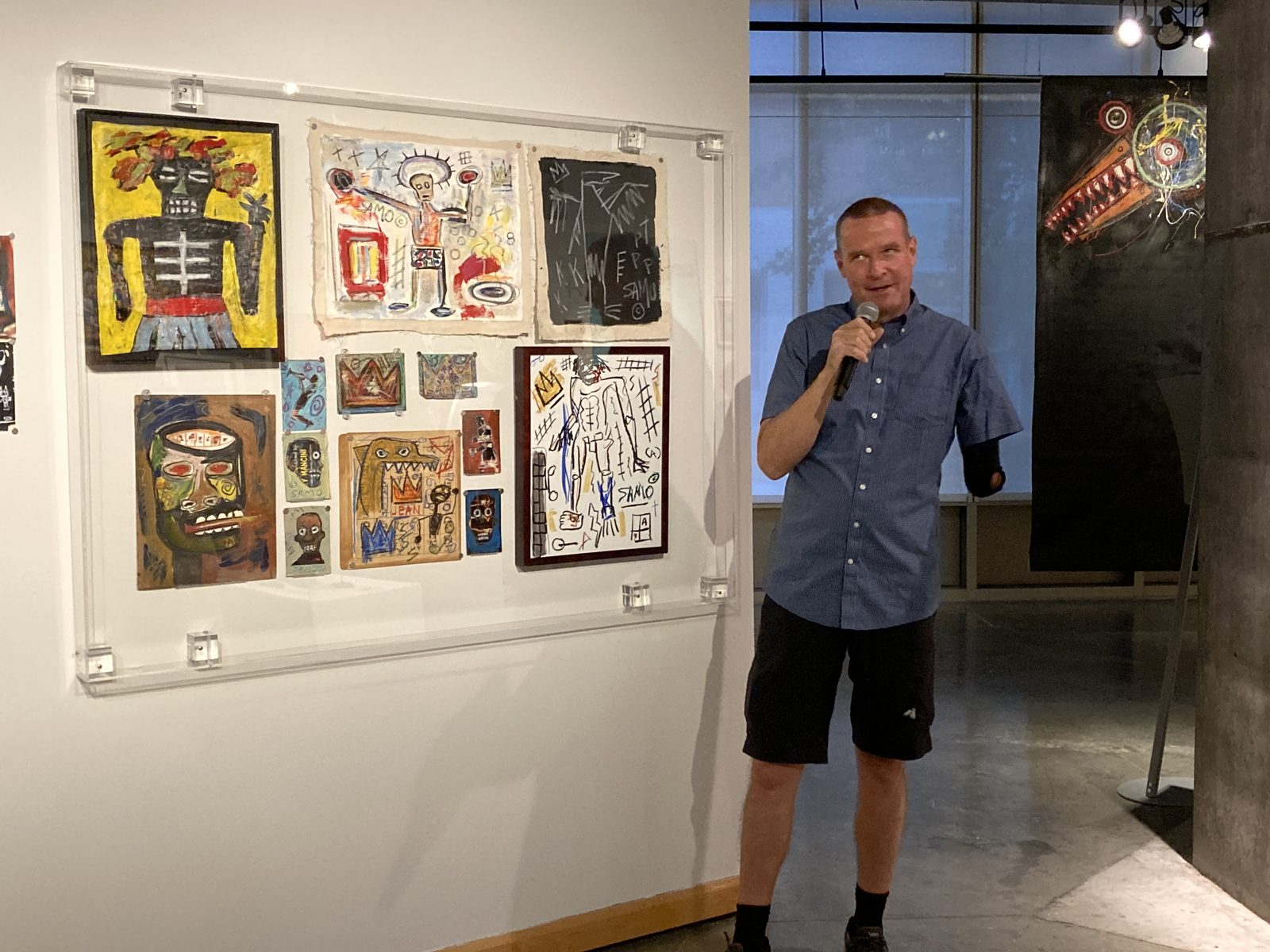
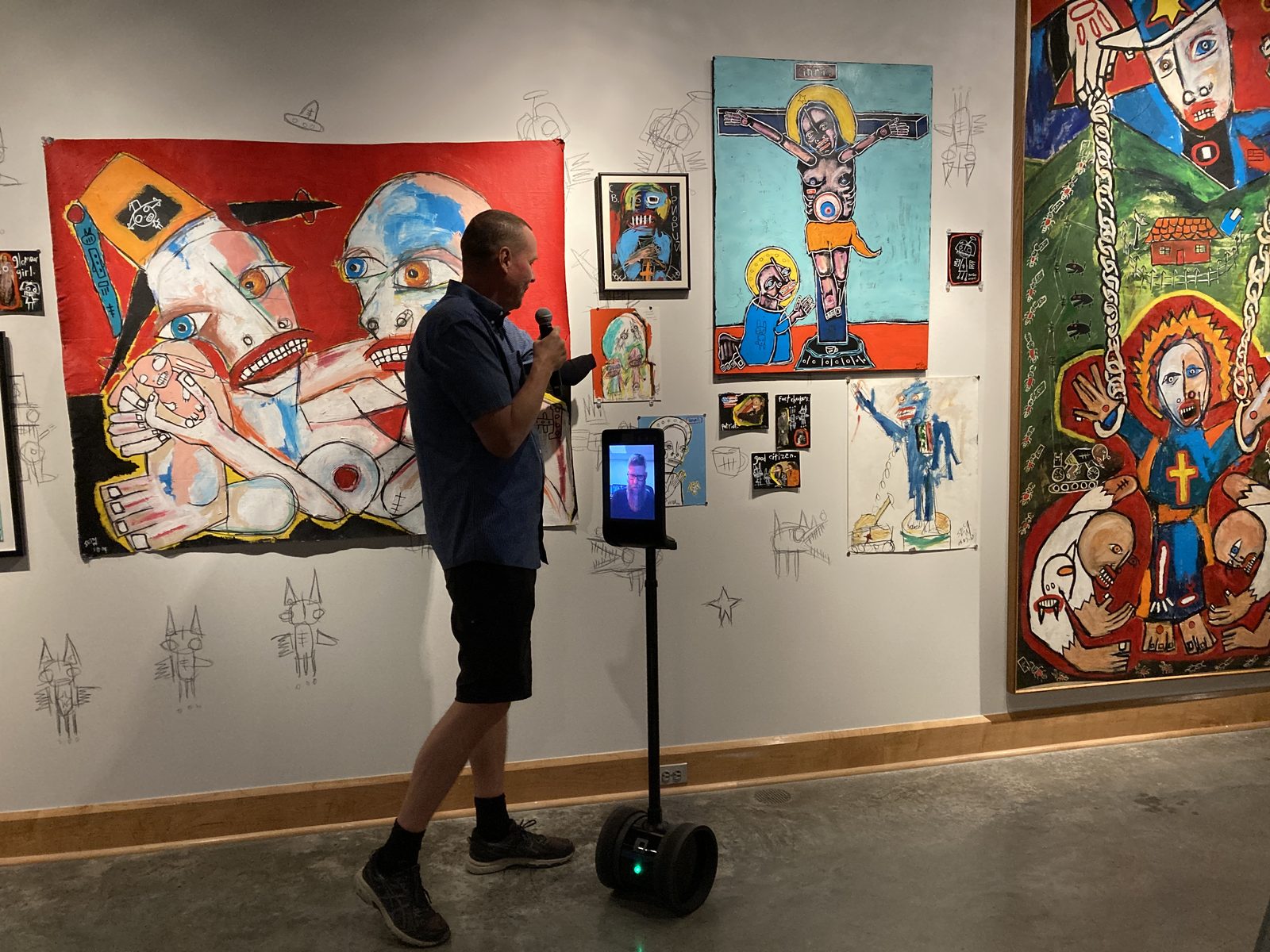
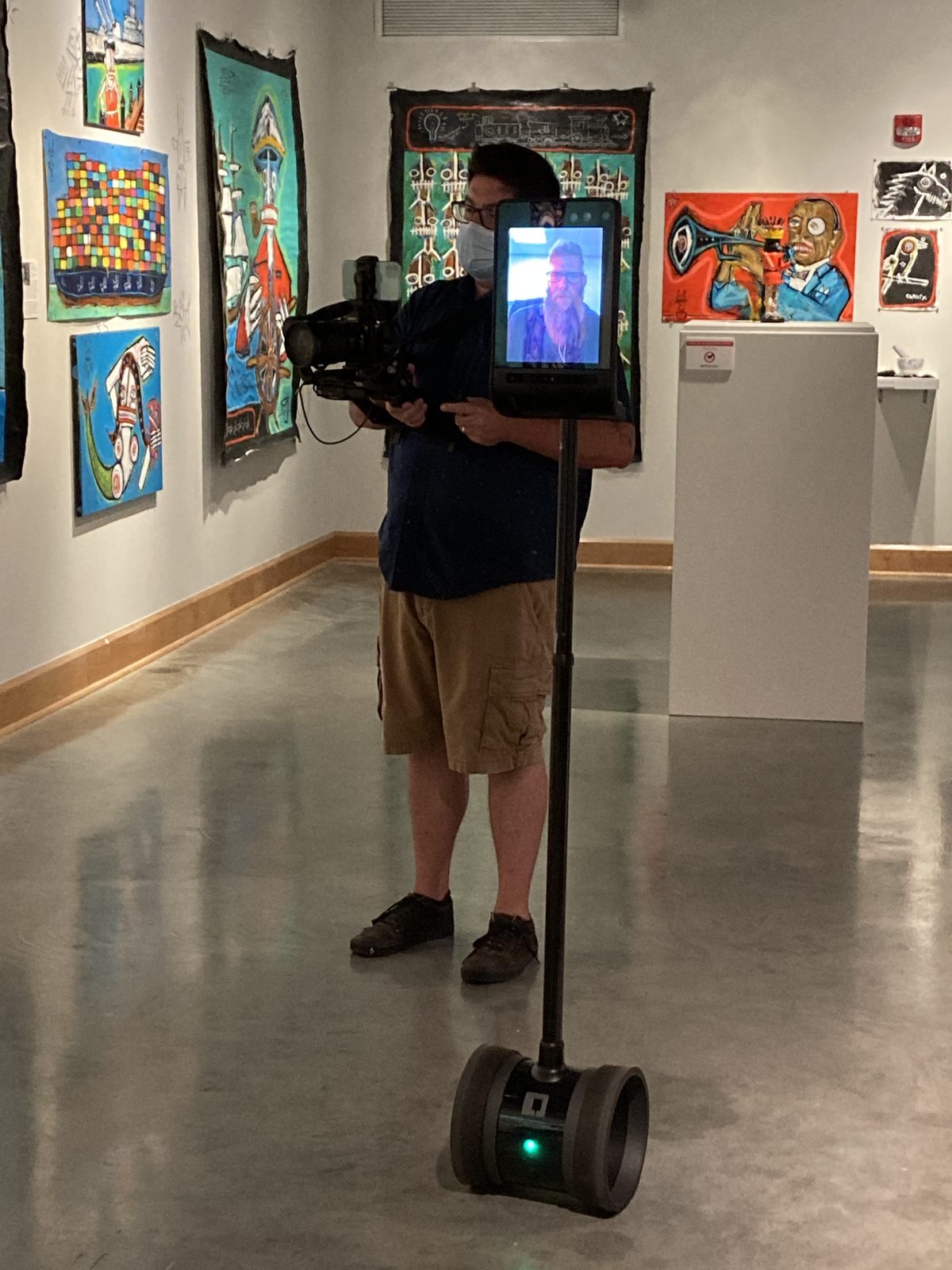
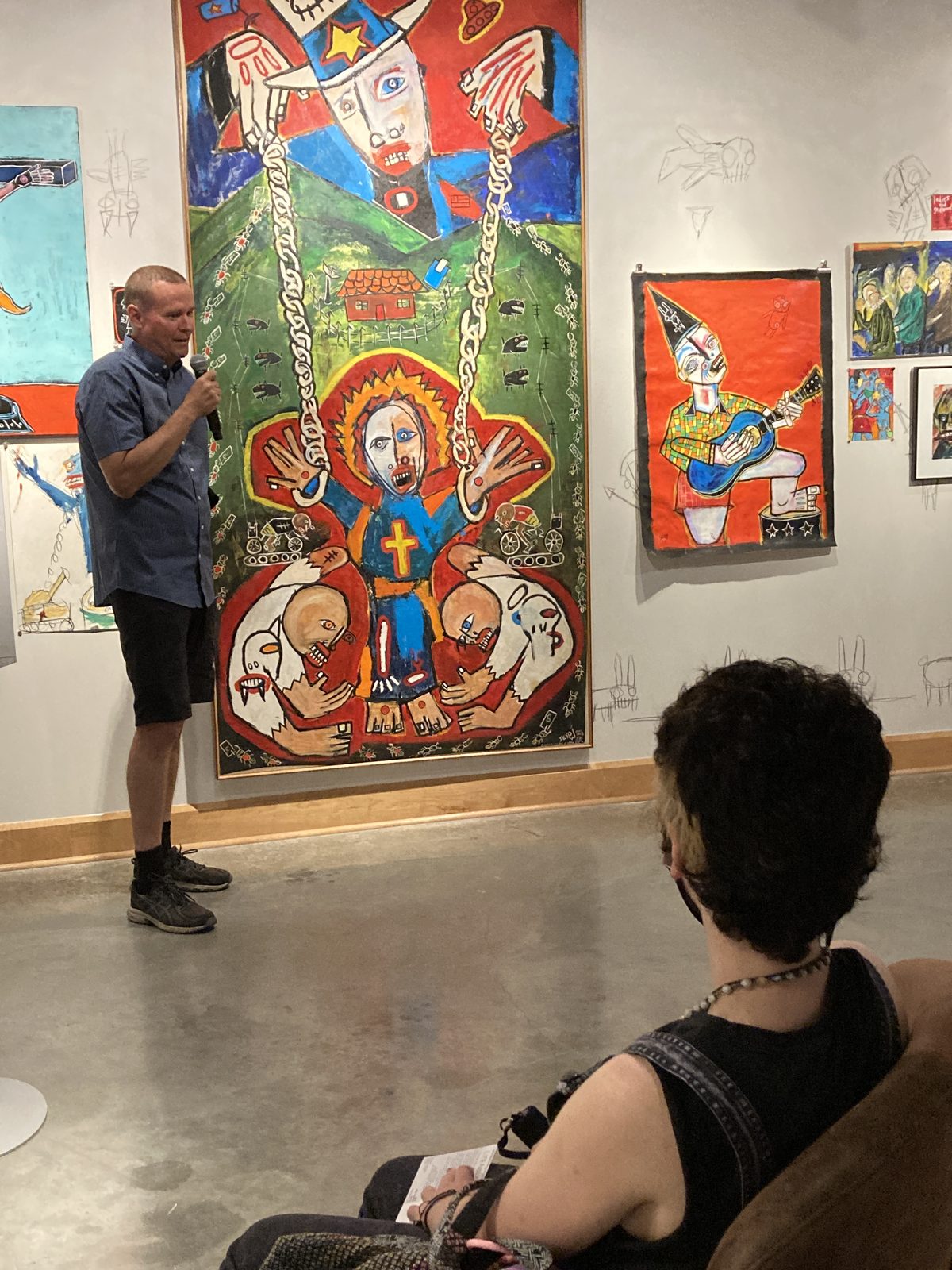
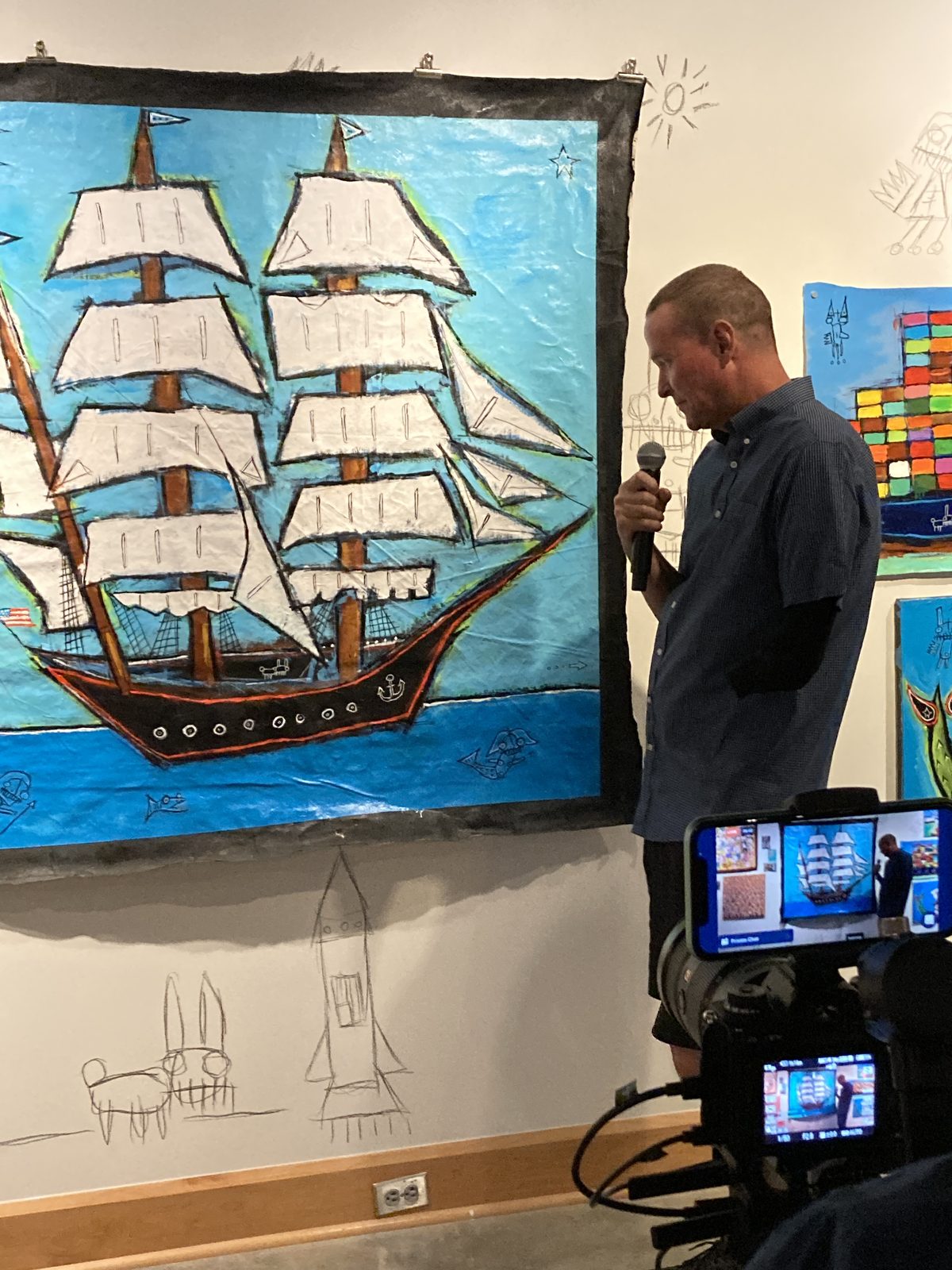
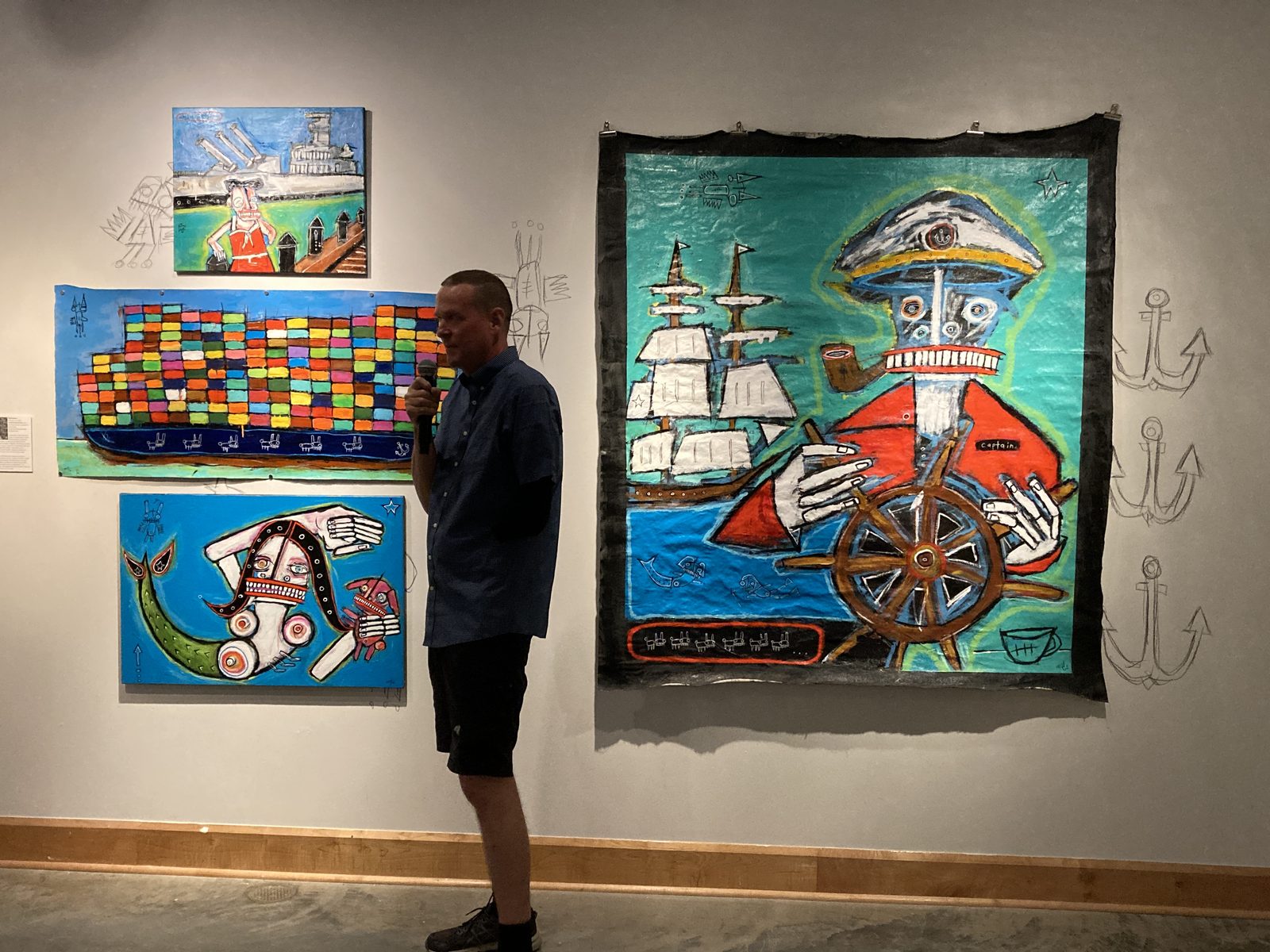
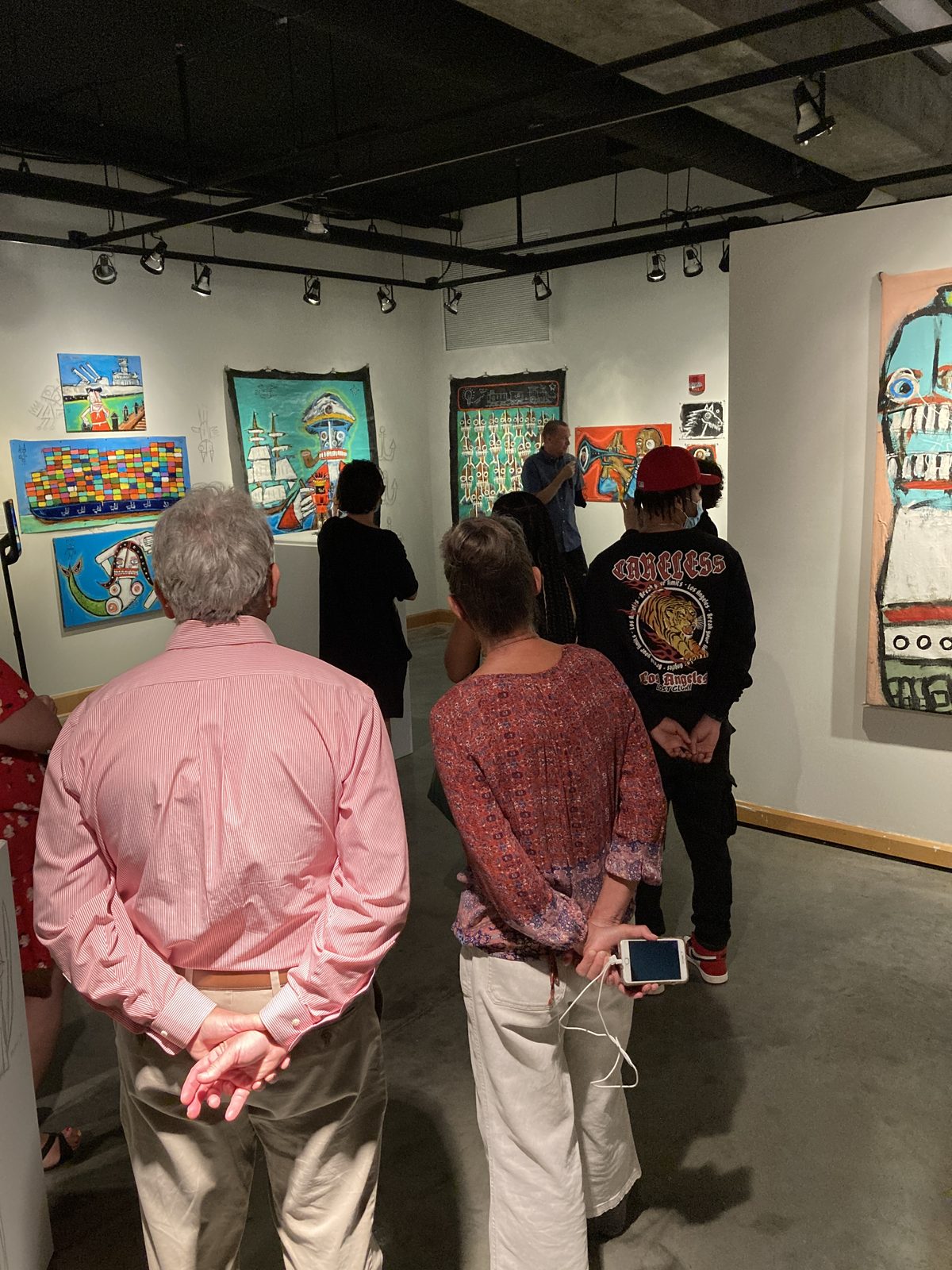
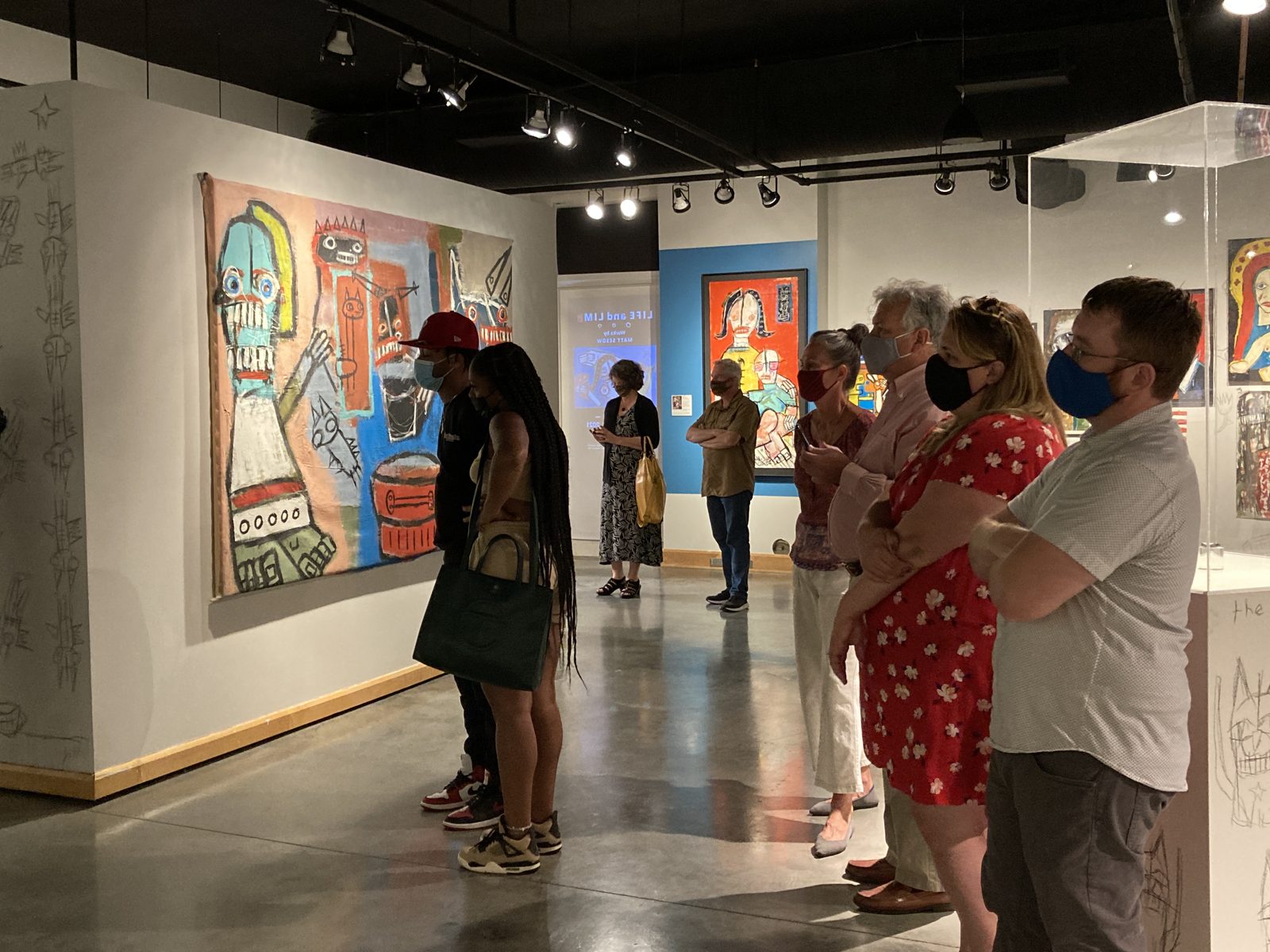
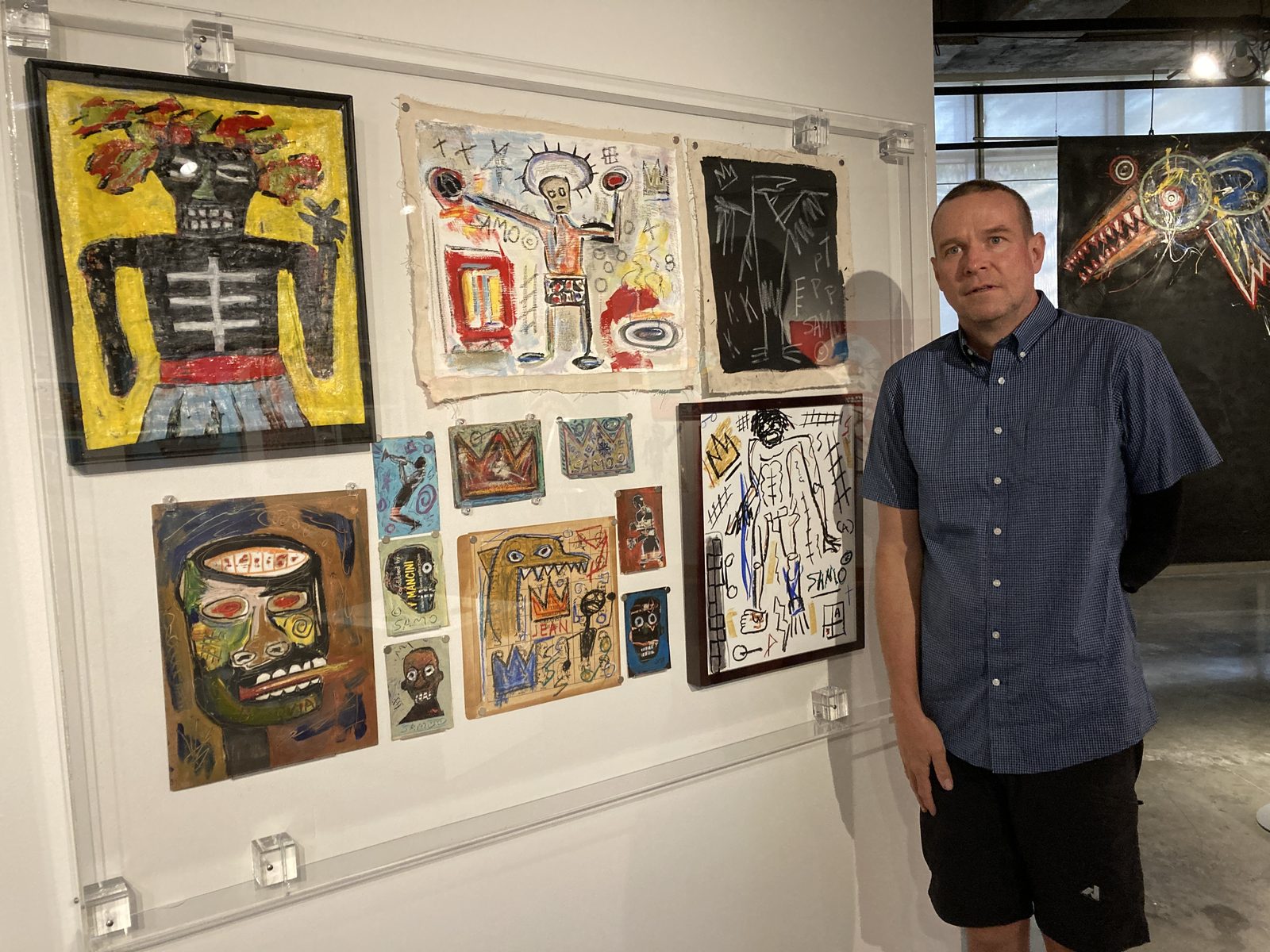
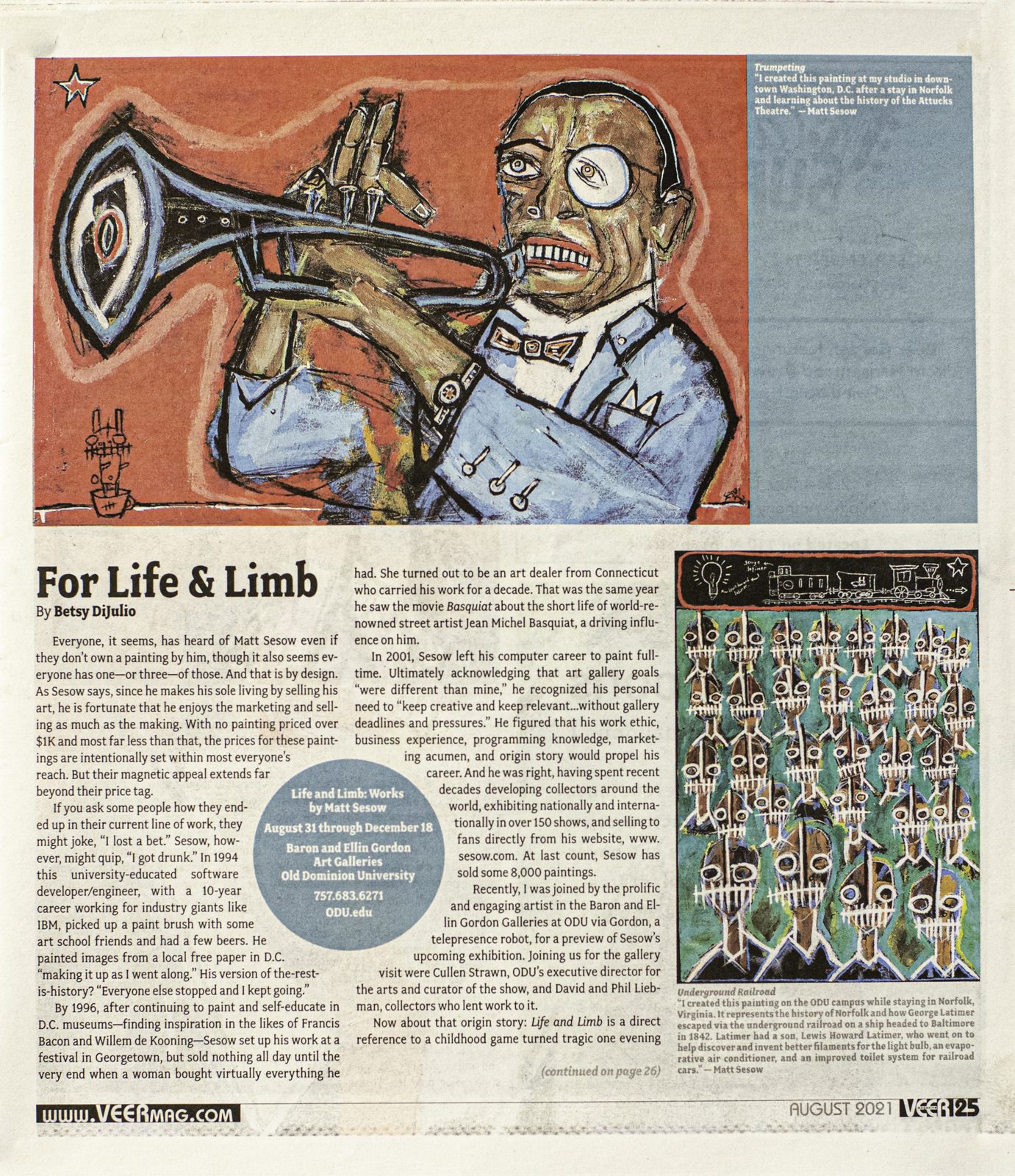
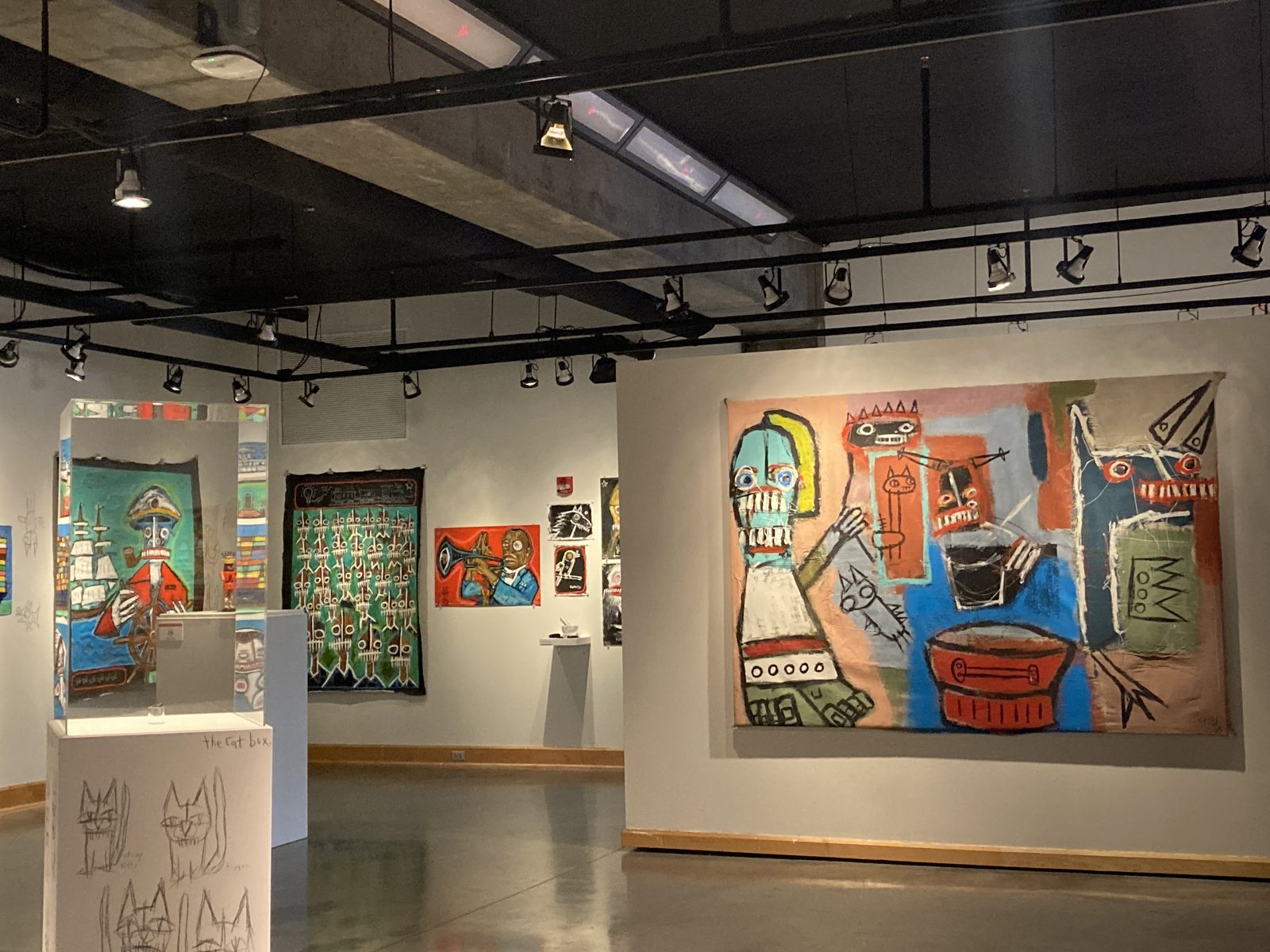
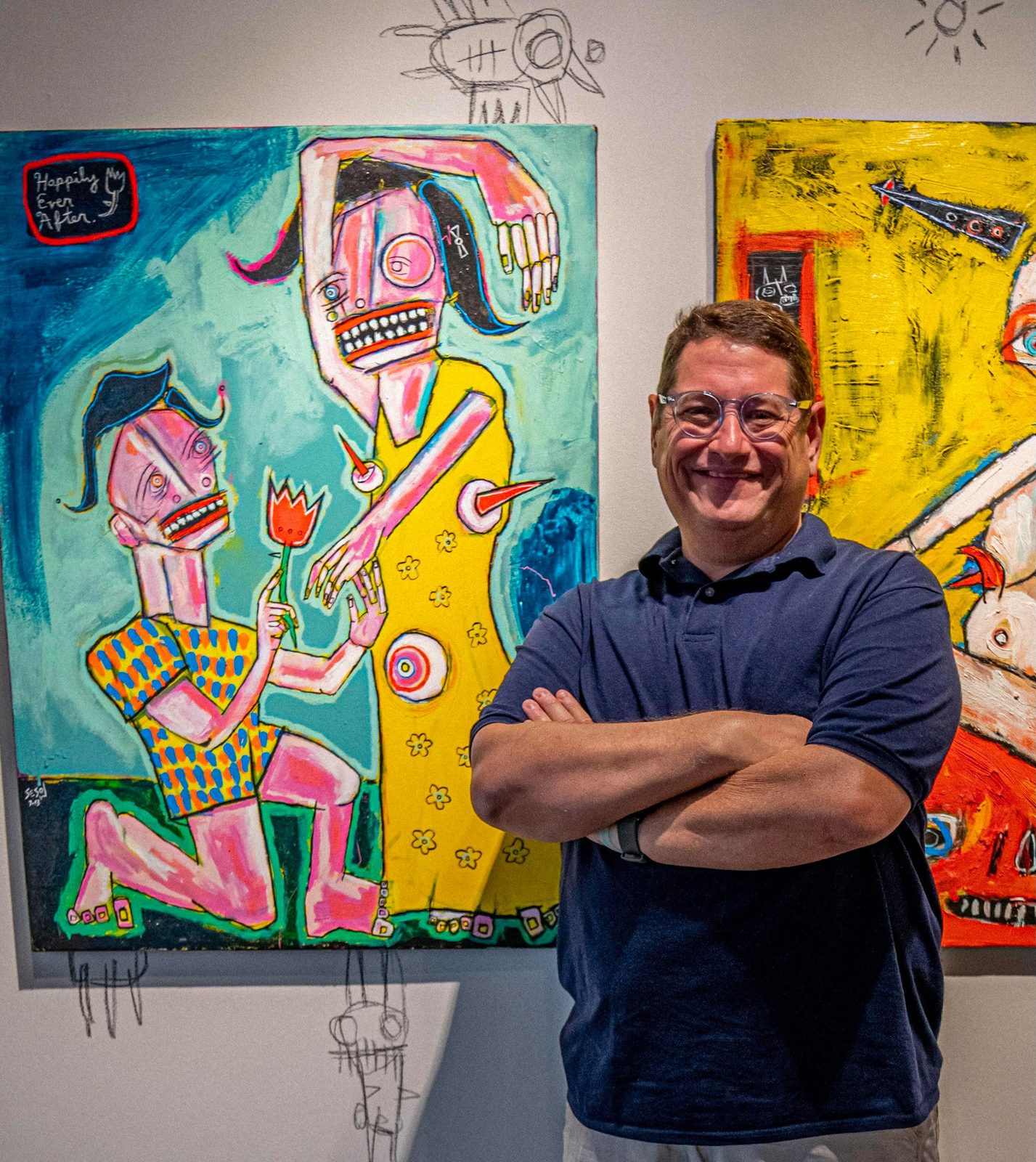
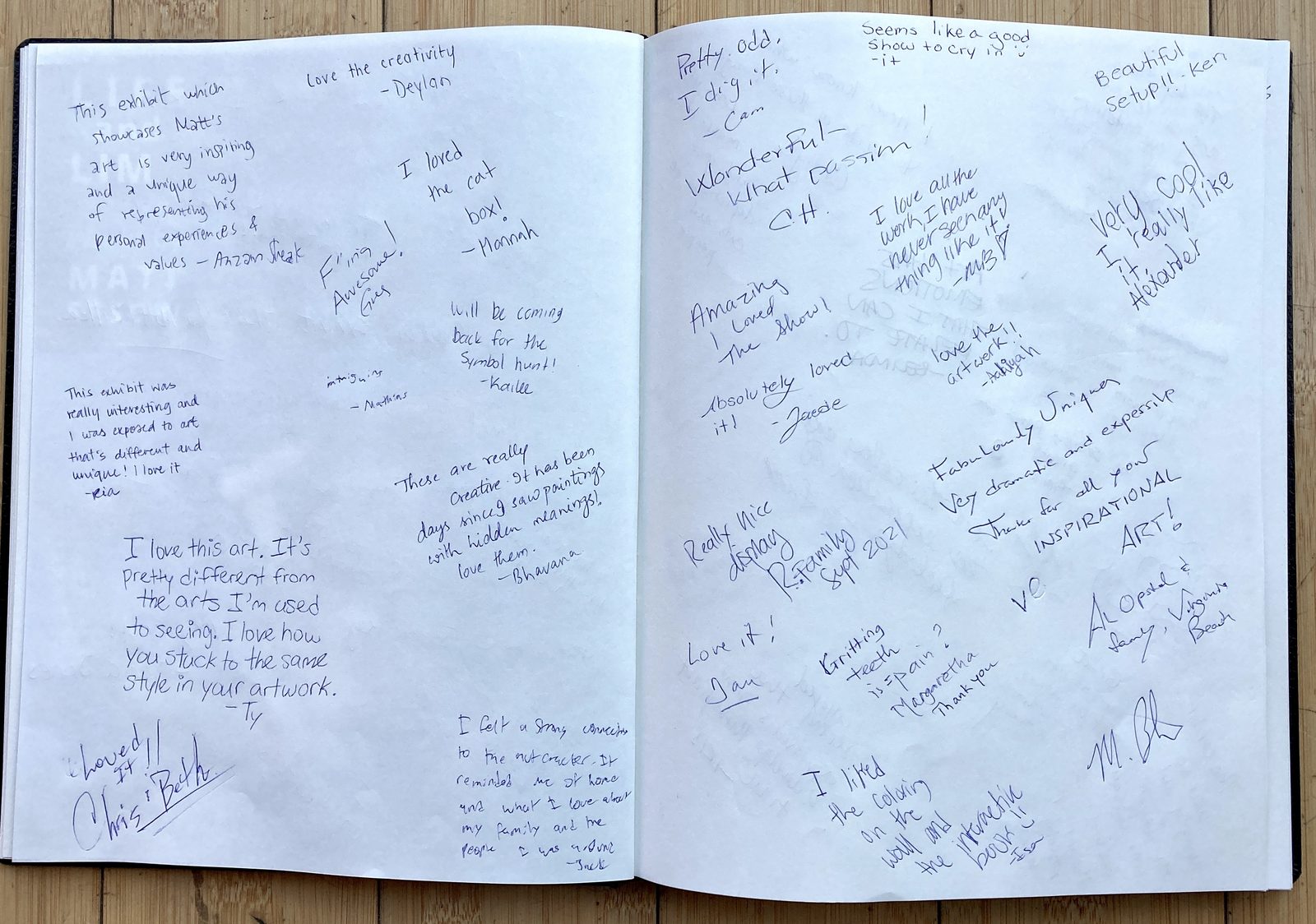
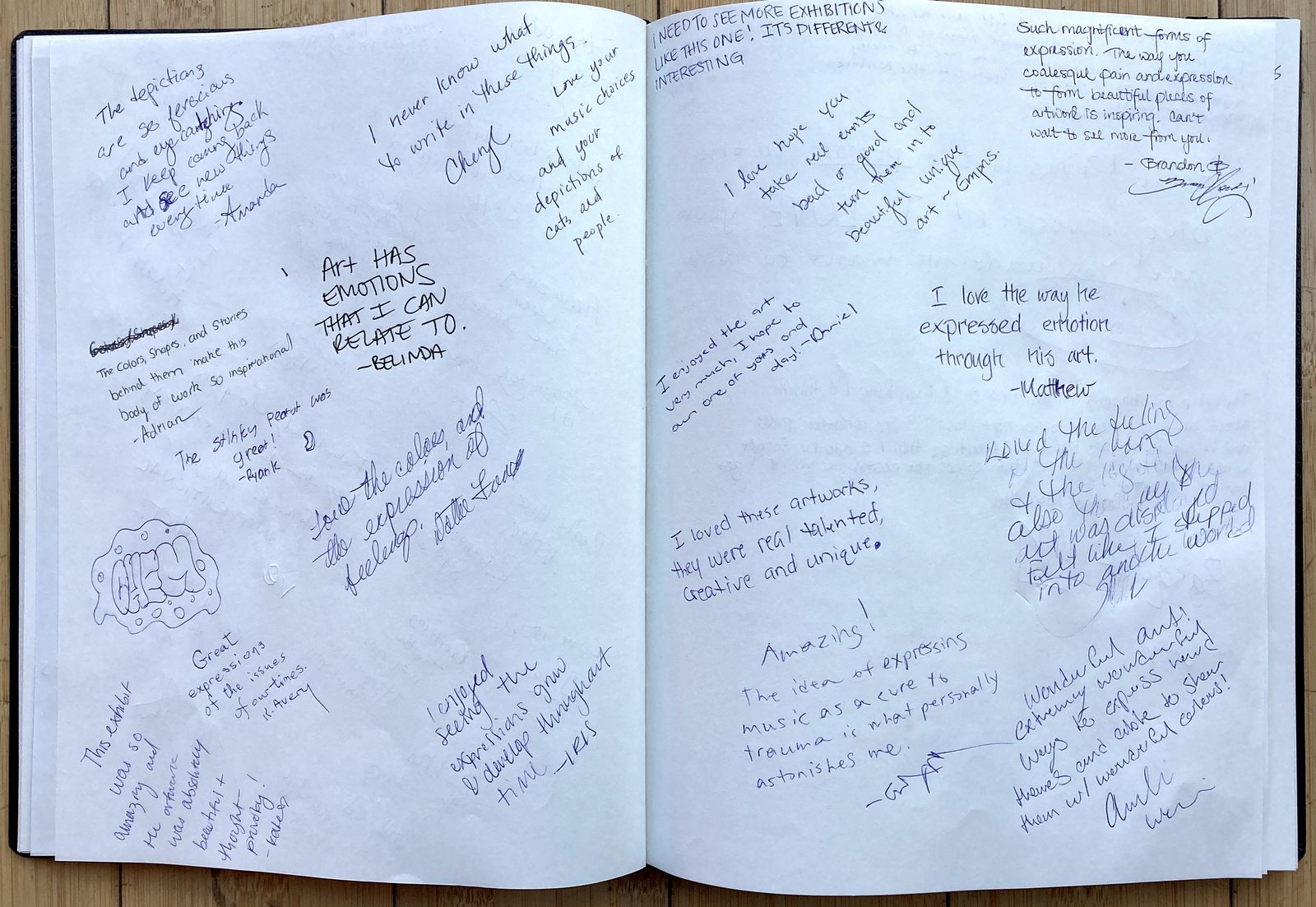
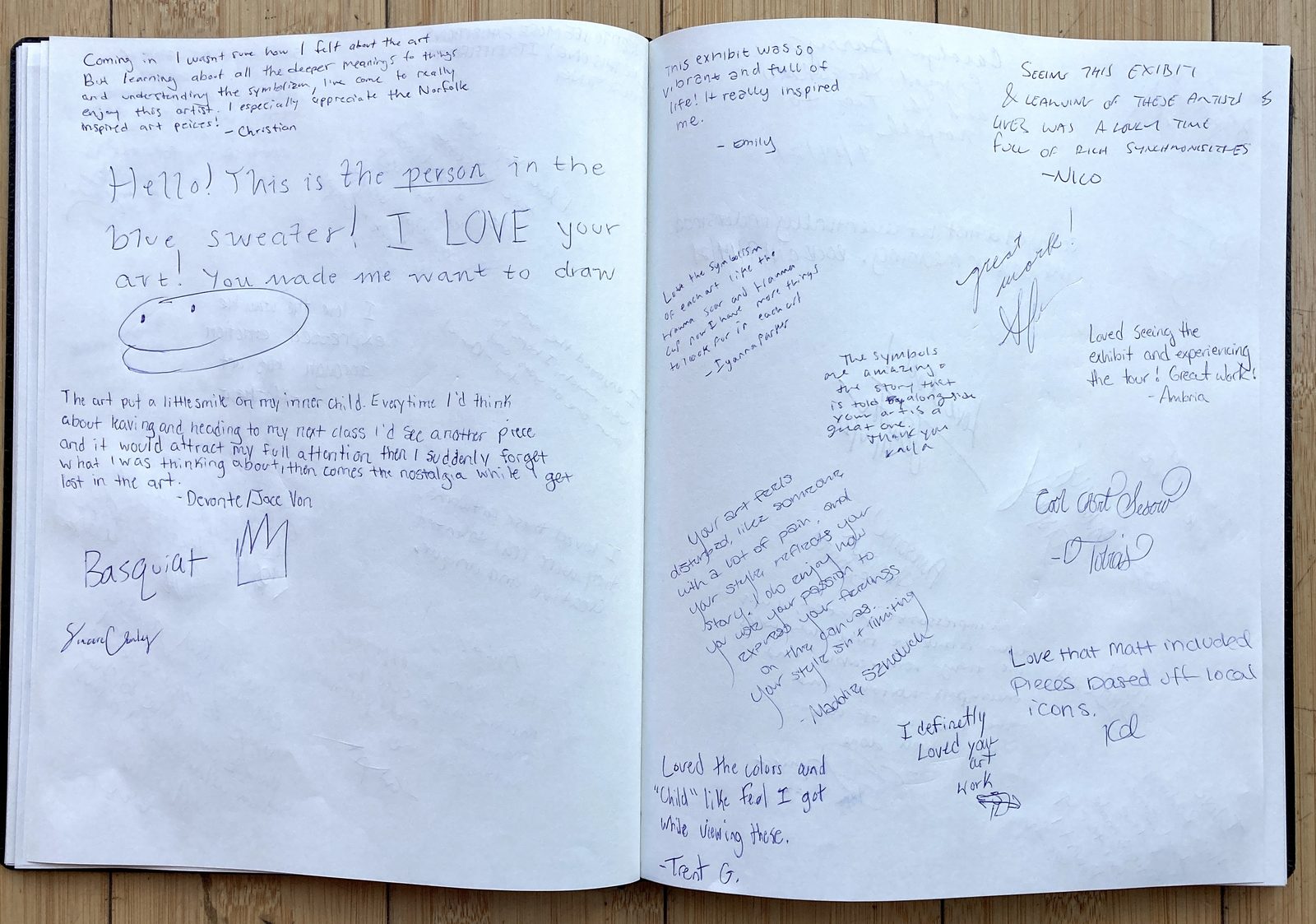
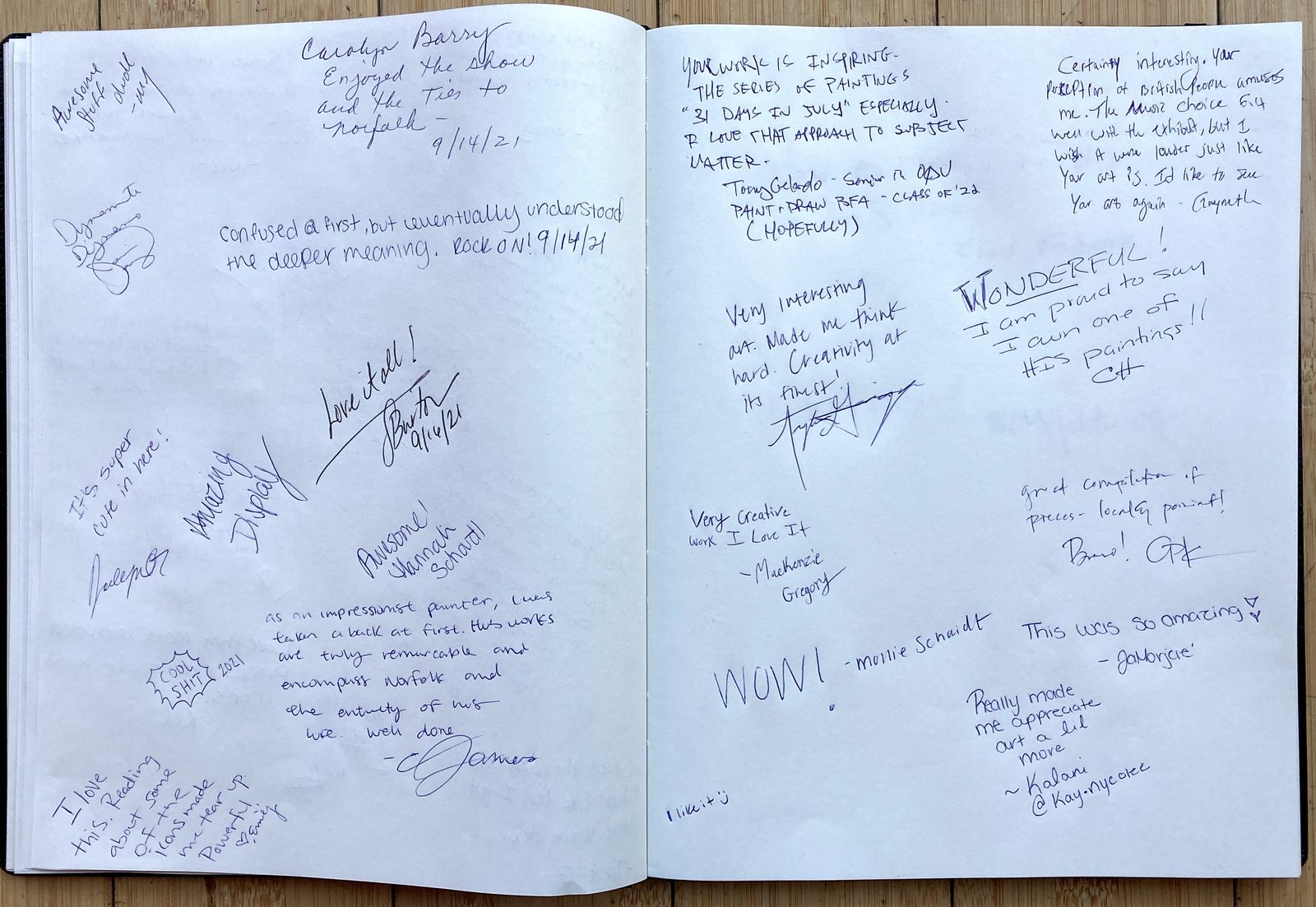
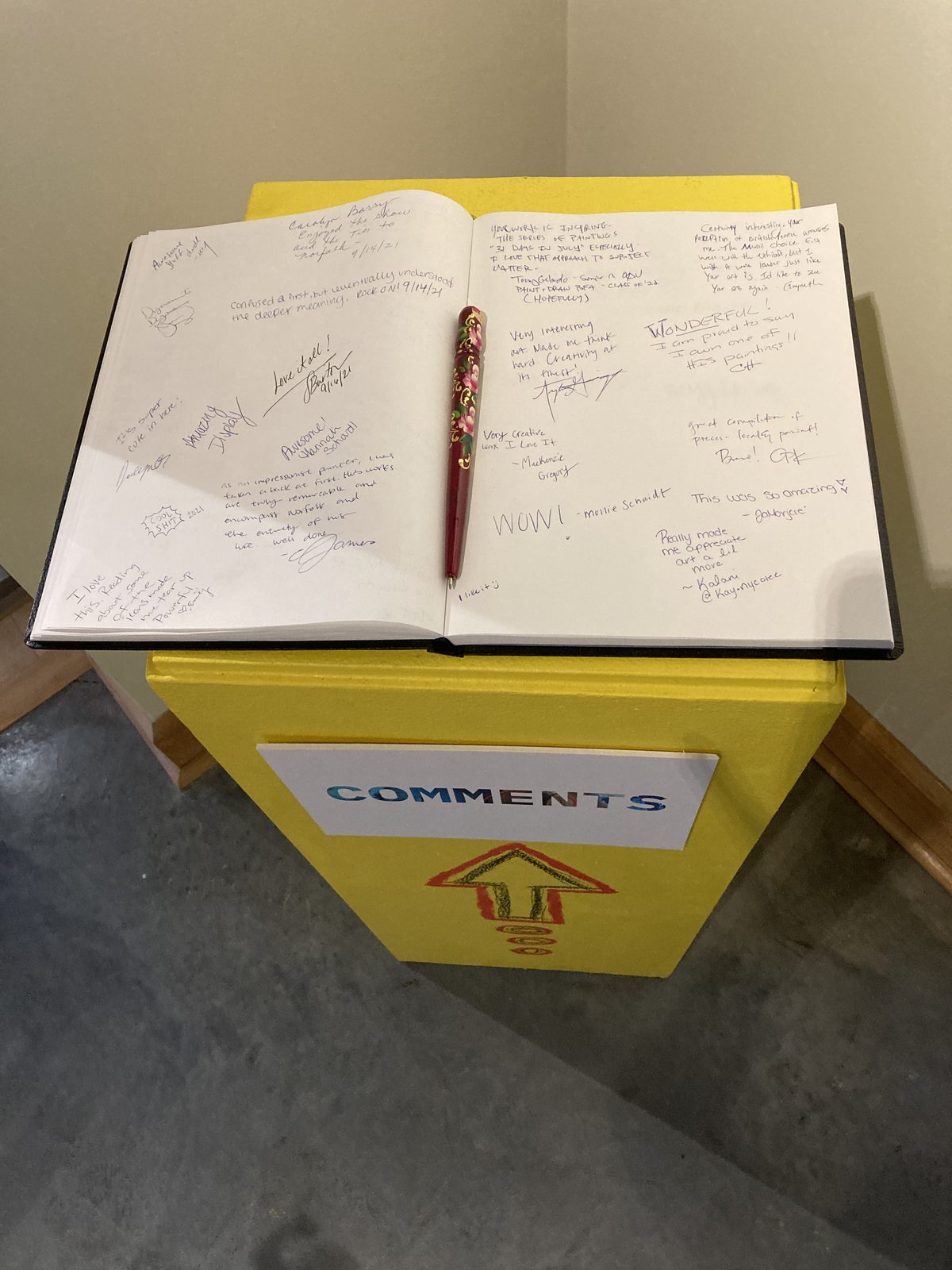
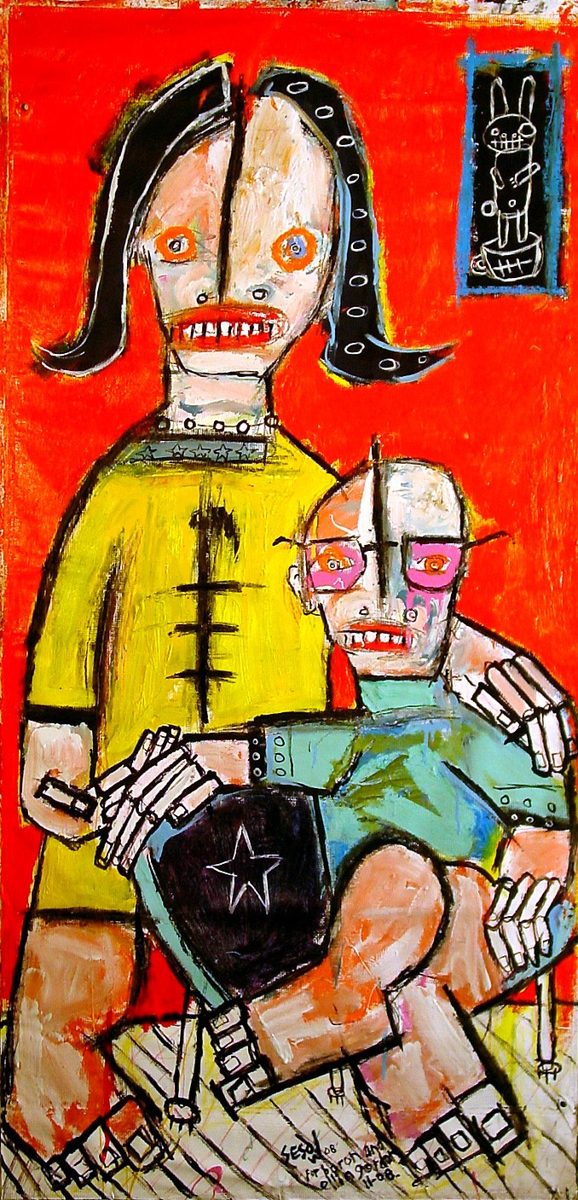
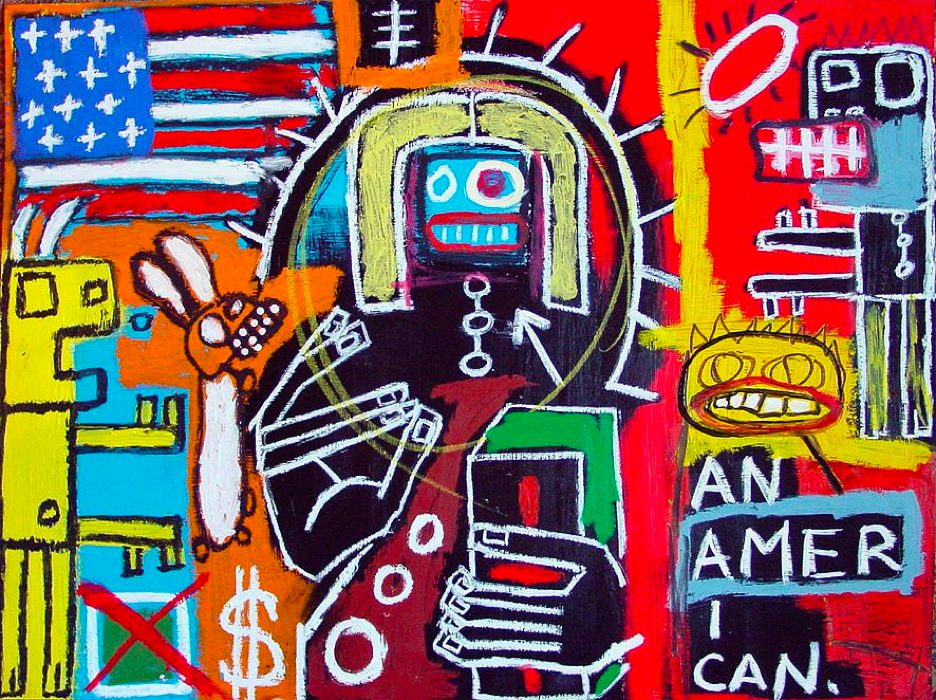
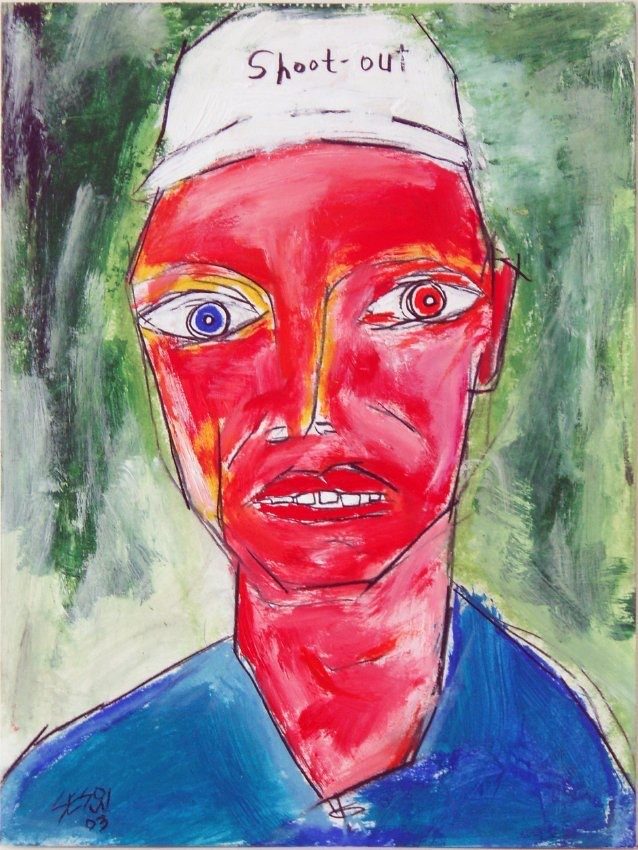
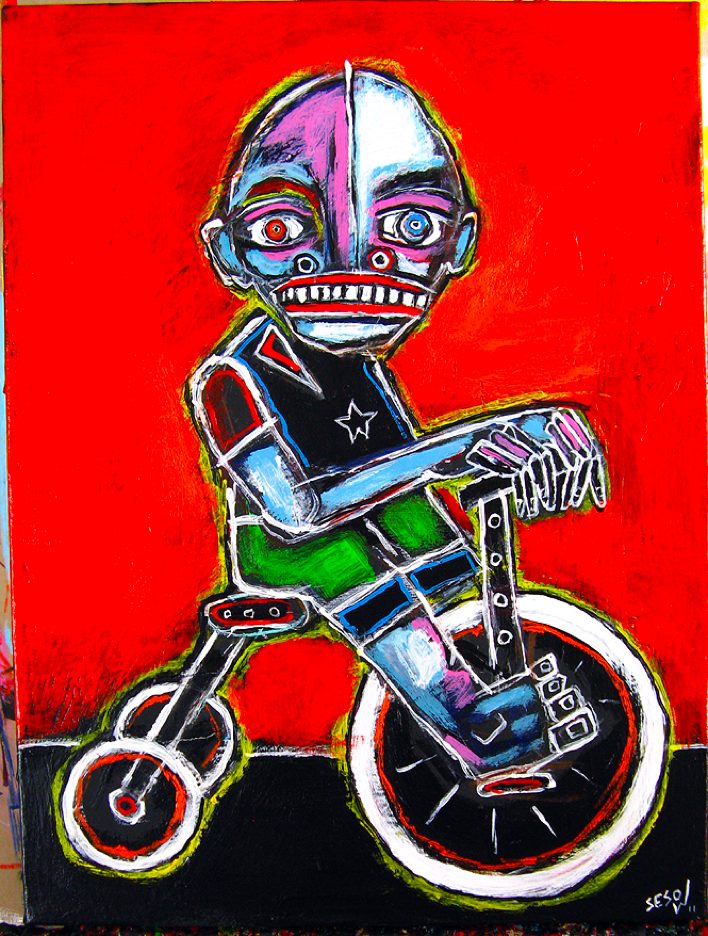
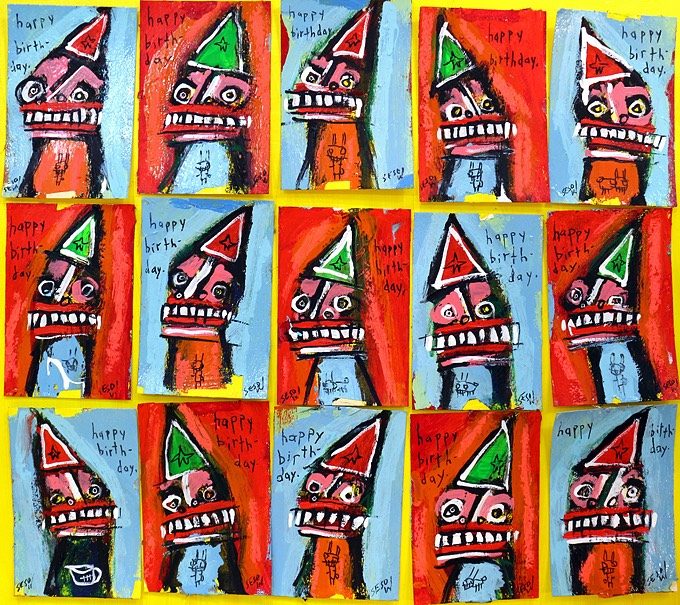
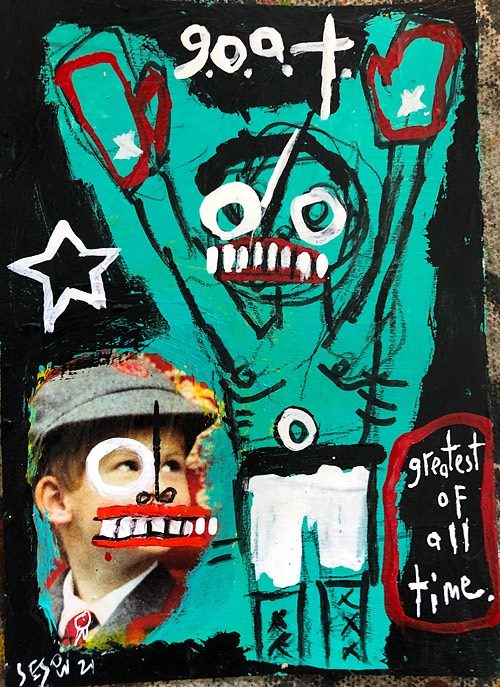
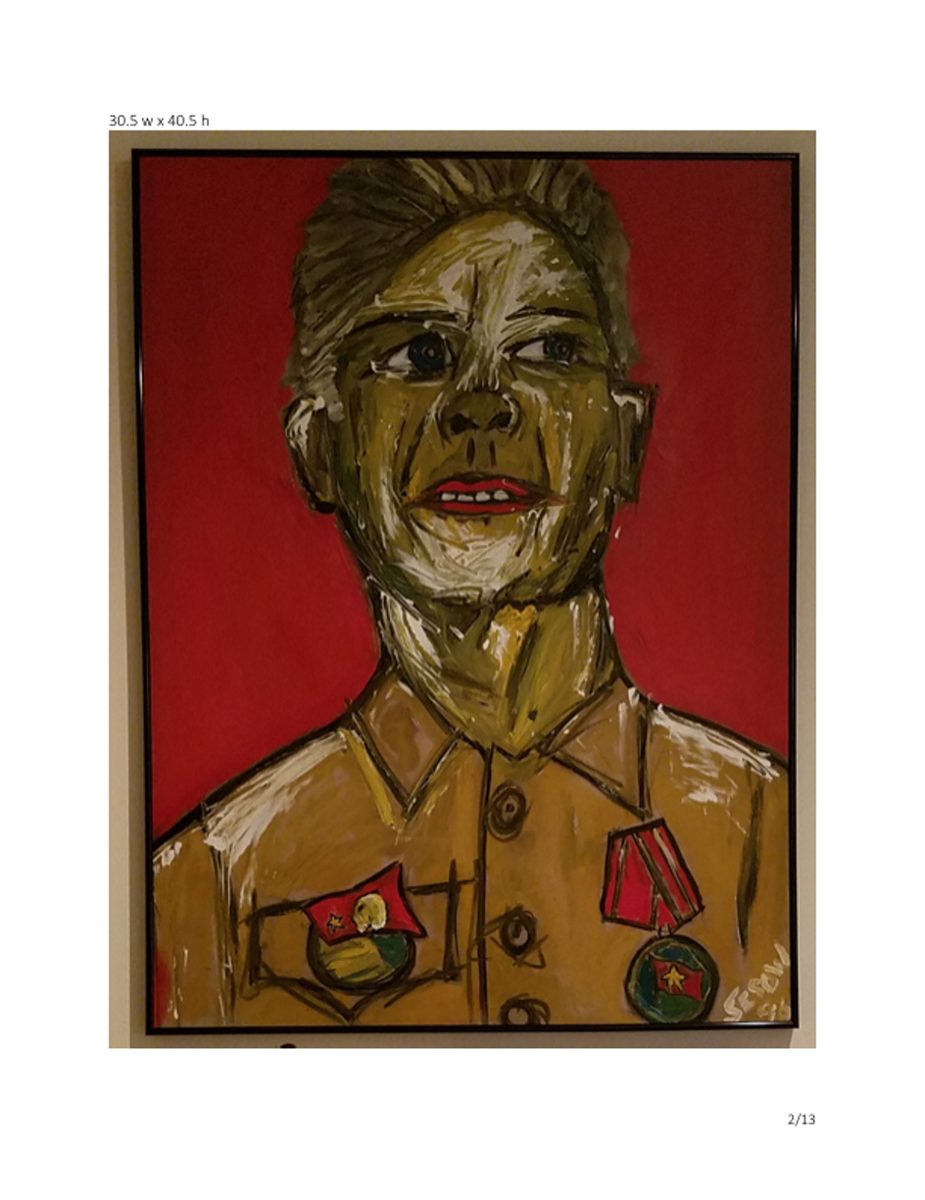
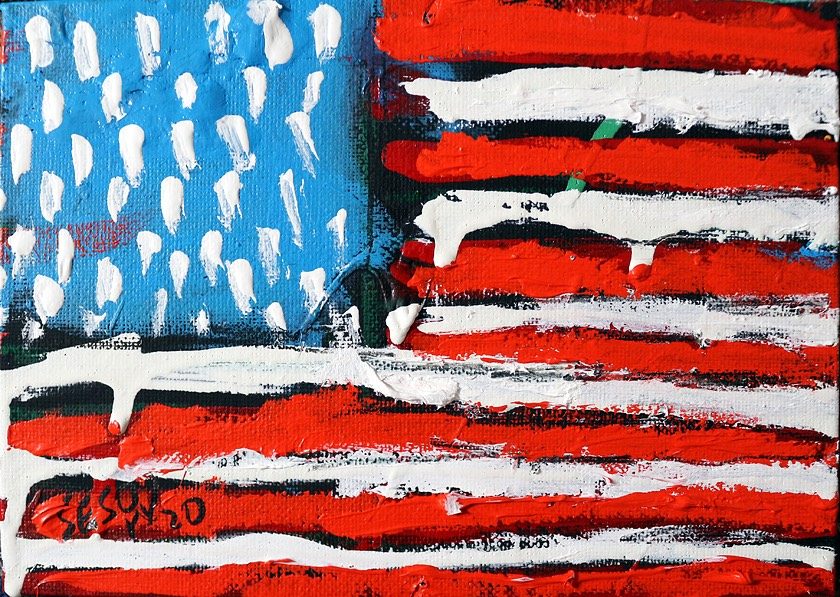
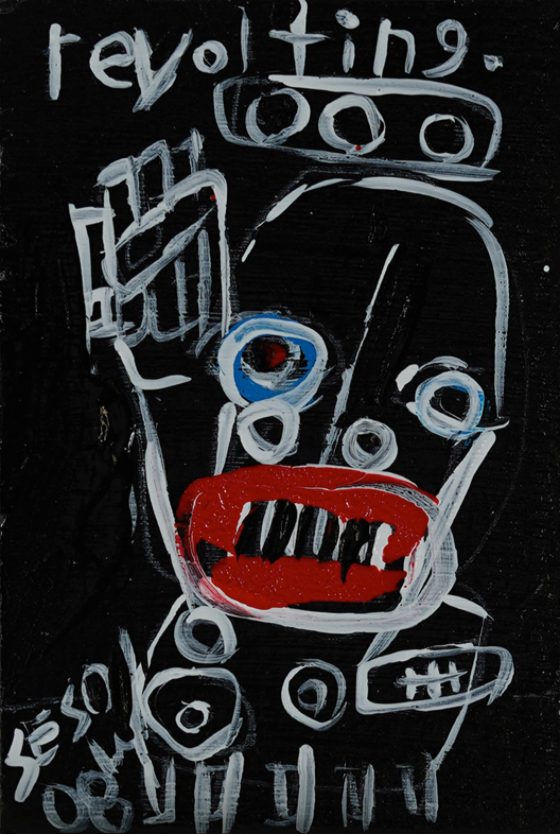
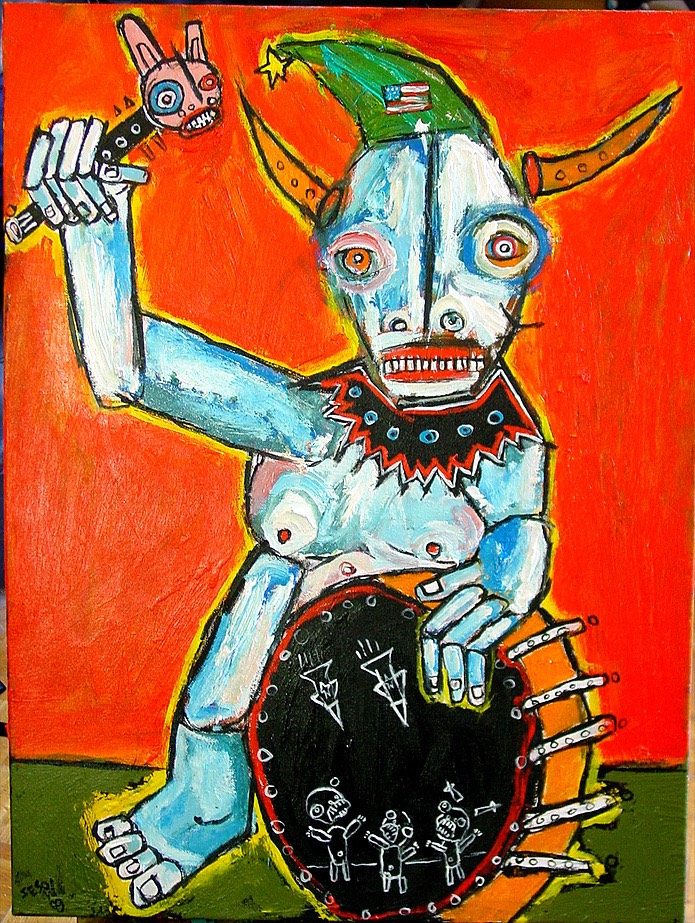
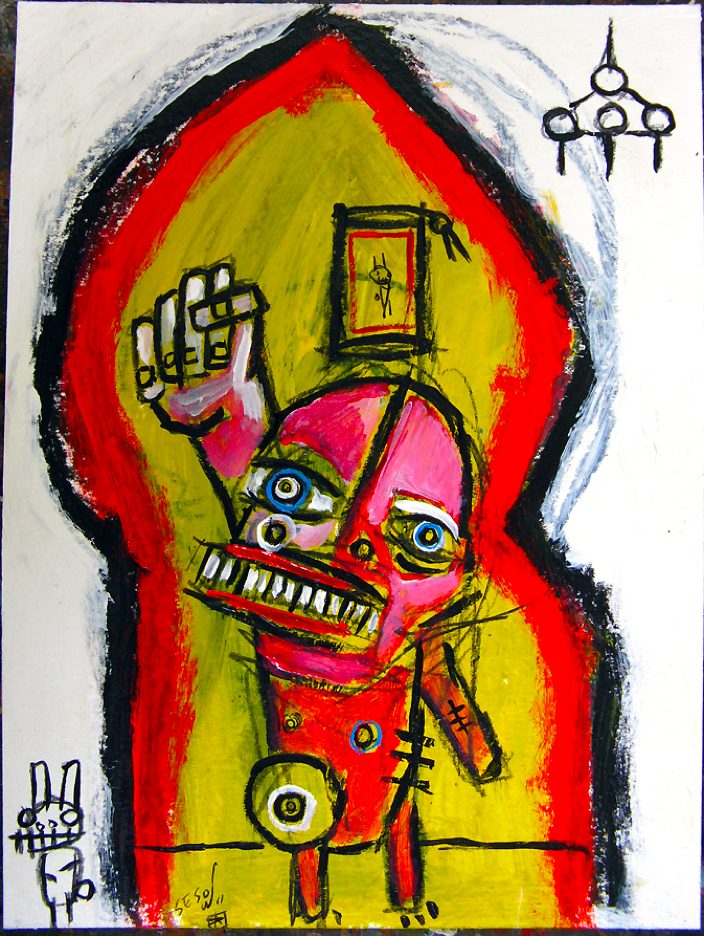
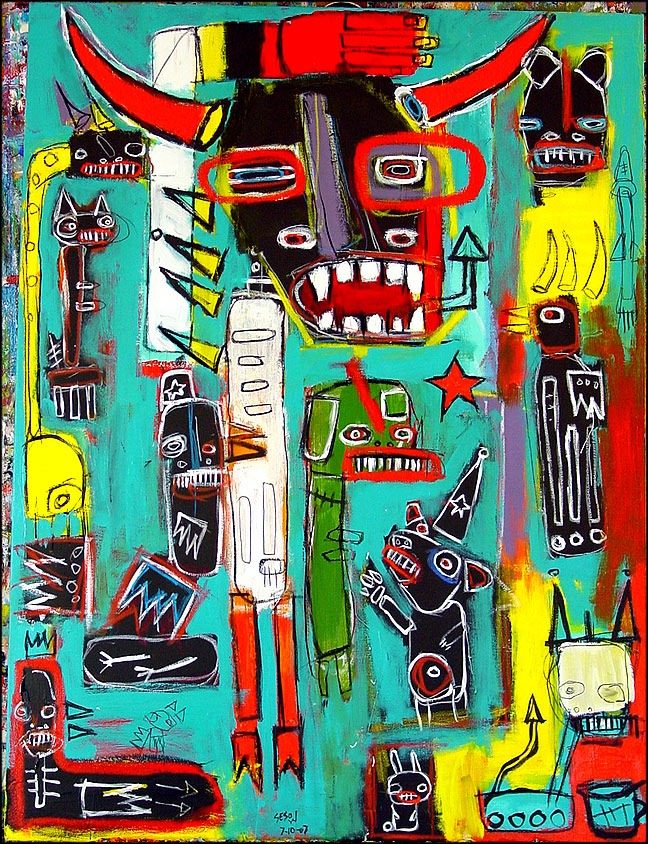
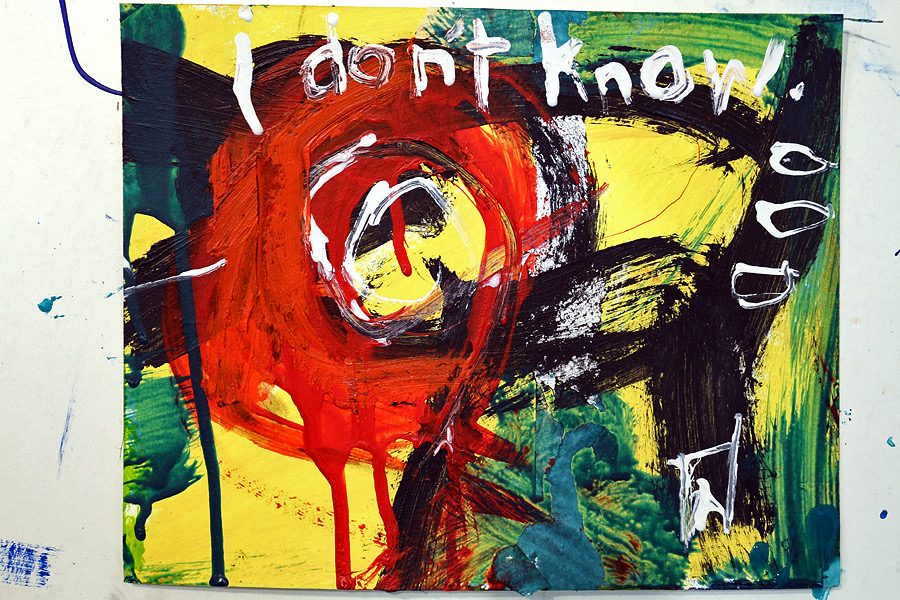
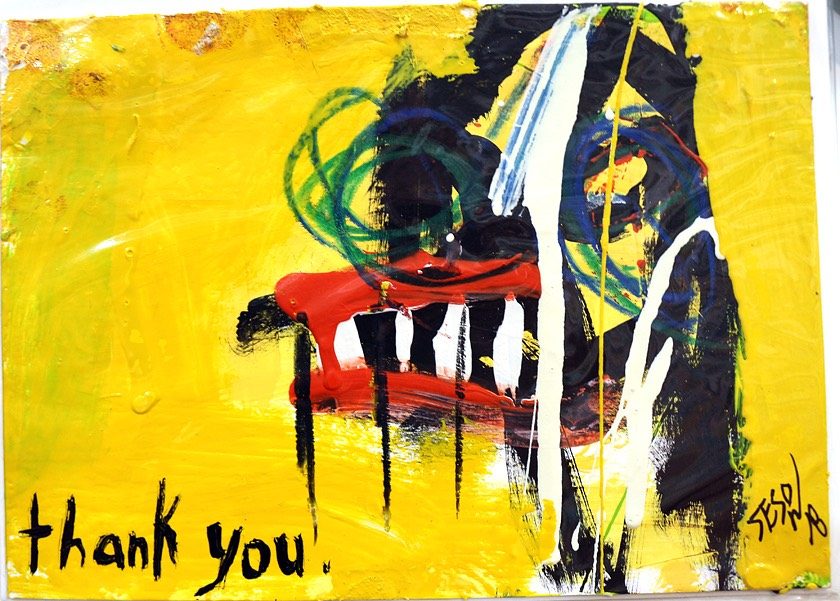
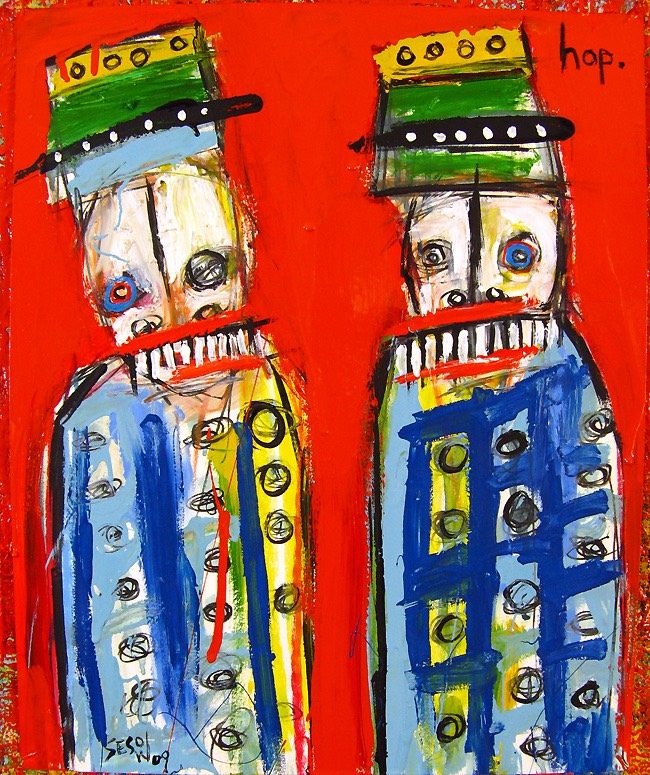
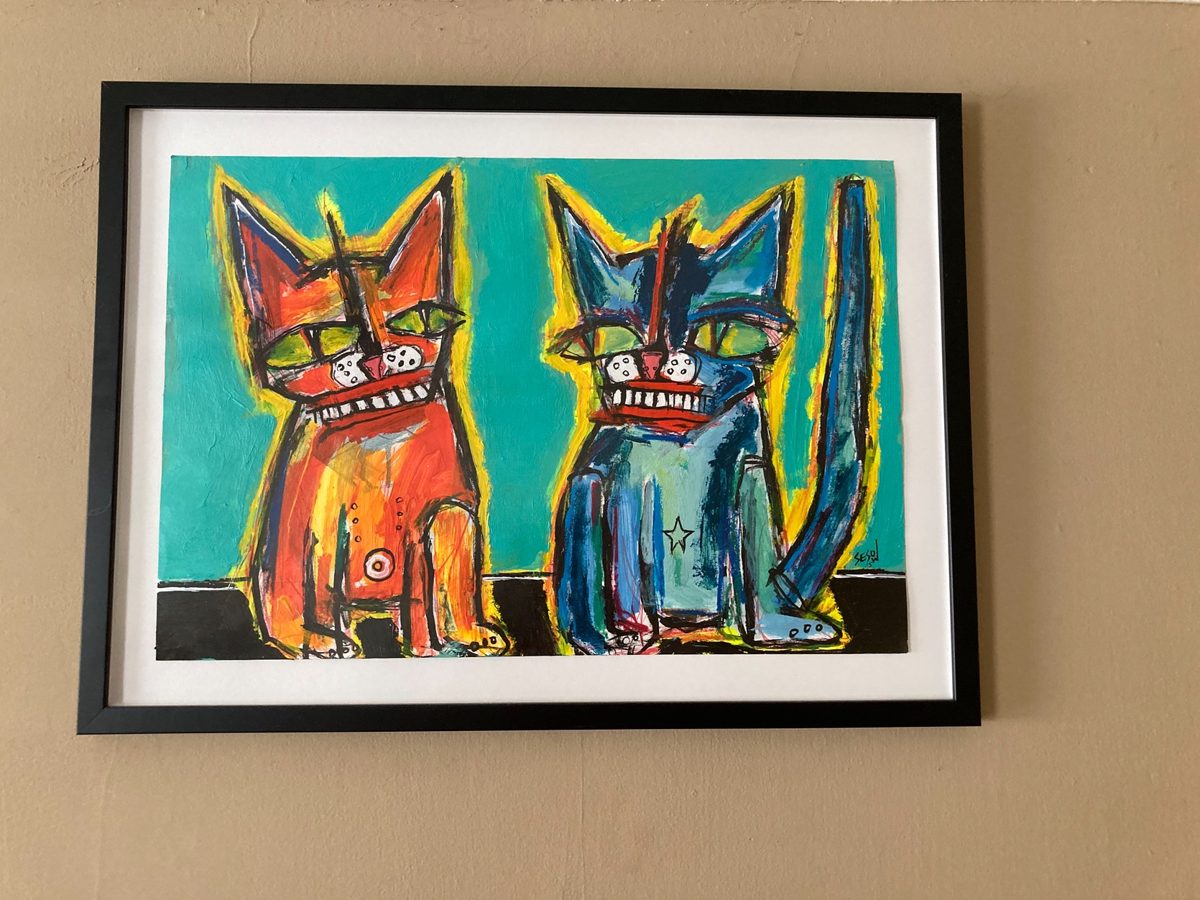
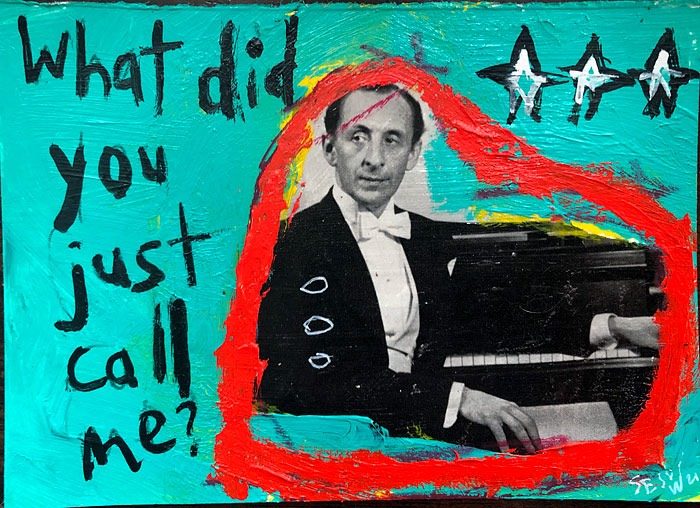
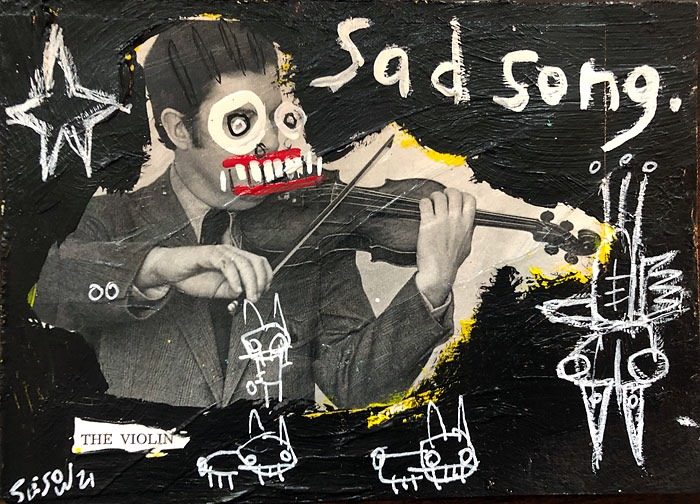
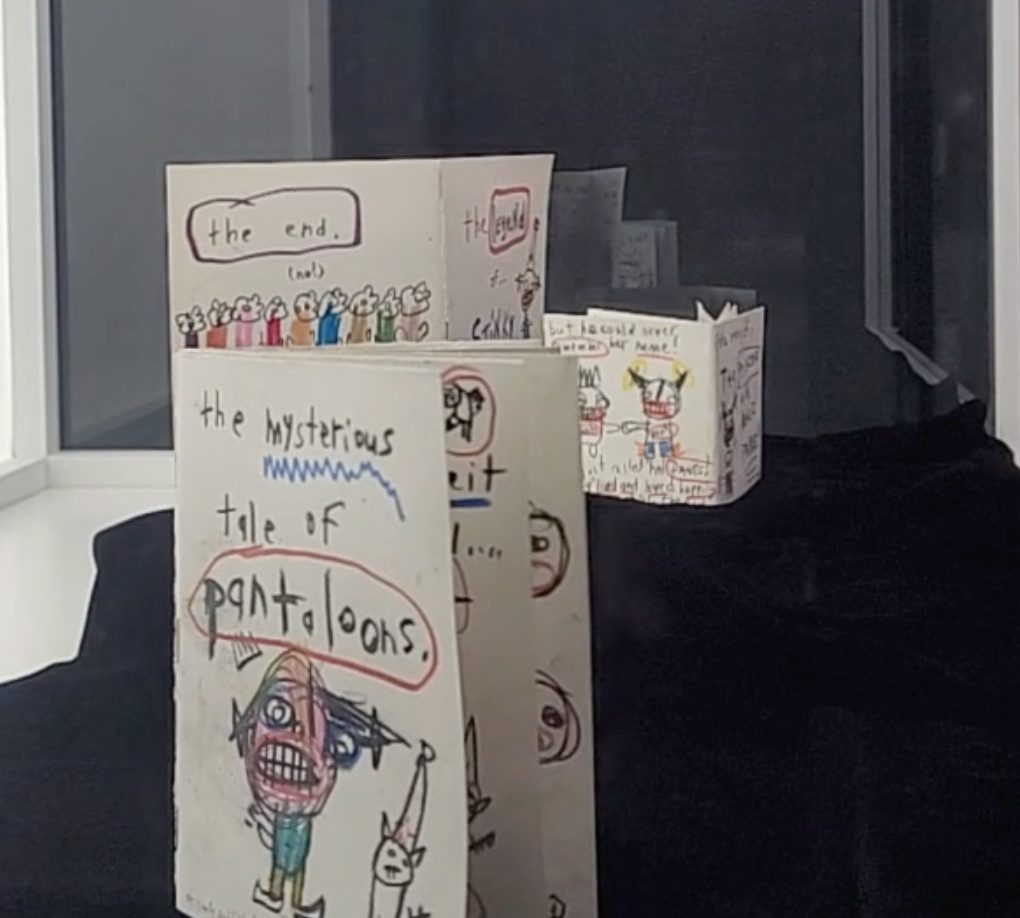
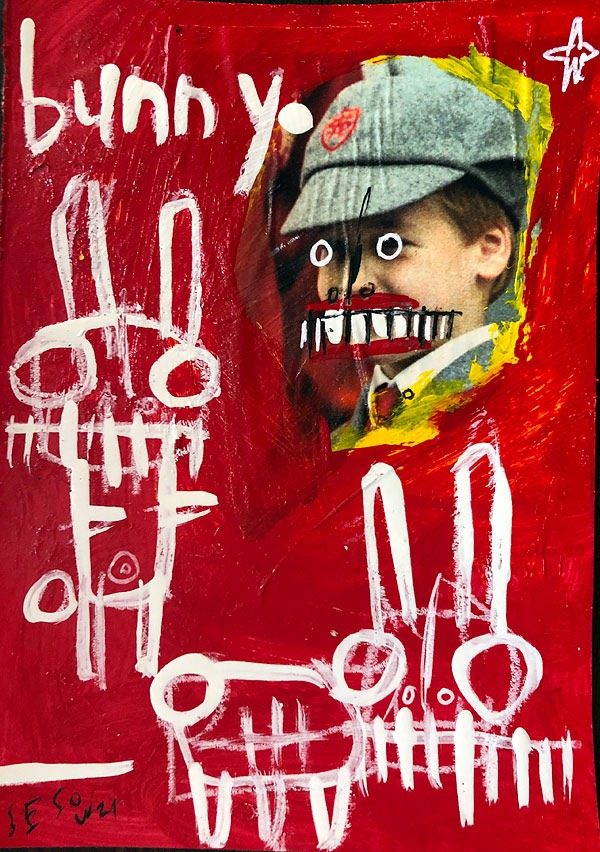
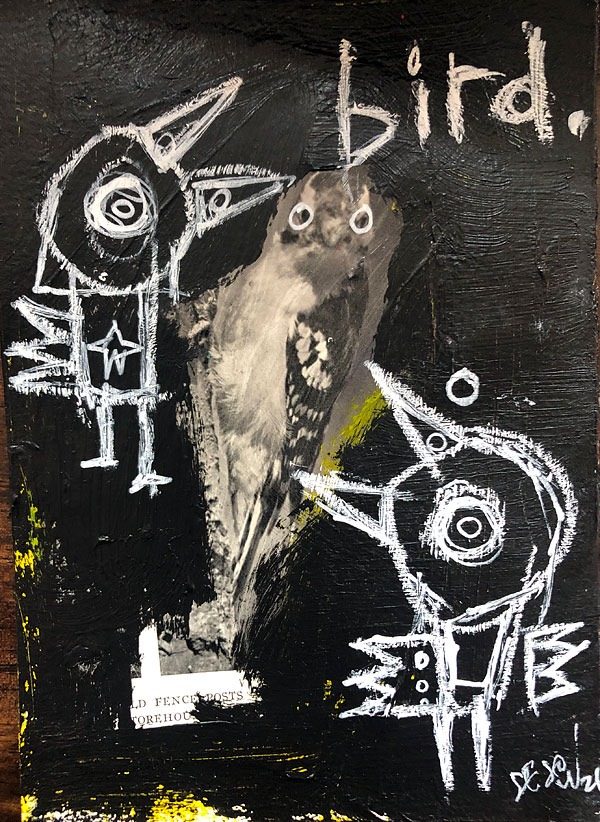
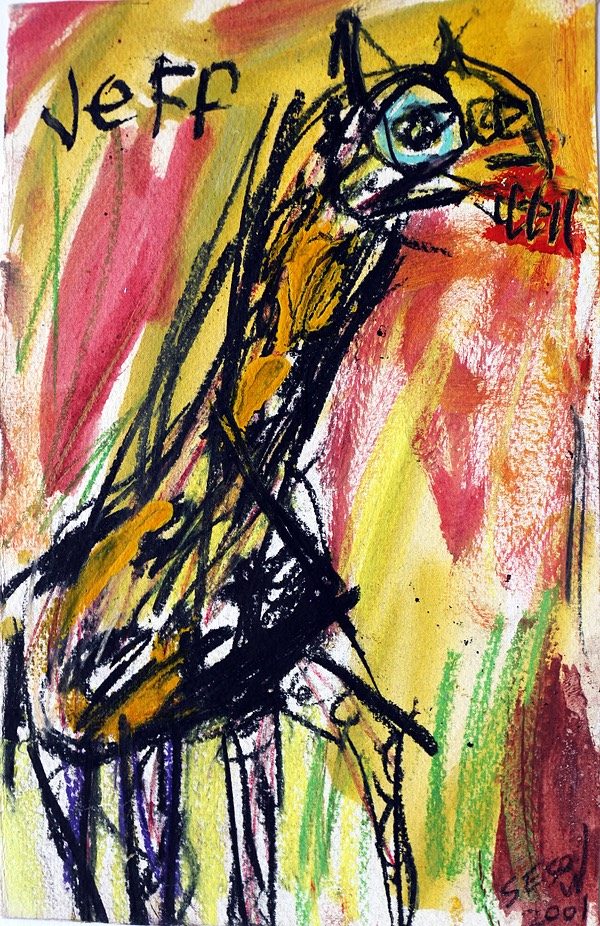
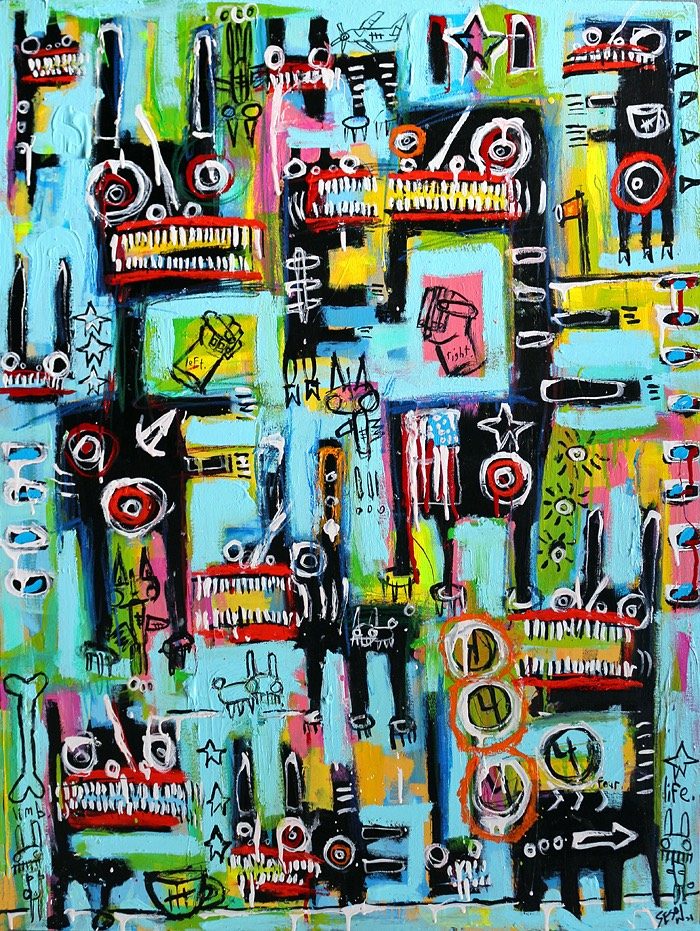
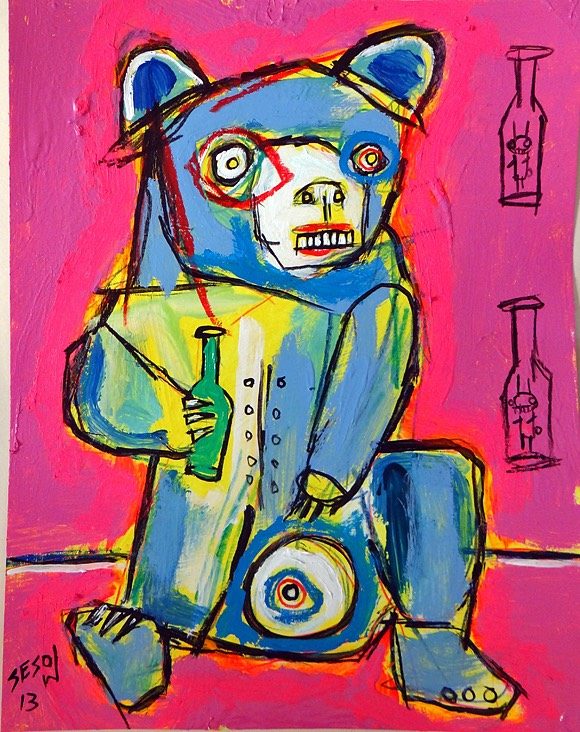
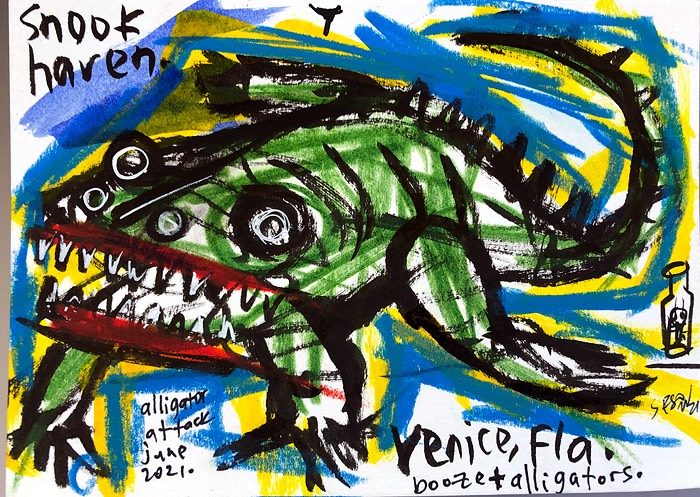
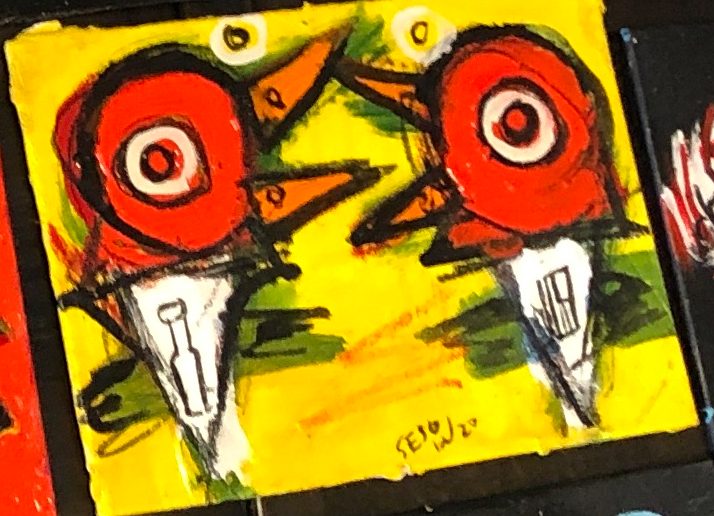
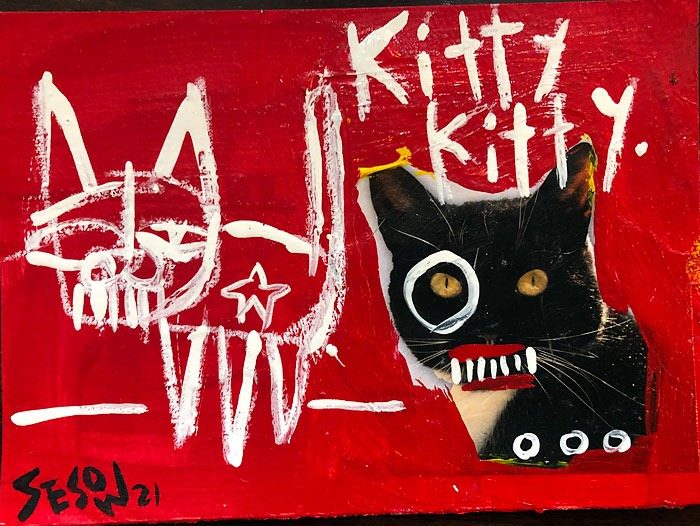
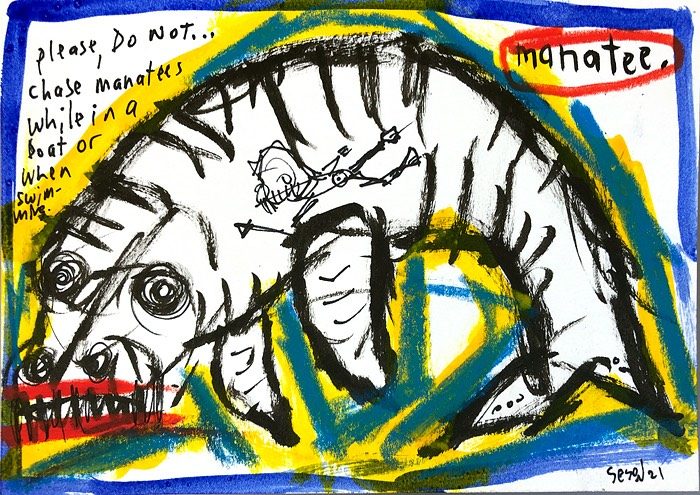
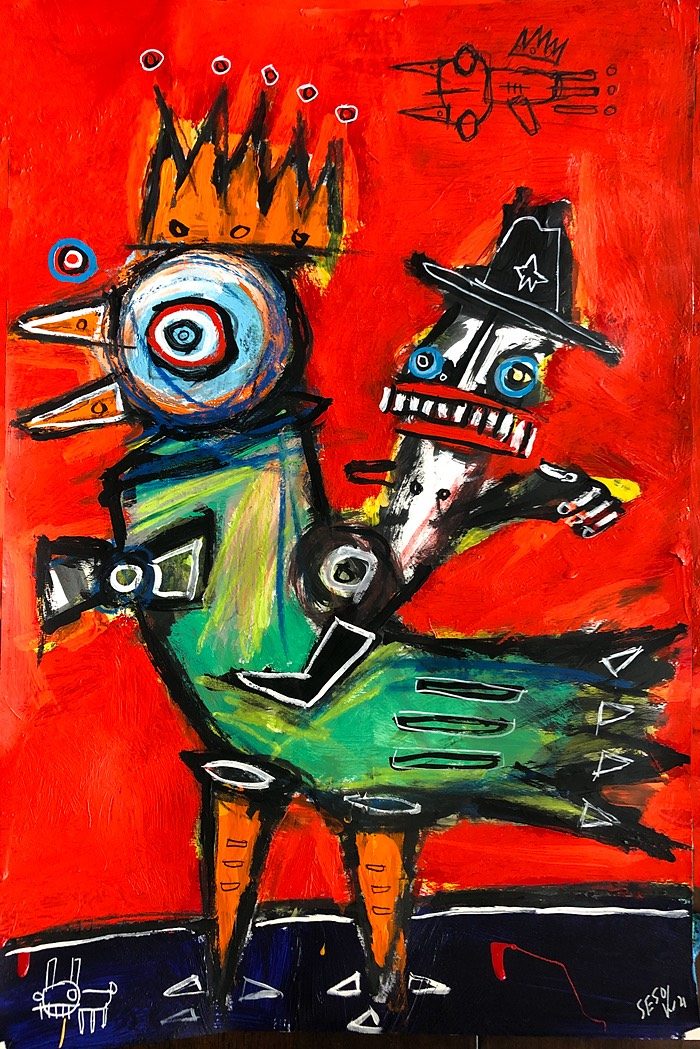
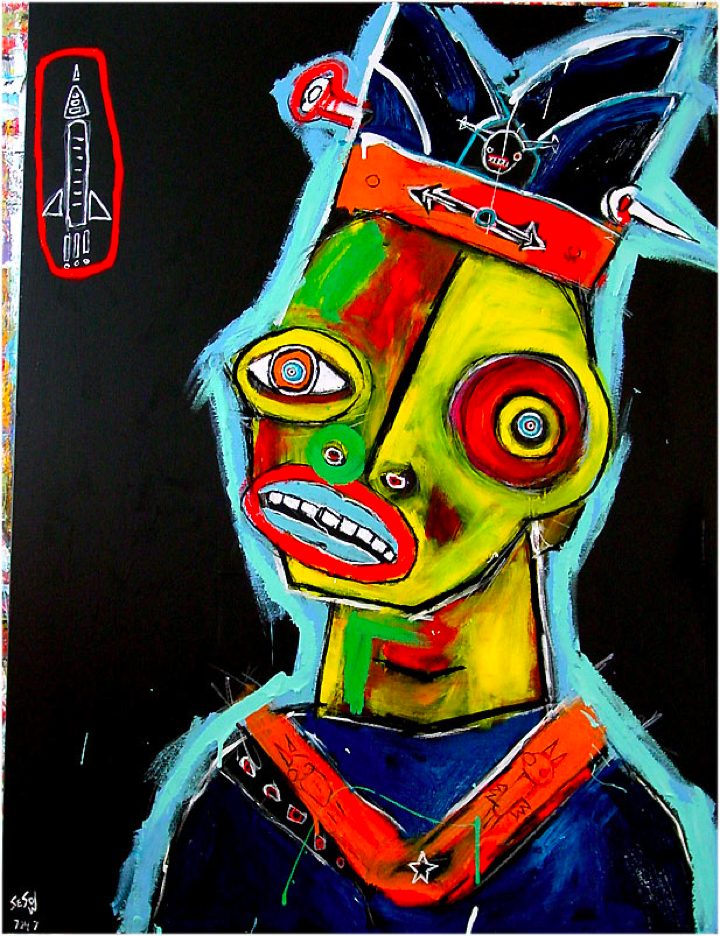
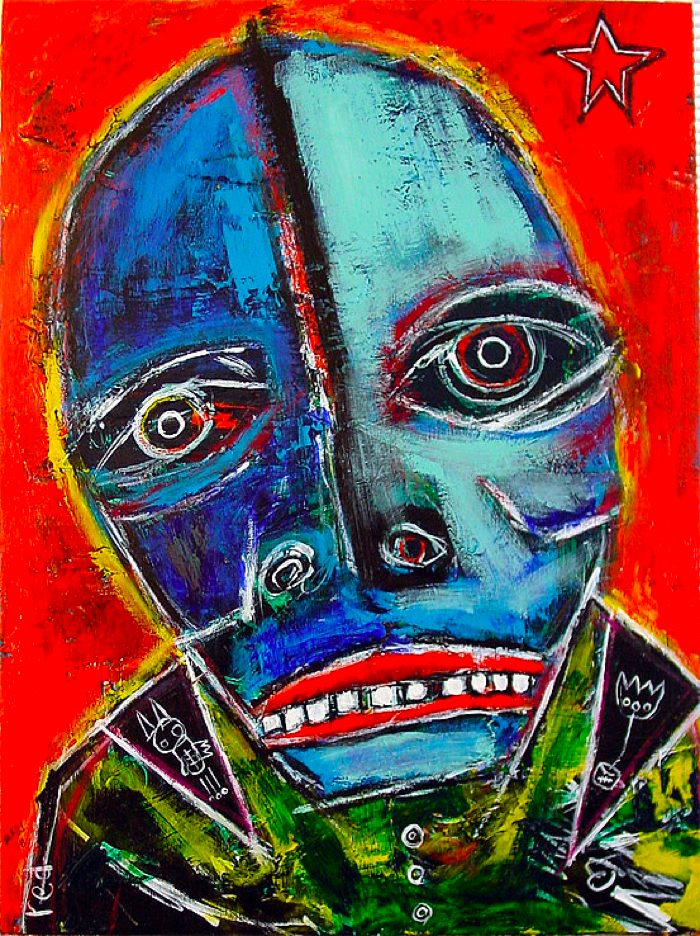
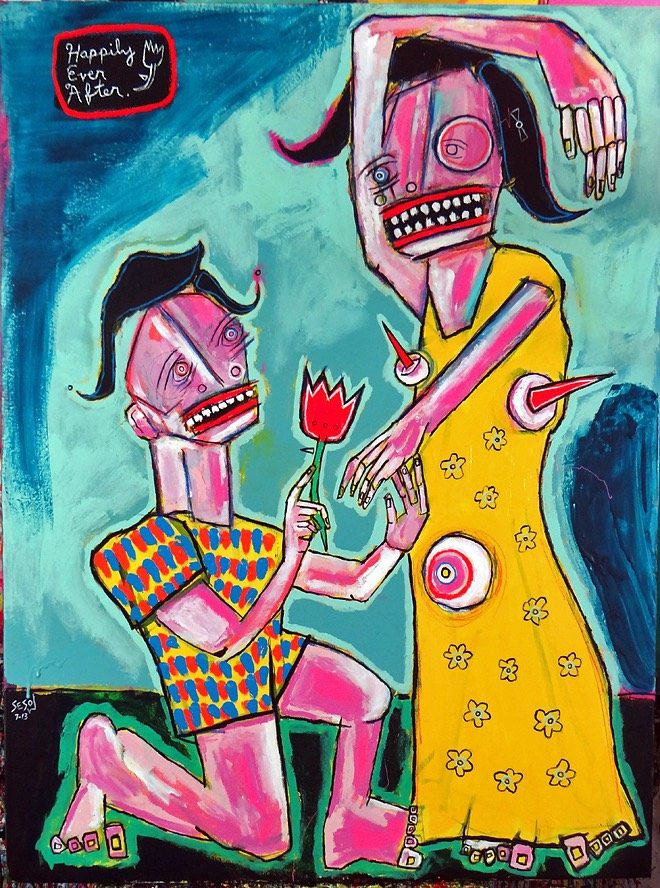
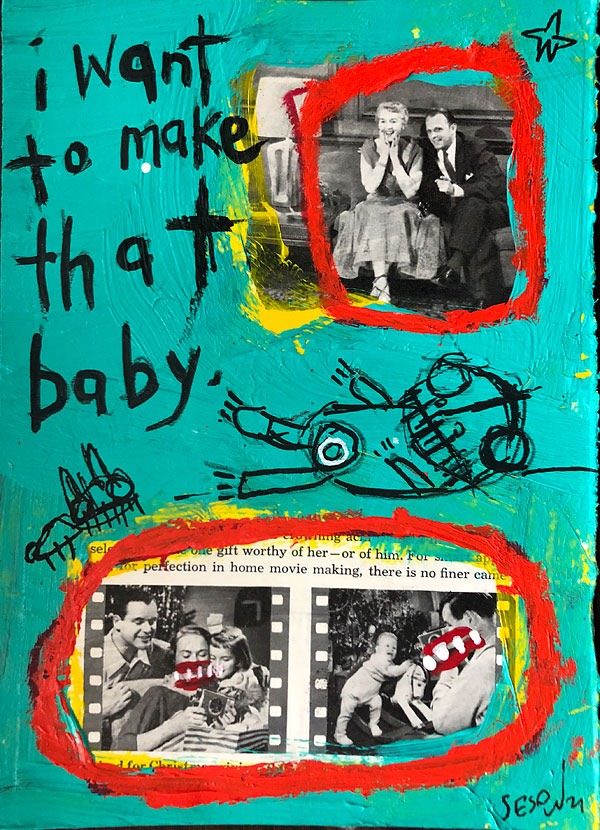
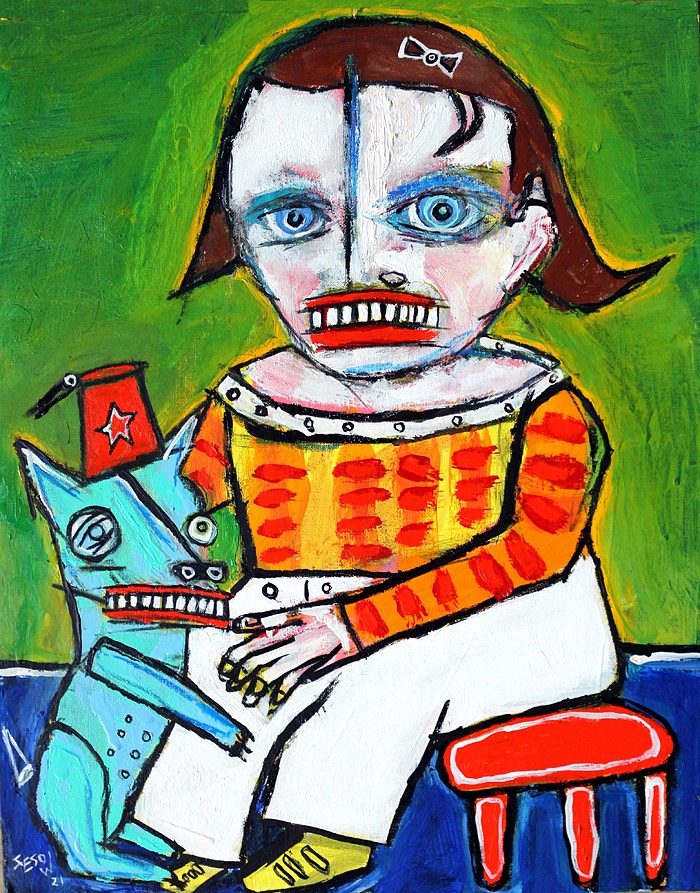
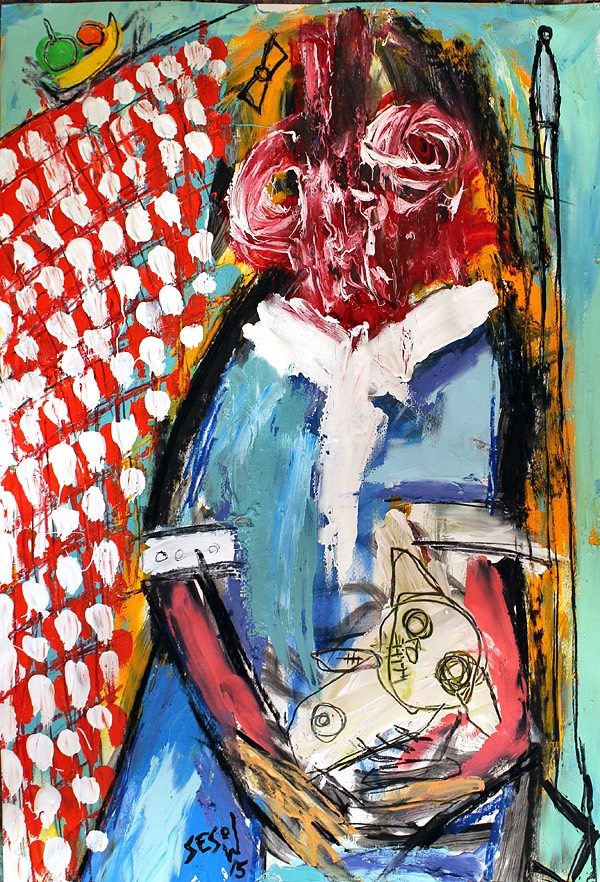
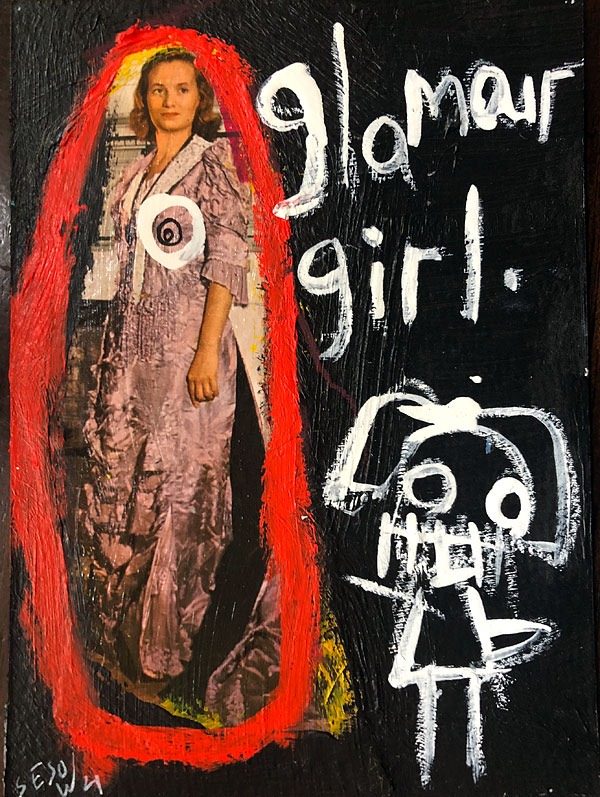
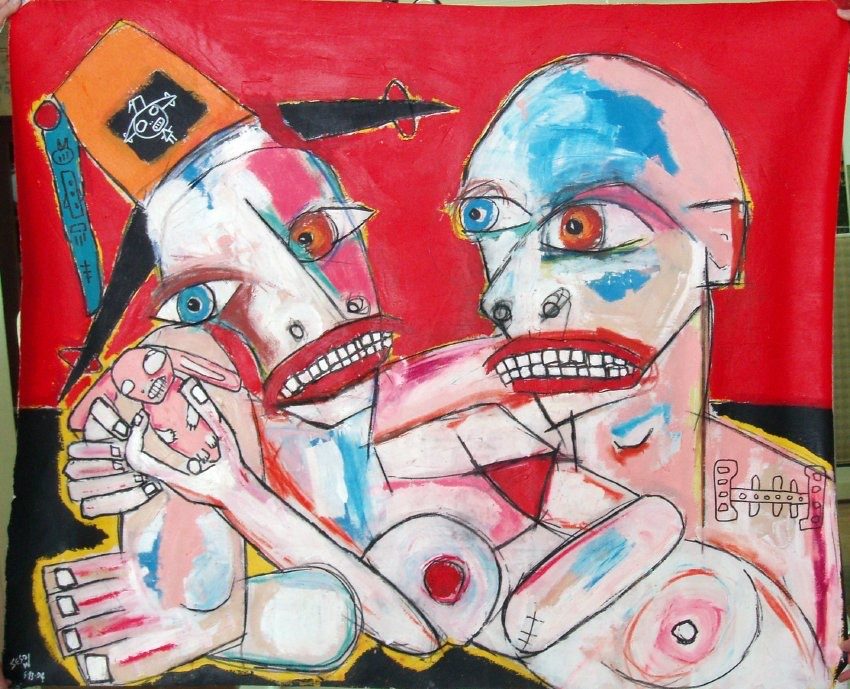
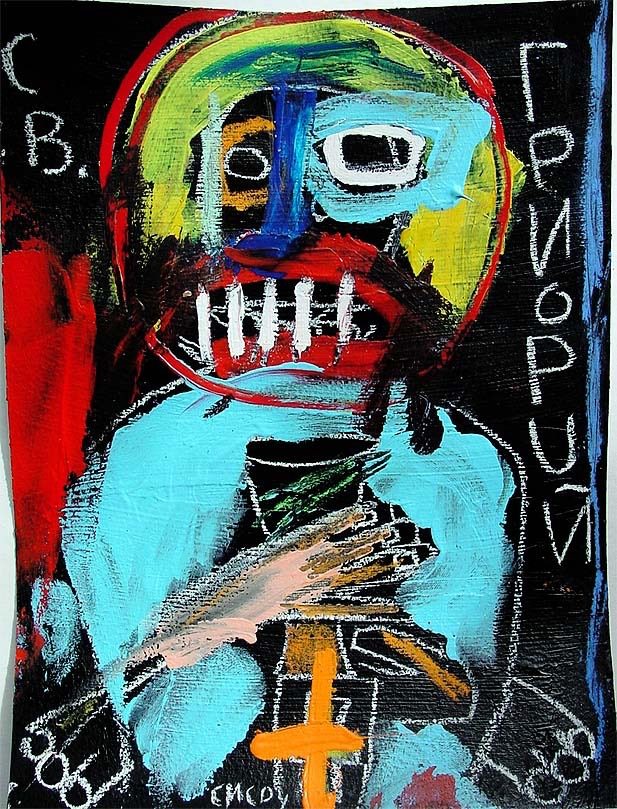
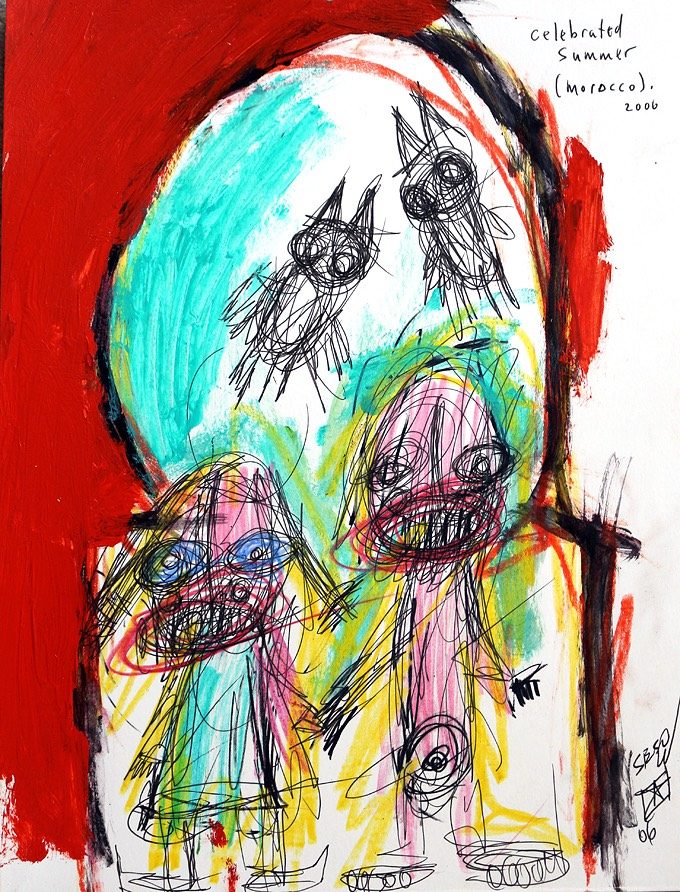
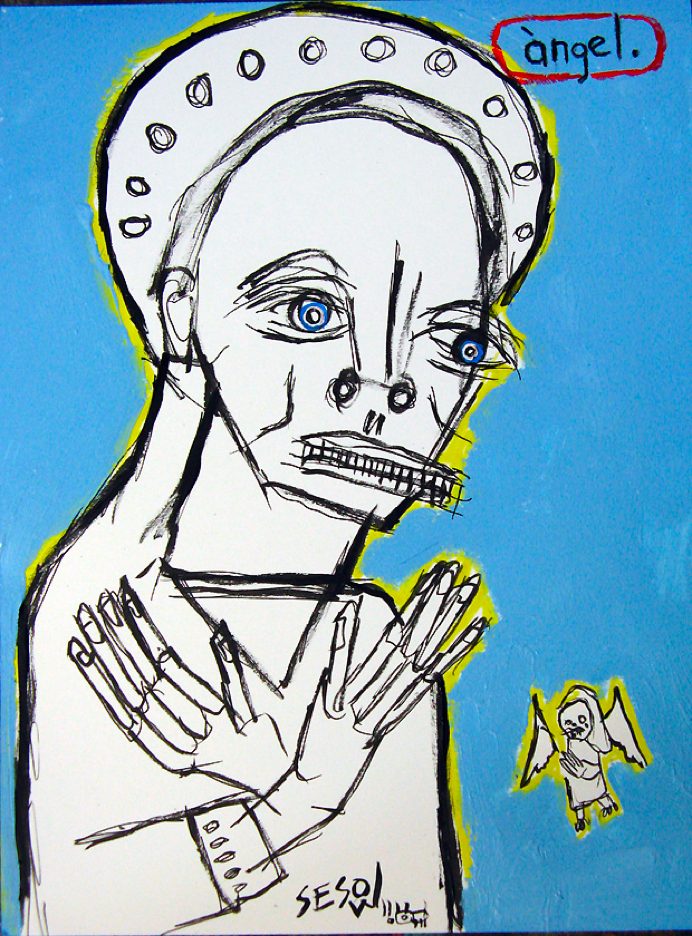
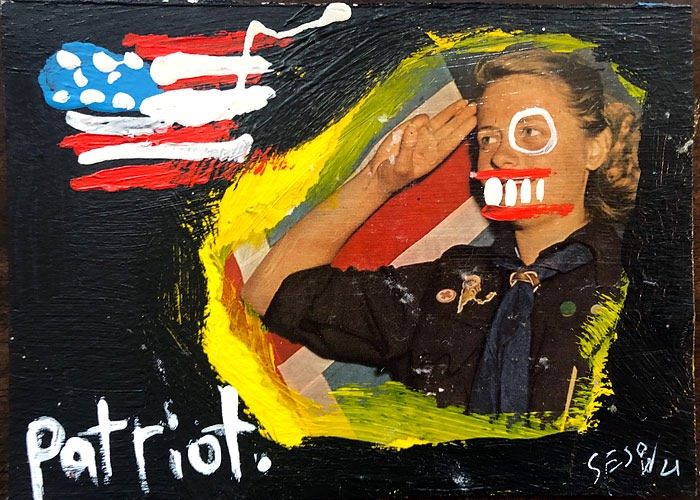
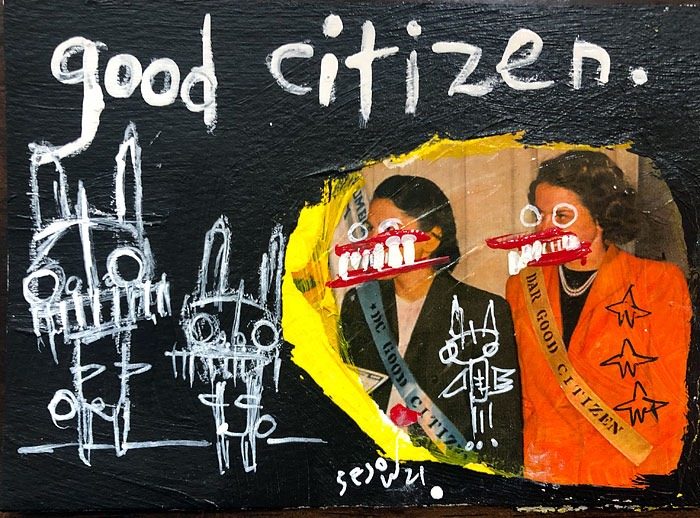
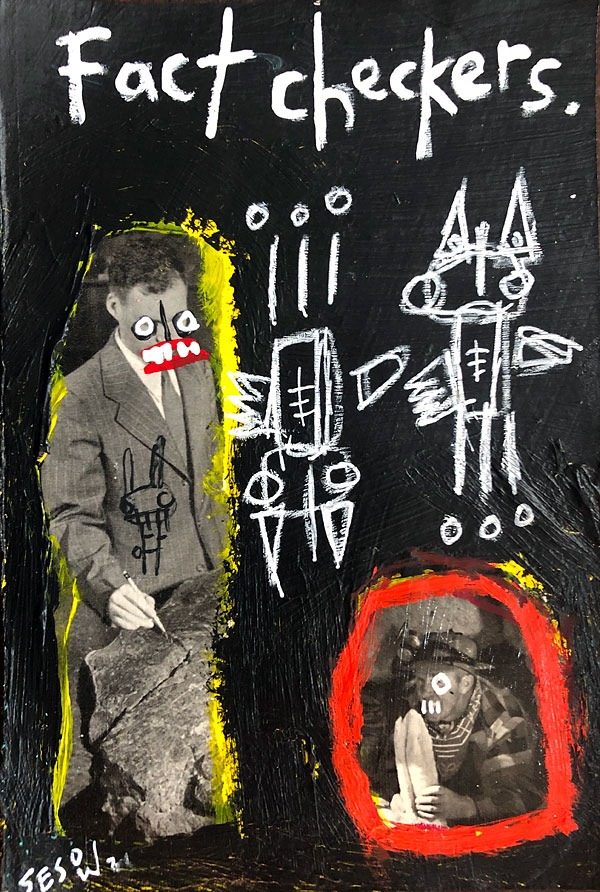
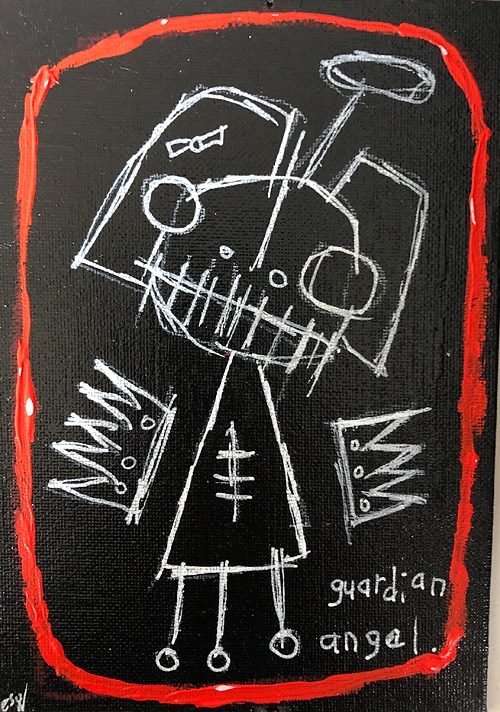
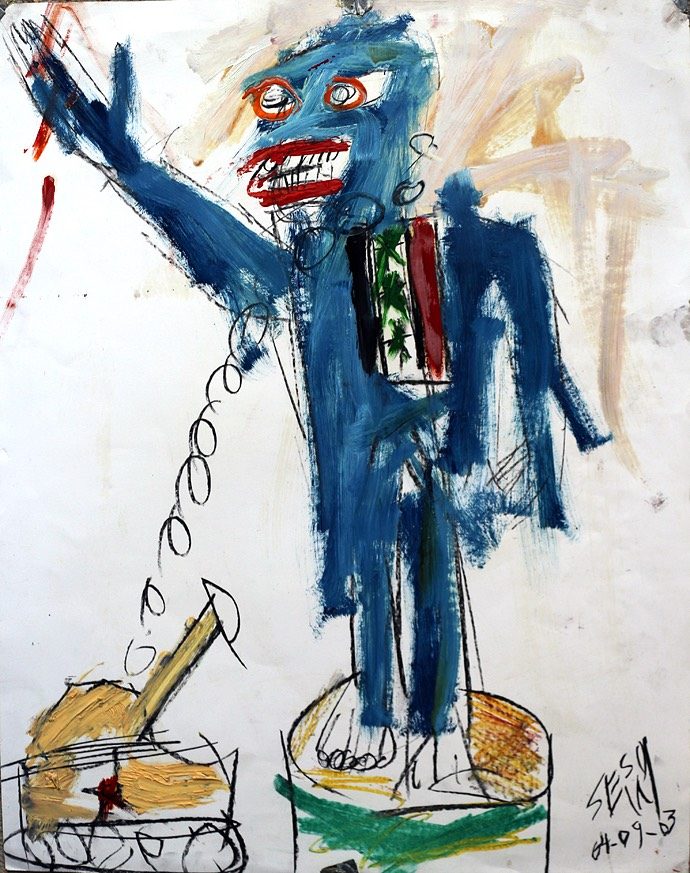
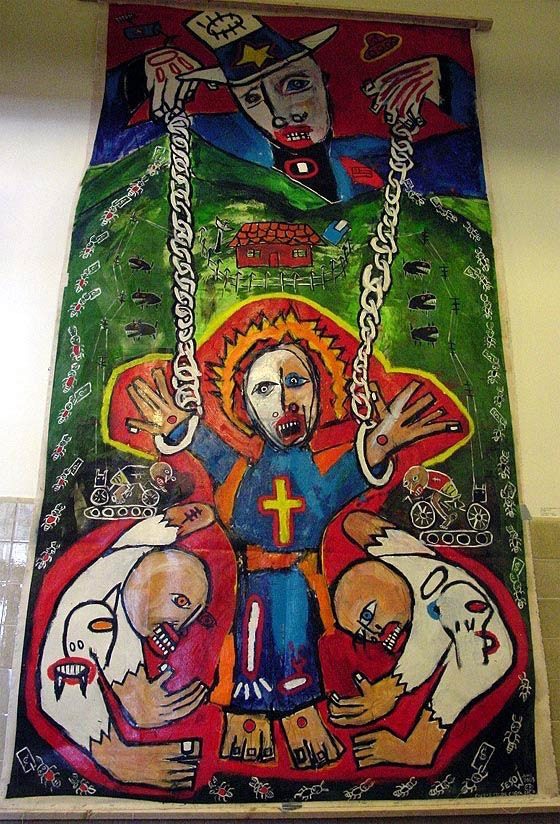
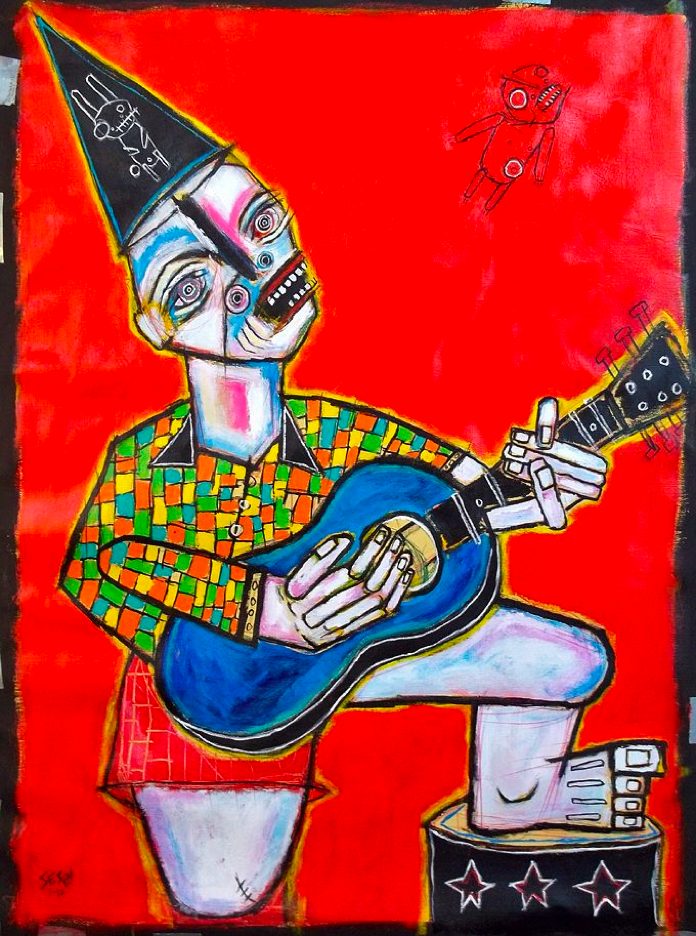
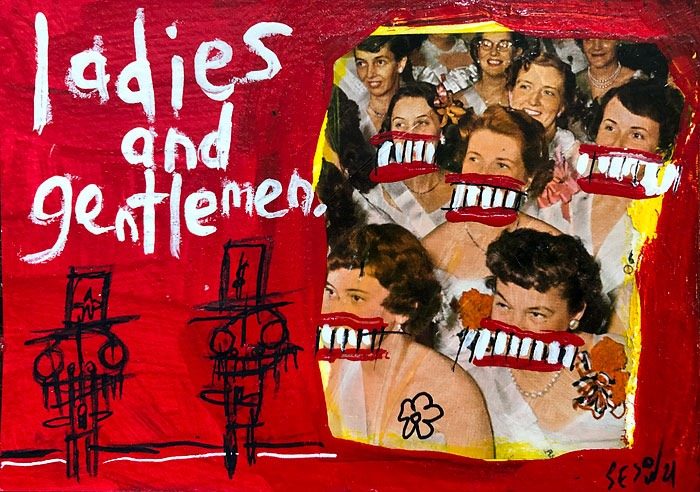
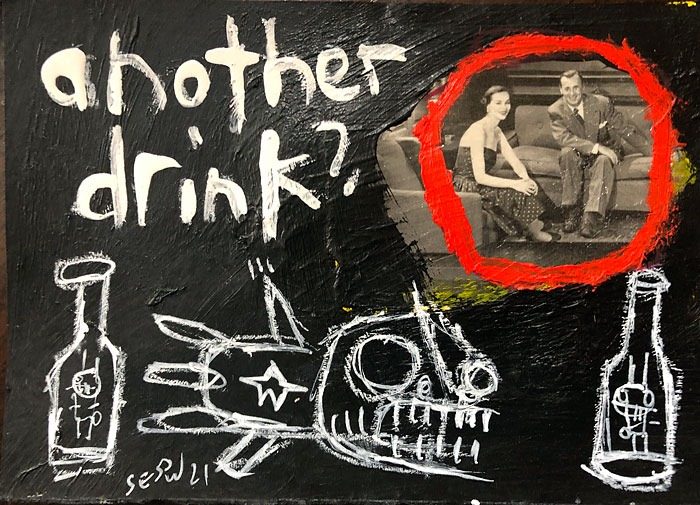
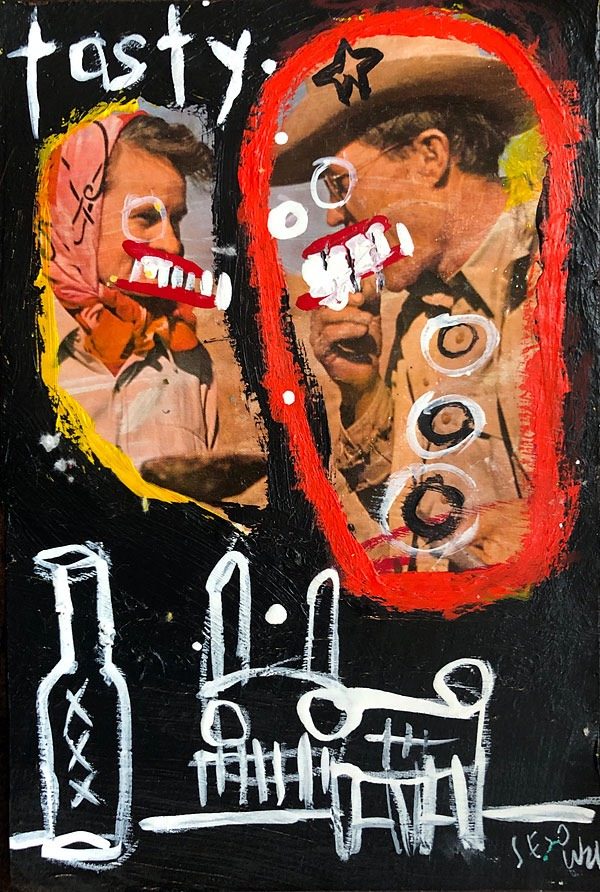
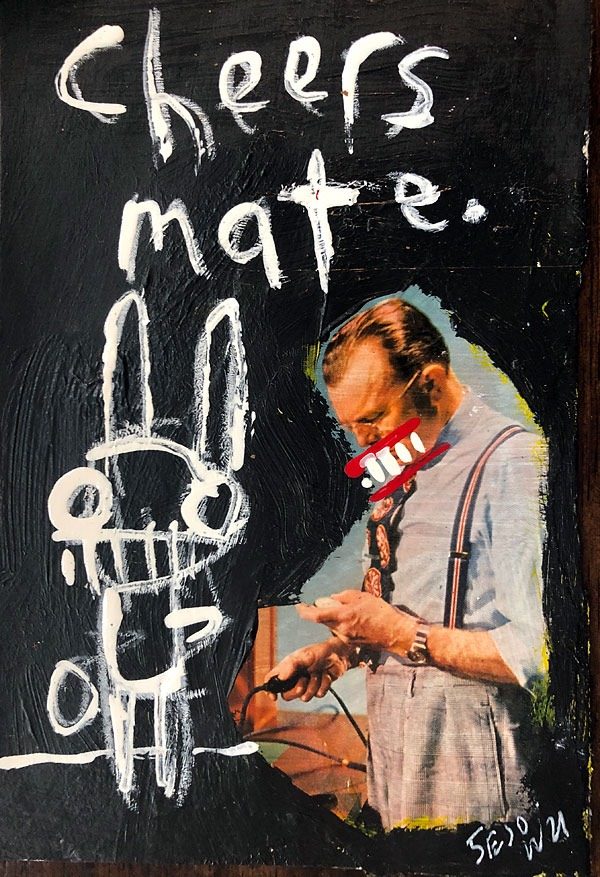
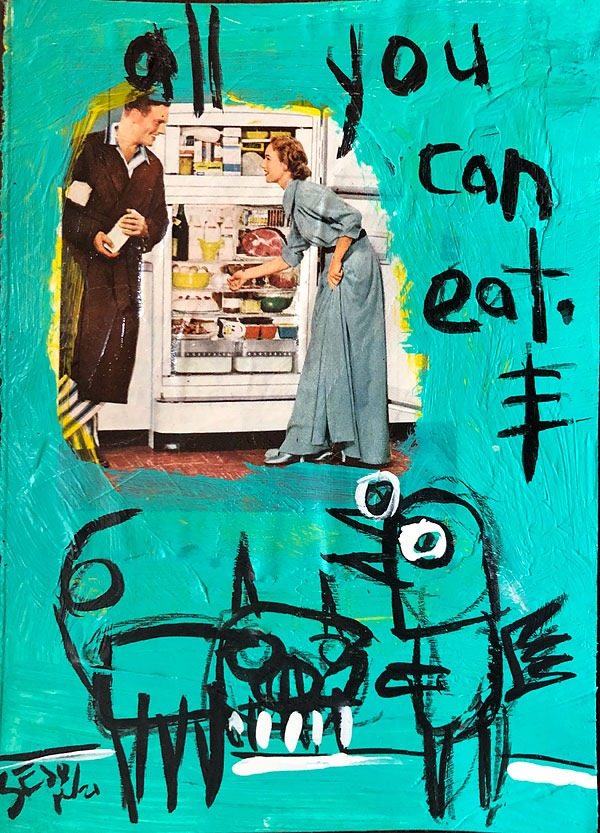
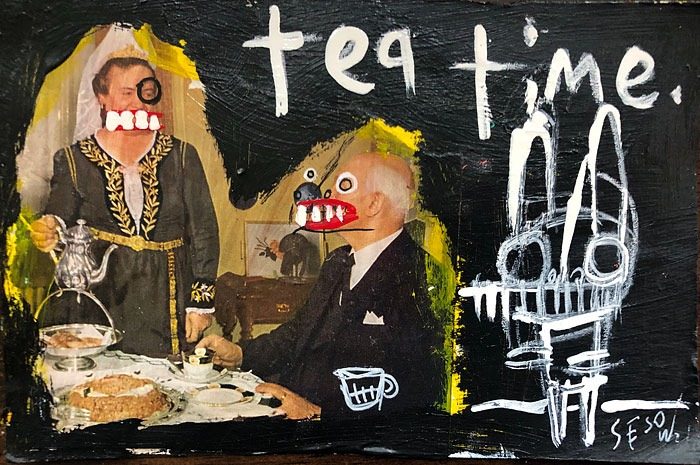
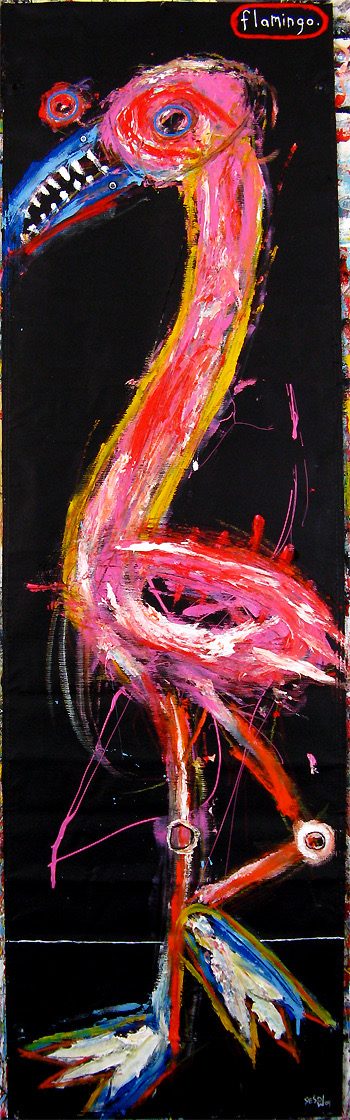
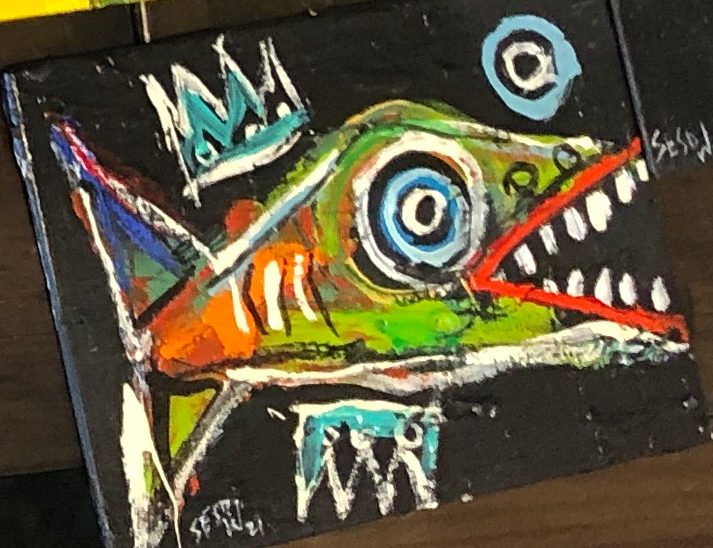
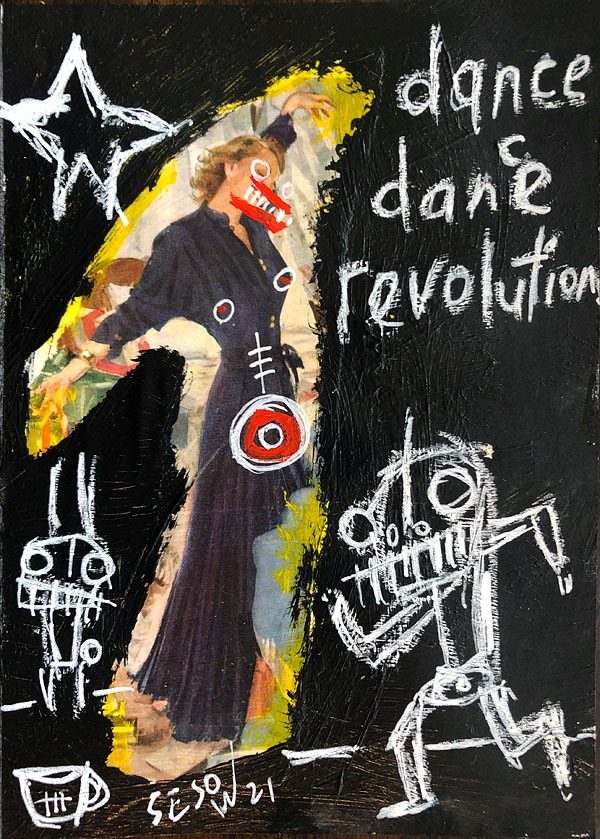
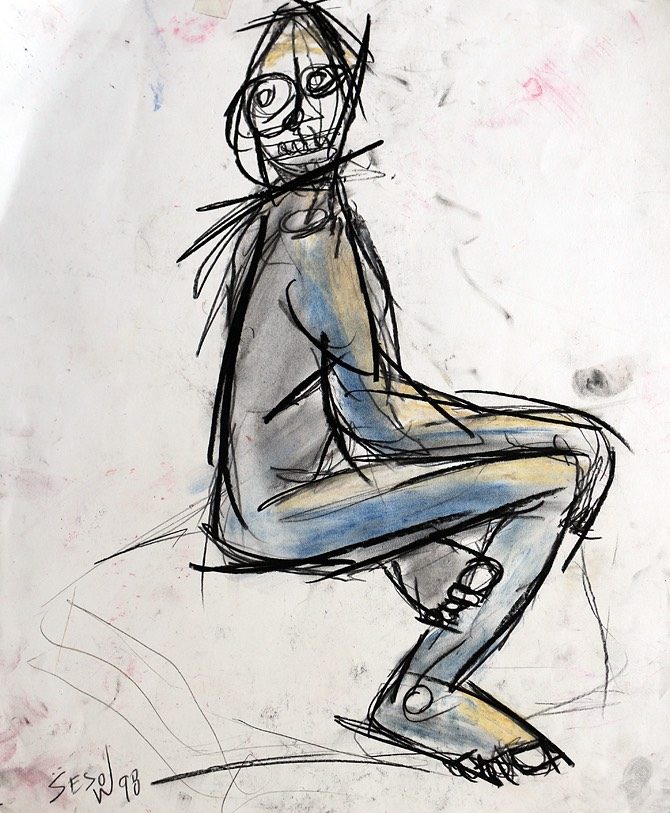
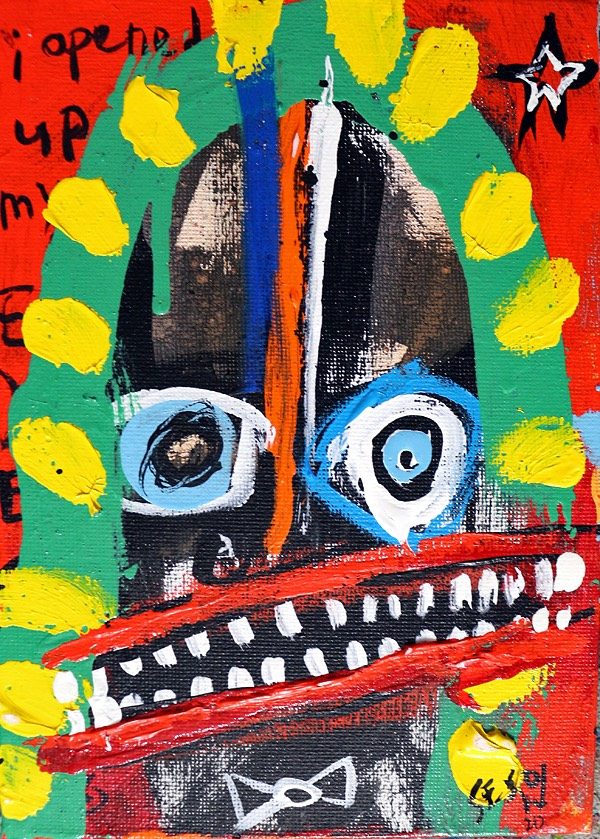
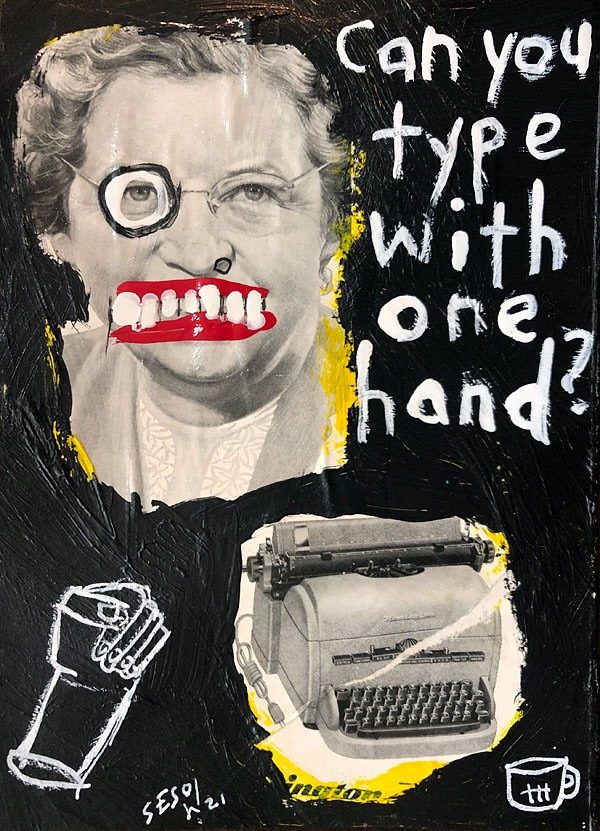
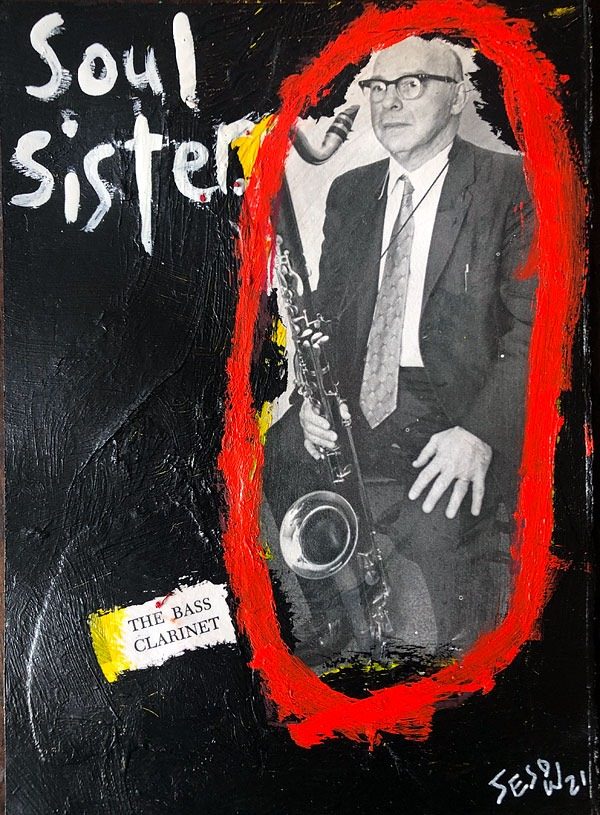
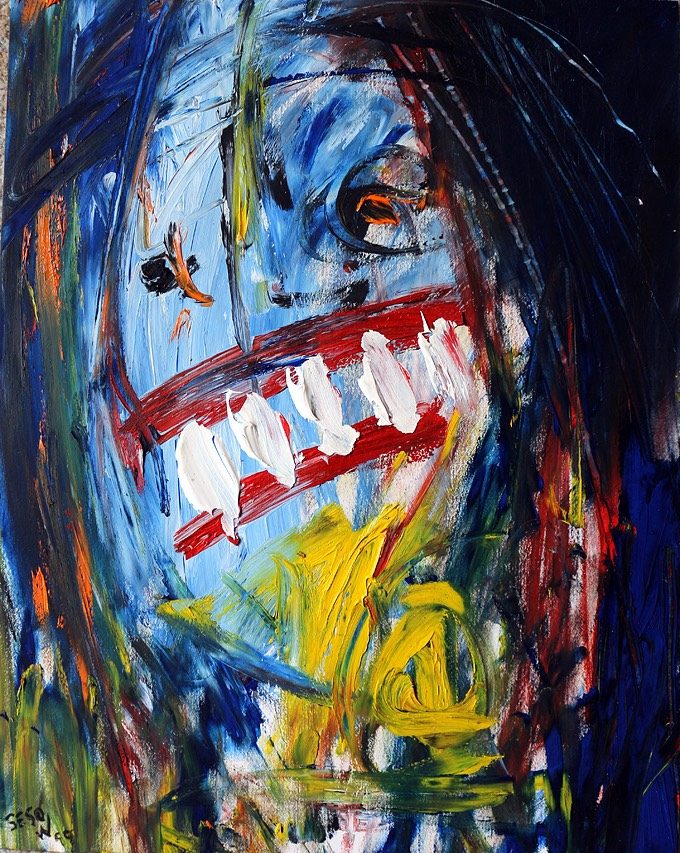
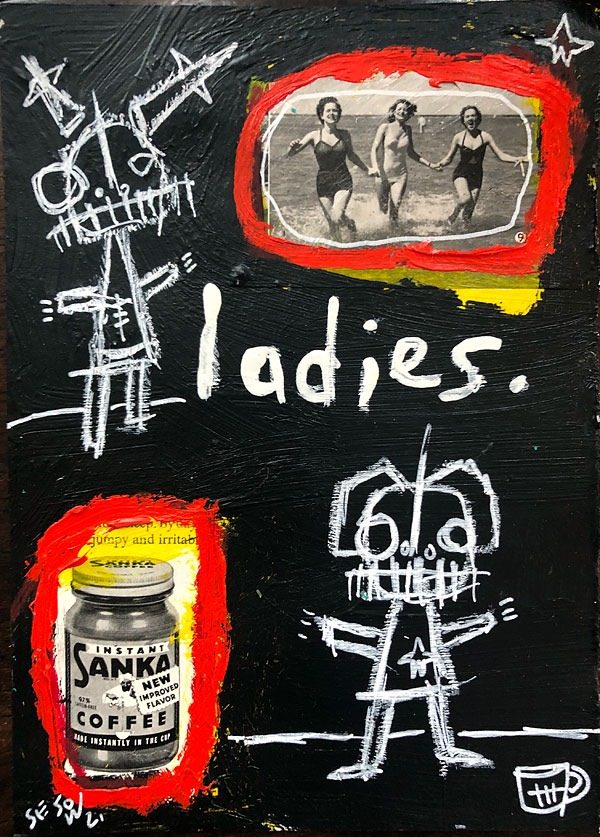
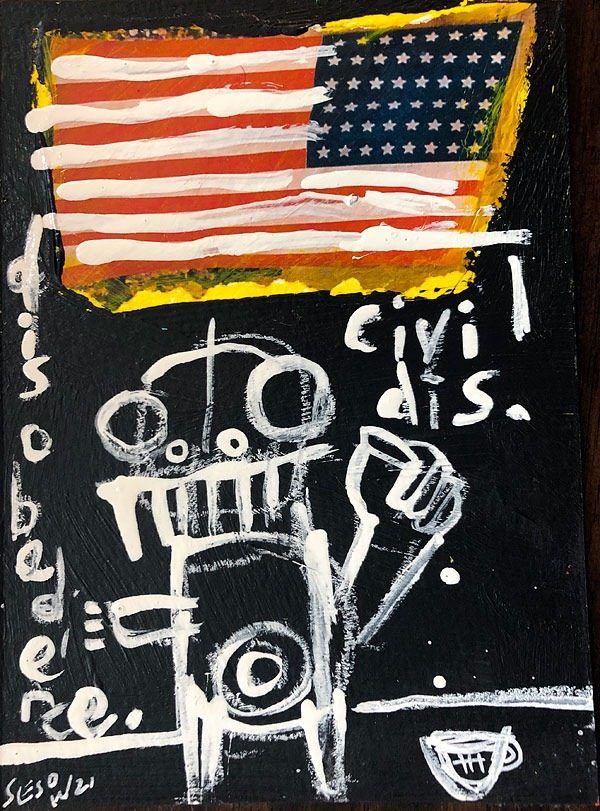
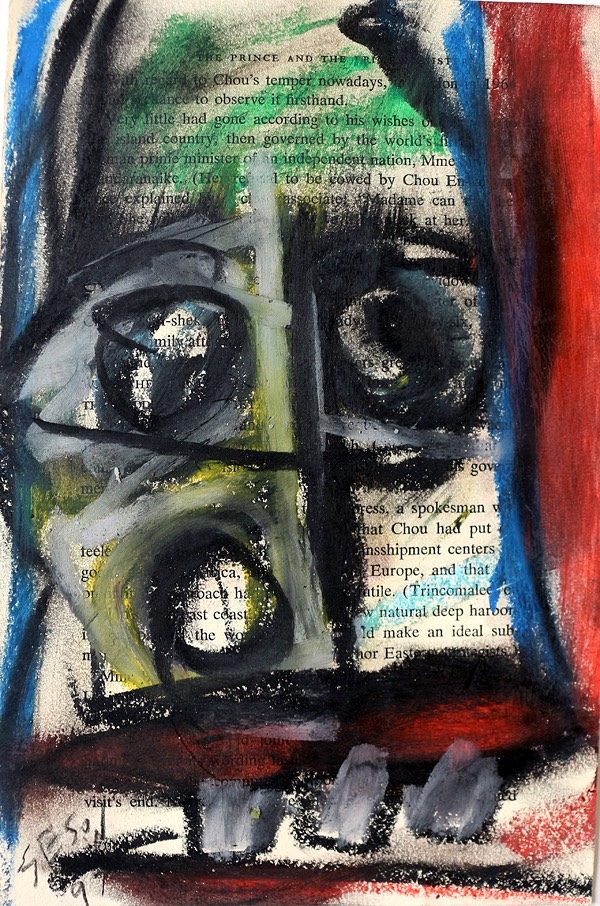
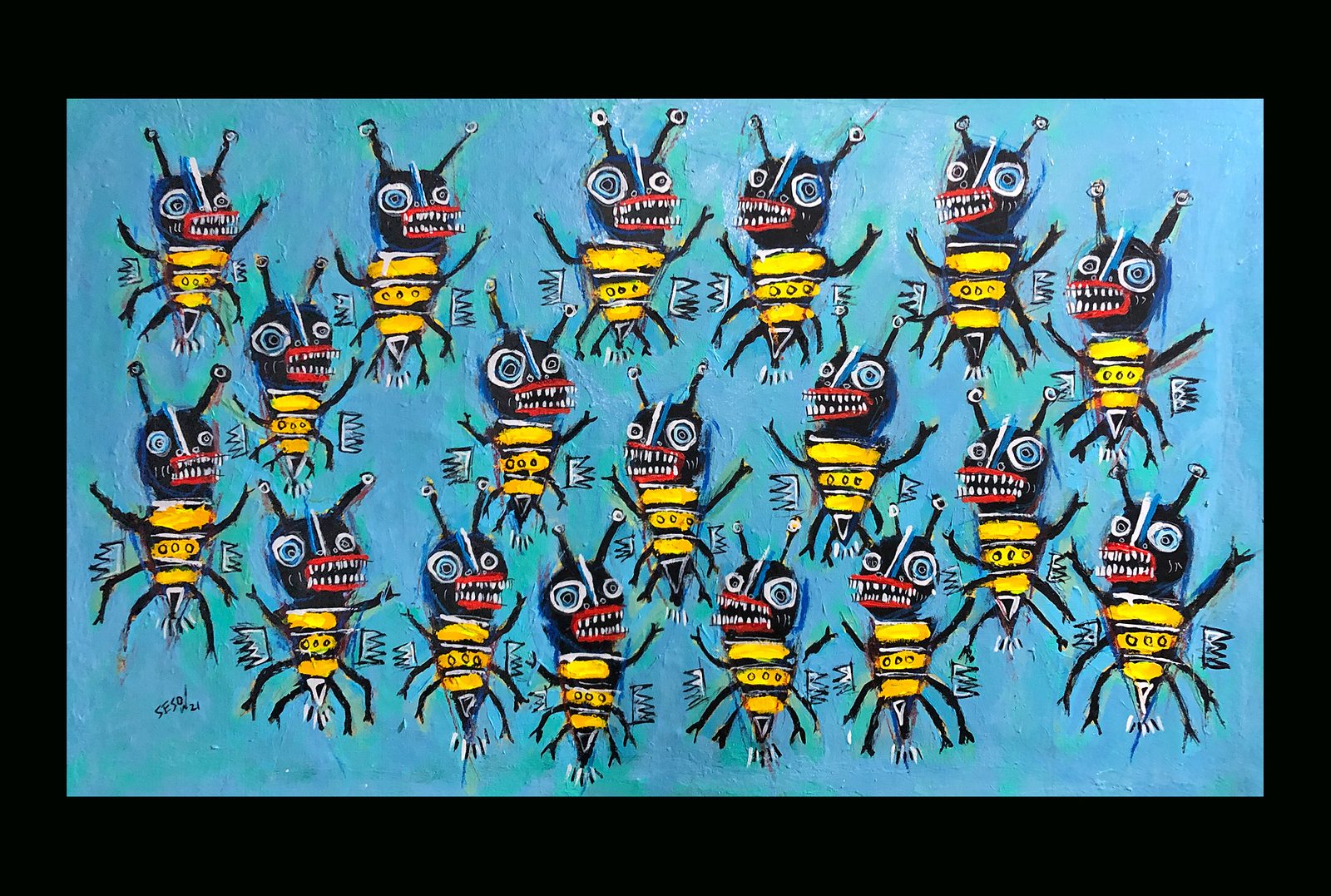
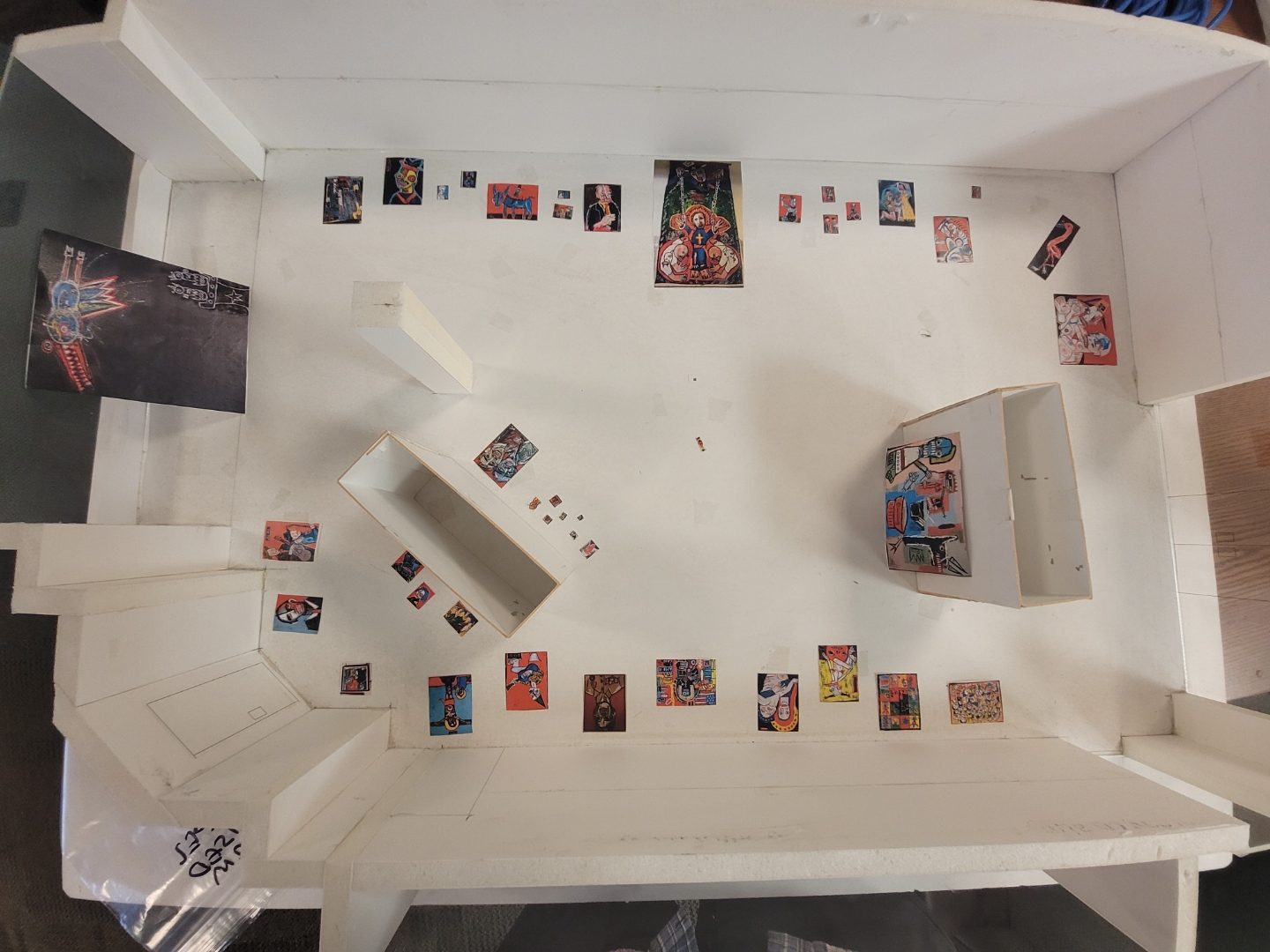
When first entering the exhibition, you are overwhelmed by a
seemingly endless barrage of colors. The walls are covered
with nearly 400 of Matt Sesow’s works, including some
narrative exposition and drawings the artist painted directly
on the walls. Quietly in the background you hear a mix of ska,
punk, hardcore, and free jazz music—though Sesow prefers to
blast this music while creating, Dr. Cullen Strawn, Executive
Director for the Arts and the Director of the Baron and Ellin
Gordon Art Galleries, chose to give visitors context by playing
the music at a low volume throughout the exhibition.
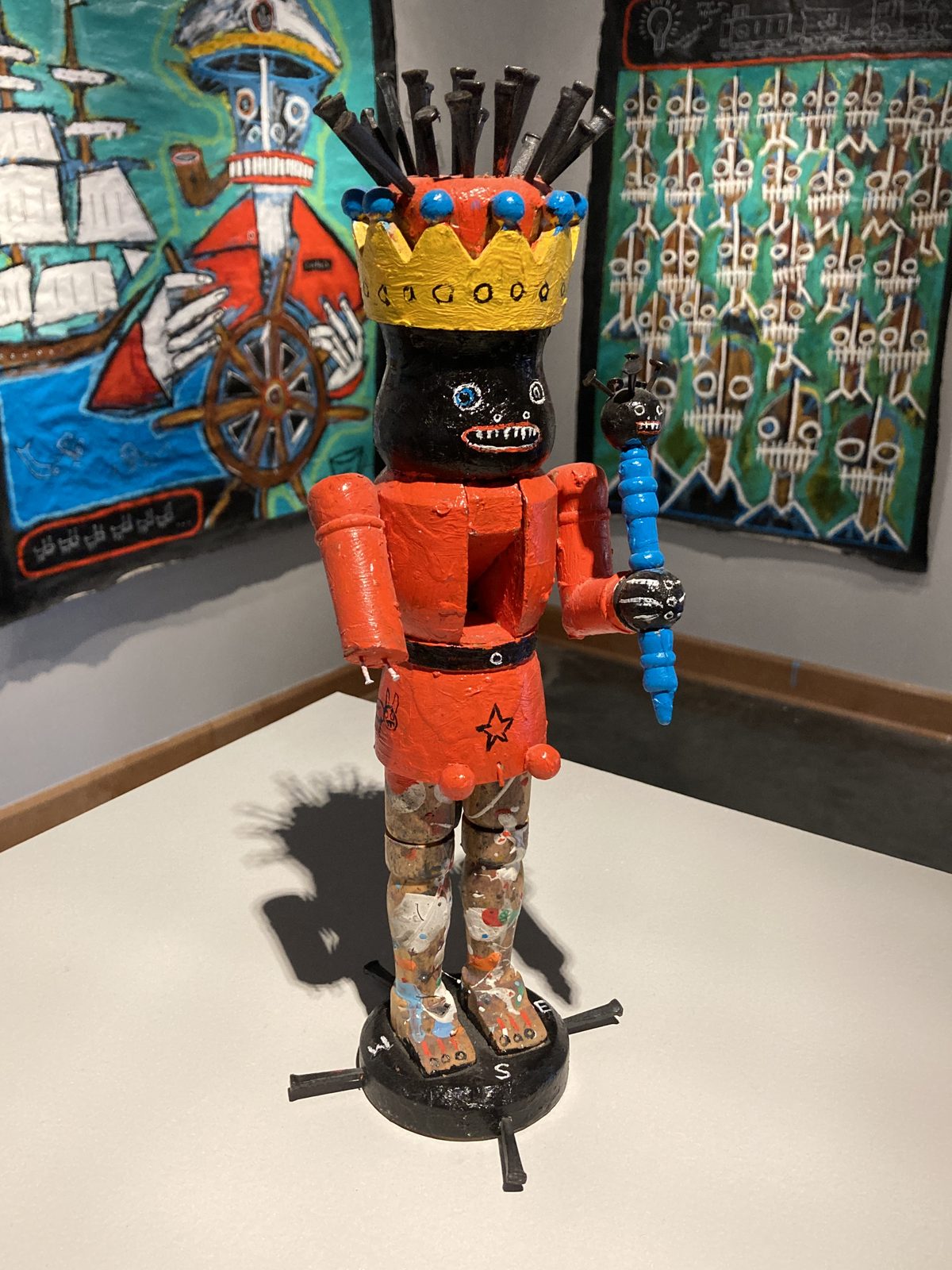
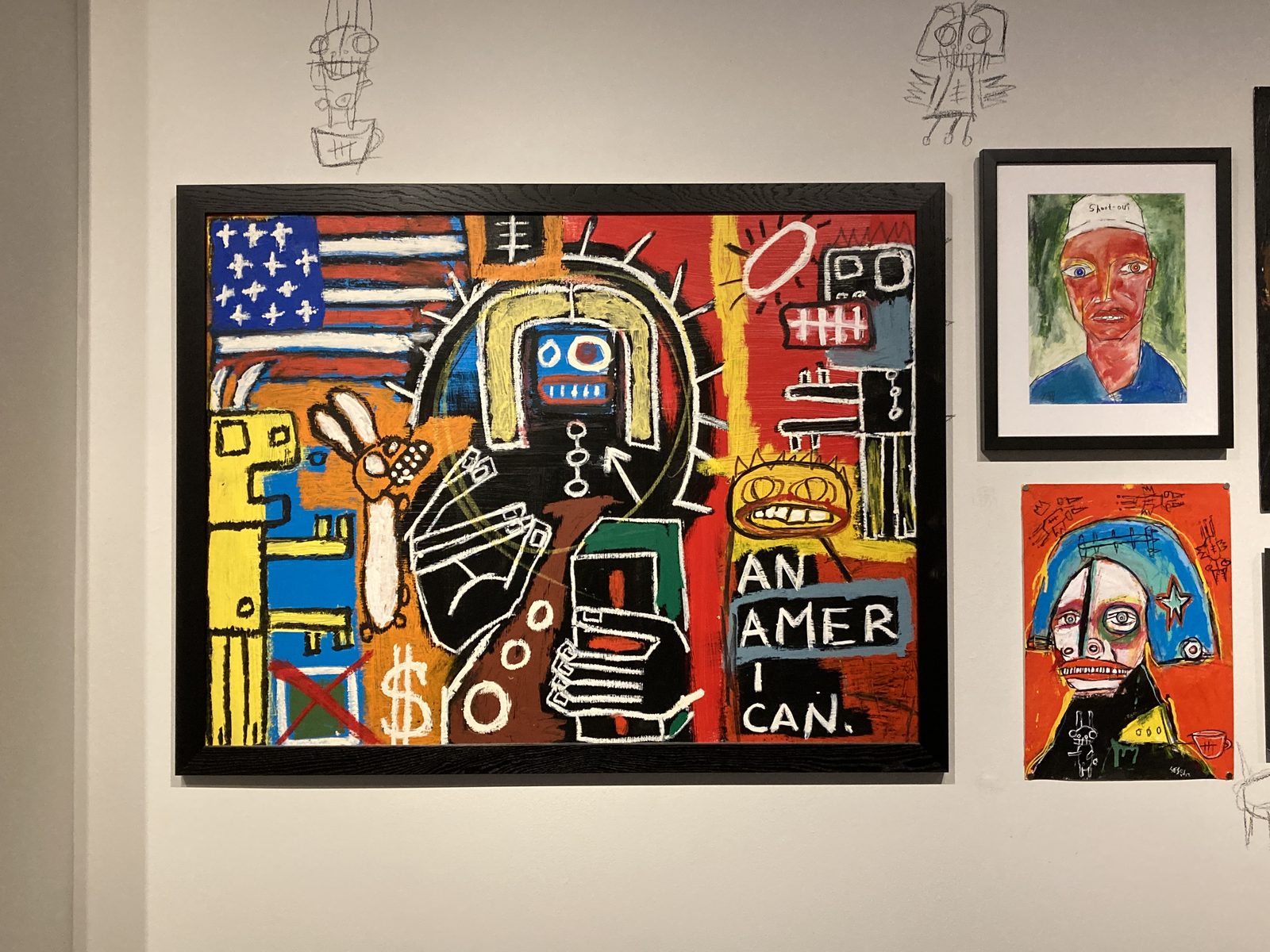
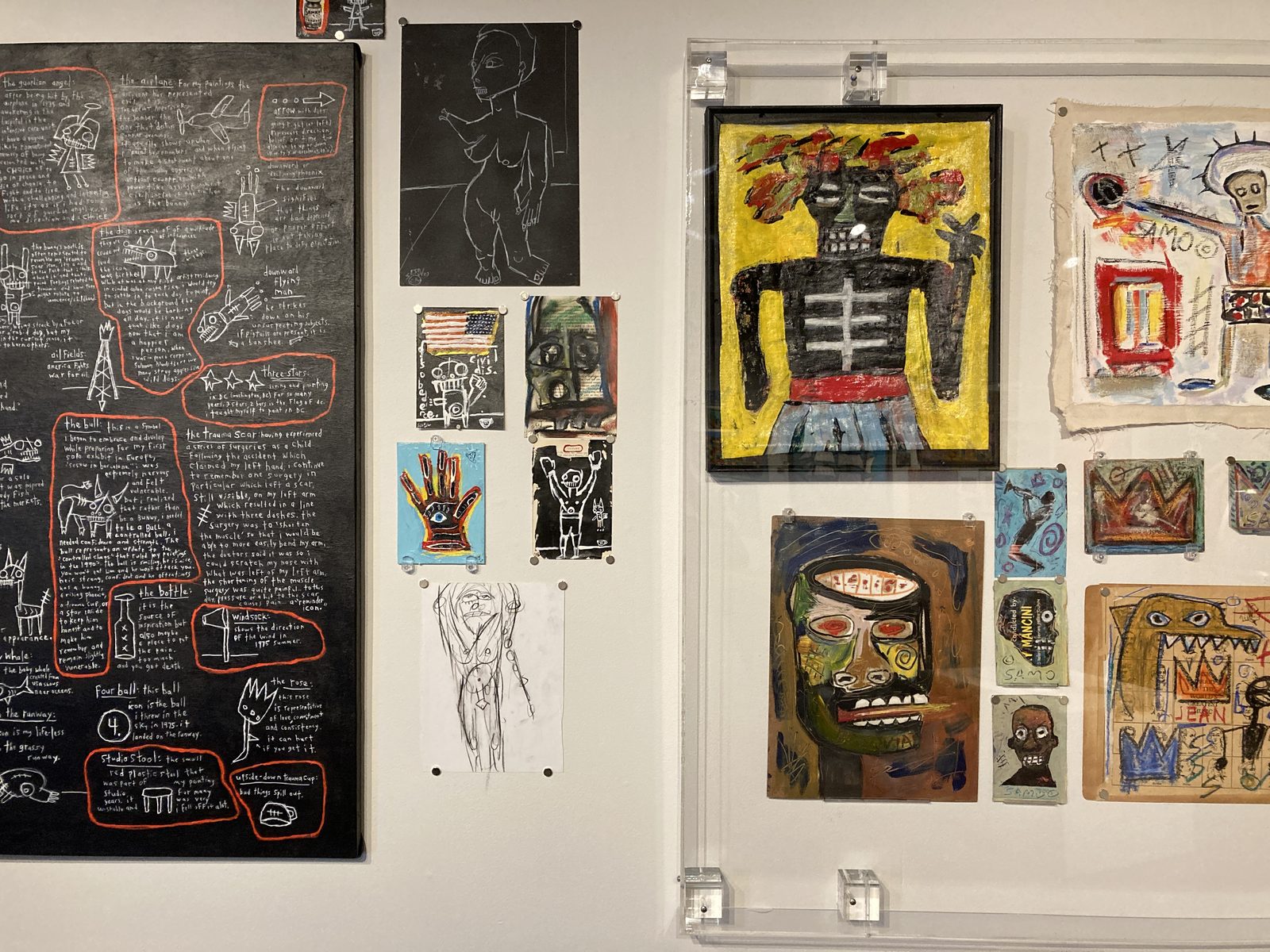
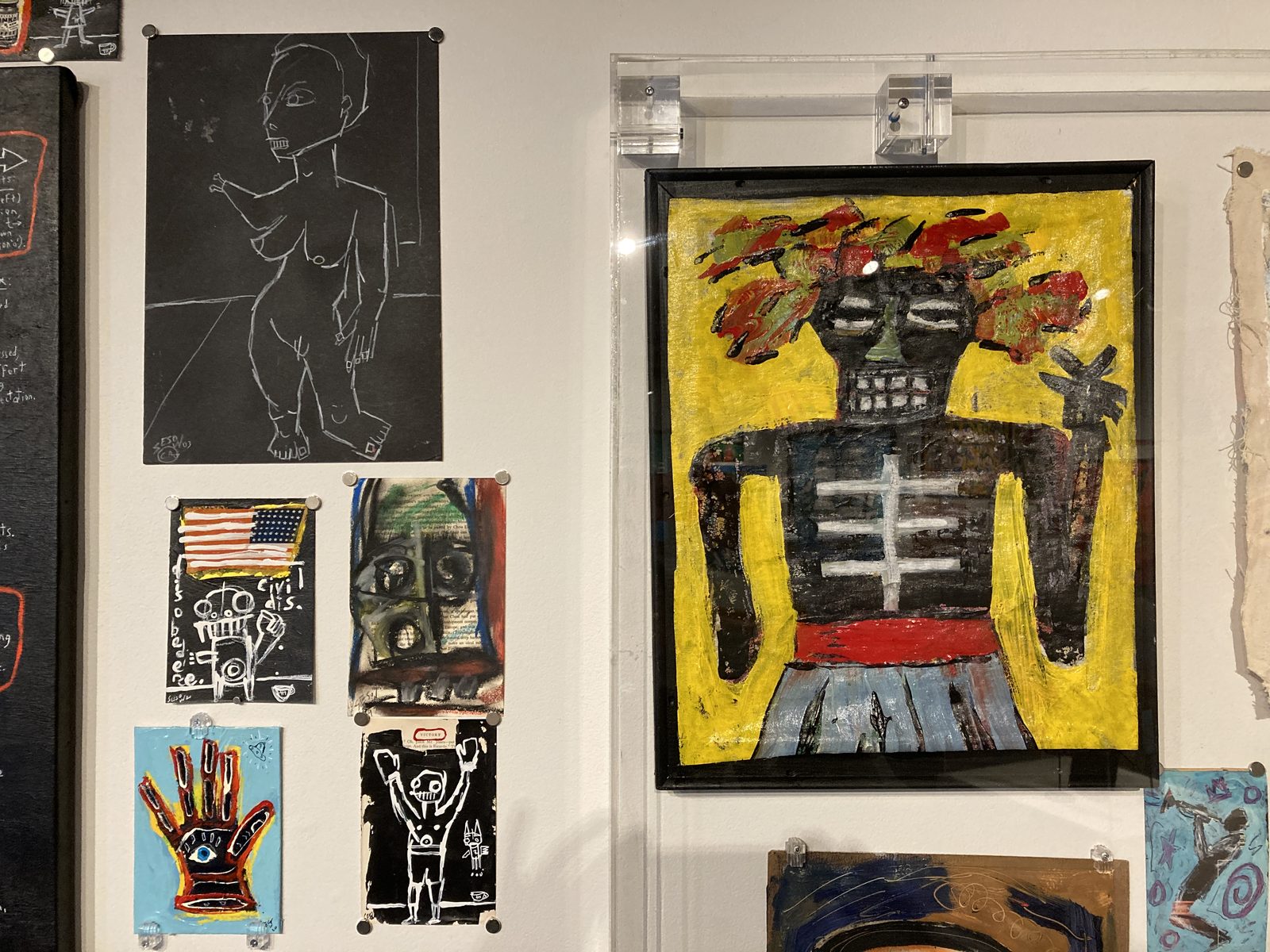
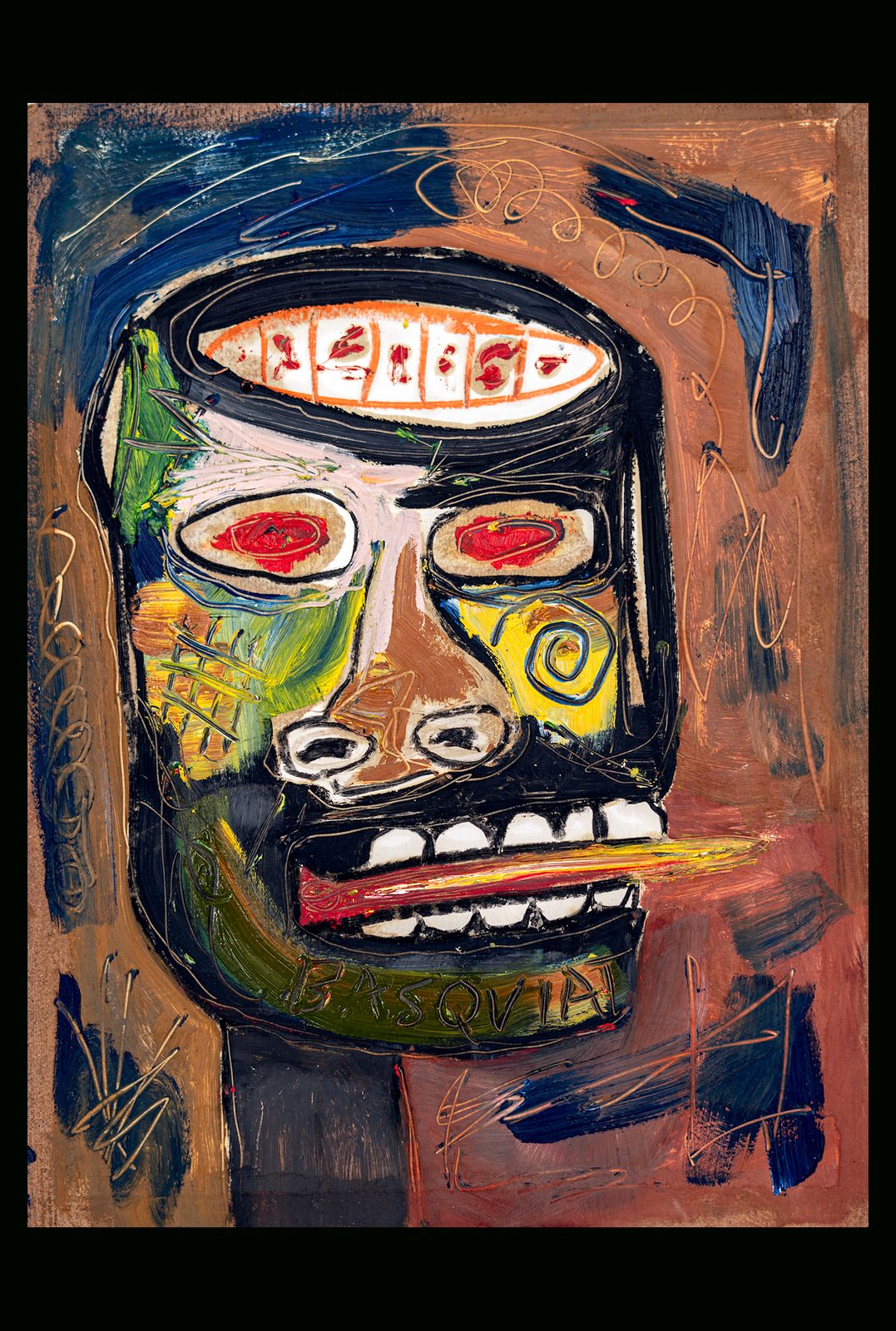
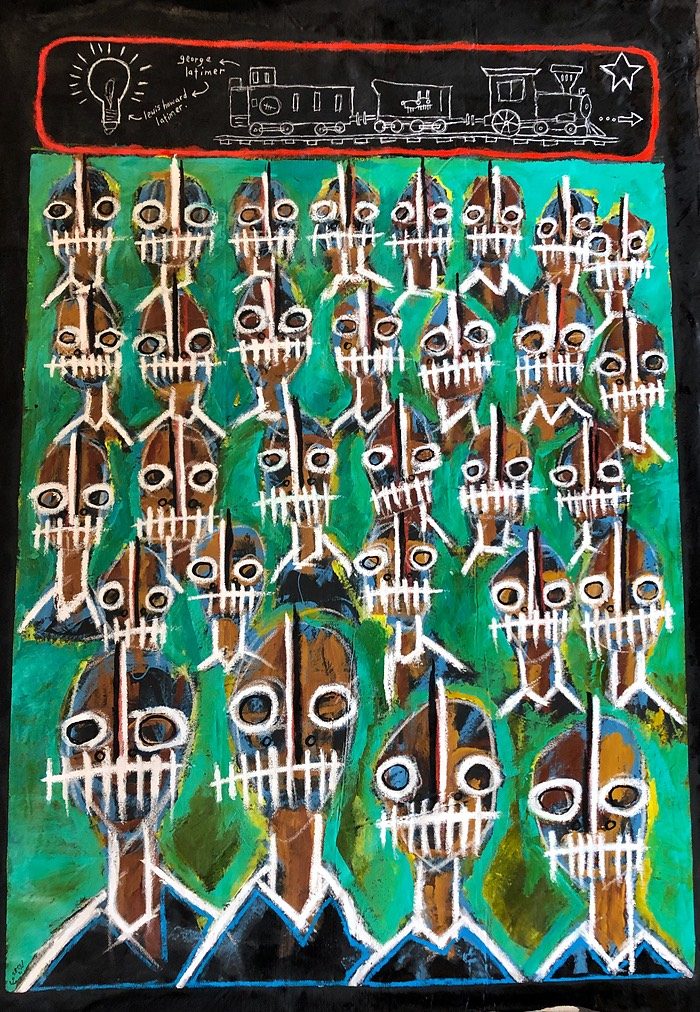
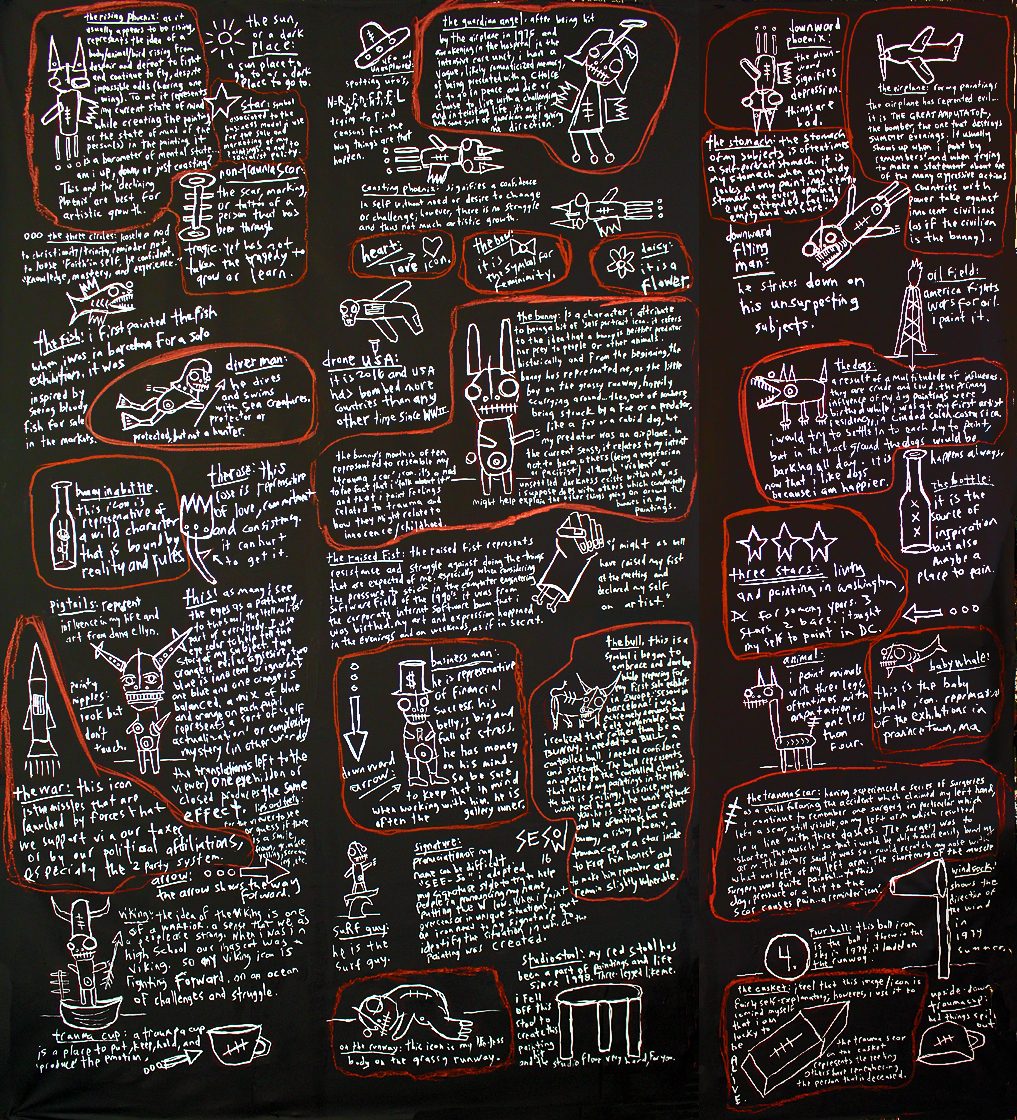
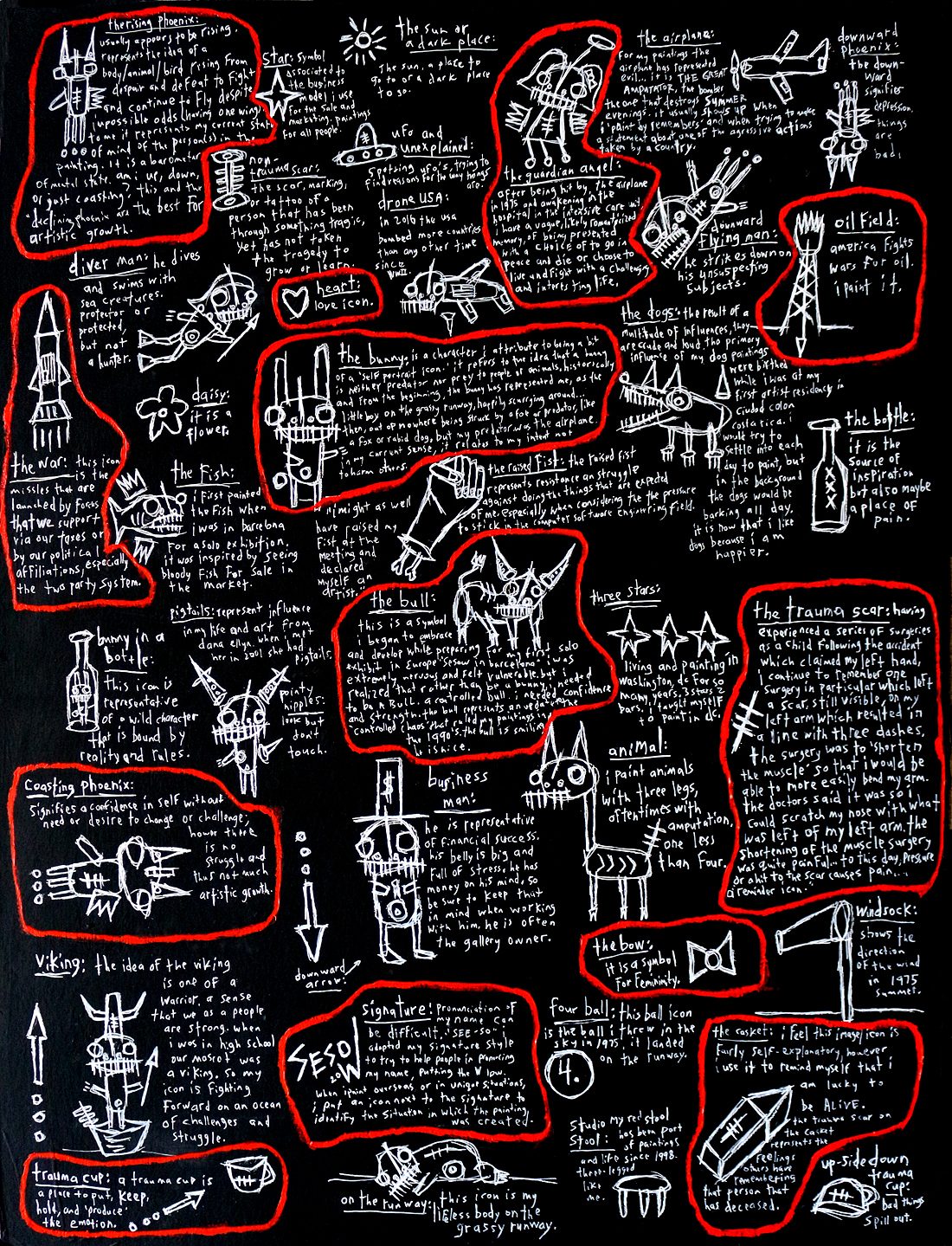
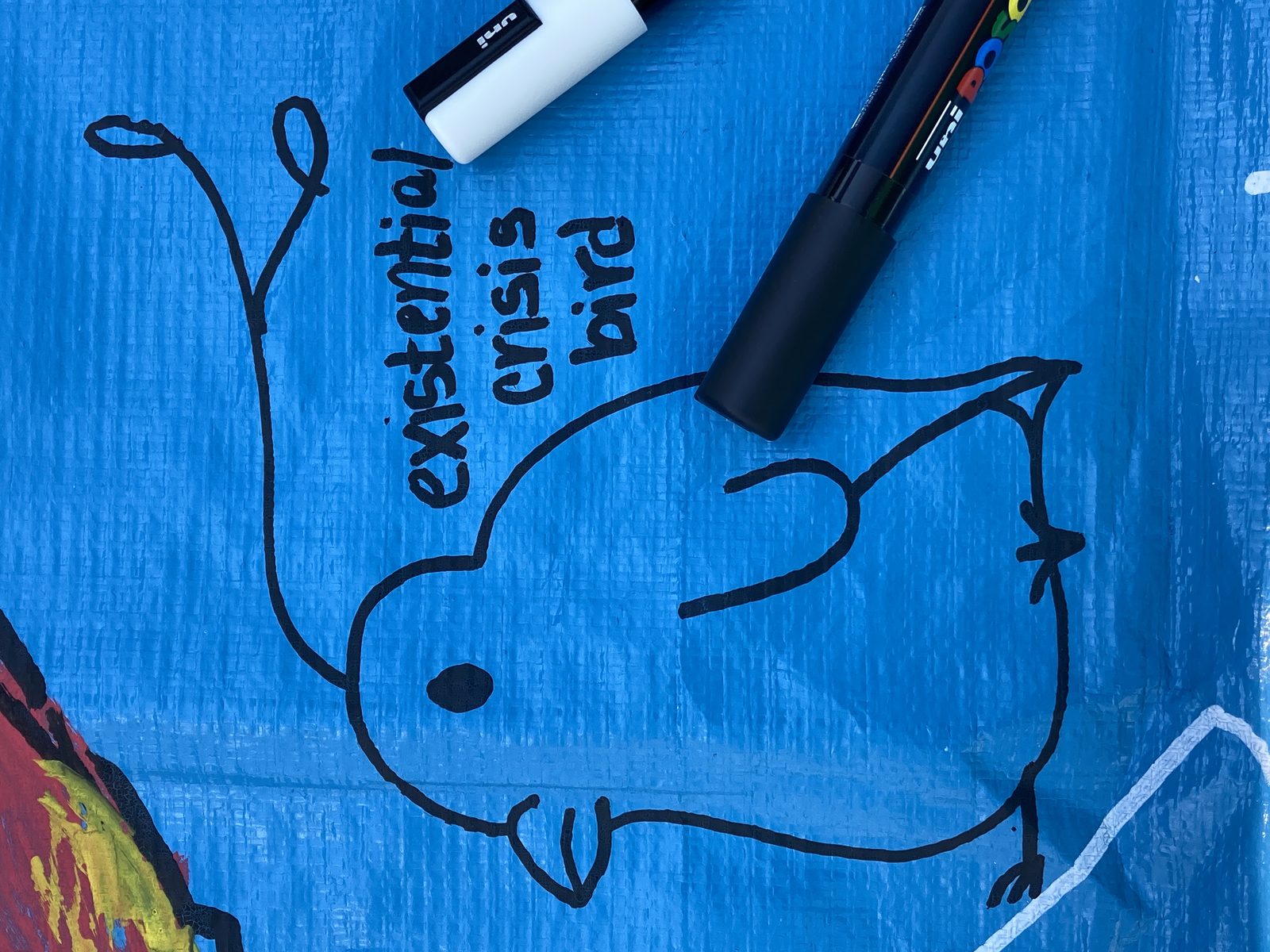
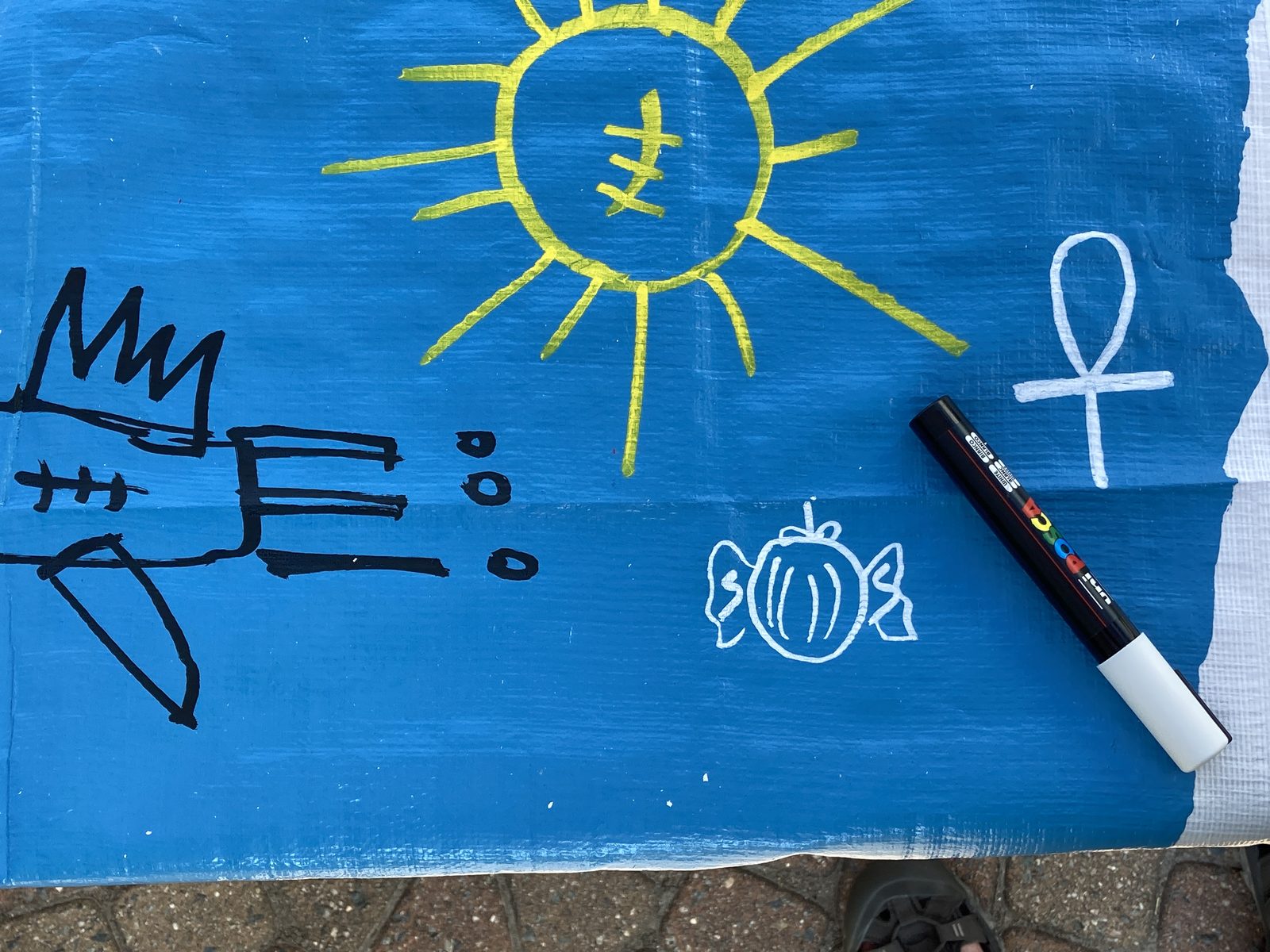
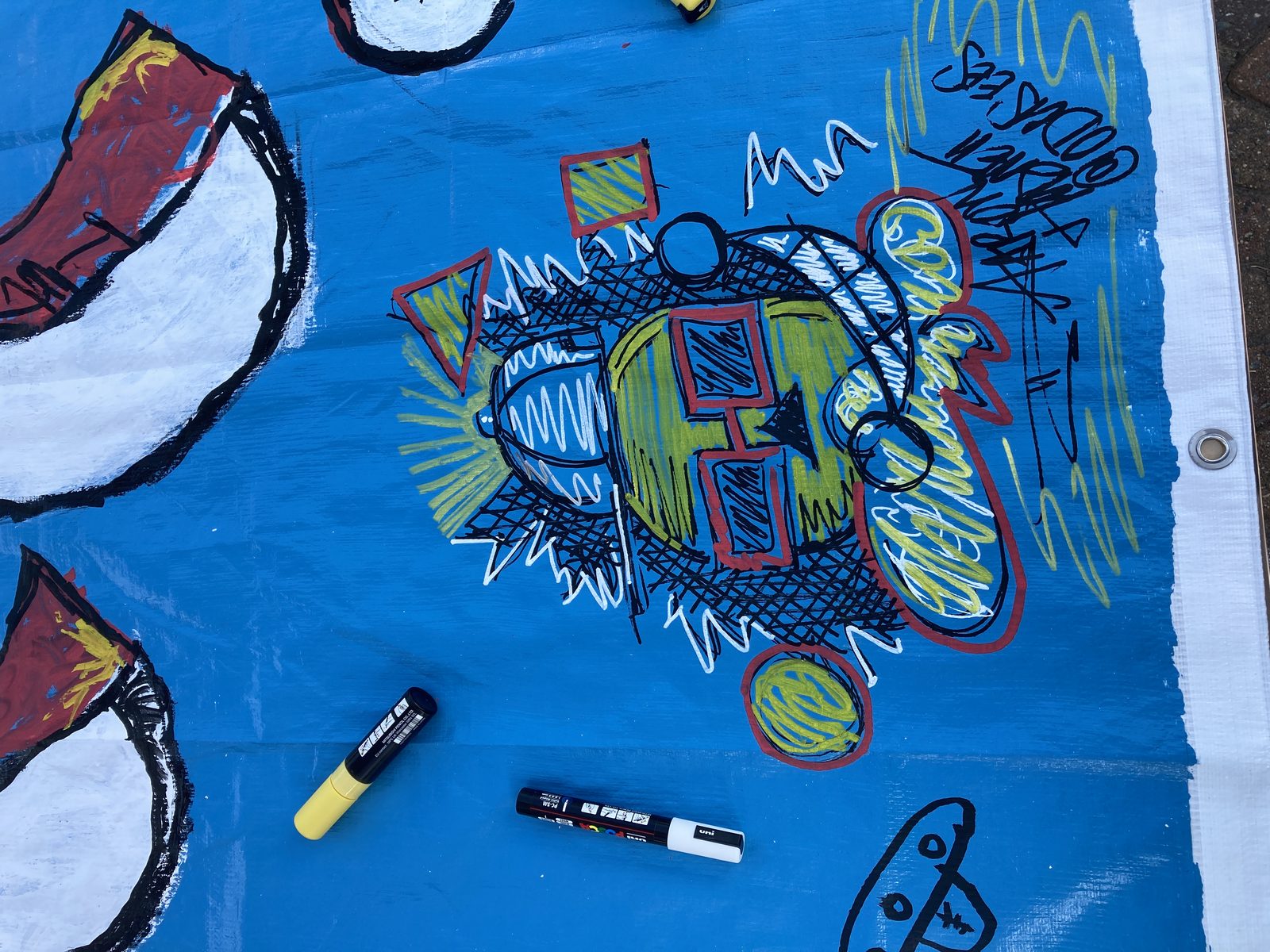
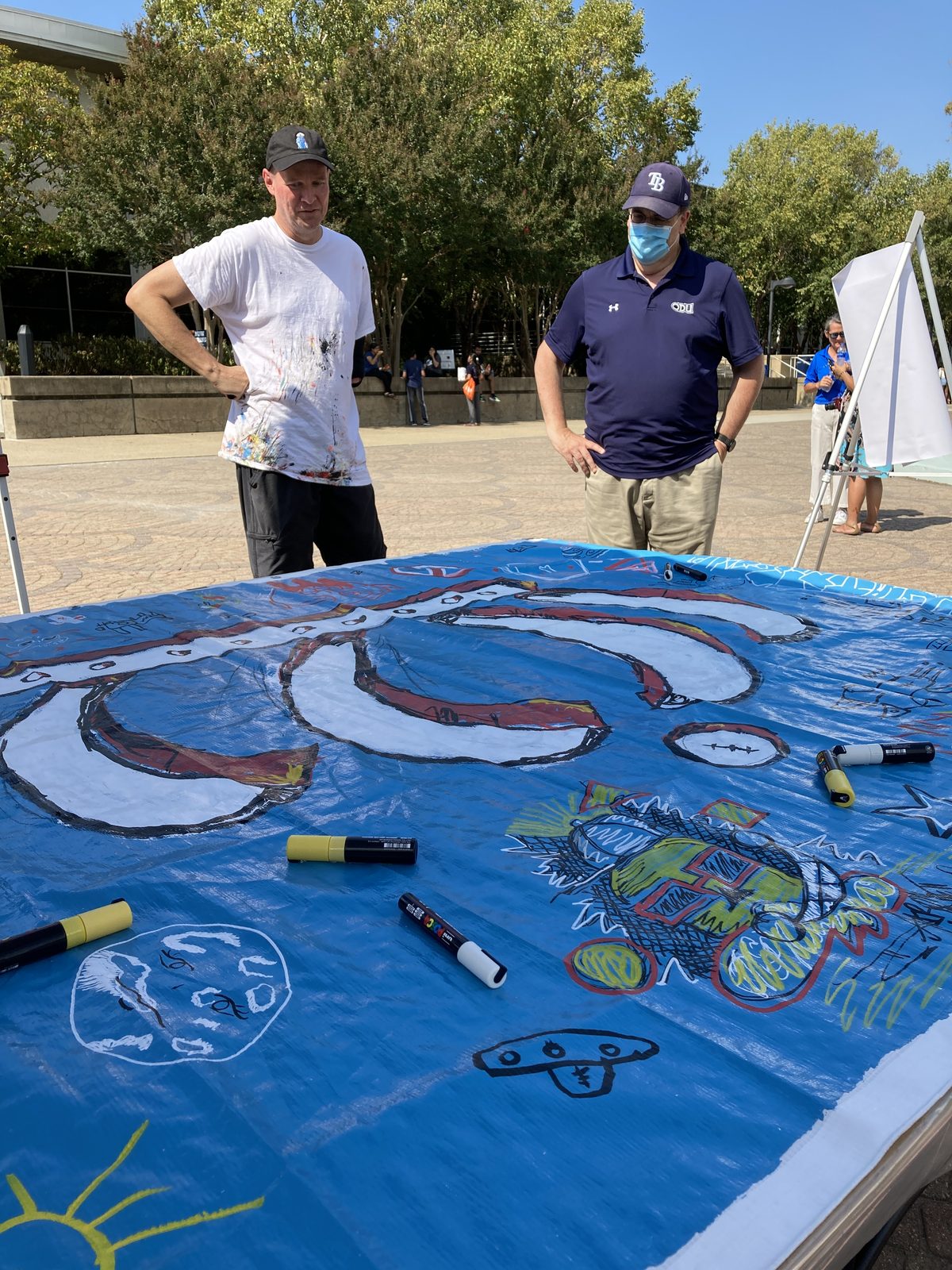
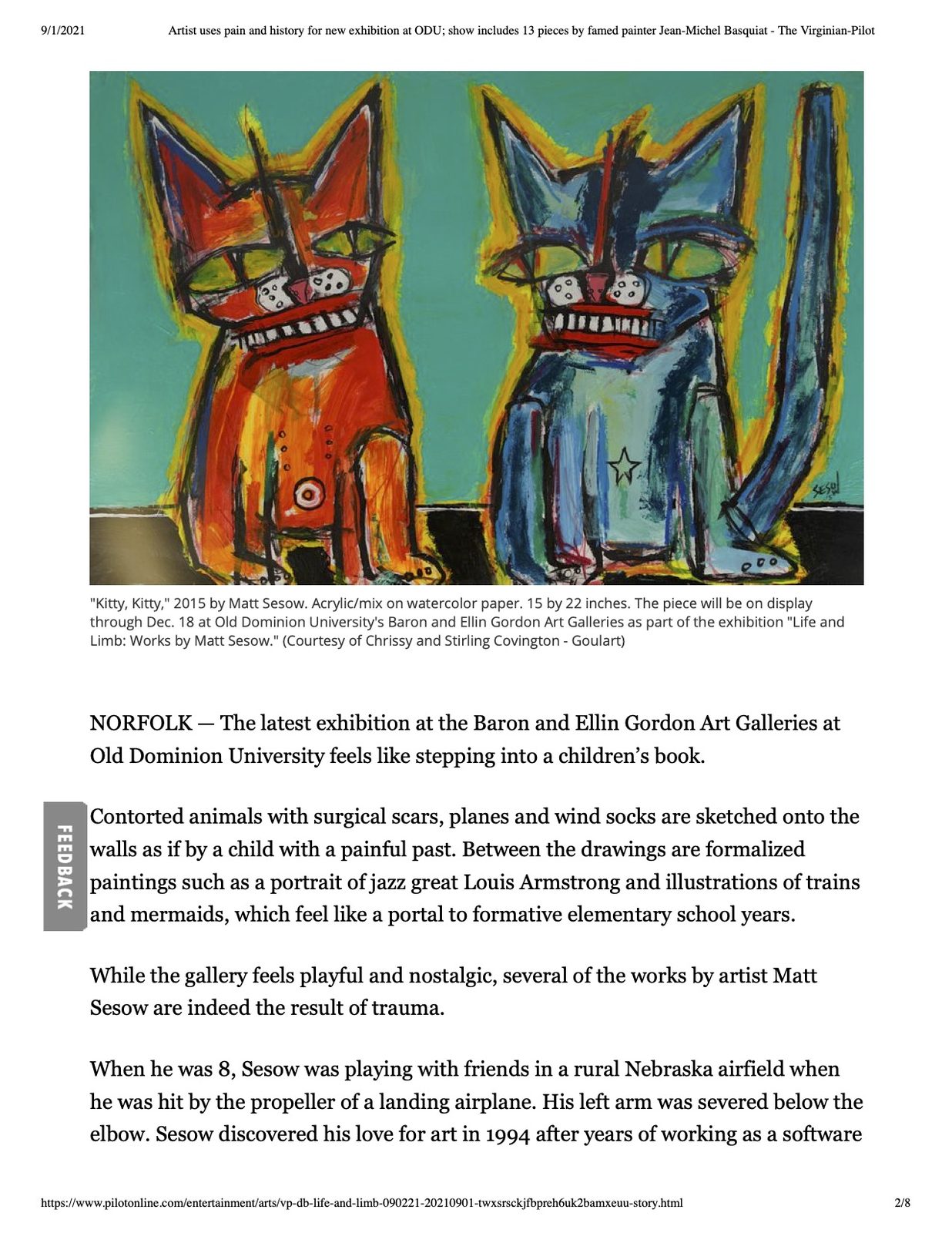
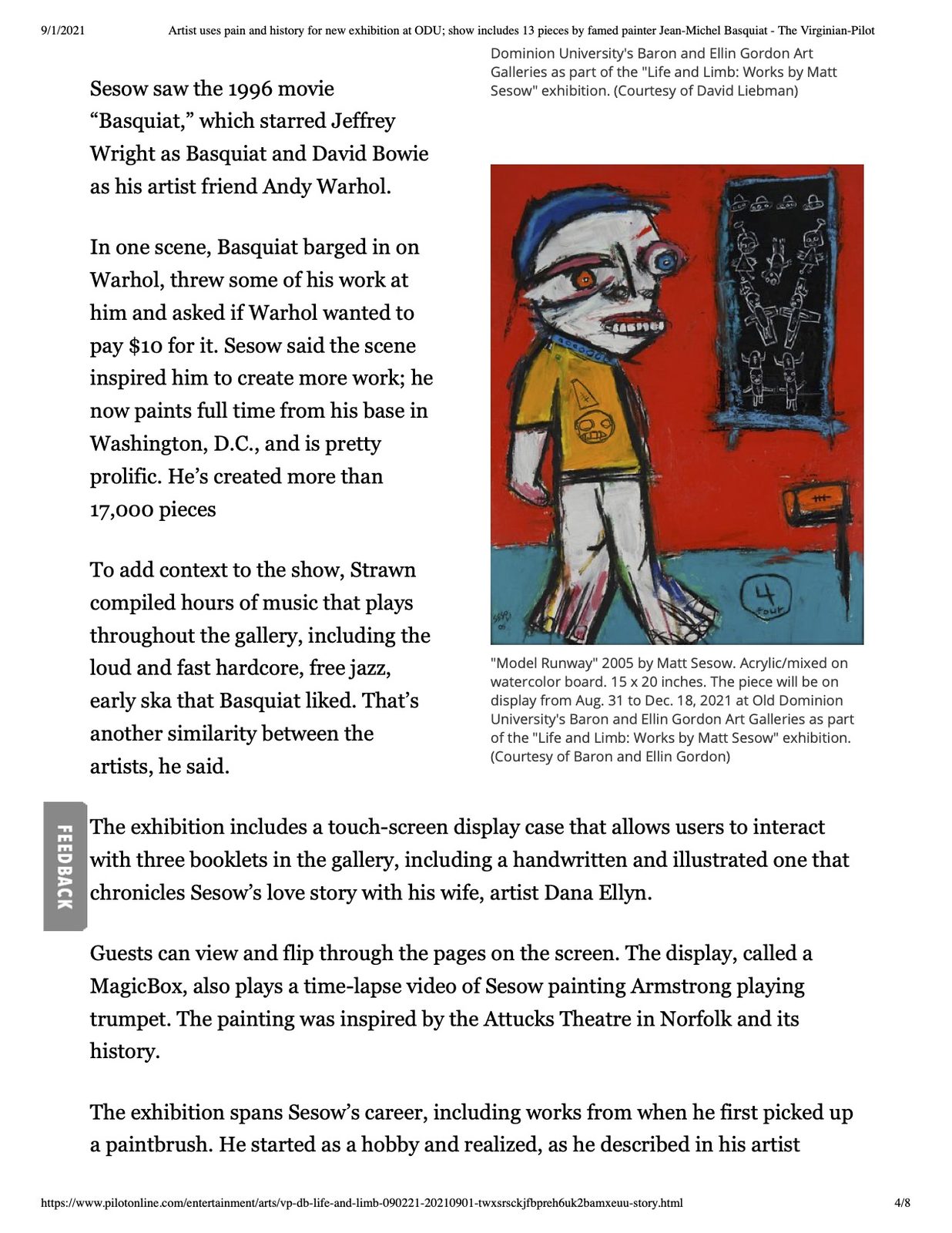
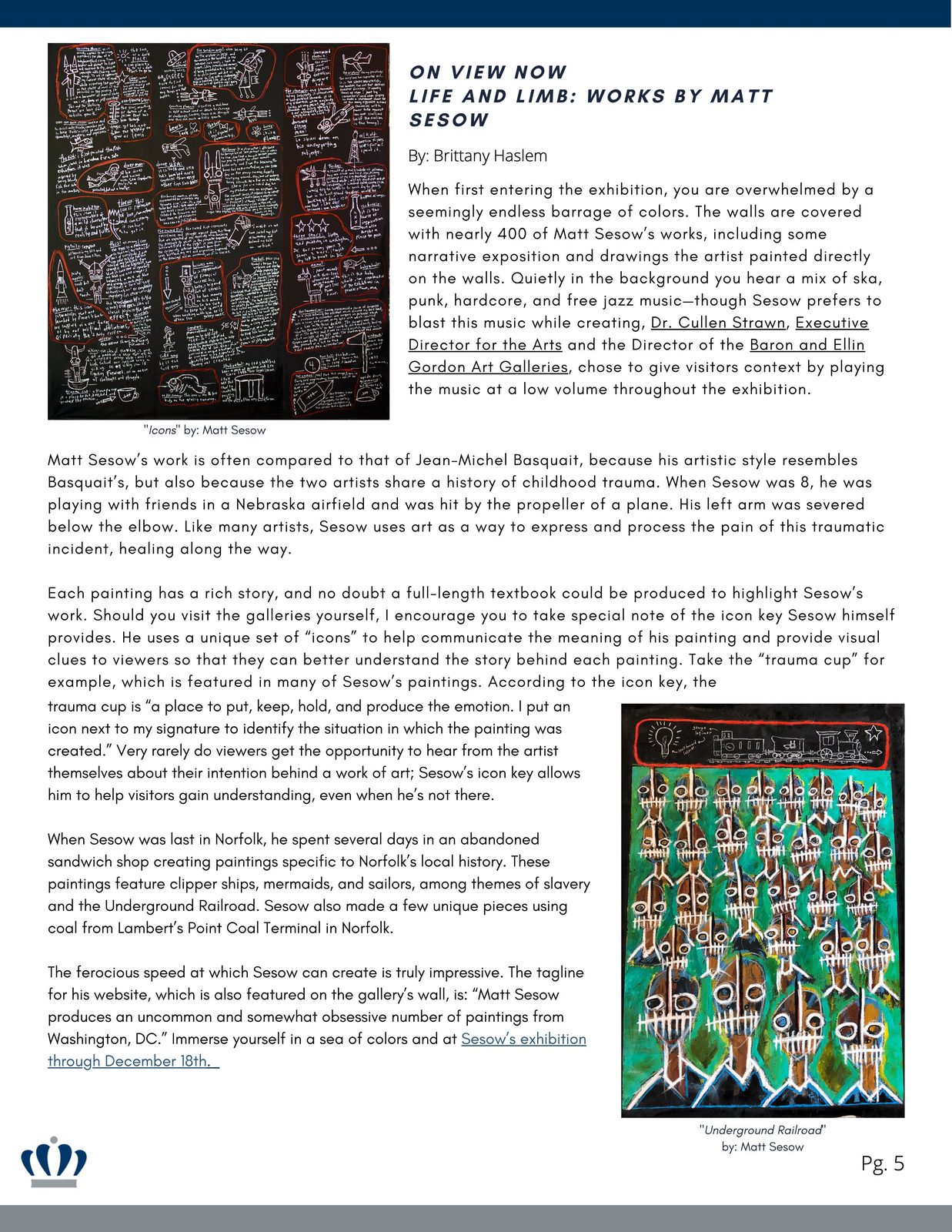
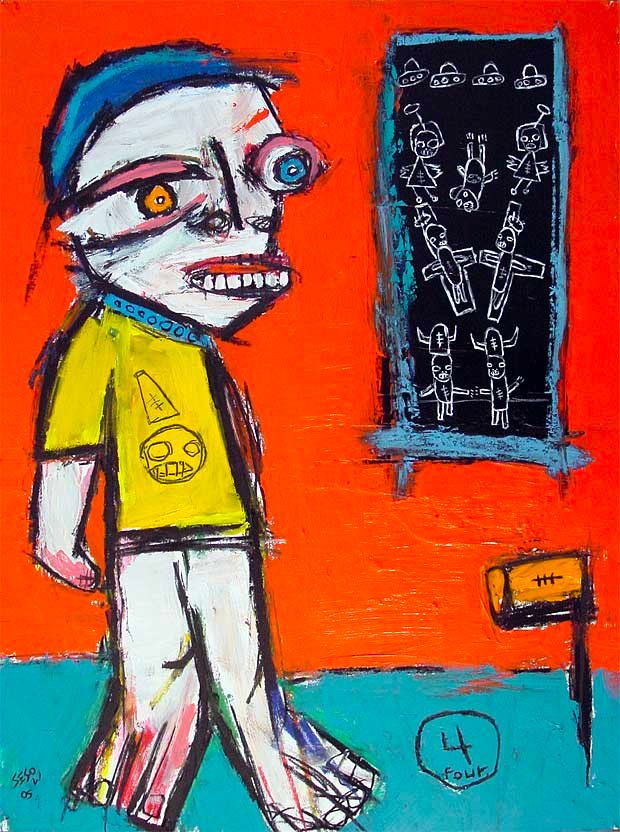
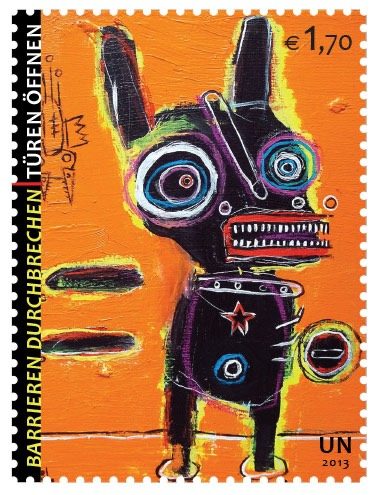
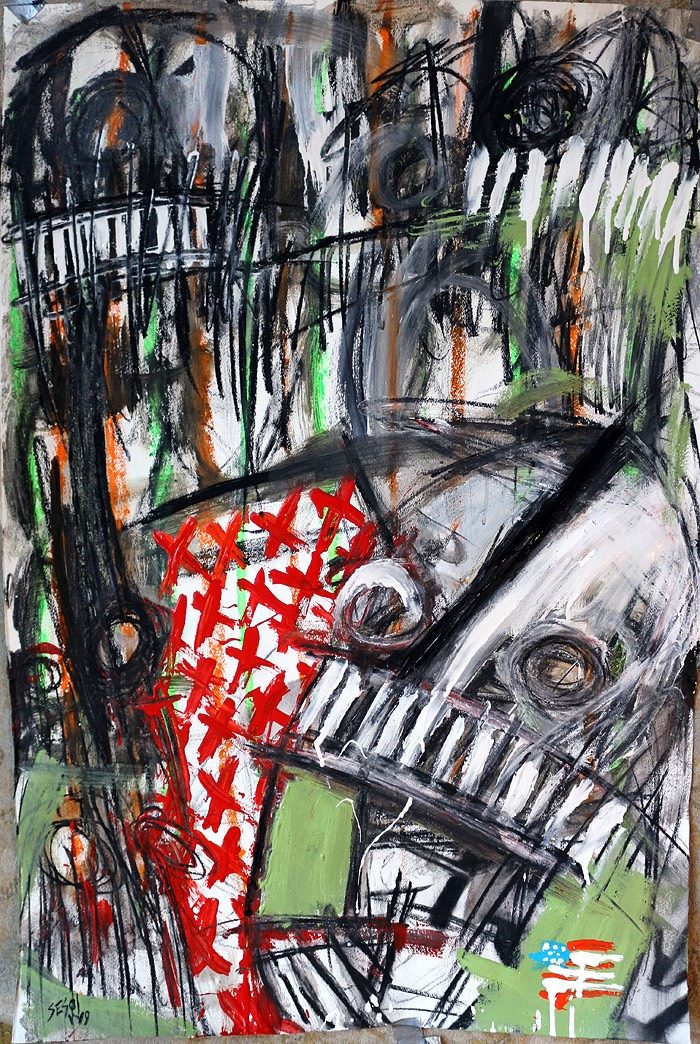
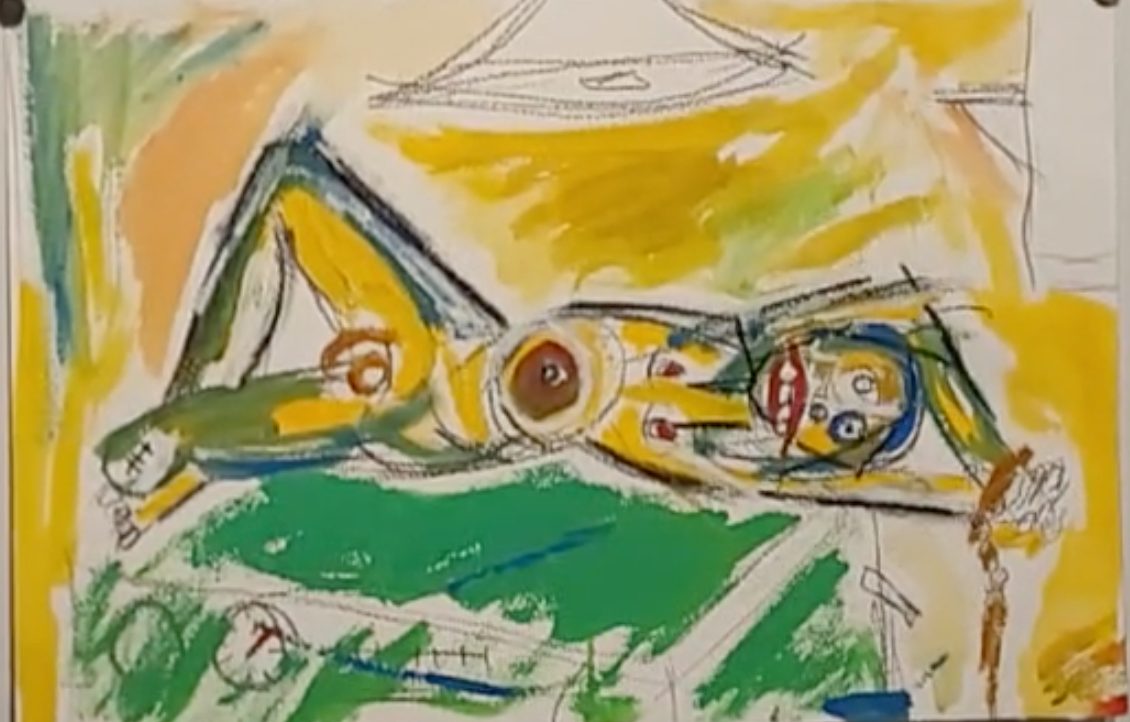
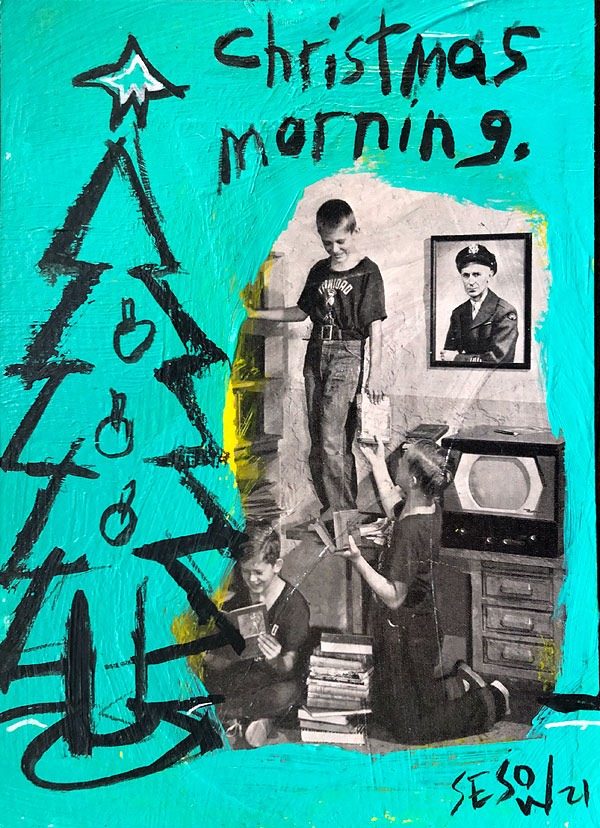
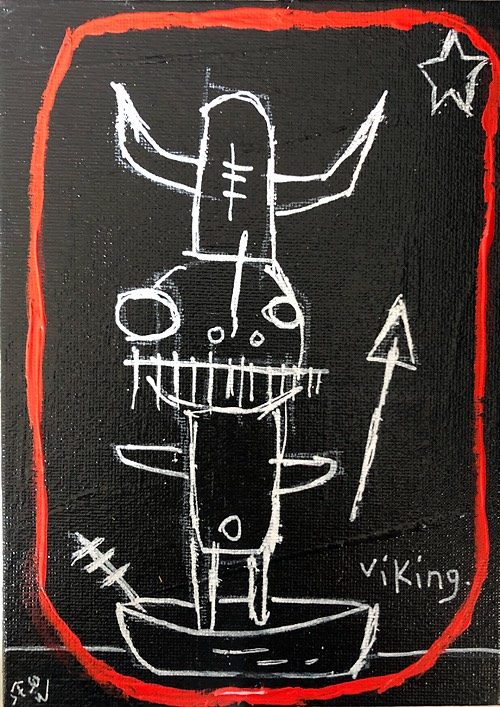
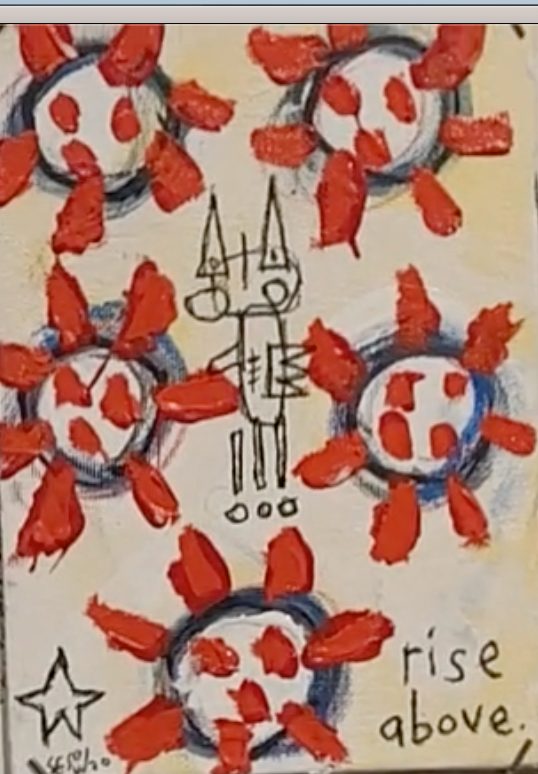
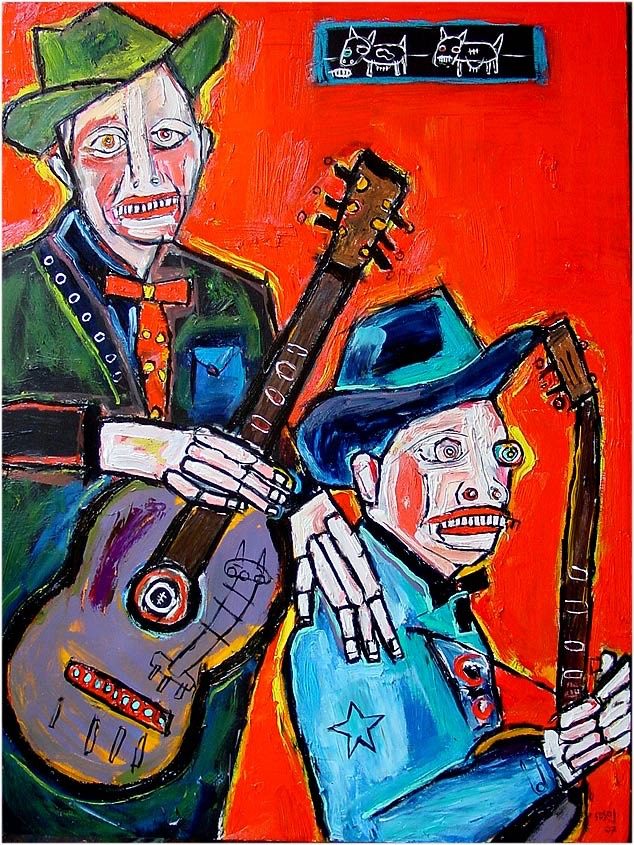
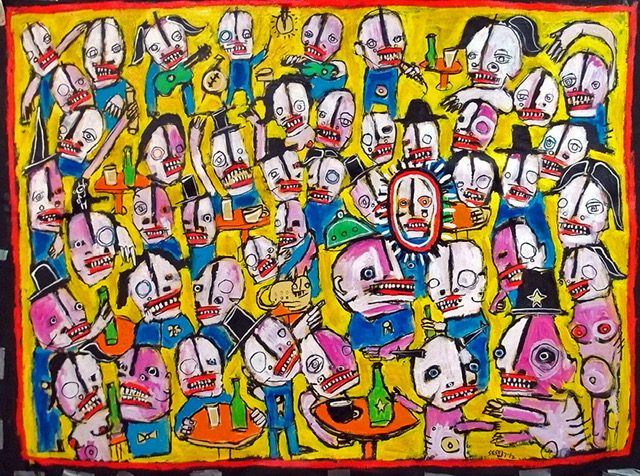
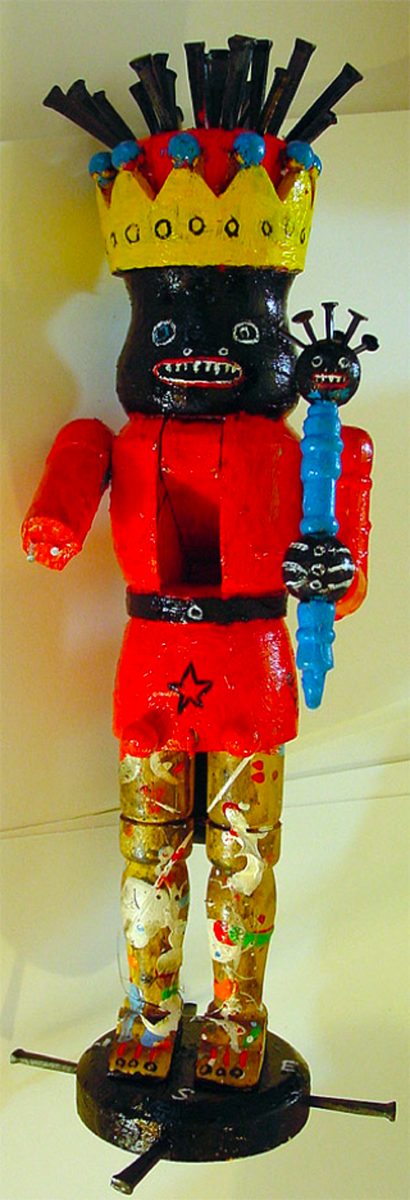
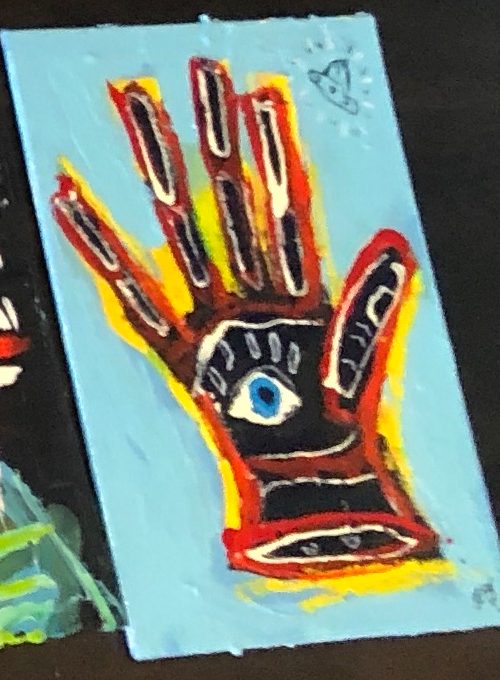
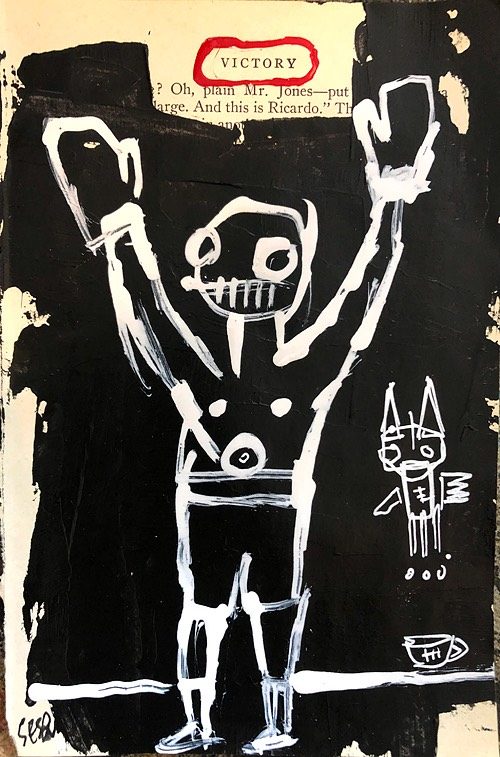
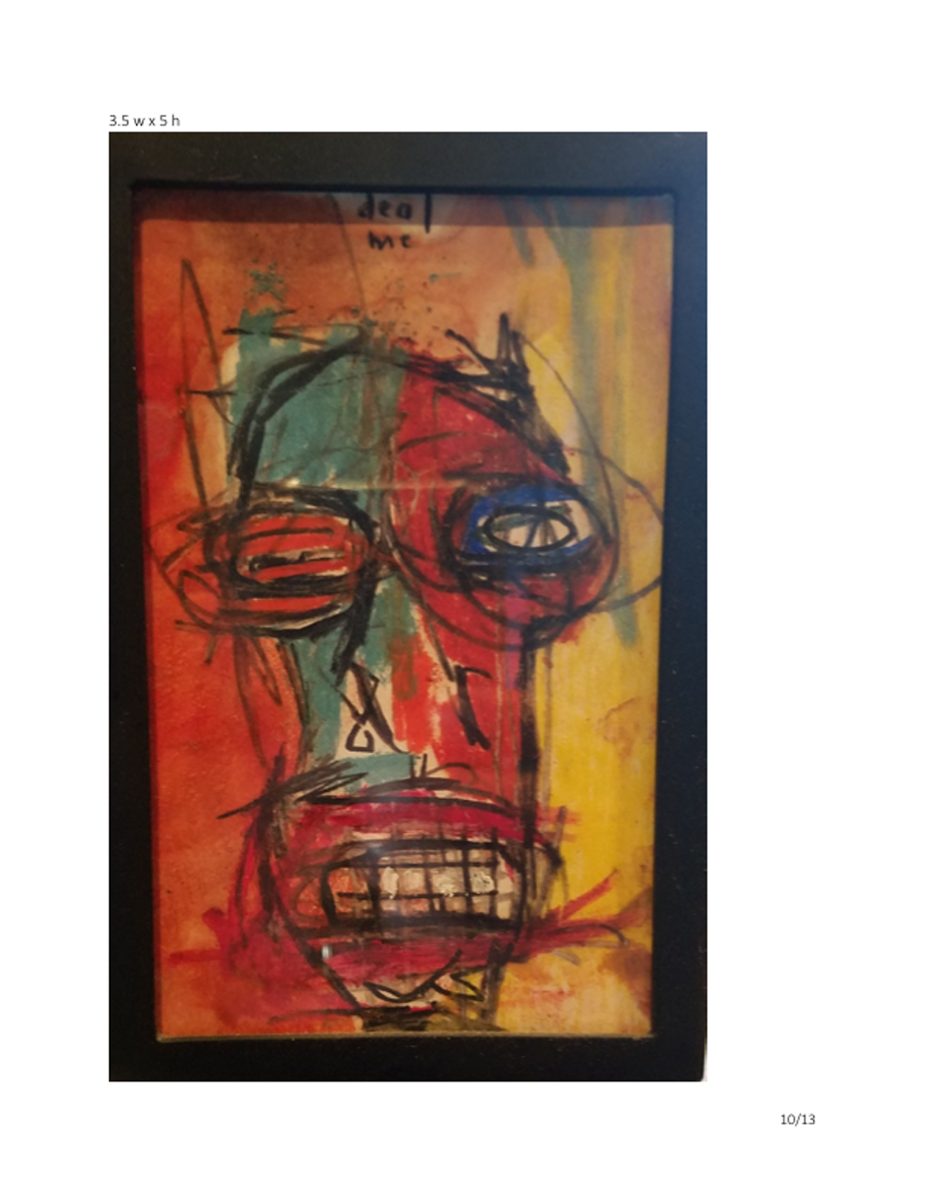
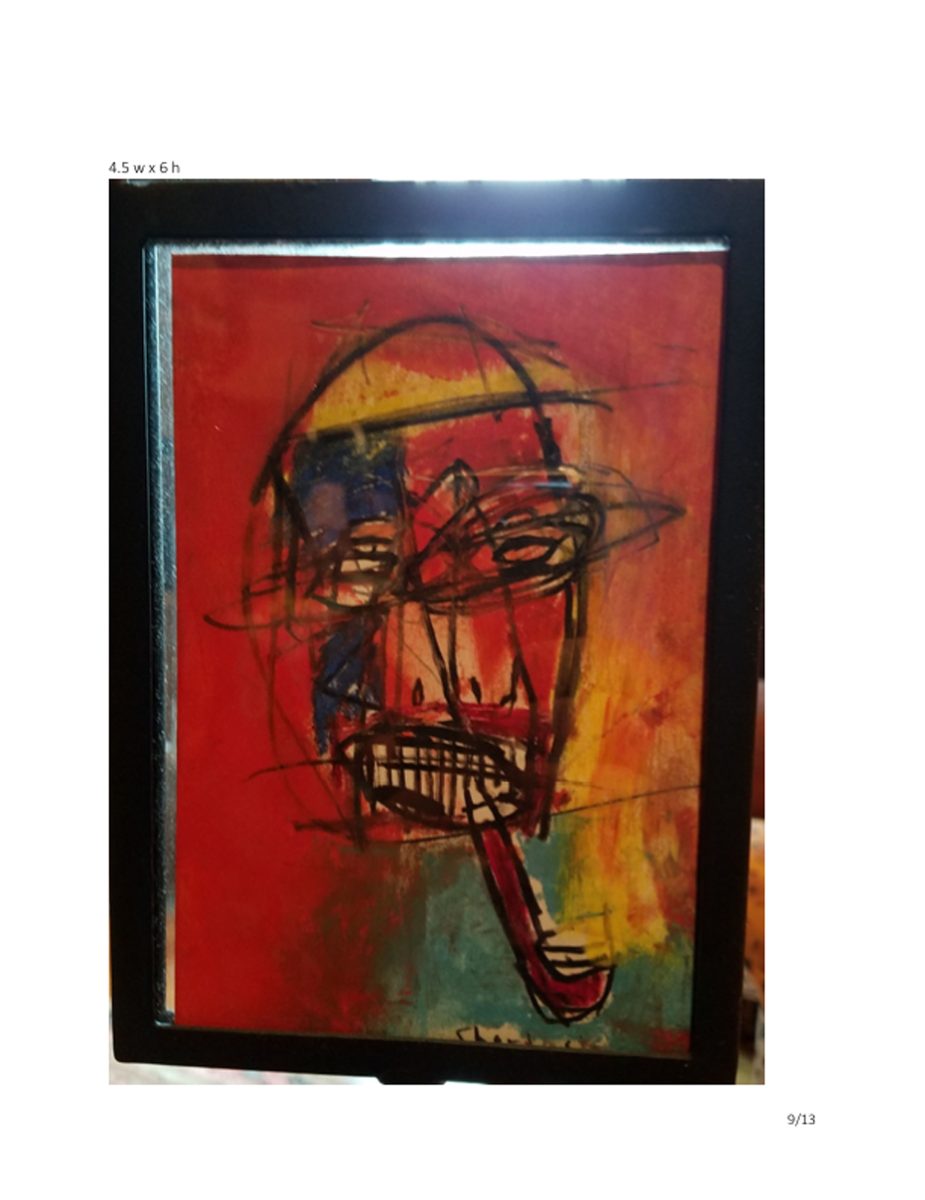
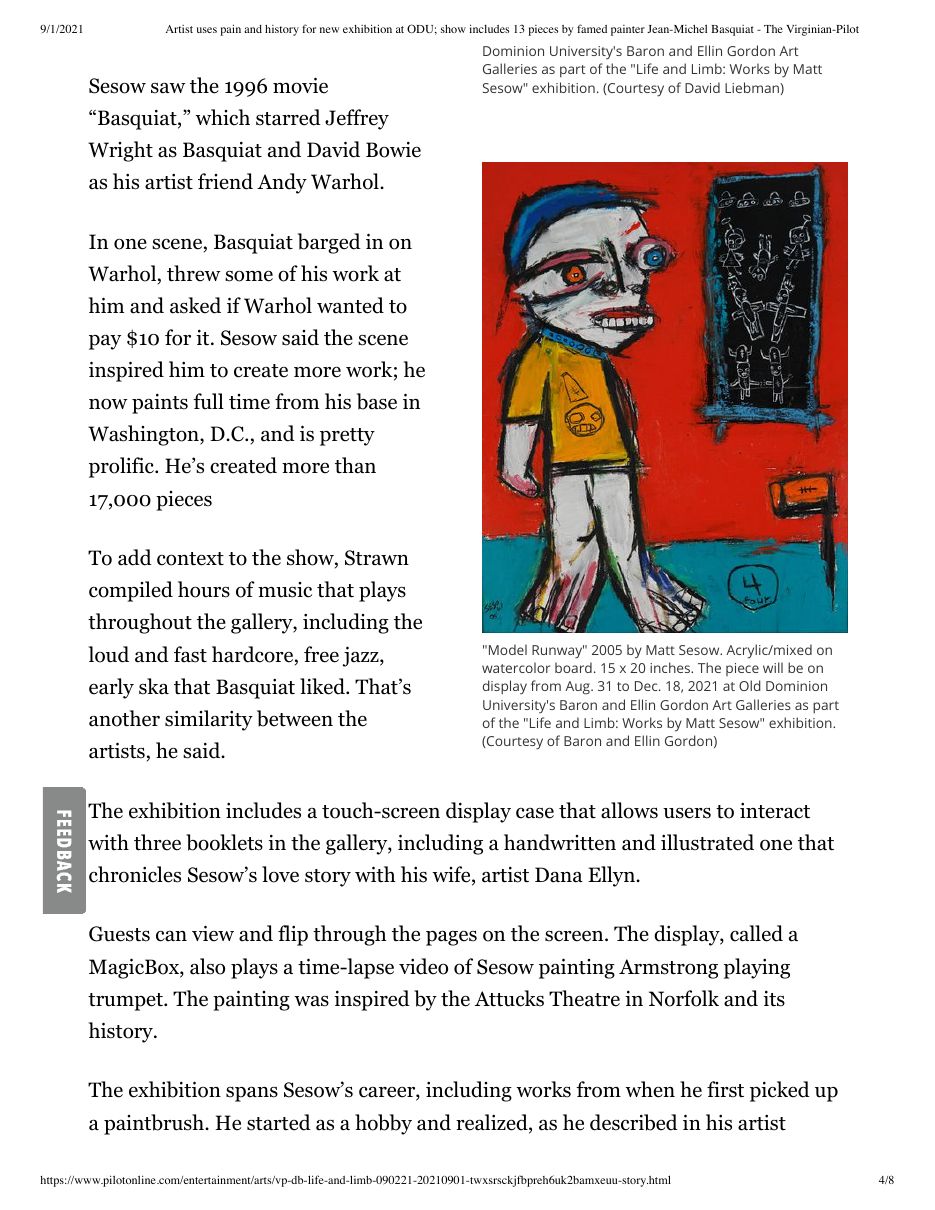
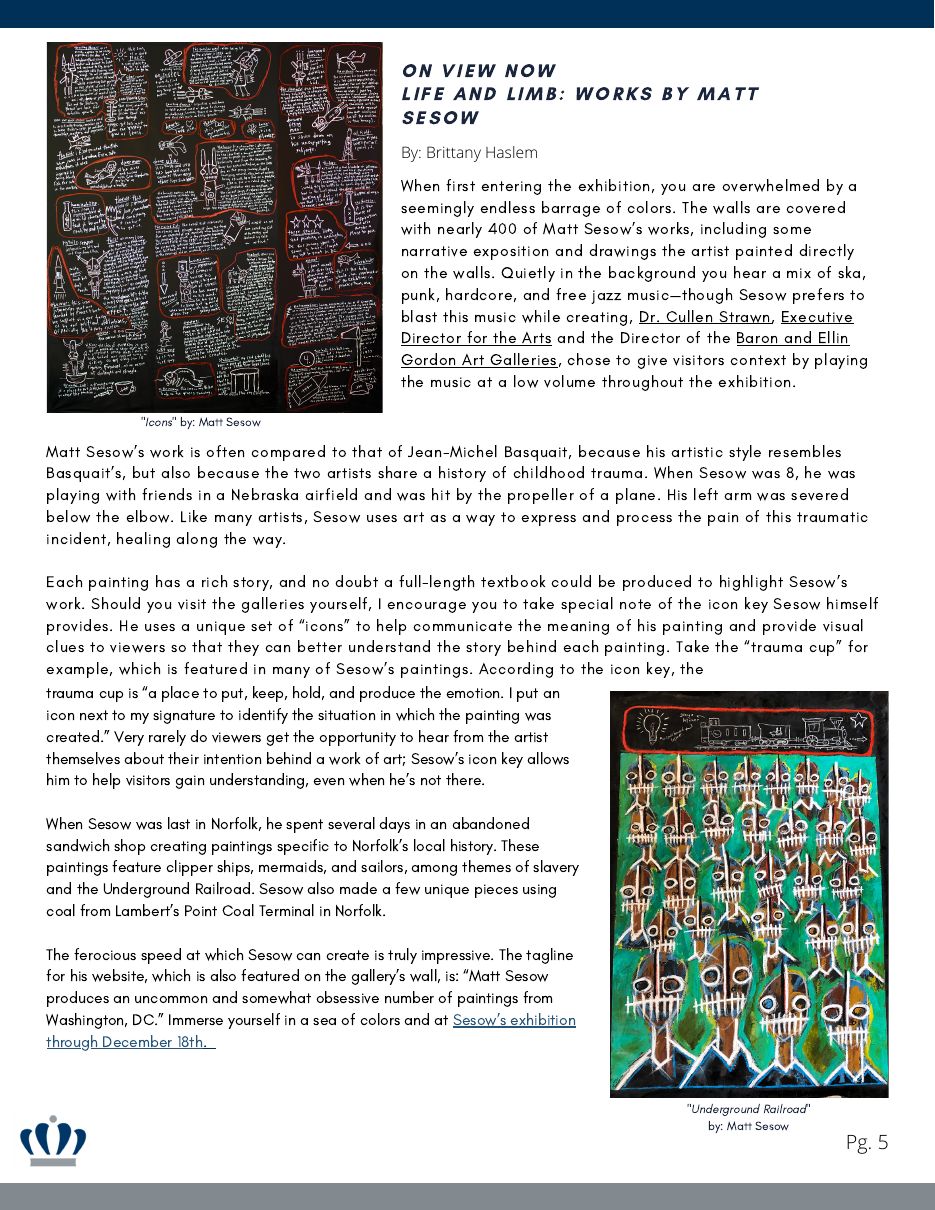
"Icons" by: Matt Sesow
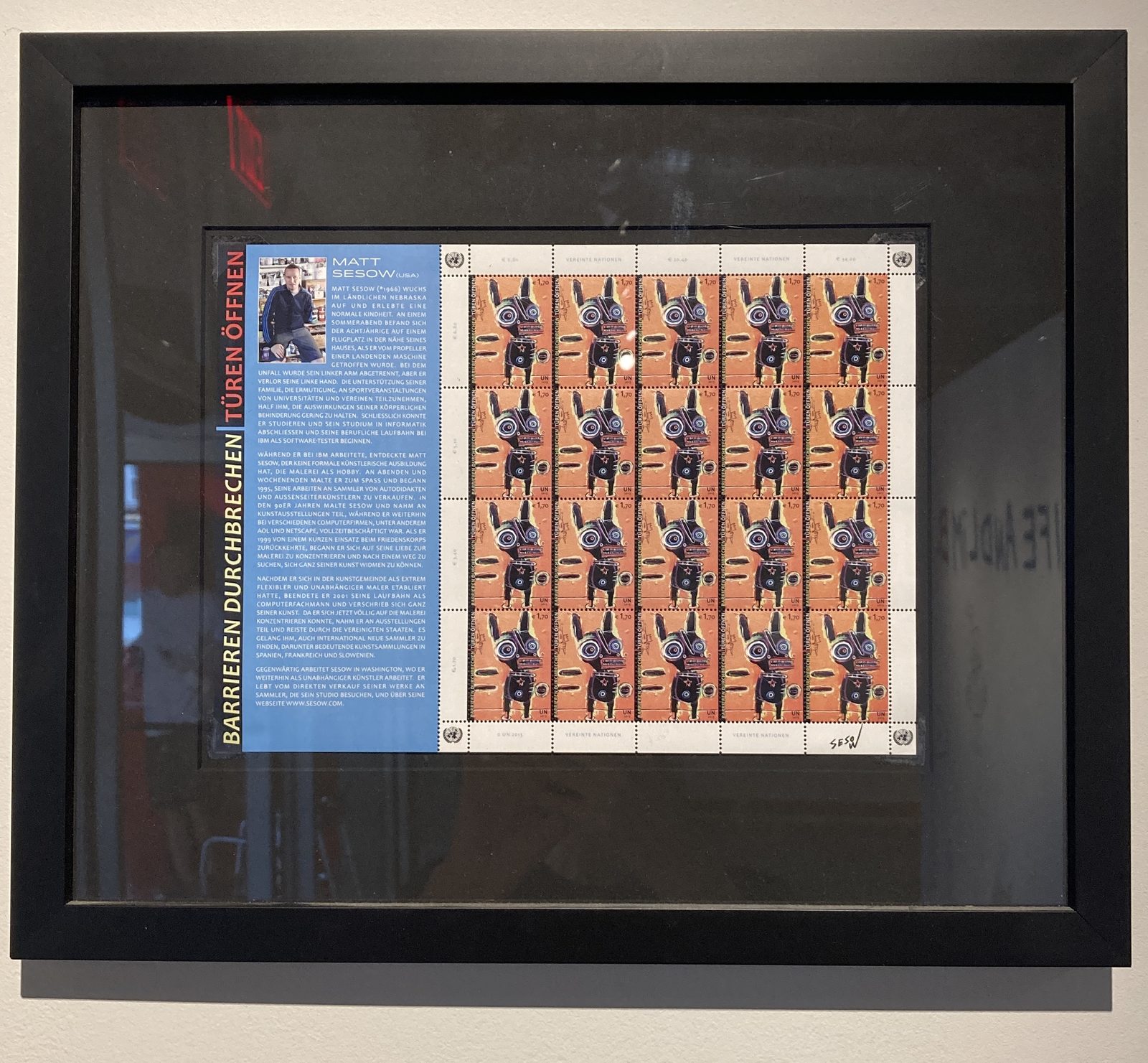
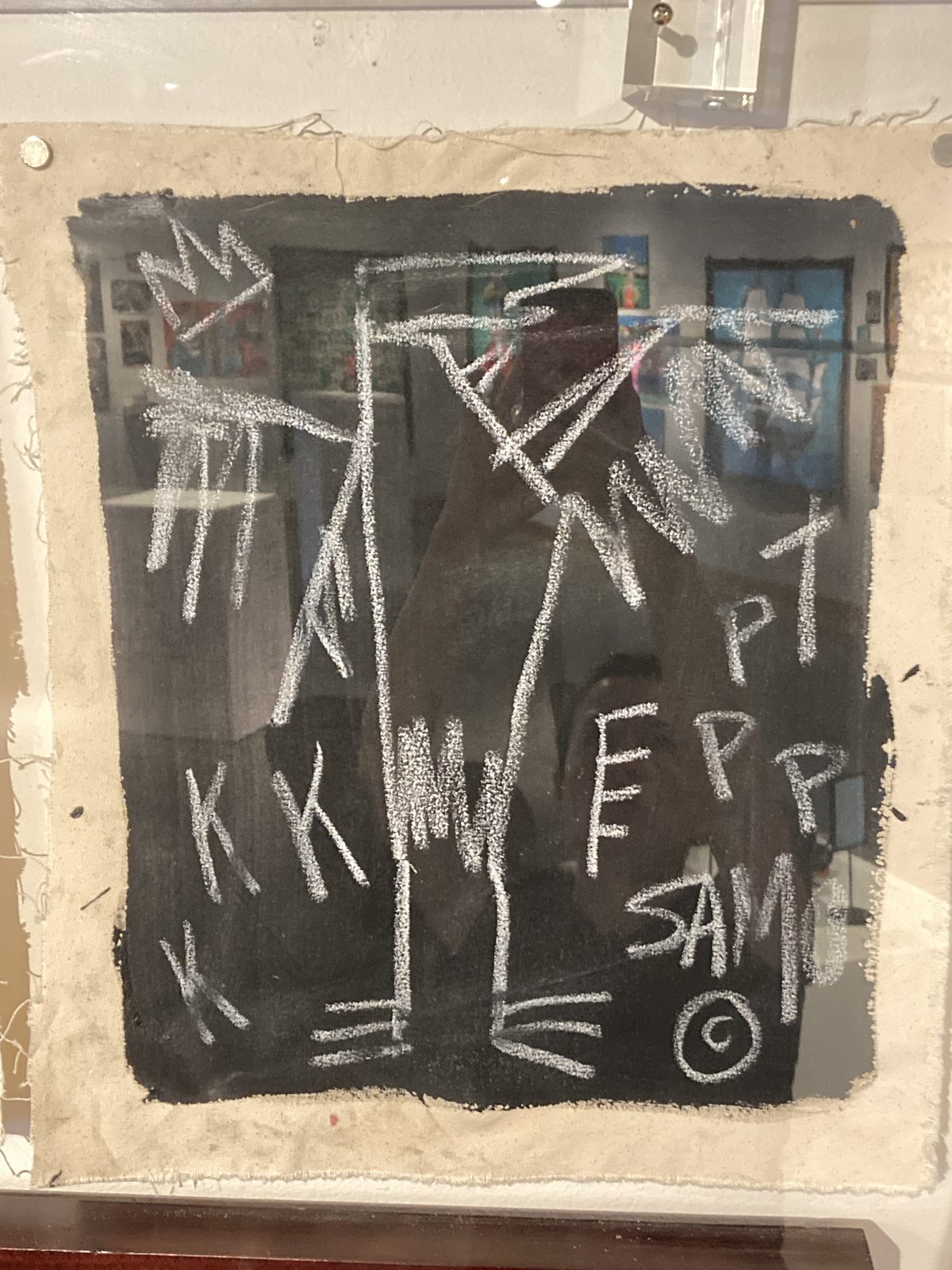
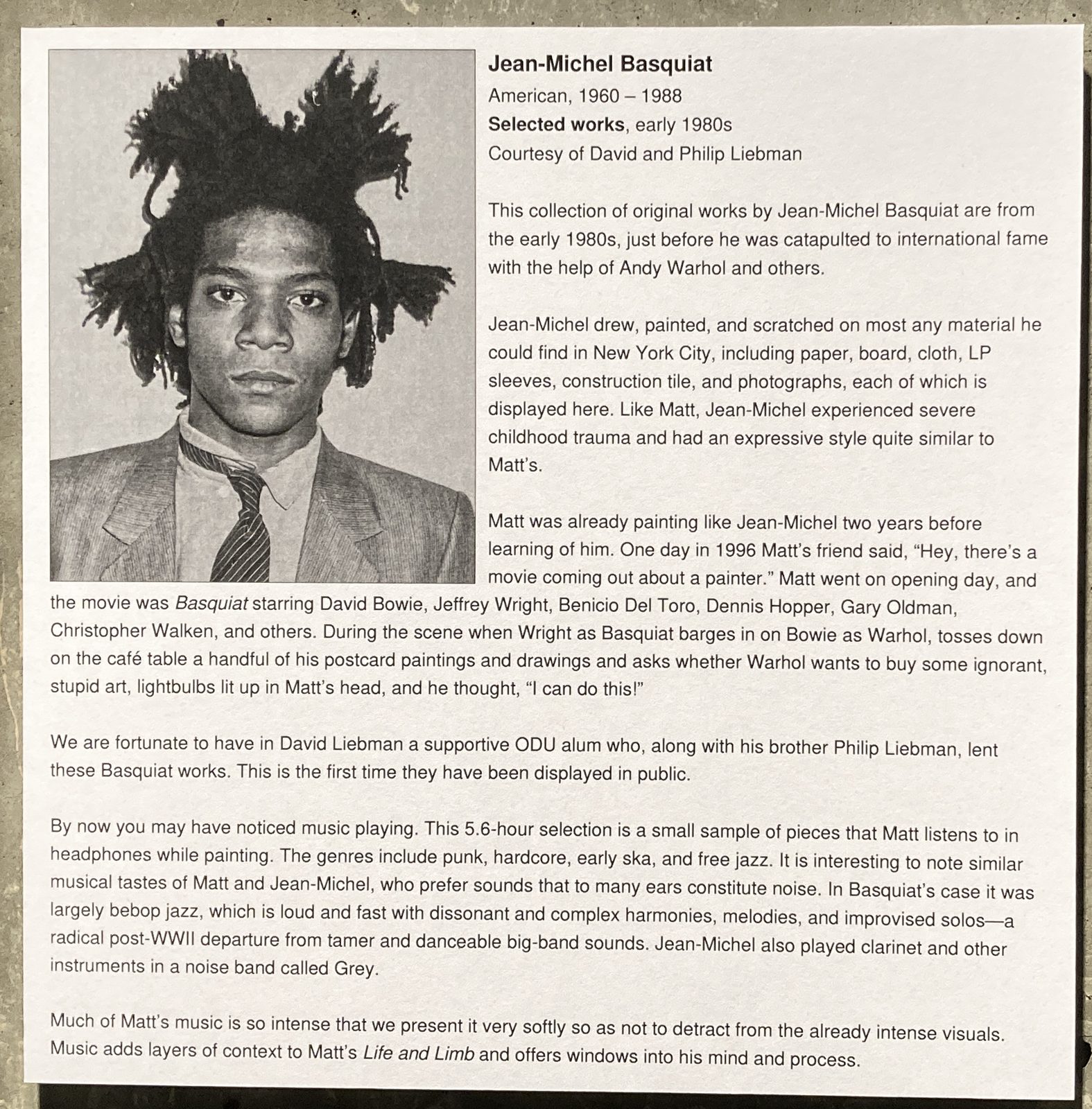
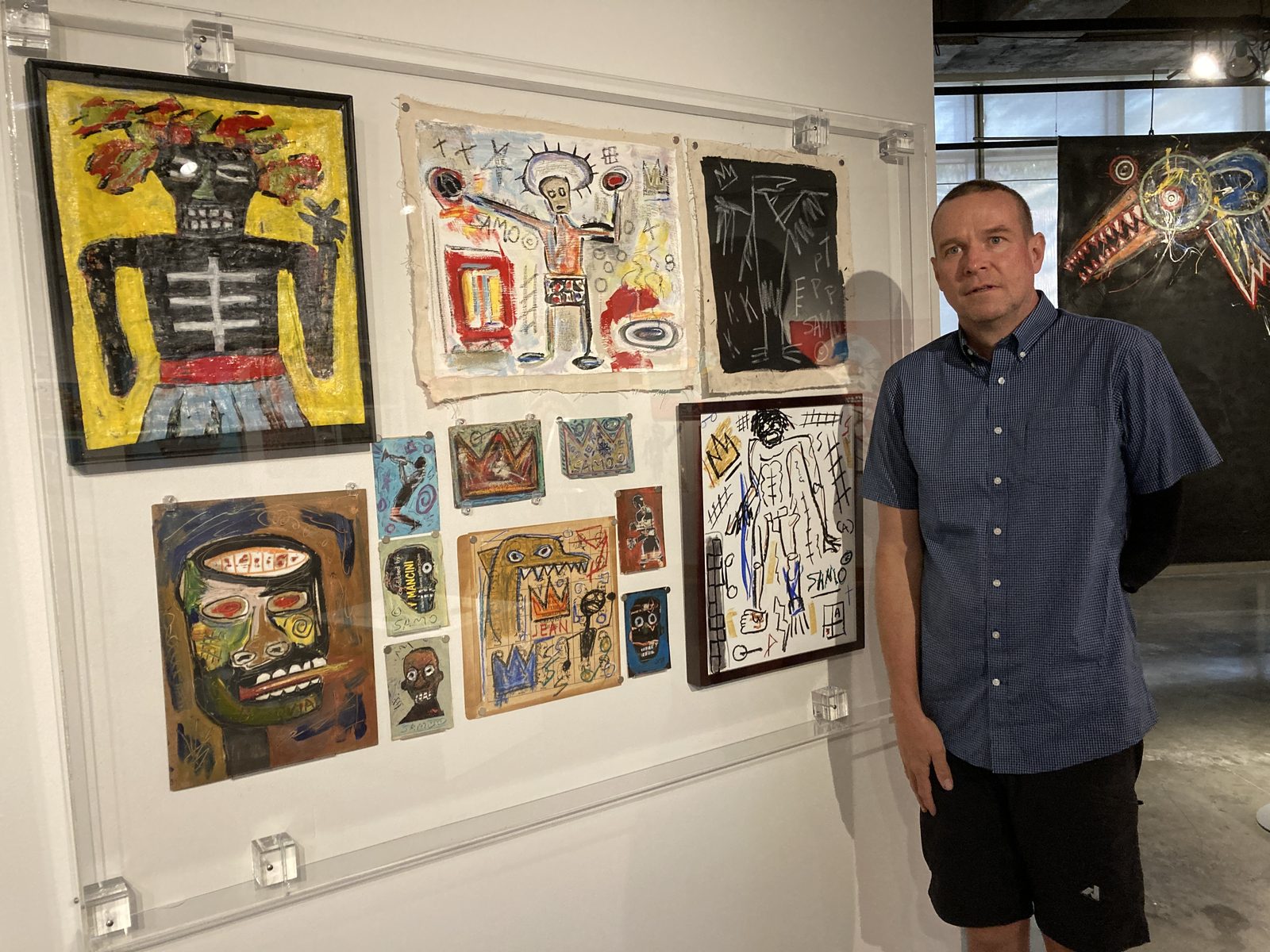
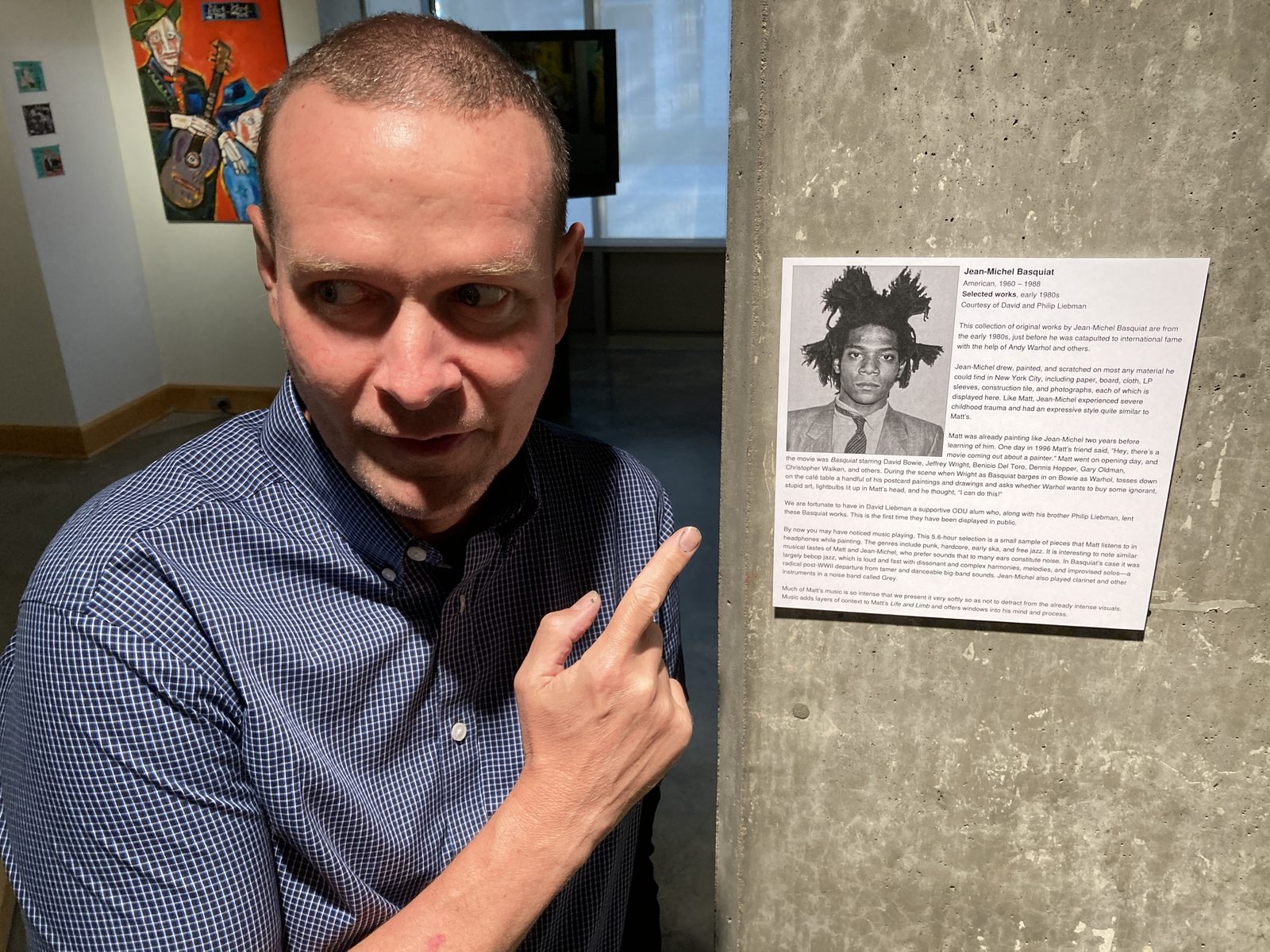
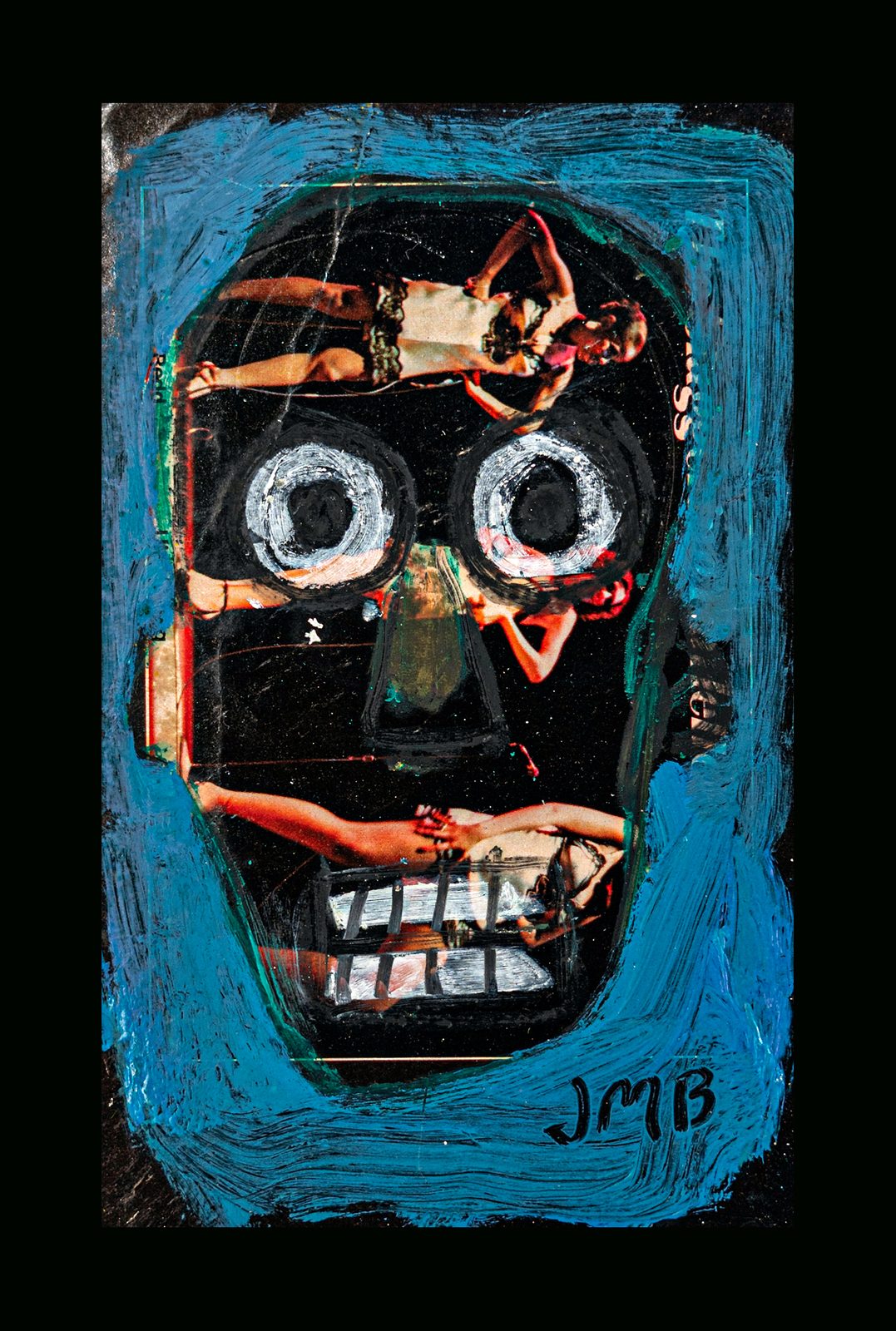
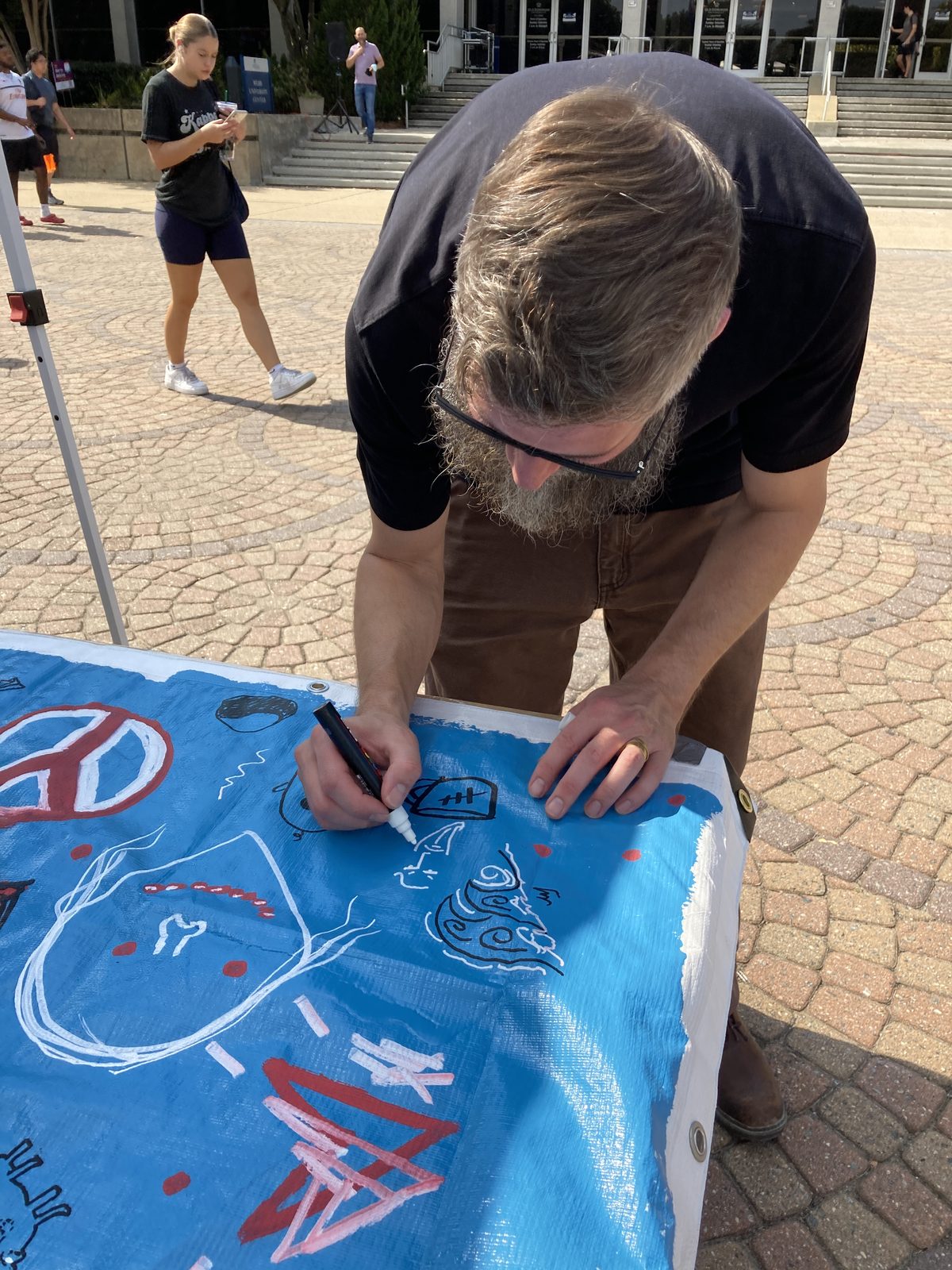
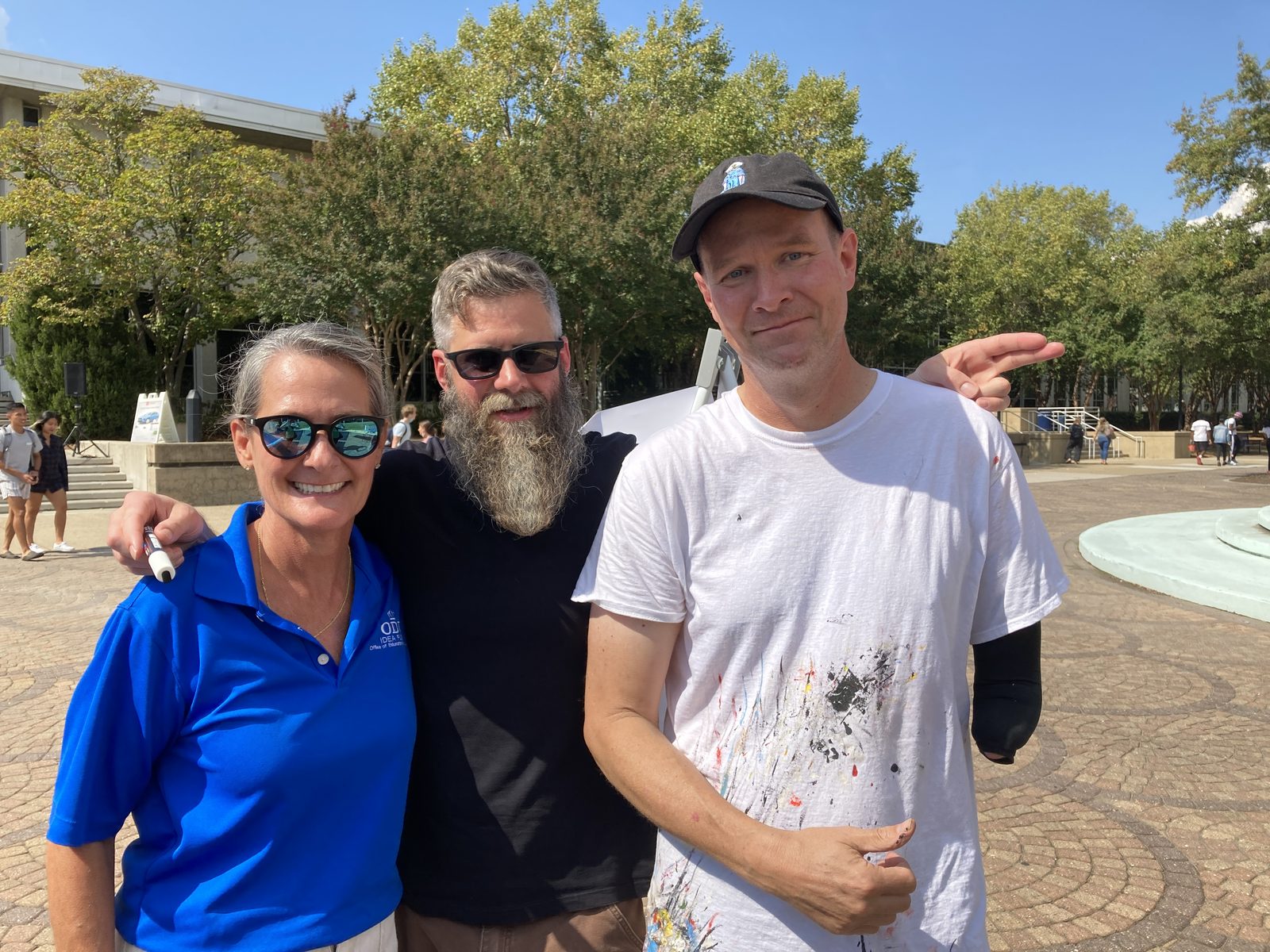
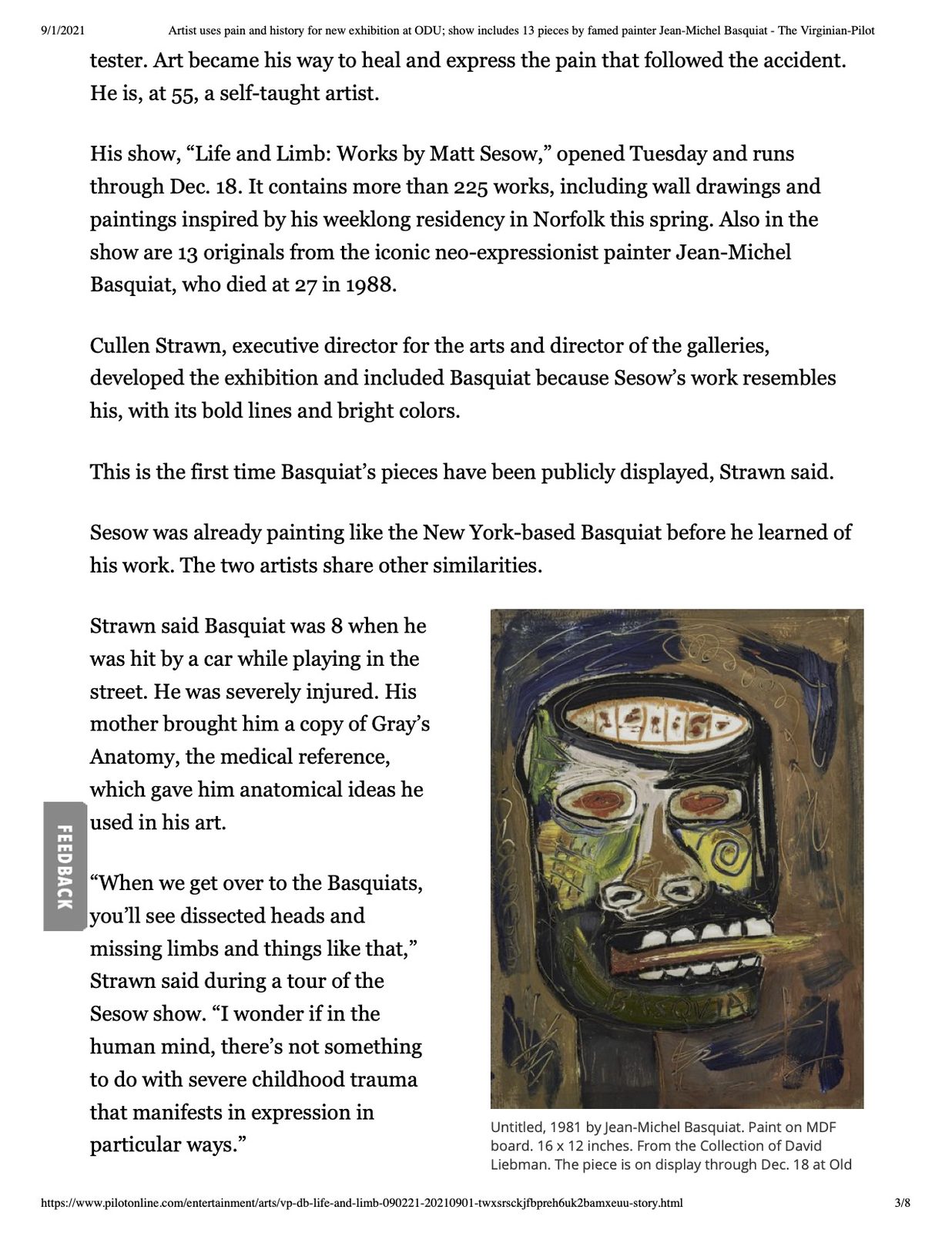
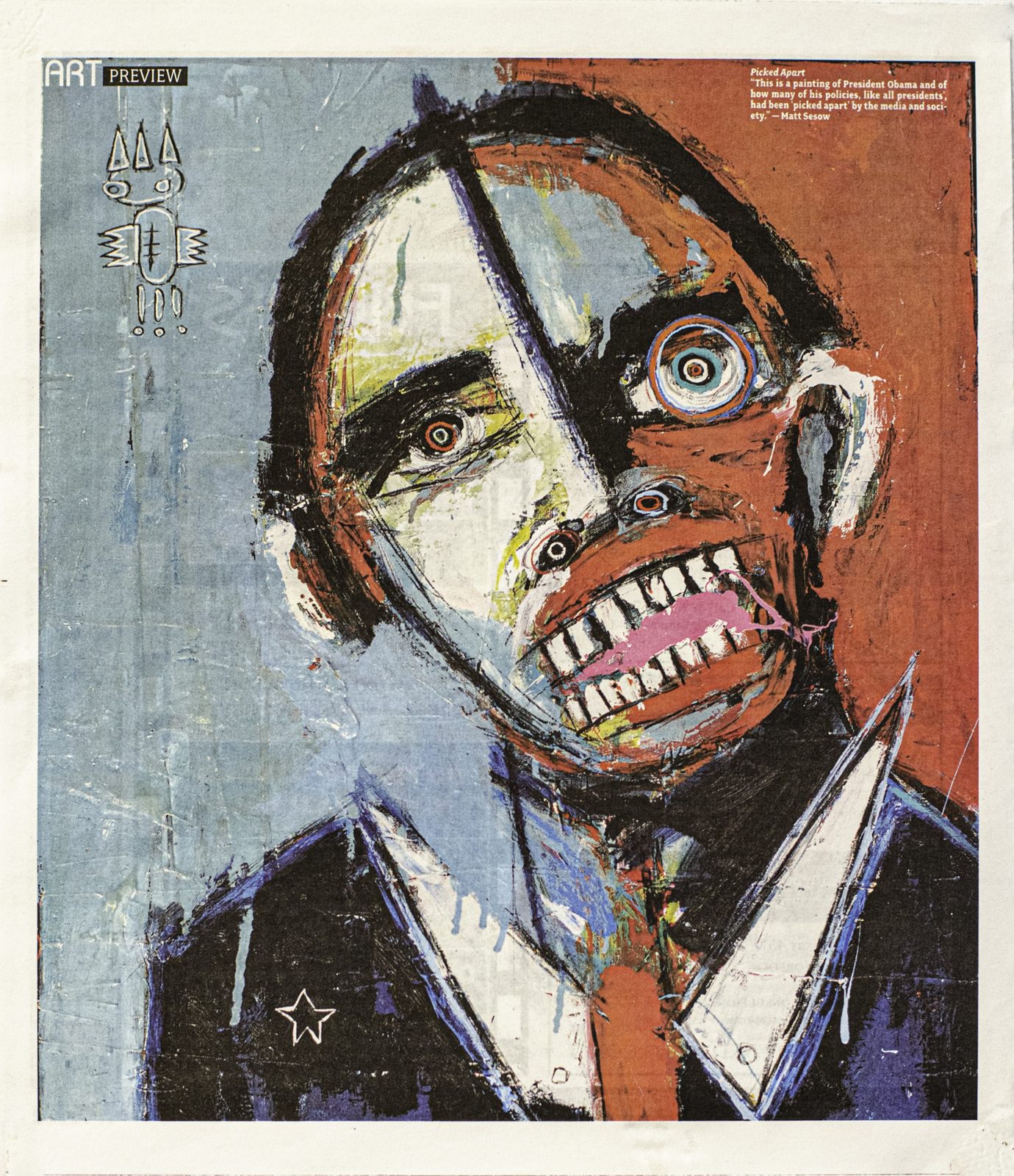
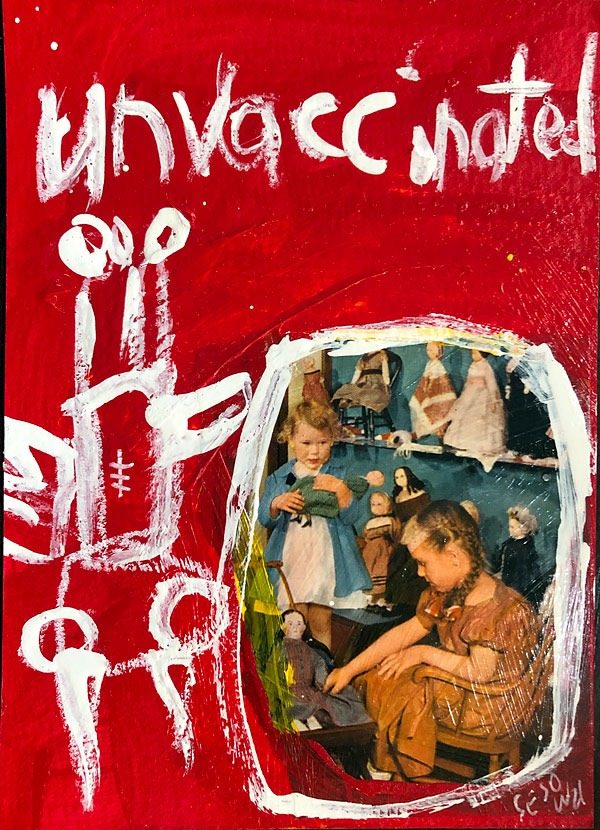
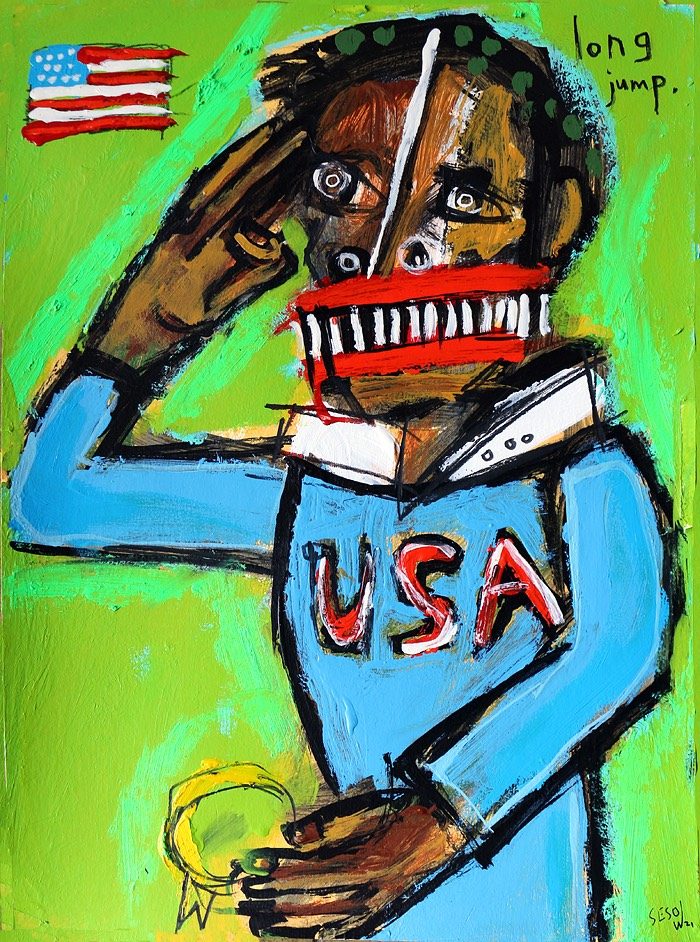
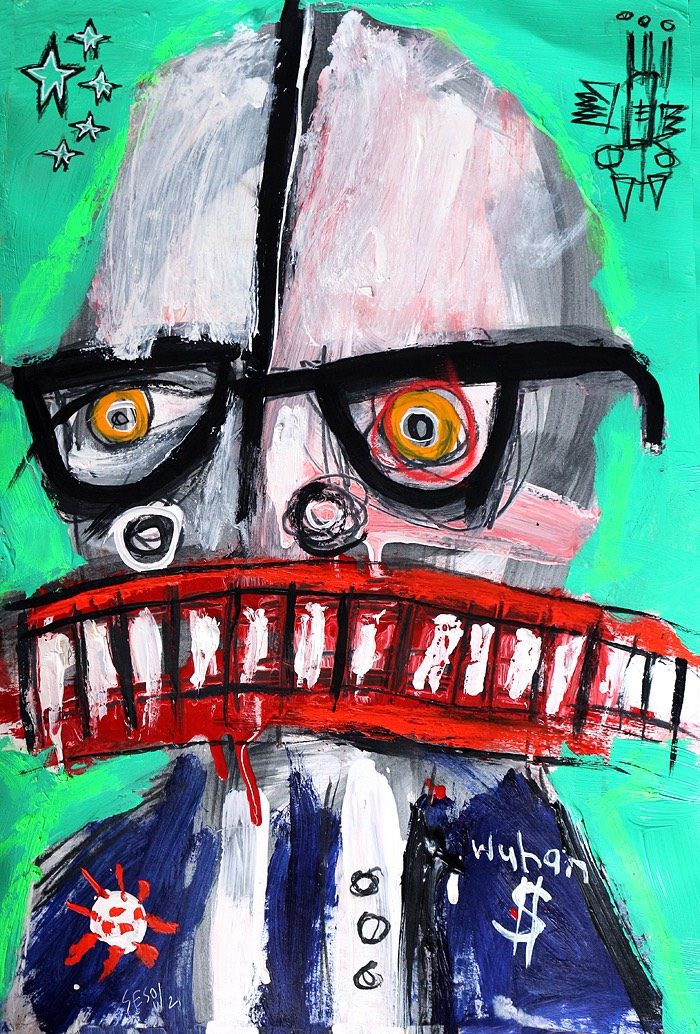
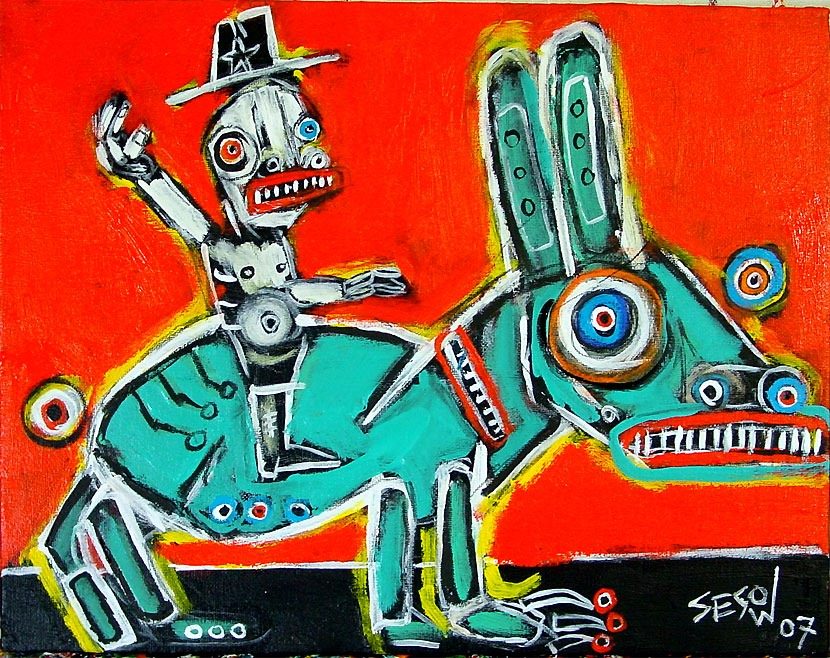
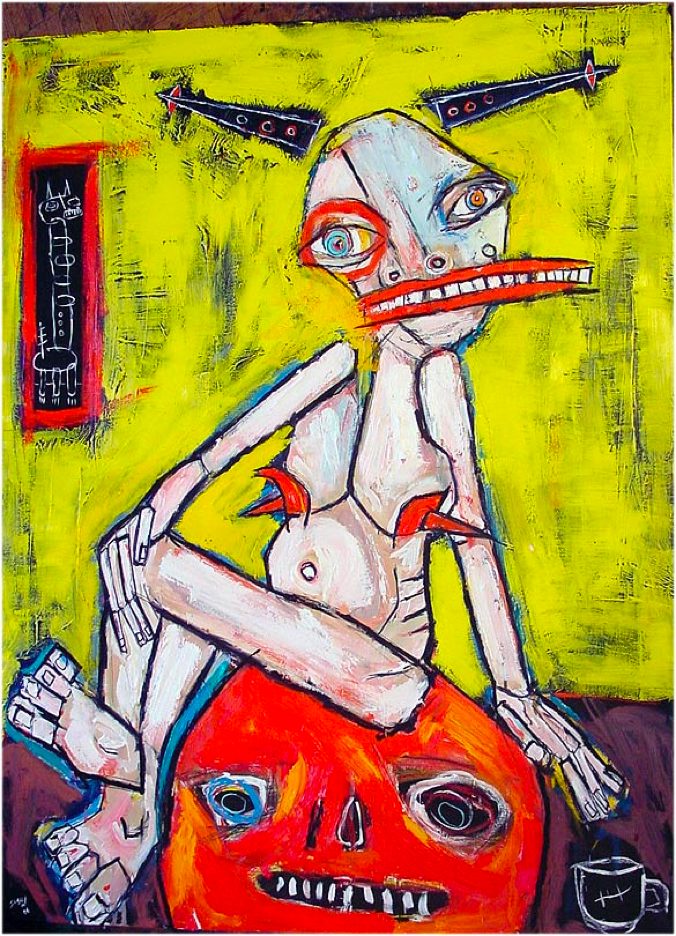
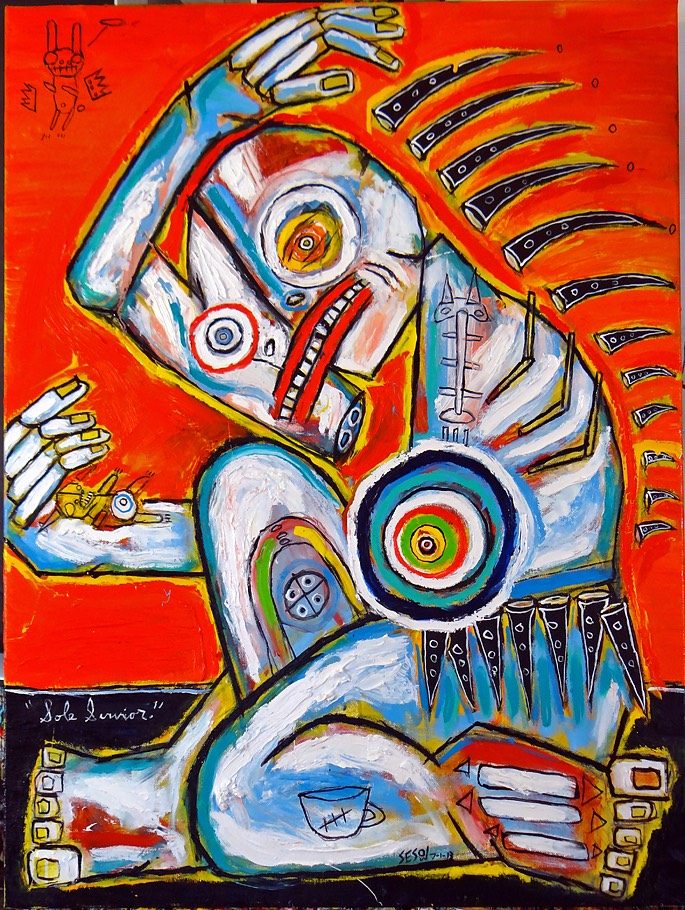
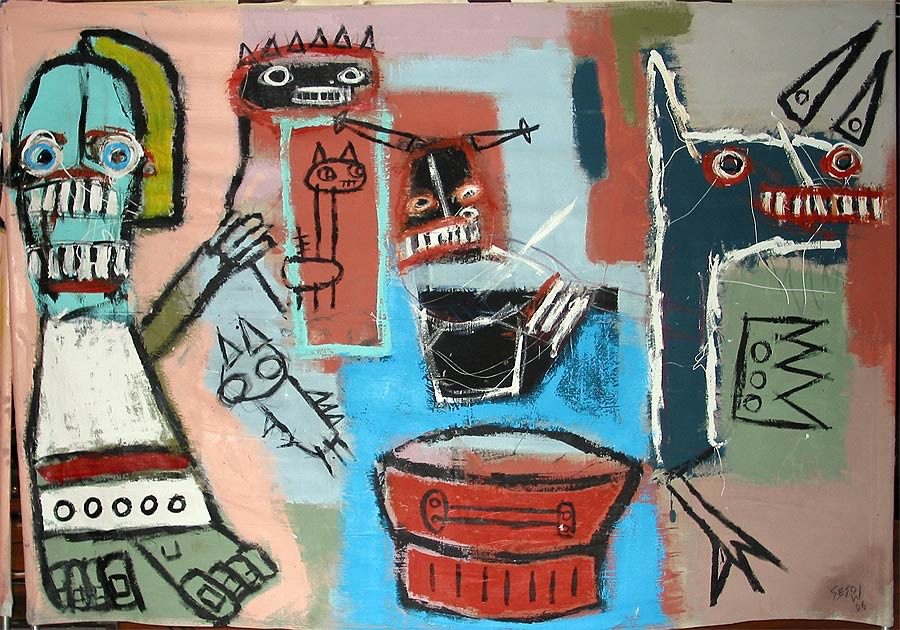
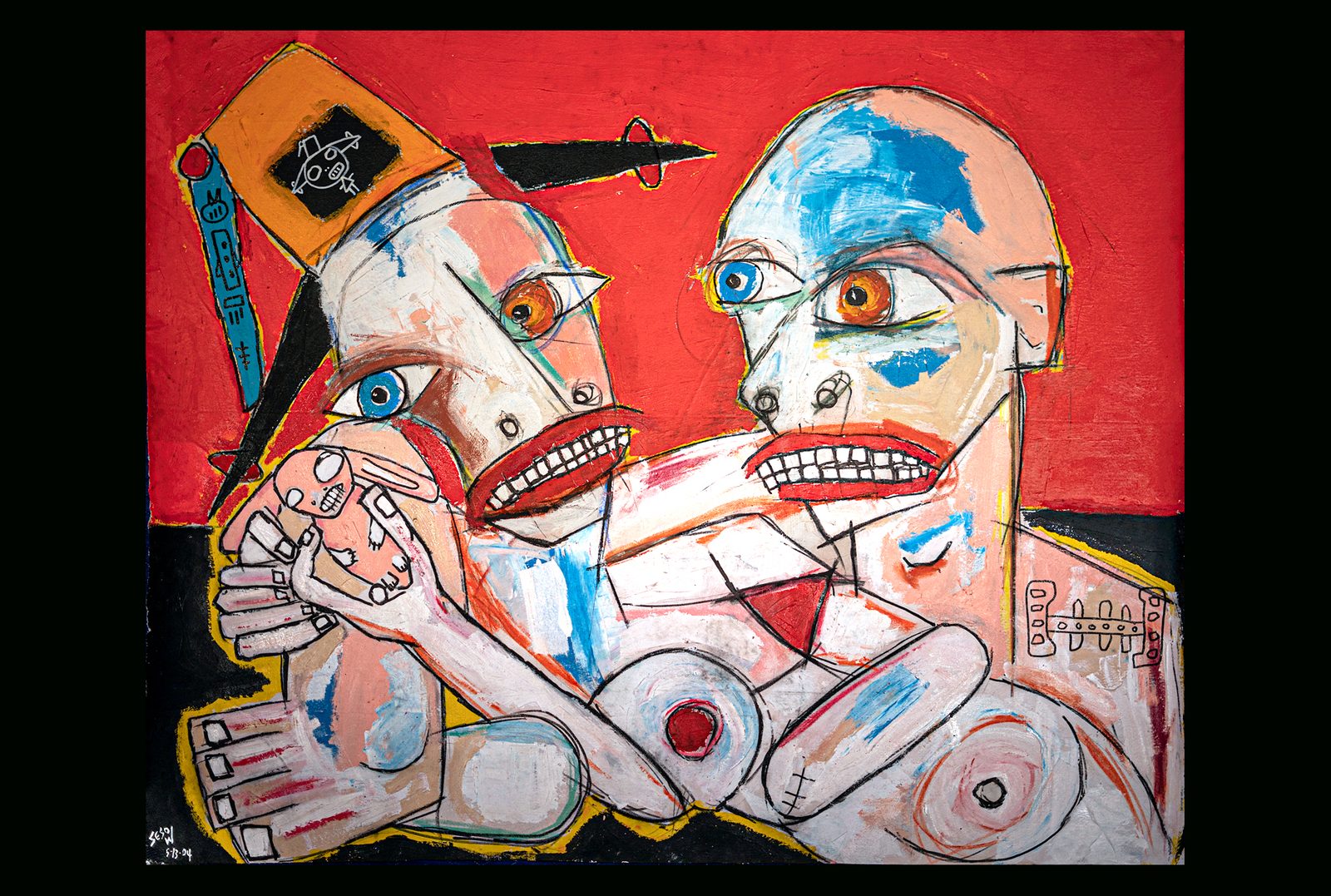
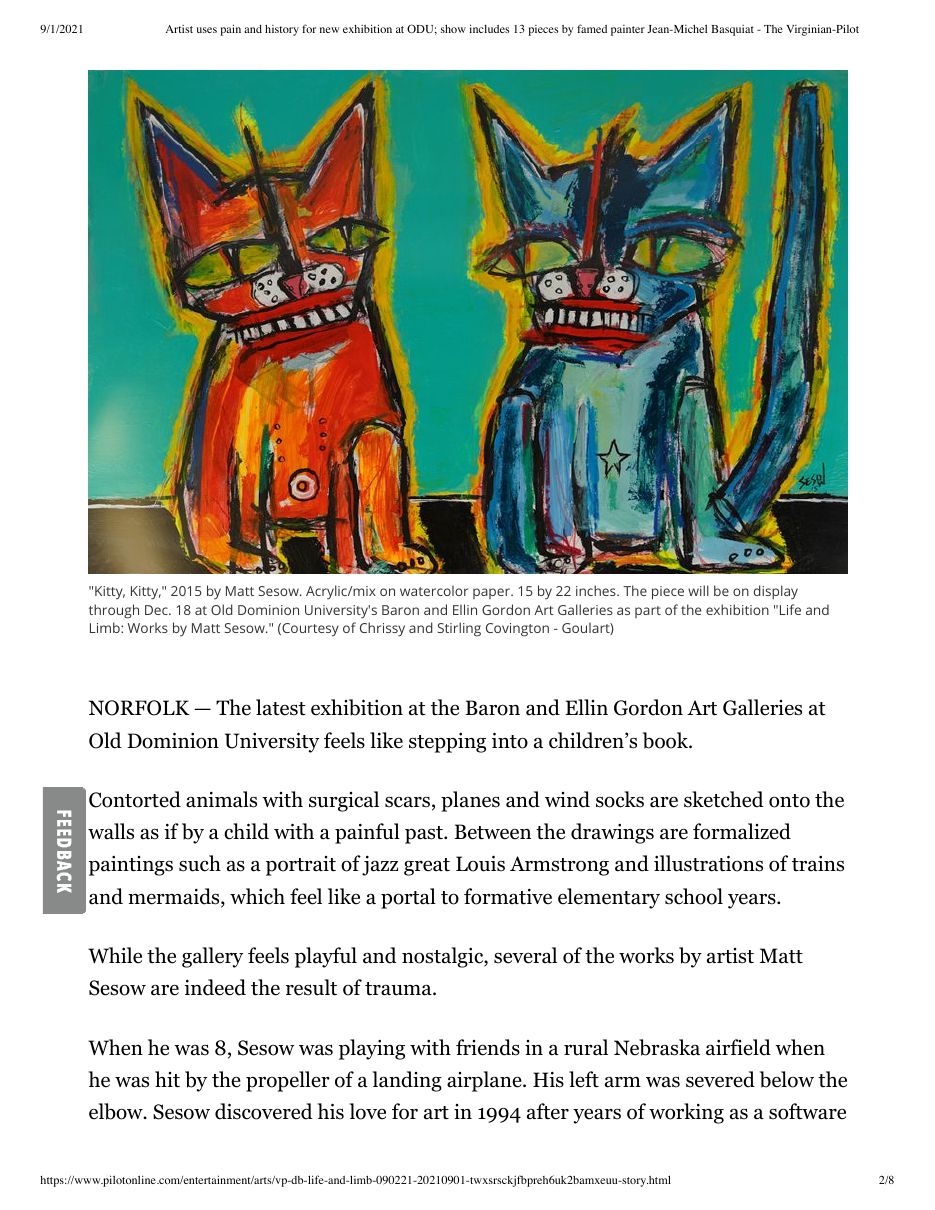
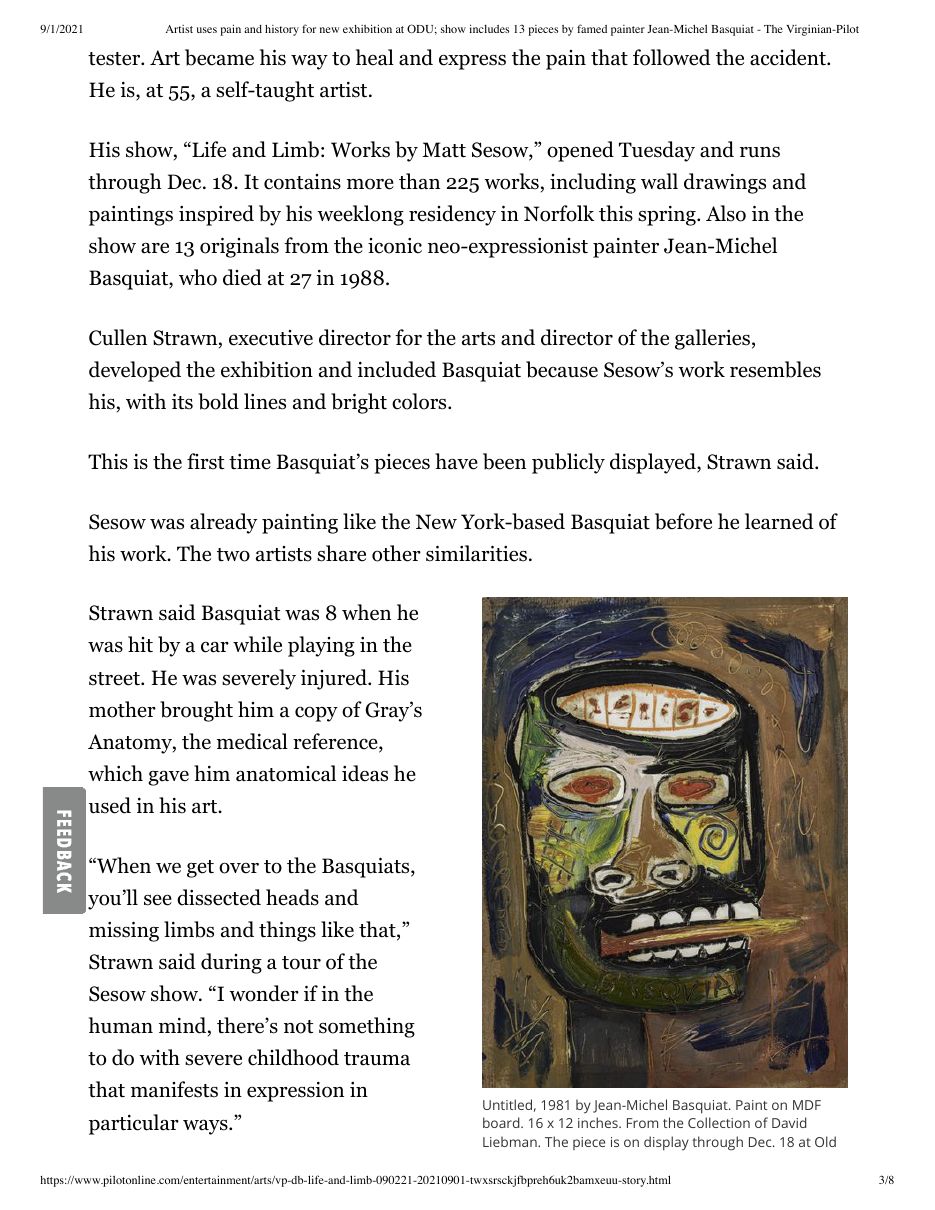
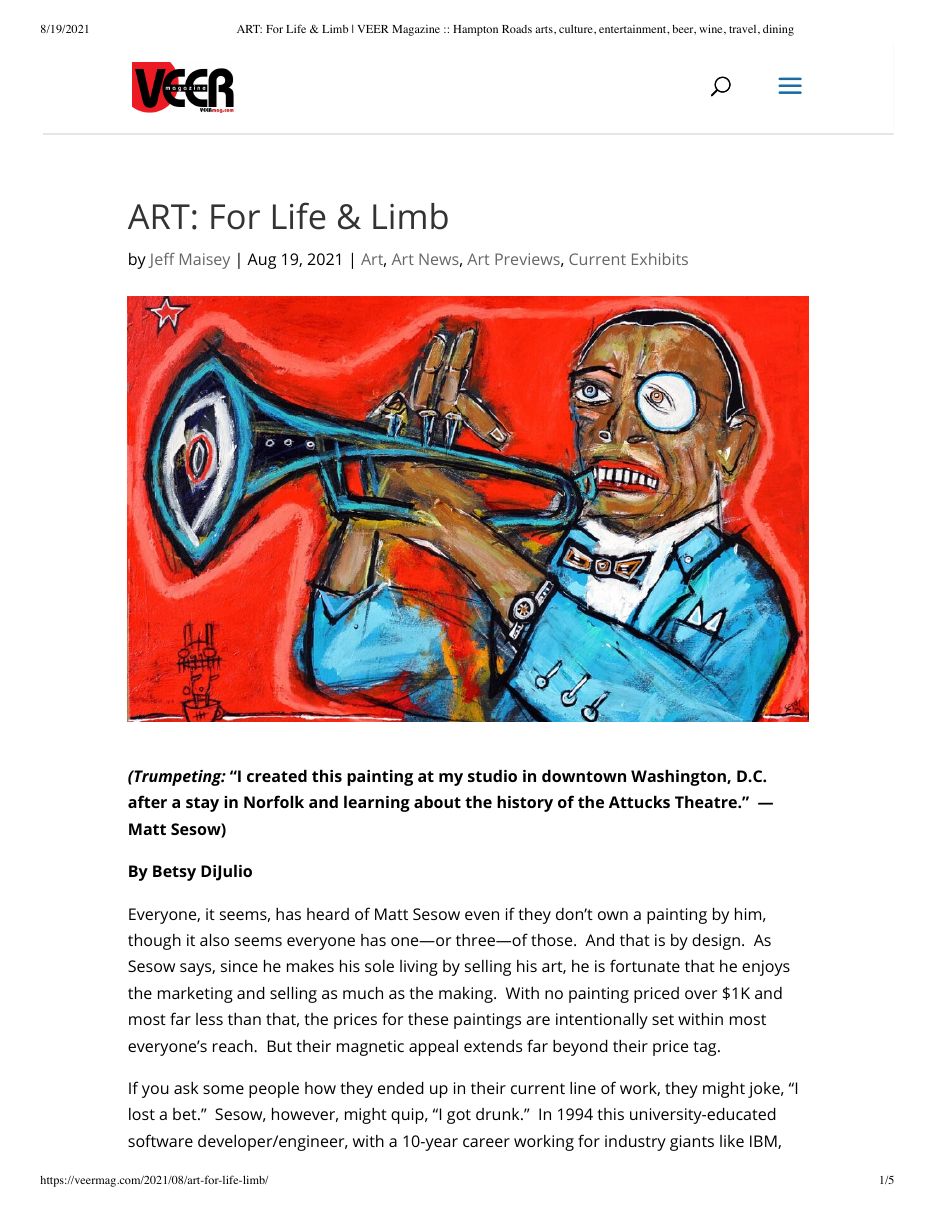
Matt Sesow’s work is often compared to that of Jean-Michel Basquait, because his artistic style resembles
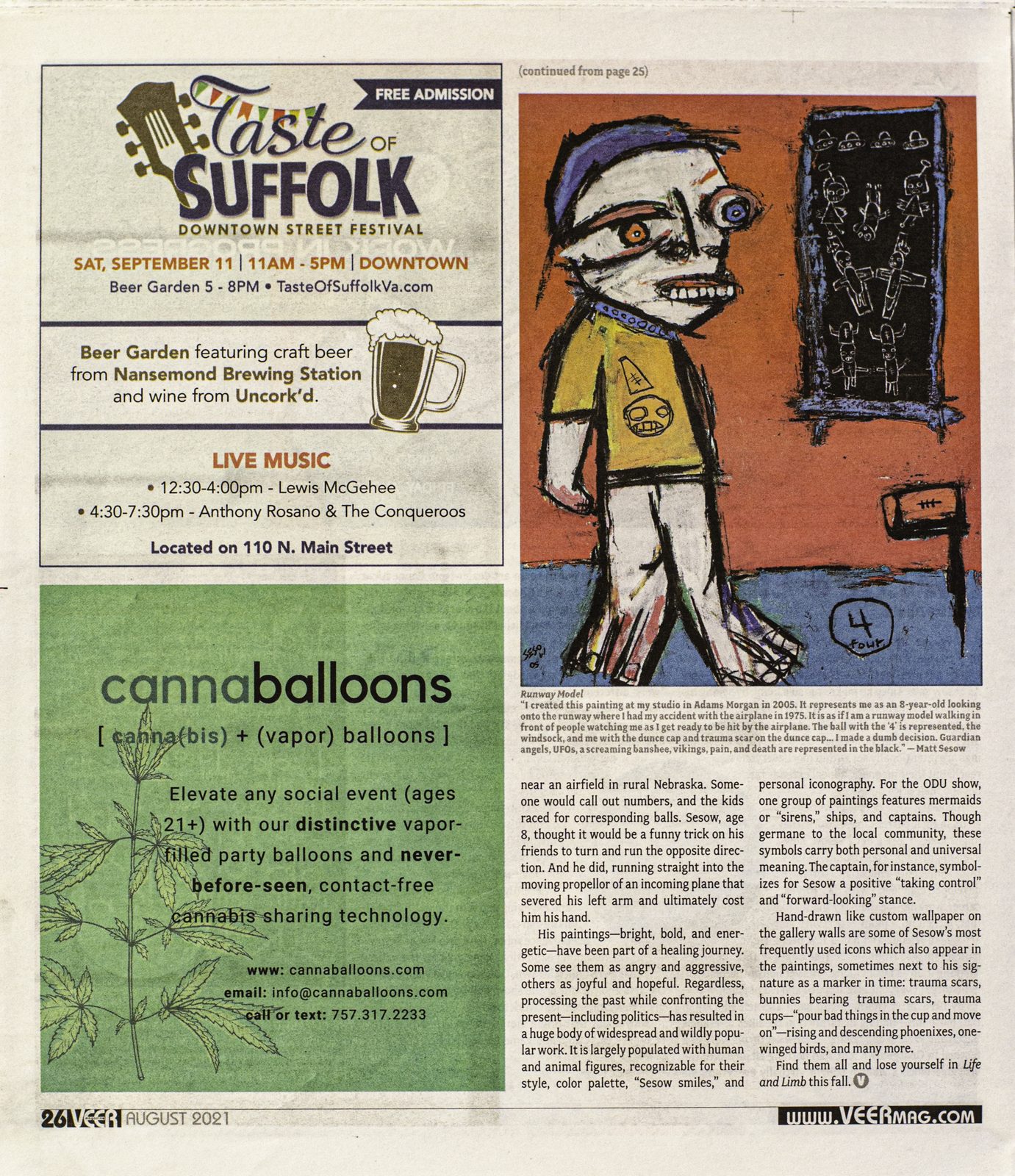
Basquait’s, but also because the two artists share a history of childhood trauma. When Sesow was 8, he was
playing with friends in a Nebraska airfield and was hit by the propeller of a plane. His left arm was severed
below the elbow. Like many artists, Sesow uses art as a way to express and process the pain of this traumatic
incident, healing along the way.
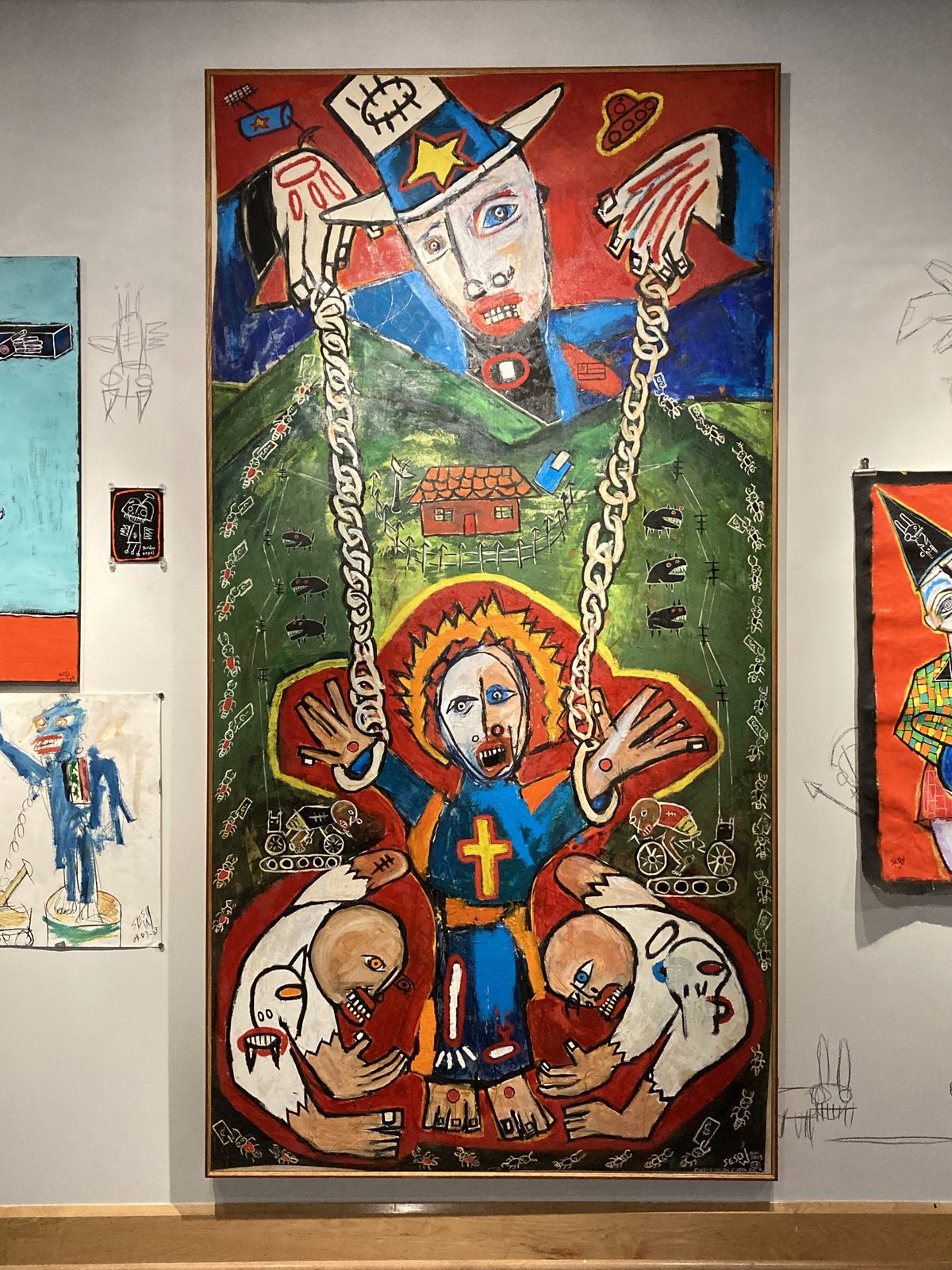
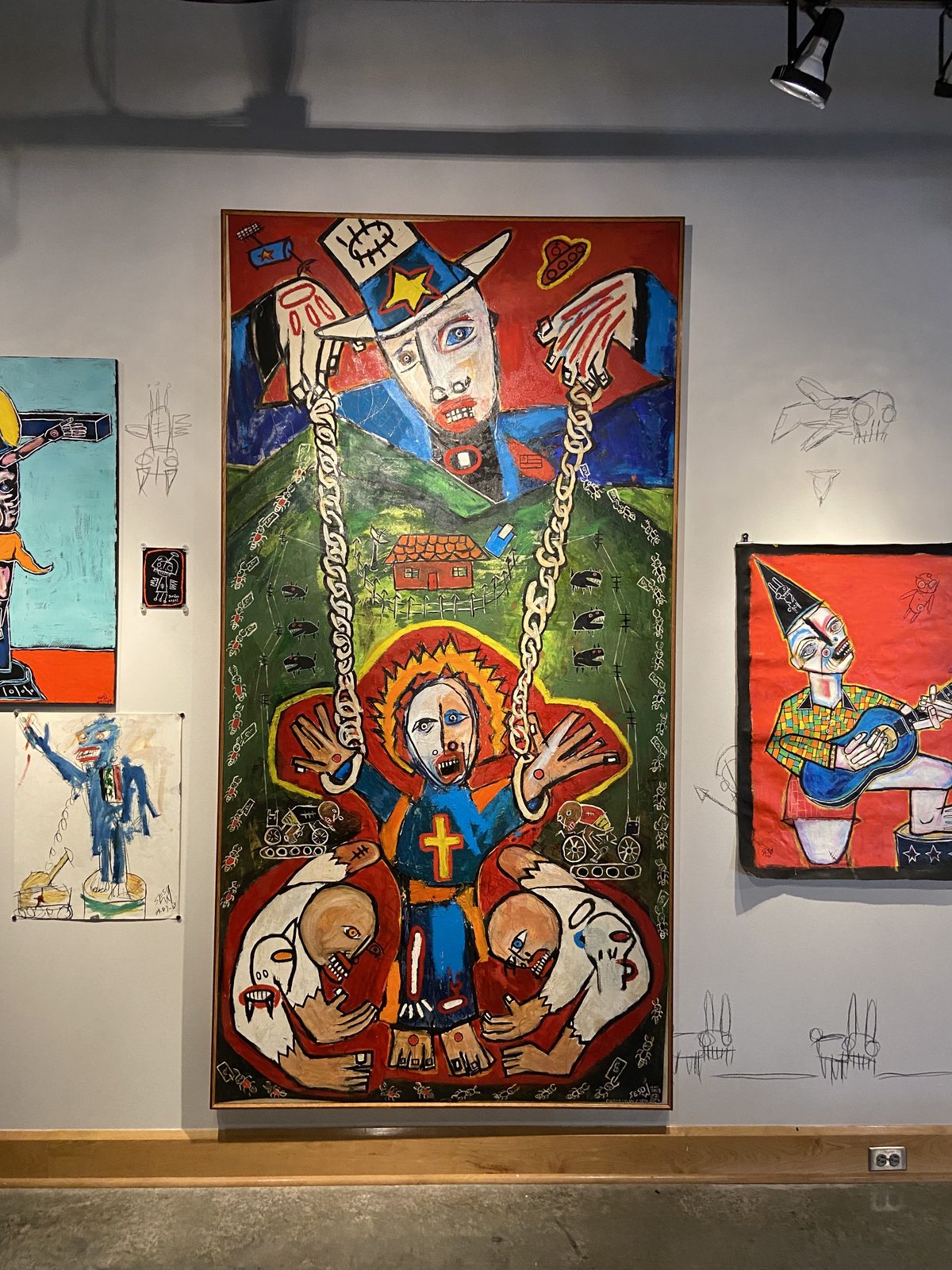
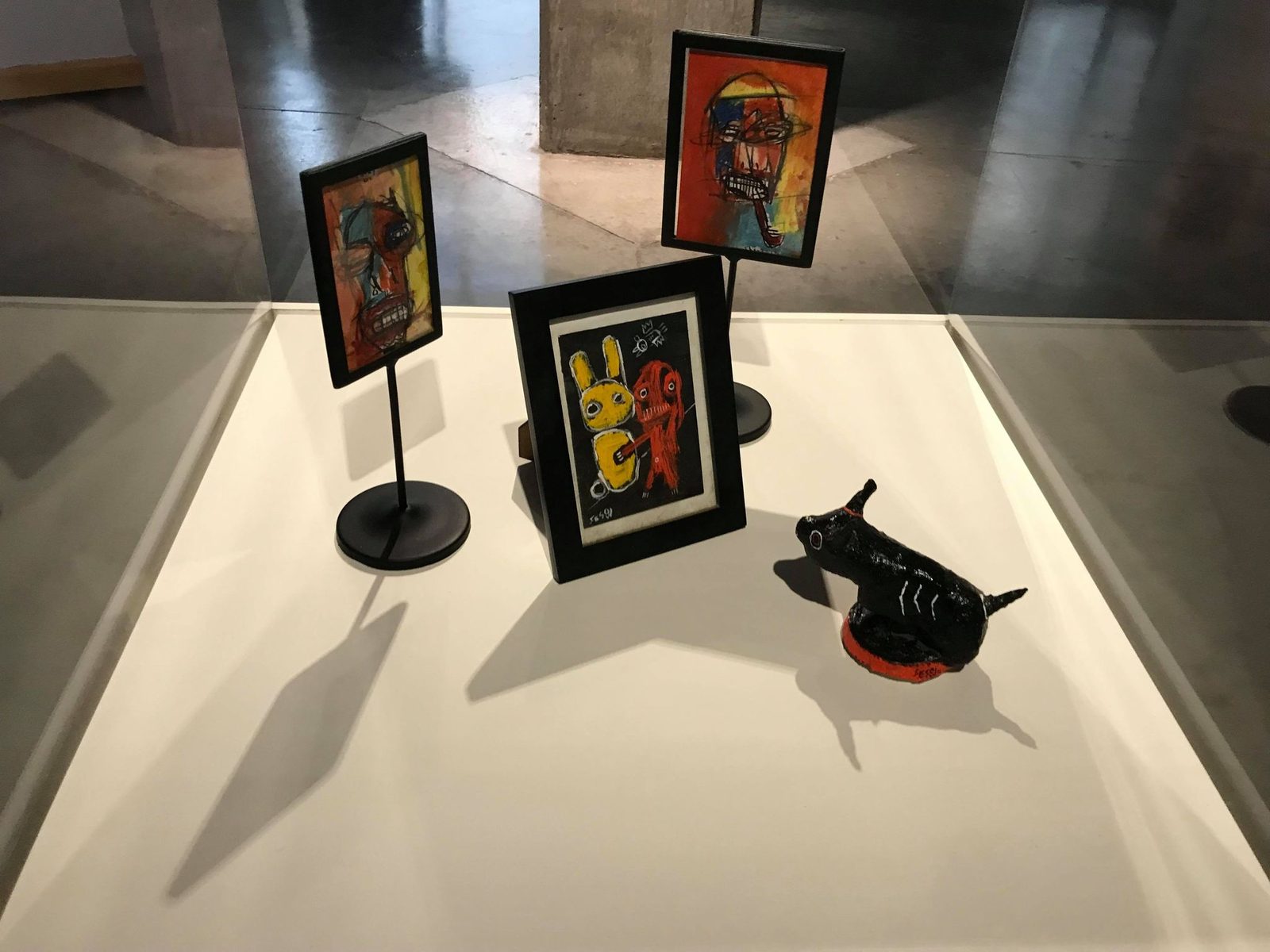
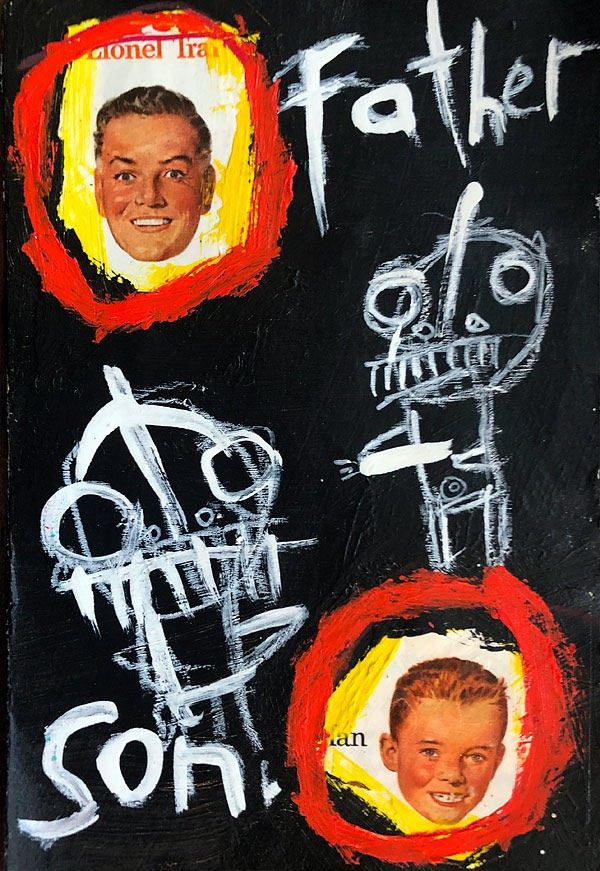
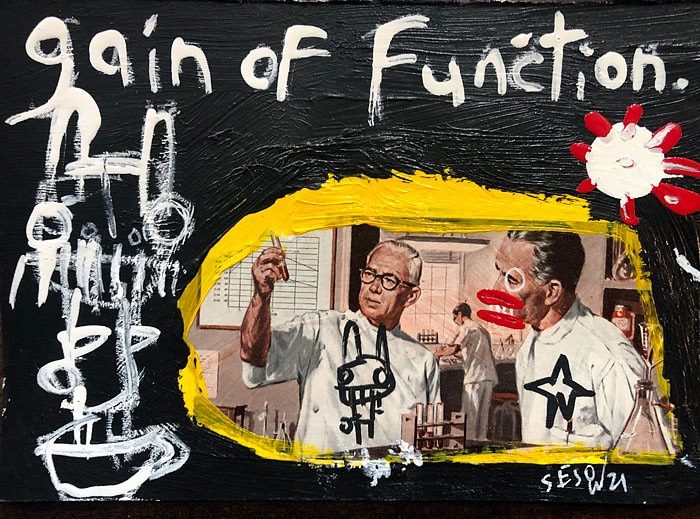
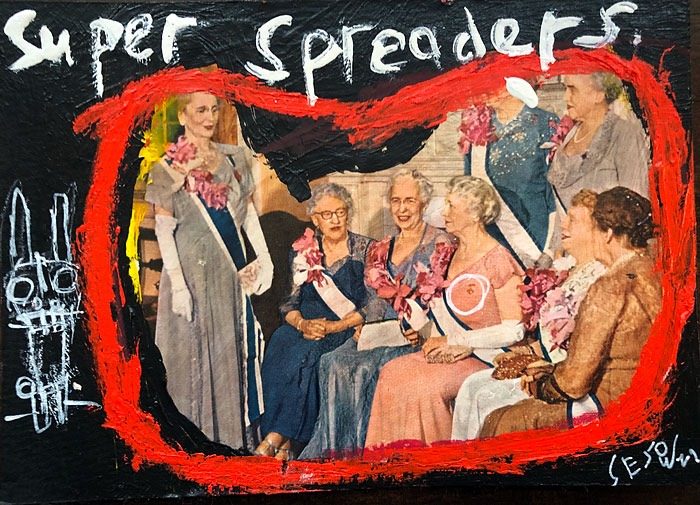
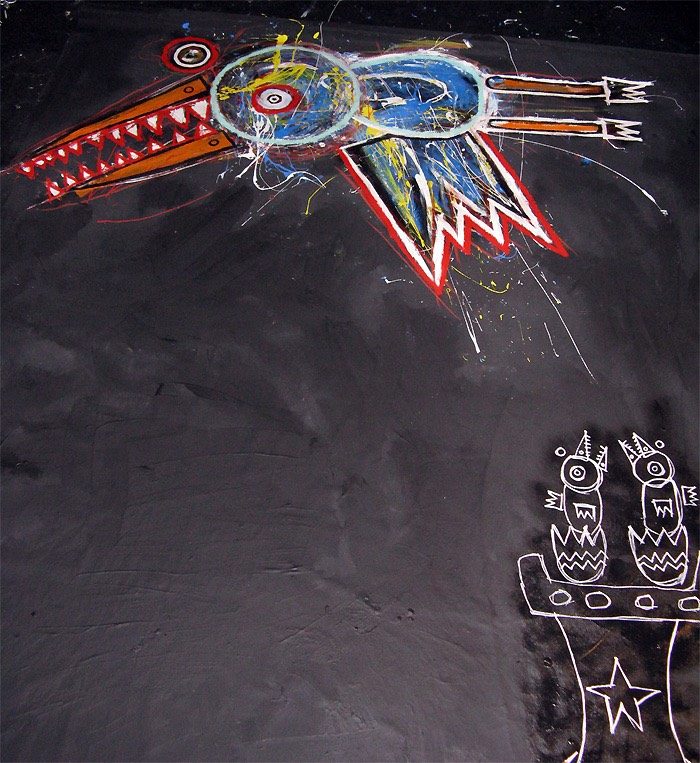
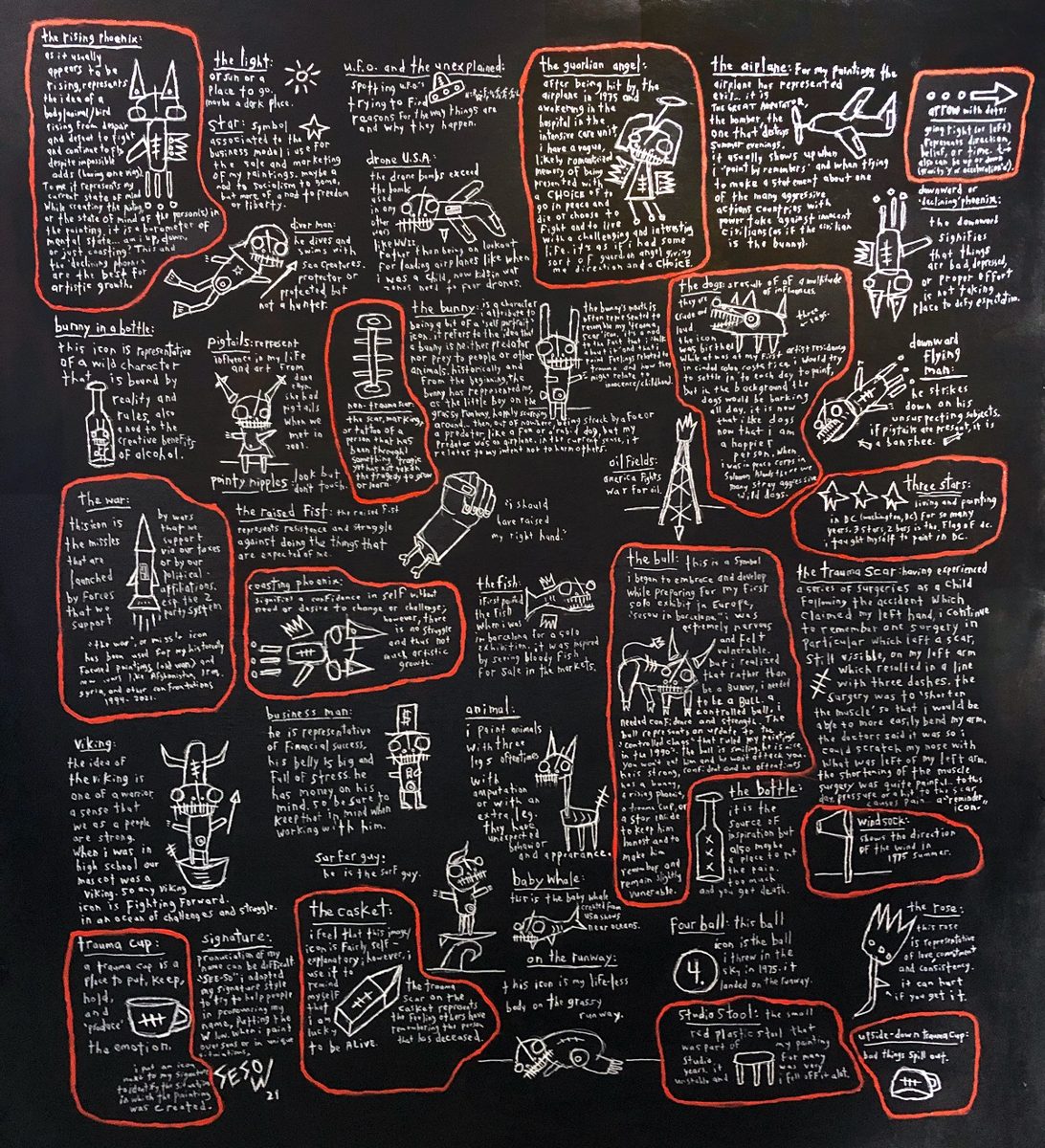
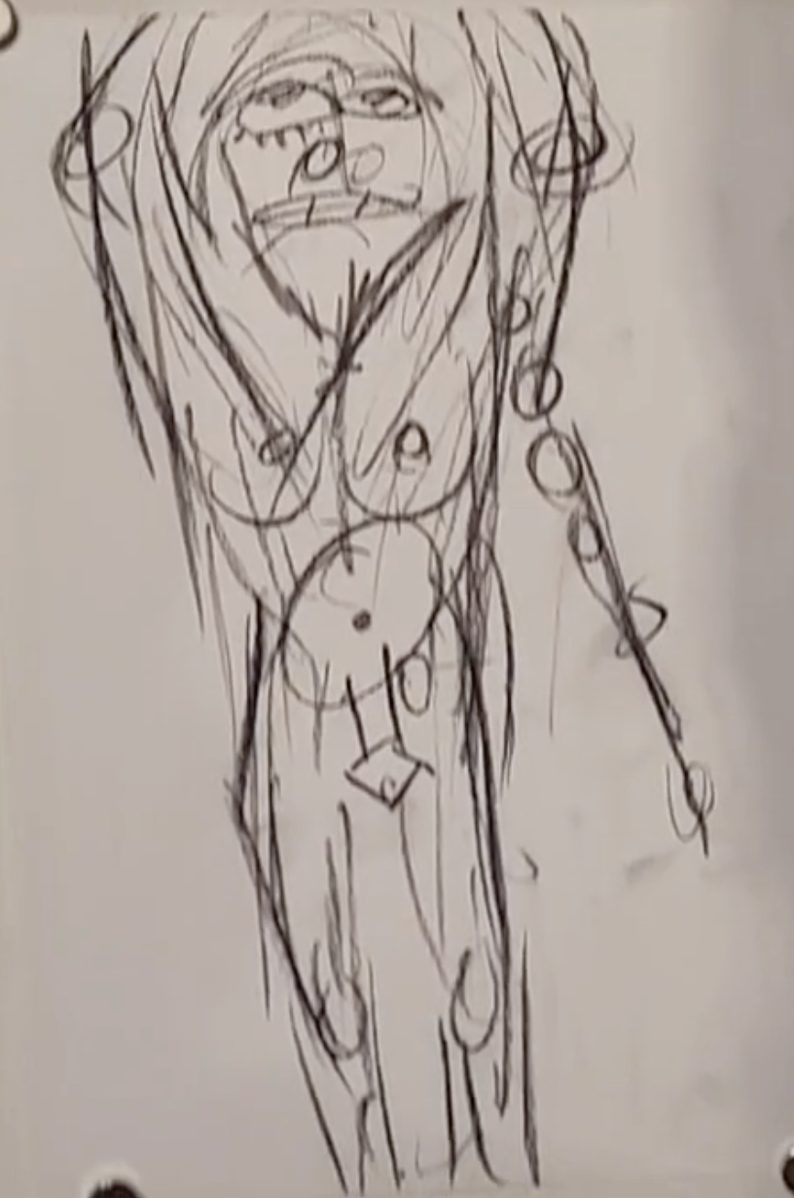
Each painting has a rich story, and no doubt a full-length textbook could be produced to highlight Sesow’s
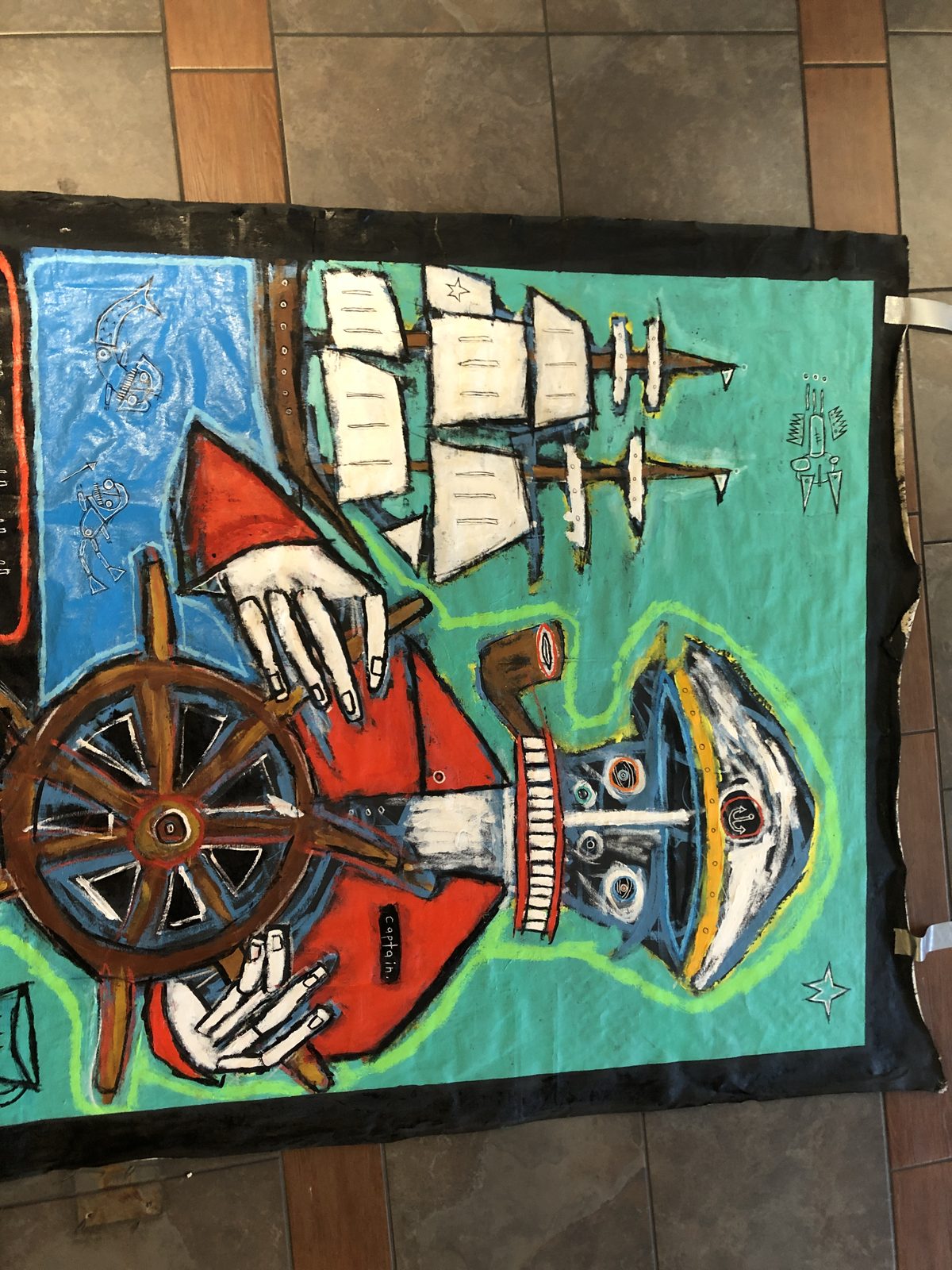
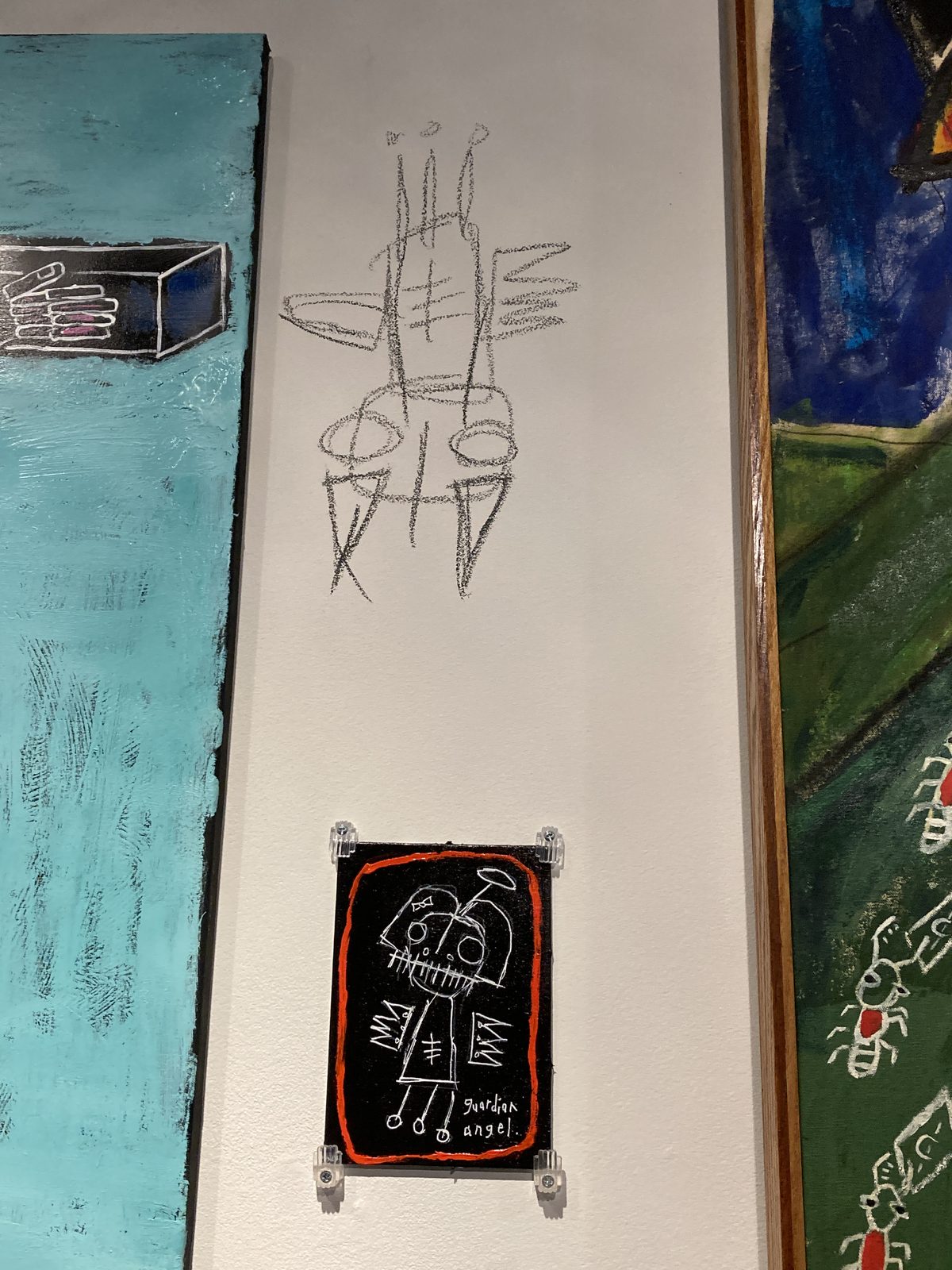
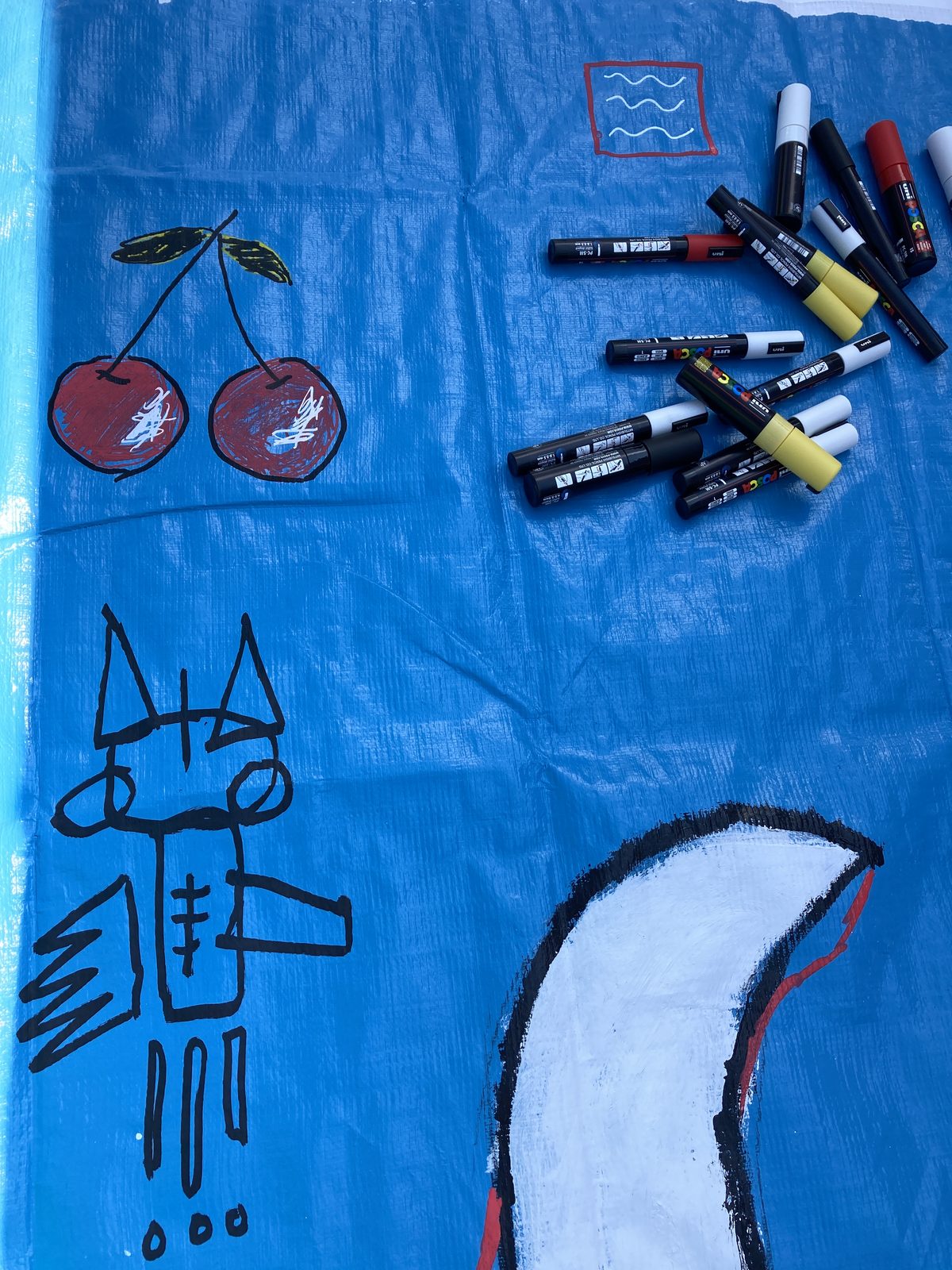
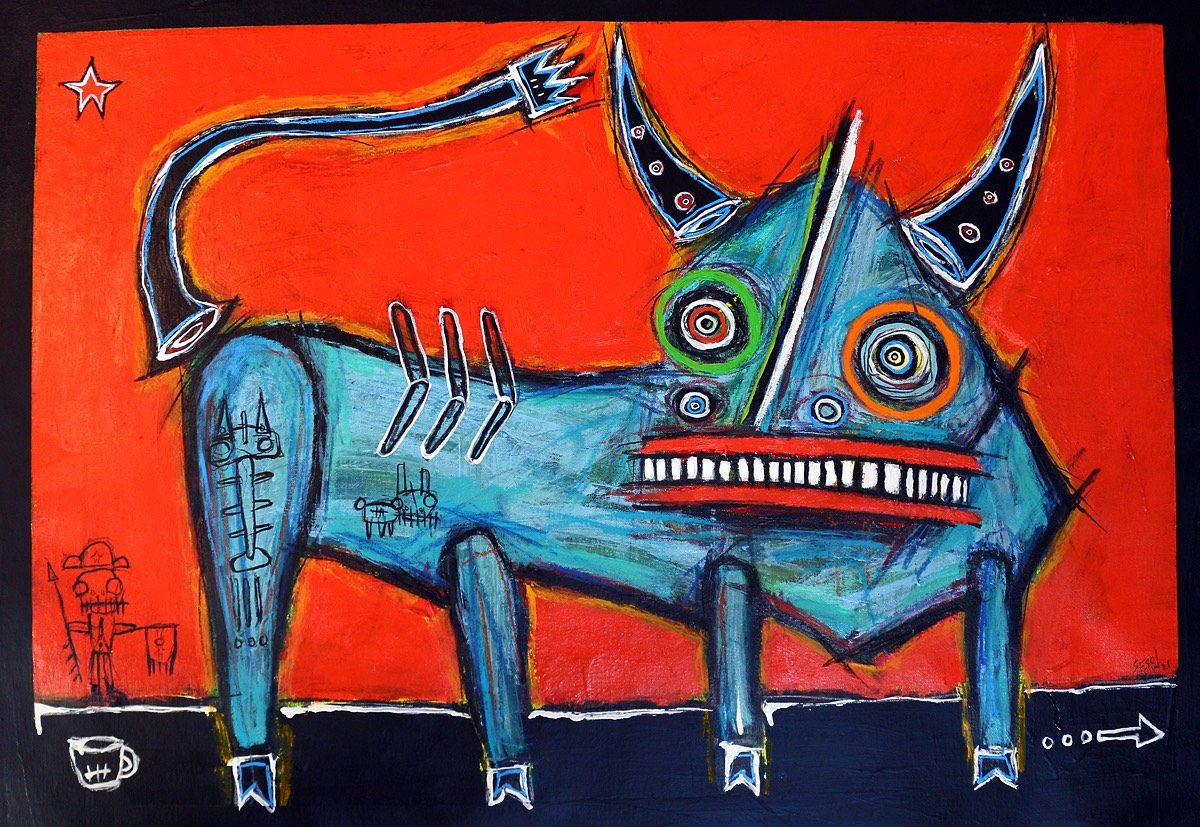
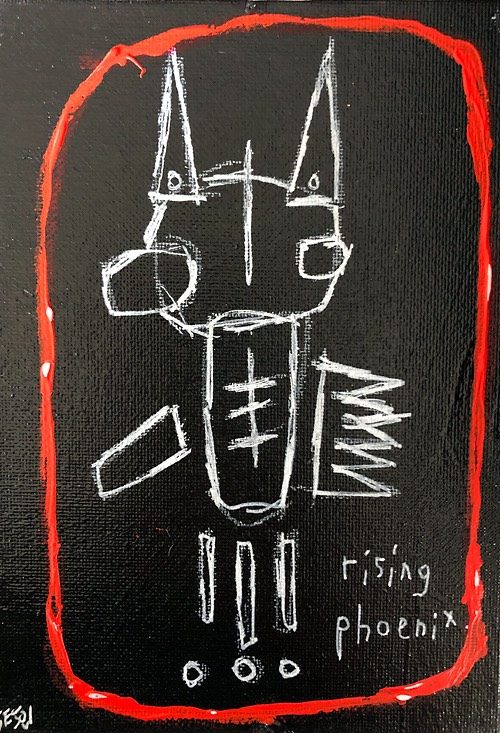
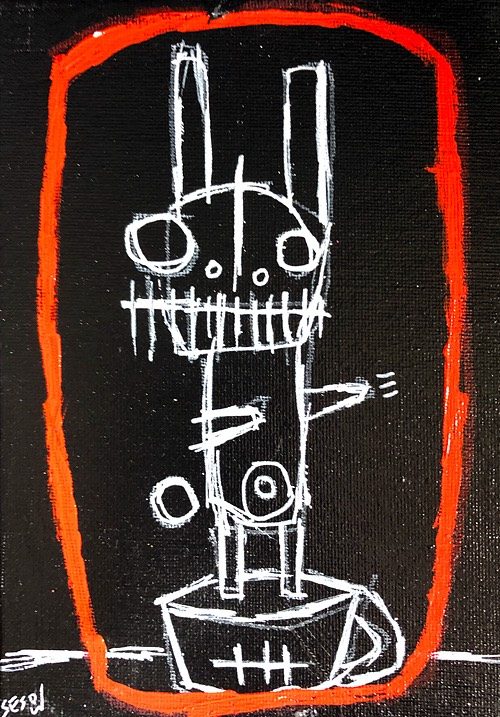
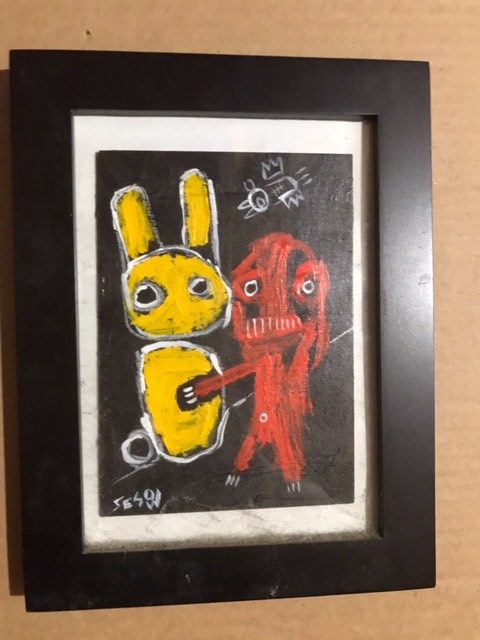
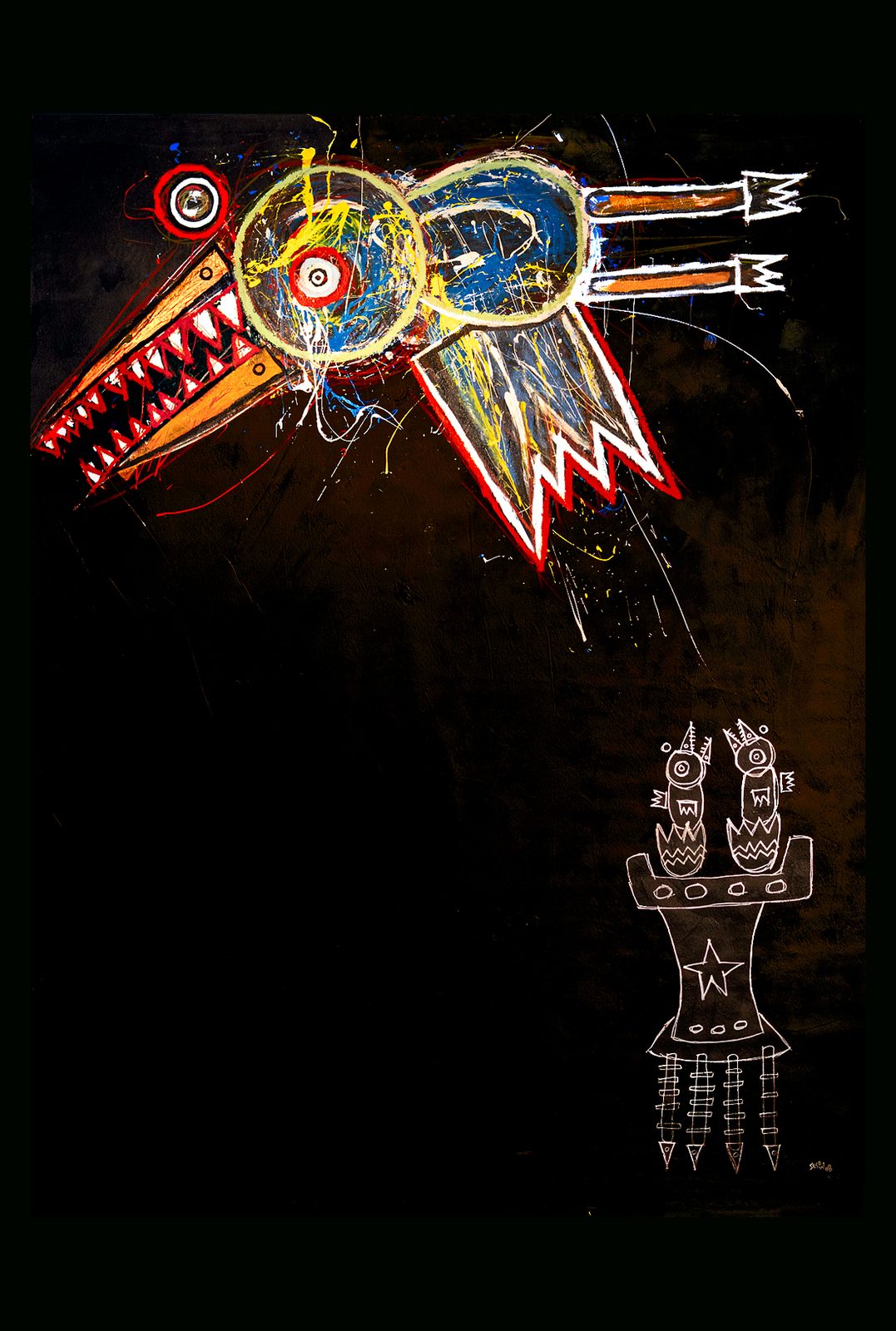
work. Should you visit the galleries yourself, I encourage you to take special note of the icon key Sesow himself
provides. He uses a unique set of “icons” to help communicate the meaning of his painting and provide visual
clues to viewers so that they can better understand the story behind each painting. Take the “trauma cup” for
example, which is featured in many of Sesow’s paintings. According to the icon key, the
trauma cup is “a place to put, keep, hold, and produce the emotion. I put an
icon next to my signature to identify the situation in which the painting was
created.” Very rarely do viewers get the opportunity to hear from the artist
themselves about their intention behind a work of art; Sesow’s icon key allows
him to help visitors gain understanding, even when he’s not there.
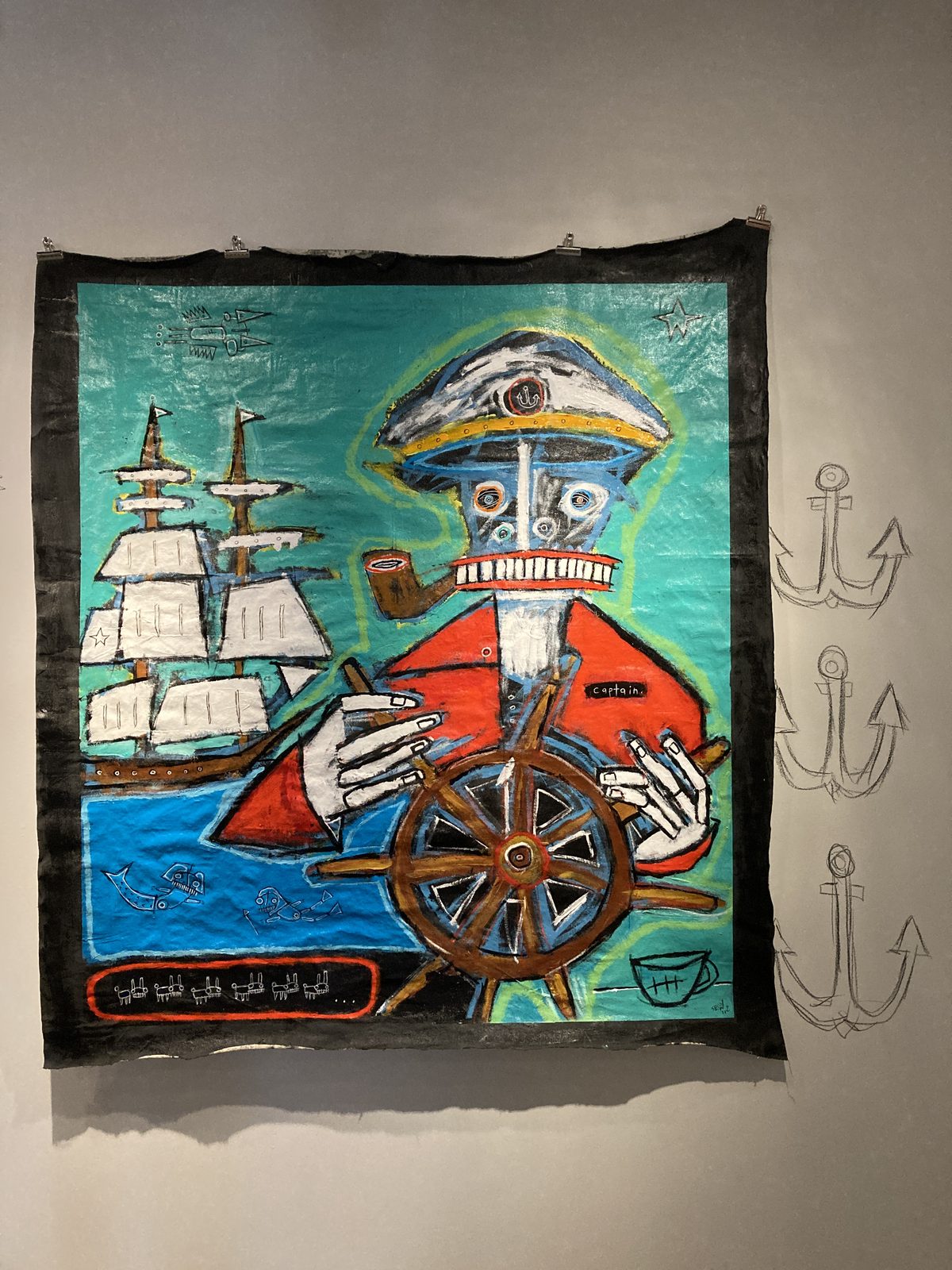
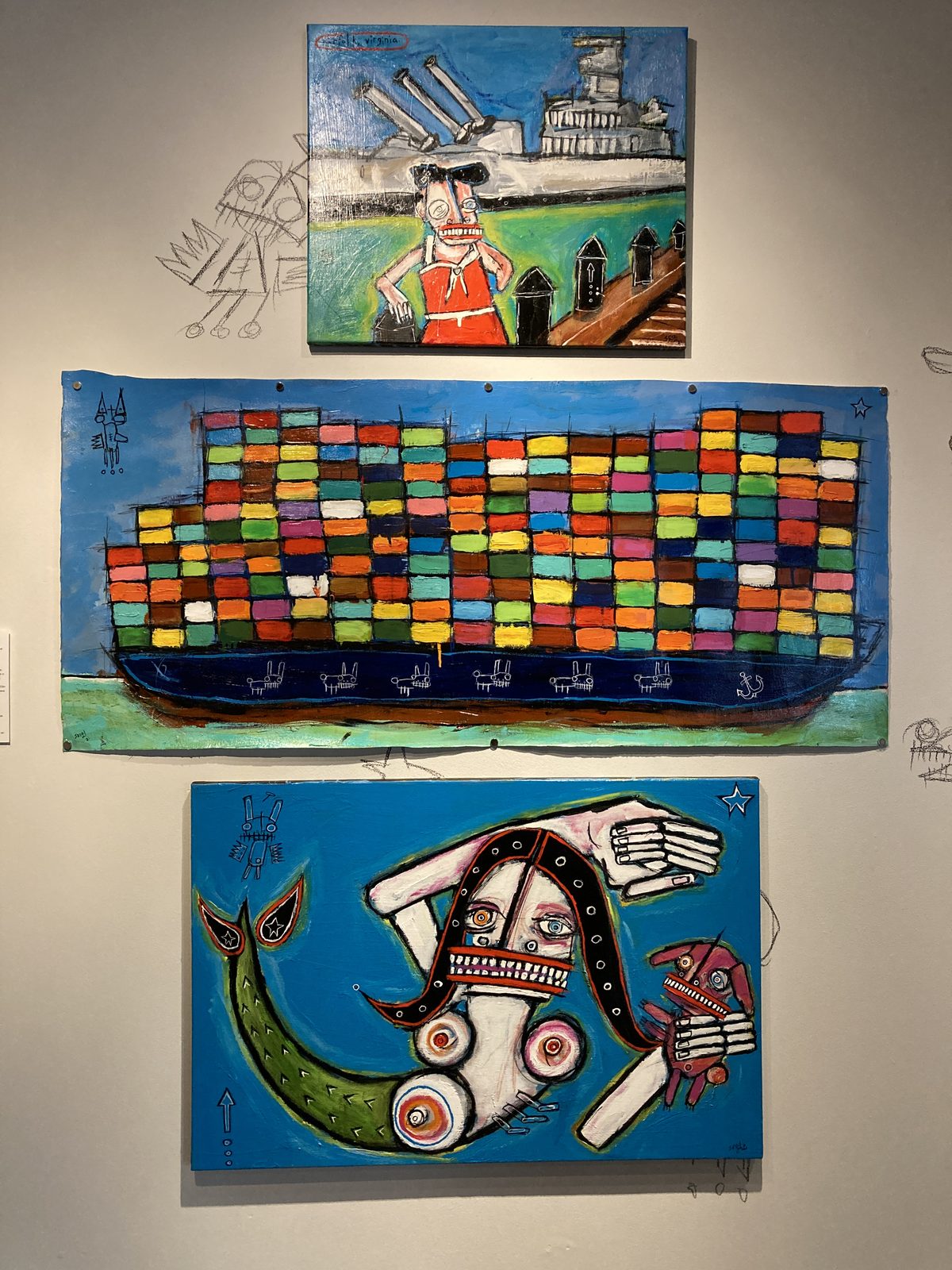
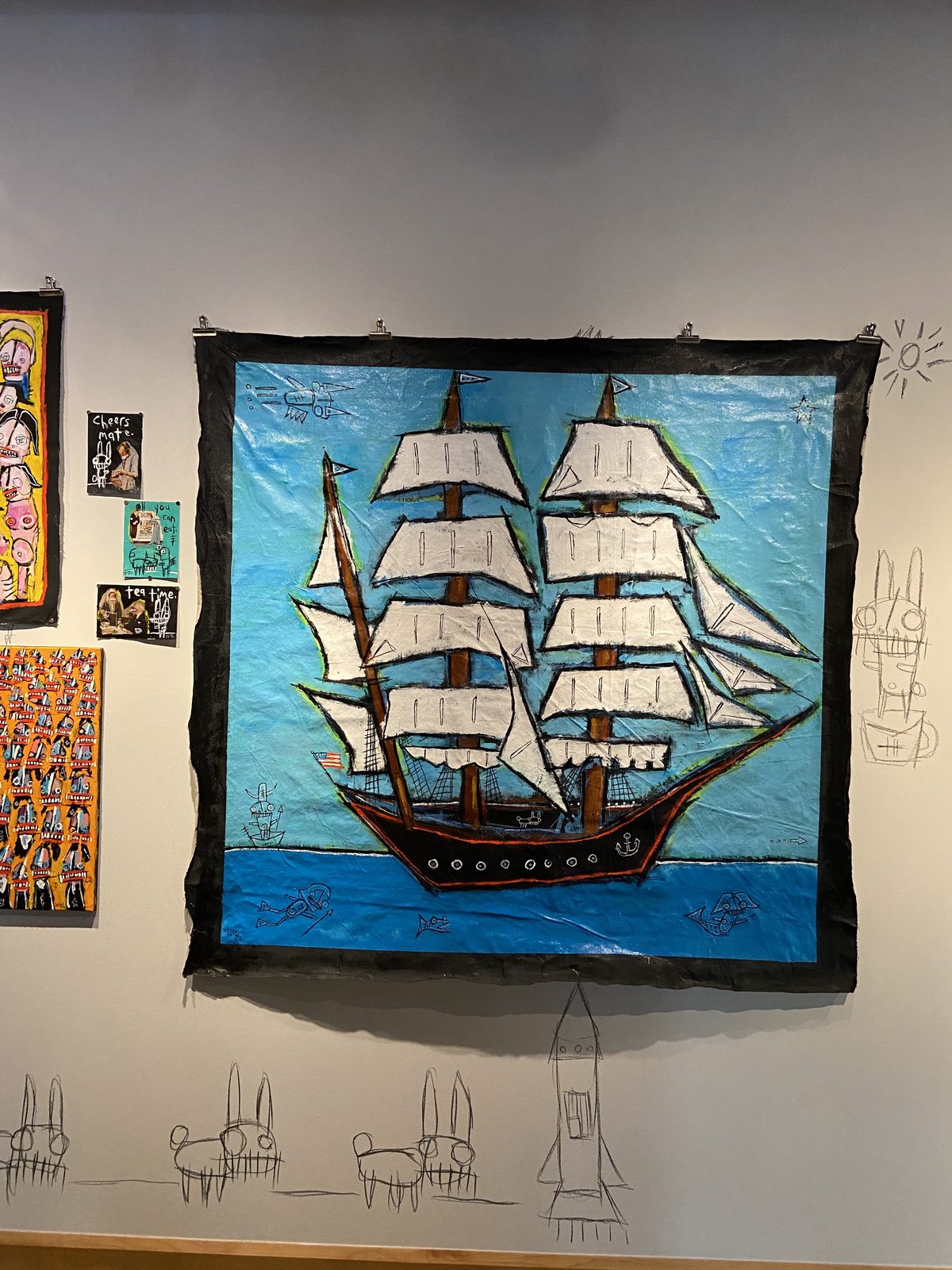
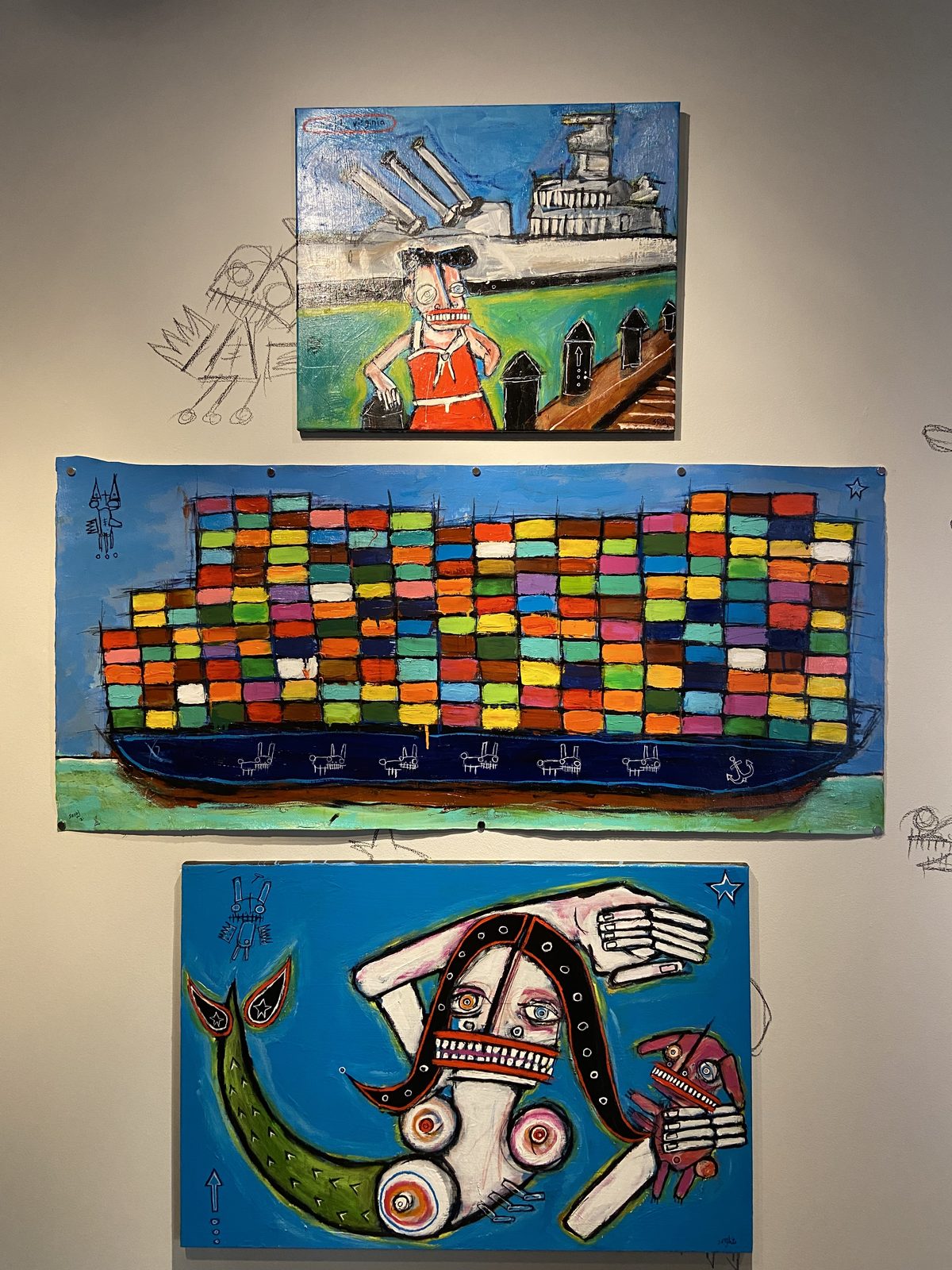
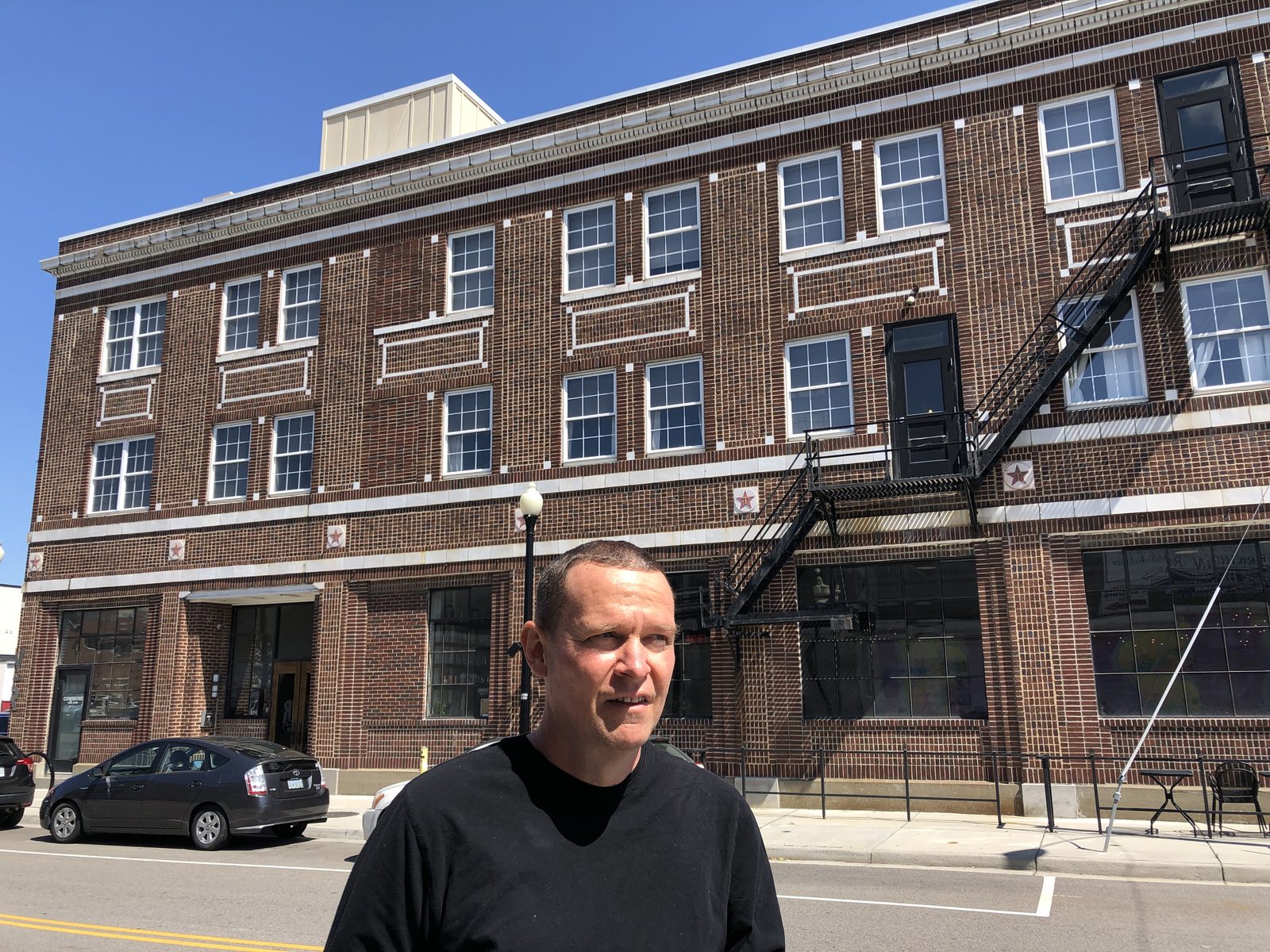
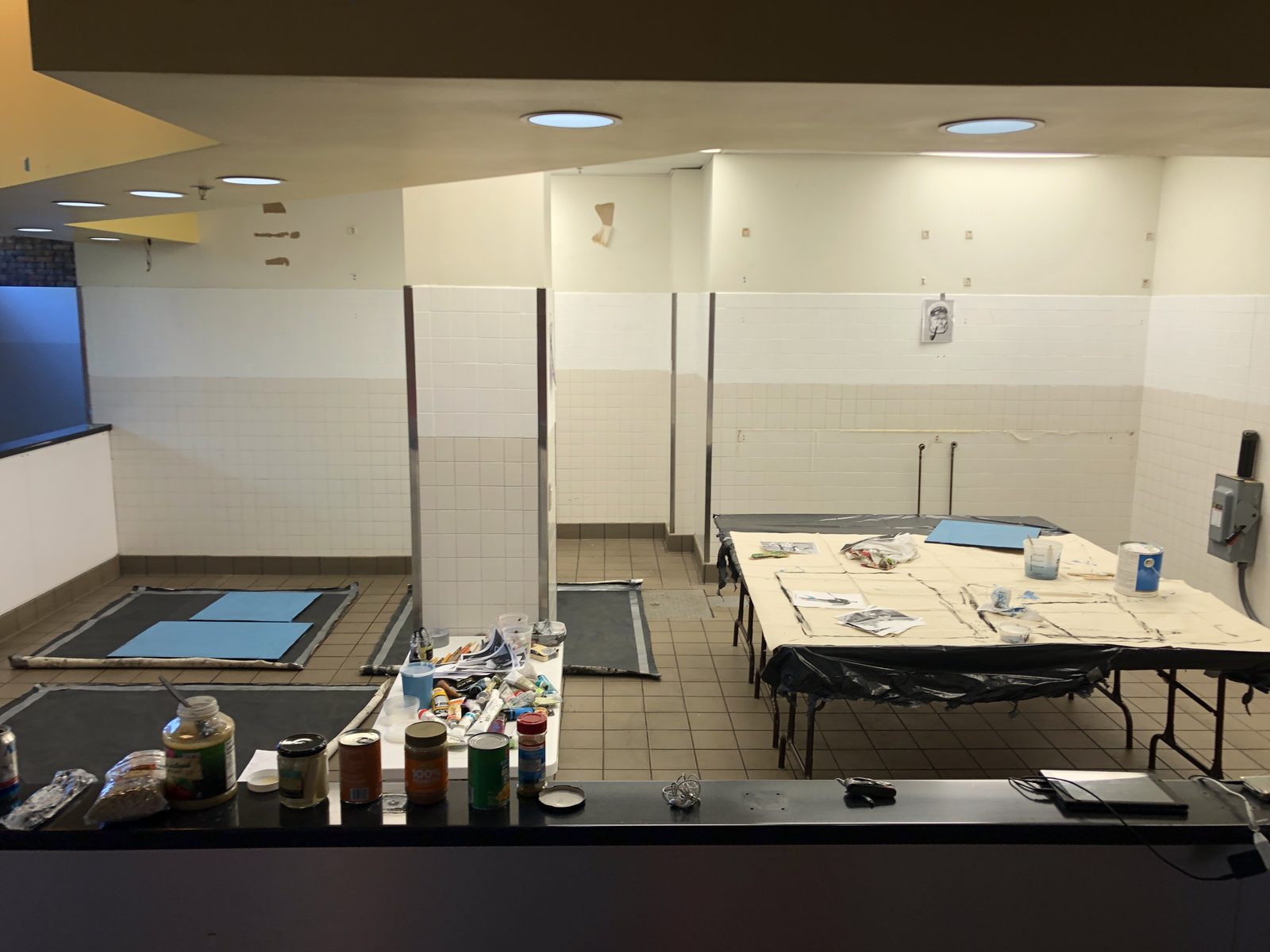
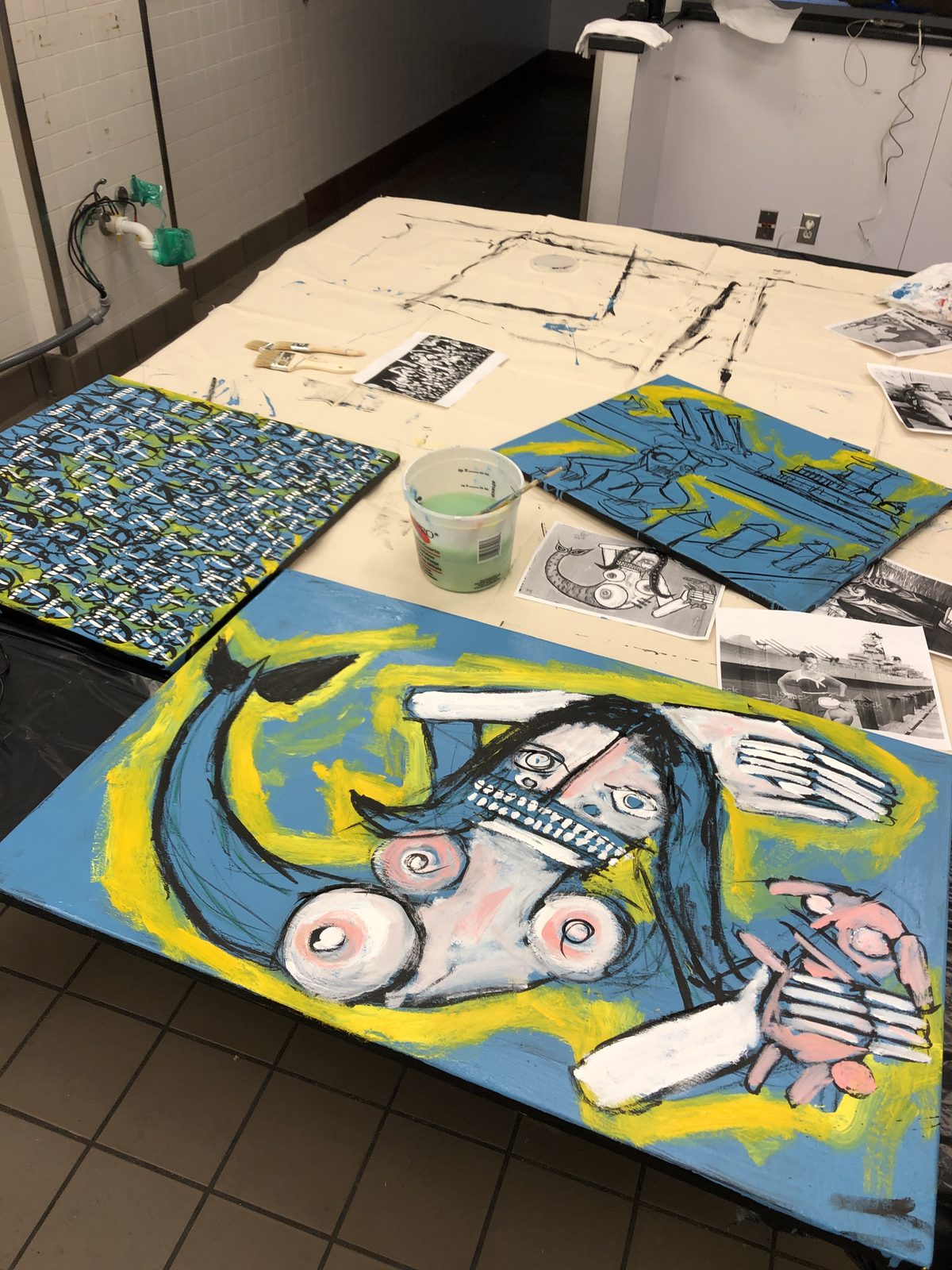
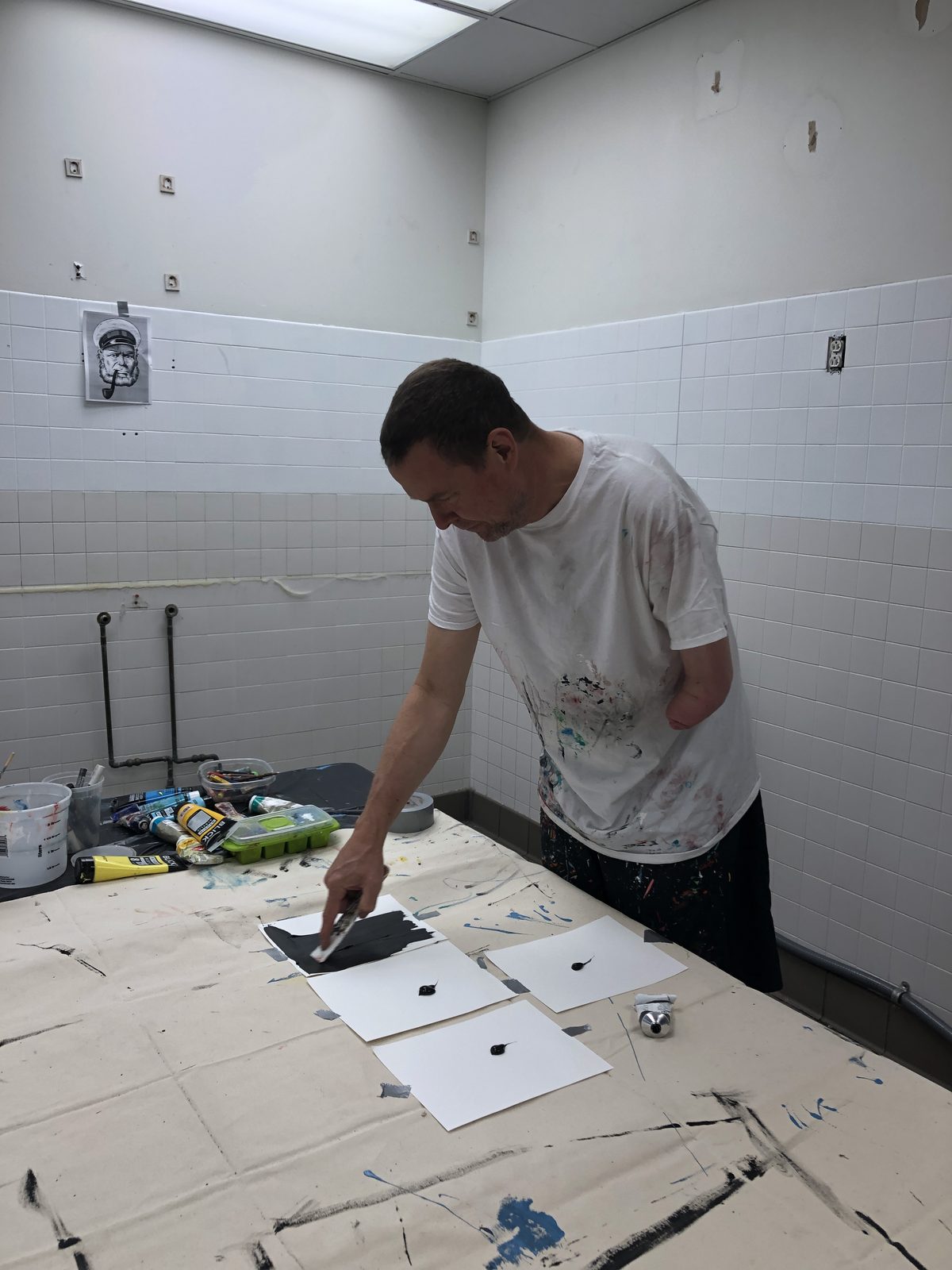
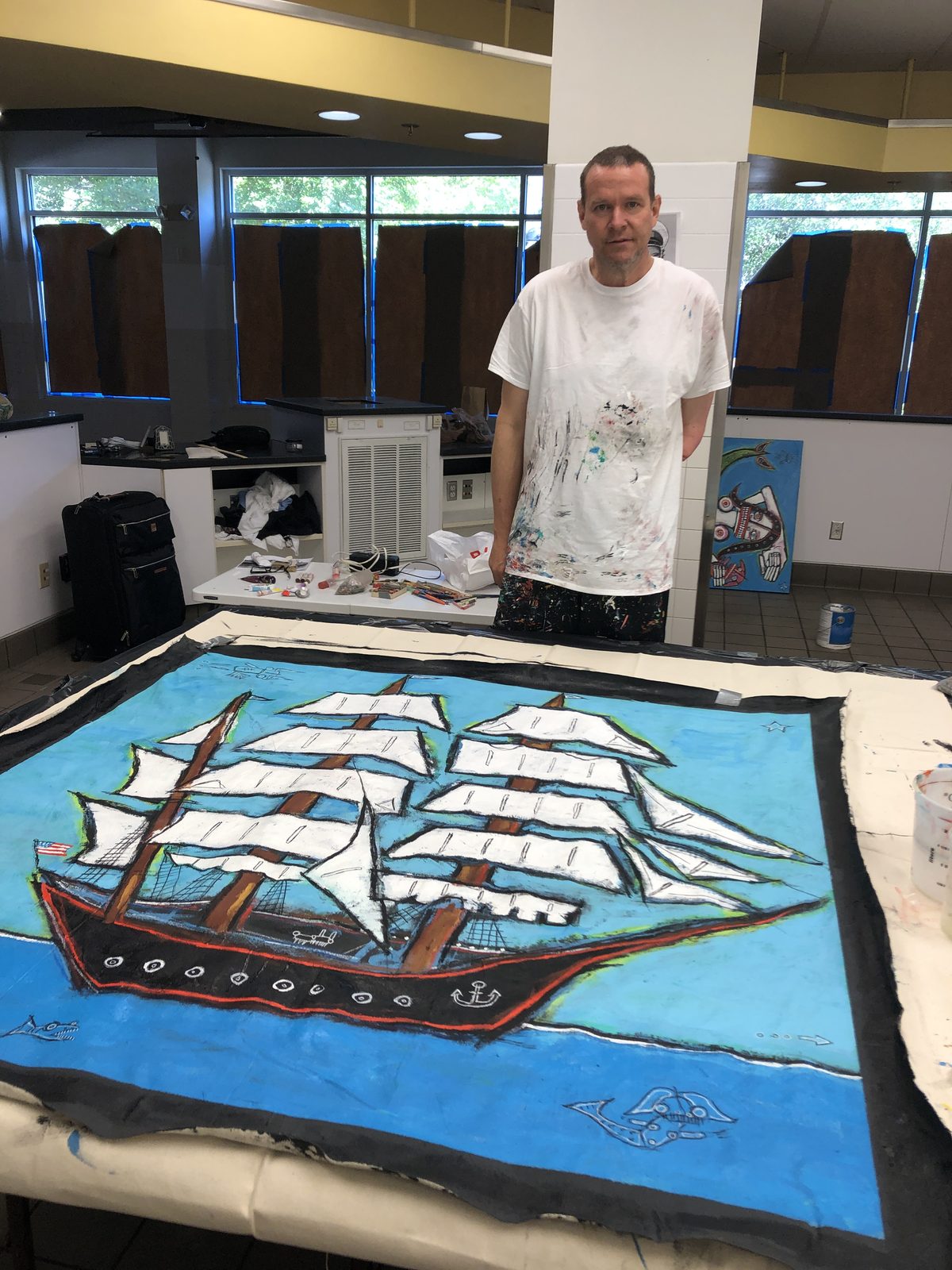
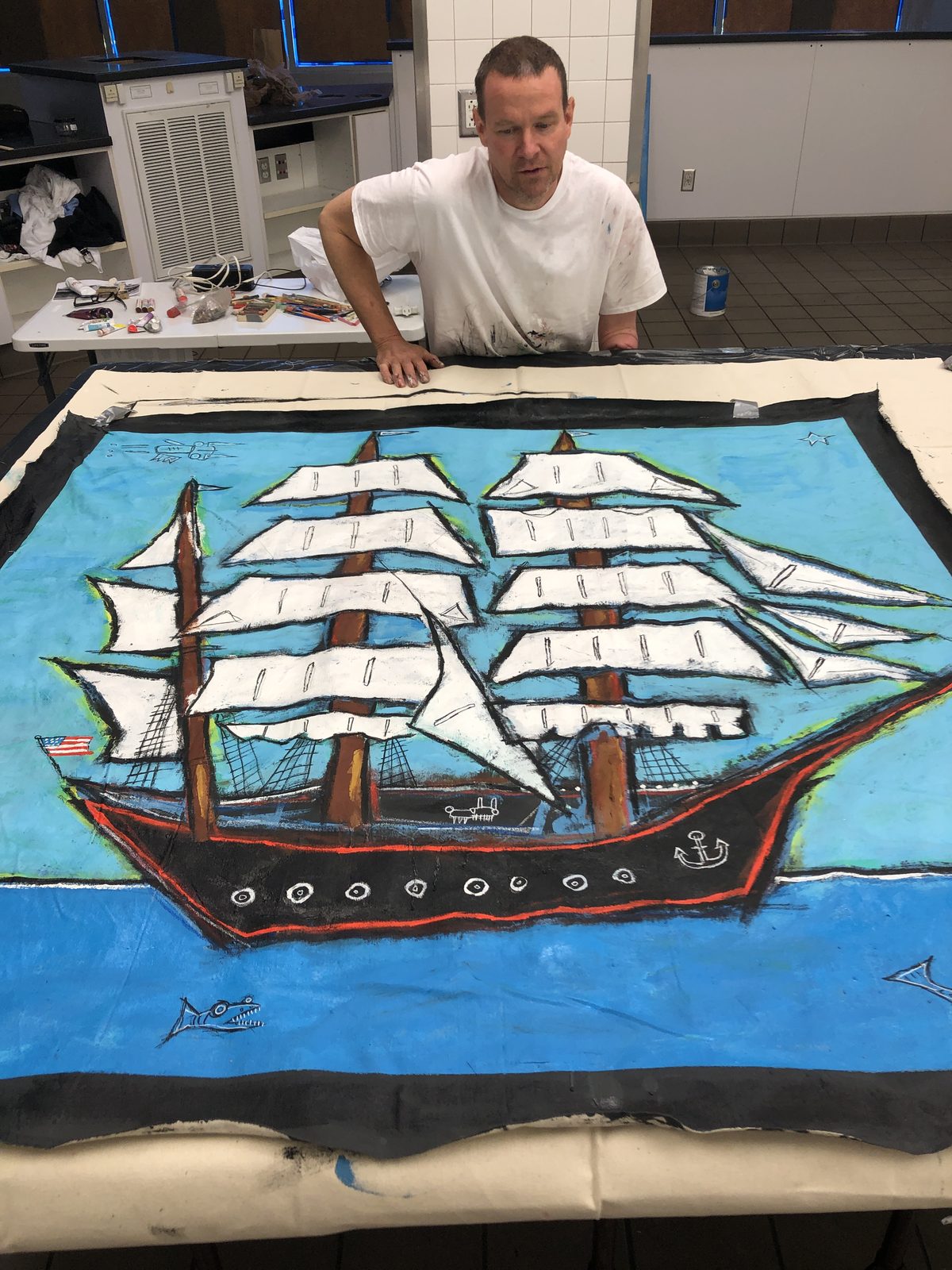
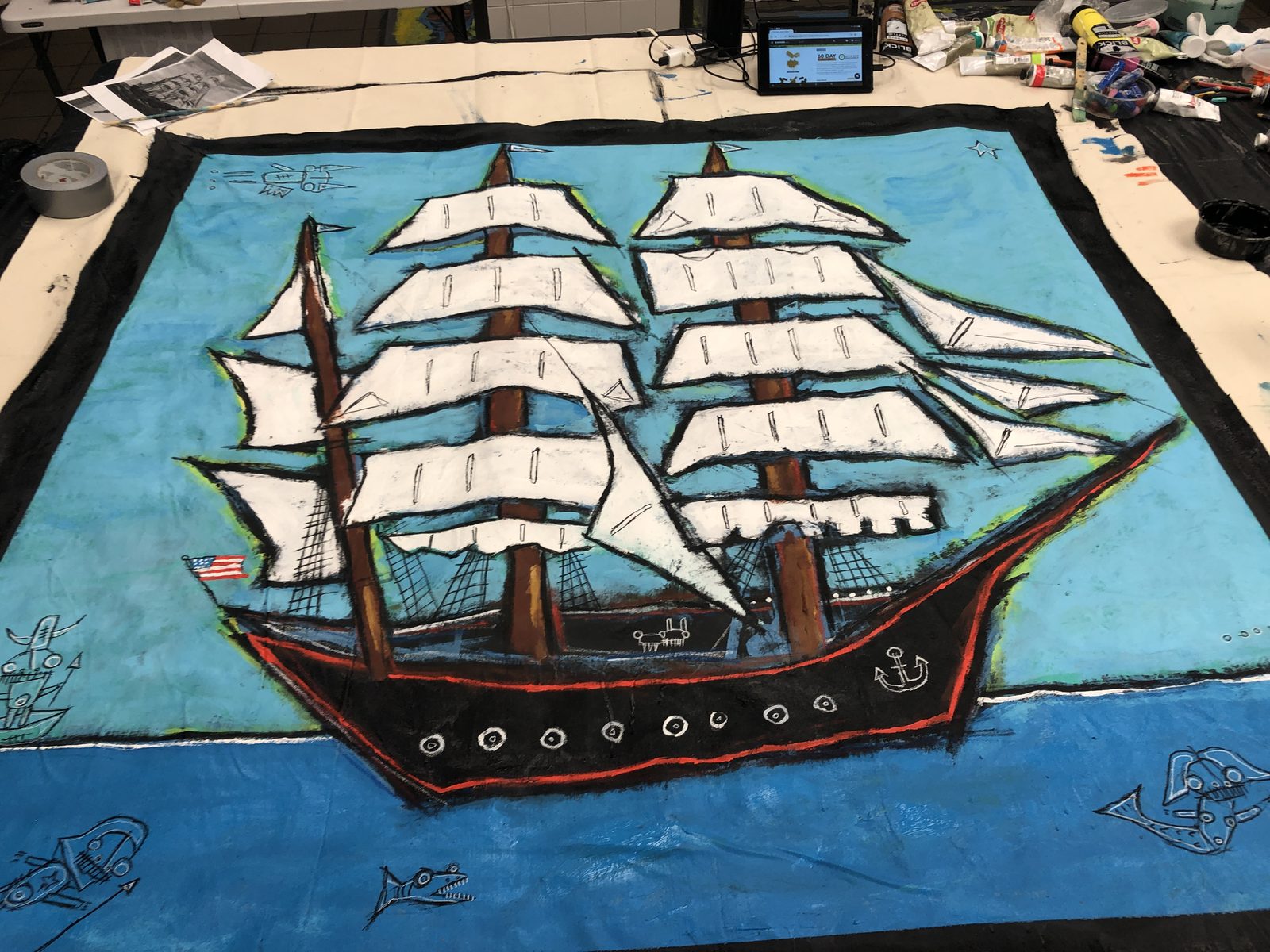
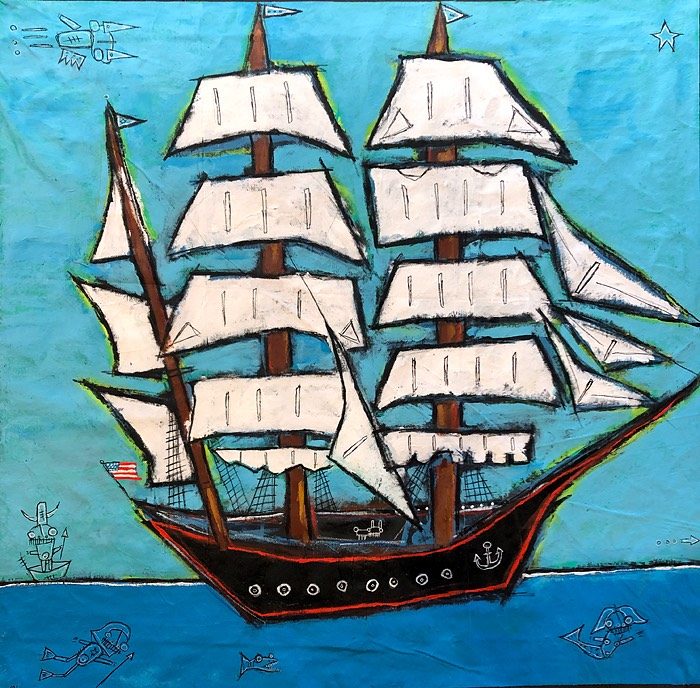
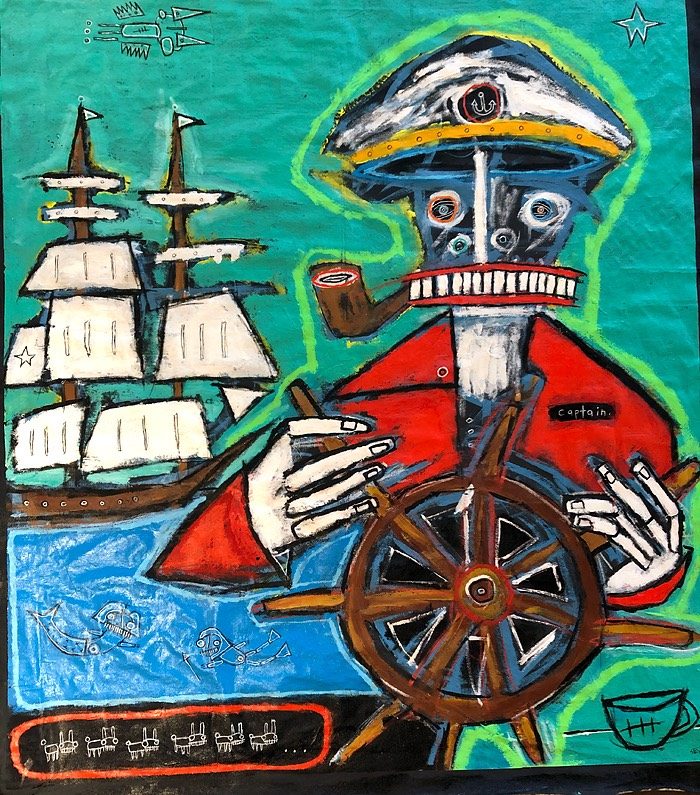
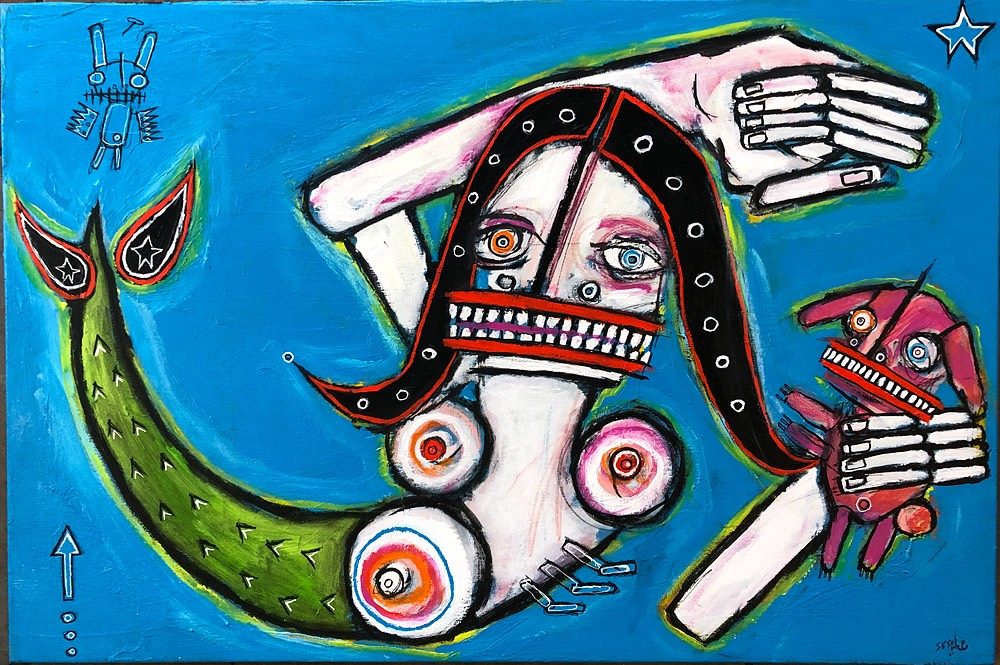
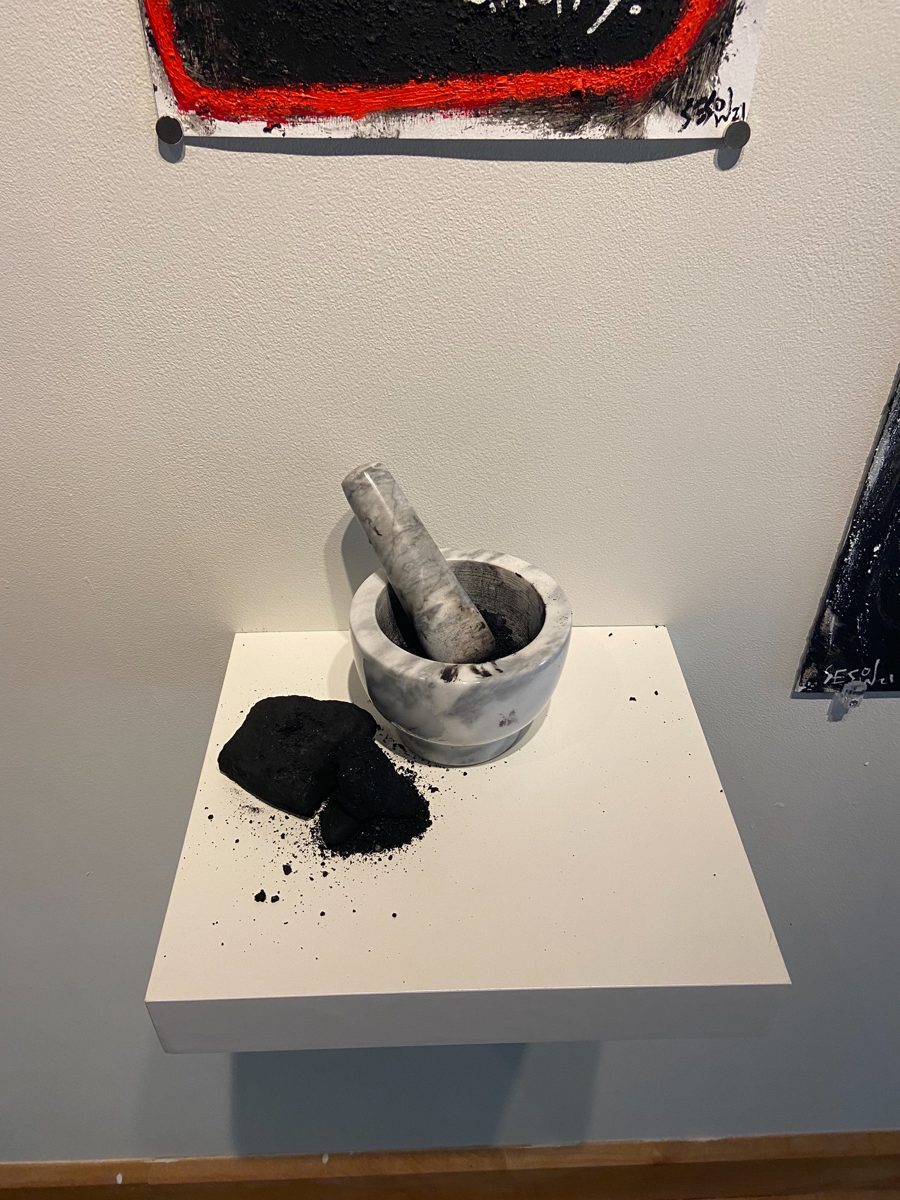
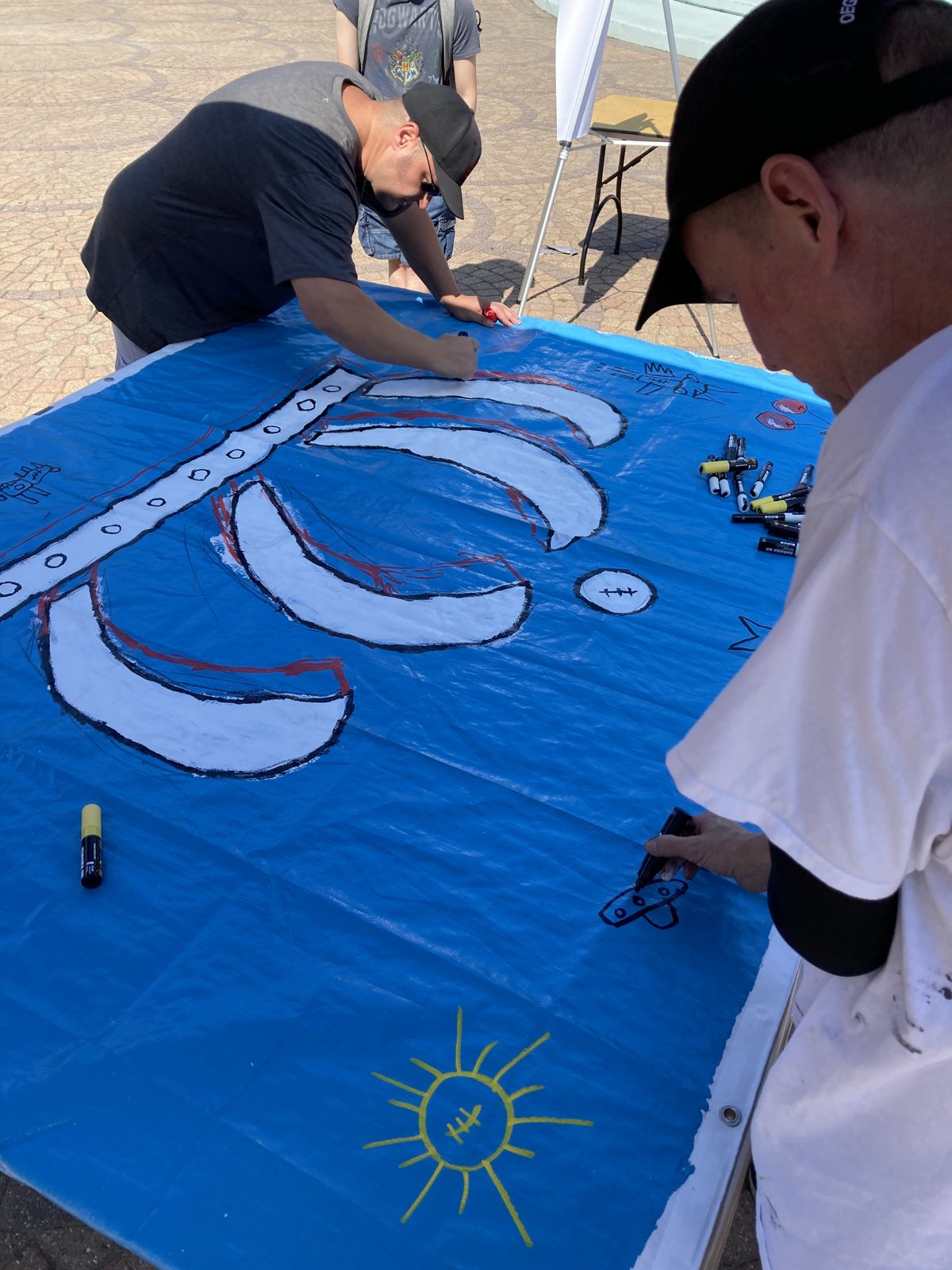
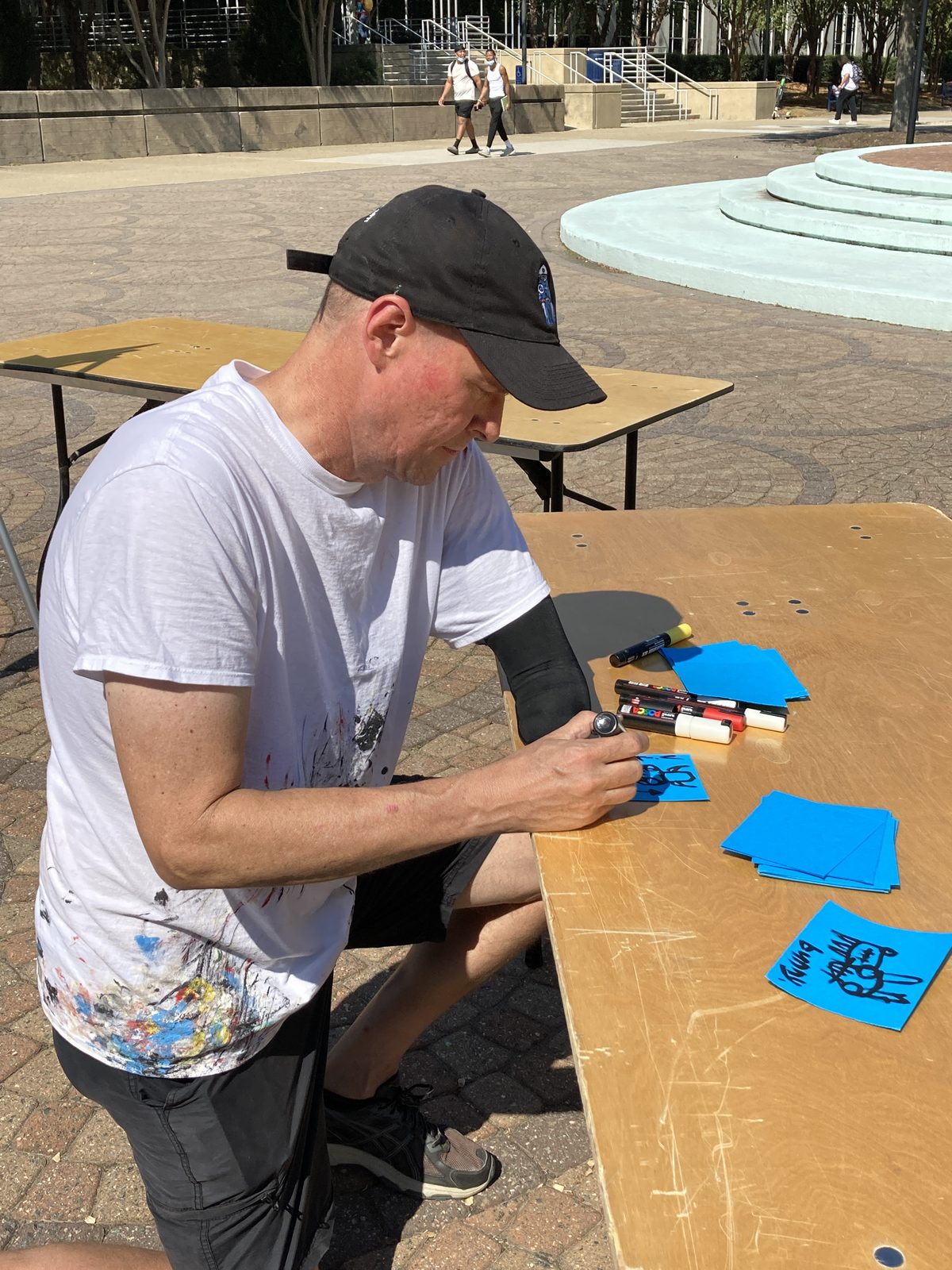
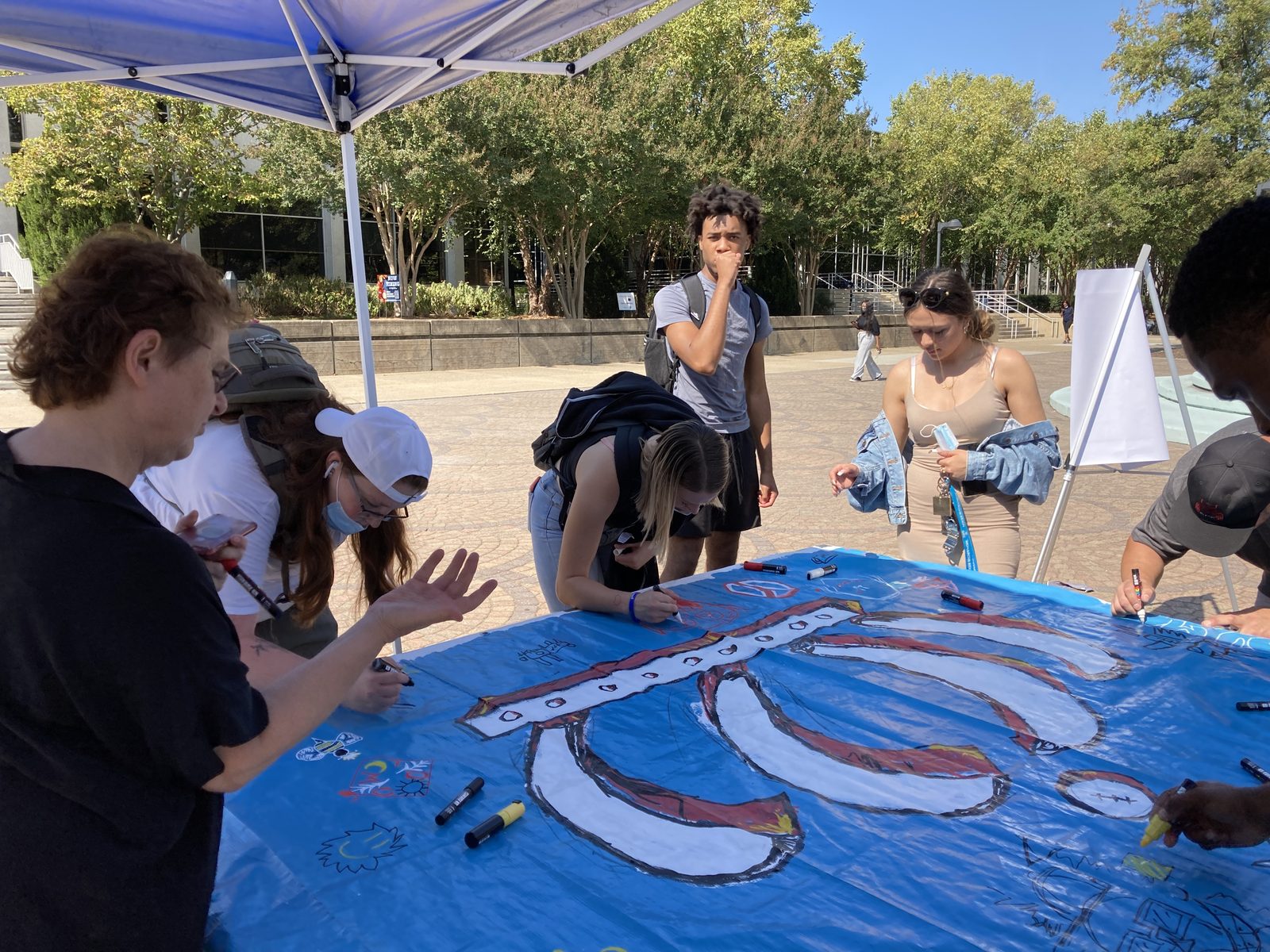
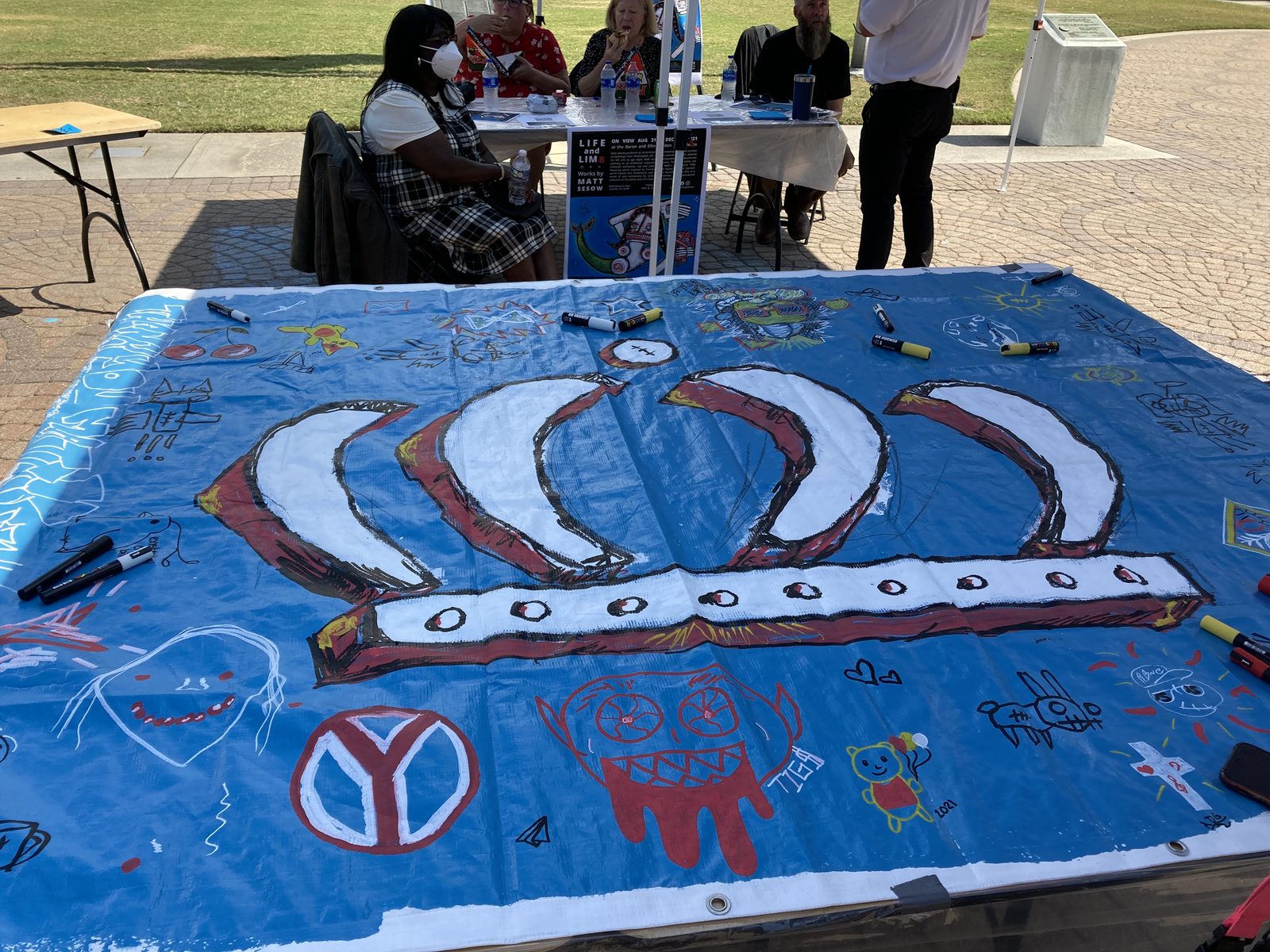
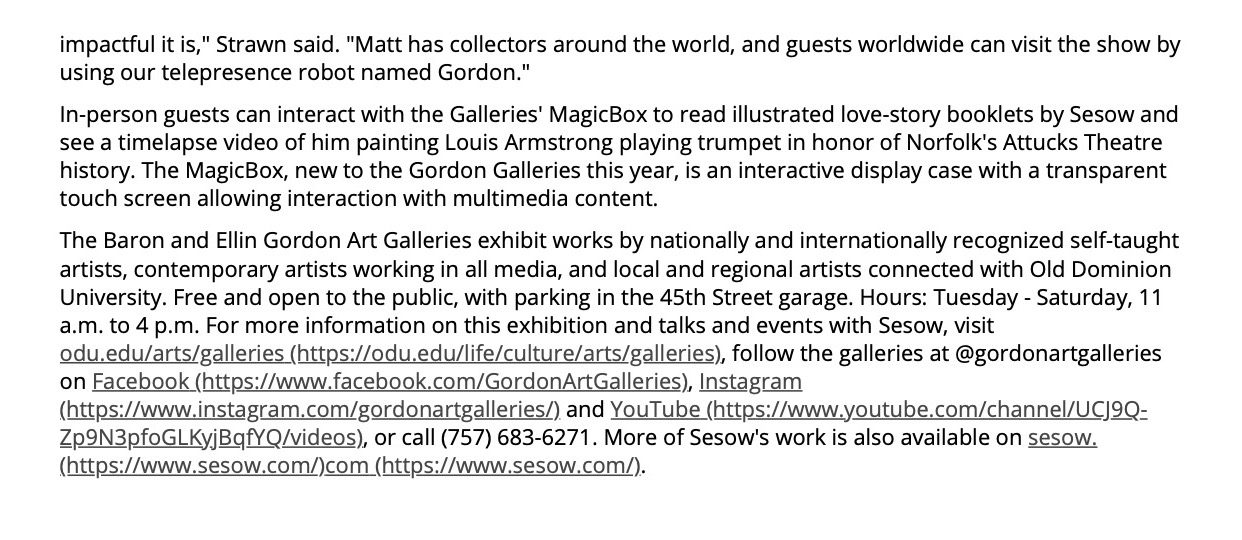
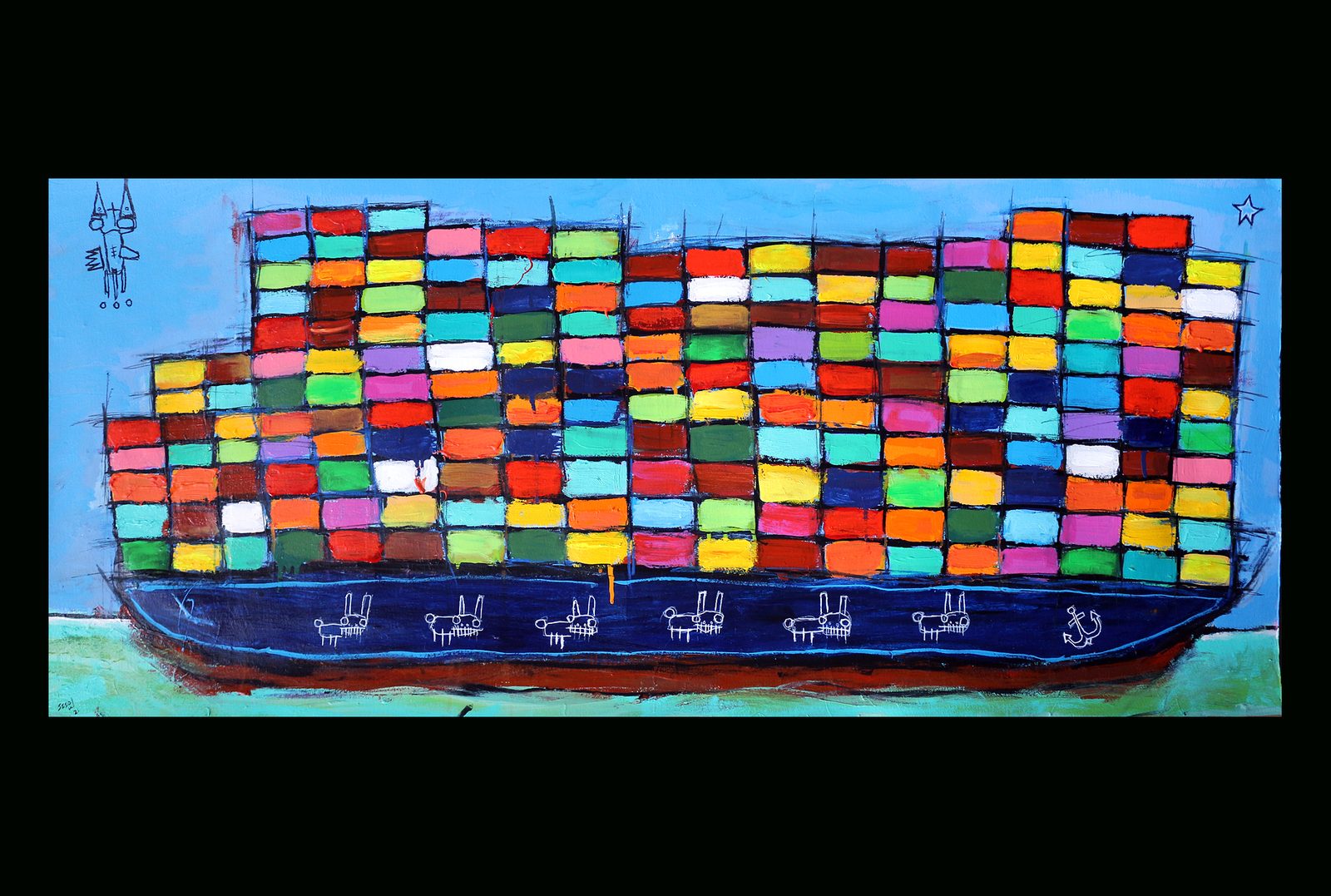
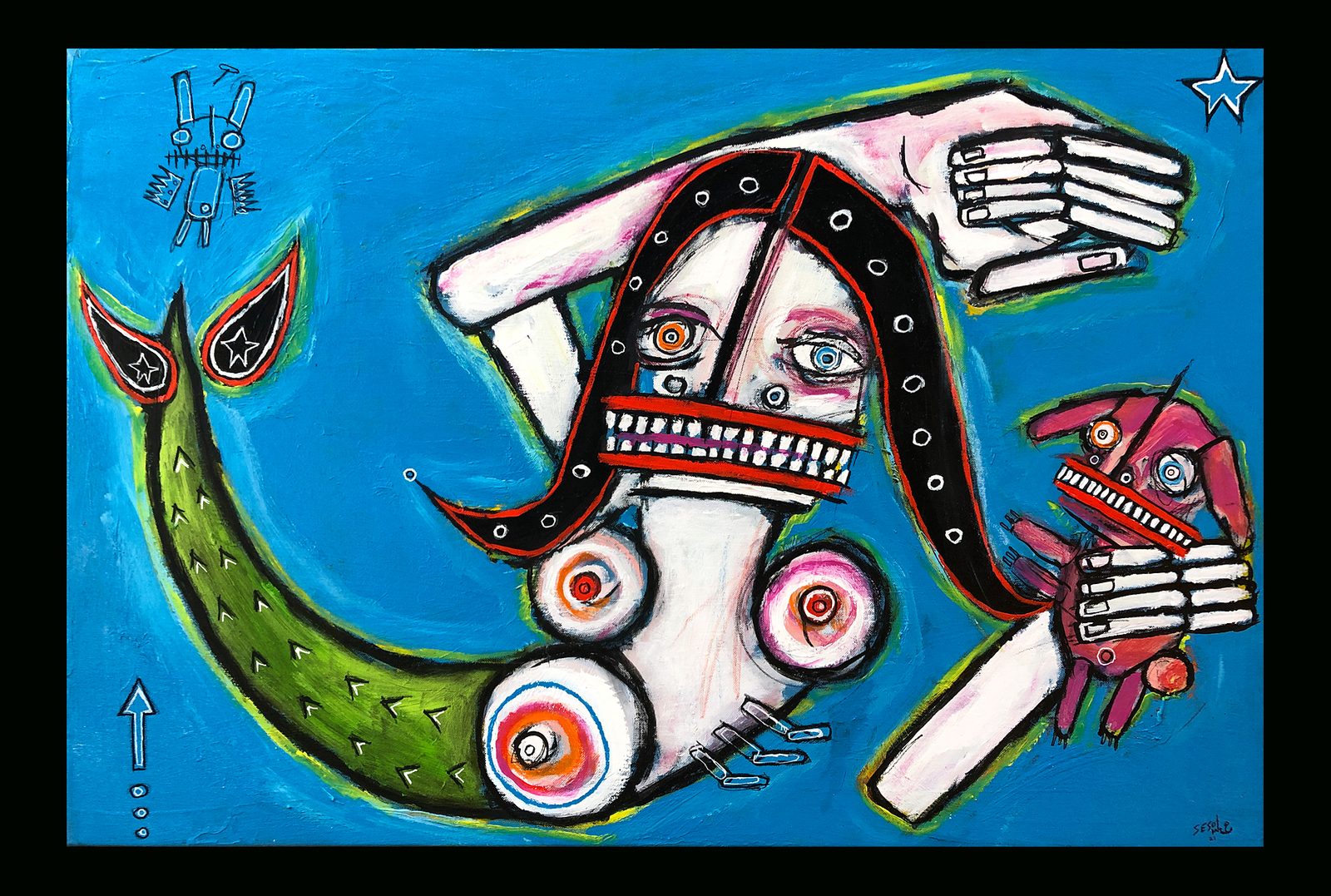
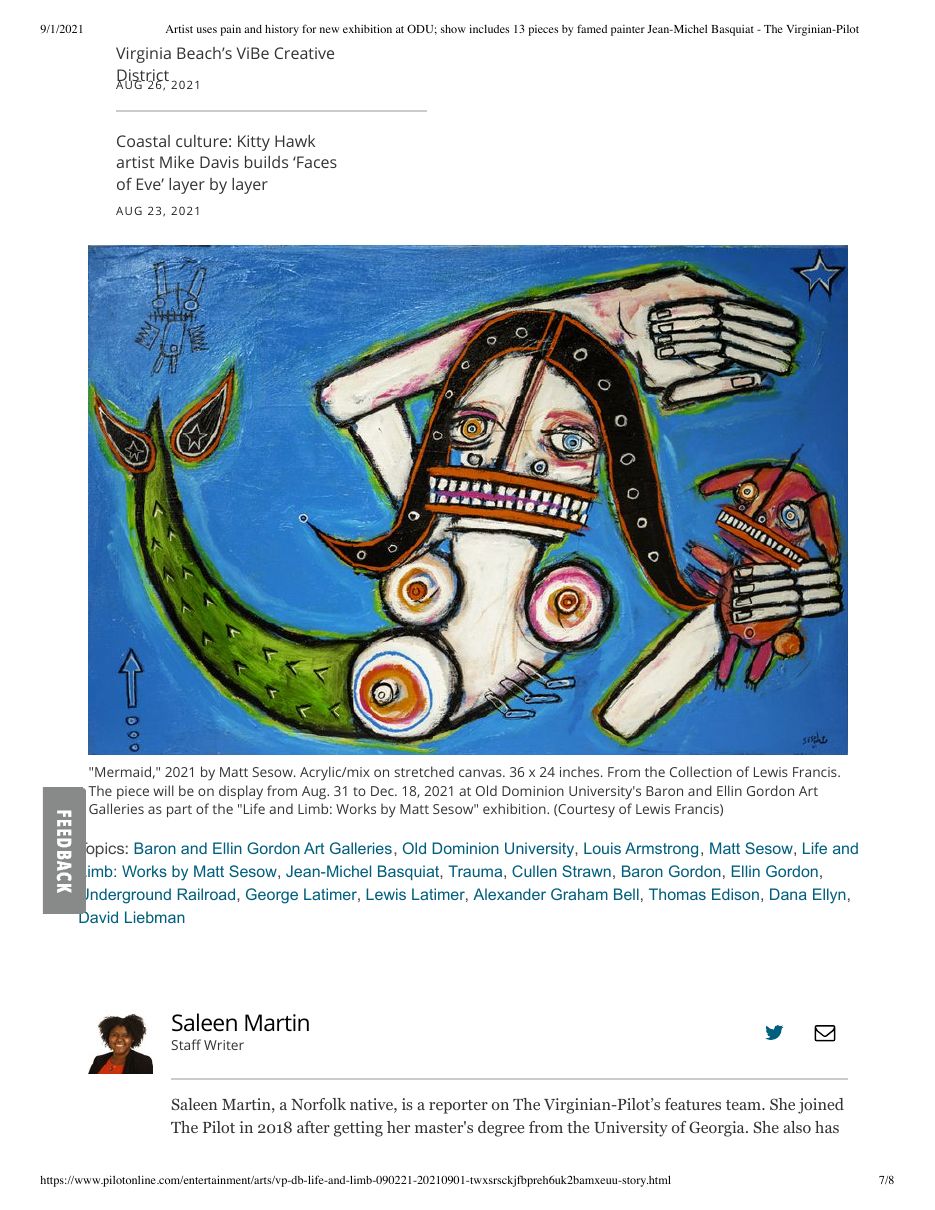
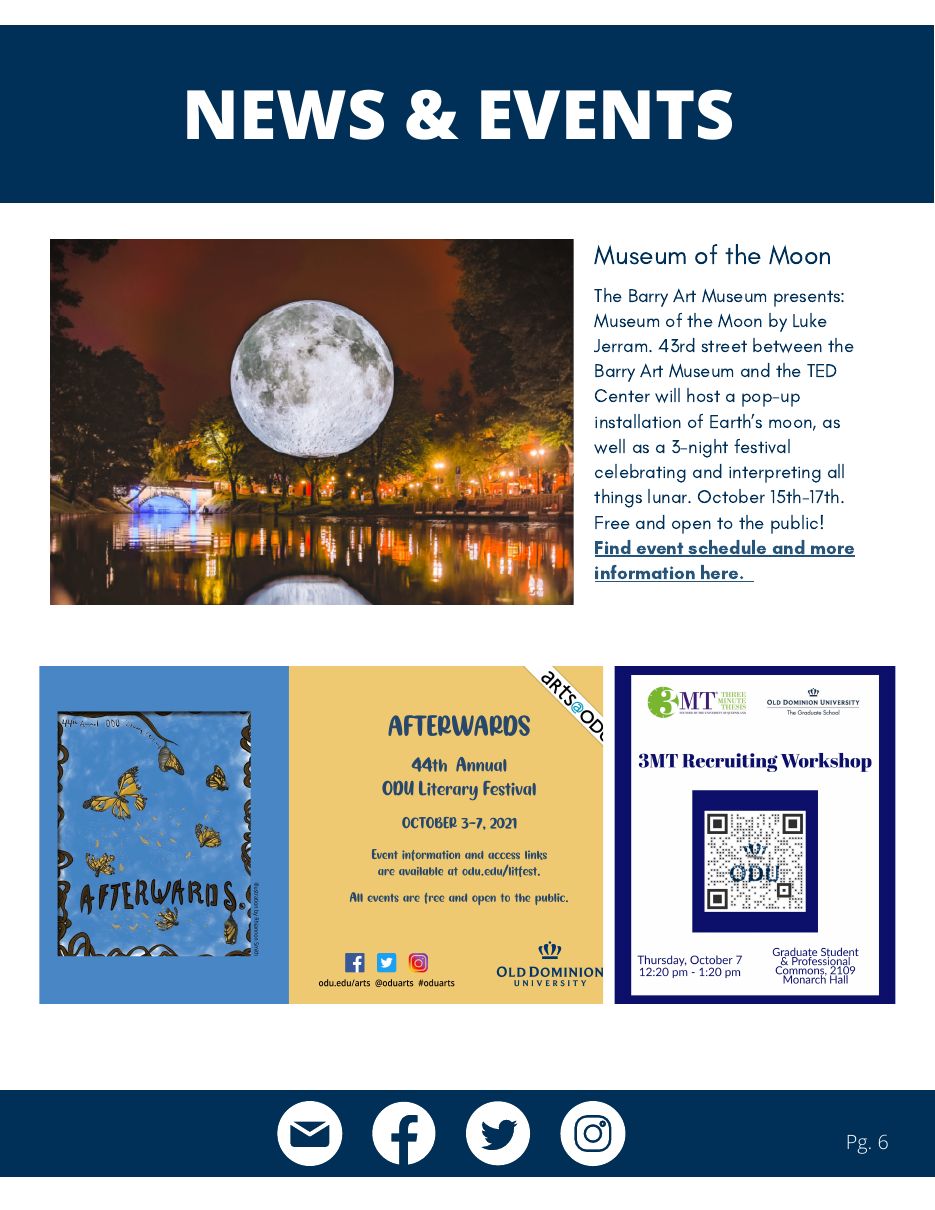
When Sesow was last in Norfolk, he spent several days in an abandoned
sandwich shop creating paintings specific to Norfolk’s local history. These
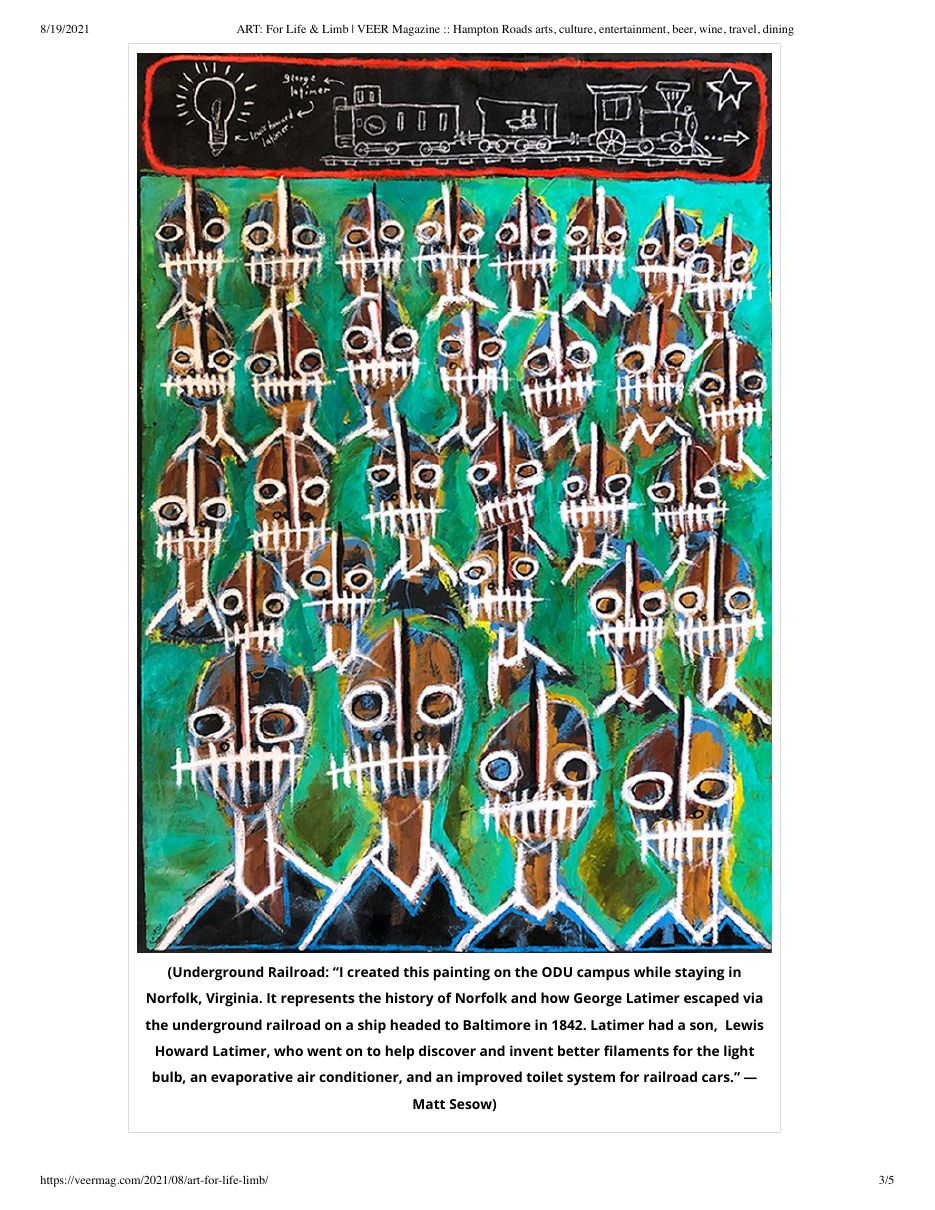
paintings feature clipper ships, mermaids, and sailors, among themes of slavery
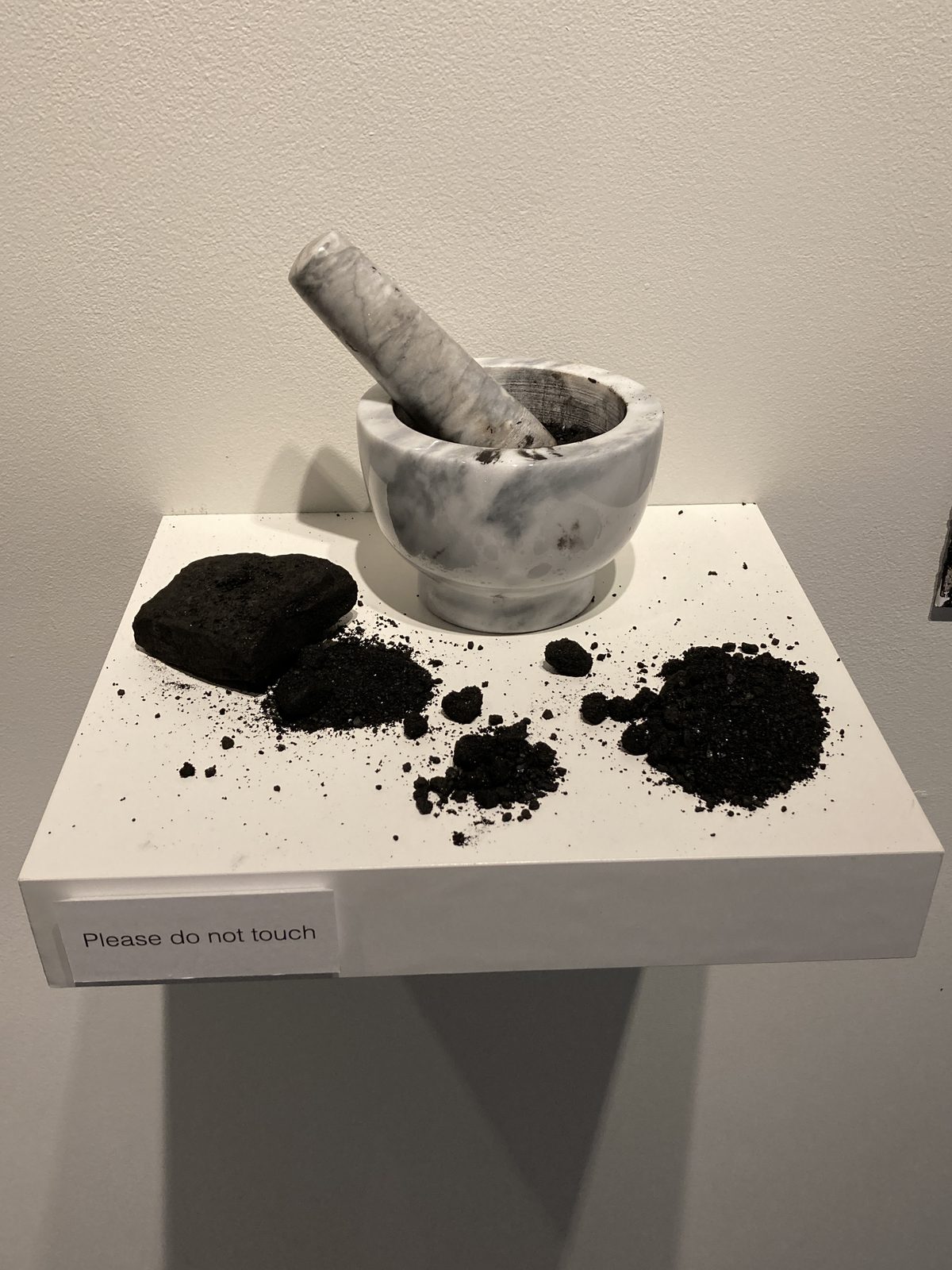
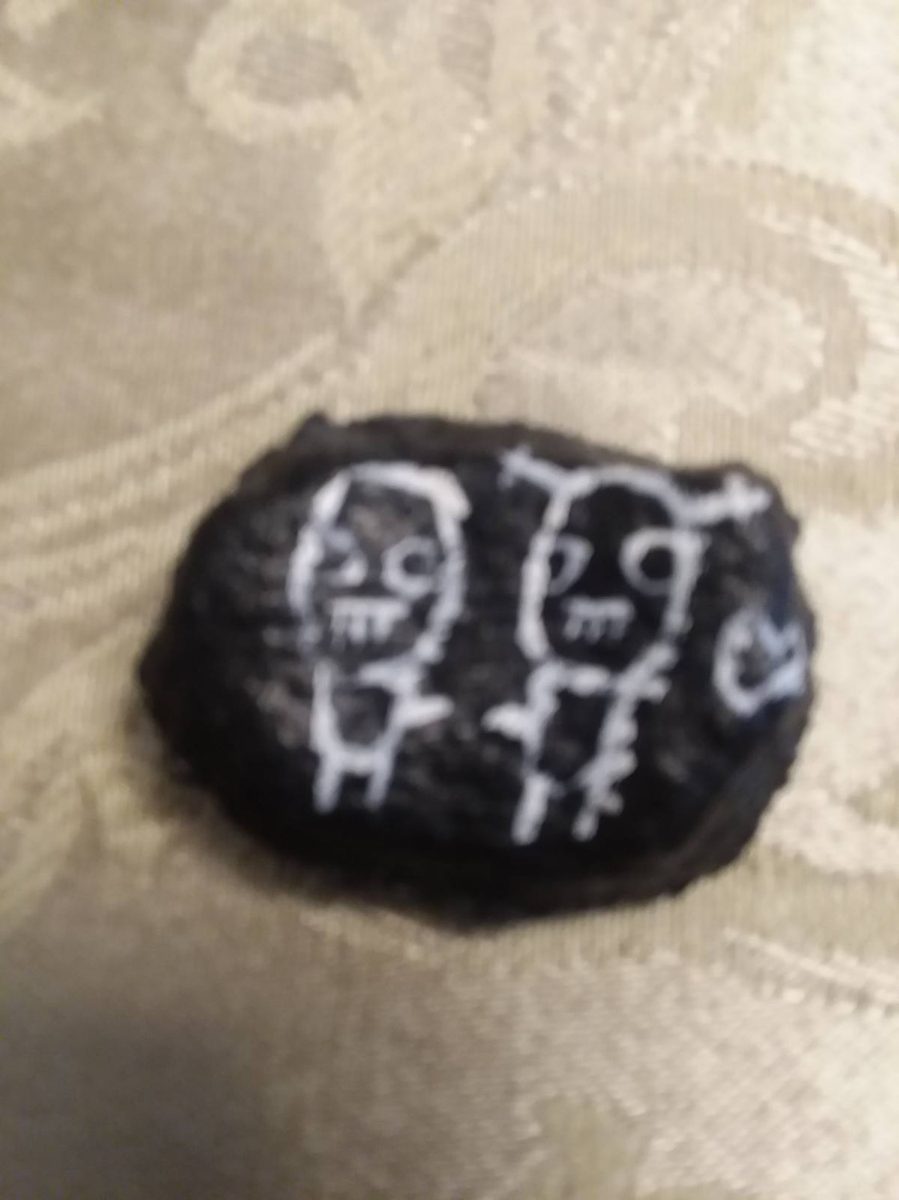
and the Underground Railroad. Sesow also made a few unique pieces using
coal from Lambert’s Point Coal Terminal in Norfolk.
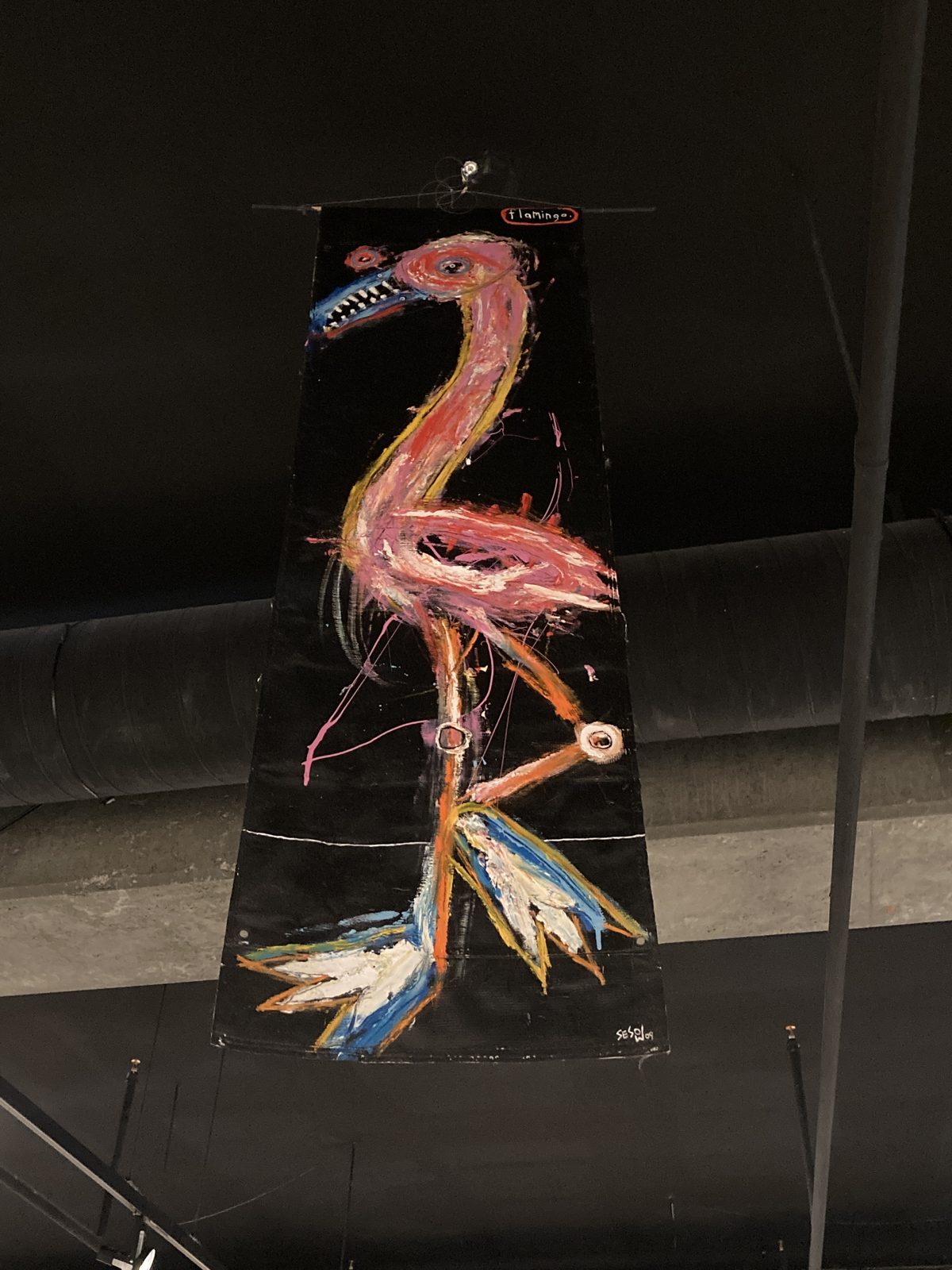
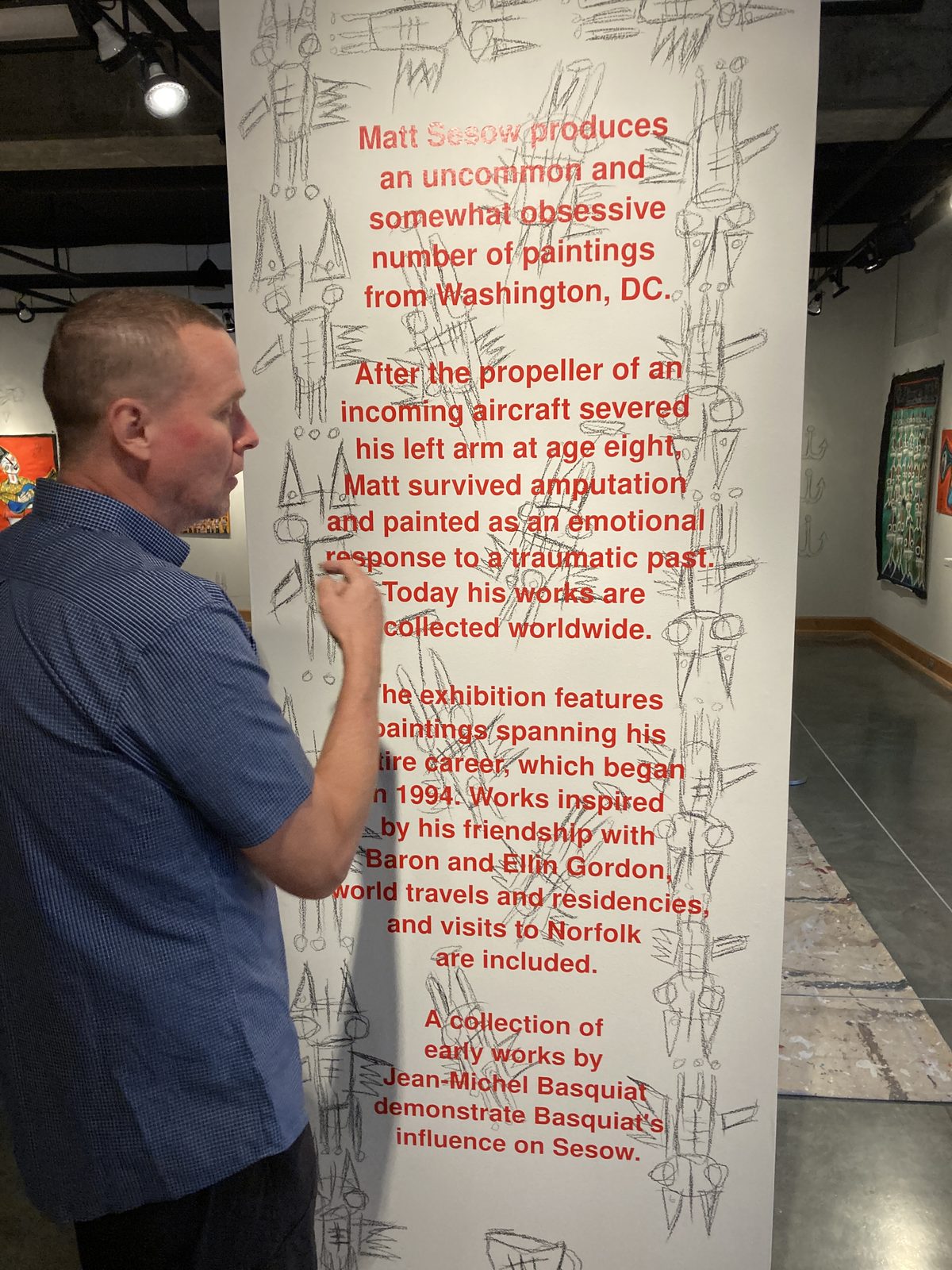
The ferocious speed at which Sesow can create is truly impressive. The tagline
for his website, which is also featured on the gallery’s wall, is: “Matt Sesow
produces an uncommon and somewhat obsessive number of paintings from
Washington, DC.” Immerse yourself in a sea of colors and at Sesow’s exhibition
through December 18th.
"Underground Railroad"
by: Matt Sesow
Pg. 5
NEWS & EVENTS
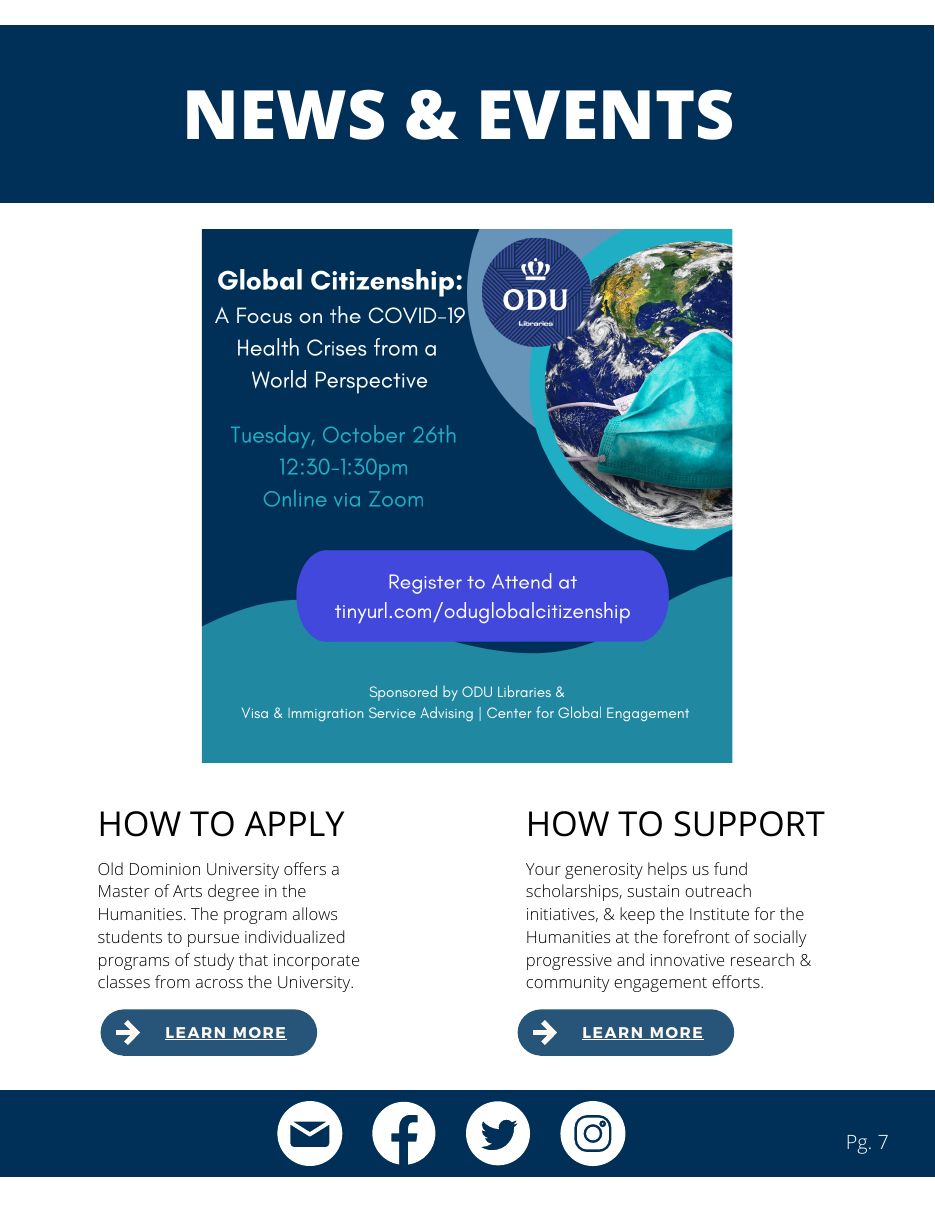
Museum of the Moon
The Barry Art Museum presents:
Museum of the Moon by Luke
Jerram. 43rd street between the
Barry Art Museum and the TED
Center will host a pop-up
installation of Earth’s moon, as
well as a 3-night festival
celebrating and interpreting all
things lunar. October 15th-17th.
Free and open to the public!
Find event schedule and more
information here.
Pg. 6
NEWS & EVENTS
HOW TO APPLY
HOW TO SUPPORT
Old Dominion University offers a
Master of Arts degree in the
Humanities. The program allows
students to pursue individualized
programs of study that incorporate
classes from across the University.
Your generosity helps us fund
scholarships, sustain outreach
initiatives, & keep the Institute for the
Humanities at the forefront of socially
progressive and innovative research &
community engagement efforts.
LEARN MORE
LEARN MORE
Pg. 7