In 1995, while working as a software engineer at IBM, Matt Sesow launched a personal website to sell his paintings directly to collectors — years before eBay, Etsy, or any online art marketplace existed. His pioneering web presence was documented in a 1997 John Wiley & Sons book as a model for independent artists on the internet.
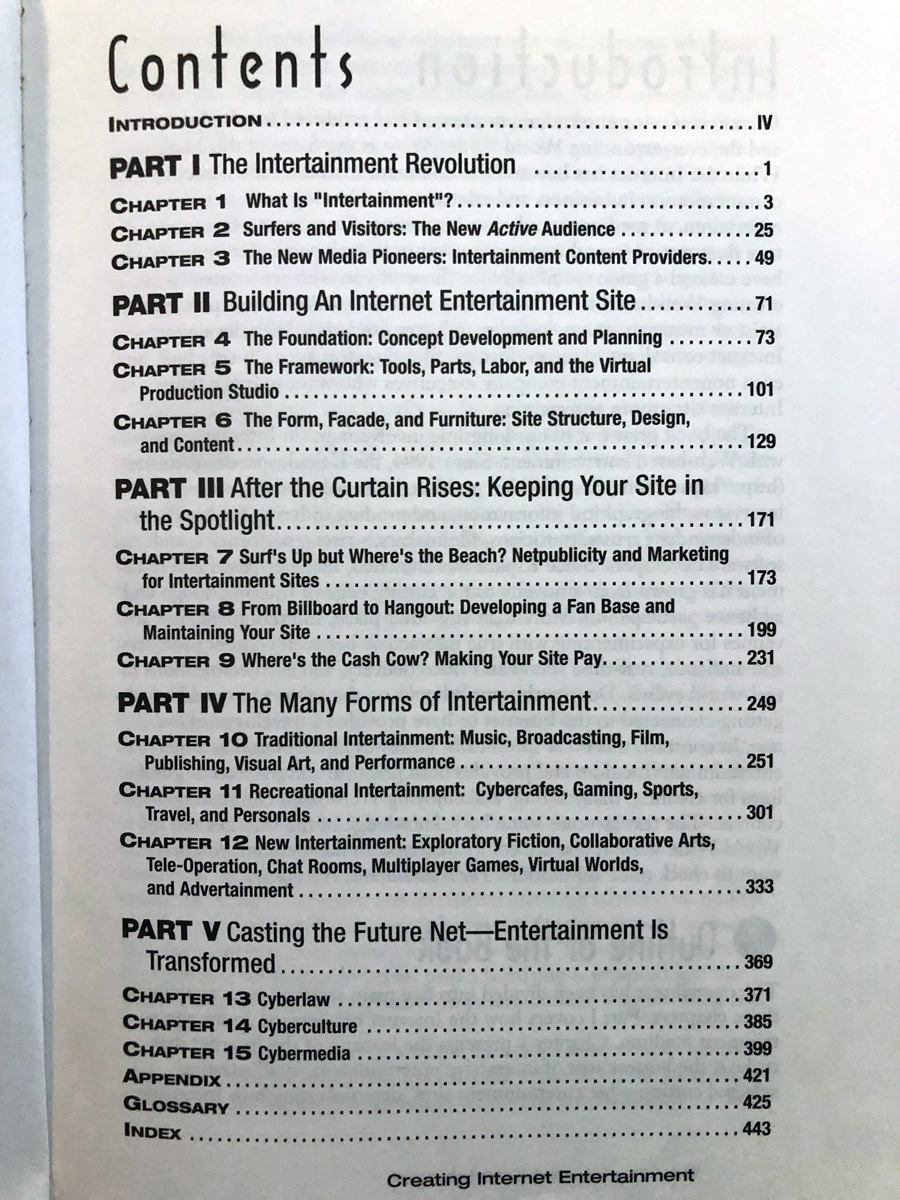
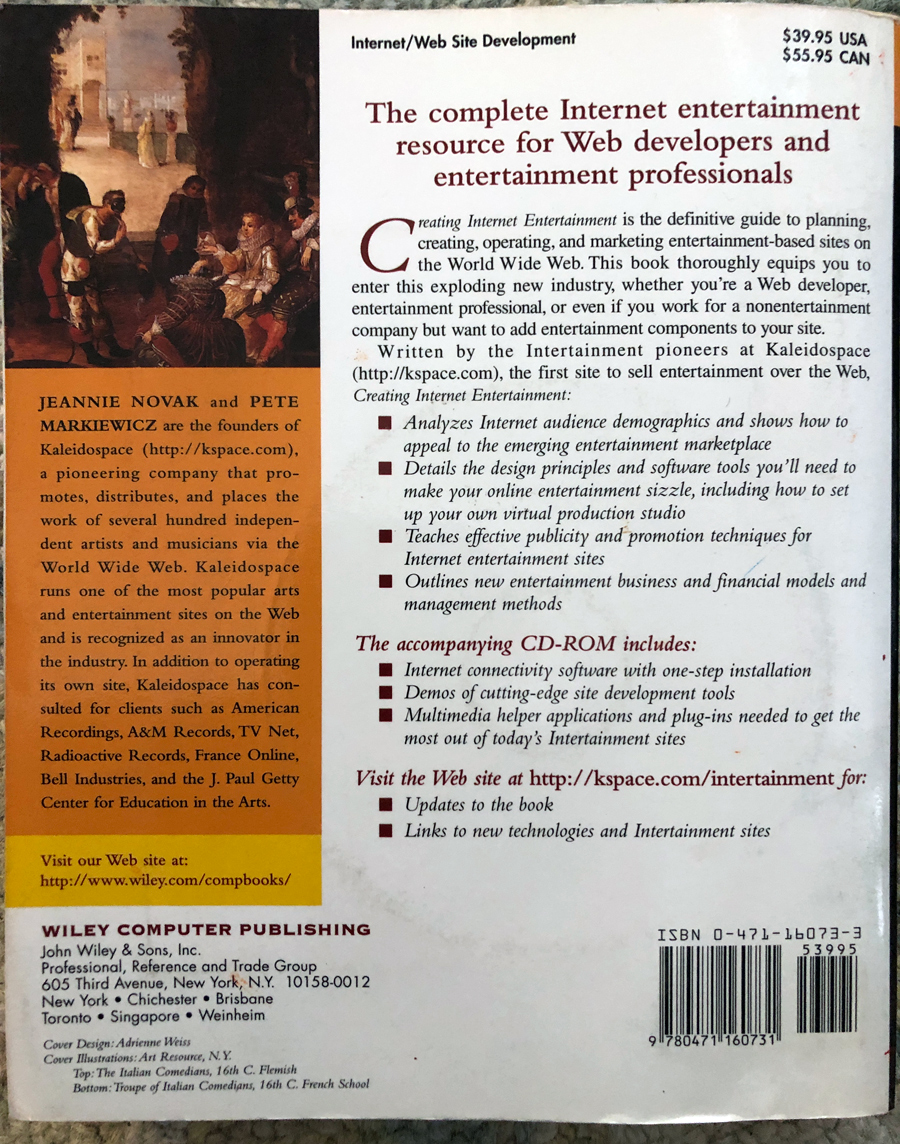
Creating Internet Entertainment: A Complete Guide for Web Developers and Entertainment Professionals was published in 1997 by John Wiley & Sons, written by Jeannie Novak and Pete Markiewicz — the founders of Kaleidospace, recognized as the first website to sell entertainment over the World Wide Web. Matt Sesow's website and filmmaking are featured in Chapter 10 as a case study of an independent artist using the web.
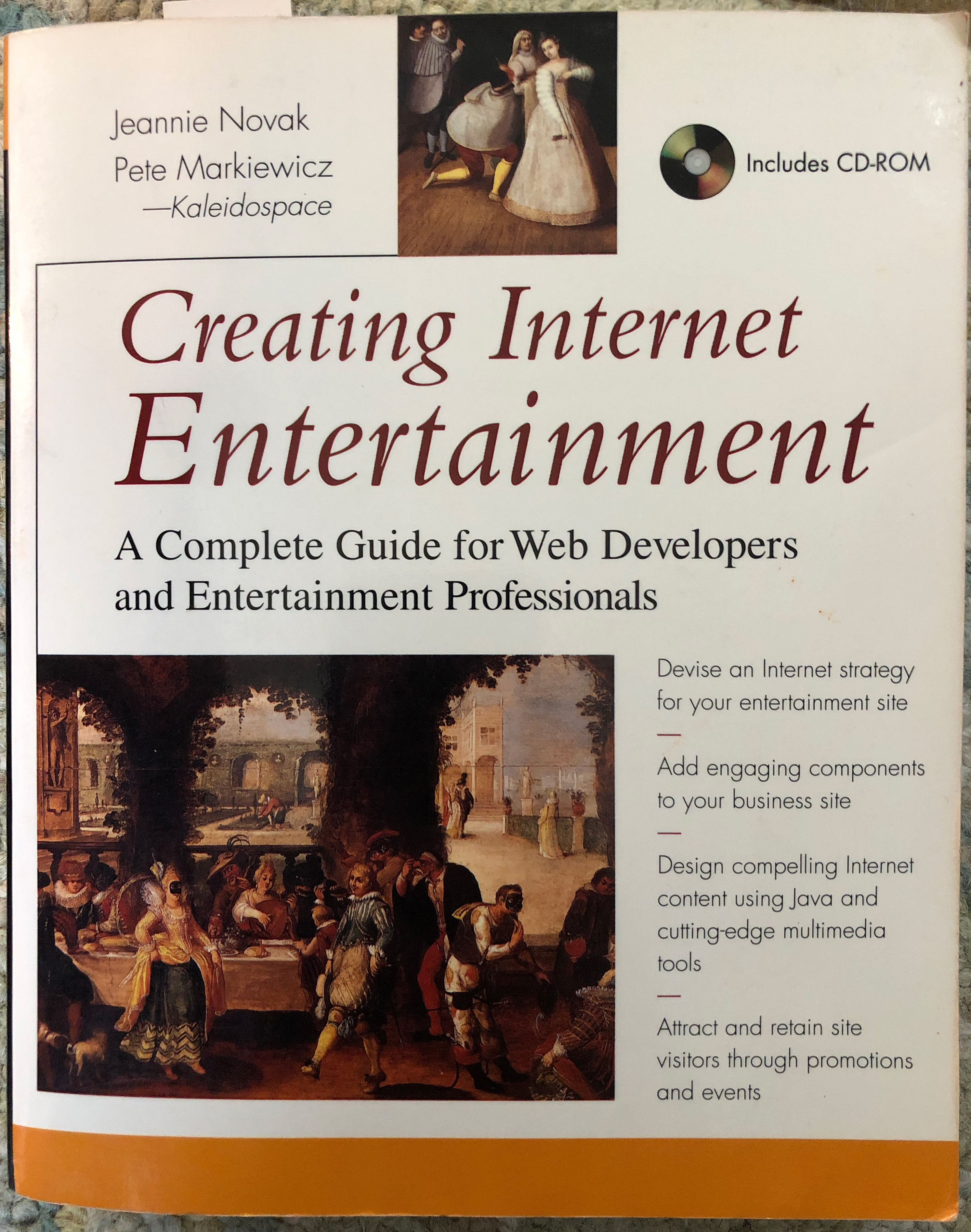
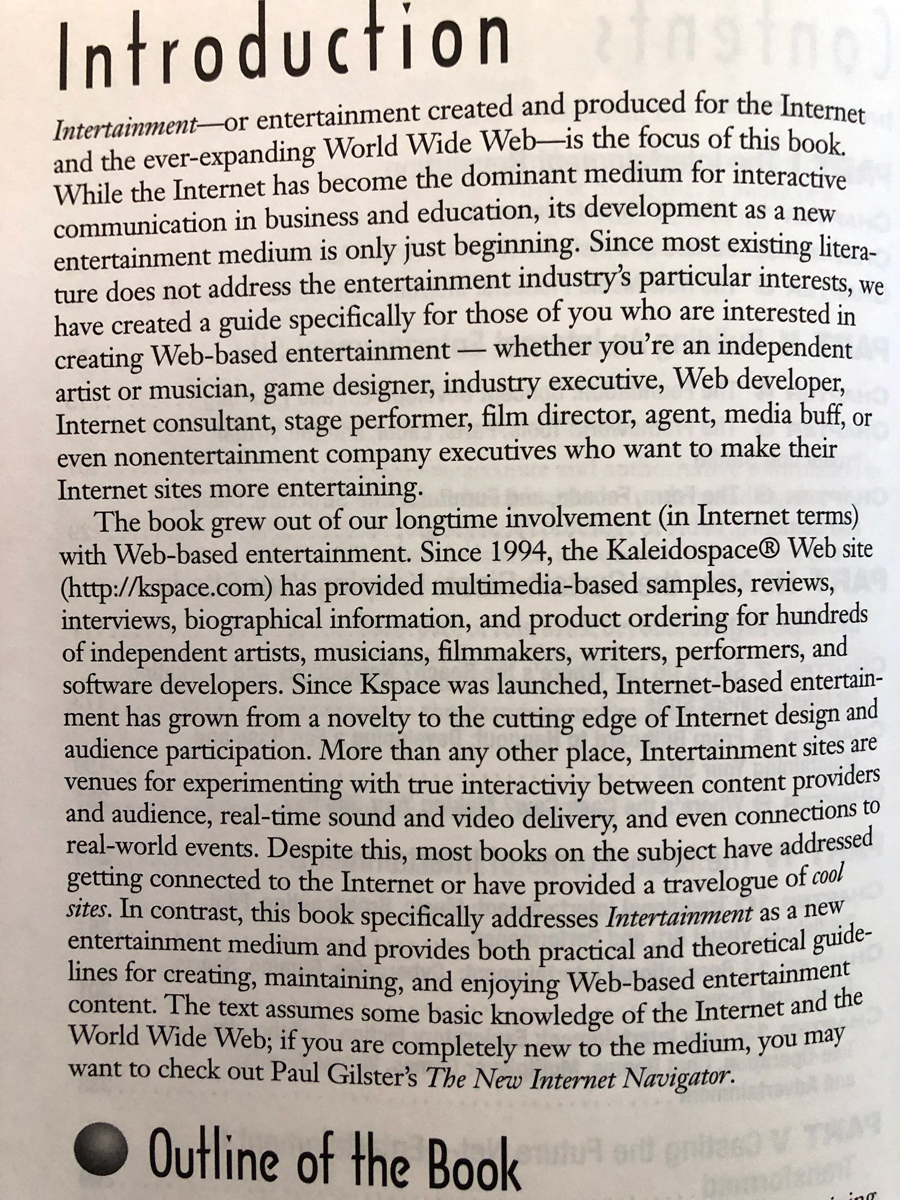
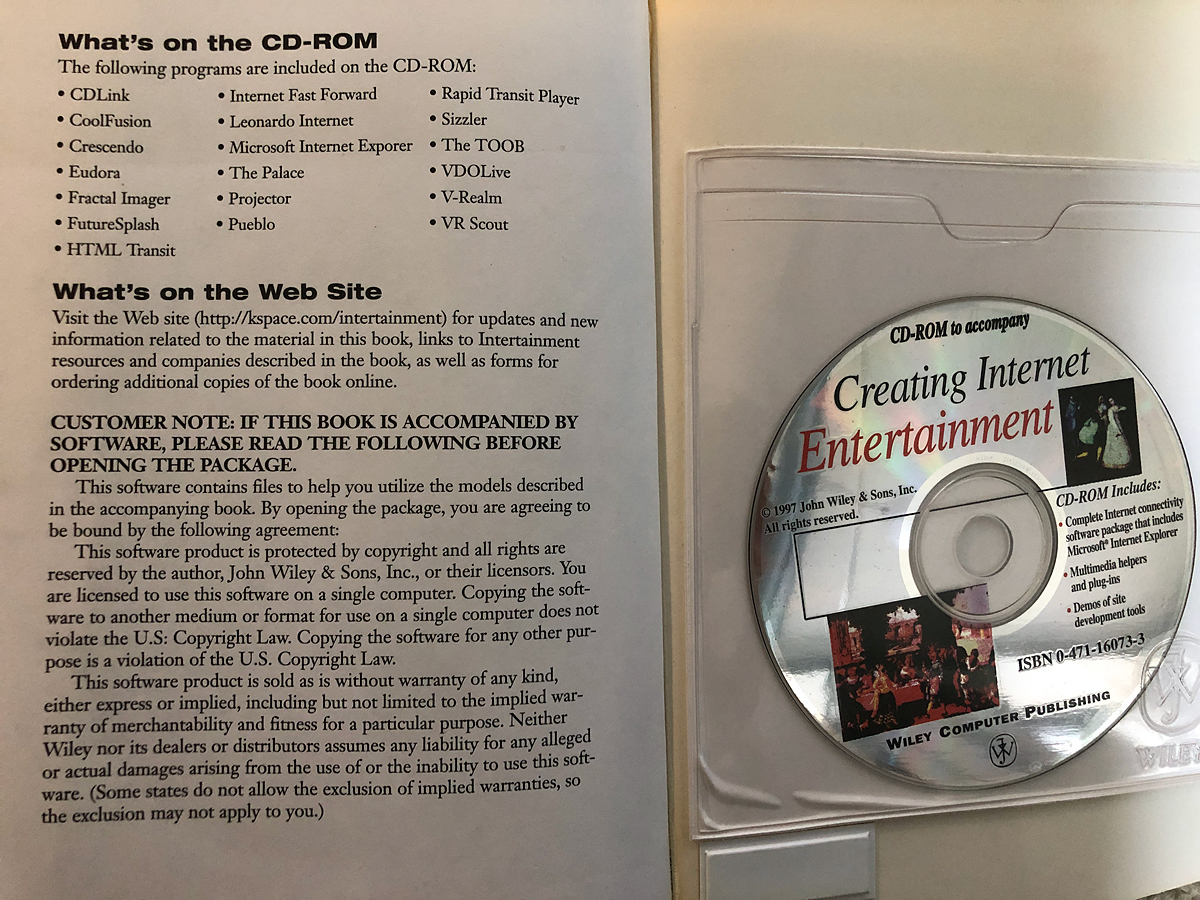
The book was written by the founders of Kaleidospace (kspace.com), which the back cover describes as "the first site to sell entertainment over the Web." Their platform had served hundreds of independent artists, musicians, and filmmakers since 1994. Matt Sesow was featured both as a filmmaker and visual artist.
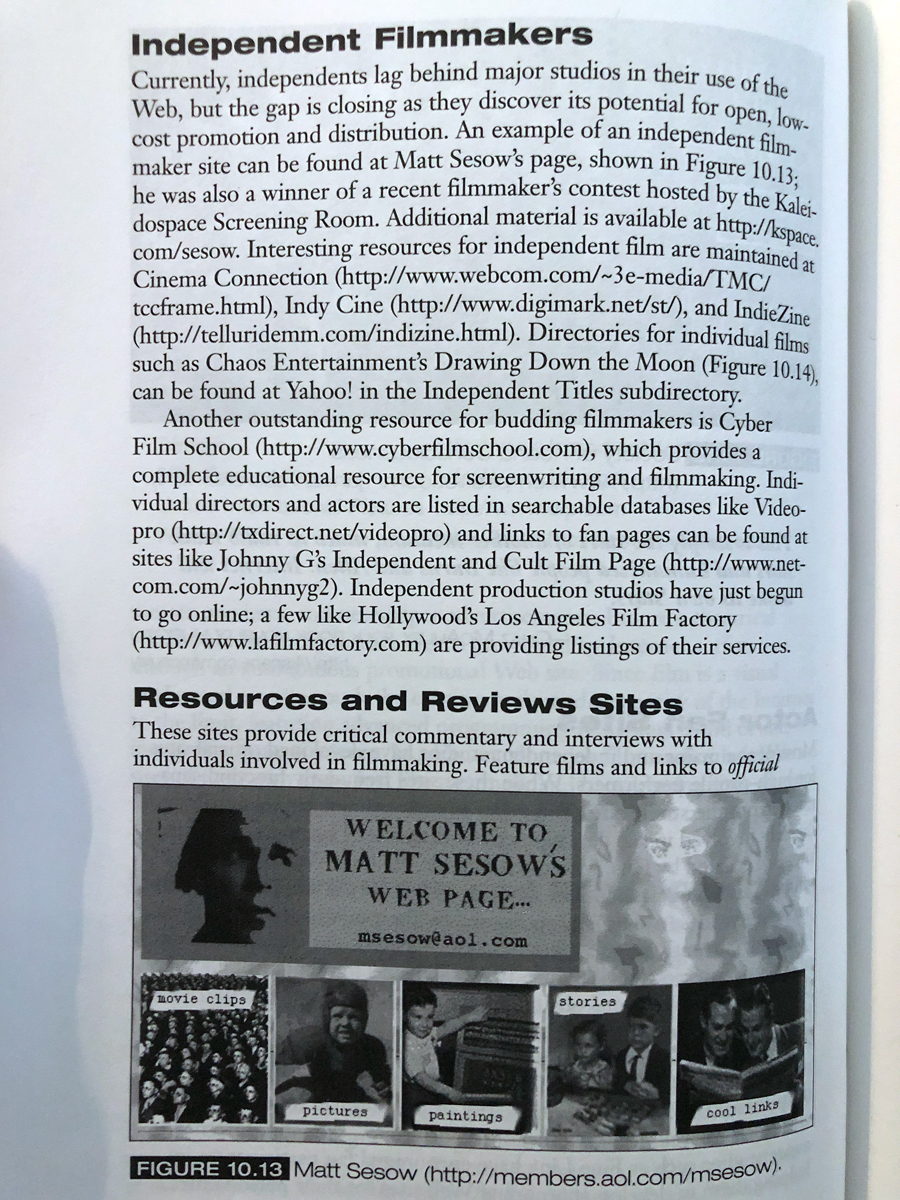
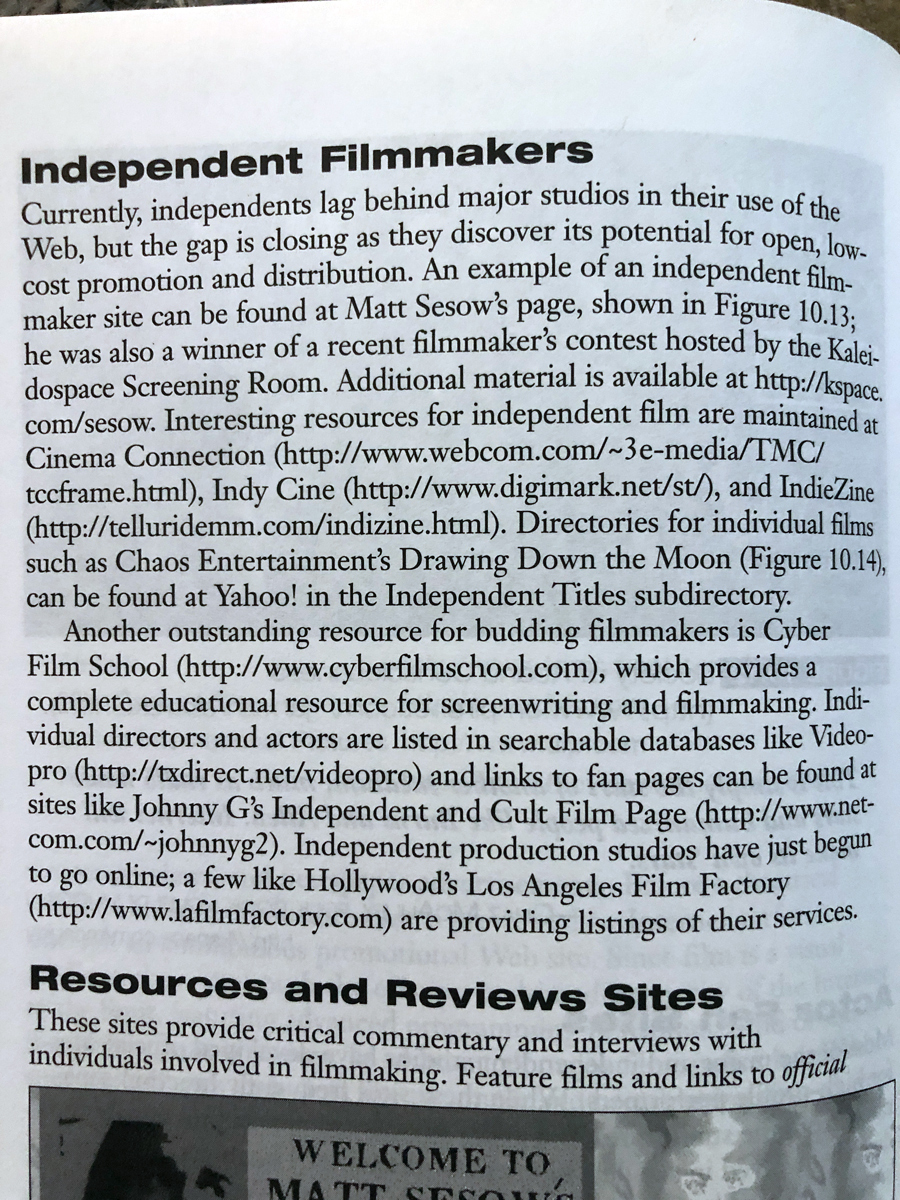
An example of an independent filmmaker site can be found at Matt Sesow's page, shown in Figure 10.13; he was also a winner of a recent filmmaker's contest hosted by the Kaleidospace Screening Room. Additional material is available at http://kspace.com/sesow.
Chapter 10, "Independent Filmmakers" — Creating Internet Entertainment, p. 251+, John Wiley & Sons, 1997Matt's original web presence at http://members.aol.com/msesow featured sections for movie clips, pictures, paintings, stories, and "cool links" — a multimedia portfolio that doubled as a storefront, years before the concept of an online art gallery existed. His email was msesow@aol.com.
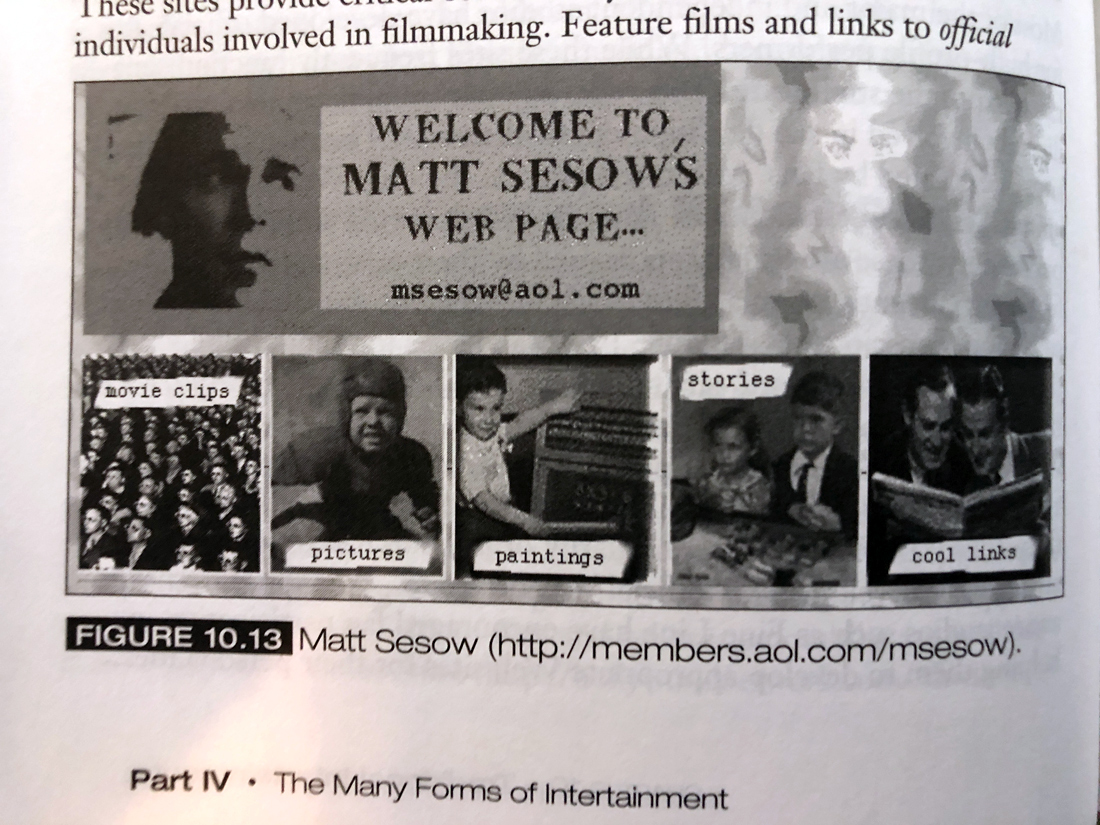
FIGURE 10.13 — Matt Sesow (http://members.aol.com/msesow) — as printed in Creating Internet Entertainment, John Wiley & Sons, 1997
Matt Sesow's journey from software engineer to one of the world's most prolific independent artists was shaped by his unique position at the intersection of technology and creativity during the birth of the commercial internet.
After earning a BS in Computer Information Systems, Matt begins working as a software tester at IBM. The World Wide Web does not yet exist — Tim Berners-Lee will propose it this same year.
While at IBM, Matt meets artists who share a house with his girlfriend. They hand him supplies and he starts painting — and can't stop. He also writes, shoots, and edits his first short film, "Seize the Day," in a single day. The Mosaic web browser launches this year, making the web visual for the first time.
Jeannie Novak and Pete Markiewicz launch Kaleidospace (kspace.com) — what will become recognized as the first website to sell entertainment on the Web. Matt begins painting in earnest, developing his distinctive raw style while still working in tech. Amazon.com won't launch until next year.
Matt sets up his web presence at members.aol.com/msesow (later sesow.com), showcasing both his films and paintings for sale. He also sells 14 paintings in one afternoon on the streets of Georgetown — his first time showing work in public. He begins an aggressive link-building campaign, emailing roughly 800 art sites to request links. This is the same year Amazon sells its first book and eBay is founded. No online art marketplace exists yet.
Matt has his first group exhibition at 'State of the Union' gallery in Washington, DC. His short film "The Box" wins the Best Experimental Film Award. He lectures at Georgetown University on painting and film. He wins a filmmaker's contest hosted by the Kaleidospace Screening Room, and additional material is hosted at kspace.com/sesow.
Matt's website is published as Figure 10.13 in Creating Internet Entertainment by Novak and Markiewicz (ISBN 0-471-16073-3), documented as a model independent filmmaker/artist site in the chapter on "Traditional Intertainment." The book is cataloged in the Library of Congress. Matt is simultaneously working as a software engineer at Netscape in Silicon Valley, literally building the browser people use to view his art site.
Matt leaves Netscape and Silicon Valley to volunteer with the Peace Corps in the Solomon Islands, painting with acrylics and oils during his service. He also travels and paints in China, Hong Kong, Malaysia, and Singapore.
After being laid off from a dot-com, Matt walks into CD Warehouse and says "I want to hang my paintings here." He never returns to the tech industry. His first solo show at the Corcoran Museum ("White Walls") features 45 works. The model he pioneered — selling directly to collectors online from his own website — becomes his permanent business model.
Three decades after launching his first website, Matt has sold over 17,000 original paintings to collectors worldwide, maintained over 20 works in the American Visionary Art Museum's permanent collection, been featured on United Nations postage stamps, and continued painting daily from his studio at 916 G Street NW in the heart of Washington, DC — all without gallery representation, using the direct-to-collector model he pioneered in 1995.
When Matt Sesow first put his paintings online for sale, the internet as we know it barely existed.
Jeff Bezos ships his first book from a garage in Bellevue, Washington. Online commerce is so new that most people have never purchased anything on the internet.
Pierre Omidyar launches AuctionWeb (later eBay). The first item sold is a broken laser pointer for $14.83. Person-to-person online commerce is a novelty.
Fewer than 1 in 7 American adults have internet access. Most who do connect via dial-up modems at 28.8 kbps. Loading a single image takes minutes.
Matt puts his paintings on the web and starts selling directly to collectors. There is no Etsy (2005), no Artsy (2012), no Saatchi Art (2006), no Shopify (2006). He builds everything himself.
As a software engineer at IBM (and later Netscape and AOL), Matt understood the technology from the inside. He didn't need a web developer — he was one.
The global online art market now exceeds $12 billion annually. Thousands of platforms exist for artists to sell online. In 1995, Matt Sesow was essentially alone.
Many artists today sell their work online. But in 1995, when Matt Sesow launched his website and began selling paintings directly to collectors through the internet, there was no precedent for what he was doing. There were no online art marketplaces, no e-commerce platforms for artists, no social media, no Instagram. There was just a man who happened to be both a software engineer and a painter, working at the very companies building the infrastructure of the internet.
His pioneering web presence was not a casual experiment — it was documented in a professionally published, Library of Congress-cataloged book by John Wiley & Sons in 1997, written by the founders of the first website to sell entertainment on the Web. This is verifiable, primary-source evidence of internet history.
Thirty years later, the model Matt pioneered — an independent artist selling directly to collectors through a personal website, without gallery representation — is now the dominant paradigm of the online art world. He didn't just adopt the internet early. He helped prove that it could work.