Press Release for the Museum show hosting four of my paintings at Музей МИСП in St. Petersburg Russia:
The Museum of St. Petersburg Art (20th–21st centuries), a branch of Central Exhibition Hall Manege, is pleased to announce the opening of an International Art Project Radical Fluidity. Grotesque in Art, that will run from December 7, 2018 till February 17, 2019. The exhibition is the first attempt at artistic research into the topic of grotesque within the museum space.
Grotesque in art will be shown through the prism of more than 100 artists from Russia, France, Italy, Germany, Belgium, United Kingdom, USA, China and other countries. Is grotesque an artistic paradox, phantasmagoria of imagery or an idiosyncratic, exaggerated perception?
…
Watch · 6 videos

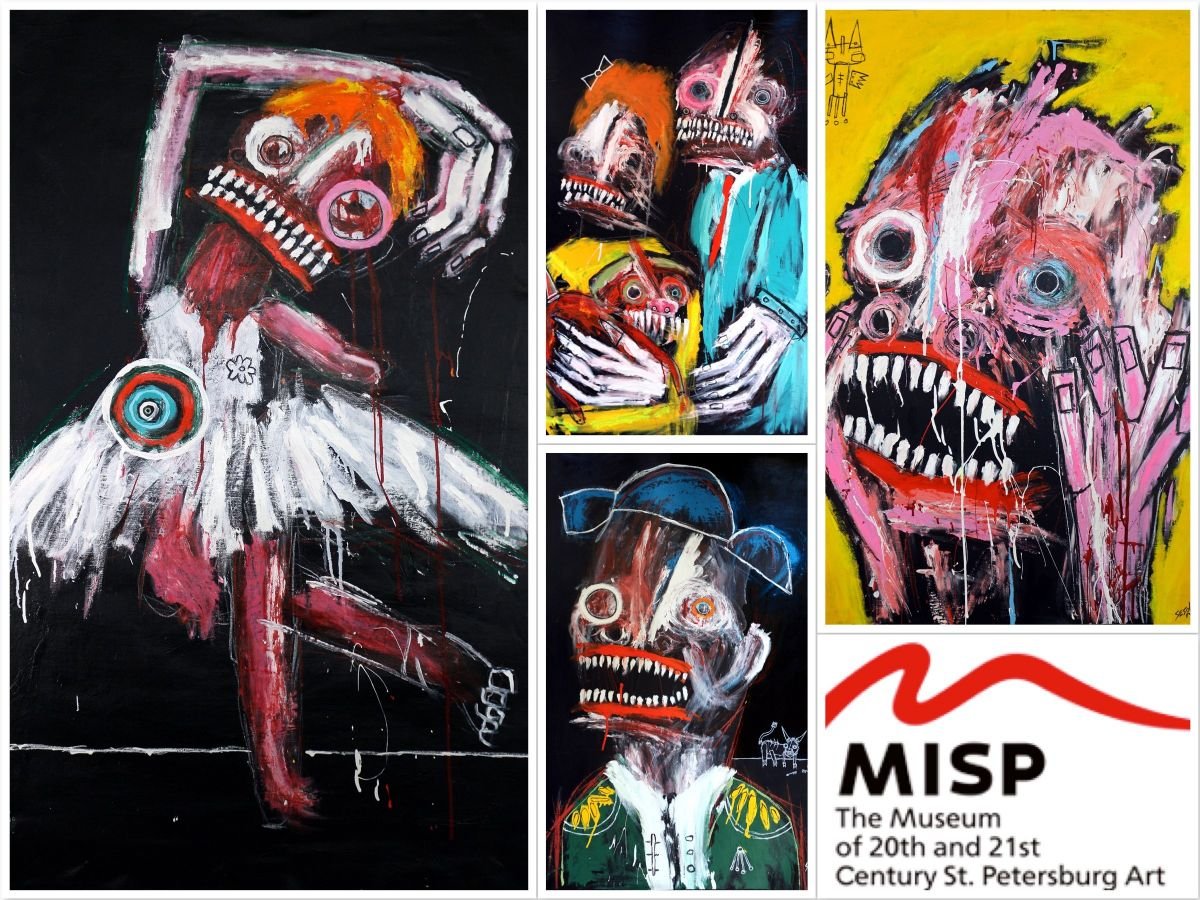
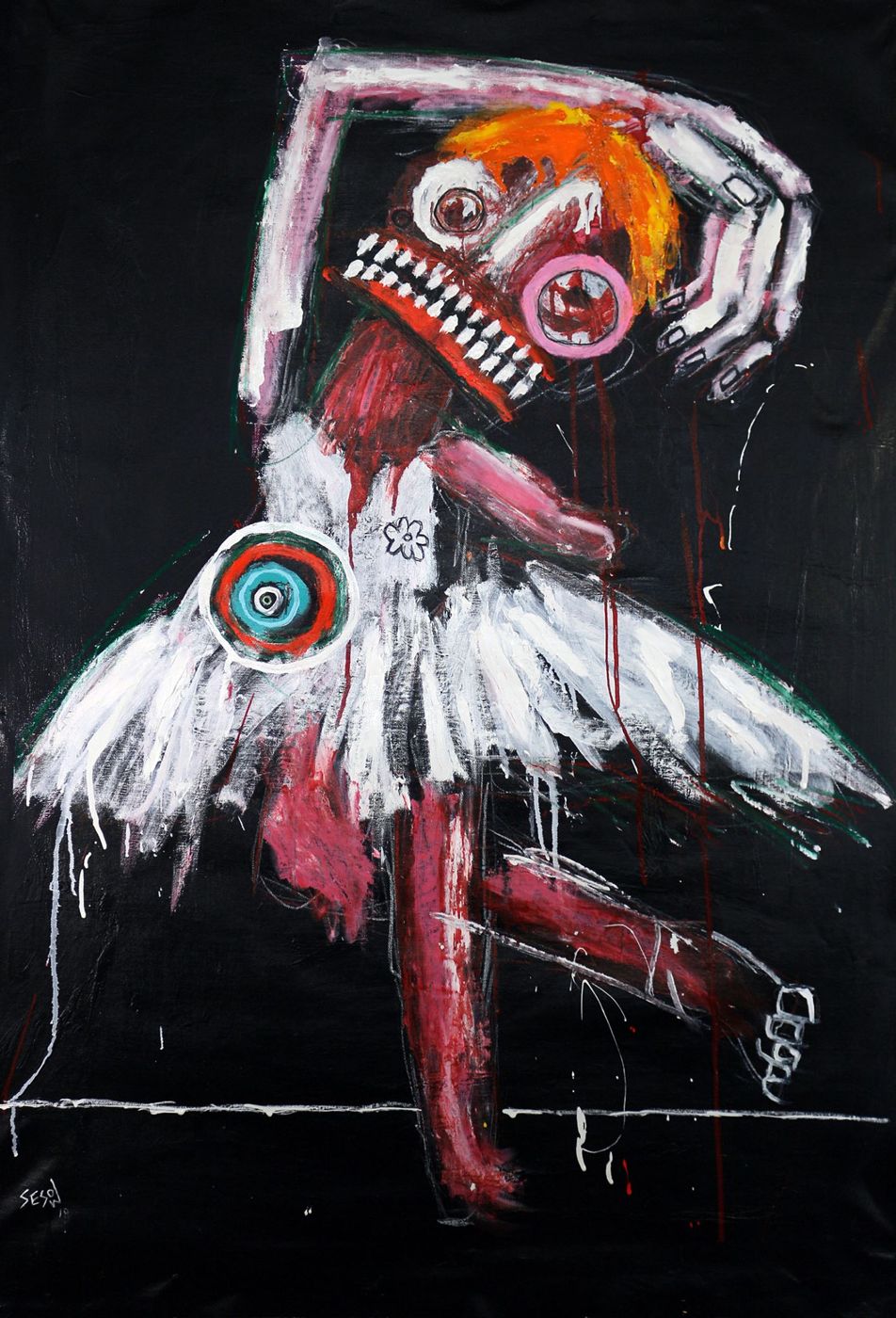
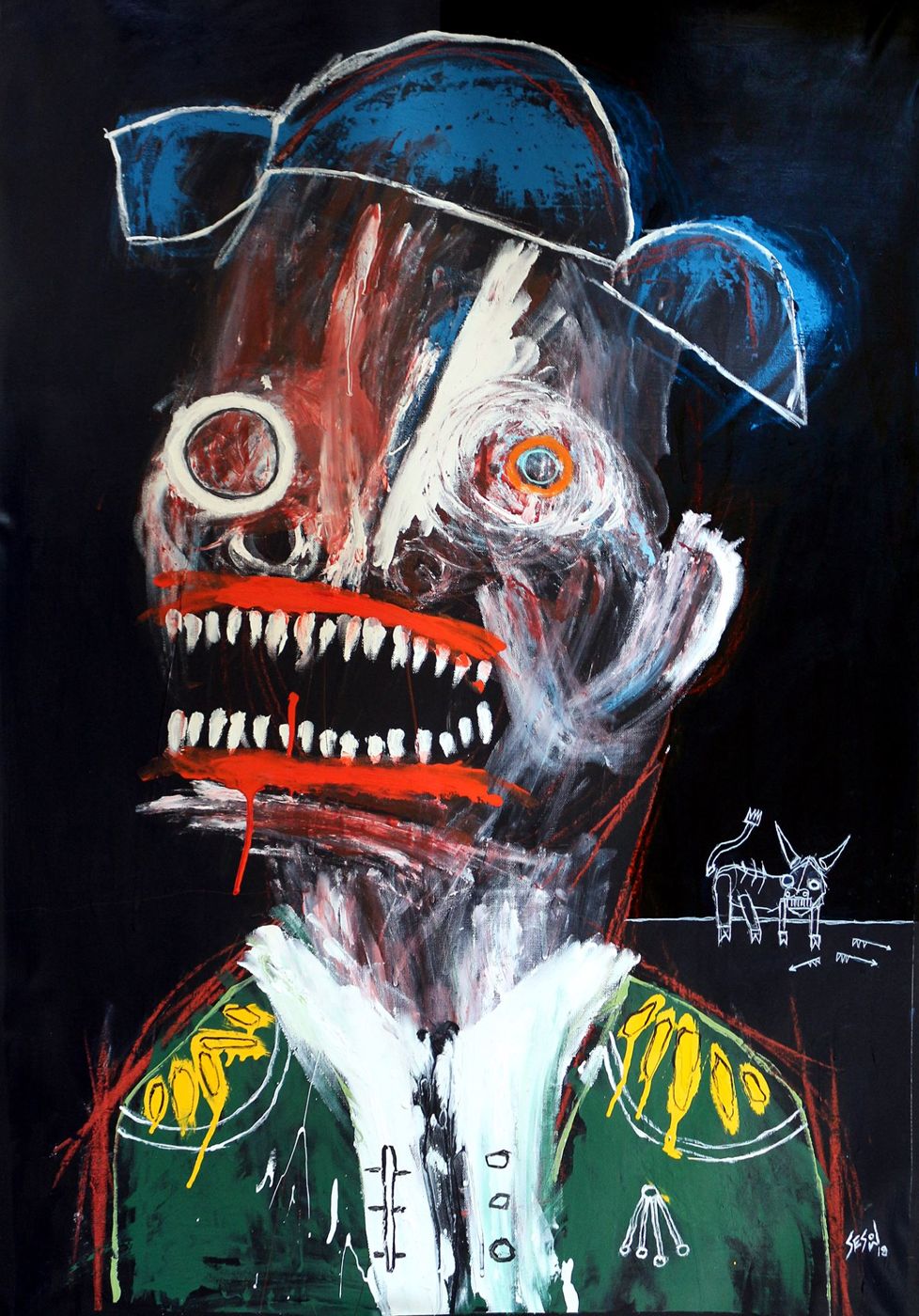
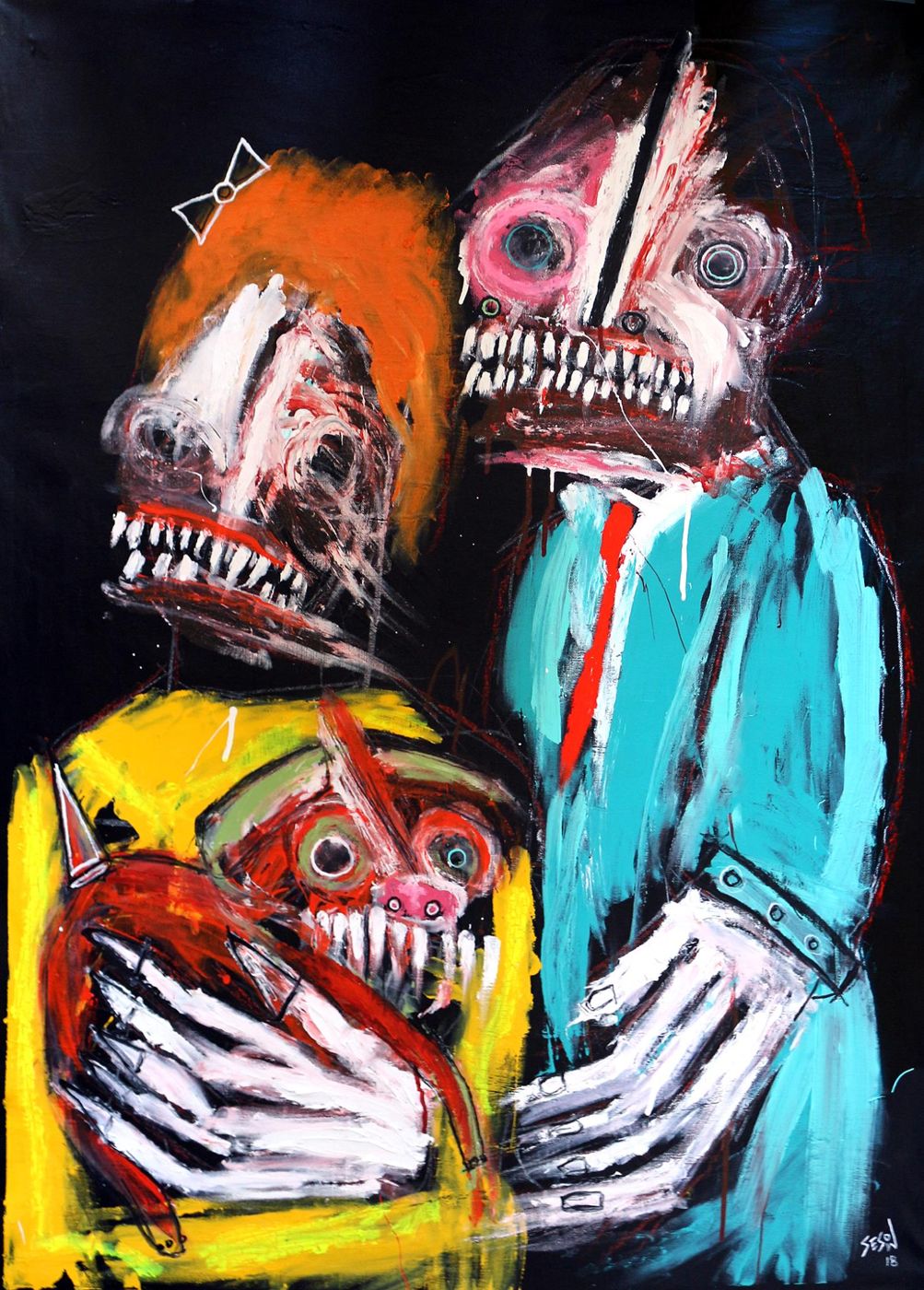

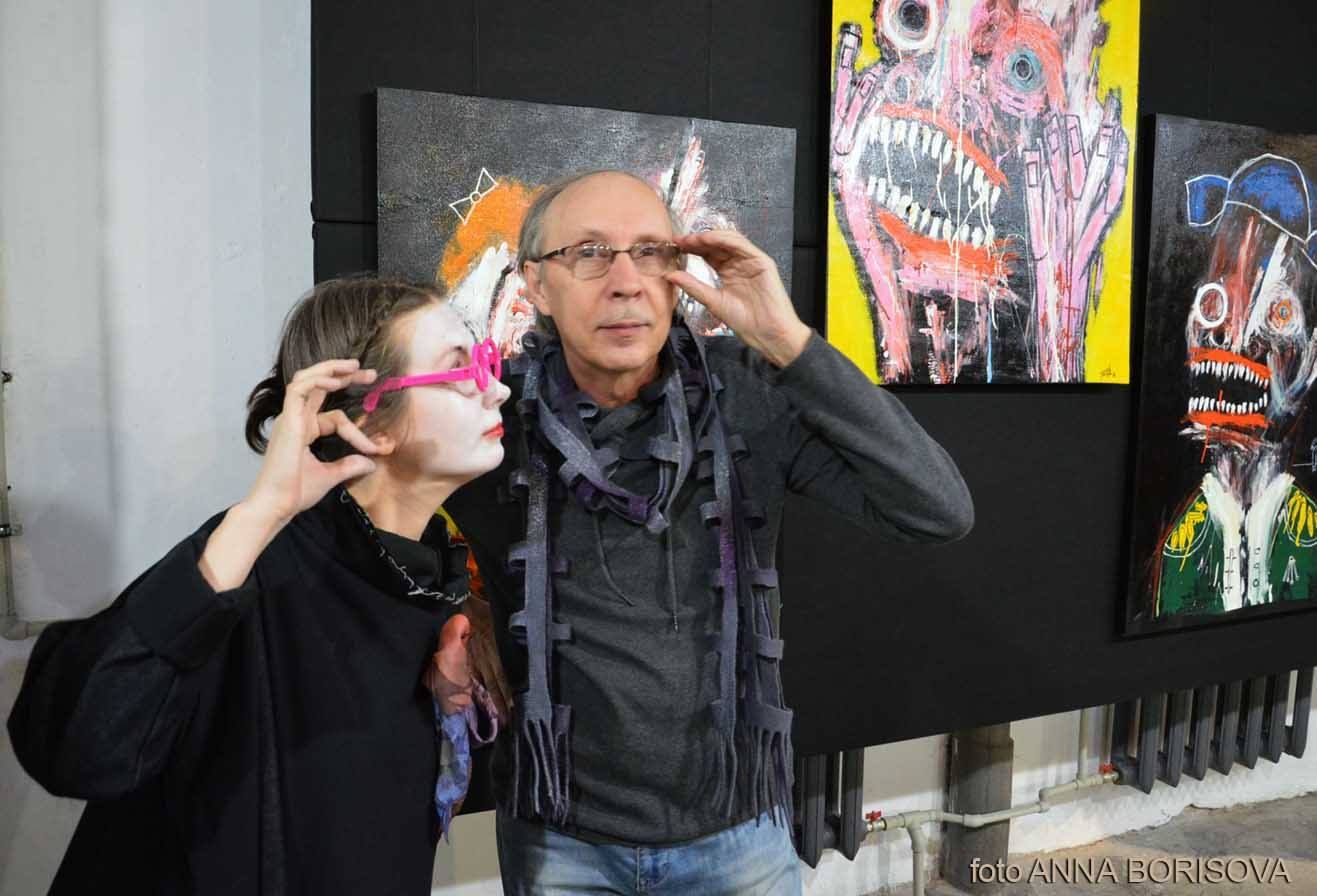
Exhibition Group Exhibition · 2018
“Radical Fluidity: Grotesque in Art,” MISP Museum, St. Petersburg
Exhibition2018Group showRussia
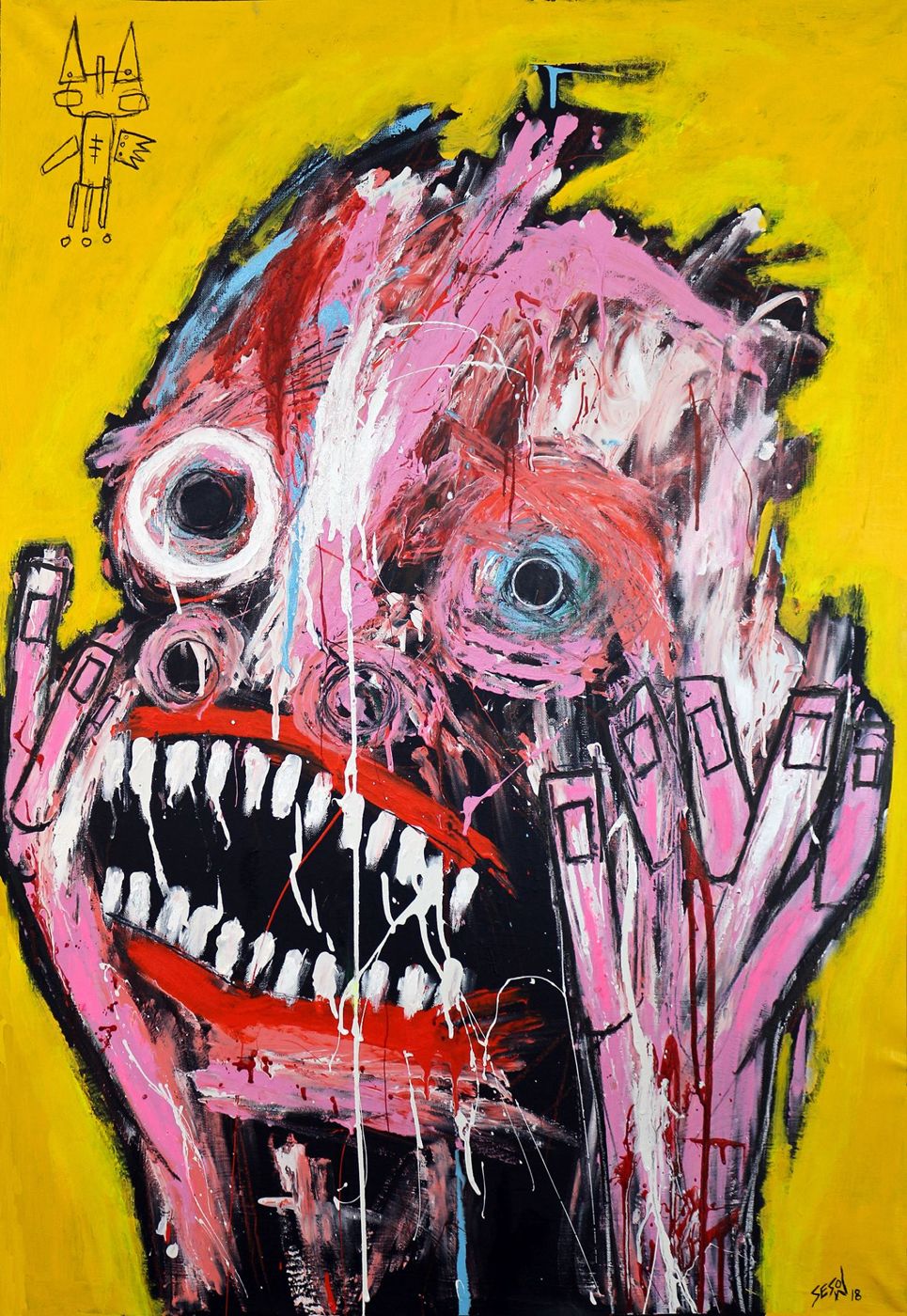
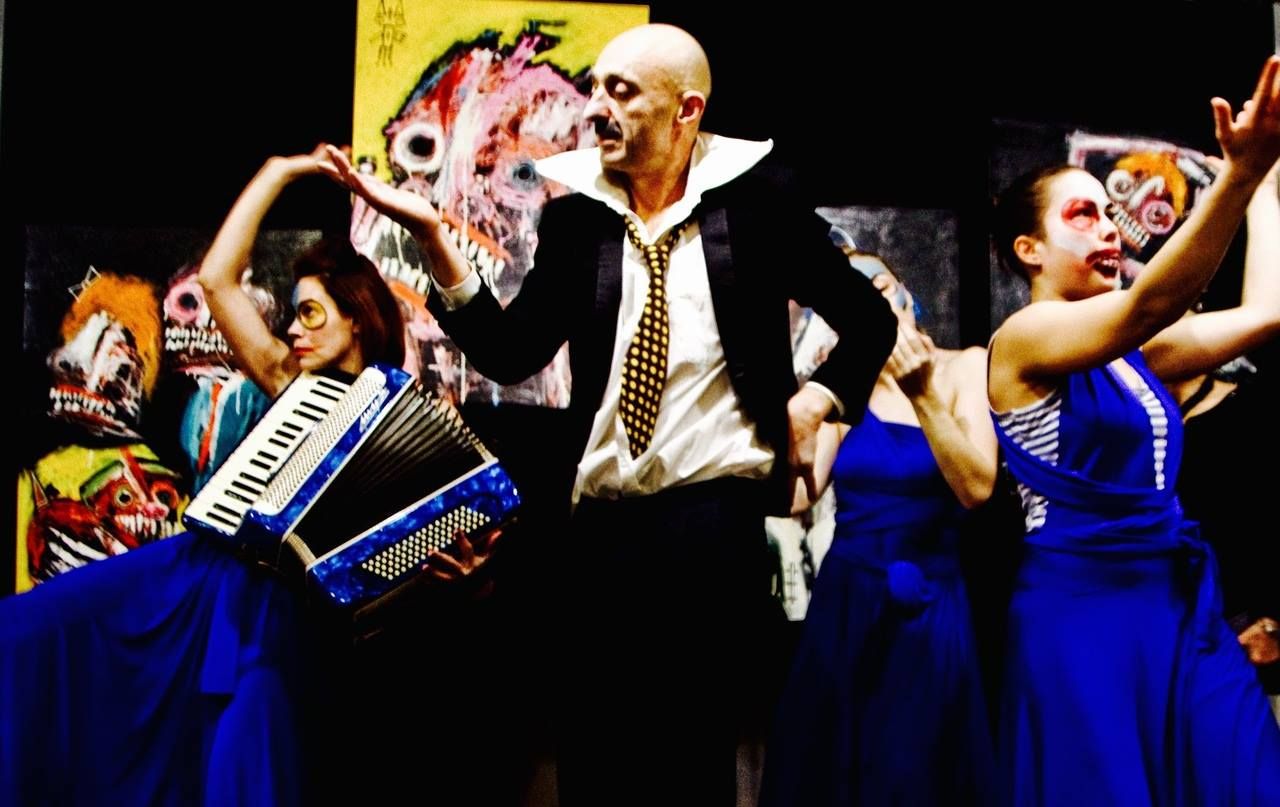
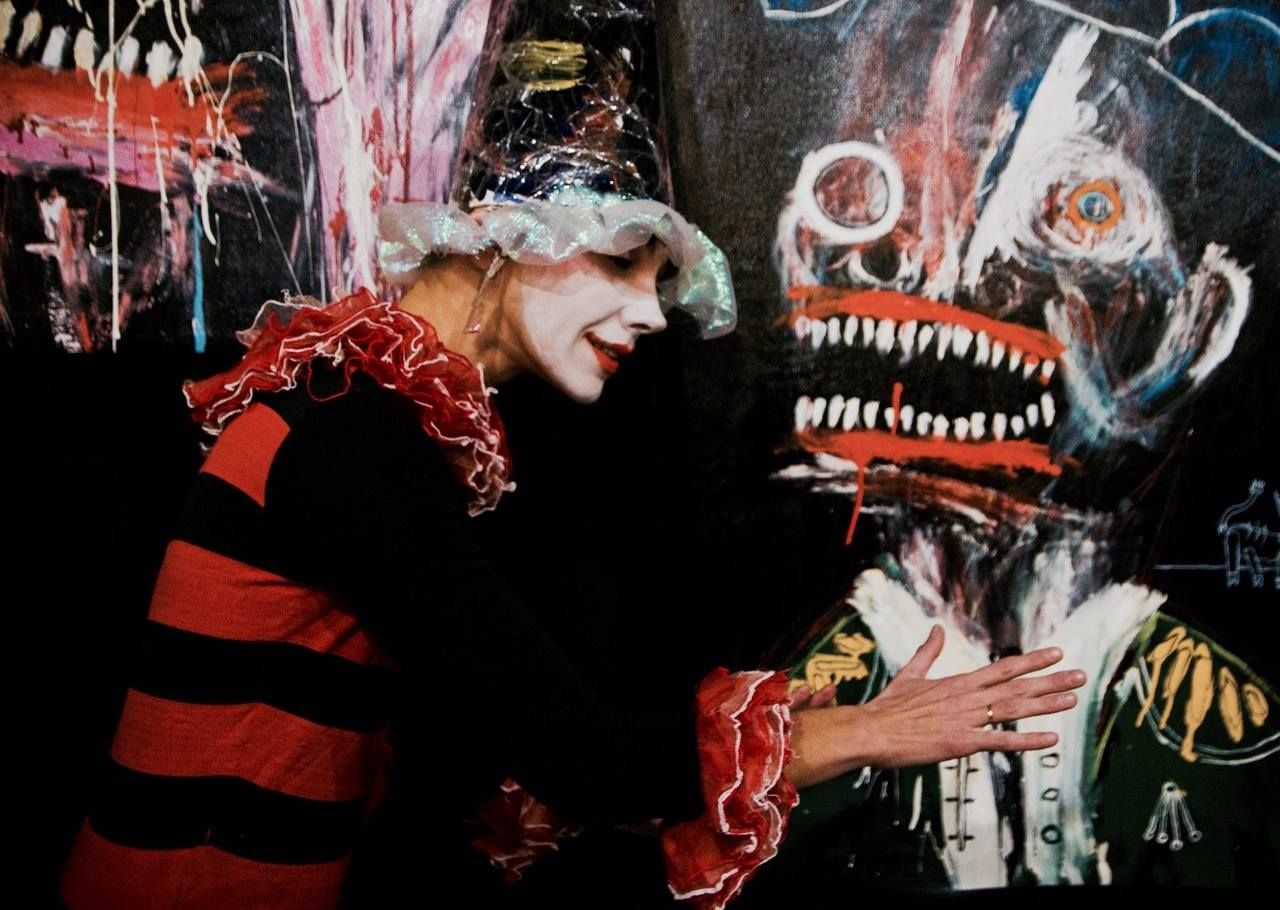
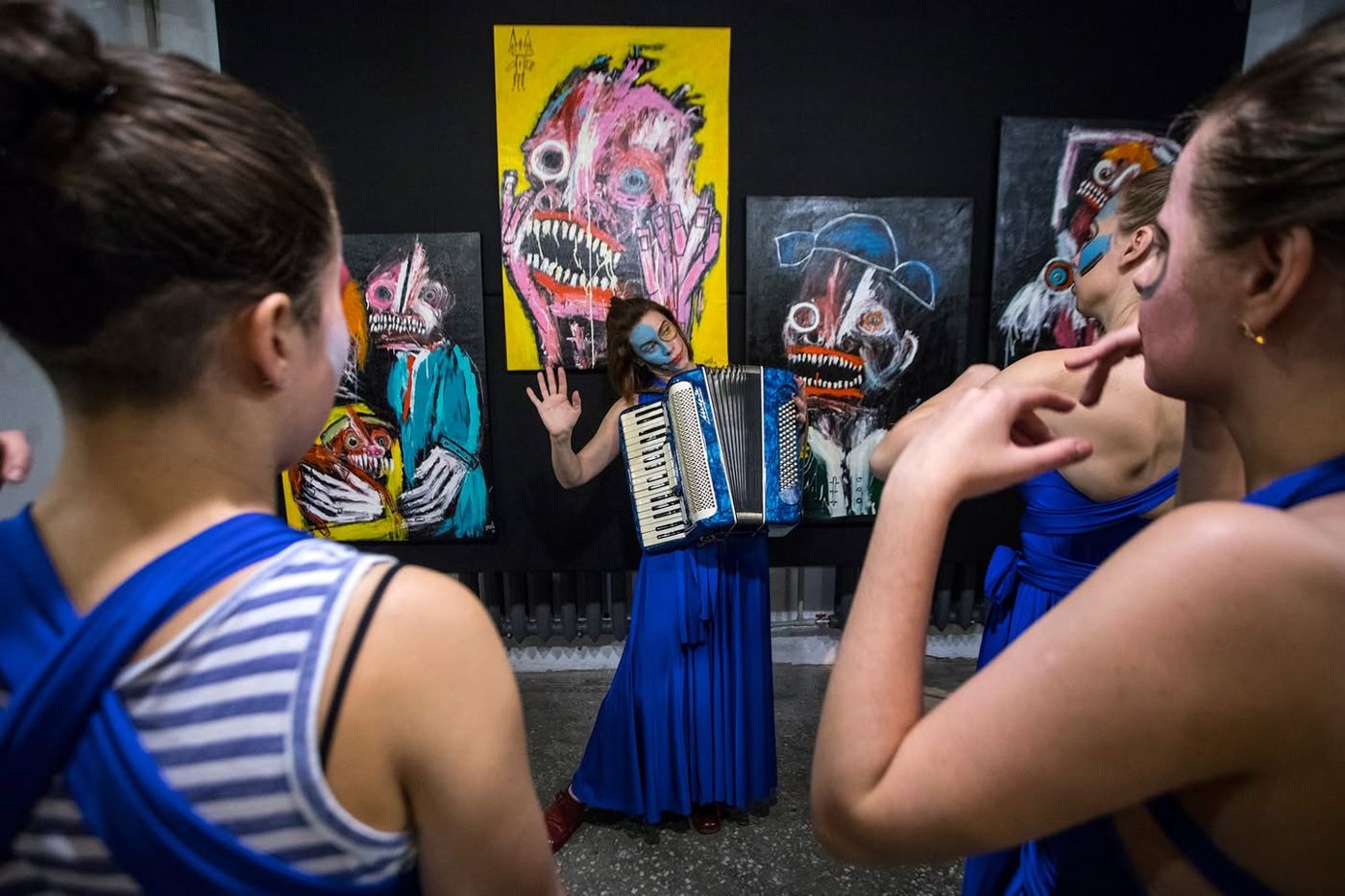
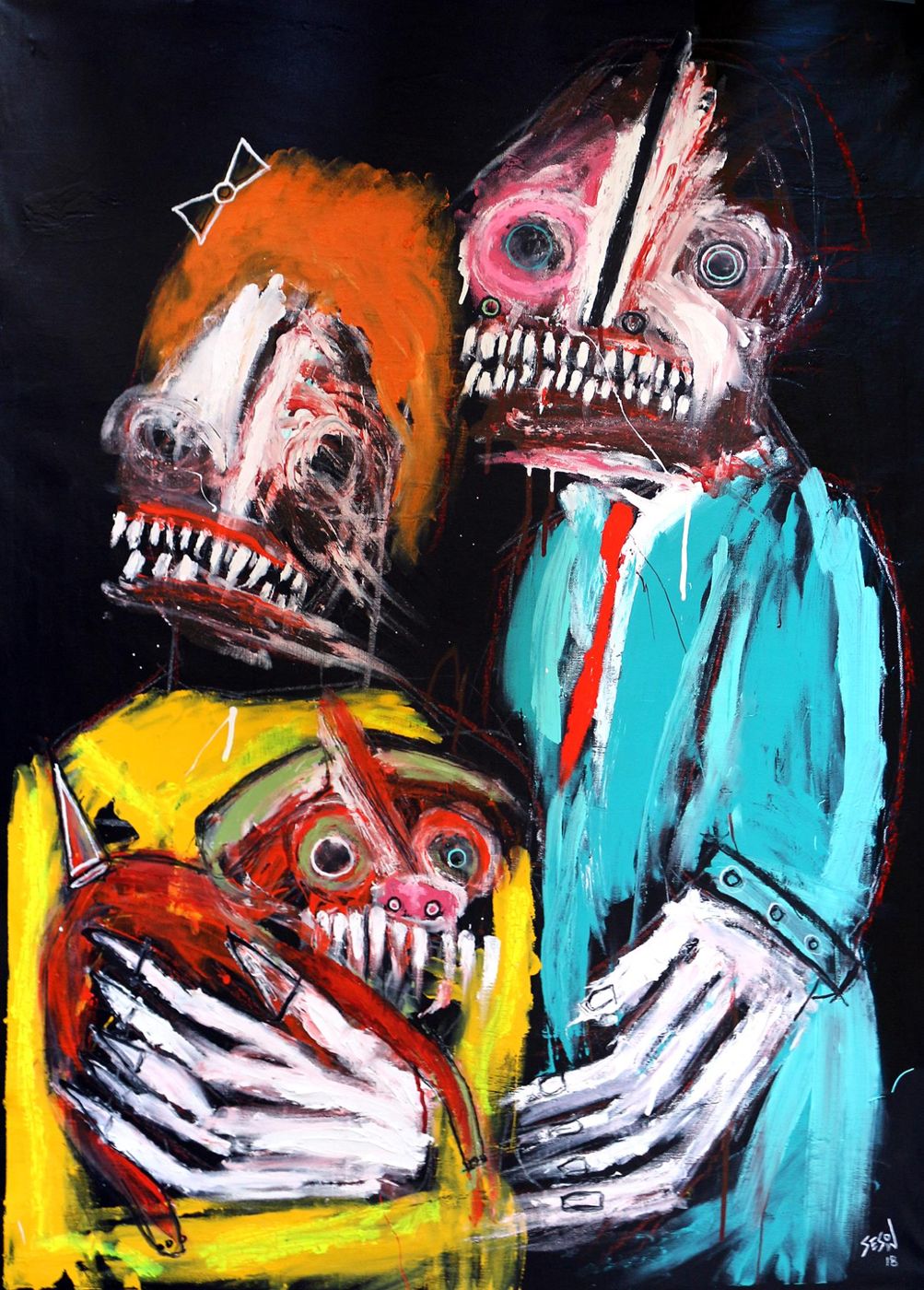
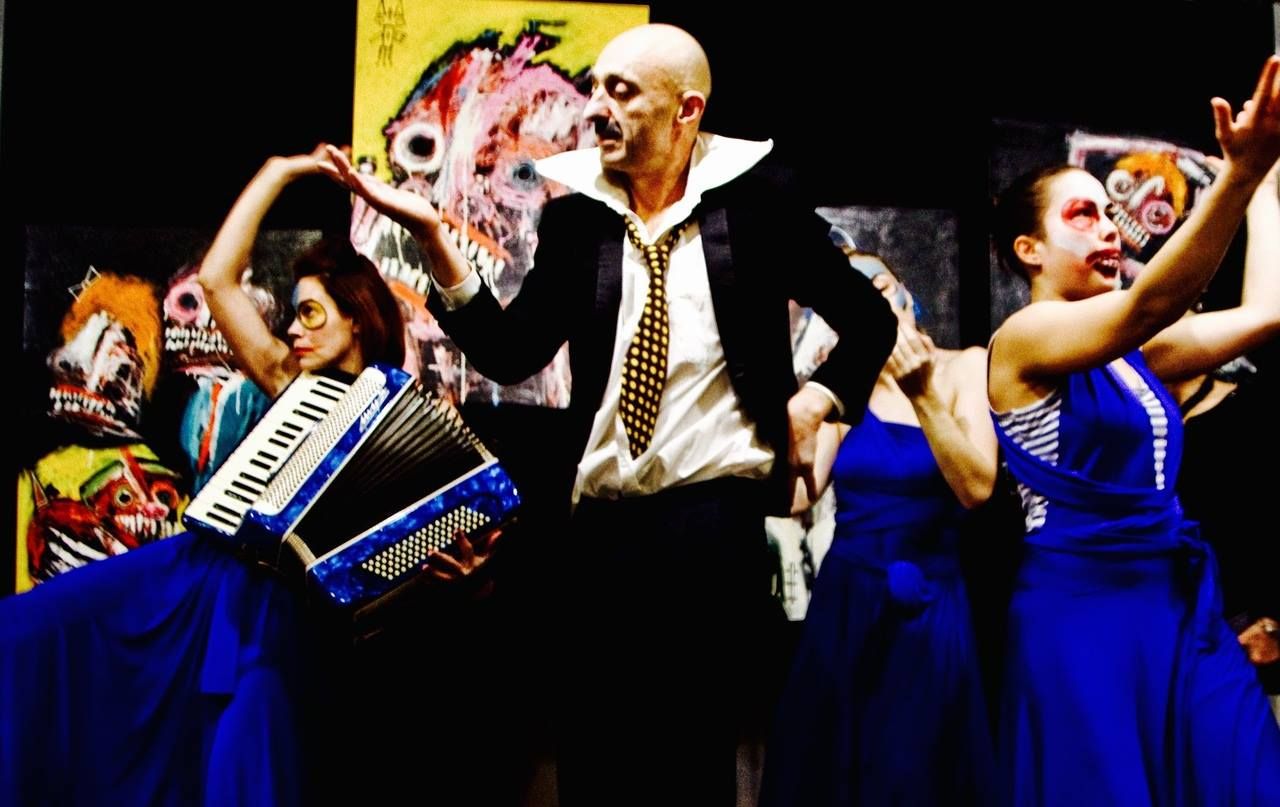
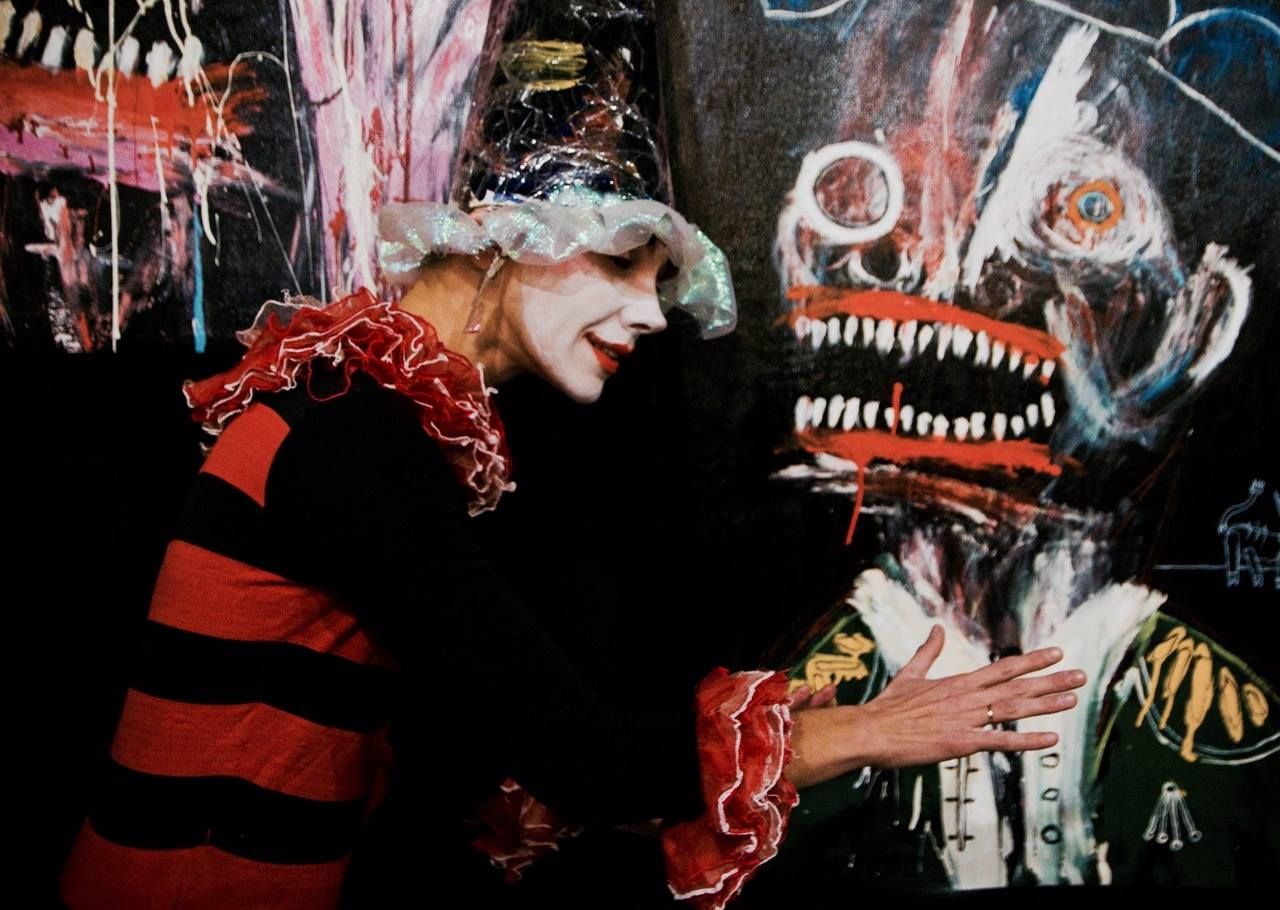
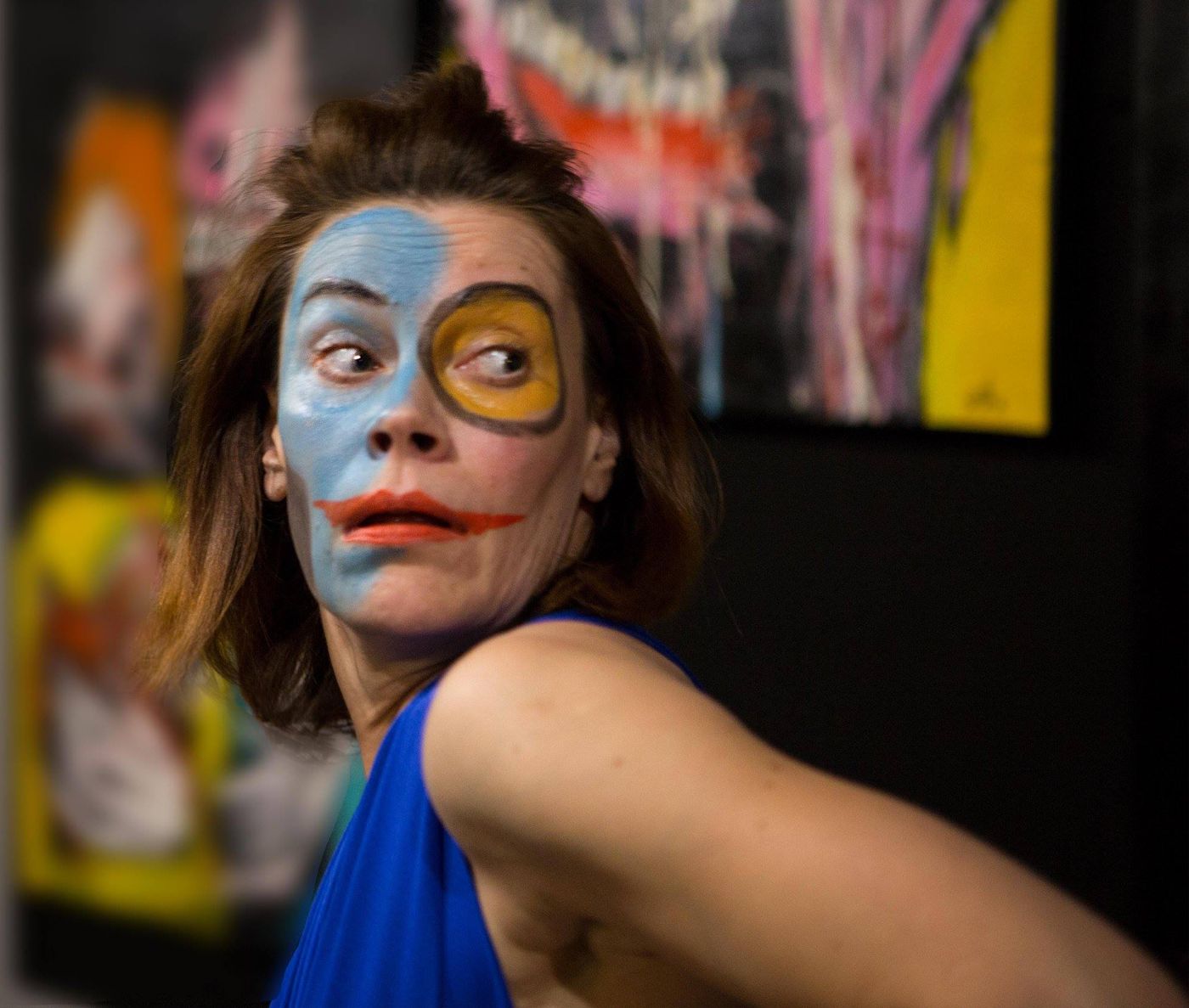
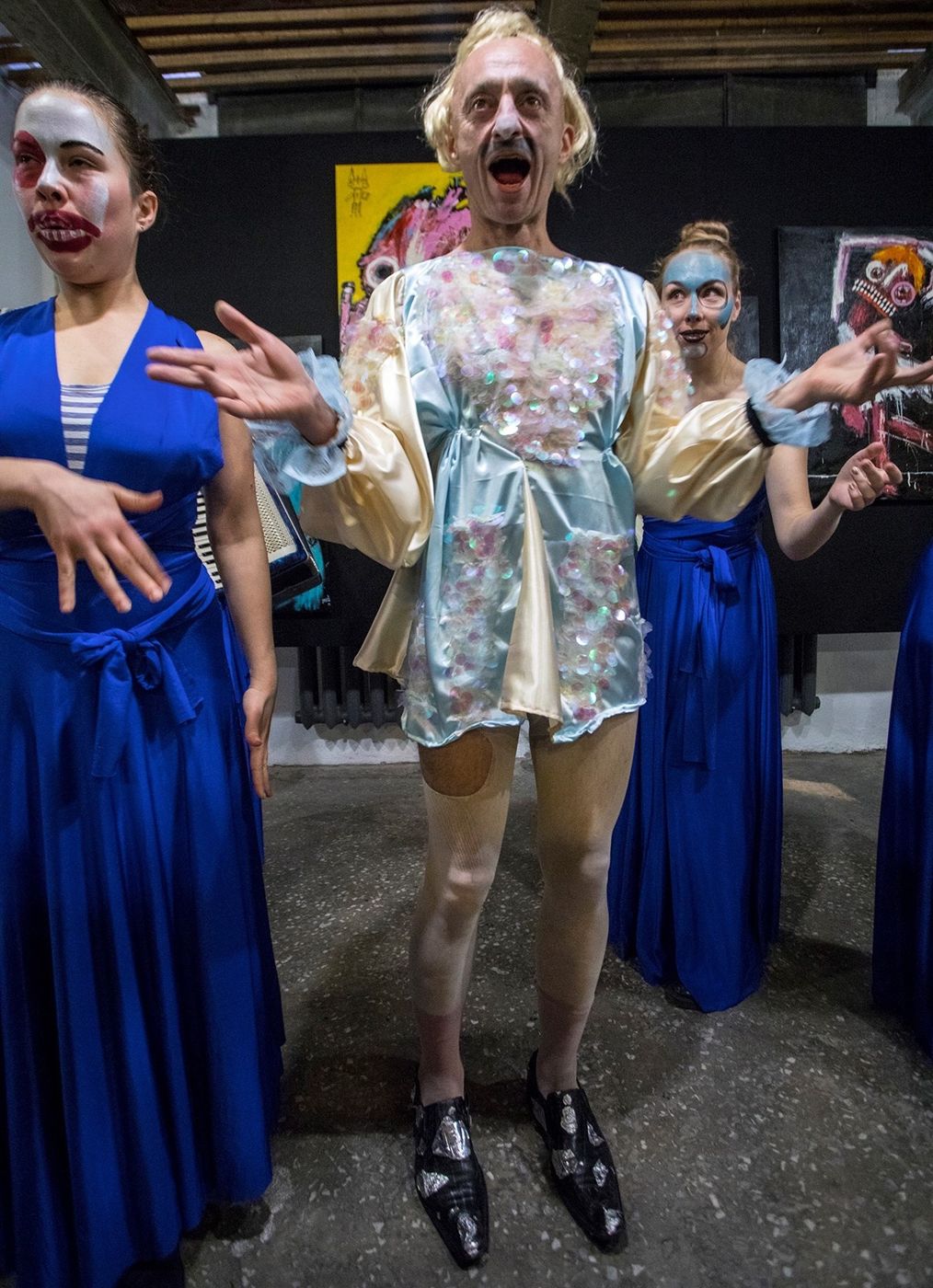
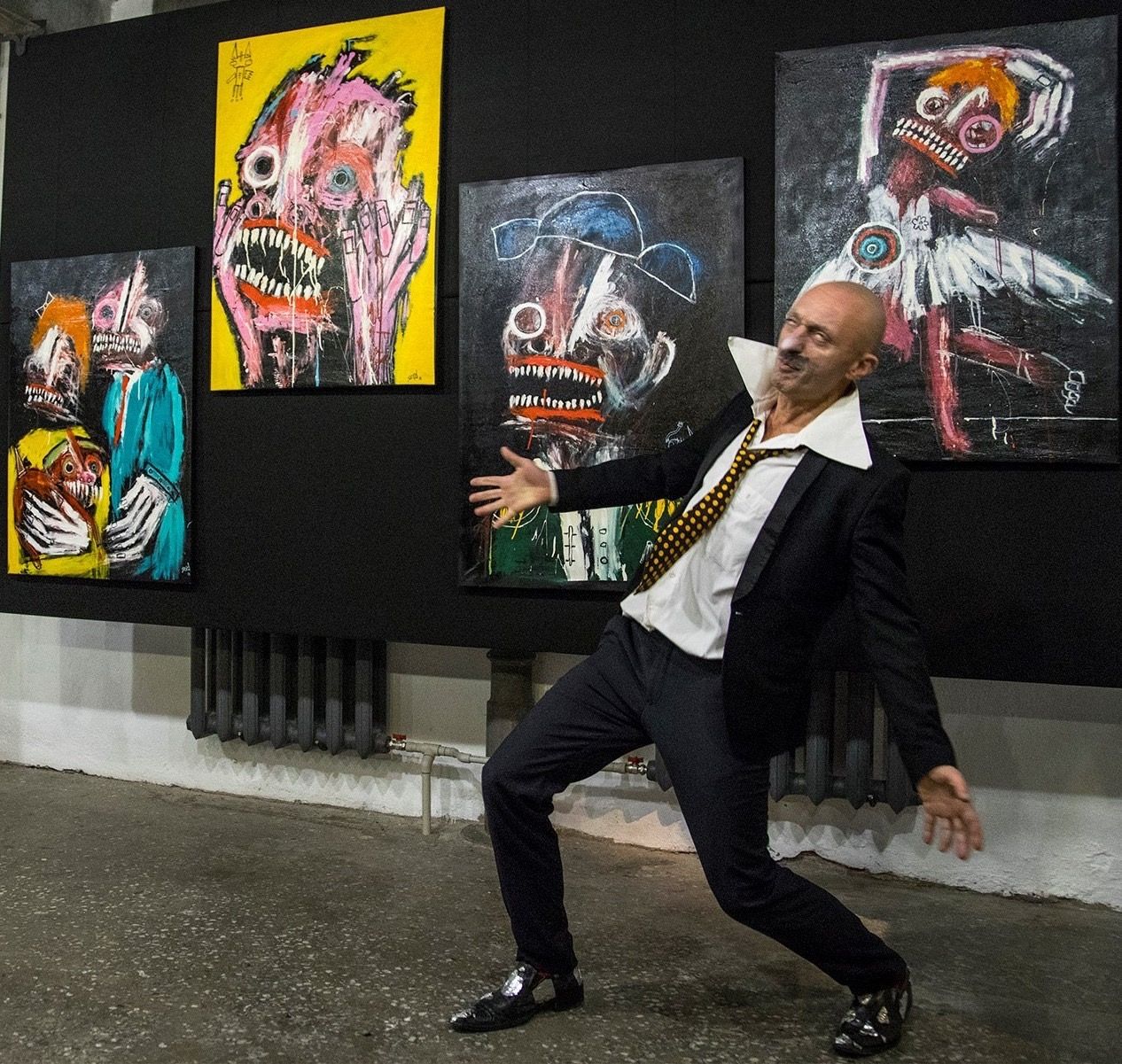
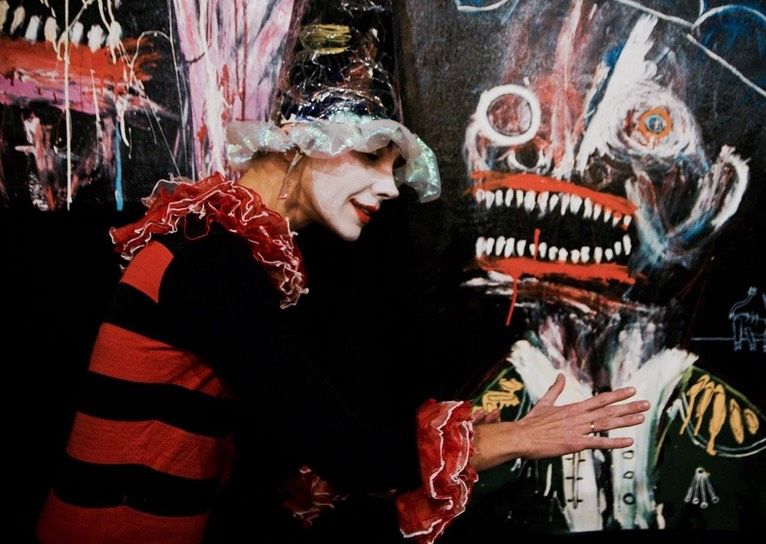
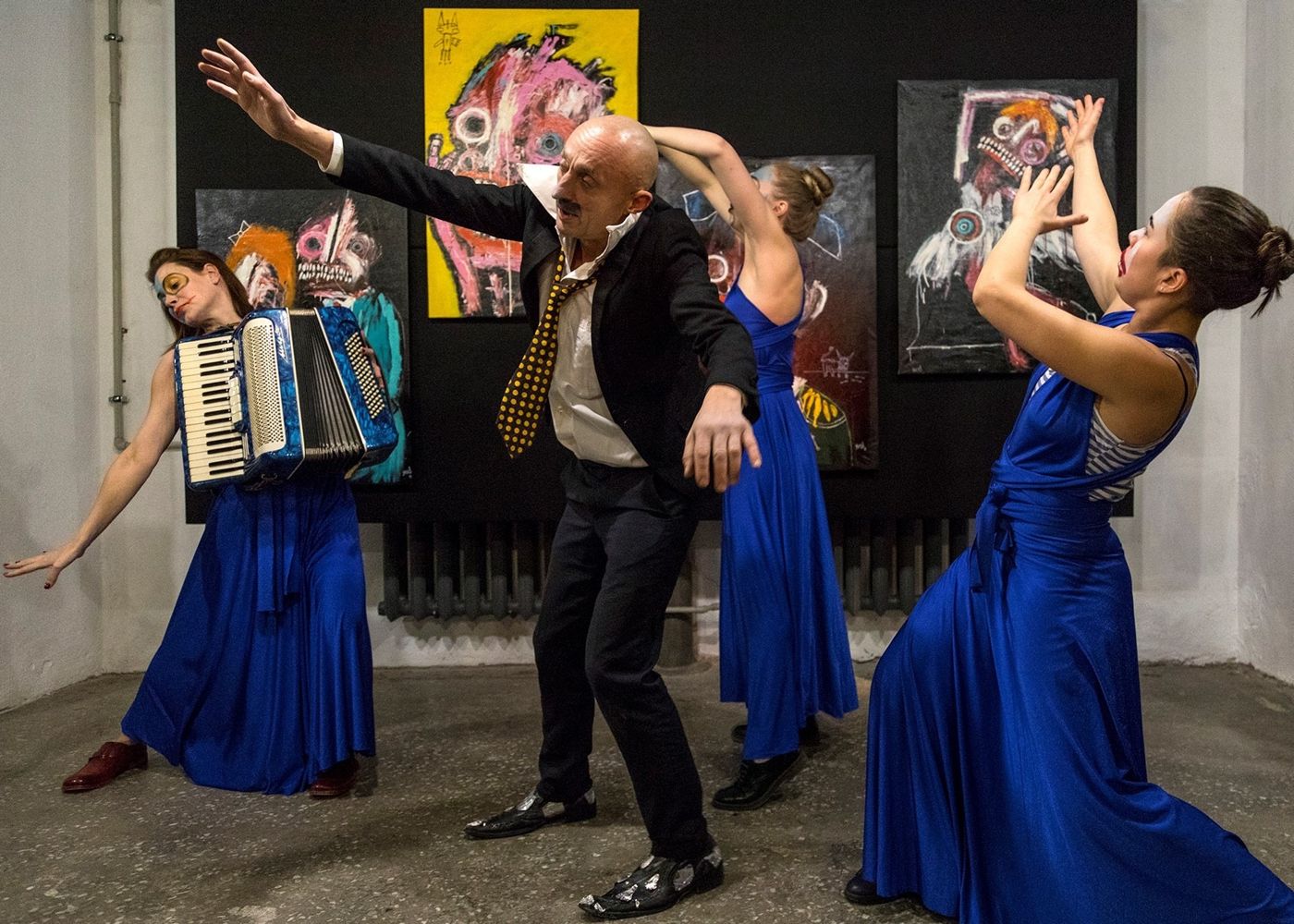
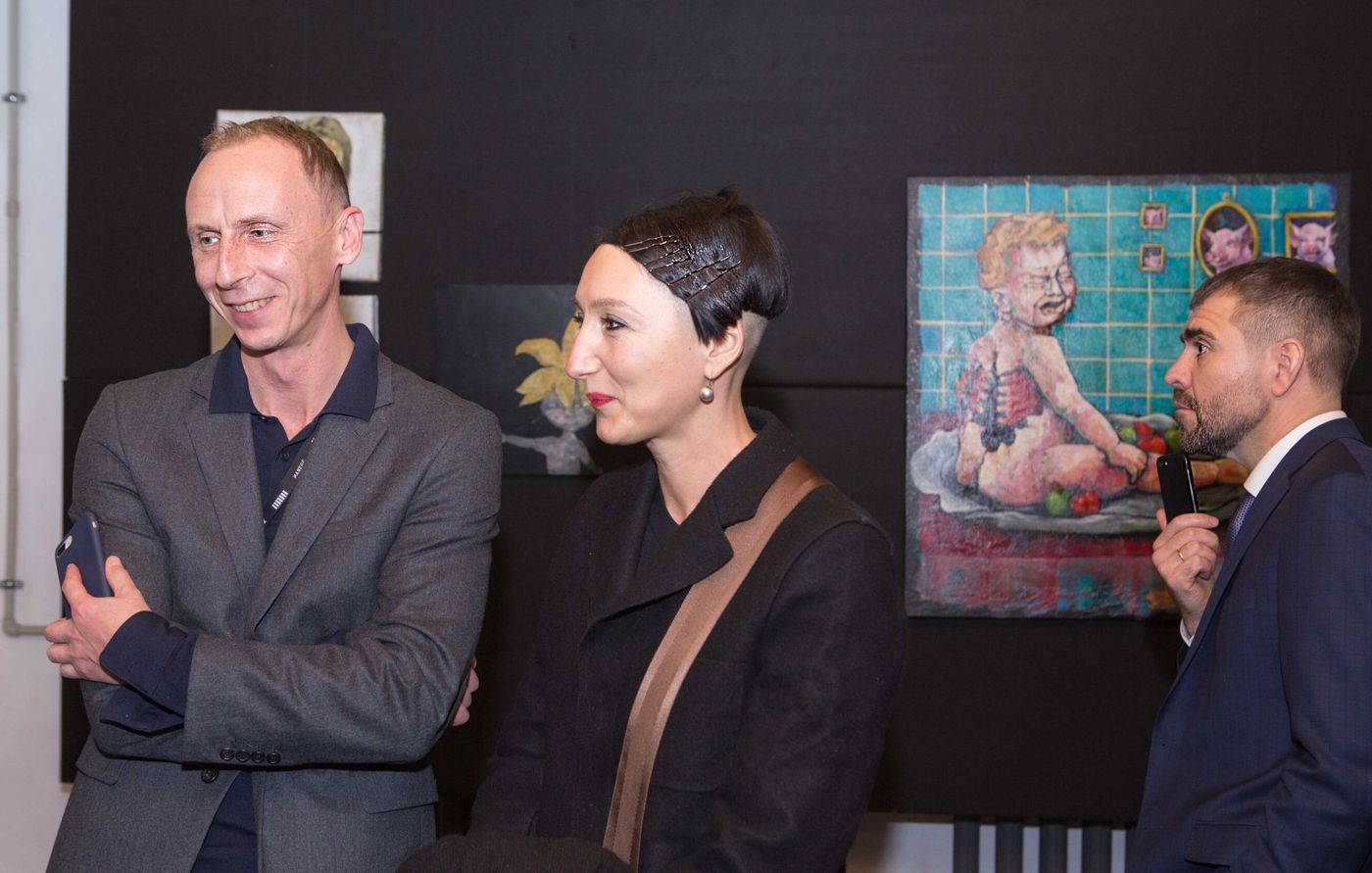
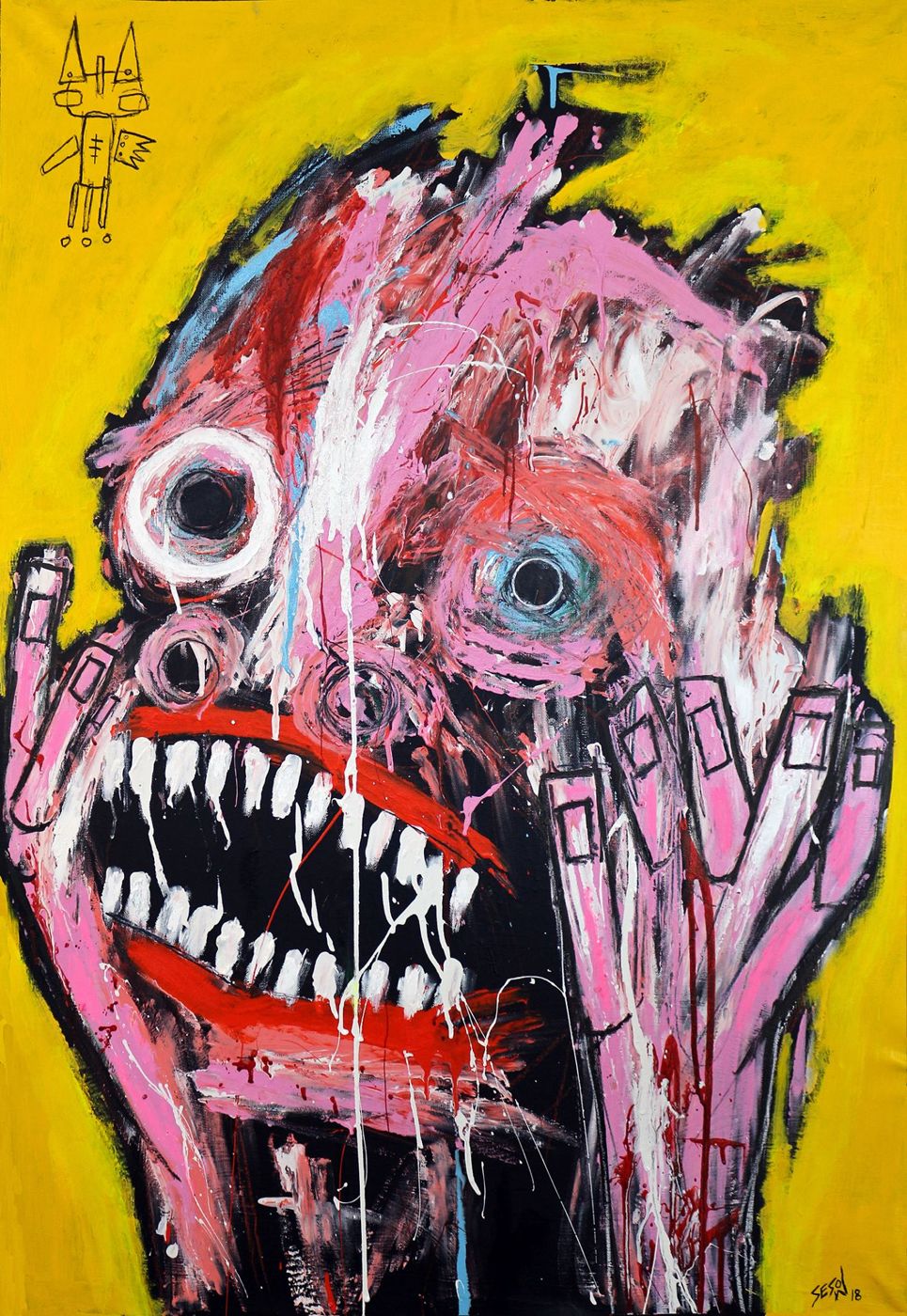
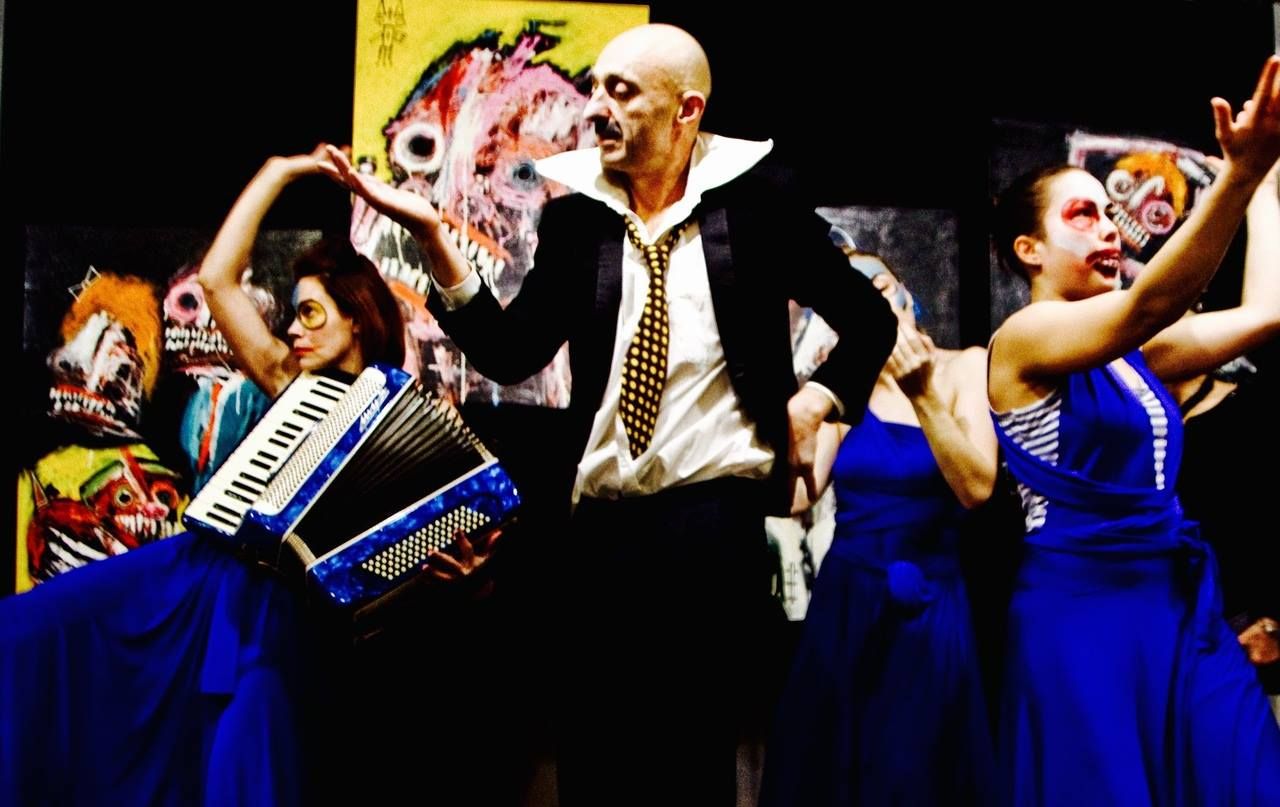
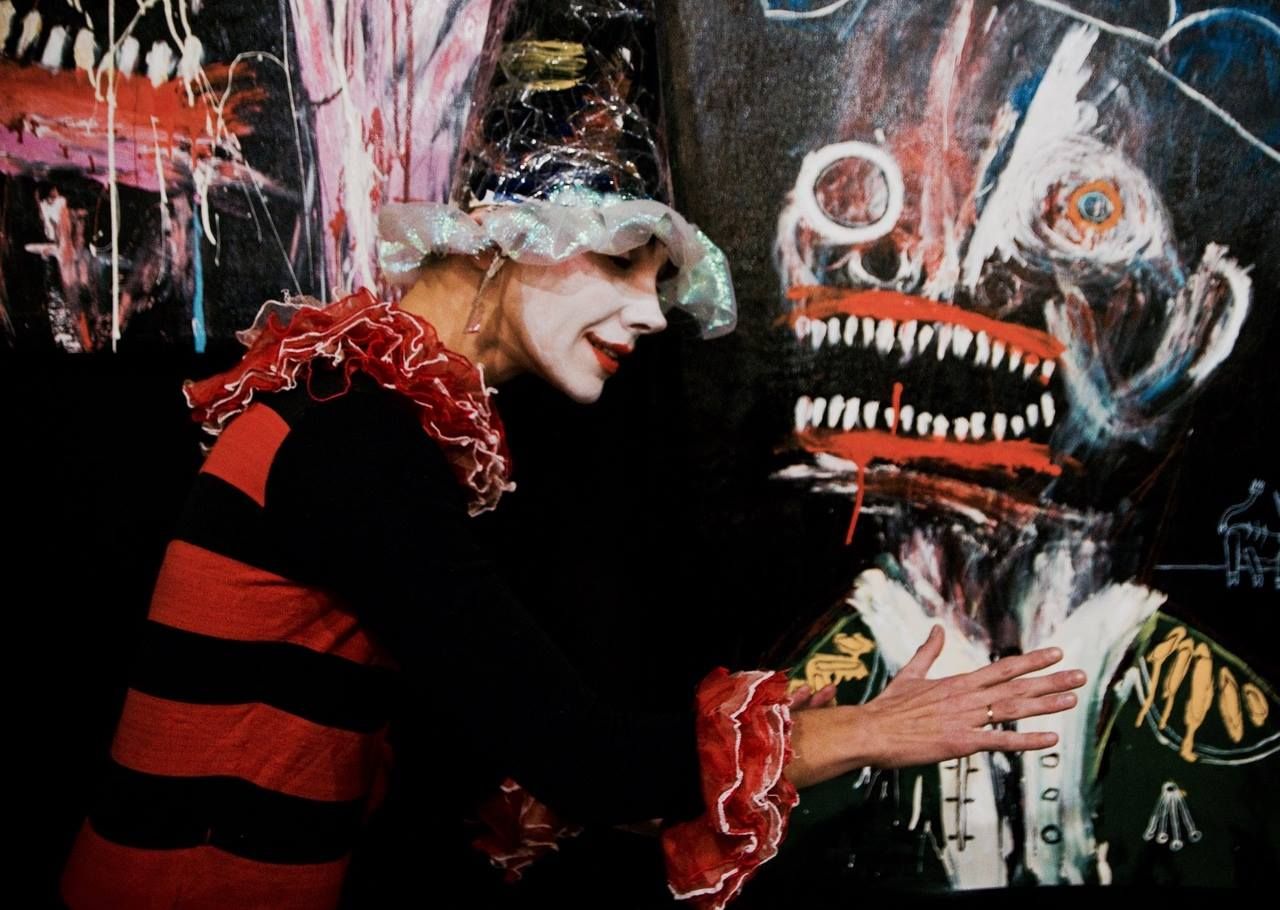
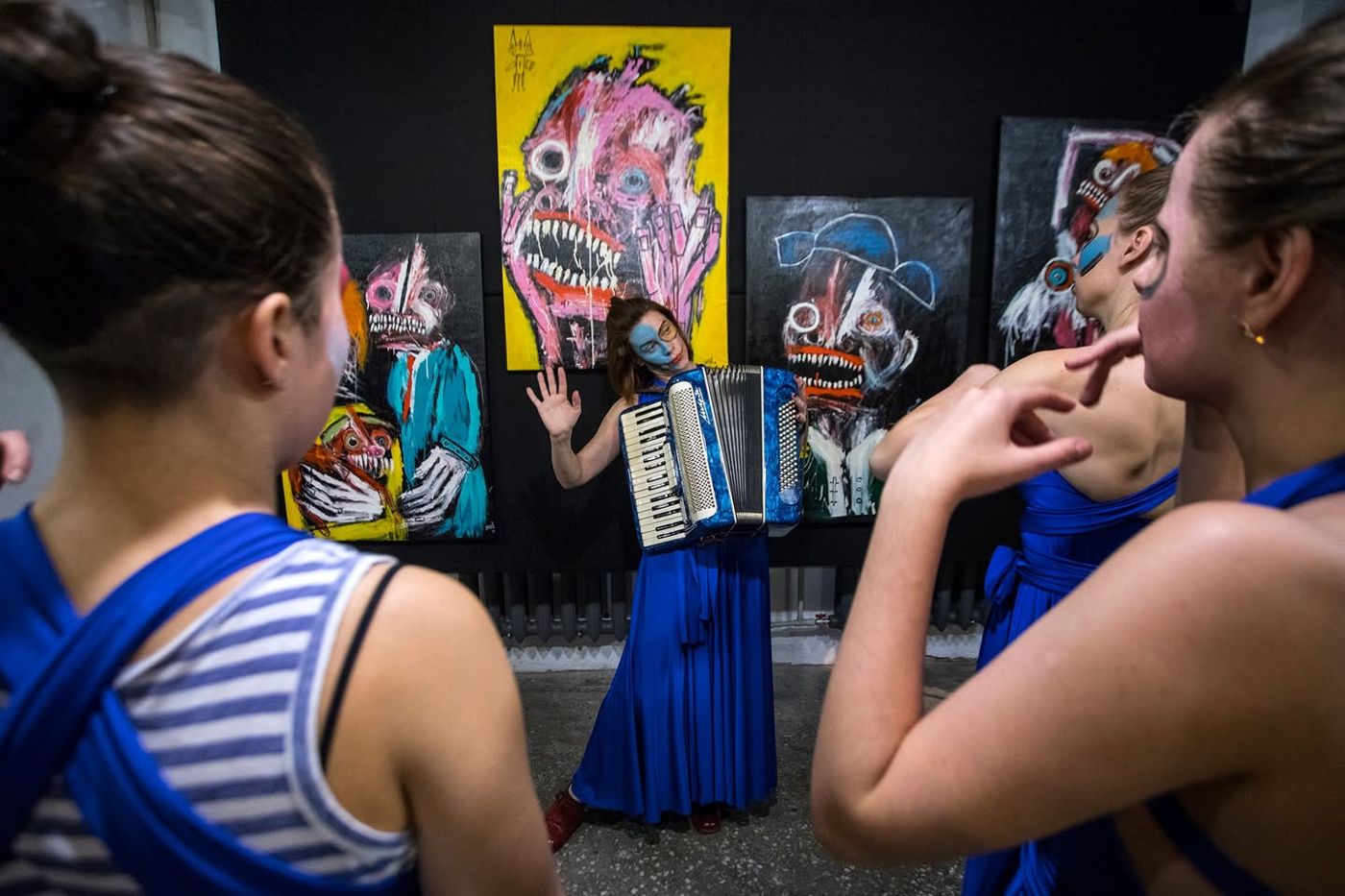
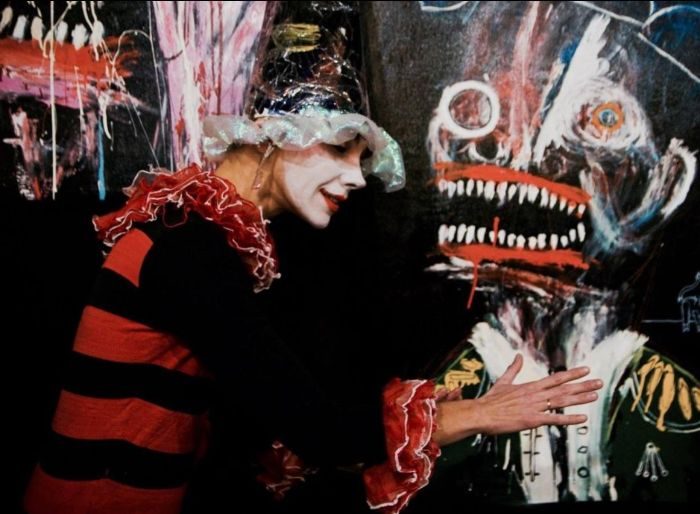
Group Exhibition — "Radical Fluidity: Grotesque in Art," MISP Museum, St. Petersburg, Russia (4 paintings, 2018–2019) (opened December 6, 2018); with Dana Ellyn, whose painting also hung — their first show in Russia. Curator: Afrodite Oikonomidou. The opening featured performers from La Pushkin Theatre; the four paintings came home in spring 2019 and prints were offered at prints.sesow.com
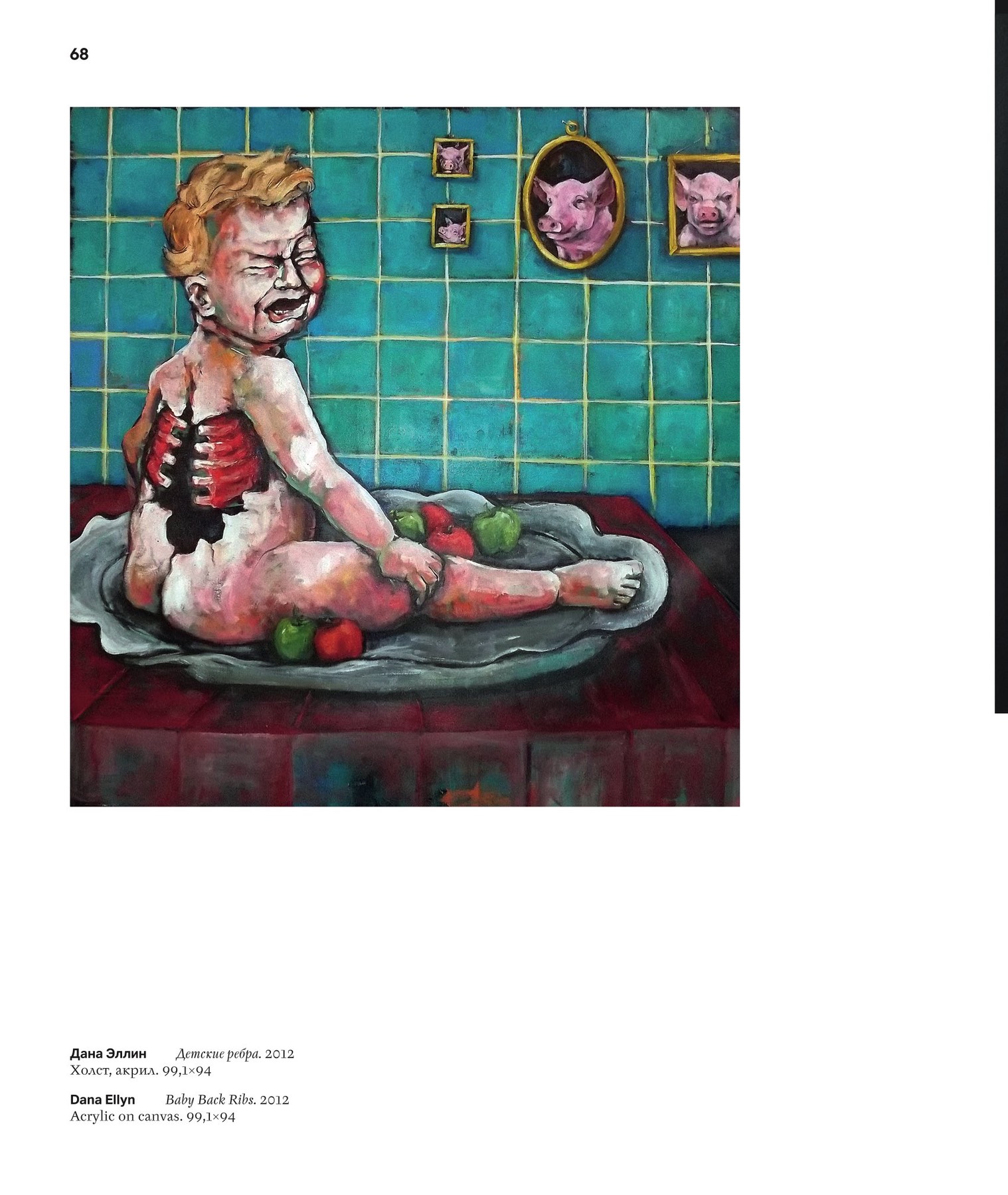
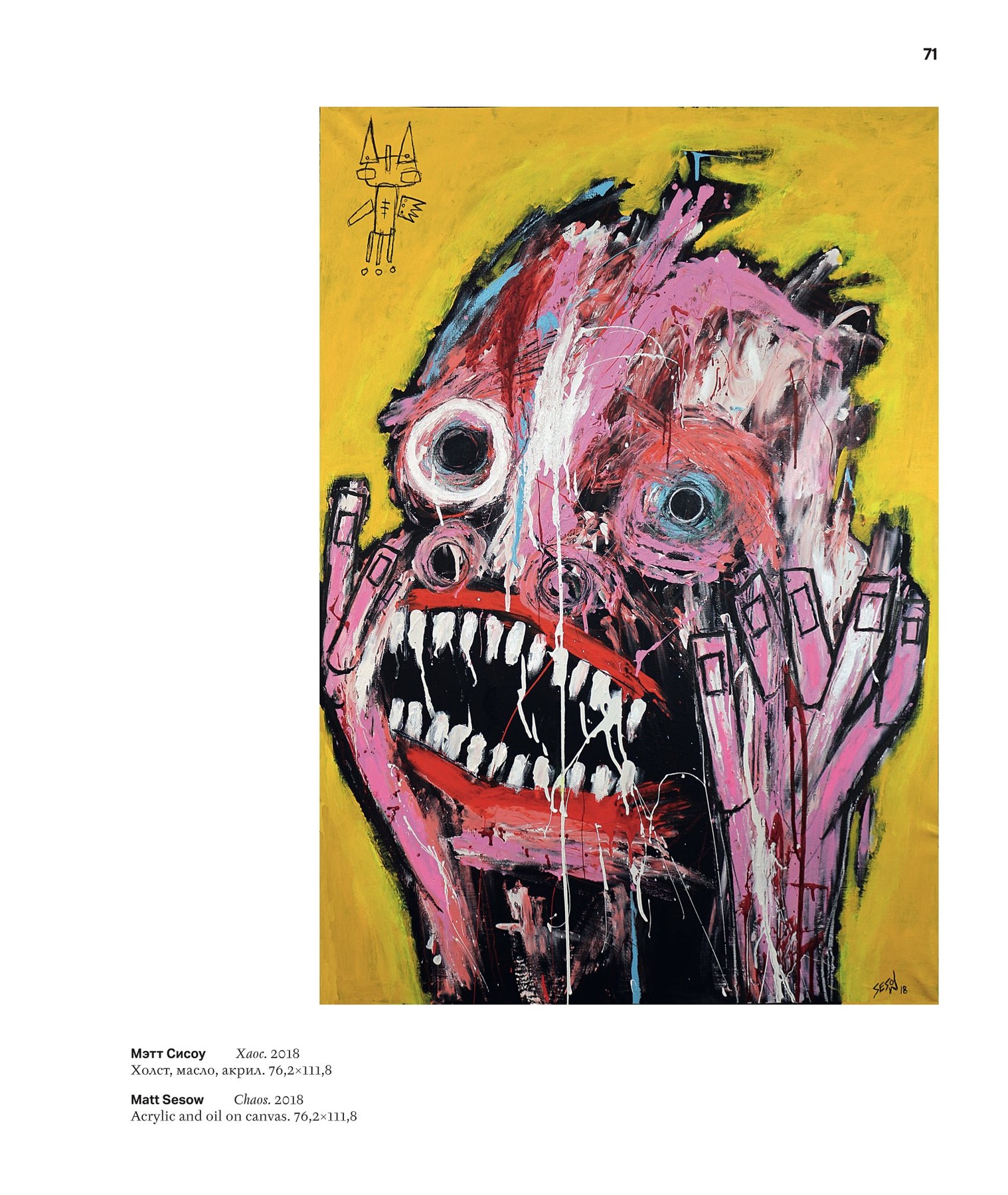
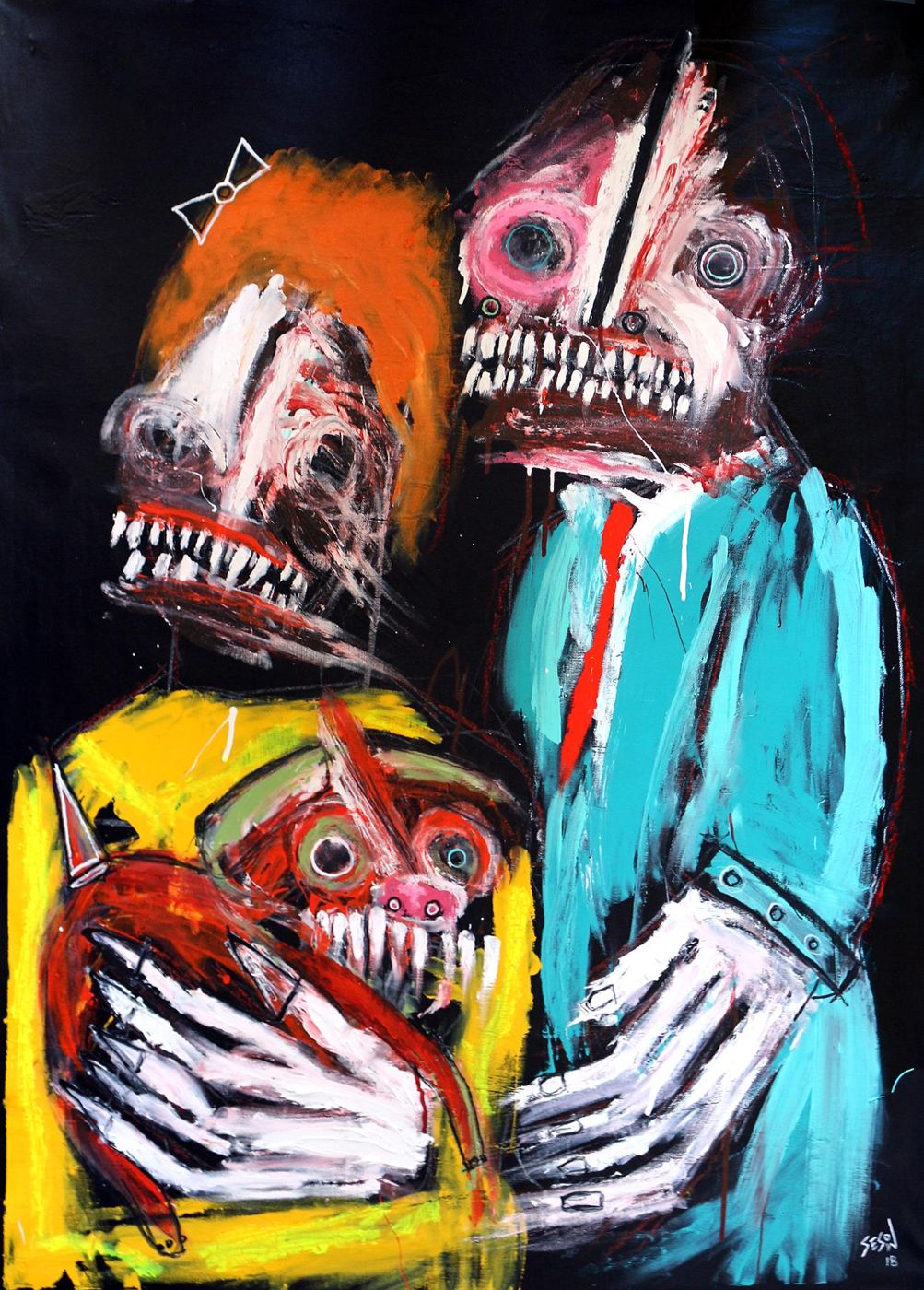
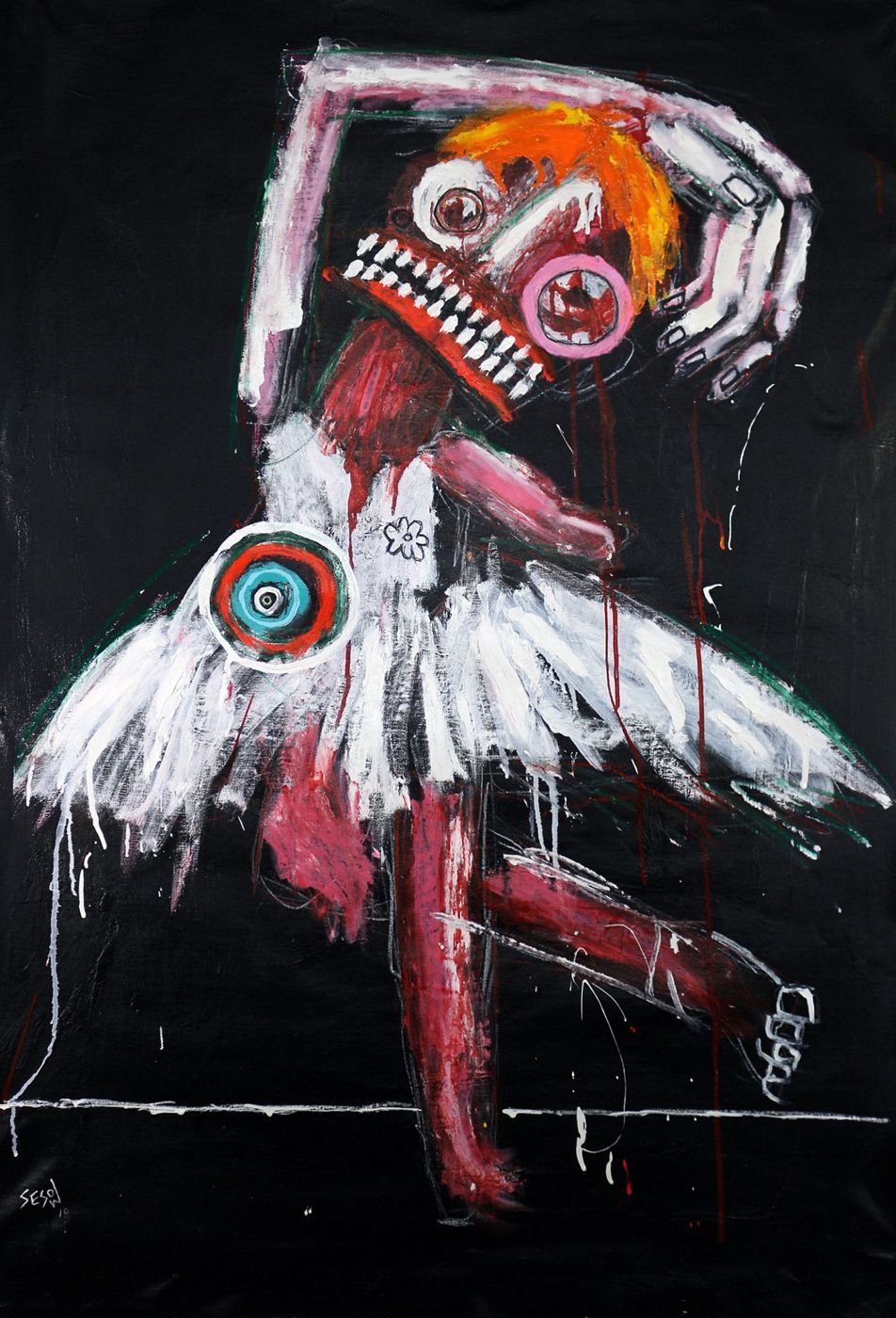
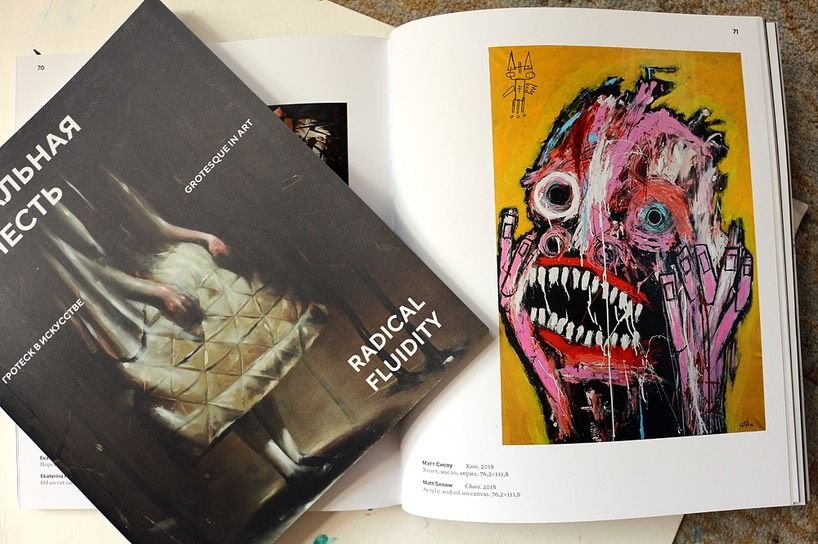
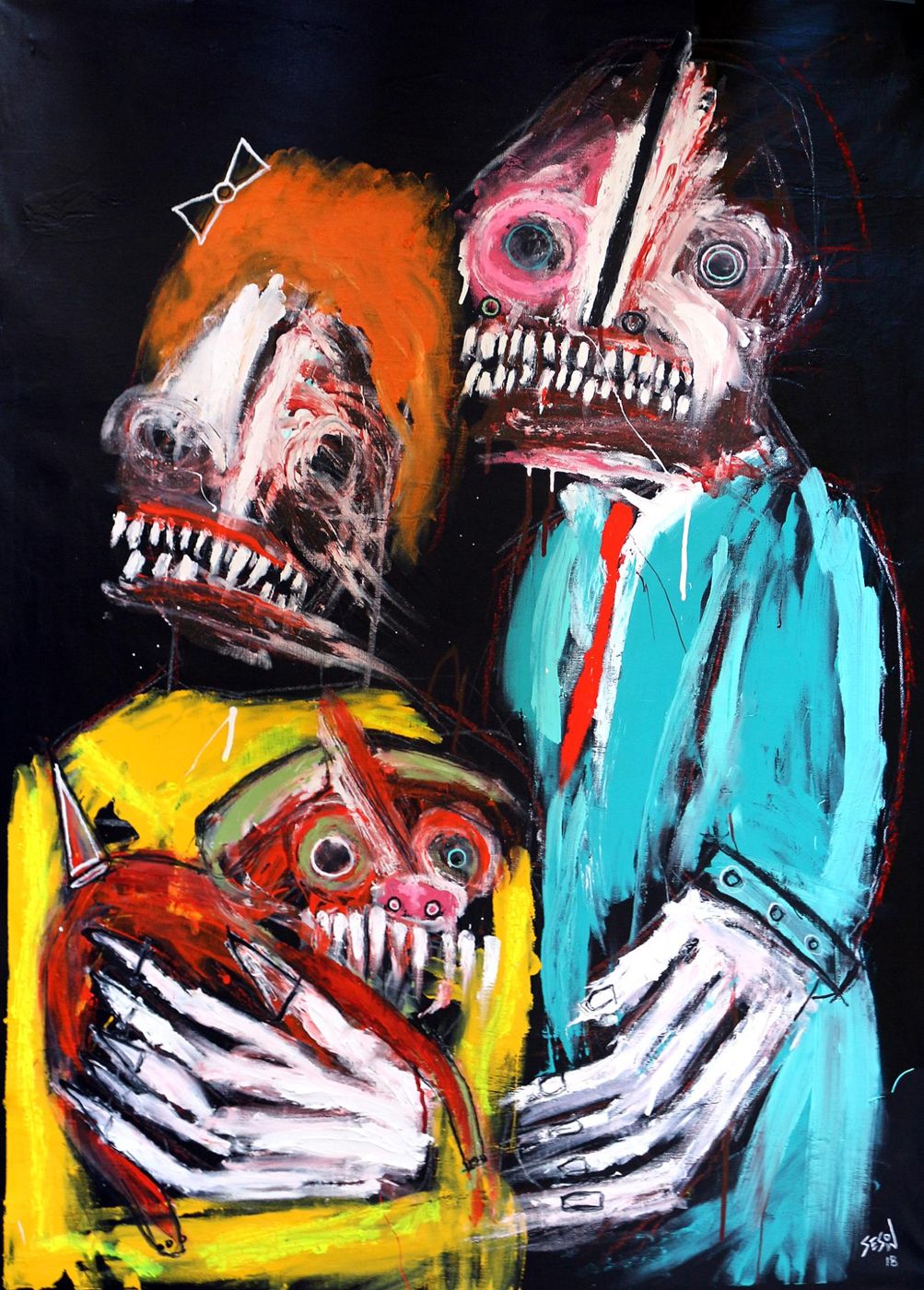
“Radical Fluidity: Grotesque in Art” was an international exhibition at The Museum of St. Petersburg Art (20th–21st centuries) (MISP), 103 Griboyedov Canal Embankment, St. Petersburg, Russia. It ran December 7, 2018 – February 17, 2019; the opening reception was December 6, 2018. More than 100 artists from Russia, France, Italy, Germany, Belgium, the United Kingdom, the USA, China and other countries showed about 300 works. Matt Sesow and Dana Ellyn were the only artists from the United States. Matt showed four paintings, Ballerina, Chaos, Matador and Family Portrait (each 30 × 42 inches). Dana Ellyn showed Baby Back Ribs. That makes five paintings from the two of them. The exhibition catalog lists both artists under “USA” and reproduces Chaos (2018) and Baby Back Ribs (2012). Its essay groups “the works of Matt Sesow, Dana Ellyn and Joseph Loughborough” with the Necrorealists. Curator: Afrodite Oikonomidou.
Exhibition catalog · 2018
Radical Fluidity: Grotesque in Art — exhibition catalog (15 pages from Matt’s copy)
The Museum of St. Petersburg Art (20th–21st centuries), St. Petersburg, 2018 · original
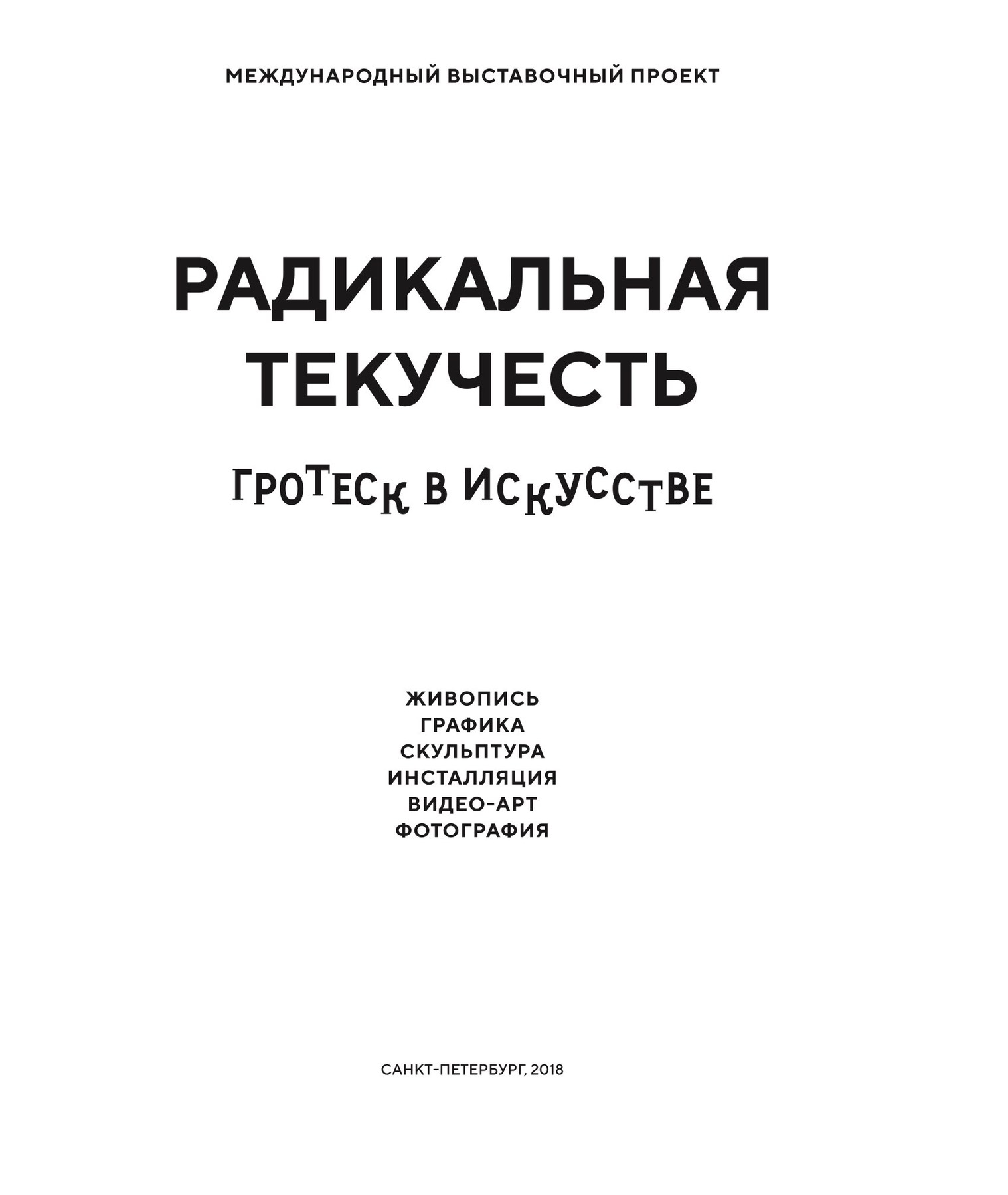
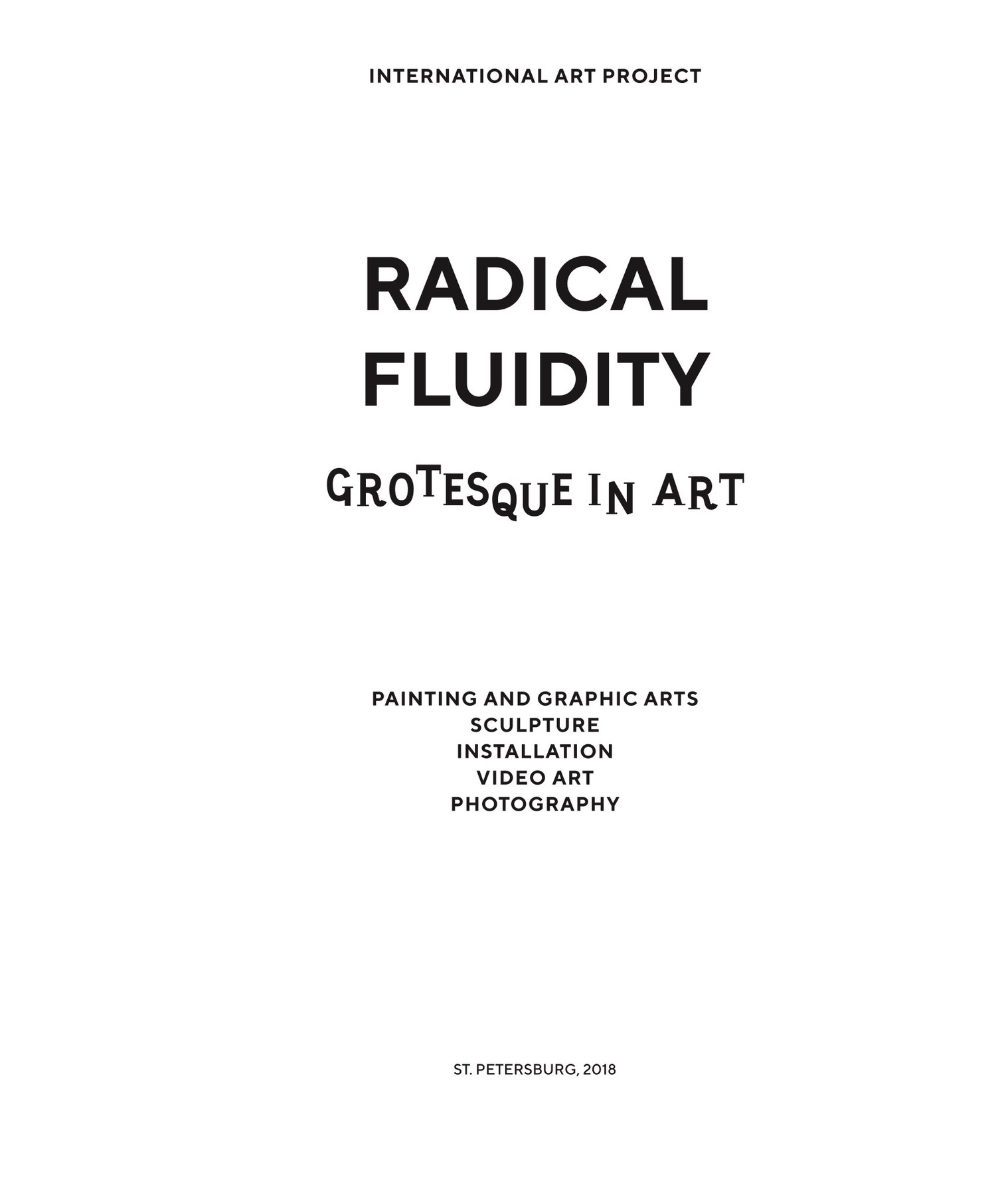
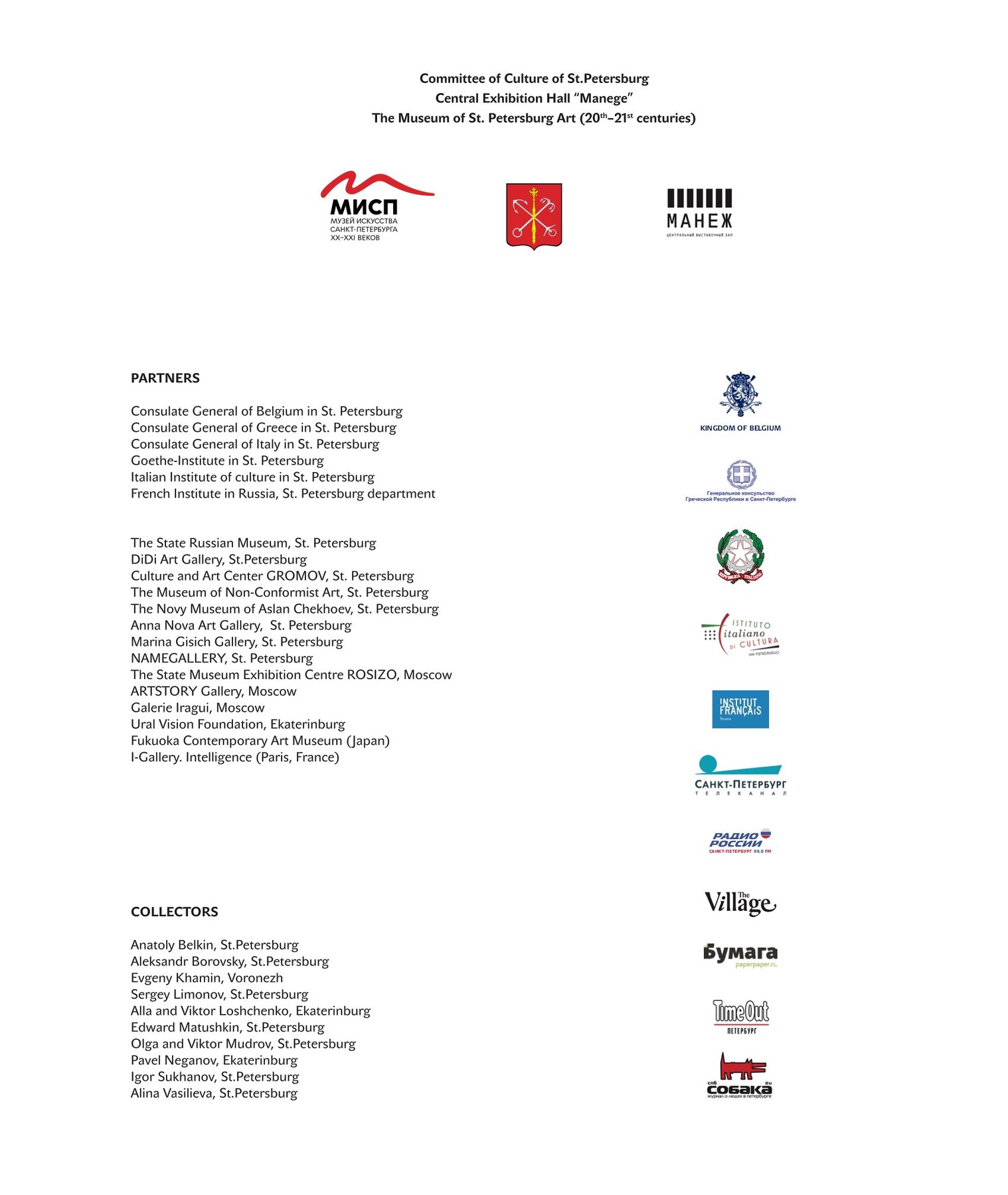
Click a page to open it — scroll or pinch to zoom, drag to move.
Full text
Page images from sesow.com/russia/exhibition-catalog/ (1518×1800 each). The text is English OCR (tesseract, English only) of pages 2–15. Page 1 and the Russian parallel text are not transcribed. Artist birth years in the list came out garbled. Check against the page image before quoting. NOTE FOR BUILD: copy the pages to images/docs/2018-radical-fluidity-grotesque-art-misp/.
[Page 2]
INTERNATIONAL ART PROJECT
RADICAL
FLUIDITY
GROTESQUE In ART
PAINTING AND GRAPHIC ARTS SCULPTURE INSTALLATION VIDEO ART PHOTOGRAPHY
ST. PETERSBURG, 2018
[Page 3]
Committee of Culture of St.Petersburg Central Exhibition Hall “Manege”
The Museum of St. Petersburg Art (20"-21* centuries)
CAHKT-NETEPEYPTA
XX-XXI BEKOB PARTNERS & Consulate General of Belgium in St. Petersburg ~ Consulate General of Greece in St. Petersburg KINGDOM OF BELGIUM Consulate General of Italy in St. Petersburg Goethe-Institute in St. Petersburg Italian Institute of culture in St. Petersburg & French Institute in Russia, St. Petersburg department ——ee
The State Russian Museum, St. Petersburg:
DiDi Art Gallery, St.Petersburg
Culture and Art Center GROMOV, St. Petersburg The Museum of Non-Conformist Art, St. Petersburg The Novy Museum of Aslan Chekhoev, St. Petersburg Anna Nova Art Gallery, St. Petersburg ISTITUTO Marina Gisich Gallery, St. Petersburg Es ThURA NAMEGALLERY, St. Petersburg
The State Museum Exhibition Centre ROSIZO, Moscow
ARTSTORY Gallery, Moscow
Galerie Iragui, Moscow ASHE:
Ural Vision Foundation, Ekaterinburg
Fukuoka Contemporary Art Museum (Japan)
I-Gallery. Intelligence (Paris, France) (e)
CAHKT-IETEPBYPr
Panu0®?
Poccun
Apo COLLECTORS Village, Anatoly Belkin, St.Petersburg Aleksandr Borovsky, St.Petersburg bymara Evgeny Khamin, Voronezh Sergey Limonov, St.Petersburg Alla and Viktor Loshchenko, Ekaterinburg mimeoute Edward Matushkin, St.Petersburg nese Olga and Viktor Mudrov, St.Petersburg Pavel Neganov, Ekaterinburg Igor Sukhanov, St.Petersburg Alina Vasilieva, St.Petersburg
[Page 4]
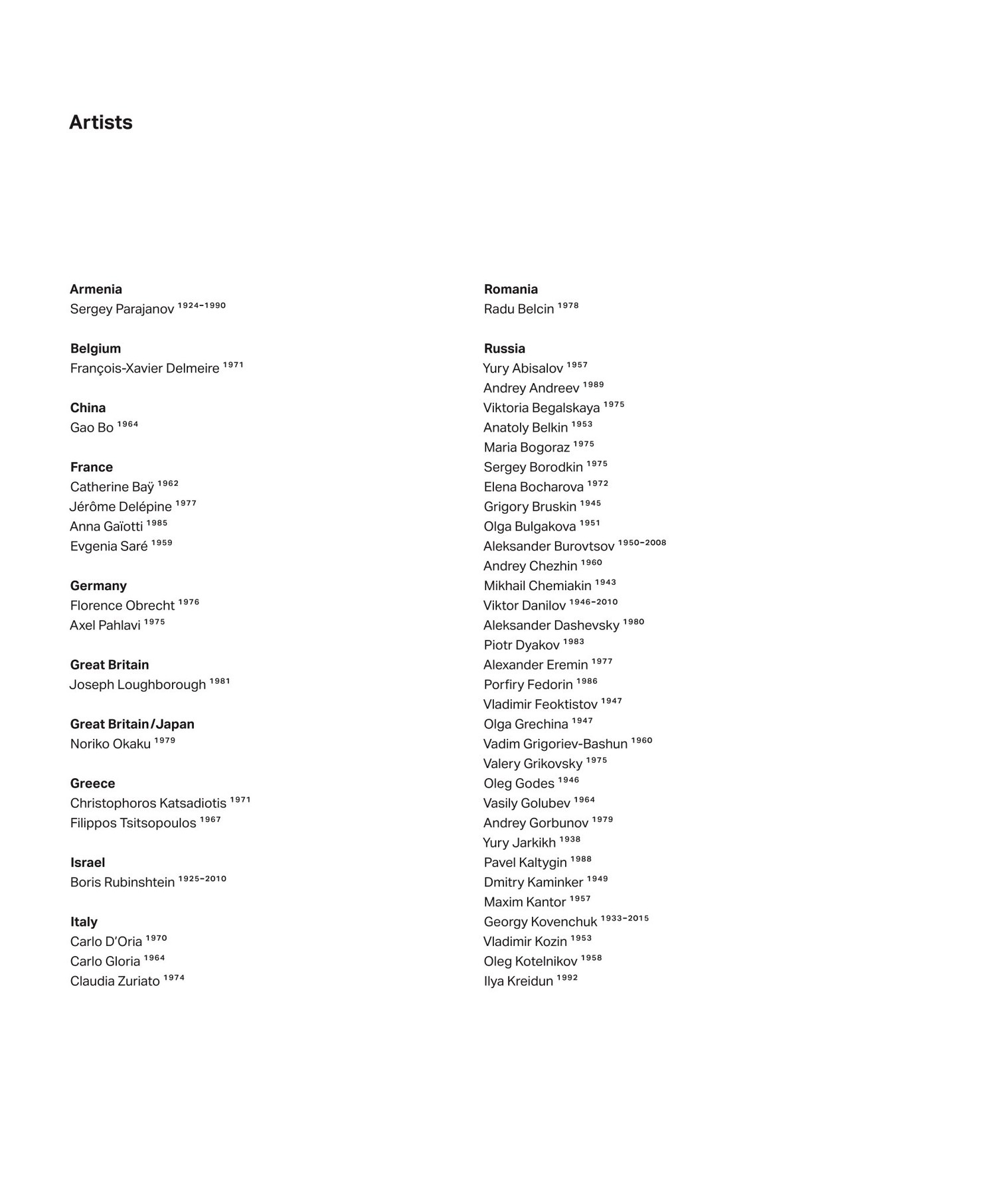
Artists
Armenia
Sergey Parajanov 1974-1999
Belgium
Frangois-Xavier Delmeire '°7"
China
Gao Bo "°°
France
Catherine Bay 19°? Jéréme Delépine 197” Anna Gaiotti "°° Evgenia Saré "°°
Germany Florence Obrecht '°7° Axel Pahlavi ‘97°
Great Britain
Joseph Loughborough '°8"
Great Britain/Japan
Noriko Okaku "97°
Greece Christophoros Katsadiotis Filippos Tsitsopoulos *°°7
1971
Israel
Boris Rubinshtein 75-2070
Italy
Carlo D'Oria "87° Carlo Gloria "°° Claudia Zuriato 1°7*
Romania
Radu Belcin "°7°
Russia
Yury Abisalov Andrey Andreev "98° Viktoria Begalskaya 197° Anatoly Belkin 195? Maria Bogoraz '°7§ Sergey Borodkin Elena Bocharova '°7?
Grigory Bruskin '°45
Olga Bulgakova "9°" Aleksander Burovtsov 19°°-7008 Andrey Chezhin '°°° Mikhail Chemiakin 194° Viktor Danilov 1946-079 Aleksander Dashevsky Piotr Dyakov "98° Alexander Eremin 1977 Porfiry Fedorin "°° Vladimir Feoktistov Olga Grechina "947 Vadim Grigoriev-Bashun *°°° Valery Grikovsky 1975
Oleg Godes "94°
Vasily Golubev '9°
Andrey Gorbunov Yury Jarkikh 1998 Pavel Kaltygin 198? Dmitry Kaminker "94° Maxim Kantor 1957
Georgy Kovenchuk 1939-201
Vladimir Kozin 195°
Oleg Kotelnikov '95°
llya Kreidun *99?
1987
1975
1980
1947
1979
[Page 5]
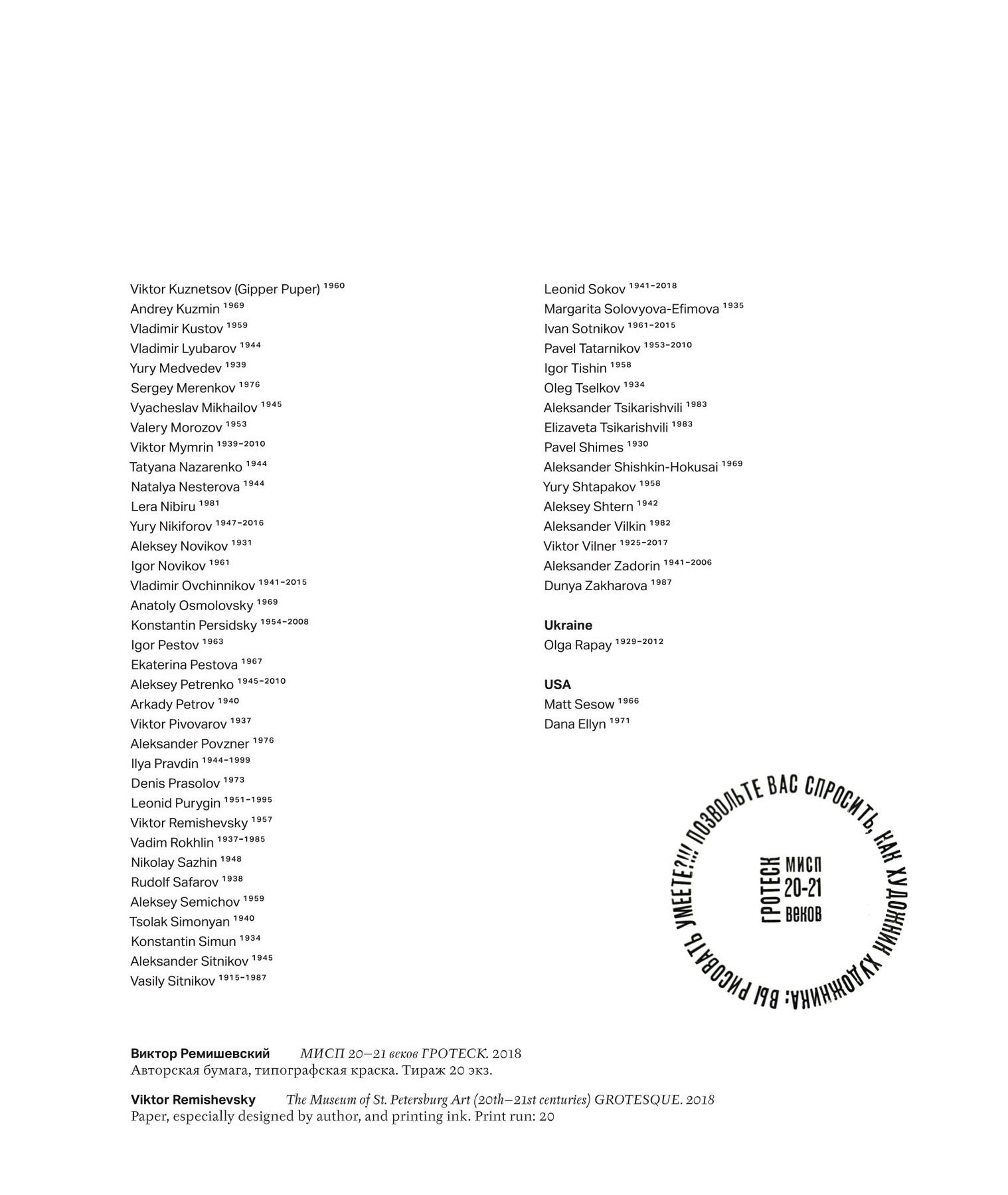
1960
Viktor Kuznetsov (Gipper Puper)
Andrey Kuzmin 196°
Vladimir Kustov '°5°
Vladimir Lyubarov '°44
Yury Medvedev 1999
Sergey Merenkov Vyacheslav Mikhailov 194° Valery Morozov "95?
Viktor Mymrin 1999-2010 Tatyana Nazarenko '°*4 Natalya Nesterova 1°44
Lera Nibiru '°**
Yury Nikiforov 1947-2018
Aleksey Novikov 195"
Igor Novikov "9°"
Vladimir Ovchinnikov *°47-2078 Anatoly Osmolovsky '°8° Konstantin Persidsky 1994-208 Igor Pestov 196%
Ekaterina Pestova '°°” Aleksey Petrenko 1945-2010 Arkady Petrov "94°
Viktor Pivovarov '8°7
Aleksander Povzner '°7°
llya Pravdin 1944-1998
Denis Prasolov '°7*
Leonid Purygin 1951-1995 Viktor Remishevsky '°57 Vadim Rokhlin 1997-7985 Nikolay Sazhin "98 Rudolf Safarov 199° Aleksey Semichov Tsolak Simonyan 194° Konstantin Simun "9° Aleksander Sitnikov '°*° Vasily Sitnikov 1919-1987
1976
1959
Buktop PemuwescKuii MUCTI 20-21 6exos TPOTECK. 2018
Astopckaa 6ymara, TumorpadpcKas Kpacka. Tupax 20 9K3.
Leonid Sokov 1947-018
Margarita Solovyova-Efimova 199°
Ivan Sotnikov 1961-2015
Pavel Tatarnikov 1969-7010
Igor Tishin 195°
Oleg Tselkov "934
Aleksander Tsikarishvili °°
Elizaveta Tsikarishvili '°°*
Pavel Shimes "°°
Aleksander Shishkin-Hokusai '°°°
Yury Shtapakov *95°
Aleksey Shtern '94?
Aleksander Vilkin "°°?
Viktor Vilner 1925-2017
Aleksander Zadorin 1941-2008
Dunya Zakharova 19°”
Ukraine Olga Rapay 1929-2012 USA
Matt Sesow
Dana Ellyn 97"
1966
<u. BAC Cop,
S g Py = MucT Zz Ss #aa & = = HeHOB =
% SS
% S
%, \\
Ha 9g yyw
Viktor Remishevsky The Museum of St. Petersburg Art (20th—21st centuries) GROTESQUE. 2018
Paper, especially designed by author, and printing ink. Print run: 20
[Page 6]
12
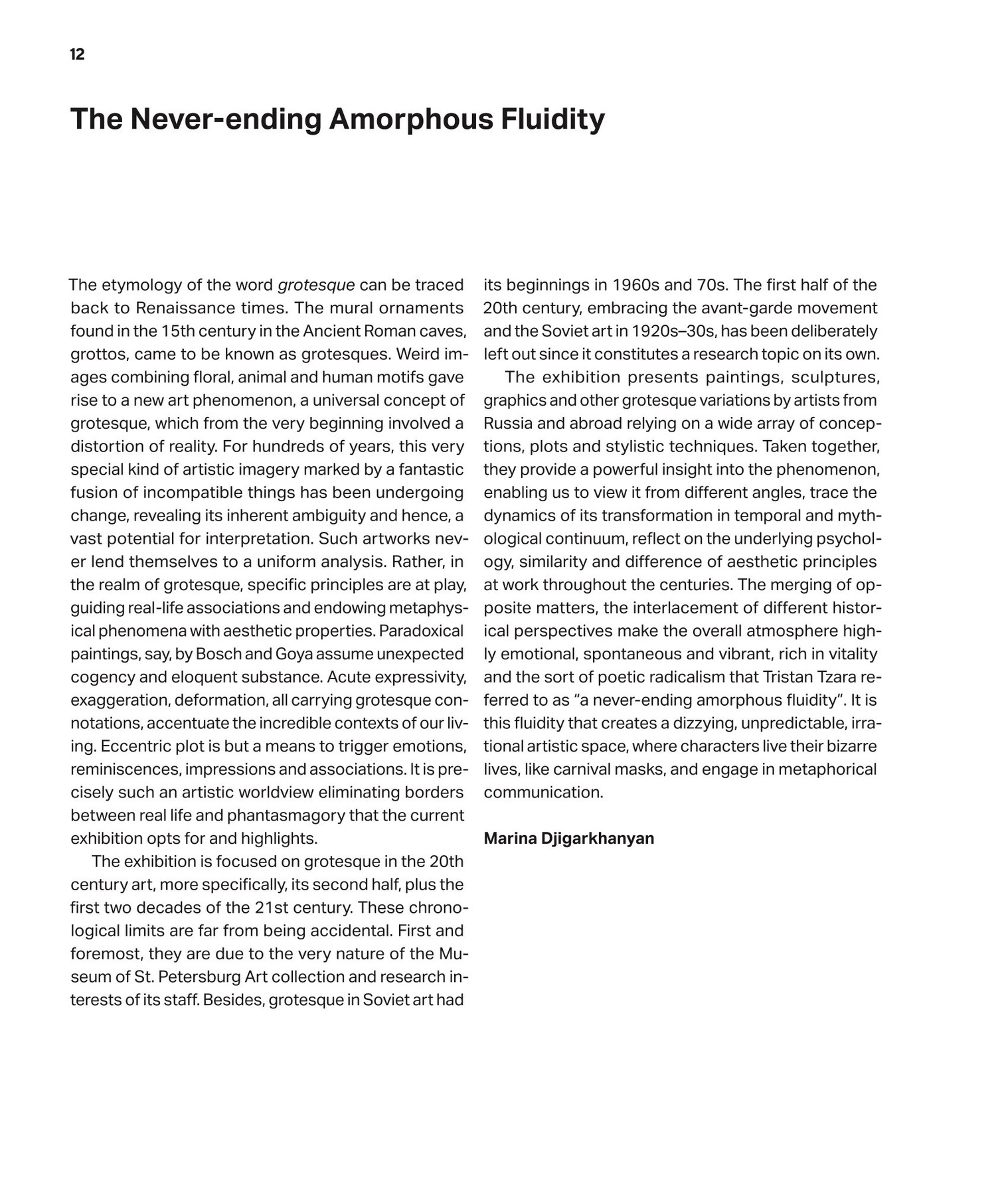
The Never-ending Amorphous Fluidity
The etymology of the word grotesque can be traced back to Renaissance times. The mural ornaments found in the 15th century in the Ancient Roman caves, grottos, came to be known as grotesques. Weird im ages combining floral, animal and human motifs gave rise to a new art phenomenon, a universal concept of grotesque, which from the very beginning involved a distortion of reality. For hundreds of years, this very special kind of artistic imagery marked by a fantastic fusion of incompatible things has been undergoing change, revealing its inherent ambiguity and hence, a vast potential for interpretation. Such artworks nev er lend themselves to a uniform analysis. Rather, in the realm of grotesque, specific principles are at play, guiding real-life associations and endowing metaphys ical phenomena with aesthetic properties. Paradoxical paintings, say, by Bosch and Goya assume unexpected cogency and eloquent substance. Acute expressivity, exaggeration, deformation, all carrying grotesque con notations, accentuate the incredible contexts of our liv ing. Eccentric plot is but a means to trigger emotions, reminiscences, impressions and associations. It is pre cisely such an artistic worldview eliminating borders between real life and phantasmagory that the current exhibition opts for and highlights.
The exhibition is focused on grotesque in the 20th century art, more specifically, its second half, plus the first two decades of the 21st century. These chrono logical limits are far from being accidental. First and foremost, they are due to the very nature of the Mu seum of St. Petersburg Art collection and research in terests of its staff. Besides, grotesque in Soviet art had
its beginnings in 1960s and 70s. The first half of the 20th century, embracing the avant-garde movement and the Soviet art in 1920s-30s, has been deliberately left out since it constitutes a research topic on its own.
The exhibition presents paintings, sculptures, graphics and other grotesque variations by artists from Russia and abroad relying on a wide array of concep tions, plots and stylistic techniques. Taken together, they provide a powerful insight into the phenomenon, enabling us to view it from different angles, trace the dynamics of its transformation in temporal and myth ological continuum, reflect on the underlying psychol ogy, similarity and difference of aesthetic principles at work throughout the centuries. The merging of op posite matters, the interlacement of different histor ical perspectives make the overall atmosphere high ly emotional, spontaneous and vibrant, rich in vitality and the sort of poetic radicalism that Tristan Tzara re ferred to as “a never-ending amorphous fluidity”. It is this fluidity that creates a dizzying, unpredictable, irra tional artistic space, where characters live their bizarre lives, like carnival masks, and engage in metaphorical communication.
Marina Djigarkhanyan
[Page 7]
24
Grotesque in Art
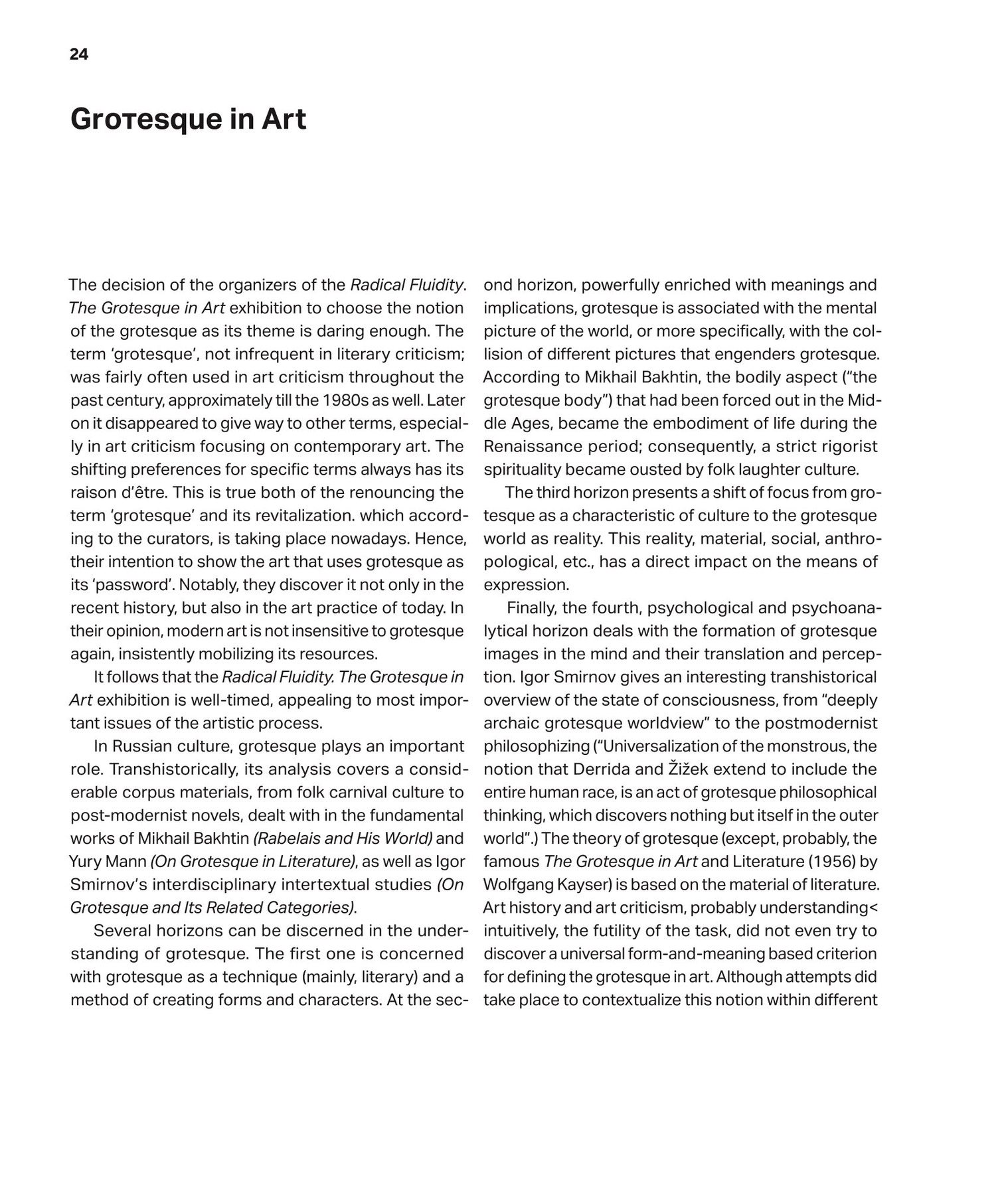
The decision of the organizers of the Radical Fluidity. The Grotesque in Art exhibition to choose the notion of the grotesque as its theme is daring enough. The term ‘grotesque’, not infrequent in literary criticism; was fairly often used in art criticism throughout the past century, approximately till the 1980s as well. Later on it disappeared to give way to other terms, especial ly in art criticism focusing on contemporary art. The shifting preferences for specific terms always has its raison d’étre. This is true both of the renouncing the term ‘grotesque’ and its revitalization. which accord ing to the curators, is taking place nowadays. Hence, their intention to show the art that uses grotesque as its ‘password’. Notably, they discover it not only in the recent history, but also in the art practice of today. In their opinion, modern artis not insensitive to grotesque again, insistently mobilizing its resources.
It follows that the Radical Fluidity. The Grotesque in Art exhibition is well-timed, appealing to most impor tant issues of the artistic process.
In Russian culture, grotesque plays an important role. Transhistorically, its analysis covers a consid erable corpus materials, from folk carnival culture to post-modernist novels, dealt with in the fundamental works of Mikhail Bakhtin (Rabelais and His World) and Yury Mann (On Grotesque in Literature), as well as Igor Smirnov's interdisciplinary intertextual studies (On Grotesque and Its Related Categories).
Several horizons can be discerned in the under standing of grotesque. The first one is concerned with grotesque as a technique (mainly, literary) and a method of creating forms and characters. At the sec
ond horizon, powerfully enriched with meanings and implications, grotesque is associated with the mental picture of the world, or more specifically, with the col lision of different pictures that engenders grotesque. According to Mikhail Bakhtin, the bodily aspect ("the grotesque body”) that had been forced out in the Mid dle Ages, became the embodiment of life during the Renaissance period; consequently, a strict rigorist spirituality became ousted by folk laughter culture.
The third horizon presents a shift of focus from gro tesque as a characteristic of culture to the grotesque world as reality. This reality, material, social, anthro pological, etc., has a direct impact on the means of expression.
Finally, the fourth, psychological and psychoana lytical horizon deals with the formation of grotesque images in the mind and their translation and percep tion. lgor Smirnov gives an interesting transhistorical overview of the state of consciousness, from “deeply archaic grotesque worldview" to the postmodernist philosophizing ("Universalization of the monstrous, the notion that Derrida and Zizek extend to include the entire human race, is an act of grotesque philosophical thinking, which discovers nothing but itself in the outer world".) The theory of grotesque (except, probably, the famous The Grotesque in Art and Literature (1956) by Wolfgang Kayser) is based on the material of literature. Art history and art criticism, probably understanding< intuitively, the futility of the task, did not even try to discover a universal form-and-meaning based criterion for defining the grotesque in art. Although attempts did take place to contextualize this notion within different
[Page 8]
cultural paradigms (‘Romantic grotesque’, ‘avant-gar de grotesque’), more pronounced was the idea of the transhistorical nature of grotesque as artistic thinking. Modern researchers, for example, will never miss the opportunity to demonstrate an affinity between the understanding of the bodily aspect in the folk culture of the Renaissance and postmodernist anthropolo gizing of the grotesque and the monstrous. However, all this remains in the sphere of theorization; ‘practical’ art criticism always preferred the features of the gro tesque based on form (deformation, hyperbole, cari cature and exaggerated visualization, zoomorphic and technomorphic references, etc.) and meaning. The latter usually includes alogism (the ‘logic of paradox’, according to Leonid Pinsky), exaggerated corporeality, appealing to the grotesque and the monstrous, carni valization of consciousness, irreality, magic, and so on {all this exists either in the collective popular version of the ‘folk carnivalesque laughter culture’ type, or in the individualized, subjectivized form). Furthermore, these definitions were used instrumentally, | would even say, metaphorically. This fluidity, figurativeness and the lack of clear-cut categories were, indeed, in accord with the subject. (Wolfgang Kayser was against its categorical fixation, as he believed that the related
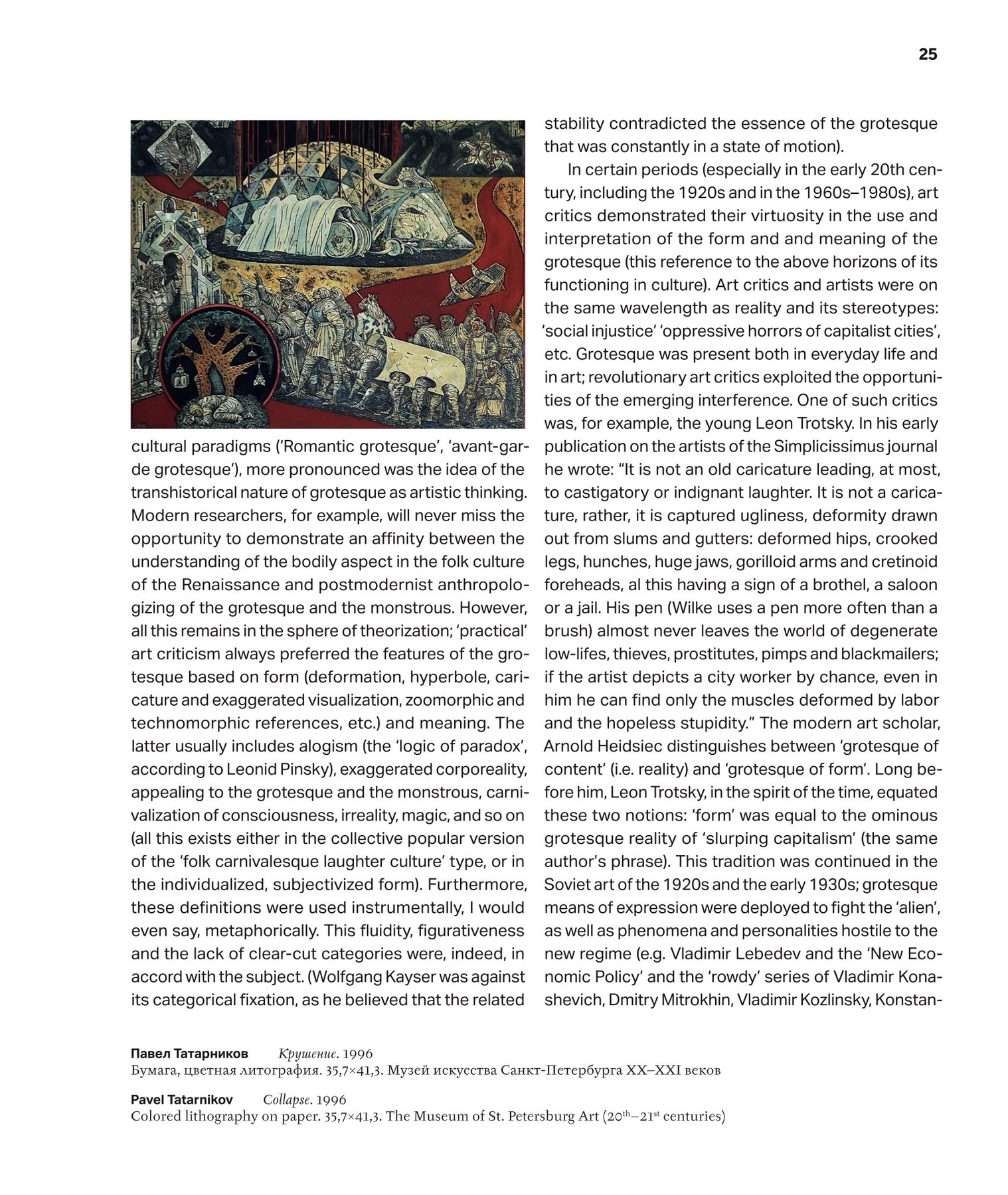
Nasen TatapHukos Kpywenue. 1996
25
stability contradicted the essence of the grotesque
that was constantly in a state of motion).
In certain periods (especially in the early 20th cen tury, including the 1920s and in the 1960s-1980s), art critics demonstrated their virtuosity in the use and interpretation of the form and and meaning of the grotesque (this reference to the above horizons of its functioning in culture). Art critics and artists were on the same wavelength as reality and its stereotypes: social injustice’ ‘oppressive horrors of capitalist cities’, etc. Grotesque was present both in everyday life and in art; revolutionary art critics exploited the opportuni ties of the emerging interference. One of such critics was, for example, the young Leon Trotsky. In his early publication on the artists of the Simplicissimus journal he wrote: “It is not an old caricature leading, at most, to castigatory or indignant laughter. It is not a carica ture, rather, it is captured ugliness, deformity drawn out from slums and gutters: deformed hips, crooked legs, hunches, huge jaws, gorilloid arms and cretinoid foreheads, al this having a sign of a brothel, a saloon or a jail. His pen (Wilke uses a pen more often than a brush) almost never leaves the world of degenerate low-lifes, thieves, prostitutes, pimps and blackmailers; if the artist depicts a city worker by chance, even in him he can find only the muscles deformed by labor and the hopeless stupidity.” The modern art scholar, Arnold Heidsiec distinguishes between ‘grotesque of content (i.e. reality) and ‘grotesque of form’. Long be fore him, Leon Trotsky, in the spirit of the time, equated these two notions: ‘form’ was equal to the ominous grotesque reality of ‘slurping capitalism’ (the same author's phrase). This tradition was continued in the Soviet art of the 1920s and the early 1930s; grotesque means of expression were deployed to fight the ‘alien’, as well as phenomena and personalities hostile to the new regime (e.g. Viadimir Lebedev and the ‘New Eco nomic Policy’ and the ‘rowdy’ series of Vladimir Kona shevich, Dmitry Mitrokhin, Vladimir Kozlinsky, Konstan
Byara, uBeTHas AuTorpadus. 35,7x41,3. Myseit ucxyccrsa Canxt-[lerep6ypra XX—XXI Bekos
Pavel Tatarnikov Collapse. 1996
Colored lithography on paper. 35,7*41,3. The Museum of St. Petersburg Art (20"—21" centuries)
[Page 9]
26
tin Rudakov, Bronislaw Malachowski; Alexander Tyshler ‘Nestor Makhno' series, works by other members of the Society of Easel Painters on the Imperialist War, Civil War, class struggle, etc.).
The real being of the ‘hostile’, in whatever form, be it a historical event, an episode, a symbol or personality, looked grotesque and monstrous, organically antithet ical to the new life as it was perceived by the artists who unconditionally accepted the Revolution. A new social and esthetic situation arose. As the old acad emist Pavel Chistyakov would say, “The technique is worth the subject.” There were others, course, not so openly socially-induced grounds of grotesque in the art of the 1920s and 1930s... They were rooted in the Silver Age art when, as Osip Mandelstam put it, “the strongest feeling of absurdity, idolized by the artists of the Distorting Mirror and the Satyricon <...> laid the foundation of the later flourishing of exquisite Russian theatrical (and | would will, graphic — A.B.) grotesque.”
Under growing totalitarian pressure, grotesque was getting under stricter control of the state. The gro tesque reality was allowed to exist only in the West. For instance, Israel Lizak had to call a series of his works devoted to the life at the bottom (a prostitute, an ivalid, etc.) A Street in a Capitalist City. In the later periods, grotesque was not only ‘measured out’, but also canalized to the genre of caricature and satirical posters. Here hyperboles and deformations were po litically motivated. And they had been pushed out from other genres. The state was perfectly well aware of the double-edged character of grotesque.
Grotesque returned into Russian art during the Thaw period, first, into graphic art. Within a decade it gained a firm position in drawings, illustrations, and partly in porcelain. In fact, it was one of the principal techniques of the so-called modern style (Yury Krasny, Lev Zbarsky, Mark Klyachko, Stasis Krasauskas, Yury Mogilevsky, Eduard Krimmer, Lev Smorgon, Lev Bukovsky, Georgy Kovenchuk, Igor Ominin, Anatoly Kiselev, Gerta Ne
menova, etc.). First and foremost, it was connected with the comeback of conventionality and rejection of forced imitativeness. At the same time, the issues of a critical nature, state of consciousness and, generally, existentialist limits were avoided. The only exception was Oleg Tselkov, who was encapsulating the state of the disturbed, inflamed, extreme consciousness in its pure form. Yet, Tselkov was a loner. Broadly speaking, the 1960s were a time of ‘mild grotesque’.
At the formal level, the presence of mild grotesque as a means of expression became a regular factor in the next decade as well. Conservative forces did not succeed in edging out different forms of radicalization and conventionality: they found their way even to the top positions of the mainstream art. A return to ‘life imitating’ art became impossible. Yet, the rollback in the public and political sphere was obvious: it was the beginning of the Era of Stagnation.
Strangely enough, the stagnant 1970s were a brightest period of grotesque art. The late Soviet grotesque did not become the dissidents’ political weapon; it was antithetical to radicalism. It was too refined for direct political statements and it was me diated by various cultural codes. However, grotesque figurativeness did have a political motivation. It was the level of world perception: art captured the situation of the troubled times, stagnation, and inertia, that was in sharp contrast with the dynamic and hopeful 1960s.
Mikhail Shemyakin was one of the first artists to perceive this state of stagnation. By the mid-1969s, when he was still quite young, he had developed his own idiom echoing the phantasms, mysticism, and masquerade of the romantic grotesque of Hoffman and Gogol. Referring to them did not mean stylization. Shemyakin's grotesque contained an anti-romantic element -—the corporeal. He developed this motif using numerous ‘carcasses’, which, in turn, were a reference to modernism and to Chaim Soutine. Then he returned to romantic carnival, enriched with flesh, corporeali
[Page 10]
ty, as much as the zoomorphism of his cavaliers with
horse heads. Masks, duplicity, iconographic and zoo morphic metamorphoses, all these elements of She myakin’s carnival grotesque have ‘evasiveness' as their common background. It conveys the impossibility of genuine unpretended search for identity (the individual
self) at the time of stagnation.
Vladimir Ovchinnikov was active around the same time. Grotesque as a morphogenetic category hard ly applies to his works: his was an accurate, focused, unexcited and unpoignant form. Grotesque was in the situations he created: angels and male nurses, disabled characters and homeless people, individuals from to day's crowd and historical characters have populated
27
his paintings in a peculiarly natural way. The exhibition
displays one of the best pictures of his late period,
The Séance. Ovchinnikov discovered his style at an
early age to develop it, later on, with a striking sense of purpose for decades. Having inhaled the air of stagna tion, he was creating his art approximately at the same
time as Shemyakin. He grasped the impossibility of the
mundane and very vividly created a situation that can
be defined as the mundane of the impossible.
The artists of the 1970s created a certain typology of escapism, a shift-away from the then reality. Gro tesque was one of the core components of this typol ogy, with its several manifestations. Grotesque carni valesqueness became, paradoxically, a uniting factor
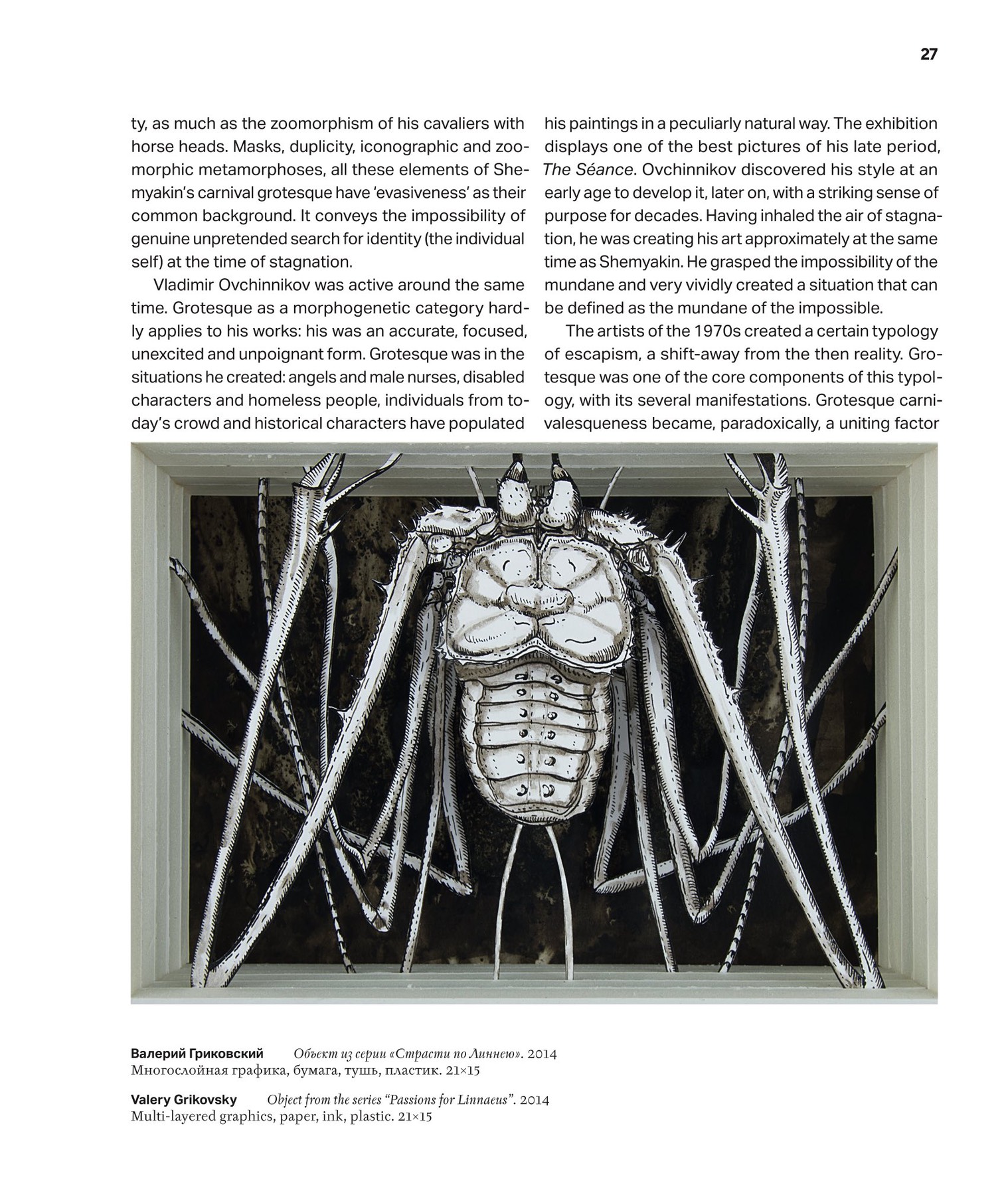
Banepuii [pukoscKnii
Valery Grikovsky
Multi-layered graphics, paper, ink, plastic. 21x15
O6vexm u3 cepuu «Cmpacmu no Aunnei». 2014
Muorocaoiinas rpapuka, 6ymara, TyUIb, MAACTHK. 21x15
Object from the series “Passions for Linnaeus”. 2014
[Page 11]
28
among artists of Leningrad and Moscow. Grotesque, it should be emphasized. At the time, the book by Mikhail Bakhtin was iconic, initiating an avalanche of popular dilettante philosophizing, Carnival became associated with spontaneous self-expression, non-bureaucrat ic activity, individual self-realization in the collective body: through carnival to freedom. However, the car nival of Tatyana Nazarenko and Natalia Nesterova has a different tone: somewhat artificial joy, diffidence, and tension. The exhibition presents Nesterova's Charac ters on a Merry-Go-Round. Some strange, grotesque ly depicted people who are literally drawn away from the real space (and the plot with the merry-go-round justifies it). In The Moonlight Feast by Olga Bulgakova the story has been already removed from the current reality into some otherness: each of the characters is self-absorbed, they are all in a state of dream or trance. This is how the metaphor of clouded state is being created... Nazarenko's carnival has an ominous touch; in The Meal she has synthesized motifs of her numerous feasts and carnivals. In this case the artist herself is ‘served’ the meal: she depicted herself, na ked, on the dish, surrounded by the carnivalesque and eerily realistic predators from some personal bestiary. Generally, the topic of the fearful, terrible, monstrous (the important aspects of the grotesque) becomes an obsession among the artists of the 1970s: for example, The Predators by Aleksander Sitnikov, The Stilts by llya Pravdin, In the Circle of Light by Alexander Burovtsev. The exhibition includes mainly paintings from the sub sequent periods, but they represent the frame of mind in the 1970s very well... Increasingly, this topic was growing in intensity throughout the next decades: a sense of catastrophe pervades not only the late Soviet art, but also the works of artists who joined the artistic scene at the beginning of the 2000s. Certain grada tions of the theme are of the Weltanschauung- rather than the generation nature. For a number of artists, representation of the terrible, disadvantaged and dis
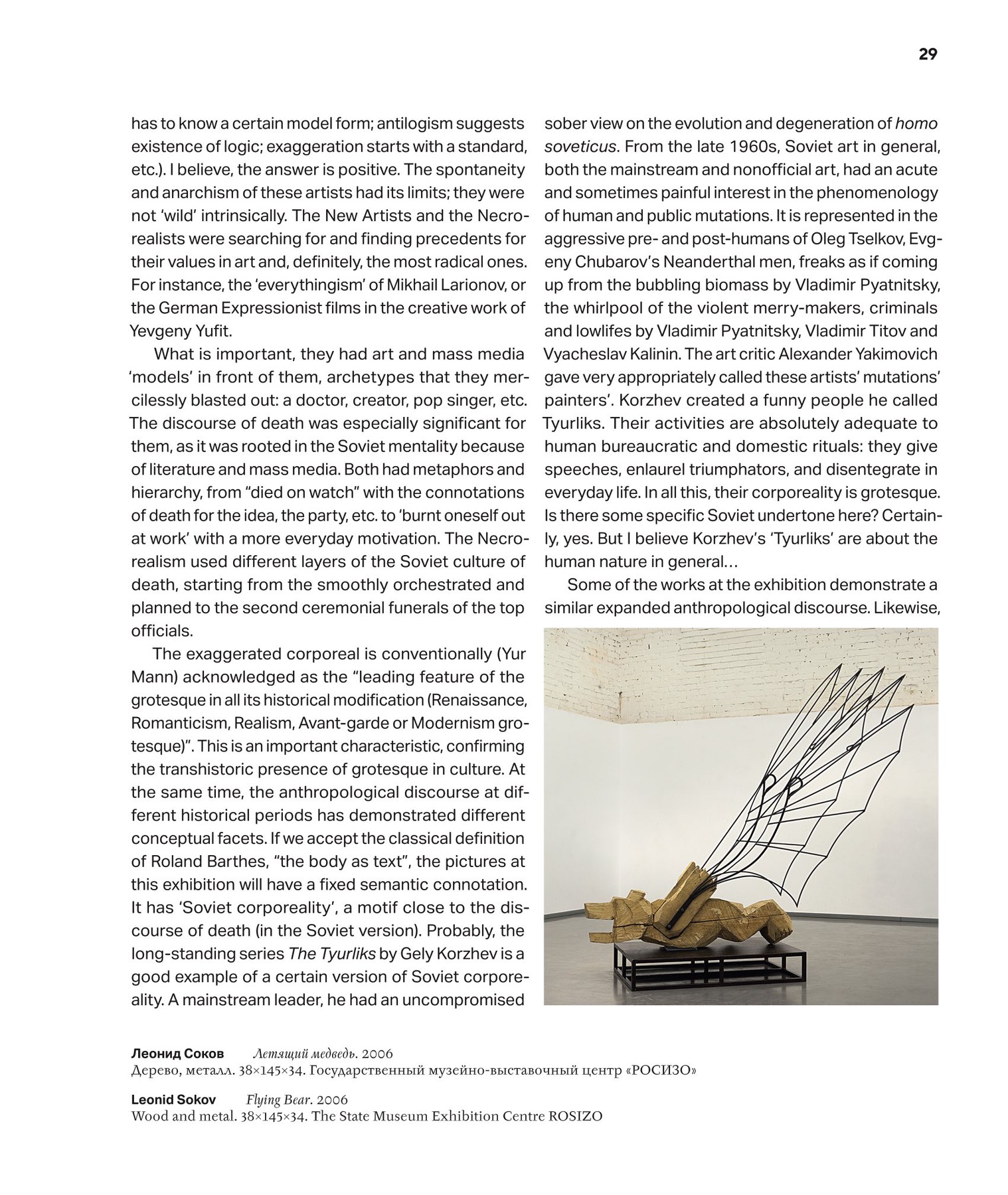
astrous was noticeably connected with the dramatic twists of modern history, in particular, with the end of the Soviet Atlantis. Works by Aleksey Petrenko (The Procedure), Vadim Rokhlin (Two Heads), Konstantin Persidsky (The Cake), Leonid Sokov (The Flying Bear), Aleksander Shishkin-Hokusai (The Fountains of Blood), Viktor Vilner (The Islanders series), Arkady Petrov (The Yellow Bus in Donbass), Viktor Mymrin (The Poor Lot) and Yury Shtapakov (Daniil Kharms), all belonging to different generations and often diametrically opposed creative principles, have direct and fairly mediated (by stylistic and symbolic analogues, etc.) references to the Soviet text, in its different forms and incarnations.
These references can be found in the New Artists’ and the Necrorealists’ works (by Aleksander Sotnikov, Vladimir Kustov, and Valery Morozov). These streams of the Leningrad art had a distinctive quality: it was the art of direct effect, striving to remove all sorts of mediation.
This circumstance is an important one. By the 1980s, the system of mediation had become conspic uous both in the mainstream and underground art. In the mainstream, the ‘thickening’ layers of this system were school, canon, trade union rules of complete ness, let alone the ideological requirements. Under ground art had developed and solidified its own layers of mediation, both formal and conceptual: orientation towards the inner aspects, different from the main stream, symbols, literary and cinematic images, other means of expression, etc. (It is easy to discern all this in the above paintings). But the New Artists and the Necrorealists, with their articulation of spontaneity, disorder, behavioral and creative wildness, rejected both the cultural codes of the mainstream and those of nonofficial art. Can their art practice be described in terms of grotesque, given that they were against norms in principle? Grotesque implies working with form, even if itis destructive. (Theoretically speaking, in order to understand the meaning of deformation, one
[Page 12]
has to know a certain model form; antilogism suggests
existence of logic; exaggeration starts with a standard,
etc.). | believe, the answer is positive. The spontaneity
and anarchism of these artists had its limits; they were
not ‘wild’ intrinsically. The New Artists and the Necro realists were searching for and finding precedents for their values in art and, definitely, the most radical ones. For instance, the ‘everythingism’ of Mikhail Larionov, or the German Expressionist films in the creative work of Yevgeny Yufit.
What is important, they had art and mass media ‘models’ in front of them, archetypes that they mer cilessly blasted out: a doctor, creator, pop singer, etc. The discourse of death was especially significant for them, as it was rooted in the Soviet mentality because of literature and mass media. Both had metaphors and hierarchy, from “died on watch” with the connotations of death for the idea, the party, etc. to ‘burnt oneself out at work’ with a more everyday motivation. The Necro realism used different layers of the Soviet culture of death, starting from the smoothly orchestrated and planned to the second ceremonial funerals of the top officials.
The exaggerated corporeal is conventionally (Yur Mann) acknowledged as the “leading feature of the grotesque in all its historical modification (Renaissance, Romanticism, Realism, Avant-garde or Modernism gro tesque)". This is animportant characteristic, confirming the transhistoric presence of grotesque in culture. At the same time, the anthropological discourse at dif ferent historical periods has demonstrated different conceptual facets. If we accept the classical definition of Roland Barthes, “the body as text”, the pictures at this exhibition will have a fixed semantic connotation. It has ‘Soviet corporeality’, a motif close to the dis course of death (in the Soviet version). Probably, the long-standing series The Tyurliks by Gely Korzhevis a good example of a certain version of Soviet corpore ality. A mainstream leader, he had an uncompromised
Jleonng Coxos Aemawmuii medeedv. 2006
29
sober view on the evolution and degeneration of homo soveticus. From the late 1960s, Soviet art in general, both the mainstream and nonofficial art, had an acute and sometimes painful interest in the phenomenology of human and public mutations. It is represented in the aggressive pre- and post-humans of Oleg Tselkov, Evg eny Chubarov's Neanderthal men, freaks as if coming up from the bubbling biomass by Vladimir Pyatnitsky, the whirlpool of the violent merry-makers, criminals and lowlifes by Vladimir Pyatnitsky, Vladimir Titov and Vyacheslav Kalinin. The art critic Alexander Yakimovich gave very appropriately called these artists’ mutations’ painters’. Korzhev created a funny people he called Tyurliks. Their activities are absolutely adequate to human bureaucratic and domestic rituals: they give speeches, enlaurel triumphators, and disentegrate in everyday life. In all this, their corporeality is grotesque. Is there some specific Soviet undertone here? Certain ly, yes. But | believe Korzhev's ‘Tyurliks’ are about the human nature in general...
Some of the works at the exhibition demonstrate a
similar expanded anthropological discourse. Likewise,
Aepeso, metaaa. 38x145x34. TocyaapcTBeHHbIt My3CHHO-BbICTABOUNDIM WeHTp “POCU30»
Leonid Sokov Flying Bear. 2006
Wood and metal. 38x145x34. The State Museum Exhibition Centre ROSIZO
[Page 13]
30
the sculpture Happy Childhood by Grisha Bruskin is a respond both to the Soviet ‘password’ and more gen eral problems of consciousness, such as the calling of the psychedelic. Juxtaposition itself of these two artists may seem paradoxical, but the significance of the anthropological discourse makes the institutional (the official-nonofficial) borders easily permeable. Oth er boundaries within the anthropological discourse are overcome, literally. The major part of the western par ticipants of the exhibition touch upon problems related to the corporeal; unexpected affinities emerge. The so cial roots of the corporeal metamorphoses are among the concerns of Alexander Pozner (The Fools series), Carlo Gloria (The Flexible Workers), Piotr Dyakov (The Head) and Anna Gaiotti (The Flaming Clown), Catherine Bay (The Valse) and Anatoly Osmolovsky (The Ukrain ian Woman). Many participants of the exhibition are preoccupied with the state of consciousness theme, common to Florence Obrecht, Axel Pahlavi (The Soul), Aleksander Tsikarishvili (The Effect of Hawthorn Infu sion), Alexander Eremin (The Chimera), Francois-Xavier Delmeire (Schopenhauer), |gor Pestov (Vy Demons) and Khristophoros Katsadiotis (FIN).
If the New Artists’ and the Necrorealists’ work be considered in the context of the anthropological discourse (and it is not for nothing that they insisted on certain anti-reflection and the inner physiological character of their ‘gesture’), the works of Matt Sesow, Dana Ellyn and Joseph Loughborough become closer to them.
The exhibition raises another most interesting ques tion of the relation between grotesque and the Man nerism. In fact, the two were linked historically, during the early Baroque grotesque was the most reliable means of expression. Since then, ties with Mannerism have remained intact, despite all historical changes grotesque has gone through.
| believe, the notion of Mannerism in this context is
not related to the historically fixed period of art history;
if anything; rather it is the endogenous state of art, some pinnacle of the subjective, the affectation and excessiveness of form; in short, the expression of the formal and substantive test that art lives through at definitive moments. The number of Mannerist works at the exhibition is astounding (e.g. Olga Rapay, Sergey Merenkoy, Viktor Danilov, Pavel Kaltygin, Maria Bogoraz, Evgenia Sare and Ilya Kreydun). This is the classical Mannerism, spicy, sharp, brittle and ingrained with retro associations, but mesmerizing and suggestive. At the same time, it is obvious that the presence of Giuseppe Arcimboldo, a classic of historical Mannerism, in the form of the title of one work (Arcimboldo by Victoria Begalskaya and Aleksander Vilkin) and a witty reduc ing reference to his favorite compositional technique (Vegetable Motif and Seafood Motif by Aleksander Zadorin), is not out of place at the exhibition. What is it grotesque during its decline, going through the stage of stylism and somnambular immersion into its own history? Or re-vitalization, with grotesque gath ering strength to overcome the inertia of modern art inertia, which, in its turn, has moved grotesque to the periphery? The exhibition's answer to these and other questions are not unambiguous. But the questions themselves will not leave the spectator unmoved.
Alexander Borovsky
[Page 14]
68
Gava Sanu Aemckue pedpa. 2012
XOACT, AKPUA. 99,194
Dana Ellyn Baby Back Ribs. 2012
Acrylic on canvas. 99,1x94
[Page 15]
Matt Cucoy Xaoc. 2018 XOACT, MACAO, aKPMA. 76,2*111,8
Matt Sesow Chaos. 2018
Acrylic and oil on canvas. 76,2*111,8
Pictures · click to enlarge
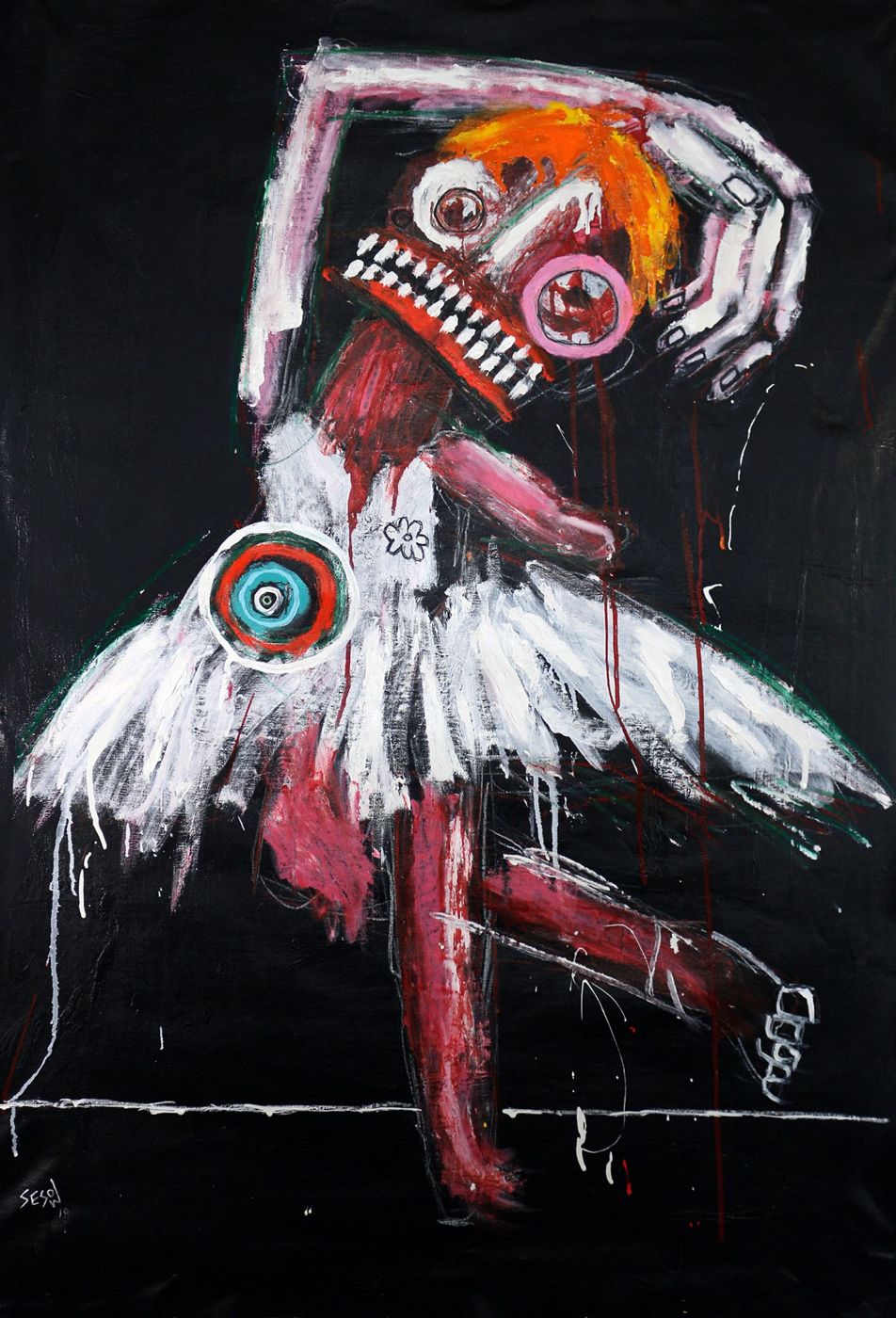
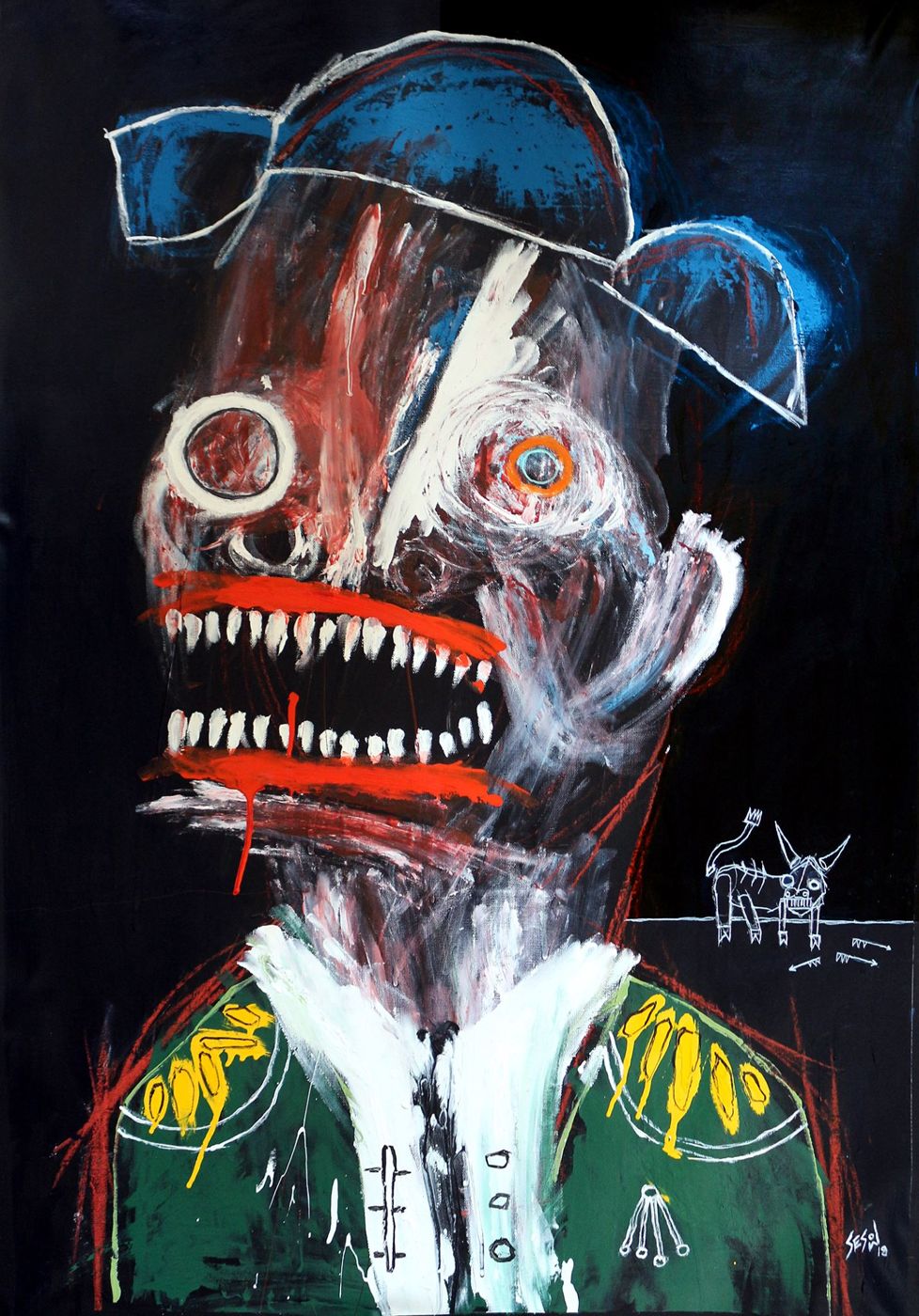
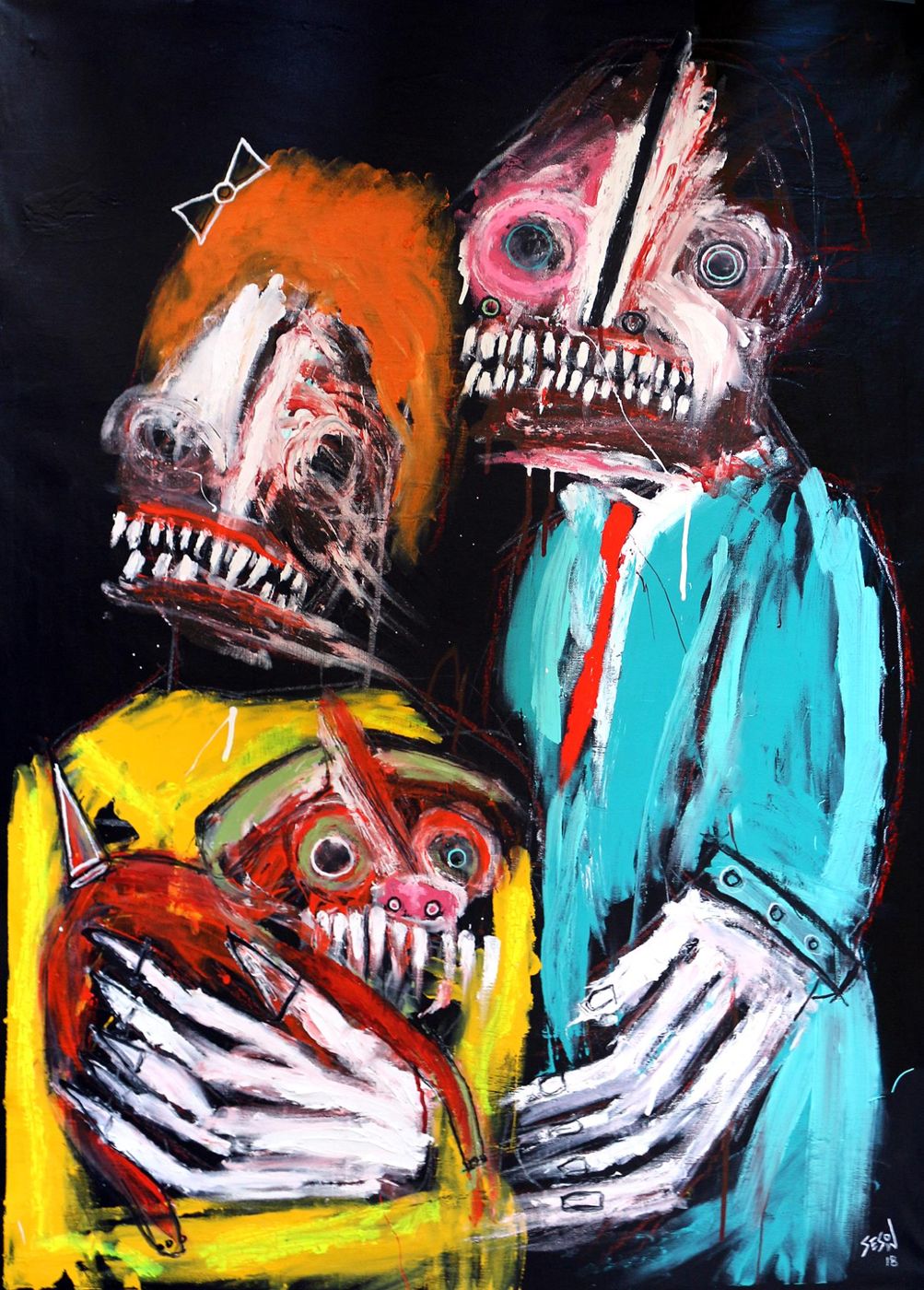
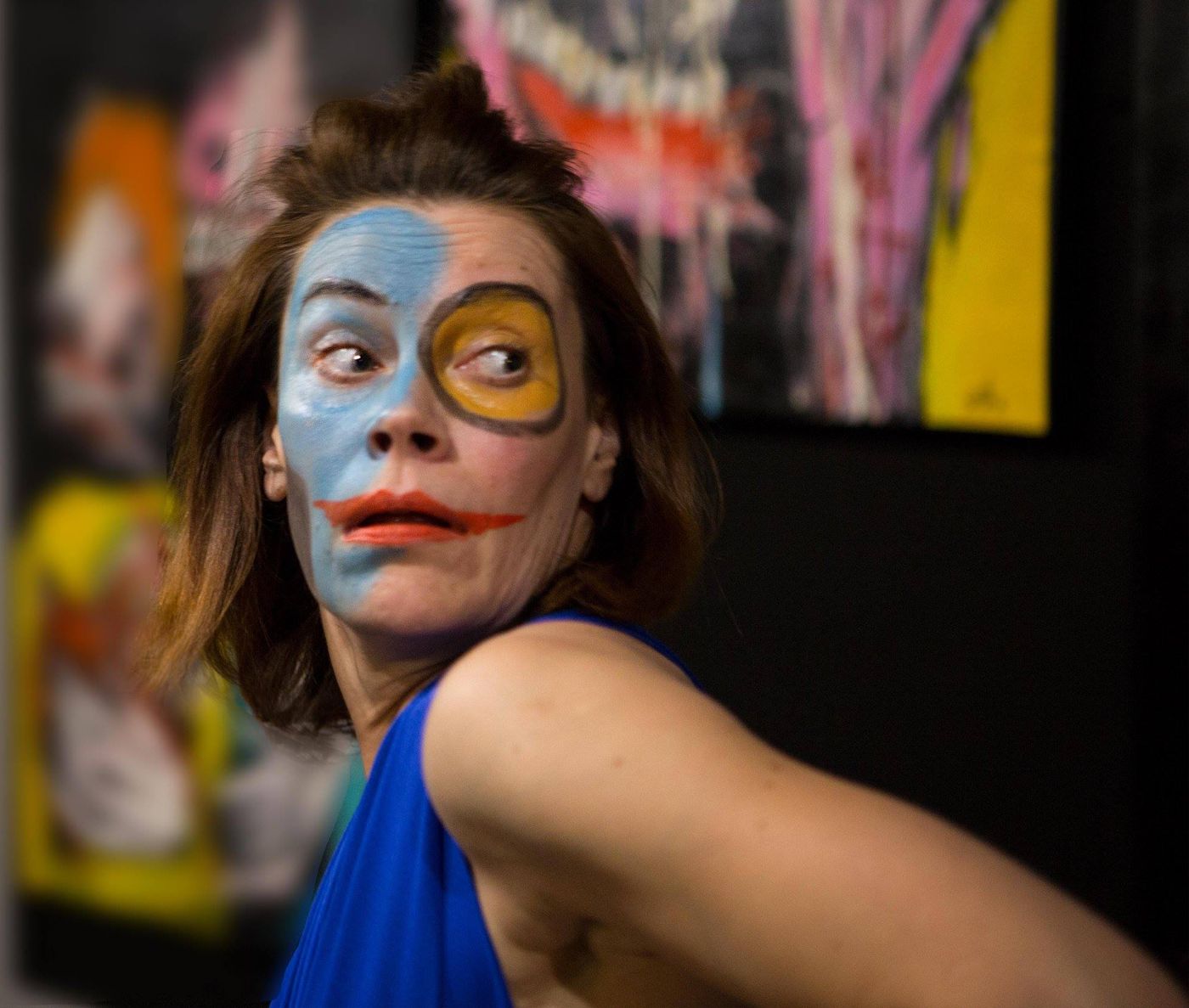
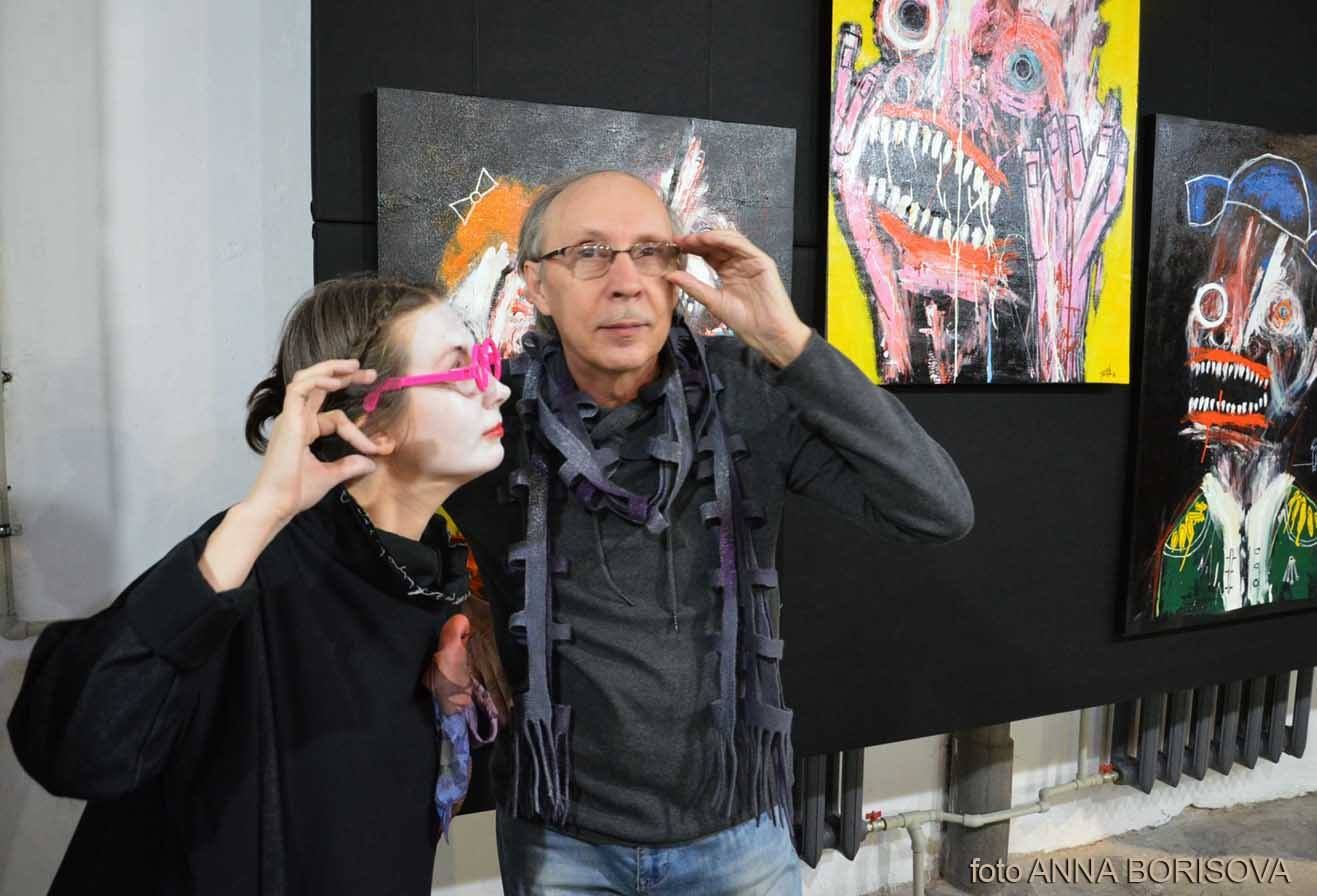
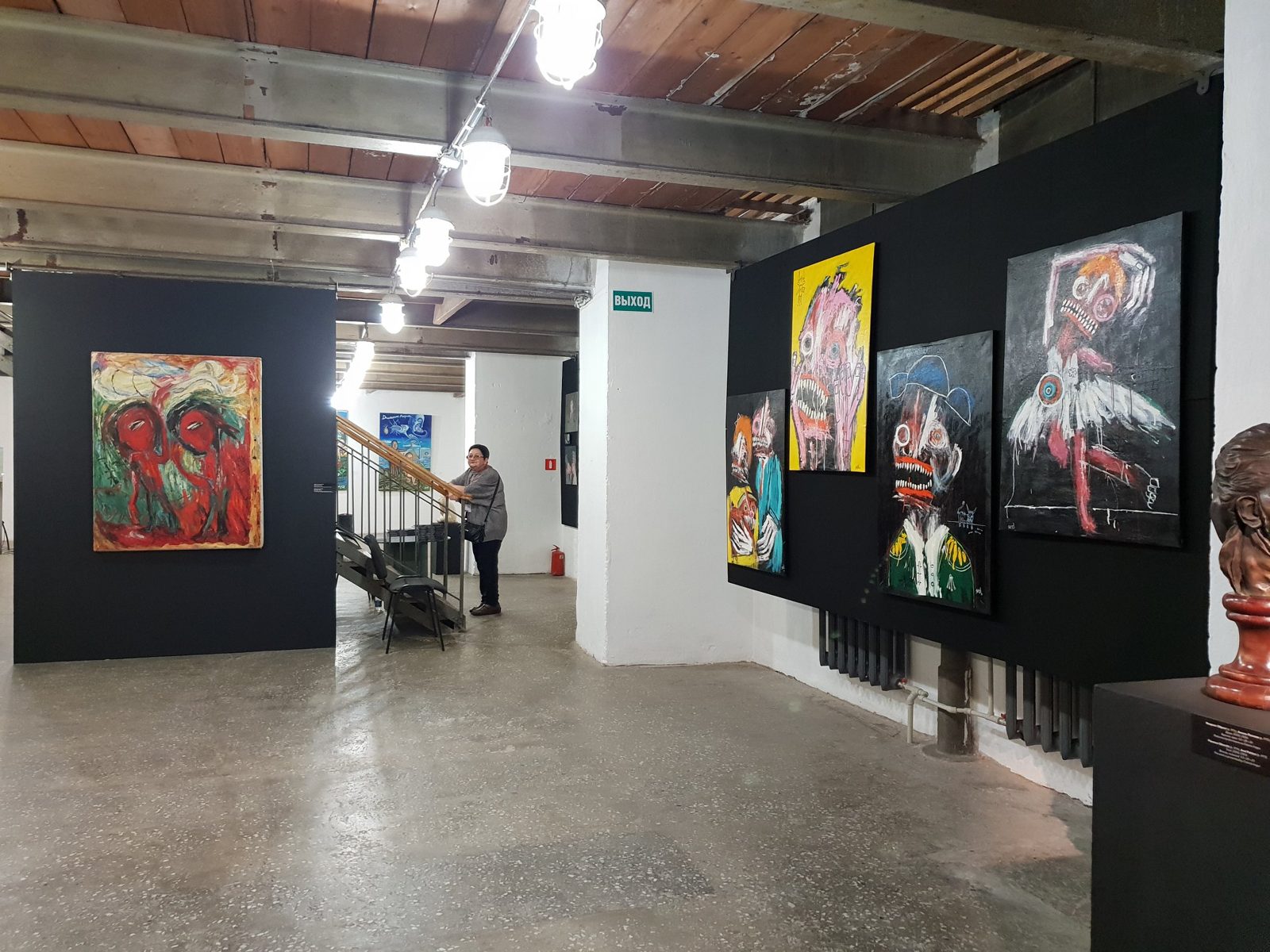
Photos from the show · 11 · click to enlarge
Full post
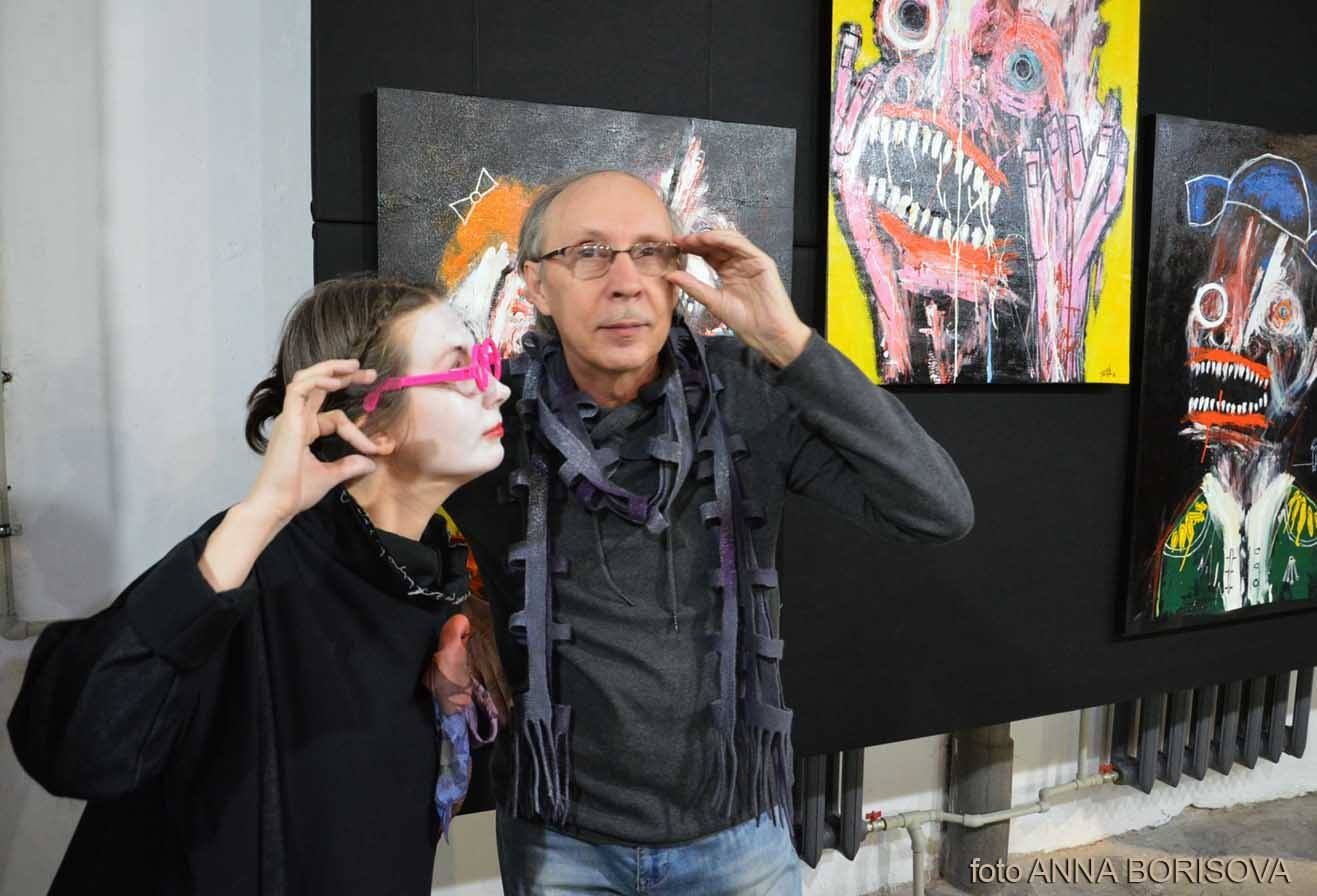
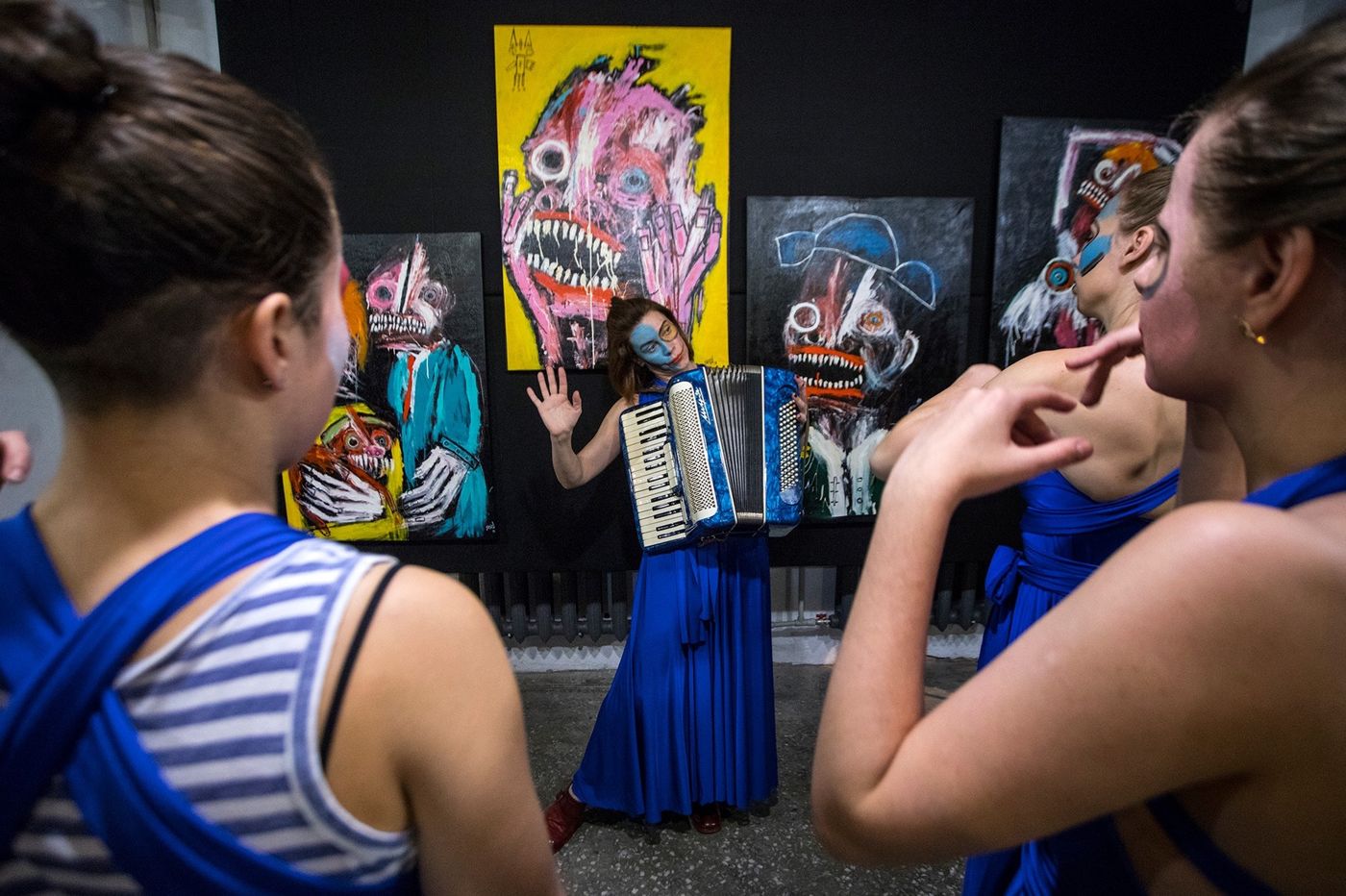
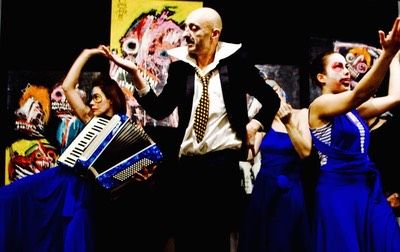
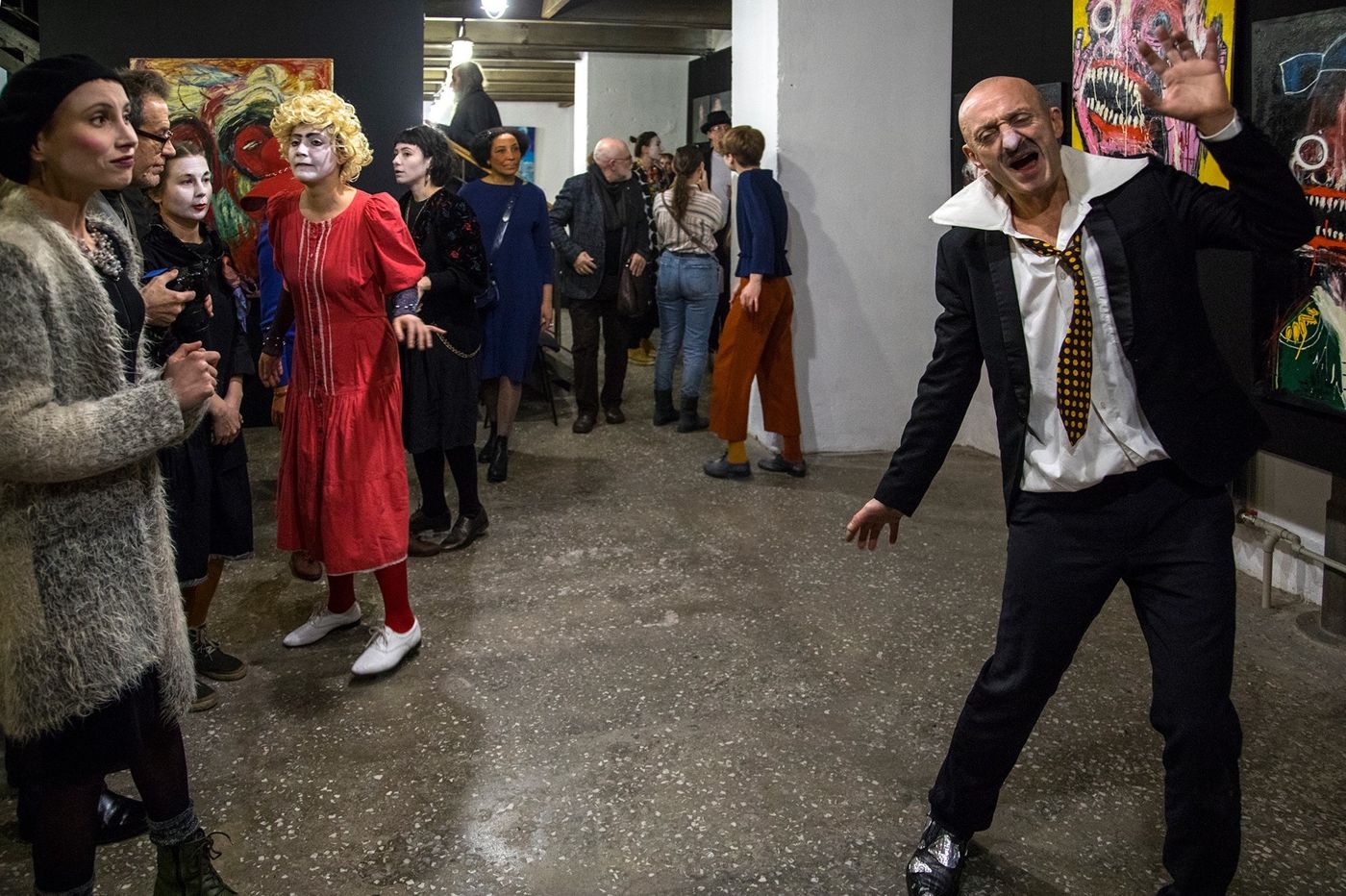
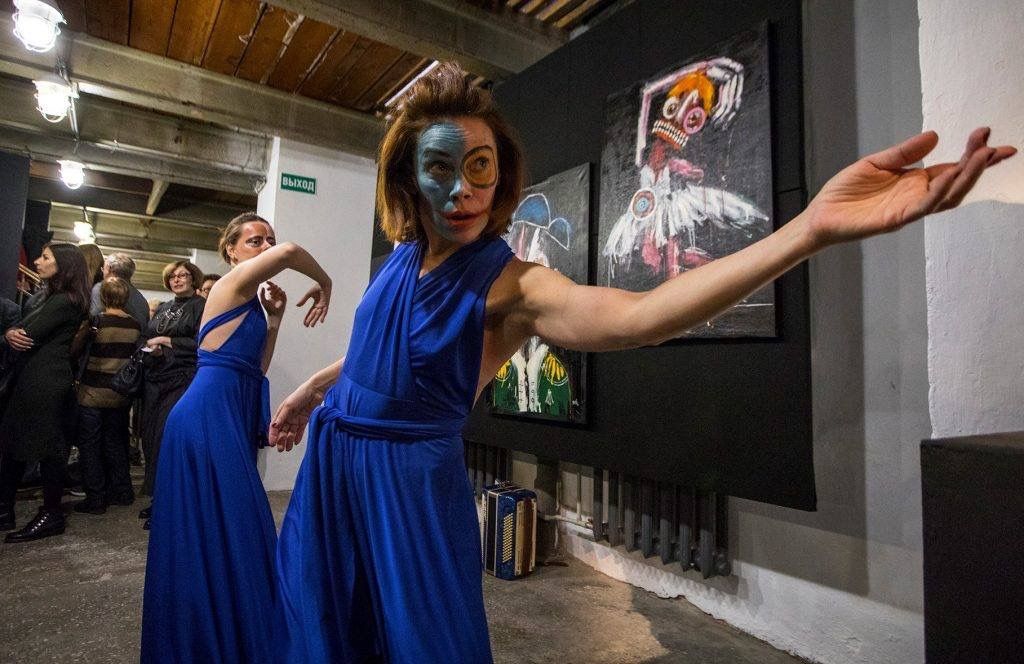
While others are in Miami... Here are a few photos from the opening yesterday at the MISP Museum in St. Petersburg Russia yesterday that has 4 of my paintings at Музей МИСП. THANK YOU Afrodite Oikonomidou! #madeindc #sesow #202creates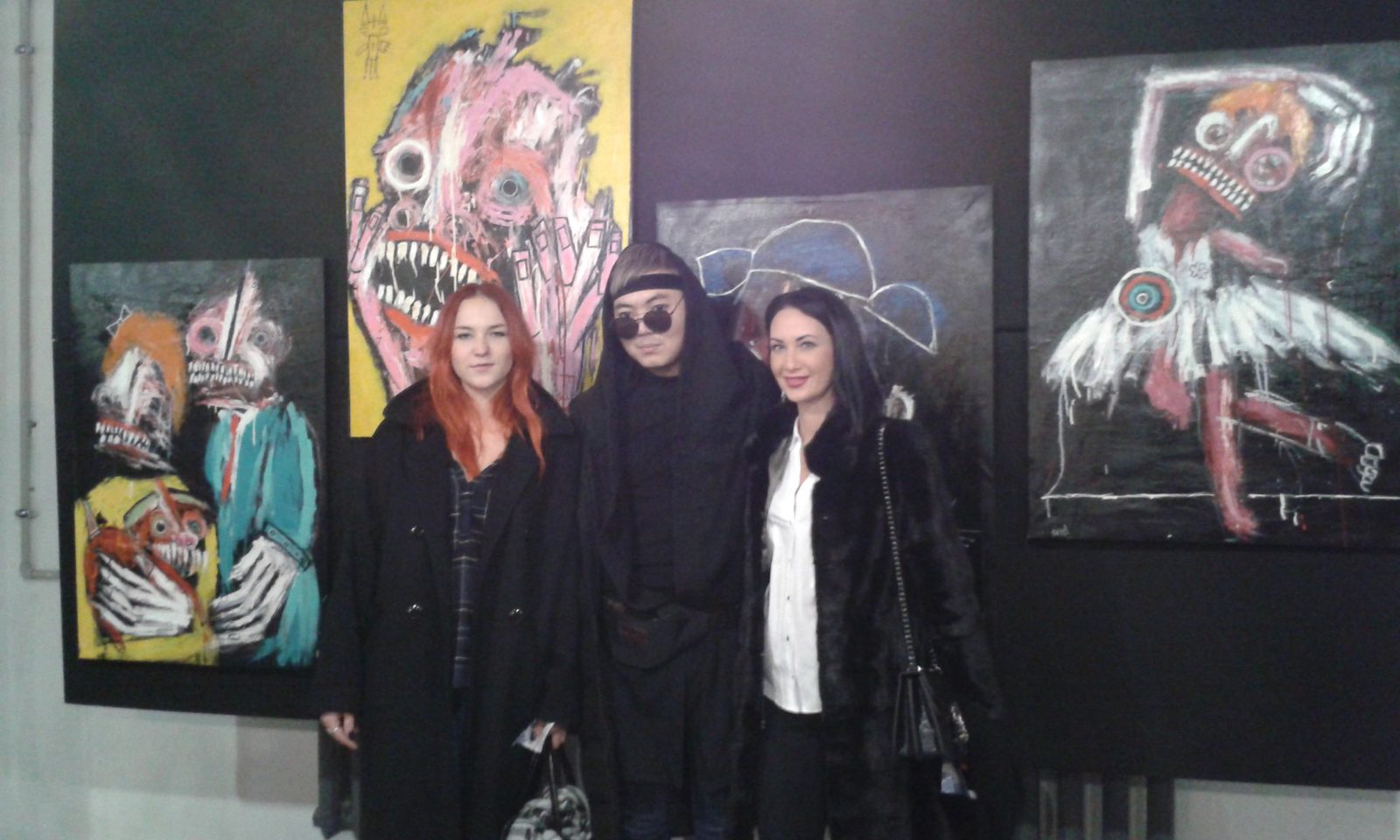
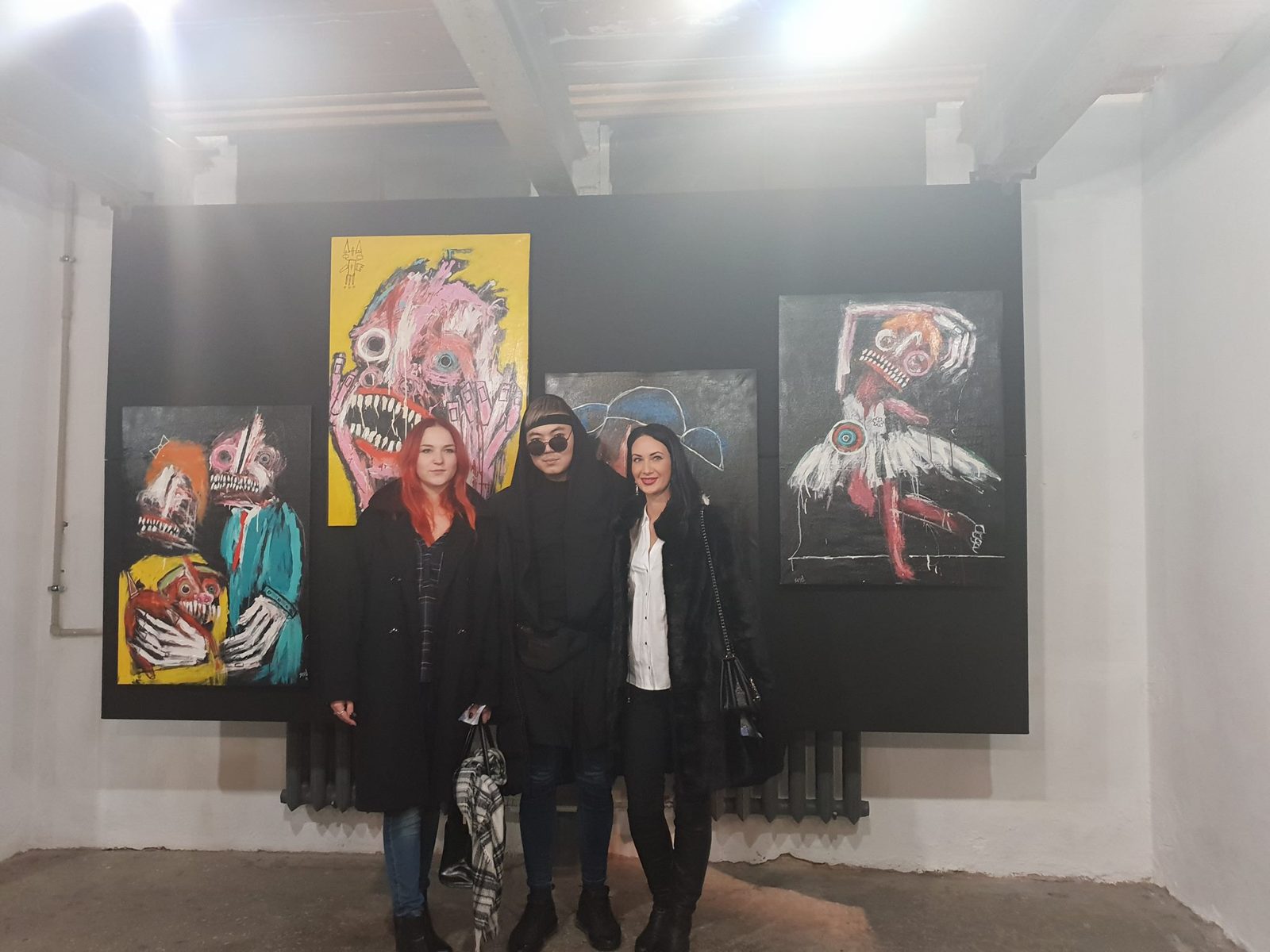
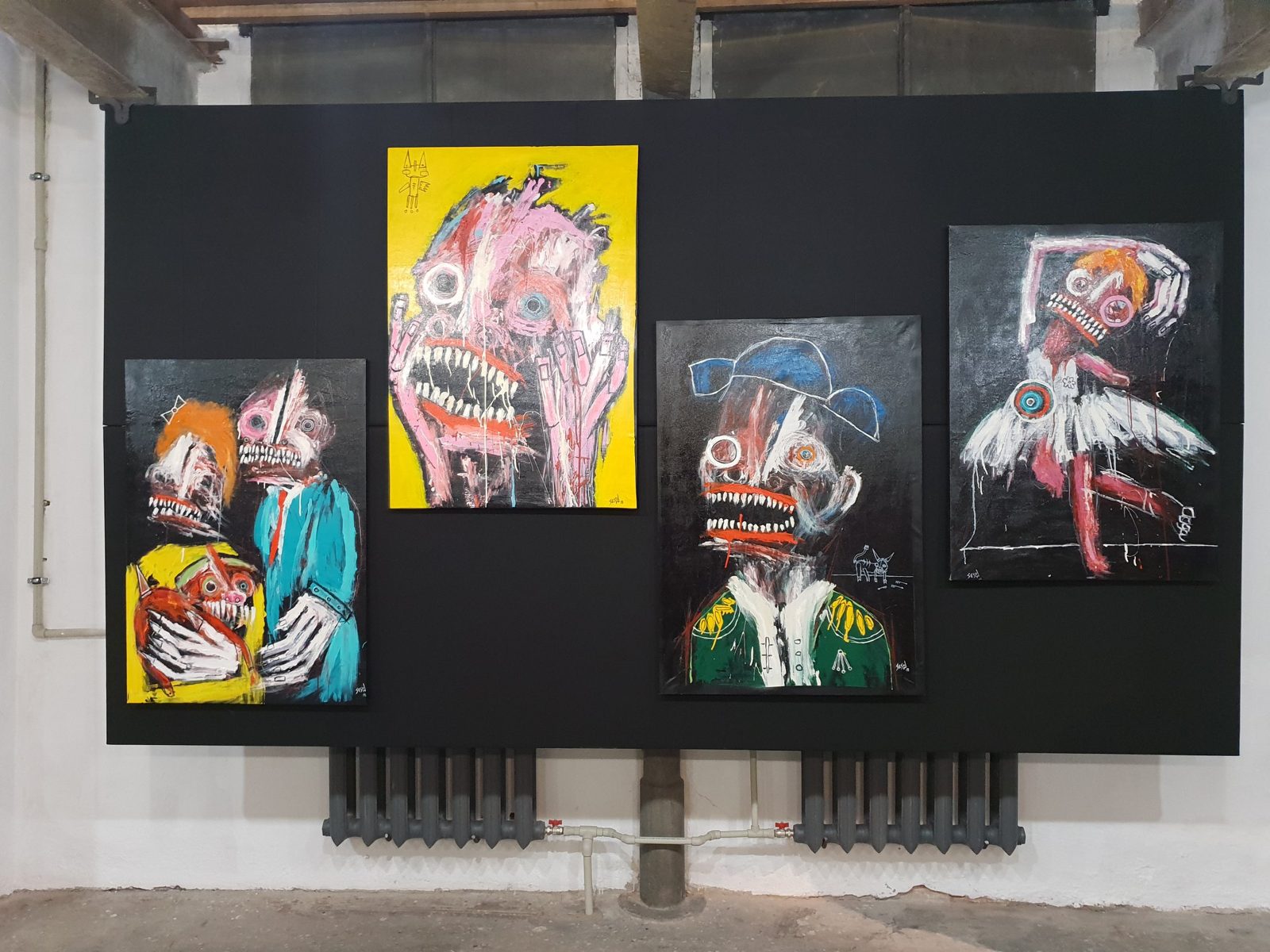
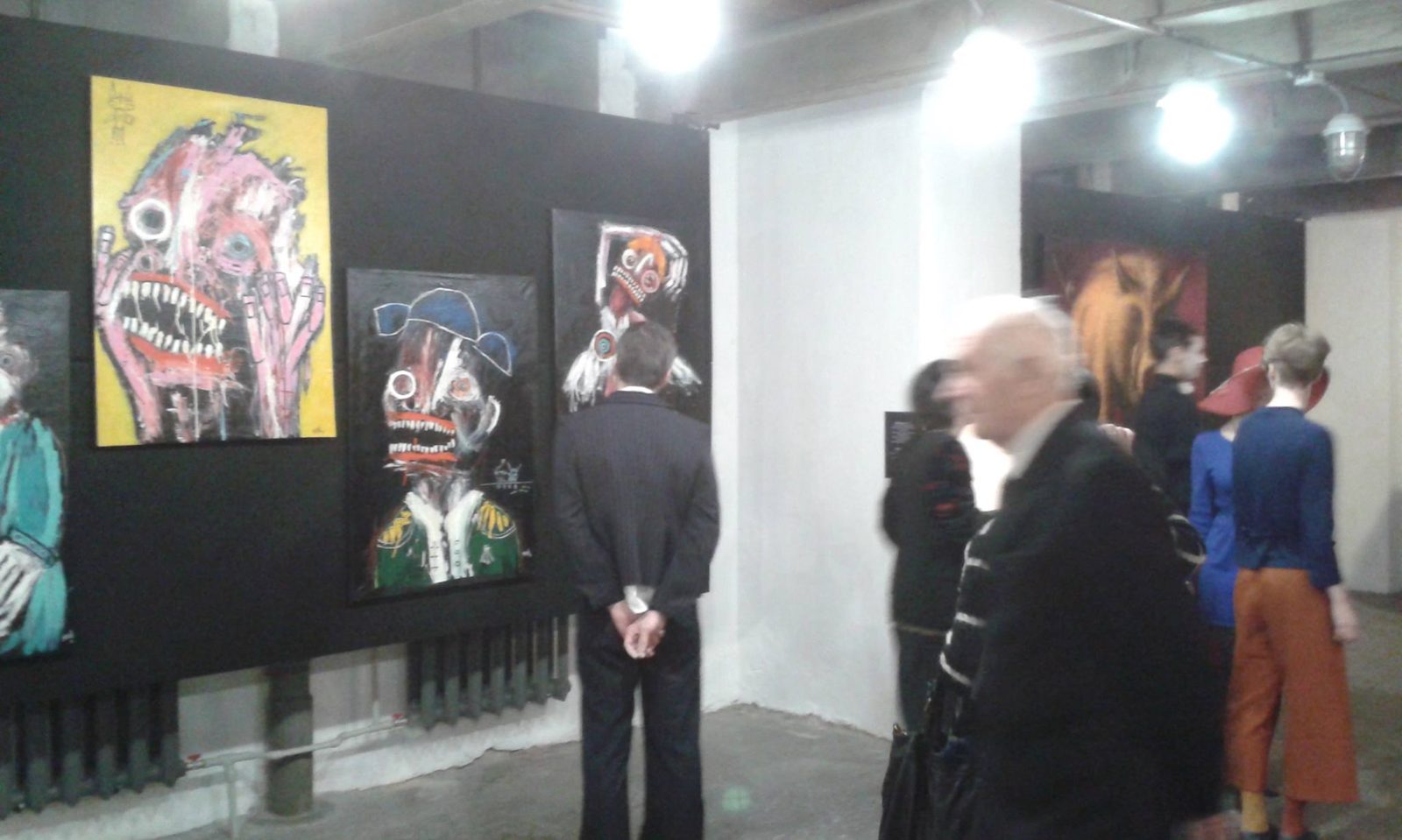
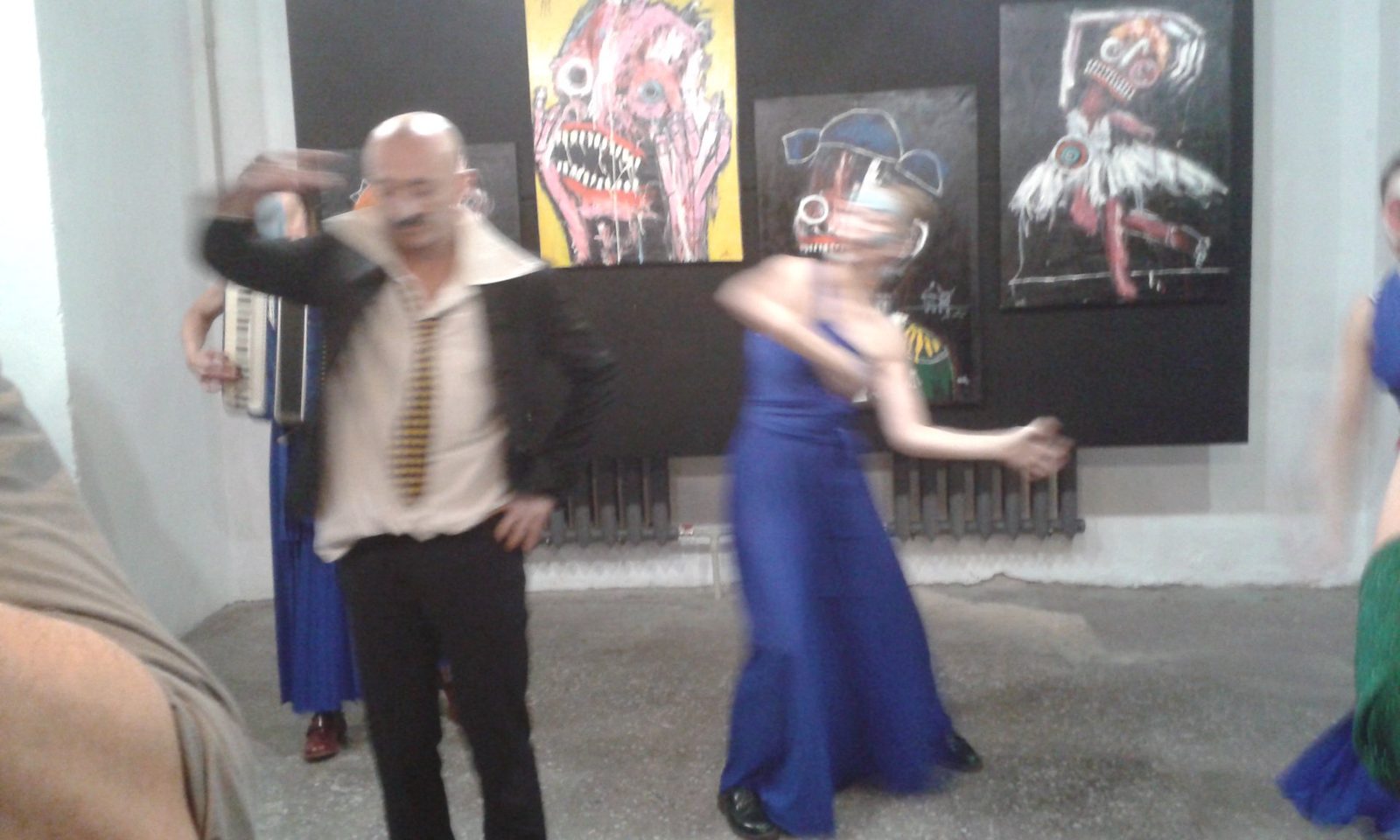
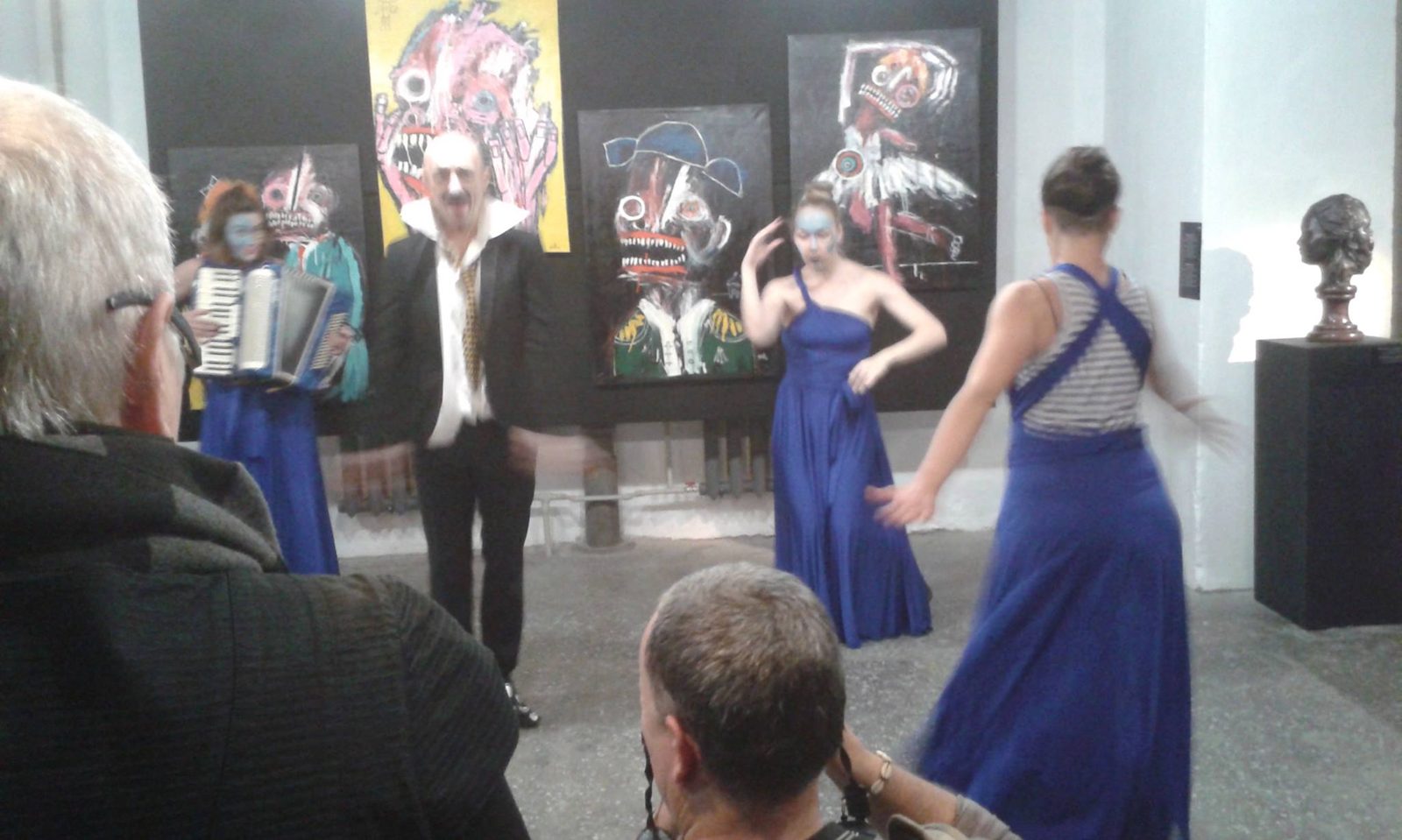
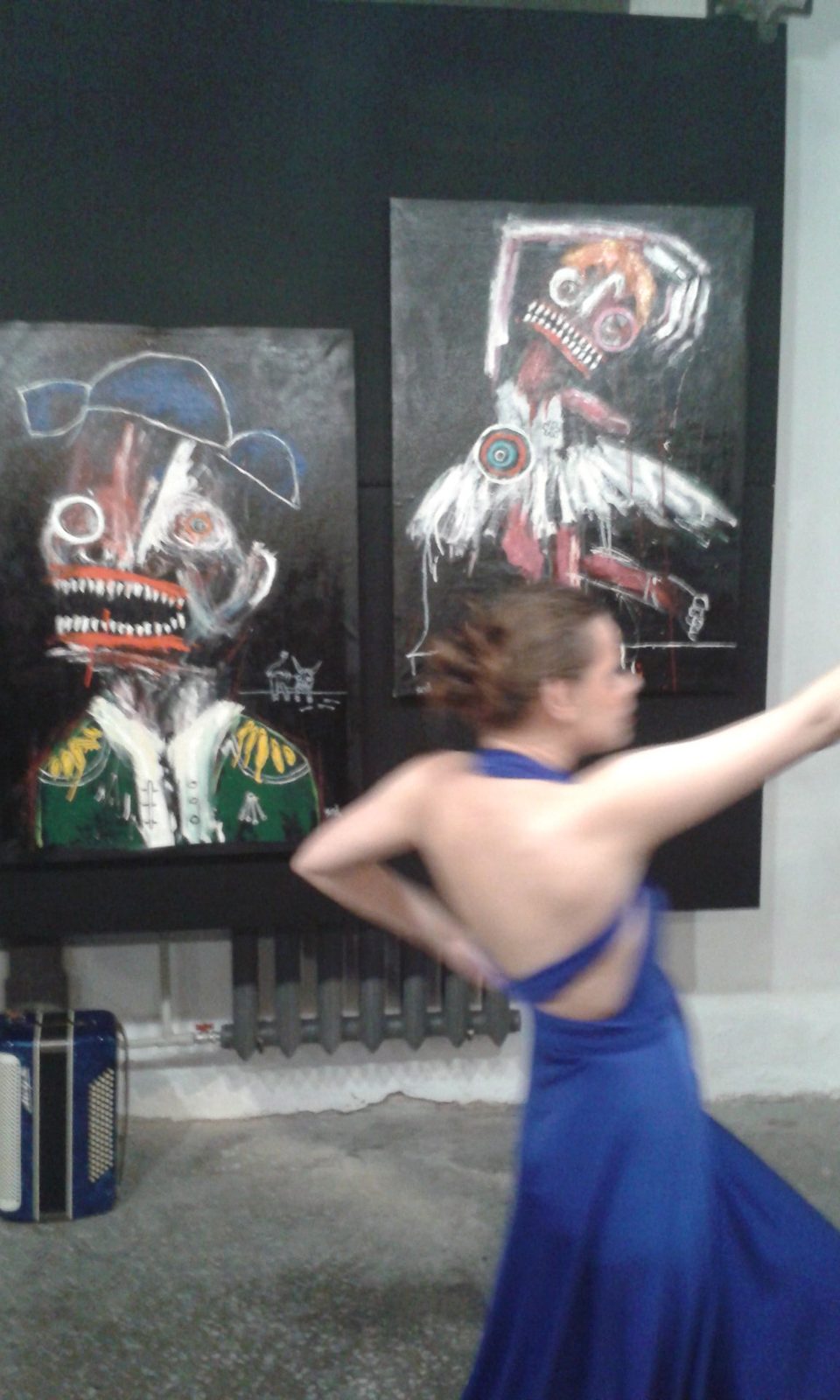
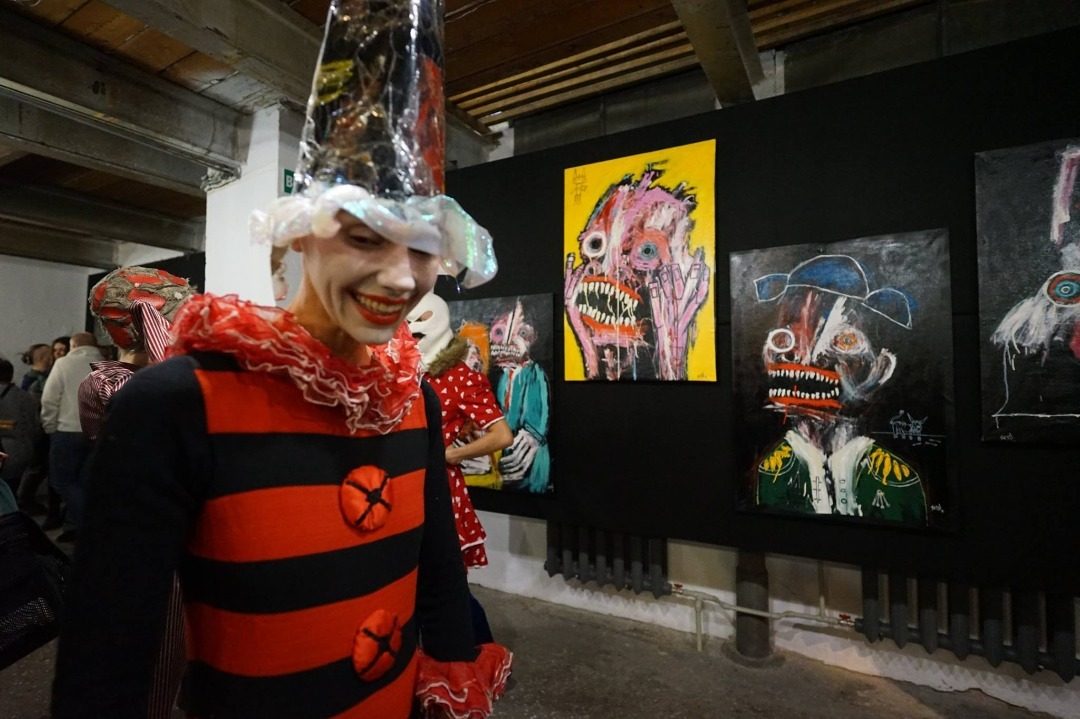
Full post
Four of my paintings at the opening of the exhibition in St. Petersburg, Russia at the MISP Museum. I have prints of all 4 available if you are interested... also, i get the 4 paintings back to me in the usa in 2019. thanks!! Matt Sesow . #sesow #misprussia #outsiderart #artbrut #avam #folkart #dc #madeindc #matherstudio #dcitystyle #202creates #contemporaryart #painting #artwork #love #instagood #kunst #fineart #grotesque #dcart #mydccool #abstractart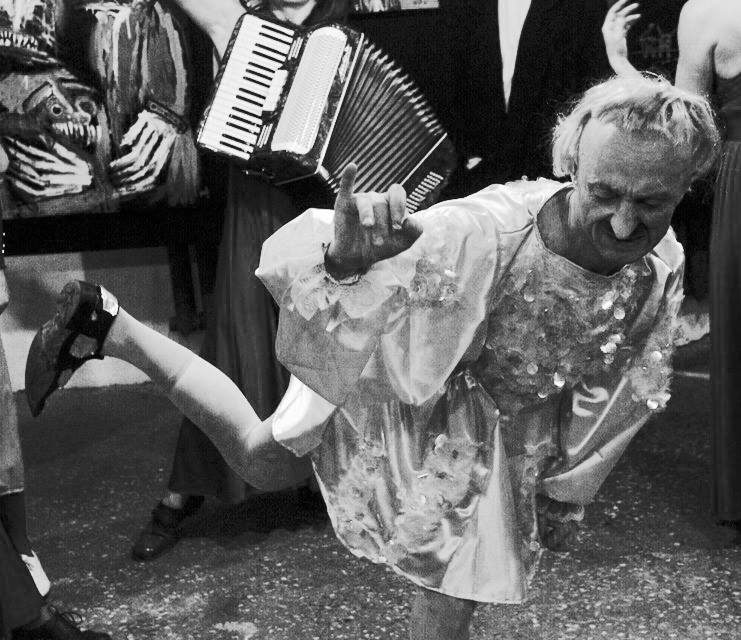
Photos and posts by Matt Sesow from his Facebook and Instagram archives and the artist’s archive. Click a photo to enlarge it.
Matt at the time · his Facebook posts
Recently received the paintings back from St. Petersburg Russia that were part of the museum exhibition at the MISP Музей искусства Санкт-Петербурга XX - XXI веков
Very happy and honored to be part of the show and so happy to get my paintings back in perfect condition, along with a few large catalogs from the museum about the show!
I'll be reaching out to the people wanting to buy the paintings in the near future... email me or message if you want to be on the list. thanks!! Matt . (ps. huge THANK YOU to Afrodite Oikonomidou !)
here is a blurb about the exhibit: Radical fluidity. The grotesque in art
An exhibition dedicated to the grotesque in art will be opened inside the Museum of XXth-XXIst century art in Saint-Petersburg. This large-scaled project contains about 300 works painted by more than 100 authors from Russia, France, Italy, Germany, USA, China and other countries. …
Saved web pages and links
- Sesow and Ellyn at MISP, St. Petersburg (sesow.com/russia/) · Matt’s own page about the show: the paintings, the catalog and opening-night photos
Research notes
- The opening reception was Thursday, December 6, 2018 (Matt’s Facebook post of December 7 says “opening yesterday”); the exhibition ran December 7, 2018 – February 17, 2019.
- Four paintings by Matt and one by Dana Ellyn, five in all.
Where this record comes from
- history.sesow.com (live, 2026-10-03)
- Facebook (Matt Sesow posts/events export)
- Mailchimp newsletter Feb & May 2019
- Matt Sesow’s Facebook posts (artist’s own export), matched to this entry by name and date
Cite as: Sesow, Matt. “‘Radical Fluidity: Grotesque in Art,’ MISP Museum, St. Petersburg.” Matt Sesow Career Chronicle, 2018. history.sesow.com/e/2018-radical-fluidity-grotesque-art-misp.html. Accessed [date].
Were you there? Do you have a photo, a clipping or a memory of this? Please write to sesow@sesow.com or use Ask Matt a question, and it will be added here.
Also in 2018
Exhibition (6)
- “All in the Family,” Metro Gallery, 1316 N Street, Lincoln, NE
- “Political Art from the 18th Century to the 21st”
- Transformer Gallery 15th Annual Silent Auction & Benefit
- Paintings at gallery in Dahouet, Bretagne, France
- Hill Center, Capitol Hill, Washington, DC
- 2018 open-studio series with Dana Ellyn at 916 G Street NW #304