Click a page to open it — scroll or pinch to zoom, drag to move.
Full text
From YouTube’s automatic captions of the CreativeMornings video, with only names and a few misheard words corrected (Willem de Kooning, Atari, Bloombars, Luncheon of the Boating Party, Dana, CD Warehouse). Otherwise Matt’s words as spoken; times are minutes:seconds into the video. Editor’s note: at 6:54 Matt says he “worked actually on the original Macintosh development team in Nebraska”; the record is that as a teenager he worked on the fonts and some of the icons for AgDisk at Harris Technical Systems in Lincoln, one of the third-party developers named on Apple’s 1984 “Macintosh Software Team” poster.
[0:32] Hello, DC
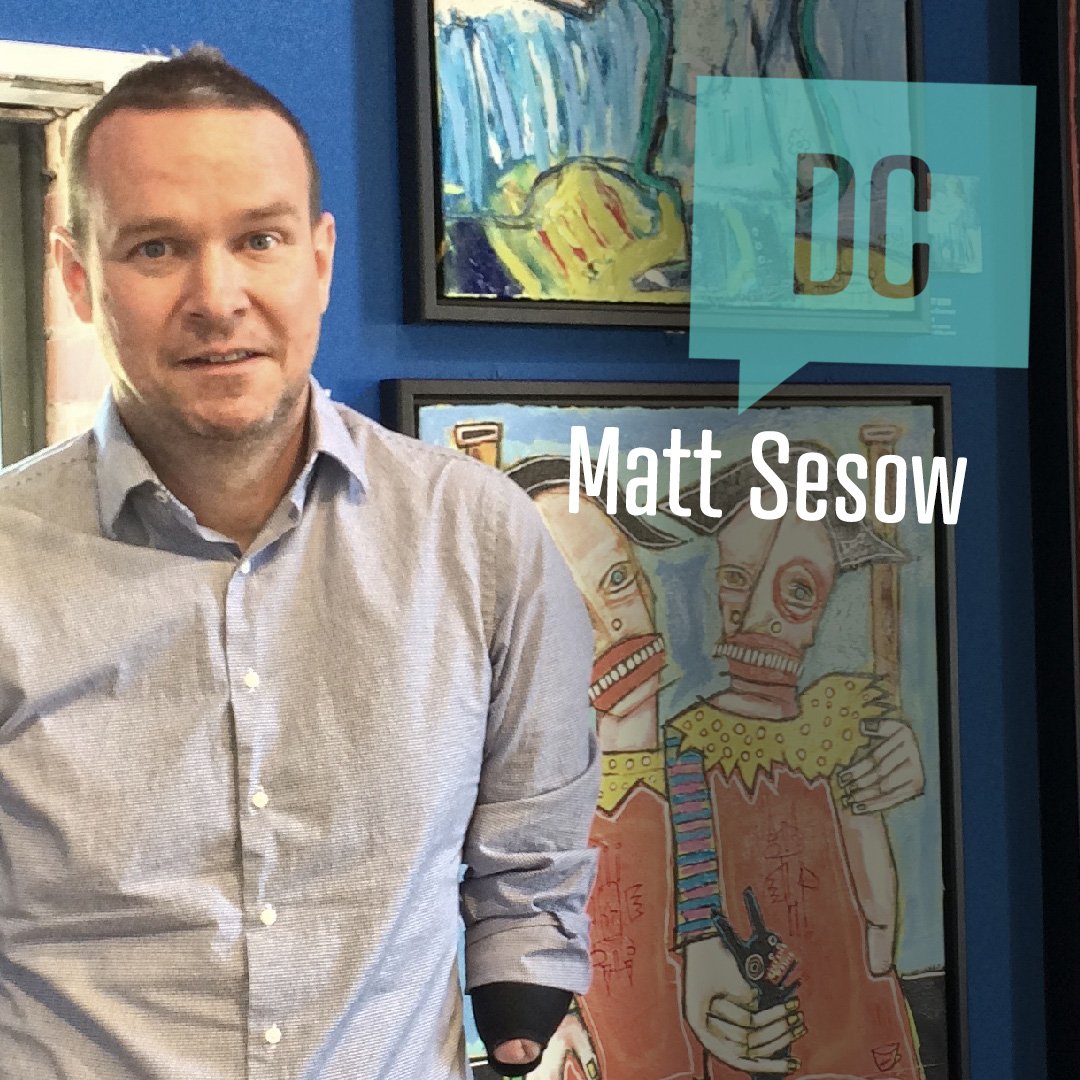
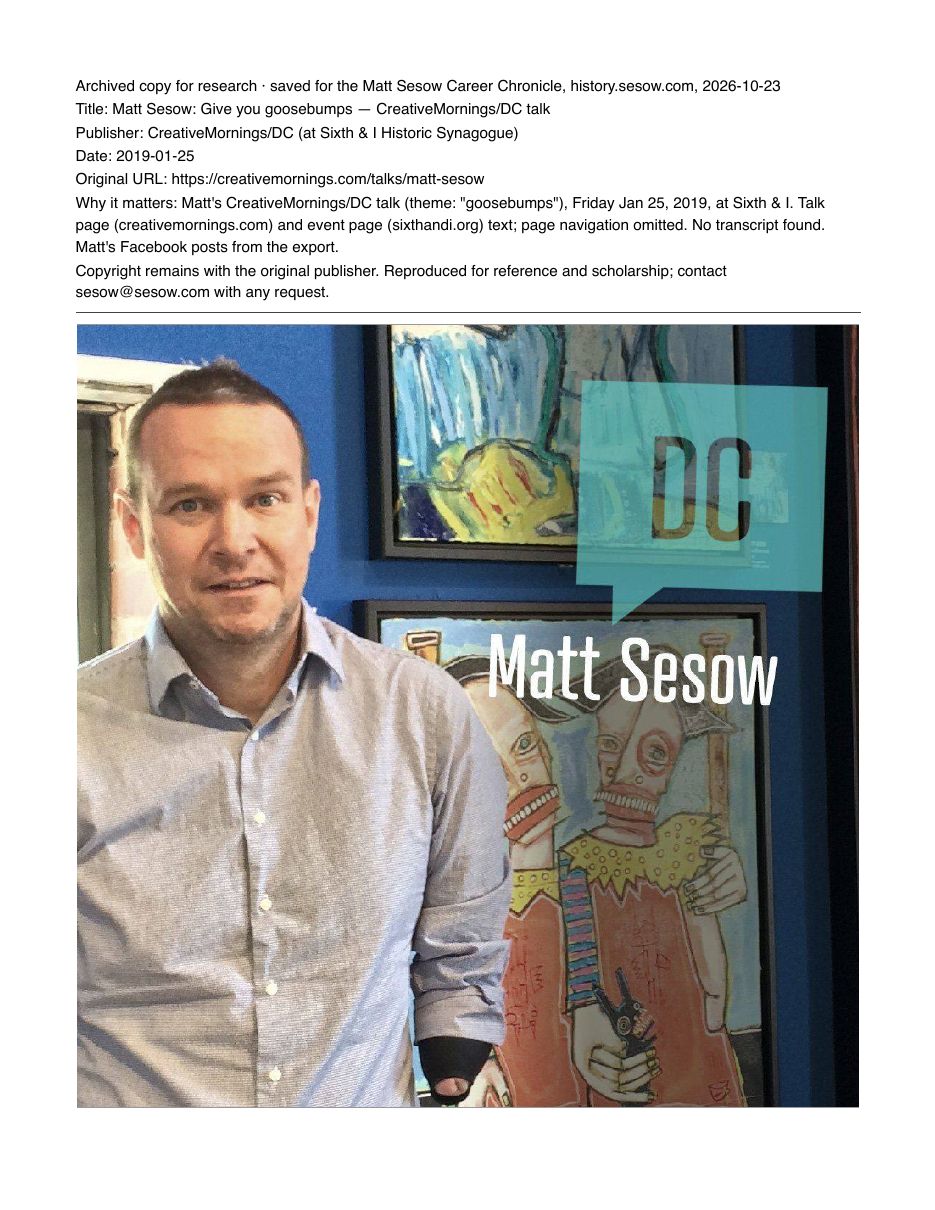
[Applause] Wow thank you get set up here it's the first time I have to do something that's timed so I don't keep you all too late yes this is me I'm Matt Sesow we'll start this way um I've been living in Washington DC since ’89, 1990 I moved properly into DC into Cleveland Park and I'm 52 years old and I I'm a painter I'm an artist and I'm gonna I guess tell you a little bit about myself and how I got here because I think but like a lot of you I was a professional programmer when I first came out here and then lo and behold now
[1:22] The year-long solo at the American Visionary Art Museum
I'm a painter so anyways this this is a postcard that was from my recent solo exhibition up in Baltimore at the American Visionary Art Museum maybe some of you have seen it the show up there was up for a year and it was 150 of my paintings featured a documentary about me it also displayed one of my stamps I'd created a stamp for the United Nations that they used so it's really kind of like I'd reached my whole goal of being an artist with this with this exhibition up in Baltimore and now the museum up there has acquired I think 20 of my paintings in the permanent collection so I made it this is kind of what I've been working on for the past 25 years was to get this show and now I want to I want to talk to you today about how did I get here maybe I can give you some advice of my experiences maybe you'll see something that I did that I relate to you give you some
[2:28] Nebraska, the airfield and the accident
inspiration hopefully or maybe it'll just be fun to look at my paintings so this is this is where I'm from I was born in Nebraska and this was the view out of my front yard across the dirt road down a little hill there was a small airfield from I guess it was probably around 1975 when I was eight years old this was one of the best places to play in the neighborhood was by the airfield and as you can see there weren't any fences there weren't any signs it's kind of different than today's rules so anyways one morning or afternoon actually in the summer the kids were all out there playing a game and I was you know running out into the grass way and in the plain of one of the small planes was landing and I woke up in the hospital so what happened that morning and I guess it was 75 not morning after noon because I because we're in the morning right now I feel very very caffeinated yeah so anyways what happened was I was hit by the airplane and it it chopped my arm basically with the propeller terrible thing for everybody to see in the neighborhood I woke up and I was like wow this is this is different I but but I can remember it's an 8 year old I thinking you know it's probably like breaking your arm or something but of course the reaction from everybody around me made me feel a little bit different because I knew this was serious so what happened was they had to amputate my hand it was my dominant hand at the time but being 8 years old it wasn't you know I guess a huge deal so I pretty much went through my my childhood you know learning to do things with one hand my family was wonderfully supportive my dad was a professor at the University of Nebraska my mom was a teacher as well so you know really stable great family brother or sister so pretty much it was just kind of like I was the surreal kid I guess we could use that word that was different from everybody else in the fact that I had a disability or physical disability that you know I didn't have previously so it was kind of a rapid change for me and and I guess fairly traumatic so anyways
[4:57] Detasseling corn and the first computer
living in Nebraska and and this was really was this is my neighborhood the backyard was a cornfield there were probably ten houses in the neighborhood there was a lot of alone time for me and one of the big things that we do in Nebraska in the summer is you when you're 14 years old as you go out and you detassel corn that's a job that we do for usually get about 200 bucks for the summer I think they still do it it seems kind of maybe it with legal stuff now I'm not sure they would let 14 year olds go work in the fields in Nebraska but anyways after the summer I had $200 and I I decided to buy a computer with or not a computer but actually Atari set up with with programming capabilities because I loved video games and that gave me chills so I'm not sure did they ask you the question coming and today what gives you chills what gives you goosebumps okay so that's kind of where I want to go with this whole whole trajectory how I got that that solo show at the Visionary Museum was a series of chills a series of inspiration a series of things that really pump my Adrenaline's what got me to this point so because I love video games so much I wanted to learn how to how to write them so I you know back then it was 8-bit you know space invaders very low-tech which you could play on your home computer but I wanted to figure out how to move little blocks around on the screen and things like that so I taught myself first basic programming then Pascal program just sitting you know alone by myself in front of this computer over much much time by myself so what turned out with that is I was able to to get myself a job or two programming at a very early age so I was I think 15 when I had my first real job as a programmer and I worked actually on the original Macintosh development team in Nebraska doing just icon work and stuff like that so so that's what kind of got me started into into do-it-yourself self-taught stuff it was it was kind of like a seeing the effects of working really hard on something and and how that that can turn out so during this
[7:16] Punk rock in England, 1981
time the other another thing that really really really gave me chills was was music because of my disability I was selected to represent the United States in a children's Olympics game that was in England and I guess it was 1981 and part of that I was on the US team we were taken to like a clubhouse you know or place a pub I guess it probably was a music hall and they had a band that was gonna come play for us and that band was Siouxsie and the Banshees I'm not sure if you know that was punk rock 1981 and I was coming from Nebraska where you know we knew Kenny Rogers and Dolly Parton and I saw that the Mohawks and the kids you know just going crazy we got up on stage and sang Rudolph the red-nosed reindeer with Siouxsie and the Banshees it was insane and then I came back to Nebraska after after you know back to my my junior high I guess it was or and I was in junior high telling kids about punk rock that's like this is great and everybody thought I was weird at that point because I was really starting to follow that so I was becoming a little more surreal maybe kind of you know more independent with my musical tastes so that was the next thing that gave me chills was music so here's I'm not I'm not in this picture because this is Henry Rollins from 1981 and I probably would have been too afraid to be that close to him I probably would have been how did I did the delay sir I would have been that guy he's gonna kill me but um so anyways I love the music so much it just really gave me such like an adrenaline a pump every time I heard it I was just like yeah the music was political it was about you know I got being against Authority and usually pretty positive stuff if you are you know listening to the right music the right bands so anyway so this this is another thing that really gave me goosebumps and chills and so what I did is I followed a lot of the bands and I read and I realized that they were super creative just in you know the promotion's of their shows so this is an actual flyer from an old show I guess in LA or the Bay Area with a lot of bands and just how that the idea of course you all see it now where people do their own fliers it's a lot of cut and paste and it's to do it yourself but there's a lot of humor there's a lot of like politics and that that was really interesting to me so so Harry was like this one-handed punk rock loving kid in Nebraska who knew how to program computers but I was in Nebraska and I love Nebraska it's wonderful place but I knew I wanted more challenge someplace where there maybe maybe something like this you know more people more like more like interaction with with people who thought the way I did maybe and so what I did is I went to
[10:16] College and IBM
college and you know taught you know I took programming and all that good stuff computer science and I landed a job with IBM here in in the DC area Bethesda in 89 so out of college directly I was now a programmer or a tester actually at IBM and and that was cool I mean I was like this is awesome I'm making good money and I'm a super geek now and I get to you know wear a tie to work every day that's we had to do that in the old days I'd wear a suit to work and I loved it and it was great but then it started to get a little like okay this is me for the next what 50 years 30 years and but I would still love to come downtown to DC and see music so I would I remember one of my greatest stories was I I just got into like the 9:30 Club and scene I private I don't think was Black Flag it was somebody else and my ears were ringing the next morning at work as I was talking to my boss in his office he called me into his office my ears were ringing and he goes Matt I'm nominating you for my job because he has told me he's leaving and I was like I just went out and saw Black Flag last night and punk rock and here I'm at IBM with my manager telling me that hey you're gonna be me next so so I started
[11:33] The night he started painting, 1994
to think a little bit more about my life that way and and what happened one night is I I went on a date with this girl in Mount Pleasant she was in a group house in Mount Pleasant this is I guess 1994 when you could supply still get a group house I don't know if those existed anymore in Mount Pleasant but so there's a group of graduated art students and her she was a programmer also at IBM and these art kids were sitting around they were painting on a you know at the table in the group house and they they looked at me and I was trying to you know I was really nervous because I didn't think I was cool or anything like that you know they were artists and and they asked me if I painted and I said oh yeah I'd paint and that was a total lie because I wanted to impress the girl so so I lied that day and I started painting that night here we are so so what what what really gave me chills and goosebumps and and and inspired me was was painting now I guess a lot of us love to paint and stuff but for me what happened was because you know I told you this old story about getting hit by an airplane and stuff I had never really talked about it I'd never been to a psychiatrist or whatever doctor you go to I'd never really discussed it with anyone I really you know just look at whatever you know just brush yourself off and get out there Matt and you know
[13:00] Teaching himself to paint in the museums
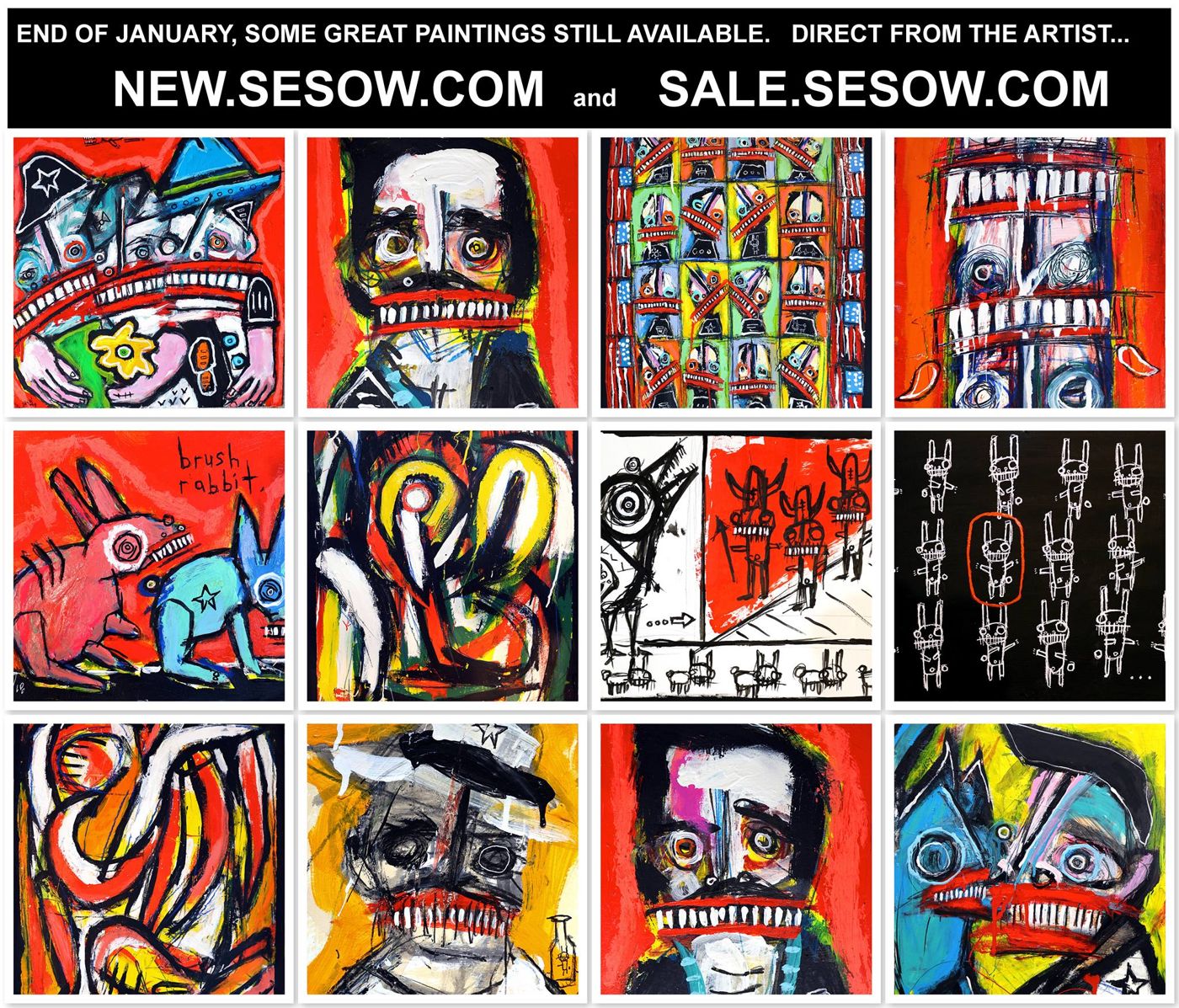
play baseball whatever I was doing the next summer so what started to happen was I started to paint about my accident I started to like you know I would like use really sharp colors are bright colors and sharp lines and I'd be like you know the scenes would be a little bloody maybe but how I started also was I was doing I was looking at posters punk rock posters or ads in the City Paper here in DC and I would try to repaint those so I was doing paintings of the posters he liked the new those were kind of funny and I could listen to the music and do that but then like say you know maybe over in the corner like like on this one maybe I would there probably have an airplane coming down or crashing or you know and down here there'd be like me running or something so so I started to add myself to a lot of the the spooky or weird imagery and I loved it it was fun but I wasn't very good at painting so I was kind of like I love this but I want to get better so in the spirit of teaching myself how to program when I was a kid back in Nebraska I decided I was going to teach myself out of paint and I was like can't do that hard right so what I did is I would go down to our lovely museums here Smithsonian I guess this was at the Hirshhorn they would have a look this is Willem de Kooning right here this isn't my work so this is one of Willem de Kooning's paintings and what I would do is I would go down to them to the museum's with my walk men in the old days we had the Sony Walkman with a cassette in it and I'd be listening to my punk rock and sit in the sitting on one of those benches with with that and no sketch pad or anything and I would just sit listen to the music get the chills I mean just get so off and he just felt so good I would be amped and I'd look at this and I tried to look at this as a computer program because back in the you know the day we did object-oriented programming I suppose they still do it I have no idea call it that or something else but it's basically what you do as a programmer or as a team of programmers you take a part you know that if I just described this correctly but you take apart the the program as you develop it you you create it and its own parts specific parts like you might have so if you're doing like a airline reservation system when some person might do the database I mean it's super simple some person does a database in person does the UI or whatever so anyways what I thought about what about painting was I bet I can break this down into its component parts and that's you know you would think oh the visual but I also broke it down into the parts of where did the idea come from who was the person that painted this of course what materials did they use what was going on in their life how old were they were they using any substances like that's another thing where they were they I don't know listening to music like me so what I did is I would just go and stare at all these great paintings that I loved it was basically Willem de Kooning if Basquiat was around I would see that Francis Bacon Pablo Picasso and I would watch documentaries about these people and I I mean I loved painting at gave you chills I knew I wanted to do it I knew I had a good story that was the main thing as I was thinking as all these people I watch I was like yeah they're interesting and they did like you know wild things like you know parties I mean they were wild people a lot of these great painters that I loved but I didn't want to fall into all the traps that they did I didn't want to like end up drug overdose and I didn't want to end up like cheating on my wife and you know so I always like you know really hurtful things I didn't want to hurt others in order to get what I wanted I guess it's what I'm saying so I think I took I took not that I'm a perfect angel or anything because what I decided is I really needed to amp up my my intensity to paint like this I needed to really bring a lot of power a lot of energy a lot of like force I had to be a fighter to do this this kind of painting and I also had to be have a really good work ethic so this so like here would be an example this is one of my paintings which is not de Kooning but it's but but the idea here is that it's it's distinctly a Matt Sesow painting the Matt Sesow icons which are kind of reminiscent of the Jean-Michel Basquiat the lips and teeth or things I kind of borrowed from Willem de Kooning maybe a little Francis Bacon with the with the messiness or whatever I don't know Francis Bacon was was wild as well I watched a lot of documentaries about him so what I was doing was taking taking the stories and the ideas from a lot of different artists that I had studied and I was trying to create my own story so or not create my own story because I mean things happened to be happen but I wanted to be able to tell it through my art so what happened with this is I
[18:01] The Georgetown sidewalk show
started painting a lot this is still 1994-95 and I was just painting like crazy crazy crazy doing wild things you know drinking and painting and drinking and painting and what I did what it turned out is I had about probably 220 car - I was actually used to do short films and I was gonna go look - she did some short films but there was this huge art show going on in Georgetown out on the streets and the person I was with at the time she said you should talk to them and maybe show your paintings here out on the street and I'm like no eventually I did so I talked to them they let me show like a little sidewalk I was able to show like I don't know like a hundred of my paintings and I was out there all day in Georgetown out in the Sun people walked by a lot of people who went to monsters or uber oh so I was like yeah I know I suck you know I was just like I just love oh lo so I was just like I'm because for me I just I love painting I don't really want to hang these in my house like I'm just I paint I'm done so everything I got it was kind of like really discouraging all day and then I was ready to pack up it's the end of the day and I'm packing up and all of a sudden this this this woman walks by this angel and she walks by and she looks and she just starts freaking out she goes oh my god what is this who are you and turns out she was an art dealer from Connecticut who deals an outsider and folk art and art brut and elad and so she you know saw me and heard my story and she sent me a contract I think that week and I signed a I think it was like a five or eight year contract with an agent after that one first time I tried to sell my paintings out on the street so I had an agent on day one good and bad parts of that but anyways I did have an 8 I had an agent right away and I was still working at IBM so I was like oh cool you know I didn't really take the painting seriously I was like oh this is fun I'll do all have a little side art hobby while I work at IBM and that's what I did she would go sell my paintings out of shows and and big exhibits and things and what was happening while this was going on is the
[20:15] Selling art on the early internet
Internet was just becoming a thing a bigger thing with it were you could actually interact with it in 94 95 and it wasn't a social media back then but from working at IBM I had got a job at AOL and I got a job at Netscape out in Silicon Valley so while that was happening I was building my web page so I was one of the I was building a web page with all my art back in like 95 96 and I started to get in early with like kind of you know promoting and I figured out a lot of you know ways to I realized the importance of gathering email addresses and you know another somebody buys a painting I want to be able to contact them again and encourage them if I'm you know selling work in the future having a show so all during this time that I was I was working in the computer field I was also painting but I was just doing the painting as a hobby doing it on weekends at nights so maybe you know like if now you have some sort of thing you're super passionate about but you're you know I when I started painting I was 28 years old so I hadn't painted ever until I was 28 and I worked as a hobby as a painter until I was 35 so from 28 to 35 I was just gathering emails and of my buyers I was painting I was learning new things I was saving my money that was a huge one like to get to this point I had to basically you know really budget to to be able to afford to eventually get a studio and get the big show so so what happened was I
[21:57] Laid off, and a solo show the same day, 2001
ventually went on to another com from you know like I guess you know when the when the when the big bubble was starting or whatever I guess before the bubble but anyways around 2001 I was laid off of a job here in DC when they cut some staff and at that time I was pretty far along in my my painting that I was getting solo shows and I was getting shows in galleries here in DC so I remember the day they told me I was being laid off I was in yellow in the office with the with the managers and stuff kind of like that day with the ringing years from Black Flag or whatever band I'd seen the night before and they were like man we're sorry we're gonna have to lay off and I go awesome I go this is it so I that was it I left that's the last computer job I did I this was in Georgetown I walked out of the out of the place I was working and I was walking back to my place in Adams Morgan and I stopped by this this gallery slash record store which used to be on mm Street was it CD Warehouse or CD I can't remember but it was I wouldn't talk to them I go hey can I have a show here Becky yep so I just with it a little bit less than an hour of getting fired I had my first solo show DC so
[23:14] “A Choice”: the hospital vision
anyways but so what I decided to do early on with my painting is to document the accident so this painting here is the probably the main one that was in the show up in Baltimore and then the name of the painting is called a choice so in speaking with you today I would kind of want to get in you to think about choices you make like for me my choice was I guess out of love was to program to listen to really fast crazy music that nobody else liked and paint and those are really the big ones that I can think of and come to DC DC was a huge huge I think choice that I made the advantage that helped me get to this point so anyways this is supposed to be me that's me after after I got hit by the airplane I'm in the hospital and I told this story to the people to the docents and things at the Visionary Museum about how when I was in the hospital my hand was so my hand was still attached they sewed my my arm back on after that because the propeller cut it off right here and they sewed it back on and you know put plates and all that good stuff so that's my gangrene hand right there and I had this this vision or I think it probably really did happen but the way I tell the story is that an angel or some person came to me bedside and said you have a choice Matt do you either want to just go off and die because I was I was pretty beaten up from the airplane as you can imagine I mean it also hit my neck not the propeller but like the wingspan hit my neck and my head was cut up and you know it was pretty gnarly and this this creature a person said you have a choice do you that one day you know leave us now go to heaven or whoever that places which would be this little little star thing up here or do you want to fight and you want to stay and do you want to have an interesting life and I remember saying I want to stay I'm gonna have an interesting life so it's kind of the choice that I've made it's it's the other thing that gets me it gives me the goosebumps and the chills so that's that's the little thing right here the little saying you have a choice either ya lay here and pain and to die or you fight get up and live an interesting life so that's kind of what's so in here you there's a lot of icons I use over and over in my in my paintings and I want to talk about those now but but as far as the overall story of my I guess I'll call it success is that I always use story I was always consistent like the these little icons are things I used within the first year I started painting and I did I did this painting this is an older pain that's from 2016 so that that's kind of the idea about choice and then I'll get into sacrifice but in order to get to this point so after that for this show at the Visionary Museum they wanted me to really focus on the accident because that's you know pretty pretty cool story and it really helps I think explain a lot to people why my style the way it is the outsider art style you know a lot of times it's people with disabilities and this is one of the paintings in the show is even though the accident is a key part of my life it doesn't define me so this is actually a painting I had the show and I thought it's just a huge painting with a lot of different events in my life and only one of these I think I can't even see it on here's me getting hit by the airplane so what I'm trying to say is that like even though I have this you know you the appearance of oh you know it's all about the accent it's really not now my painting is all about healing it's about growth it's about you know overcoming obstacles it's you know I guess I could become a motivational speaker here today but so much about my story was was using painting to get to get to the next the next level kind of like how I used basically the airplane to you know I guess that doesn't really come soon later but anyways the detasseling corn to get the job through the programming the programming to DC the DC you know the music and it just everything kind of how it all comes together to give us these opportunities oh my gosh okay so
[27:52] Surreal versions of familiar images
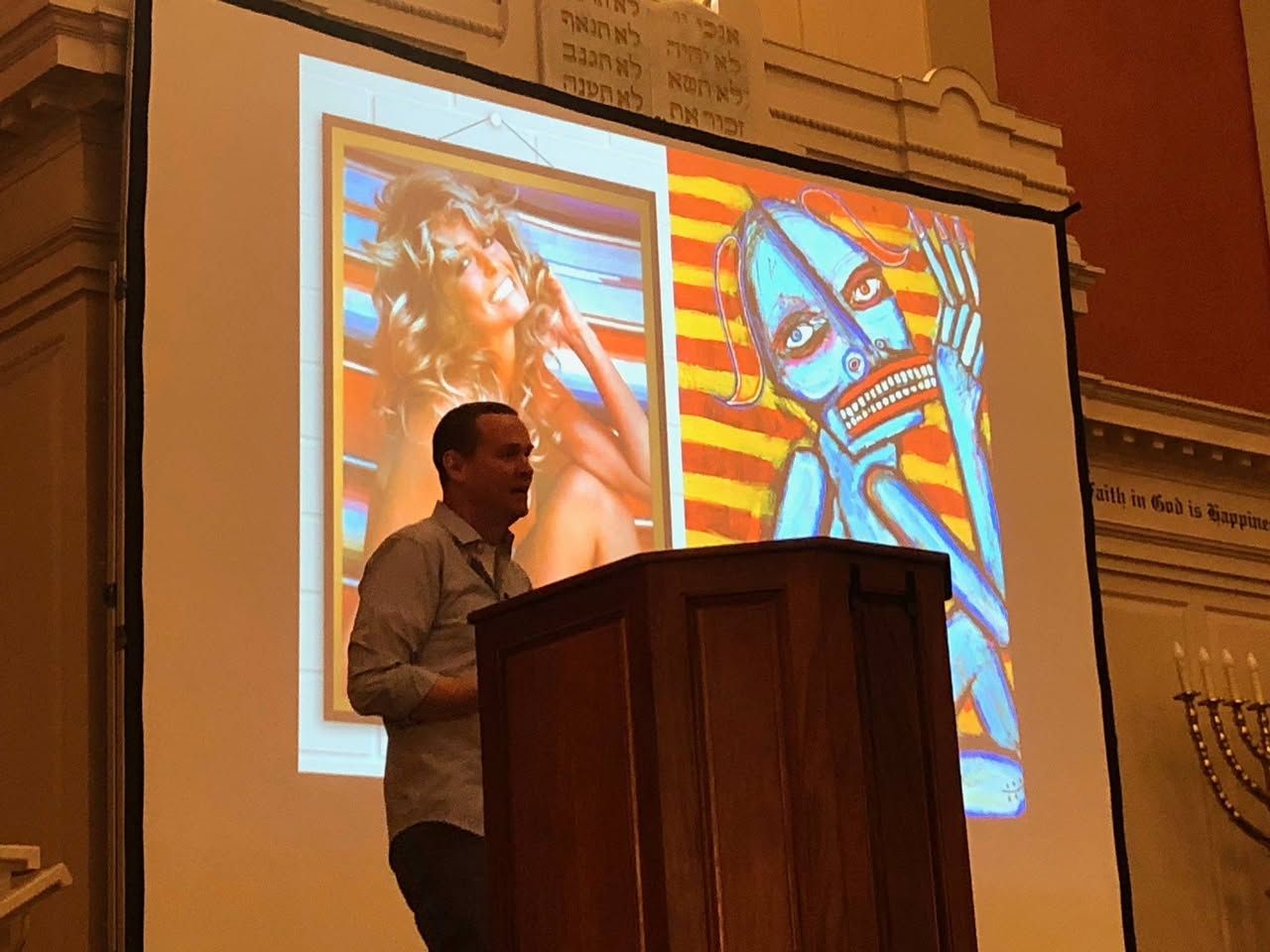
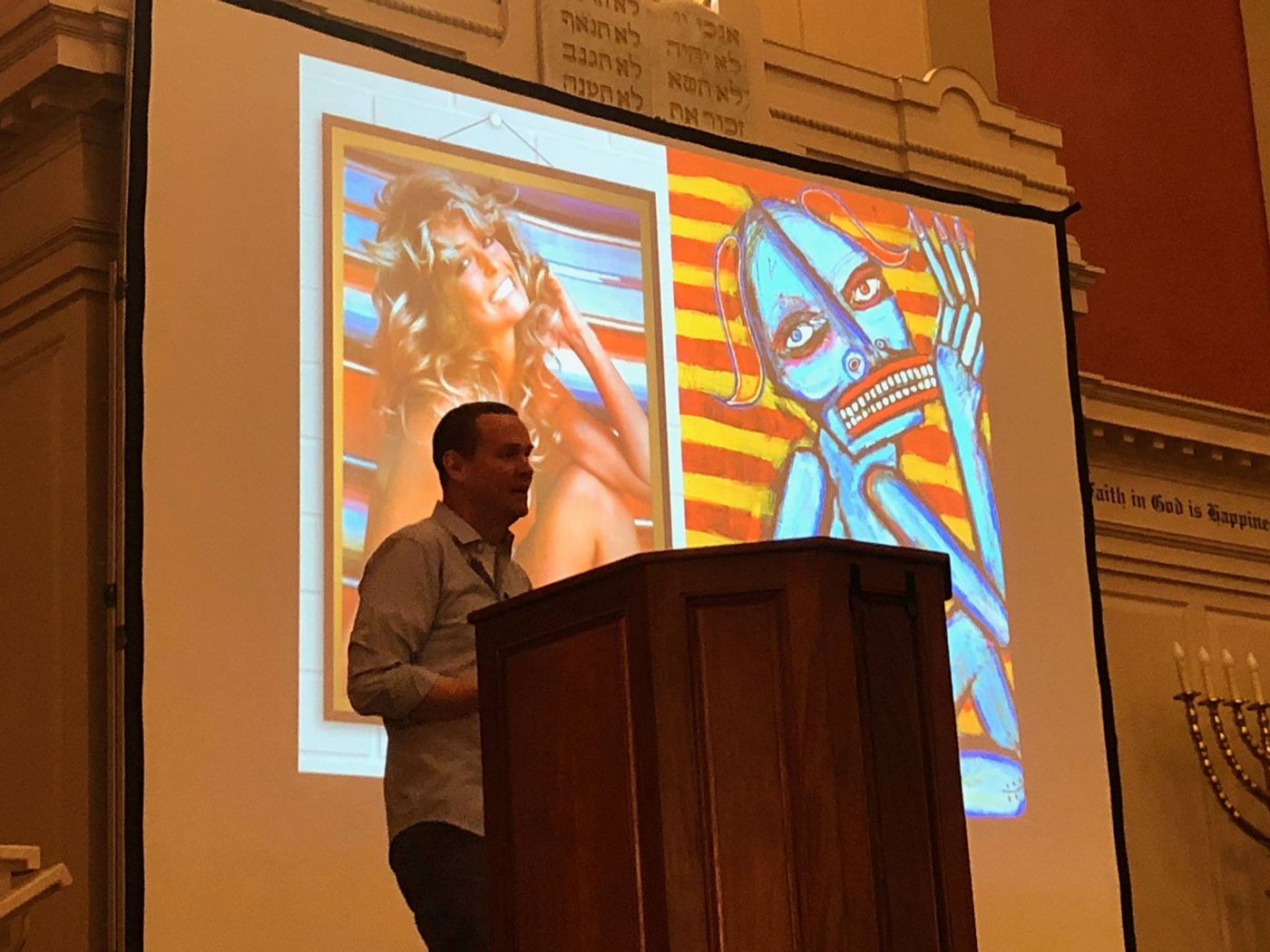
going back to that the surreal topic that we're you know focusing on today the idea of taking common objects and then creating surreal versions this is another thing from the 70s this is so I had this in my room when I grew up this Farrah Fawcett of course those of you who are older than you now 40 and so this is just like an idea of one of my paintings where I take a common image and I just create my own version of it and this was a show I think I had up at Bloombars I had this painting in it here in DC and a lot of times what I do with my paintings not only did I turn it into a self-portrait of myself as as Farrah Fawcett but I always add like a little that's amputation so that doesn't cut cut her the rest of her leg off so the idea here is that in my paintings I always want you to be able to look at the look at one of my paintings and know it's mine so kind of like going back to you like de Kooning or looking at Basquiat or looking at Picasso you know what's there painting so that's another thing when you're a creative I think you always have to bring your specialty to whatever it is you're doing whether you're you know writing or filmmaking I think if you add your own flair your own style your own like chills yeah goosebumps to it because like I can see this ago I mean I get excited seeing my paintings now look like this I'm like god I would love to do that again like but I know that to get to that point I have to be in the zone I have to be bringing my specialties which allure that's music my life experience and the other thing that I think is really important as a creative or as a professional and you want to do creative things is so you all here I assume you all work in DC or the area you are like the special group of the best of the best I think in the nation like I think only the best come to DC it's like really high education really high work ethic you know really smart people and I think that if you have a creative pursuit that you bring whatever you know you graduated college for like for me it was programming so what I did was just kind of use the idea of working lay and and working a lot and creating a lot and sticking to schedules being you know time management so important with painting because when you're working with the gallery and they want you to you know have the big show and you're you know if you're flake they're not gonna they're not going to work with you so anyways that's that's just another side of it was you know bringing my own knack to two common images like here's my version of Luncheon of the Boating Party yeah so what I tried to do here is you know include all the characters and you can see again the lips and the teeth and I just think it's you know very happy happy type painting which where maybe my earlier work was a little more aggressive and a little more angry even though this you know it's very raw it's very surreal you know taking this beautiful beautiful painting and turning it into one of my own I was like you know it still had to show that it was mine and and and bring my own voice to that so another thing that I pull from
[31:23] Borrowing from the artists he loves
is other artists so the great thing I guess for creatives and all painters do it is I don't know what Picasso's what was good painters copy great great artists steal so in other words I don't steal from other artists but I think what what you could do is always find out what you like most about certain artists like for me Langston Hughes this quote I thought was was fantastic just as hold fast to dreams for if dreams die life is a broken-winged bird that cannot fly so the idea here is is I like the way Langston Hughes is saying you know set your goals stick to them achieve your goals you'll fly and basically basically as long as we stay on on our path that with the you know you said I'm all about setting goals and then and then like a like a focus just stick to it don't don't let things you know like knock you off your track so for me for example in order to become a painter here in DC for I guess I've been doing it full-time I've been paying all my bills by selling paintings since 2001 I live in a lived in a 500 square foot apartment and Adams Morgan and did all my painting in that little little spot on a wall smaller than this screen probably out probably out this size I did all my shows I've probably done I don't know I probably been in like 3 or 400 shows they're more thanks okay I'm getting assistance from my assistant but I'm gonna show you pictures of the studio coming up I was gonna jump ahead but anyways this next slide was work about more borrowing here's one shepard fairey did the great one of Obama you know I would I loved that he did that such an iconic image and I was so jealous I was like god I wish I would have come up with that as an artist so what I did is I as I say borrow from Shepard Fairey I used the same his same color schemes and kind of came up with my own Obama so I've done probably a hundred of the of this series of Obama so I another thing I always say is you know try to document the times we live in be historical and then I'm gonna show just another one taking you know common historical figure like Rosa Parks and then I so that last I think the last three paintings the Langston Hughes the the Obama and this one were all showing up Busboys and Poets they had me do a show there two years ago or so so I did this one at Rosa Parks beside I've done this this image before and and one of the things I always like to say is for my art is to is to back to the object-oriented talk is to minimize the number of brush strokes in a way to tell the story or to create the image so here you can see I'm really not using much pain or much it's just a lot of like contrasts and stuff to get this down and in preparing for this today I realized that it's very similar to the video games back they've got me the first buzz and the first chills was was just those 8-bit programs so you might have like four blocks on the screen that's supposed to represent a gorilla or you know a race car and you're supposed to pretend you that's a race car so so I think that that's where I got a lot of my like my minimalism in the art from that was doing that and then here's another image that is that is very timely as well with the migration issues so I've done that several times as well a lot of shows have use that so that's just another
[35:08] The Adams Morgan studio and the bunk bed
taking a common image and making it surreal so I see we're getting I I just could talk forever this is me painting at my small studio in Adams Morgan so this was this is like five hundred square feet that's the size of the wall there and that's just me kind of trying to look cool leaning into painting but that that's how messy it is it's a disaster and that's another just picture of the wall where I paint now because we're getting towards the end and I want to sum this up nicely the the choices I made this was a huge one was to live like this I lived without a car you know small apartment I paid it off that was one of the keys was to but this was of course back in the 90s it was a lot cheaper to live here but I had my my lodging paid for I I slept in a bunk bed so this I didn't have a bedroom this is just one room in Adams Morgan and I had a bunk bed until I guess age 50 I was living here but my mom never visited this place so yeah I slept in the paint I mean I I would every day paint paint paint I my estimate is around 17,000 paintings I've painted and sold over the years they're all over
[36:27] 17,000 paintings and a slower pace
some people this room might have some and so what happened is I had that show at the Visionary Museum my wife Dana has been with me for 18 years we've been together and I realized at the point that I'd reached my goal of you know it was a huge goal to have my solo exhibition for a year long at a museum I decided maybe it's time now to to grow up a little maybe it's time to slow down maybe it's time tonight keep chasing because it wasn't a dream to chase anymore that was that goal of the chase which was which was the solo show so I sold that place last year to a gallery they bought it as is and I'm done with it so this place is no longer exists and now I live downtown with my wife finally I we didn't even we didn't even live in the same place for the first 15 years I lived there for like three days out of the week and we would commune see each other so now we're downtown and I've changed basically my my pace my attitude everything about painting so now what I do is is a lot calmer this is like these are like what I call my my cash cows and what I do is like what I do is I've taken all my experiences from that you know like the 16,000 or so paintings and I creating like if somebody says hey can you paint my cats I'm like oh yeah there we go there's your cats or you know people like birds and so what I do is I do these call more paintings but they you'll still have my edge and I'm still listening to the music I'm still edge and then every now and then when something very political happens in this city I will paint it and I and I do still pain obviously what's going on now and I'm and I will be doing more of that but but I'm not just focusing on so much the anger or the aggression I've now become more of like you know an old 52 year old man with a cat and a sweater but but it was a long trip to get here it was a lot of choices and a lot of sacrifice it's it's surreal in every
[38:34] Pick the choices that give you goosebumps
aspect I feel like my time am I about towards the end okay so what I really want to stress is is we all have choices try to pick the choices that give you goosebumps and attack as hard as you can and do it better than anybody else and do it for less money than everybody else if you can because you'll you'll sell you know you'll you'll become the most attractive thing in this capitalist society people want to buy value they want to buy a bargain so so give people value for the dollar and that's one way you will you will always win because people owe it the galleries hate me for my pricing like if anybody's about my paintings in here you probably didn't pay more than you know a thousand dollars I know that's you didn't but but I saw myself very inexpensive and that is so key than this and this business is to is to price your stuff affordable so anyways thank you very much and Dana will have postcards if anybody wants any a free postcard with a painting on it and it's got my contact information I'll talk to anybody you can come visit our studio any time just be in touch Matt Sesow okay