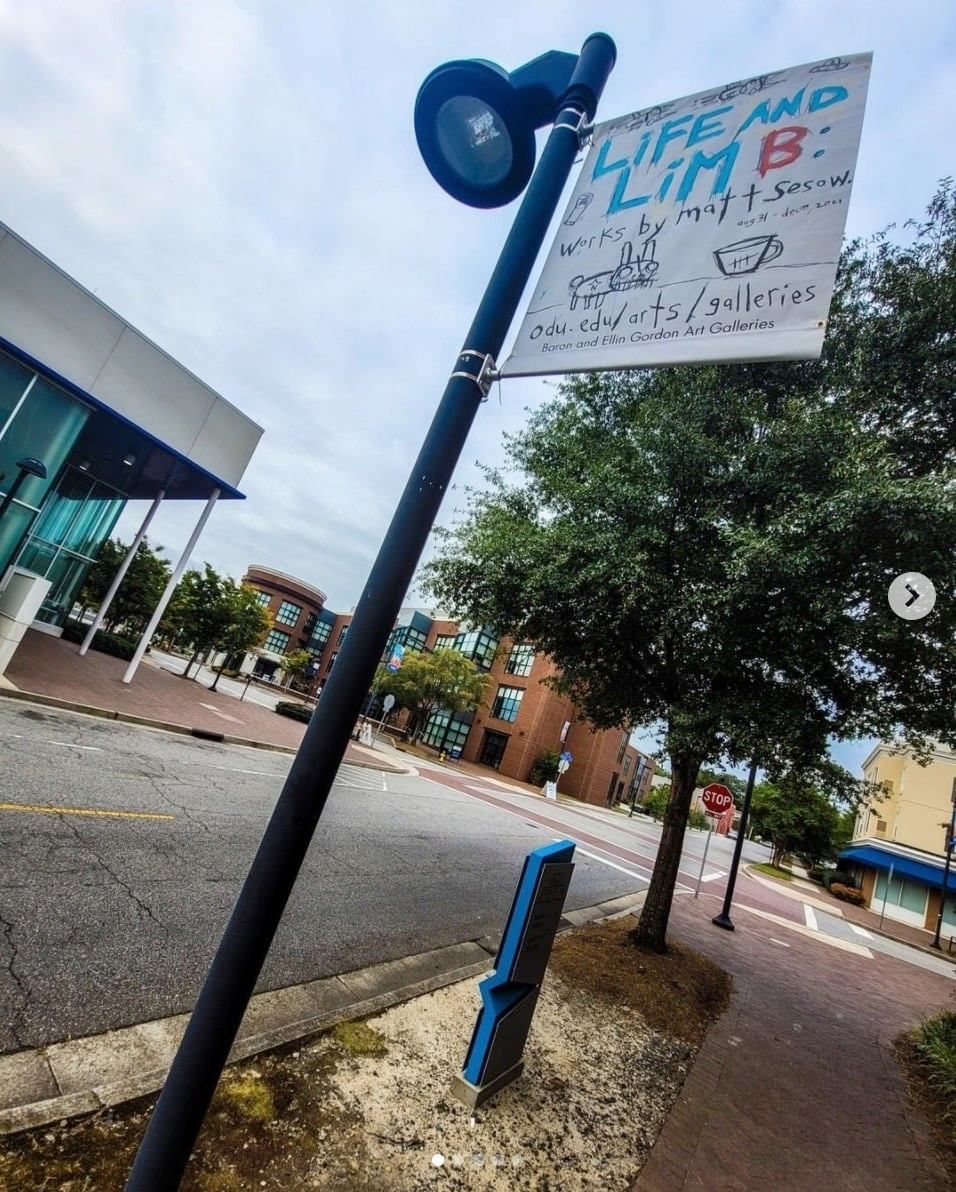
I spent most of today updating http://www.sesow.com/life which is the website documenting my show Life and Limb that continues until december 18 in Norfolk, VA at the ODU Baron and Ellin Gordon Art Galleries. check it out!
https://filedn.com/lG3Uo1ThBljYjP2UieLa1z5/pages/life/
Saved copy · 16 pages
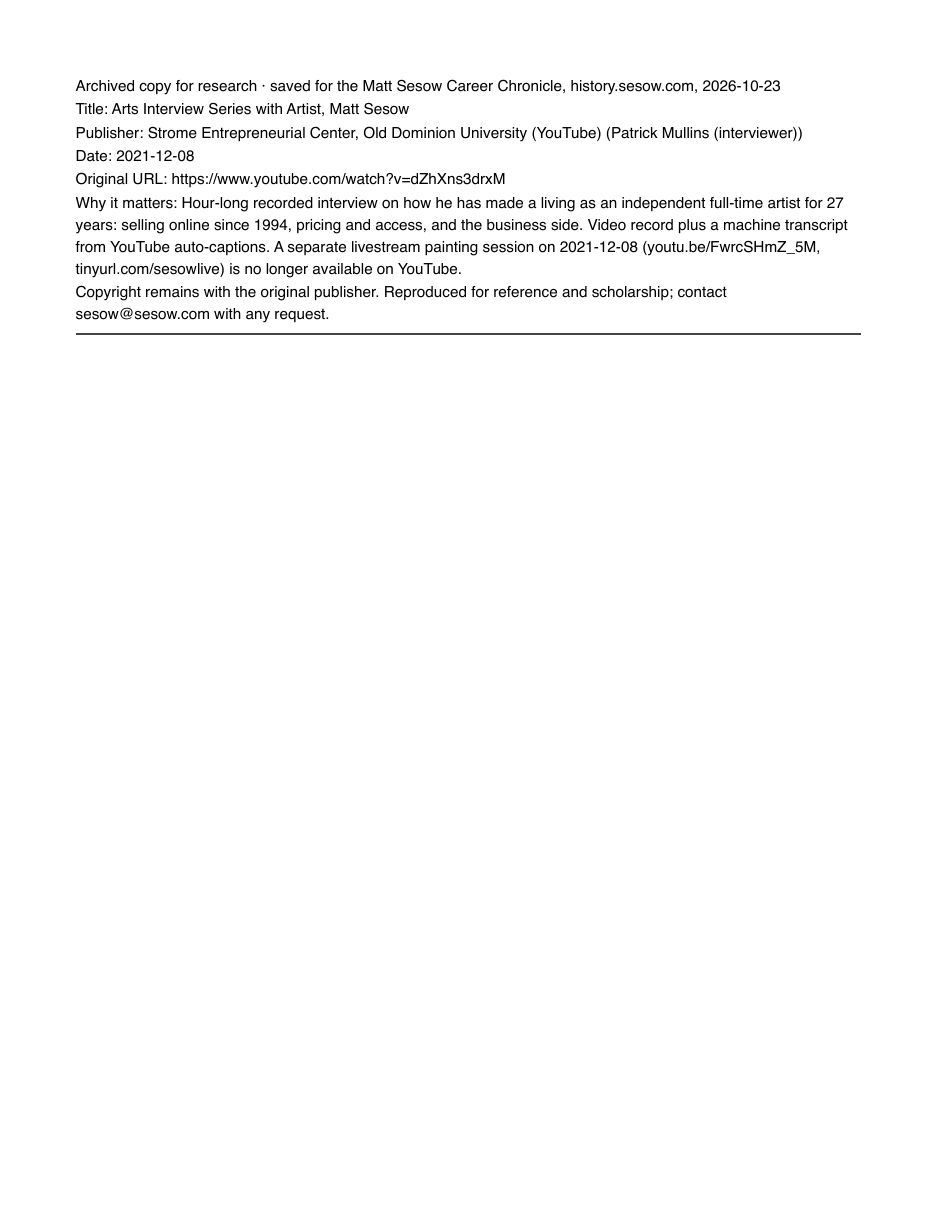
Arts Interview Series with Artist, Matt Sesow
Strome Entrepreneurial Center, Old Dominion University (YouTube) (Patrick Mullins (interviewer)) · 2021-12-08 · original address
Hour-long recorded interview on how he has made a living as an independent full-time artist for 27
Click a page to open it — scroll or pinch to zoom, drag to move, arrow keys for the next page.
Full text
Full text as published. Copyright remains with the original publisher; reproduced here for the historical record (machine-read pages may contain small errors — check the page images).
Arts Interview Series with Artist, Matt Sesow VIDEO — "Arts Interview Series with Artist, Matt Sesow", Strome Entrepreneurial Center (Old Dominion University), interviewer Patrick Mullins. Live-streamed; YouTube upload 2021-12-08, 55 min 46 s.
https://www.youtube.com/watch?v=dZhXns3drxM VIDEO DESCRIPTION (as posted):
Event Overview: Arts Interview Series with Artist, Matt Sesow In this series Patrick Mullins interviews artists, producers, and arts administrators who are using technology, non-traditional funding, and entrepreneurism to empower art makers and increase the accessibility of the arts to all people. In these live-streamed conversations, national-level creatives will share what "hacks' have helped them produce work and create income streams. The focus will be on innovations in the art-making process, in the marketing and advertising of work, and in the sales and funding of work in both commercial and nonprofit models.
View Life and limb: Works by Matt Sesow now through Dec. 18 at the Baron and Ellin Gordon Art Galleries!
Matt's Facebook post, 2021-12-01: "Next week! I'll talk "what has worked for me" as an independent full-time 'artist' for the past 27 years... :). open to the facebook public" TRANSCRIPT — machine transcript from YouTube's automatic captions (not checked word for word against the audio; names come out wrong, e.g. "matt ciso" = Matt Sesow; no speaker labels). Timestamps are [mm:ss] / [h:mm:ss].
[00:03] well hi and welcome to the strom entrepreneurial center my name is patrick mullins and uh this is a series of uh conversations about innovation in the arts both in distribution creation process um and how folks are doing that and today we have with us um uh matt ciso who is uh an amazing painter hi matt and uh he wasn't yeah let me tell you a little about matt and then i'll let him tell you about himself because obviously he's the expert on him but matt wasn't always a painter he discovered his passion in 1994 while he was working at ibm and he eventually left his career in computers to become a full-time artist by his estimate he sold more than 17 000 works due to his emotional joyful and in his words obsessive painting um he paints in an outsider art style that always uses story consistently uses iconography his work's highly influenced by some really great 80s artists including john michael basquiat and i'm sure he'll talk [01:04] a little bit about that but folks who rose to fame for their bold and colorful artworks but he's a full-time painter and he lives in washington dc and he's been painting it on the web since 1994 matt cesar hello hello thank you yeah we'll give you a hand all right all right well it's good to have you to matt um maybe uh you could tell us a little bit about your journey we can just start there because you you have a very uh very fascinating story oh thank you um all right i i guess uh for painting i started in 1994 like you said uh i was working at ibm at the time here in the dc area and just on a fluke one
night i was at a group house here in dc and there was a you know a bunch of fellow people might call them kids but actually i was an adult i was 28 at the time so we're all about the same age but [02:04] um a few of them had gone to art school and they were sitting around at a table painting and stuff and they they asked me if i had ever painted and i was trying to be cool so i lied and said yes i mean you know i messed around in high school i guess in probably elementary school but um so i just kind of kind of you know made it up as i went along that night and uh i just stuck with it after that i realized when i started painting that first of all i was probably mostly influenced by music and a lot of the flyers for shows that i would like to go see here in dc this is i guess in the yeah early 90s um so i was trying to like represent a lot of that um emotion and politics and i would use really you know sharp color or bright colors and sharp lines and um yeah so i started painting after that night uh kept you know when i would go back there they would be if they were working on art i would do it uh with them and then usually what happens after they would quit for the night i'd keep going um and what happened eventually i [03:06] had a lot of little you know little paintings and laying around that house and um when they'd have parties i would put my paintings up on the wall and then in 1994 and like people would come by like sell them for like 10 bucks or 20 bucks to people so i realized that there was a little bit of interest there um and then the other main thing that i subject matter was painting at the time was a reflection of my um my physical disability um when i was eight i got hit by an airplane in nebraska which is not a very common thing to happen for anyone um and that that resulted in them having to amputate my hand um so there was a it was kind of like you know i guess a nebraska midwest kind of thing you know just brush it off and get back out there so there wasn't really a lot of discussion about what happened to me or i you know i never really talked about it with anyone they just kind of live life played sports went to college stuff like that um so what happened was when i started painting i started to maybe [04:08] focus on the disability or do a little self-portrait type things trying to communicate some emotional feelings you know responses or emotions i've had that i hadn't really ever articulated um and that's when it really took off i just really really started to get into the painting that way um and it's very emotional and um i'll just i'll skip just a little bit around here but then in 1996 when i uh was just out around georgetown i asked this group that was holding an art fair if i could just show some of my paintings and they let me and that was the first day i ever tried to sell my work it was like in the kind of like a doorway of a of a business along the streets of wisconsin avenue in georgetown and i was about ready to give up for that excitement sold one painting it was just kind of like a you know fluke and i was like well this this is dumb i'll go back to programming i mean that's what i was doing full-time anyways but um and at the end uh [05:09] a woman came up to me who was visiting her son in dc who lived in dc and she kind of she kind of flipped out and she said oh my god what is this who are you and told her my story and everything and she pretty much brought bought every painting that day before i left and um ended up she was an art agent in the outsider art folk art world and she um signed me onto like a five-year contract the next week to represent me so it's kind of a you know fairy tale story first time i ever tried to sell it it was was gangbusters and um so that yes then i had an agent for the first five years while i
was working at ibm um that's a lot of unique strikes of luck in all sorts of directions yeah yeah and the funny thing is is i i meant it to my wife dana a lot sometimes i mean because what else am i going to say but a lot of times i go you know it was kind of a good deal that i got hit by that airplane you know because it gave me this this unique story this unique life you know i mean it was tragic for people [06:09] to see it and you know you know go through all that stuff but but i think there was something about i was able to take it and quote unquote use it to tell the story through my paintings and and have a unique story um and i think that's you know trauma and struggle that's sometimes can you know point you in a direction that you normally wouldn't wouldn't have taken no it's fodder for many artists yeah absolutely yeah um maybe tell us a little bit about how your life is now and then we can talk about how you got from being an ibm programmer to where you are now but maybe tell us a little bit about what your life is now you've got your your studio and your wife and you yeah you've got a pretty idealistic life i think yeah yeah i'm pretty happy we live downtown um it's an 800 square foot apartment condo um sleep in a bunk bed i've been sleeping in a bunk bed since i was i think about 29. i'm 55 now so it's a lot my parents are [07:10] very proud um and um so this half of the apartment is where i paint and then dan and my wife she's on the other side of these bookcases that's kind of like this artificial wall and she paints over there and then we have a bedroom um so pretty much every day wake up i try to run every other day so i really try to keep fit as possible um and then i just you know depending on whether somebody wants me to paint something for them through a commission or i have a show coming up or i just want to you know paint whatever's on my head i pretty much get to do that every day now um and the way we the way we work our so our business now we're married so we counted as like kind of two different businesses so it's the map business and the dana business um and we just pretty much paint and sell online and then once a week go to the post office and if we have a really good week we'll be shipping around 30 paintings a week but typical typical week [08:10] i'd say i probably sell it now on average about one one painting a day which is which is pretty good one to two so um it's really pretty much that and i i like to you know try to always come up with new ideas um for example tomorrow i'm going to be doing a live painting on youtube um from 11am eastern to 3pm and anybody can watch that um and i i'll type i can type the the link in the chat or something but or tell you or you can just go to um i think it's life.cso.com there'll be a little window there for but anyways uh just always trying to come up with new things and um you know it's it's we get up like at five or six a.m every day and go to bed at eight i mean it's it's not the like you know fancy fancy art life that maybe you see in the movies anymore because the the idea now is to just prolong the art life as long as possible not to you know burn out or to you know get too wild and crash um because like i said i've been doing this i guess 27 years now [09:10] and when i started out i was definitely wild i mean when i was started out i was you know trying to be as intense or crazy as possible with the art and push myself as hard as possible and now with all the those sales like you know the 17 000 or whatever it's um it's given me a lot of foundation a very solid foundation uh to have a lot of collectors that i can you know kind of as i keep them aware that i'm doing new things it's just kind of a self feeding monster now the art that's that's a really fascinating thing i watched another interview with you where you were talking about because you
were coming from computer land that you built a very early website when people weren't really doing that yet and and you had an email list before long before mailchimp and all that stuff um so maybe we could veer into that story of how you went from ibm to full time yeah so one of the jobs i had so ibm was [10:10] the first job and then after that i also worked for places like aol i worked at netscape in silicon valley uh but at aol that's they made it pretty easy to start a website i think it's like probably around 1996 so i was you know using a lot of that ability that i had because i was you know pretty much i was working you know programming and testing at a at a major web company um so what i remember my website now is pretty much the same uh code instruction right i used in 97. it's it's i think i think i started this like this site maybe 96.97 but i remember what i did originally is i took the guinness beer site and i viewed the source code for what they had done and then i you know of course backwards engineered to make it into my site um so i did a lot of you know copy paste to see how other people were using javascript and html and stuff like that um but yeah so now when i when i do a new painting um [11:10] i take a picture of it and post it up and i do the html code that's all raw coding i don't i don't like drag drop stuff it's it's all uh it's all um you know code um although now i'm starting to use some tools for other sites because it's a lot easier and then when i first started painting too there weren't digital cameras so in the in the late 90s mid 90s i used to make short films using my mac and vhs tape so in order to get a an image of my painting on the on my new website i'd have to shoot it with a video camera and then pause it um on you know while it was playing the video of my painting or whatever pause it and then i have the video capture software that could take frames and stuff so that's how i did it back in the old days a lot of work that is well um as you as you crossed over [12:11] through this journey maybe talk about how did money work for that did you did you have a nest egg from programming land that helped you jump in or how did how did you navigate that life change yeah the the the key i think to all of this is um i'm notoriously cheap i mean i i hardly ever spend money my wife will tell you that too but um so what i did is i i bought a condo when i moved when i moved to washington dc um a little i guess 500 square foot place so very inexpensive in a neighborhood that nobody wanted to live in at the time now of course you know it's probably worth a lot more but um so what i do is i make sure i have my property bought um i don't have a did i still don't have a car i haven't had a car since i guess 97 or 98. um you know i've never had cell phone cable all that kind of stuff i just always was taking pretty much all my money and saving it um even at ibm i mean i was like eating [13:12] rice for frozen you know like i'd make rice on sunday and bring it in five different little you know packets throughout the week um so i pretty much just never spent money um and then once i realized i want to be a painter i kind of took it into overdrive um and just you know everything went to paint um and let's see that's i mean it's kind of like yeah it was like an attitude almost like because a lot of the music i love is that punk rock stuff from the 80s and 90s or hardcore whatever and the idea there was always value for money the idea is like you go see a show it's only going to cost you five bucks to get in and you're good now of course that's impossible but back in the days you could do that um and i always wanted to do that with my art i wanted to make imagery that was not i mean
primitive fast edgy but also very affordable and also maybe even better than what you would get from some hot shot out of art school [14:14] selling their work for you know eight thousand dollars um so that was always the idea too is almost like against the system in a way like anti-gallery in a way even though i've worked with a lot of galleries over the years although i don't try to do that anymore but um that's like a necessary evil that you have to you have to work work with the within the business structure of the gallery system in order to kind of you know get known and all that kind of stuff but um i don't know i mean you know i can get into like you know since i'm a business i pay taxes every every quarter you know i keep all the books very very simple you know it's all part of the business and and i kind of took my ibm skills or programming skills and use that for the art in other words like every project has a schedule there's checkpoints um you know if i'm if i have to create 100 paintings for a show i make sure that i'm you know on schedule to do that um you know answer email yeah it's it's the [15:15] the business side is probably 60 of it now um just to keep on top of stuff um the painting's kind of the easy part uh well you often refer to your work as being outsider work which i you know kind of refers to style but you know also your attitude toward galleries which is um is fascinating so do you think of galleries as like a marketing system almost like is it part of your marketing scheme if that makes sense yeah it's i think i mean a lot of people don't know this but a lot of galleries are most galleries nowadays i guess they take 50 of your sales so let's say these little doggy painting behind me if i charge i don't know 800 bucks for that and that's 800 bucks that my customers are people that buy my work are used to paying so if i have a gallery show i only get 400 for that one it sells and a [16:16] lot of times now that i've been doing this for so long like let's say a gallery that is relatively new i mean i ca i can tell 30 000 people about this gallery show and what's happening is i'm bringing kind of my 27 years of experience into this gallery that's only around one or two years and they might they might get me you know 15 people at an opening so in the beginning it does make sense you get you kind of have to do the gallery shows you have to give up 50 but the advice i try to give new um artists is don't just don't price your work too high because that the gallery you're working with they're not going to be around in two or three years like they they come and go all the time and they're going to convince every kid at art school that they're the next picasso um so you know i i know people here in dc you know they're charging 10 000 for something and i'm like you know you're gonna have an inventory problem especially if you if you do a lot of work and you have like if i charge 10 000 for this i'm gonna have like you know 10 000 of these [17:18] babies laying around this apartment that's not big enough so that the trick is i do what i love i love to paint so i want to move it out i want to move it out and you know i price it so that it it leaves here um luckily the shipping systems like with the postal system and ups fedex they're very reliable now i mean i know they get a lot of bad rap but you can really inexpensively ship stuff all around the world now like i ship all over the world um and haven't lost a painting yet it's amazing of all those that's um that's that's amazing uh what and i will say you know i went to your website and spent some time there and um yeah for what people go to some big box store or you know decor store they can get a much more interesting piece that's that's yours i think what's fascinating about that though is that you've built a lifestyle that you like
[18:18] you know most of us are like oh i've got to have this job to do this and i'm and you you've really focused on what do i do that brings me joy every day there was another interview where you talked a lot about that and i think you linked it back to music actually and video games and the things that kind of gave you a tingle and and and that you gravitated toward those things can you talk about that a little bit sure yeah so um the video game thing is is i guess fairly interesting so i was i was telling you before that um when i was 13 or 14 i decided corn in nebraska so that's a job where you would walk down the field and pull the tassels off of i guess it's seed corn i don't i can't remember but um but i really wanted an atari 2600 this is like back in i don't know what 70 or eight i know it's probably 81 or something but um anyways i took that money i bought a little video game system um and i the color system if you look at i guess [19:18] that's our 8-bit right the old days um very blocky colors very bright primaries and i think that really affected my art a lot because i always remember playing games like breakout and like the space invader and they would the colors were just weird how they always would mix and i i there's something about that i really enjoyed um and then while playing my games i would listen to music on eight track tapes believe it or not um you know like like probably rock back in the days like the pretenders or something like that but um yeah we just spend like you know eight hours or not eight hours probably like three hours playing you know space invaders or something just ridiculous games back in the day um so the idea of like happiness in life and making it this way i i think i as i want to jump ahead a little bit before i go back to music but the idea of doing what you love um i i love programming at the beginning [20:20] i mean i pretty much taught myself how to do all that i mean a lot of it a lot of what i learned in college but um it was fun but then it kind of lost lost the the fun and the thrill once i started to do it from you know like real money and a job and being told what to do and when to do it um so i think the key was to paint simultaneously at the same time while i was working because i had this i had the steady income i could take risks with money a little bit more because i knew i was getting a paycheck every two weeks so i was able to buy really good quality paint i was able to travel if i you know needed to or i could buy an ad in a magazine i don't think people do that anymore but maybe they do but i could spend money on marketing in college my minor was business so i think that helped me a lot to marketing classes so anyways i knew i knew i didn't want to really be a corporate person once i got into [21:20] painting anymore or once i got into painting and want to be corporate so much anymore so so i kind of set my goal like it used to be maybe over here and i realized that's kind of boring over here i want to go over here now so i just switched my whole focus even though i still played along in the corporate world i always knew i was going to be over here and um so by saving money and you know hitting when the and when the time is right i remember though after i left my last job and that was in georgetown too it was a it was a web design i was a tester at a web design company and they laid me off and i remember being in there and they were like oh you know like they're all nervous oh we're gonna have to lay you off now we're so sorry and i go thank you thank you so on my walk back to my place in adams morgan i stopped into this little gallery record store place and i said can i just have a solo show here i said sure so i i wasn't even back before i'd gone full-time hard i was like i i'm i'm done i'm done with programming so at least for a job um but that took me
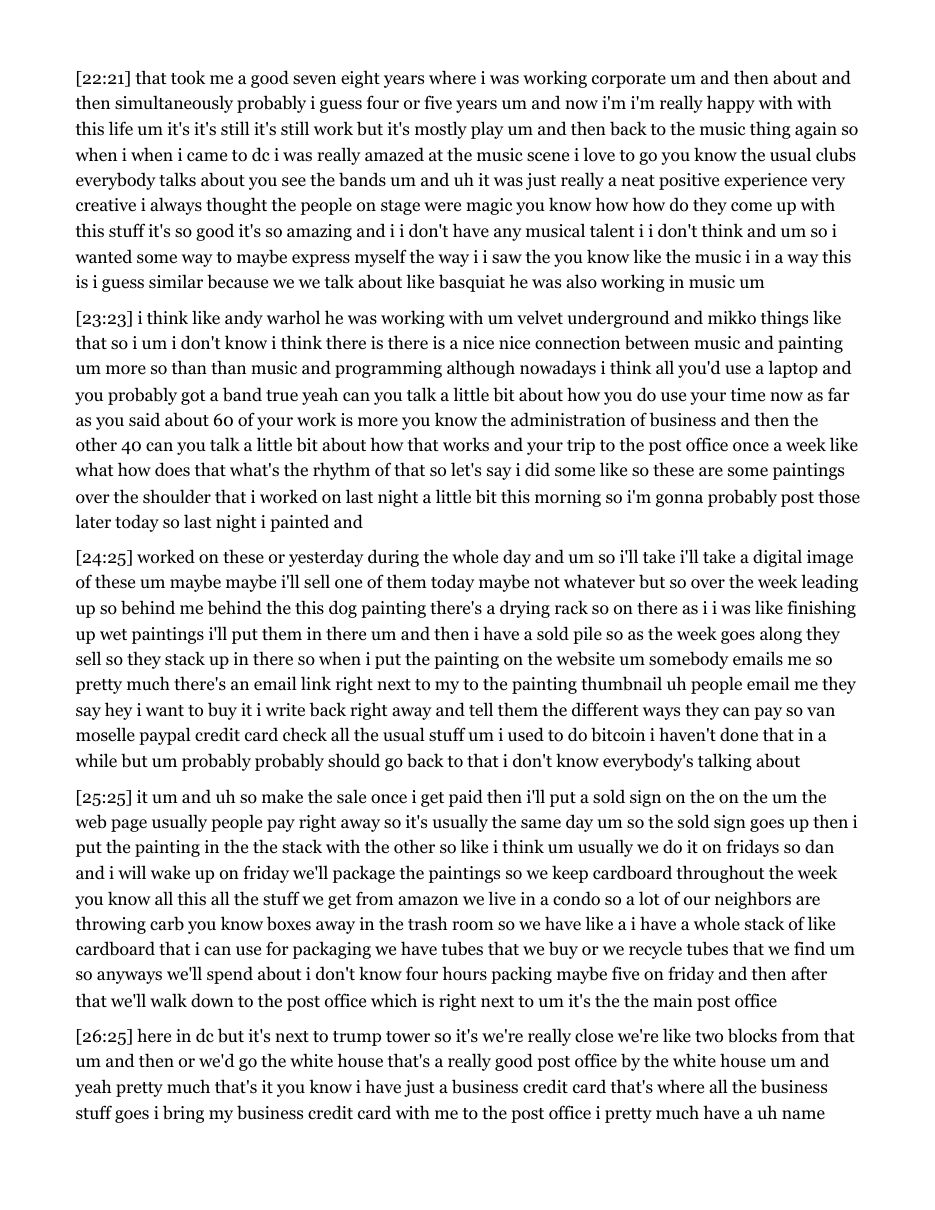
[22:21] that took me a good seven eight years where i was working corporate um and then about and then simultaneously probably i guess four or five years um and now i'm i'm really happy with with this life um it's it's still it's still work but it's mostly play um and then back to the music thing again so when i when i came to dc i was really amazed at the music scene i love to go you know the usual clubs everybody talks about you see the bands um and uh it was just really a neat positive experience very creative i always thought the people on stage were magic you know how how do they come up with this stuff it's so good it's so amazing and i i don't have any musical talent i i don't think and um so i wanted some way to maybe express myself the way i i saw the you know like the music i in a way this is i guess similar because we we talk about like basquiat he was also working in music um [23:23] i think like andy warhol he was working with um velvet underground and mikko things like that so i um i don't know i think there is there is a nice nice connection between music and painting um more so than than music and programming although nowadays i think all you'd use a laptop and you probably got a band true yeah can you talk a little bit about how you do use your time now as far as you said about 60 of your work is more you know the administration of business and then the other 40 can you talk a little bit about how that works and your trip to the post office once a week like what how does that what's the rhythm of that so let's say i did some like so these are some paintings over the shoulder that i worked on last night a little bit this morning so i'm gonna probably post those later today so last night i painted and [24:25] worked on these or yesterday during the whole day and um so i'll take i'll take a digital image of these um maybe maybe i'll sell one of them today maybe not whatever but so over the week leading up so behind me behind the this dog painting there's a drying rack so on there as i i was like finishing up wet paintings i'll put them in there um and then i have a sold pile so as the week goes along they sell so they stack up in there so when i put the painting on the website um somebody emails me so pretty much there's an email link right next to my to the painting thumbnail uh people email me they say hey i want to buy it i write back right away and tell them the different ways they can pay so van moselle paypal credit card check all the usual stuff um i used to do bitcoin i haven't done that in a while but um probably probably should go back to that i don't know everybody's talking about [25:25] it um and uh so make the sale once i get paid then i'll put a sold sign on the on the um the web page usually people pay right away so it's usually the same day um so the sold sign goes up then i put the painting in the the stack with the other so like i think um usually we do it on fridays so dan and i will wake up on friday we'll package the paintings so we keep cardboard throughout the week you know all this all the stuff we get from amazon we live in a condo so a lot of our neighbors are throwing carb you know boxes away in the trash room so we have like a i have a whole stack of like cardboard that i can use for packaging we have tubes that we buy or we recycle tubes that we find um so anyways we'll spend about i don't know four hours packing maybe five on friday and then after that we'll walk down to the post office which is right next to um it's the the main post office [26:25] here in dc but it's next to trump tower so it's we're really close we're like two blocks from that um and then or we'd go the white house that's a really good post office by the white house um and yeah pretty much that's it you know i have just a business credit card that's where all the business stuff goes i bring my business credit card with me to the post office i pretty much have a uh name
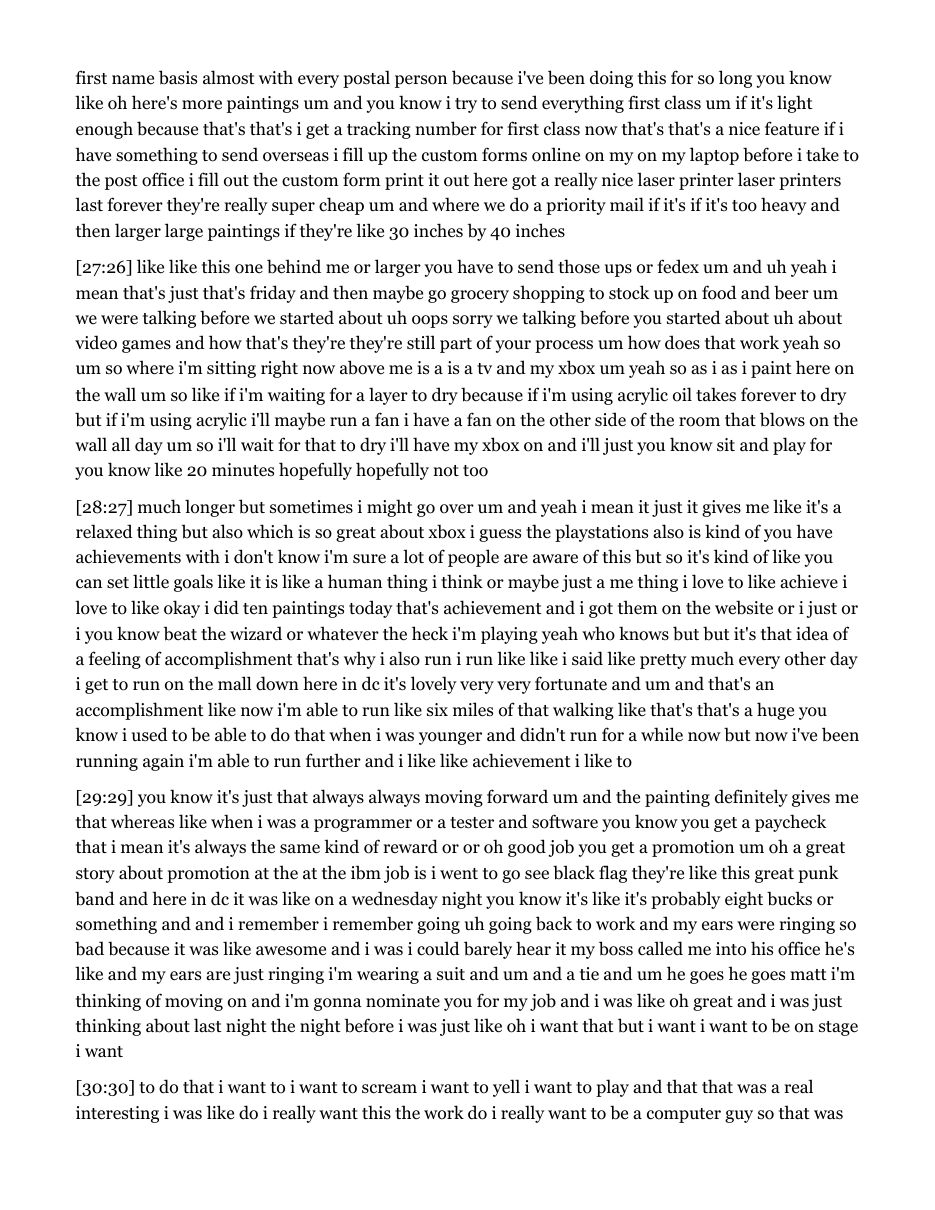
first name basis almost with every postal person because i've been doing this for so long you know like oh here's more paintings um and you know i try to send everything first class um if it's light enough because that's that's i get a tracking number for first class now that's that's a nice feature if i have something to send overseas i fill up the custom forms online on my on my laptop before i take to the post office i fill out the custom form print it out here got a really nice laser printer laser printers last forever they're really super cheap um and where we do a priority mail if it's if it's too heavy and then larger large paintings if they're like 30 inches by 40 inches [27:26] like like this one behind me or larger you have to send those ups or fedex um and uh yeah i mean that's just that's friday and then maybe go grocery shopping to stock up on food and beer um we were talking before we started about uh oops sorry we talking before you started about uh about video games and how that's they're they're still part of your process um how does that work yeah so um so where i'm sitting right now above me is a is a tv and my xbox um yeah so as i as i paint here on the wall um so like if i'm waiting for a layer to dry because if i'm using acrylic oil takes forever to dry but if i'm using acrylic i'll maybe run a fan i have a fan on the other side of the room that blows on the wall all day um so i'll wait for that to dry i'll have my xbox on and i'll just you know sit and play for you know like 20 minutes hopefully hopefully not too [28:27] much longer but sometimes i might go over um and yeah i mean it just it gives me like it's a relaxed thing but also which is so great about xbox i guess the playstations also is kind of you have achievements with i don't know i'm sure a lot of people are aware of this but so it's kind of like you can set little goals like it is like a human thing i think or maybe just a me thing i love to like achieve i love to like okay i did ten paintings today that's achievement and i got them on the website or i just or i you know beat the wizard or whatever the heck i'm playing yeah who knows but but it's that idea of a feeling of accomplishment that's why i also run i run like like i said like pretty much every other day i get to run on the mall down here in dc it's lovely very very fortunate and um and that's an accomplishment like now i'm able to run like six miles of that walking like that's that's a huge you know i used to be able to do that when i was younger and didn't run for a while now but now i've been running again i'm able to run further and i like like achievement i like to [29:29] you know it's just that always always moving forward um and the painting definitely gives me that whereas like when i was a programmer or a tester and software you know you get a paycheck that i mean it's always the same kind of reward or or oh good job you get a promotion um oh a great story about promotion at the at the ibm job is i went to go see black flag they're like this great punk band and here in dc it was like on a wednesday night you know it's like it's probably eight bucks or something and and i remember i remember going uh going back to work and my ears were ringing so bad because it was like awesome and i was i could barely hear it my boss called me into his office he's like and my ears are just ringing i'm wearing a suit and um and a tie and um he goes he goes matt i'm thinking of moving on and i'm gonna nominate you for my job and i was like oh great and i was just thinking about last night the night before i was just like oh i want that but i want i want to be on stage i want [30:30] to do that i want to i want to scream i want to yell i want to play and that that was a real interesting i was like do i really want this the work do i really want to be a computer guy so that was
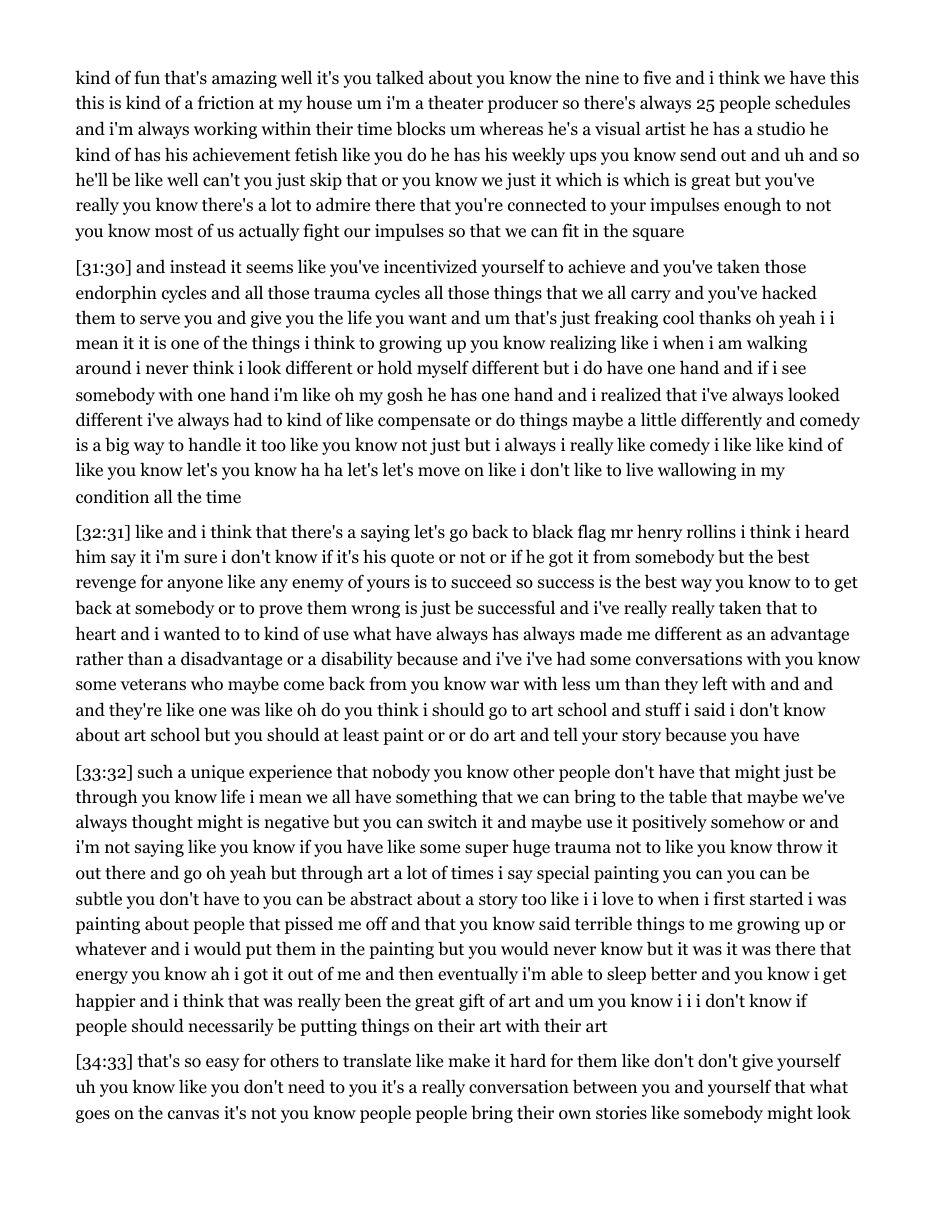
kind of fun that's amazing well it's you talked about you know the nine to five and i think we have this this is kind of a friction at my house um i'm a theater producer so there's always 25 people schedules and i'm always working within their time blocks um whereas he's a visual artist he has a studio he kind of has his achievement fetish like you do he has his weekly ups you know send out and uh and so he'll be like well can't you just skip that or you know we just it which is which is great but you've really you know there's a lot to admire there that you're connected to your impulses enough to not you know most of us actually fight our impulses so that we can fit in the square [31:30] and instead it seems like you've incentivized yourself to achieve and you've taken those endorphin cycles and all those trauma cycles all those things that we all carry and you've hacked them to serve you and give you the life you want and um that's just freaking cool thanks oh yeah i i mean it it is one of the things i think to growing up you know realizing like i when i am walking around i never think i look different or hold myself different but i do have one hand and if i see somebody with one hand i'm like oh my gosh he has one hand and i realized that i've always looked different i've always had to kind of like compensate or do things maybe a little differently and comedy is a big way to handle it too like you know not just but i always i really like comedy i like like kind of like you know let's you know ha ha let's let's move on like i don't like to live wallowing in my condition all the time [32:31] like and i think that there's a saying let's go back to black flag mr henry rollins i think i heard him say it i'm sure i don't know if it's his quote or not or if he got it from somebody but the best revenge for anyone like any enemy of yours is to succeed so success is the best way you know to to get back at somebody or to prove them wrong is just be successful and i've really really taken that to heart and i wanted to to kind of use what have always has always made me different as an advantage rather than a disadvantage or a disability because and i've i've had some conversations with you know some veterans who maybe come back from you know war with less um than they left with and and and they're like one was like oh do you think i should go to art school and stuff i said i don't know about art school but you should at least paint or or do art and tell your story because you have [33:32] such a unique experience that nobody you know other people don't have that might just be through you know life i mean we all have something that we can bring to the table that maybe we've always thought might is negative but you can switch it and maybe use it positively somehow or and i'm not saying like you know if you have like some super huge trauma not to like you know throw it out there and go oh yeah but through art a lot of times i say special painting you can you can be subtle you don't have to you can be abstract about a story too like i i love to when i first started i was painting about people that pissed me off and that you know said terrible things to me growing up or whatever and i would put them in the painting but you would never know but it was it was there that energy you know ah i got it out of me and then eventually i'm able to sleep better and you know i get happier and i think that was really been the great gift of art and um you know i i i don't know if people should necessarily be putting things on their art with their art [34:33] that's so easy for others to translate like make it hard for them like don't don't give yourself uh you know like you don't need to you it's a really conversation between you and yourself that what goes on the canvas it's not you know people people bring their own stories like somebody might look
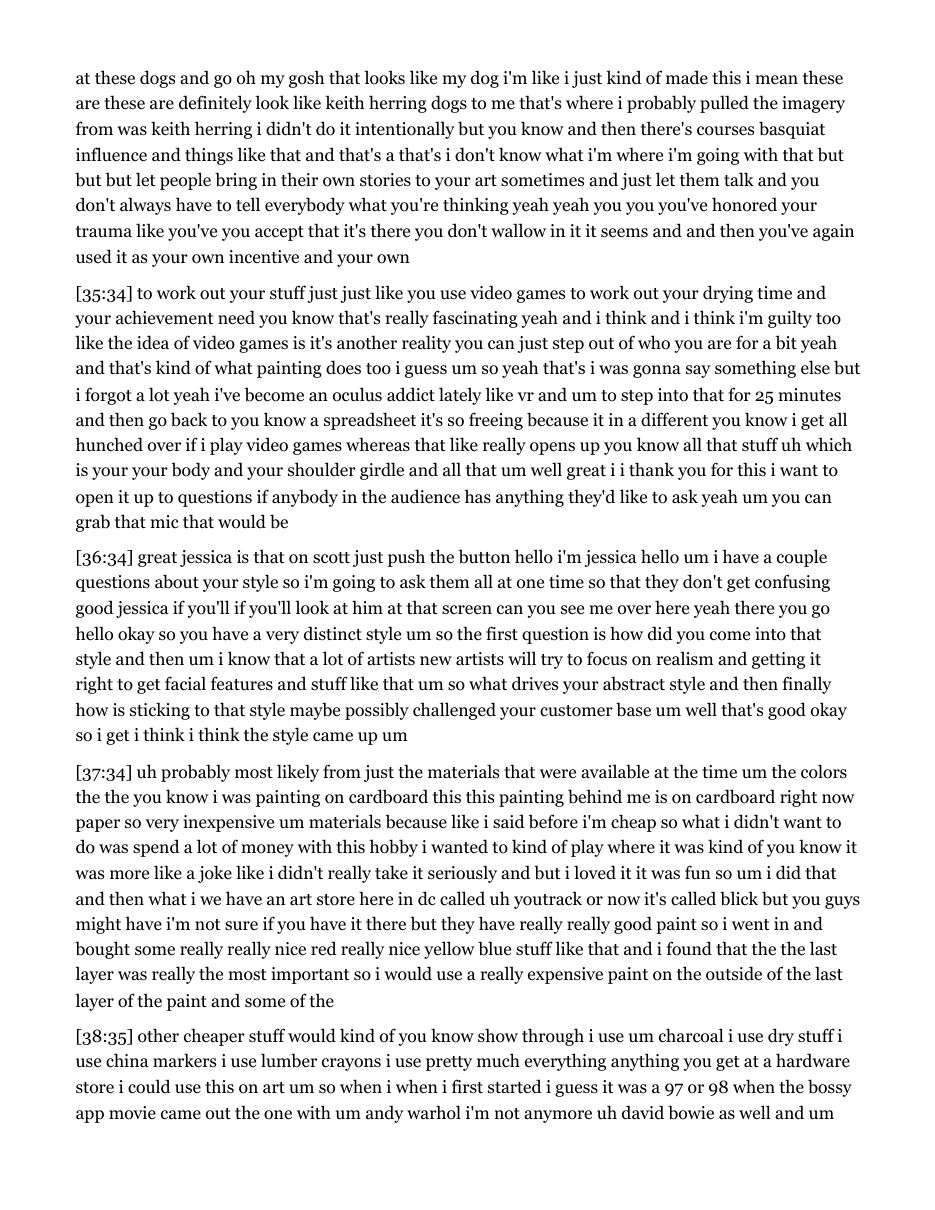
at these dogs and go oh my gosh that looks like my dog i'm like i just kind of made this i mean these are these are definitely look like keith herring dogs to me that's where i probably pulled the imagery from was keith herring i didn't do it intentionally but you know and then there's courses basquiat influence and things like that and that's a that's i don't know what i'm where i'm going with that but but but let people bring in their own stories to your art sometimes and just let them talk and you don't always have to tell everybody what you're thinking yeah yeah you you you've honored your trauma like you've you accept that it's there you don't wallow in it it seems and and then you've again used it as your own incentive and your own [35:34] to work out your stuff just just like you use video games to work out your drying time and your achievement need you know that's really fascinating yeah and i think and i think i'm guilty too like the idea of video games is it's another reality you can just step out of who you are for a bit yeah and that's kind of what painting does too i guess um so yeah that's i was gonna say something else but i forgot a lot yeah i've become an oculus addict lately like vr and um to step into that for 25 minutes and then go back to you know a spreadsheet it's so freeing because it in a different you know i get all hunched over if i play video games whereas that like really opens up you know all that stuff uh which is your your body and your shoulder girdle and all that um well great i i thank you for this i want to open it up to questions if anybody in the audience has anything they'd like to ask yeah um you can grab that mic that would be [36:34] great jessica is that on scott just push the button hello i'm jessica hello um i have a couple questions about your style so i'm going to ask them all at one time so that they don't get confusing good jessica if you'll if you'll look at him at that screen can you see me over here yeah there you go hello okay so you have a very distinct style um so the first question is how did you come into that style and then um i know that a lot of artists new artists will try to focus on realism and getting it right to get facial features and stuff like that um so what drives your abstract style and then finally how is sticking to that style maybe possibly challenged your customer base um well that's good okay so i get i think i think the style came up um [37:34] uh probably most likely from just the materials that were available at the time um the colors the the you know i was painting on cardboard this this painting behind me is on cardboard right now paper so very inexpensive um materials because like i said before i'm cheap so what i didn't want to do was spend a lot of money with this hobby i wanted to kind of play where it was kind of you know it was more like a joke like i didn't really take it seriously and but i loved it it was fun so um i did that and then what i we have an art store here in dc called uh youtrack or now it's called blick but you guys might have i'm not sure if you have it there but they have really really good paint so i went in and bought some really really nice red really nice yellow blue stuff like that and i found that the the last layer was really the most important so i would use a really expensive paint on the outside of the last layer of the paint and some of the [38:35] other cheaper stuff would kind of you know show through i use um charcoal i use dry stuff i use china markers i use lumber crayons i use pretty much everything anything you get at a hardware store i could use this on art um so when i when i first started i guess it was a 97 or 98 when the bossy app movie came out the one with um andy warhol i'm not anymore uh david bowie as well and um
and i i went to opening date and i i didn't know anything about basketball it's painting at the time but when i saw the movie and they had the scene where the gallery owner goes to his apartment and sees his stack of pains and she's flipping through and i'm like oh my god because i thought his his art is very primitive and mine is primitive and i thought it was very similar um so then i was like oh my god i can do this um so [Music] the thing that really probably has kept me in the style the most is because it's i find it easy [39:36] and that may sound weird but i this is the easiest way for me to paint this is the easiest way for me to to do painting i can't do realistic paintings i don't think i mean i i've tried when i first started i would make i would like get a photo and then i would do like a dot-to-dot i would do the i would do like a ratio of you know on the canvas if this is 10 over on the on the photograph it was six over so i would do like a matrix type thing and then i tried to determine where the eyes would go the note you know like i didn't understand i didn't take the classes so i'm self-taught in that respect i didn't know you know where things were supposed to go so i just kind of tried but that took forever when i was doing dot painting so that i just went back to do an abstract and now i just kind of listen to music on the headphones and let it go like just let the let the song take me i'm still listening to stuff i listen to in high school and i'm finding new inspiration from that still um so i guess i do go kind of back in [40:36] time when i paint in a weird way like i am trying to be that 16 17 year old person when i paint have that energy and that's another thing i always tell people if when you're younger paint everything that you feel at the at that time because my god if i could go back to what i used when i was a kid and had all that energy i could i'd probably have a lot more paintings out too and i'd probably be a better painter um and then and then the how does it challenge my customers um i don't know i mean i guess i guess some people say that i get repetitive like so these dogs have done thousands of these things the bowl over here and those are what i call my hits so if you think of like a band um like the rolling stones they probably come out with new records now or records new songs and um but people don't want to hear the new stuff you want to hear the old stuff so a lot of times i know i can these are like in marketing it's called a cash cow i believe is that right term yeah where you have a a widget that has always been successful [41:37] that kind of is always going to sell no matter what yeah um so that's what these are for and then i can so that kind of every month i have a my wife and i we have a number that we want to hit sales so every month so we have a spreadsheet you know every sale everything every expense and we have a number the first of every month we have 30 31 days to hit that number once we hit that number then we can relax paint whatever we want kind of idea so that way we know at the end of the year we've made enough money to pay bills and do savings so that's another key to my business stuff is um is doing that so anyways uh all right customers so pretty much i i take requests i take commissions also from people so if somebody wanted a a christmas present for somebody they want me to paint them with their dog they know it's going to look like one of my paintings but i will do requests for people so i don't know if that makes sense but so in other words if somebody gets bored of my work they go hey man why don't you paint you know this for me and i'll go sure i'll give it a shot and the way i work that is
[42:38] you don't have to pay me if you don't like it so in other words i'll send you an email at the picture that i painted this and if you don't like it you don't have to buy it but i paint it in a way that i know somebody else will buy it so i do that if you haven't already been to the gordon gallery do stop by it's a it's an amazing show and uh and and you did some commissions for this you painted david good my friend um uh and some other folks for that and and some of it you did with cole from norfolk southern yes yes so that's um a real important thing i think with the art is whenever so i've traveled a lot i'm shown in a lot of different places and a lot of times what i'll do is i'll go to uh like a city or a country and i like to spend a week or two painting there and getting inspiration from the things around me where i'm painting um which is a great thing living here in dc always something going on but um so like when i went to norfolk um they were able to get me a place to [43:39] paint and i was able to research go down to the water and you know look at the ships and things and and get a sense for the culture and the community and then colin the curator of the show he was able to get me some coal um to paint with because we were talking a lot about the reliance on coal for the economy and um so i thought that would be really cool to paint with coal so that's the first time i ever used coal is for this show with norfolk so i would use that kind of as a base and if you know the artist uh duba faye he's um they show his stuff here at the smithsonian he was a taught artist but wanted to paint like an outsider or like a folk artist so but his stuff he used a lot of sand and dirt um so i went and looked at some of his work before i started working for this for the cool stuff for this show um i think his stuff is a lot better than mine i don't know if i don't know if my coal paintings were super successful i think there were like three really good ones or four i don't know but it was a lot of [44:40] it was fun i like it and colin was the one who got me that coal it was he actually went and secured it somehow and then shipped it overnight to means i got this huge box of coal in the mail that was really cool that's awesome any other questions yes uh hello so i did go to the odu exhibit and i thought the cole paintings were really nice especially the the one of the the owner who helped with the connections of getting you the coal the self portrait that they were talking about um and i got a uh it was a private tour with colin who uh how i found out about your exhibit and one of the things that he mentioned was that you painted a backdrop for play and i've also been asked to paint alongside a performance of some sort how was it uh like getting those opportunities and experiences like what was it like [45:40] um yeah it was great so the both of those opportunities and it's amazing how pretty much every opportunity like that has always been via social media somebody just seeing my work on facebook or i guess that's kind of all that we've ever used um and um so i did a play i've done a few plays but um it was one like in l.a where this person just found my work this was probably about i guess almost 20 years ago and he just wrote me and said hey do you want to come to la hollywood and uh do the backdrop for this play and i ended up sleeping in the theater and painting it all right there on the spot which is crazy that's what i had more energy and um and i would watch the you know the the practices or what are they i don't know if they call practices what they call when you don't yeah yeah rehearsal there you go
[46:40] and um and so anyways i was watching that and getting more ideas for those so i i pretty much read the script on the plane out there um the one i did one one of the in the show at odu is well there's one from another playlist that i did in san francisco that was the same guy who asked me to do the thing in l.a and um i had like two or three days to do those and they were huge and the sub was another one where i had to sleep um in the theater and paint i'm pretty much on the floor because there's you know it's too large so i did all that on the floor um i just made it up i mean i had just had to go with confidence and just kind of you know be squirrely with it and hope for the best um and then there's another one in there that's from uh operated in raleigh north carolina during giovanni the the performance the opera performance of giovanni and that was another one they they had me stay in raleigh north carolina in a um like a storefront abandoned [47:41] business and i painted all these huge canvas on the floor uh for the that were you know for the backdrop of the of the opera and this was a kind of opera where people had black ties and it was like real professional stuff which blew me away i was like i was just kind of like this you know hack pain or doing this and um but then during the performance the i think it was like two nights i was painting while they were performing on stage so i was just having to make up stuff then too like using house paint and cool and it was hard i mean it was it wasn't hard it was just kind of intimidating but i think the idea is i get now with painting and maybe this could be some advice is i really i think most of my work is pretty crappy like i think if i if i have that attitude in my head that it's not serious and it's not necessarily great art or um you know then it gives me a freedom where i don't have to worry that that i'm making mistakes so it's almost like all our all my art is is mistakes and it's a series of mistakes and i don't [48:42] think i'm the first one to say that i think that other artists have probably said that but oh no isn't it bob ross is that happy accidents yeah he's very happy trees but then something about yeah anyway so it's kind of that idea where you know the colors come together and then that's your painting and once so i always make sure you always see mine they have the lips the teeth you know maybe the circles the eyes and the colors so i always use that somewhere or try to use that in my painting so that you know it's one of mine um some of you the advice i have given artists or people who want to try this is just come up with some icons come up with some things that are repetitious that you can put in all your work um and use quality paint uh that's the biggest advice i could give to because when you start off as an artist or a painter you're gonna be in group shows a lot of times like you'll be in a show with you know 20 other people but if you have the brightest red and the deepest colors and your yellows are better than everybody else's yellow your your painting from the other side of the room it's going to pop so much better than theirs you're going to tell [49:42] the other people we're trying to you know just do the work and maybe not spend any money on it but the other trick is charge less than everybody else in the room too especially if you have a better looking painting or better looking art and you'll you'll do fine great a couple more and okay so you've mentioned a couple times um kind of you're cheap and so you buy cheaper materials um which is something i picked up a lot of my canvases at thrift stores and paint over them um so how do you price your min your uh pieces to kind of keep that price down and what's your process with that um yeah pretty much hourly i kind of try to give myself an hourly wage i try not to make more than a
certain number in a day like if i have a really good day and paint a lot i try not to go overboard and make too like i like my cheapest work now i think is probably 30 or 40 dollars my smalls [50:44] and i'm using you know i'm using paper i'm using like so like i'm sitting in my studio so this is like canvas board 5x7 get this on amazon you get 72 of these i think for for 20 bucks or something i mean you you can get so many inexpensive things and then just you you pass on the savings to your people that are collecting it and then um uh oh another thing i didn't mention when i ship i always wrap stuff in butcher paper butcher paper you can buy that like so you can get the the holder and the and the rolls on amazon um so that that makes your paintings a lot safer when you ship them and stuff but um so back to an expert yeah so okay so pricing i mean it's pretty much if you look at my site like a uh 18 or 12 inch by 18 piece of paper probably like 120 130 which i still think is high but now that i'm married i have to have another boss that i have to run prices by and but anyway she she's done she's [51:46] very wise on this stuff um but we come up with pretty much we price ourselves about the same so we we buy bulk canvas um you know it can really you can really get the price low if you uh you guys have a jerry's artima i think at virginia beach there and they have really good prices i buy a lot of canvas from them um so i don't know i mean always buy bulk paper you can get stacks of like you know 300 sheets of good good paper for like 100 bucks and you know you can pay for it one painting was there one over here did you have much no great well um thank you so much for joining us today we should probably wrap up um uh i needed this today um uh you know there's a lot about trusting your gut and your intuition and making your own rules but also you know the discipline in industry that that's required by that you know that's really beautiful to hear [52:46] and the way you've hacked your or or at least incentivize your life for yourself is is gorgeous any any parting words of wisdom for young art entrepreneurs oh yeah yeah so yeah the main thing is that sounds i sound like a old football coach that i used to have in high school but always set goals always have like a you know a week goal a month goal um your goal five year goal ten year goal so right now i'm working towards a ten year goal where i'm planning on paying for at least ten more years before i start you know i'll be 65 in 10 years so i'm trying to keep this pace until then um so always have goals out there you know if you're if you're 20 now um save your money um throw it in some if you have extra here and there but i didn't put it in this you know stock so i don't know that's probably not the best idea but i [53:46] know or maybe it is i mean i wish i would have done that earlier but um that's really the main one and um put yourself through through struggle i mean i i was talking with dan and my wife this morning and i you know i've a potential another show coming up like four or five months and i was like god do i want to do it i'm like yes you got to put yourself through through through strain and struggle in order to grow and i mean that's maybe why i run too like like add an exercise plan into your day somehow you know just something um and that's about it and also i'm a vegetarian so i haven't eaten meat in a long time so 25 30 years so that's another thing i really attribute to maybe my insane appetite for i don't know painting something like that [Laughter]
[54:49] yeah yeah stay hungry i guess that's the thing there you go all right well thank you matt thank you so much for your time today and uh and for your work it's really a joy to enter that space and
spend some time with it so thank you for all you're putting out all your good vibes and um and your good taste of music so yeah all right thank you very much i appreciate everybody listening and send me an email anytime if you have any questions or complaints cool thank you oh and uh he's painting live tomorrow right on youtube yeah painting live tomorrow um if you go to youtube and just type in matt ciso it'll pop up um it's yeah it's coming soon or whatever that's probably the fastest way to get there um and a quick google search will get you to mattco.com and uh yep or just email me yeah yep cool all right thanks have a good afternoon