Saved copy · 5 pages
Click a page to open it — scroll or pinch to zoom, drag to move, arrow keys for the next page.
The full text of this page is printed above, under “Text of the original page”, with the machine-read text of its clippings.
Full text
Text taken from the saved copy (where a page was only an image, it was machine-read and may contain errors — check against the page image before quoting). Copyright remains with the original publisher; kept for the historical record.
Sesow in the Hurn Museum ***
Coerrr
Pe el ae
Suan ue a eet)
Savannah, GA 2006
Cee uae ncaa n ceee
ups:
jwwsesow-com/folkface htm
pSacumaly Morauny -\ct0s4
SAVANNAH now> {i
Local News web pested saturday,
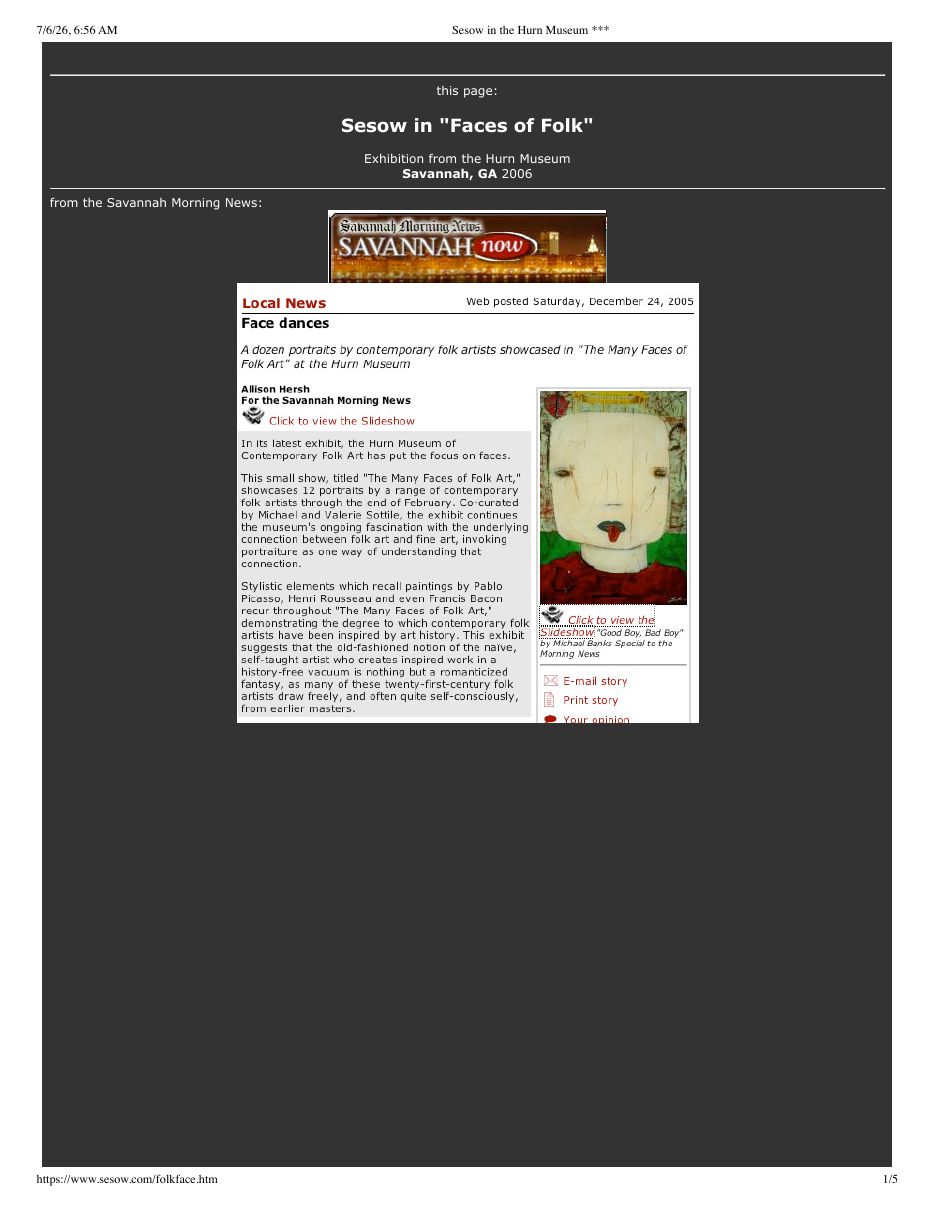
Face dances
A dozen portraits by contemporary folk artists showcased in "The Many Faces of
Folk Art at the Hurn Museu
Allison Hersh
For the Savannah Morning News
SF click to view the Slideshow
In its latest exhibit, the Hurn Mus
ci Act hos put th
This small show, titled "The Many Faces of Folk Art,’
showcases 12 porvalts by a range of contemporary
‘ongaing fascinaticn with the underlying
n folk art and fine art, invoking
jay of understanding thet
nts wh all paintings by Pablo
Henri Rousseau and
demonstrating the di smporary folk
artists hay n inspired by art history. This exhibit
1s that the old-fashioned noton of the naive,
incpired
history-fr uum frothing but a romantic
fantasy, as mary of these twenty-first-century folk
artists draw f ansciously,
from earlier masters,
[page 1 machine-read (OCR) from the image]
Sesow in the Hun Museum *+*
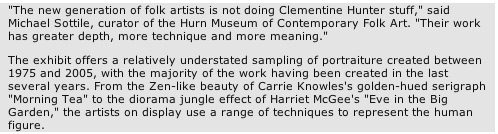
tion of folk artists is not deing Clementine Hunter stuff" said
Michael Sottile, curator of the Hurn Museum of Contemporary Folk Art. “Their work
has greater depth, mare technicue and more meaning,”
‘The exhibit offers a relatively understated sampling of portraiture created between
41975 and 2095, with the majority of the work having been created in the last
several years. From t K 's gelden-nued serigrapn
"Mornin "Eve int
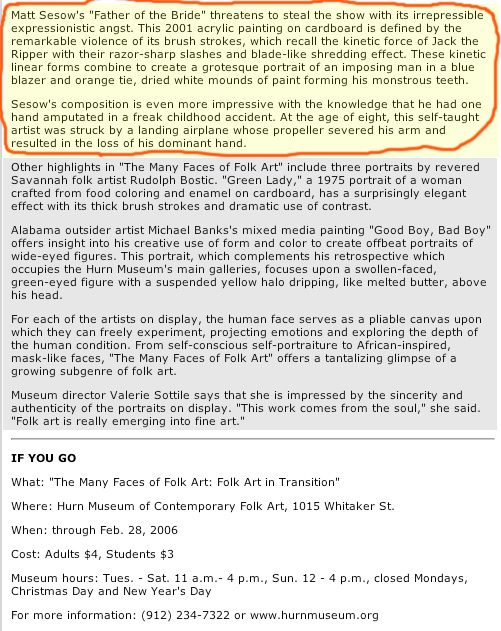
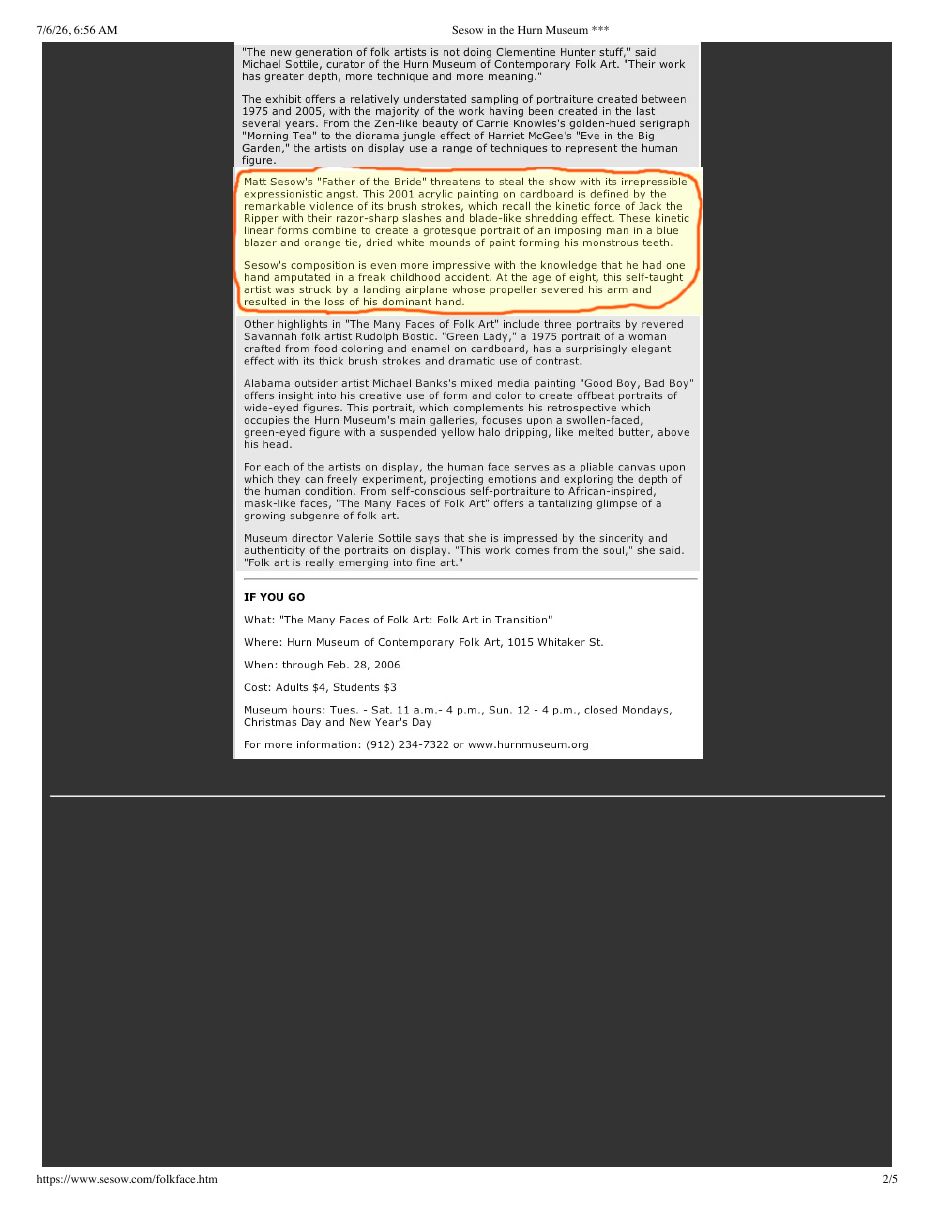
ne to steal the shew with it lwrepressiole
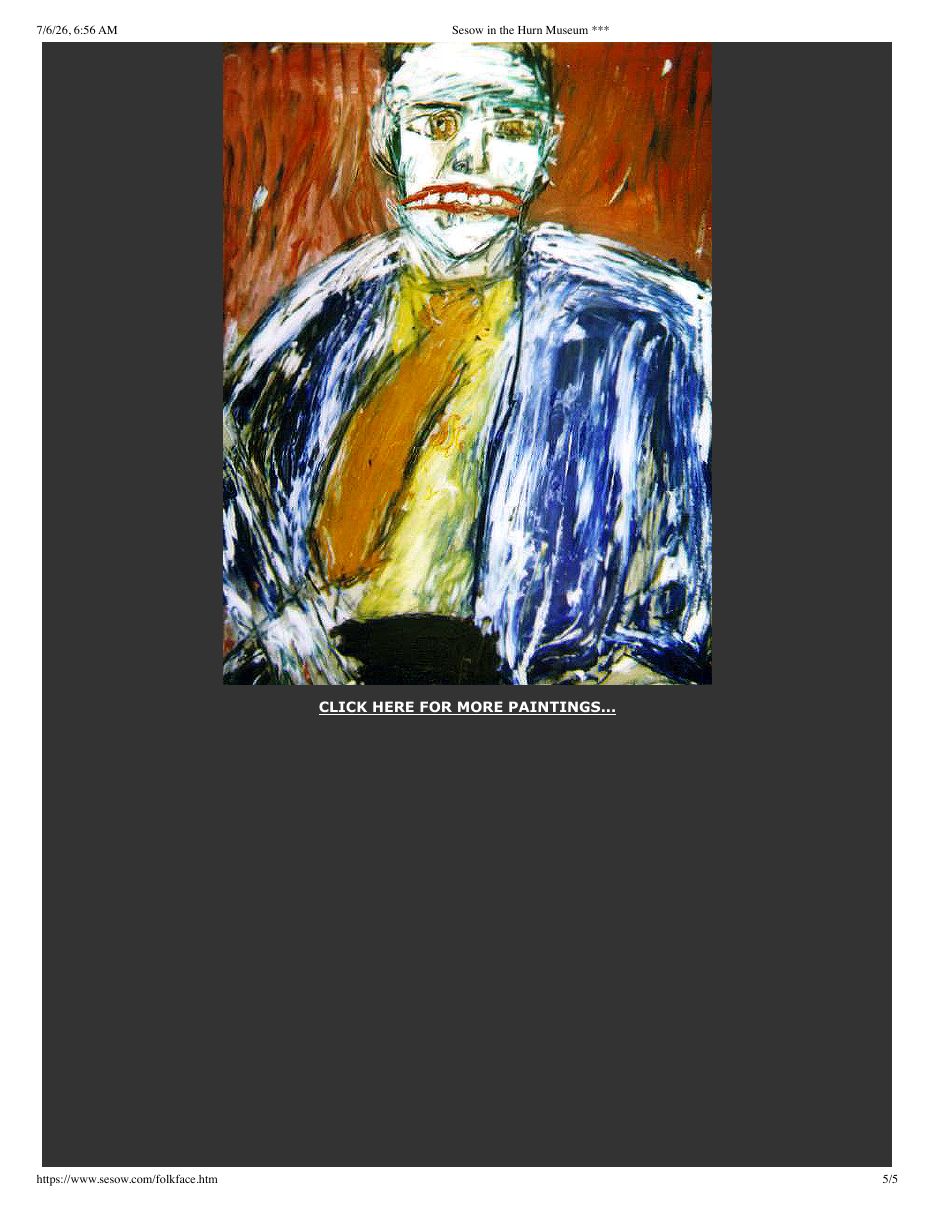
painting on cardboard is define by th
; which recall the kin of Jack t
Ripper with their razor-sharp slashes and Dlade-tke shredding effect. These kinetic
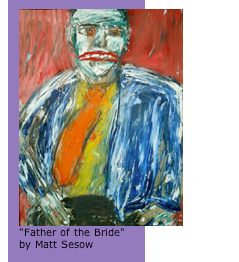
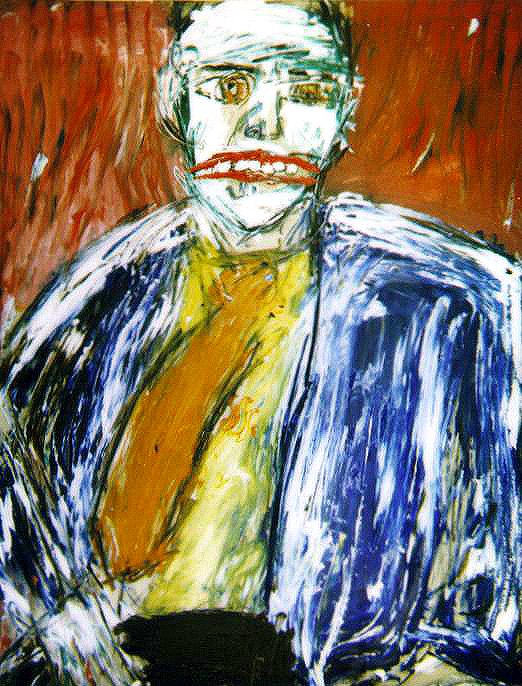
linear rorms combine te create 2 grotesque portralt of an impasing man in @ DIUe
blazer and erange tie, dried white mounds of paint forming his monstrous teeth,
aw's compasition is even more impressive with th a had one
hand amputated in a freak childhood 2c 9 seli-teught
trtist was stuck by 3 lancing airplane whose propeller 5
cf his de
johlights in "The Many Fe
nian falk artist Rudolph Bi
from fead coloring and enamel 5 pris iagant
effect with its thick brush strakes and dramatic use of contrast
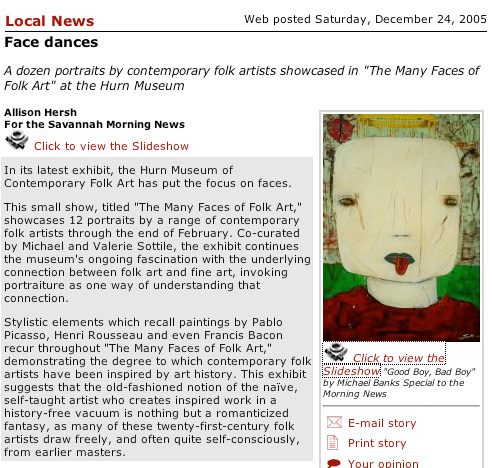
Alabama outsider artist Michael Banks's mixed media painting “Good Boy, Bad Bo
offers insight into his creative use af form end color to create offbeat portraits of
“This portrait, w 7 = his ive which
the Hurn Museum's main gall ccuses upon a swollen-*ai
with a suspended yellaw halo dripping, i 3 butter, above
or each of the artists on display, the human face serves asa pliable canvas upon
which they can freely experiment, prajecting emations and exploring the depth of
the human condition. From self-conscious self-portraiture to African-inspired,
Mary Faces of Folk art” offers a tantalizing glimpse of 2
essed by the sincerity and
authentiaty of the portraits on cisplay. “This work comes fram the soul" she said
I ertis reolly emerging into fine ert.”
IF You co
What: "The Many Faces of Folle Art: Folk Art in Transition’
Where: Hurn Museum Art, 1015 Whiteker St.
When: through Feb. 2
Cost: Adults $4, S
Museum hours: Tue 1a.m.-4 p.m., Sun. 12 - 4 p.m., closed Mondays,
Christmas Day and New Year's Day
For more intormati
ups:
/www'sesow-com/folkface htm
[page 2 machine-read (OCR) from the image]
- 6:56AM. Sesow in the Hurn Museum ***
ea eT
THE HURN MUSEUM
CONTEMPORARY FOLK ART
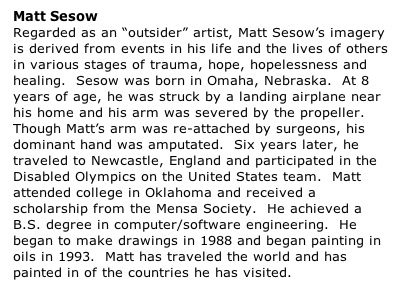
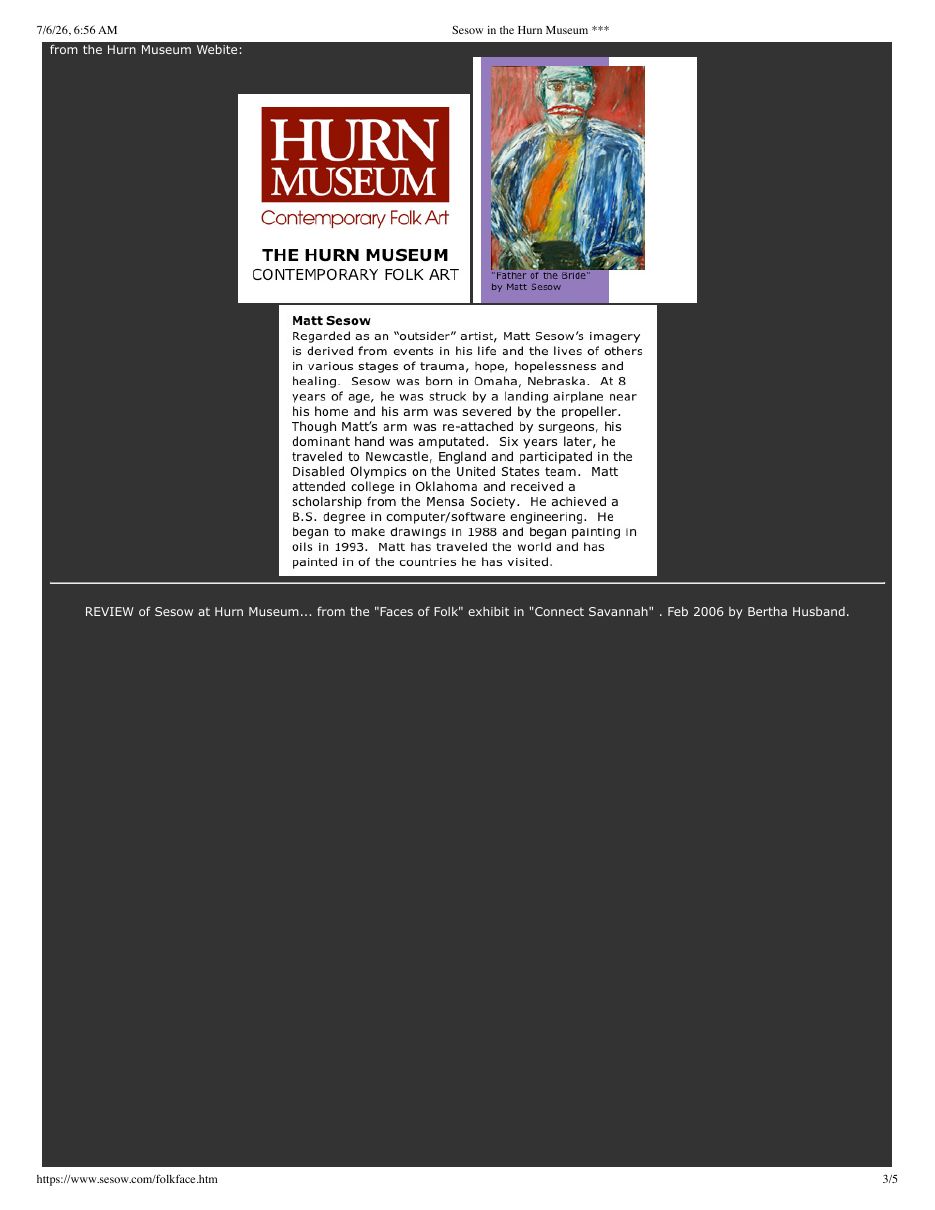
Matt Sesow
Regarded as an “o imagery
lerived from event of others
healing. Sesow was born in Omaha, Nebraska. At &
years of age, he was struck by a landing airplane near
his home and his arm was severed by the propeller.
Though Matt's arm was re-attached by surgeons, his
dominant hand was amputated. Six years later, he
traveled to Newcastle, England and participated in the
Disabled Olympics on the United States team. Matt
attended college in Oklahoma and received a
scholarship from the Mensa Society. He achieved a
B.S. degree in computer/software engineering. He
began to make drawings in 1988 and began painting in
oils in 1993. Matt has traveled the world and has
painted in of the countries he has visited
Pray ae Se a eee eee aa ees ead
baups:/www.sesow.comvfolkface him
[page 3 machine-read (OCR) from the image]
116126, 6:56 AM Sesow in the Hurn Museum ***
ECE LOTT A
ane)
Through Feb. 28@The Hurn Museum
INONE OF THE SHALL galleries arioning “Portran ota Friend
reserved for intimate, temporary exhibt again inthe loosor brush eroxos
tione atthe Hutn Museum, thre ara eur of Rutt Bostk’s enamel and focd
‘ently showing twelve works by nine Coloring poral, “Green Lady”
fanists under the to of “Faces of Folk” ‘There aro, infact. only uo
Inavarety of Szes, svios and macia__worksnere that seem fo asplay ro
pevatra The worahae bam exchlly fckottweait pant handing i
Shonen fom enevaing ast inthe. Mice! Ban, “Good Boy. Bud ‘
teins coecton ane what tel Boya lage, fia aco wha halo :
Soot ot ferme was cma penry a pra on, ara at i
‘roda and slowly medomnictinfences “Eve tthe Big argon’. Inwich g
TTatwor apparent and Rat wegereraly _thenated ve, abid inher hard g
Sotorerpea fom arsislaed, Tok’ snd accompanied by age sar 2
Forintnce, Rose Waters ecryic, tly ued ty ane oferty 3
ora of St tay roots tr yined out ou, three norton ij of 8
fecr ae Modern’ mms out paper ara andiones i
Sot Moaglen: oat raancnoy stow ifuoncos ar pair sis i
Gite faces long necks, smallmeuthe arene what one expects ror fk i
Siampy optics eyes Miscants ast, Usaly Roughtel es i
aes cle mete her resend unghtn the aad gerry i
ached nom te anagpresshe itr Unedited. In fo ona thy wo i
ro wouldrt kena orat answer Inte alne wih ony er ieral :
Vator: comer ison the vo ajo Wslonas nepraon,and bey
Minis have Den vemoved sn yetsoem cesta avon om ier specal
Tefosppeatontie est Actrngs do pace “outs” homancteam
Bing croyeciteastetneeamnfabea-eotur, when doa wi tha uray
recur there e Walter Wore ouconin tl and socus vaya
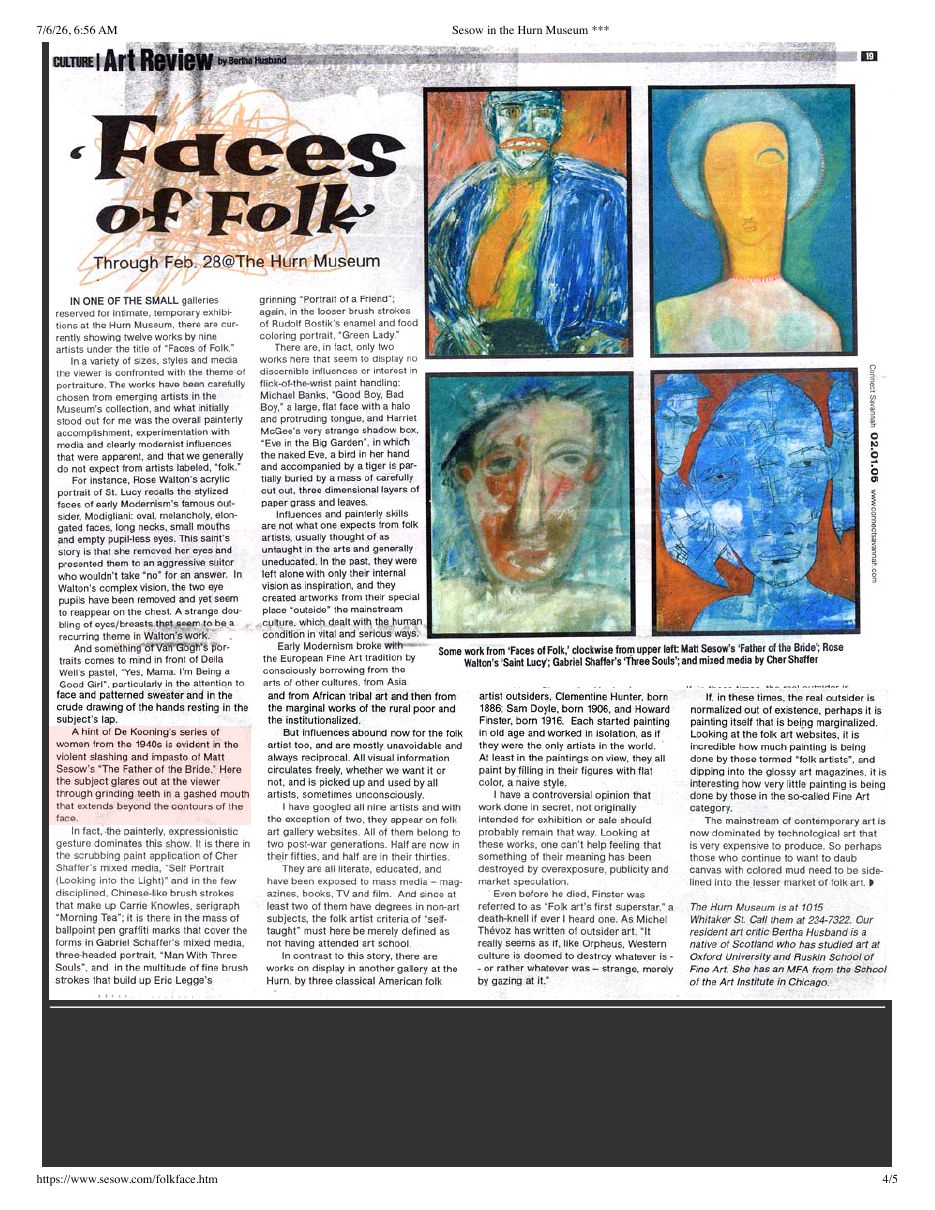
‘and something TVaFSPGNs For Eniy Moderiom bok witr=~" on warkton Faces ofF’ clockwise fom up let Mat Sesow's Fata ha Bio’ Reso
rahe iiiewomerDae, tte caeyuanrme ni racaryy 20m wet fom Tem fF! doch foe nea Mel So aroma
Mots pst. "Yes Maran Beng 8 conscouty boraning rom We
sod Gt partly th tonian tort atotner camires, for Aaa gesagt
face and paltemed swecterand'nthe and rom Arcan iil art and then fiom aris outsiders, Clemnine Hunter. born” Hin hese limes. the Fal caer ie
crude dawing of hehards resting inthe the marginal works of the ruta poor and 188, Sem Doyle, bomn 190, and vowardnomalzedou of exsterce, perhaps
subjects ep the isttuonaze. Foster bom 1916. Each started panting palning ea ale beng margralze.
‘Alto be Kooning sels of Butiuonces abound row or he fok rol age andwerkod in isalaton asi Looking tne tok art websites is,
womanifom the 1040 evident the itt oo, ndare most uneelable and theywere the ony aistsinthe wot, beredive tow mech panting & Bang
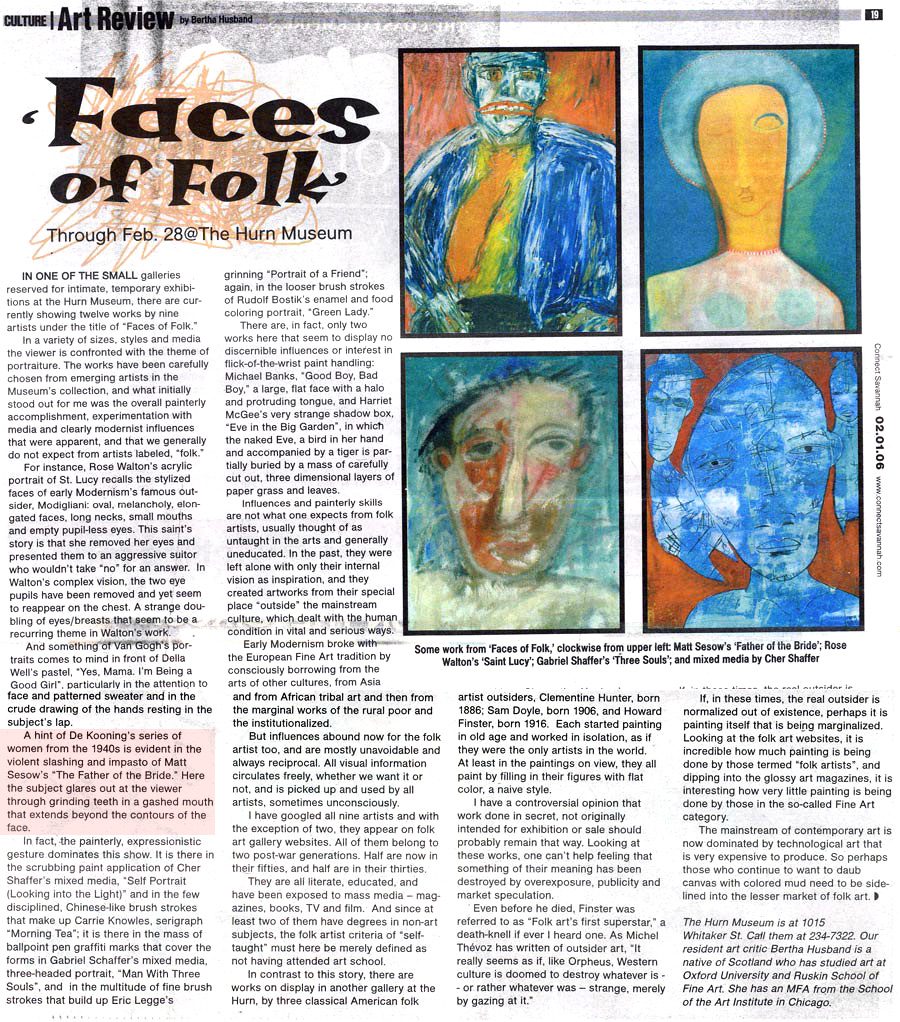
Viln! slashing ata mpasto of Matt alvaysracrocalAlvisialinfarmation AS east in he pantrge on view theyll done by those termed we arete aid
Srsow/s"The Father of he Bride: Hore ckeustes rey, whee’ we wantit er painibyling in hel figures wine! doping inte the Gosay at ggasies, is
the sibject lees out atthe vswer nol andis plekedupandusedby al alo. ana sl. irorestng how very itl paning s beng
trough grinding woth na gashed moun ars sometimes urconseusy Thaveaconteversialopnion tat done by tosein he scaled Fin At
tat extends eyed thecantousofihe | thaws googled allnire asi and win work denein sect, not orally catogor.
faa the xcuplon of tothe appear on fol Iter for enti or ene should The mahateam of contimporaryatle
Infact. he cantor oxeressionisic at galley wetaltes Alot thom belong to probably aman that way Locking st now domanatd by technolgicl at et
gesture dominates ts show. tisthere nwo postwar goneratons. Haare now tase works ne can't repteeing that lovery expense fo produce, o porns
the serbing pat apptcaon of Cher" teitifies and half arn thelthrtes. something of het msanng has been, those who cornue fo wan to dub
Shafer mexee medi Set Peat, Tay are alnerat, educated, ane _aastoyed by cverexposur,publety and canvas wth edored mud need to bo side-
{Looking ine tre Ugh) and inthe few haveleun exposed io ress ela~ mag: tare spect, ined athe esser market oar B
Giecpinnd, Chnasetinbrushstckes anes, ocks,TVand fm, Ard ance a Evanbetore he dled, Firetor wus
that make up Carte Knowles, seraraph_leasttwo afthemnae degrees Innor art cloredto.a Fok a's rat superstar Toe Hum Museum is at 1015
‘Morning Teas tere nthe mass ot subjects te fok arts teria of set deathwraif ever heard ne: Av Mhel” Whitaker St Cll em at 23-7822 Cur
Ballpoint pen grat mas that cover the taught must ere be merely defied as ‘Thévoz has wren of ouster art _relcent at crile Behe Husband ise
forms mGabeel Schafers mind medi, not wn atendea at school realy Sons as ke Orpheus, Wester nate of Scotnd who has studed art at
Urreaheaded porvaltManWih Thee," incontast fo hissy, there reales doomed to detvy whatver s- Oxford Unerslrand ust Shoot of
Sault" and inthe mlthid ffine brush workeoncaphy another gatey atthe or ther whatever was cvange mete) Fre art Sho hasan MPA ha Oe Saco!
stokes that build up Erie Legge's Hurn, by three classical American folk by gazing at it” of the Art Institute in Chicago,
baups:/www.sesow.comvfolkface him
[page 4 machine-read (OCR) from the image]
7/6/26, 6:56 AM
Sesow in the Hurn Museum ***
CLICK HERE FOR MORE PAINTINGS...
https://www.sesow.com/folkface.htm
5/5