Press archive
Christopher and Dana Reeve
Full text of the clippings, machine-read from the scans (may contain small errors; check the images).
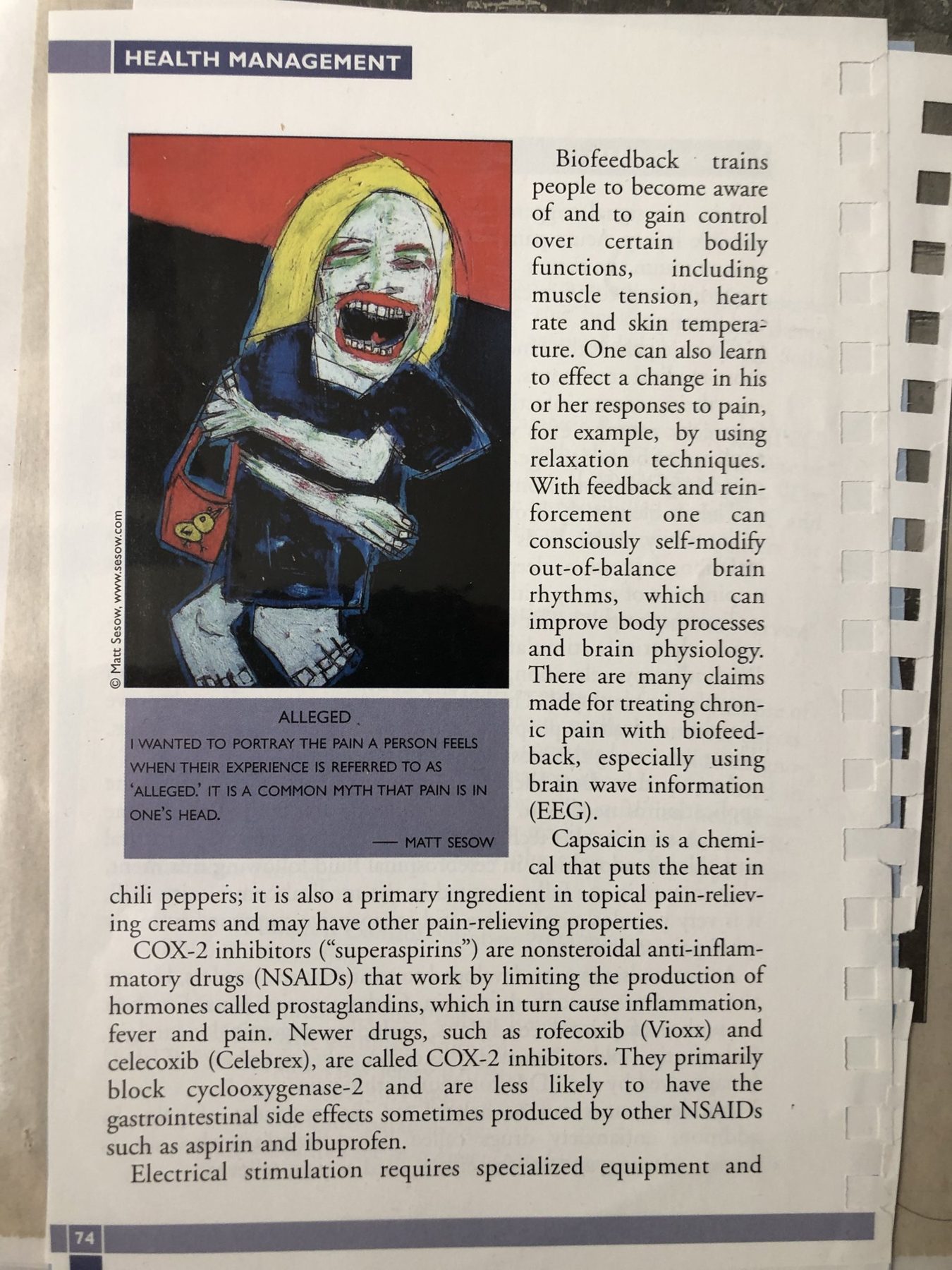
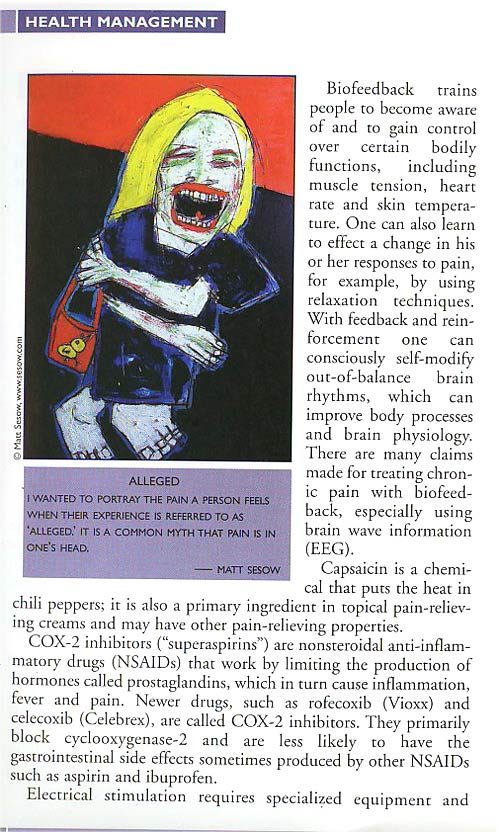
Biofeedback trains people to become aware of and to gain control over certain bodily functions, — including muscle tension, heart rate and skin tempera ture, One can also learn to effect a change in his or her responses to pain, for example, by using relaxation techniques. With feedback and tein- forcement one can consciously self- modify out-of-balance brain rhythms, which can improve body processes and brain physiology. There are many claims made for treating chron- ic pain with biofeed- back, especially using brain wave information (EEG).
Capsaicin is a chemi- cal that puts che heat in chili peppers; it is also a primary ingredient in topical pain-reliev- ing creams and may have other pain-relieving properties.
COX.2 inhibitors (“superaspirins”) are nonsteroidal anti-inflam- matory drugs (NSAIDs) that work by limiting the production of hormones called prostaglandins, which in turn cause inflammation, fever and pain. Newer drugs, such as rofecoxib (Vioxx) and celecoxib (Celebrex), are called COX-2 inhibitors. They primarily block cyclooxygenase-2 and are less likely to have the gastrointestinal side effects sometimes produced by other NSAIDs such as aspirin and ibuprofen.
Electrical stimulation requires special
© Ma Sesow. ose
ed equipment and
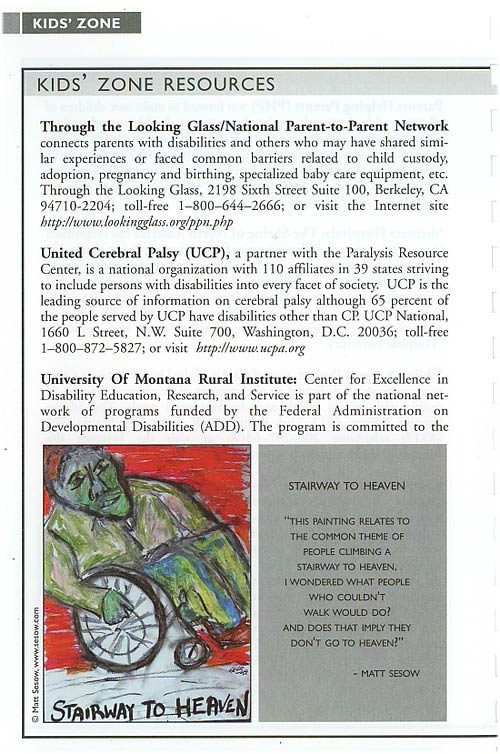
KIDS’ ZONE RESOURCES
Through the Looking Glass/National Parent-to-Parent Network connects parents with disabilities and others who may have shared simi- lar experiences or faced common barriers related to child custody, adoption, pregnancy and birthing, specialized baby care equipment, etc. Through che Looking Glass, 2198 Sixth Street Suite 100, Berkeley, CA hup:ltewuslookingglas.orglppn.php
United Cerebral Palsy (UCP), a partner with the Paralysis Resource Center, is a national organization with 110 affiliaes in 39 states striving to include persons with disabilities into every facet of society. UCP is the leading source of information on cerebral palsy although 65 percent of the people served by UCP have disabilities other than CP. UCP National,
University OF Montana Rural Institute: Center for Excellence in Disability Education, Research, and Service is part of the national net- work of programs funded by the Federal Administration on Developmental Disabilities (ADD). The program is committed to the
HEALTH MANAGEMENT |]
personnel trained in the procedure being used.
TENS uses tiny electri- cal pulses, delivered through the skin to nerve fibers, to cause changes in muscles, such as numb- ness or contractions. Thi: inieums produces teahpos rary pain telief
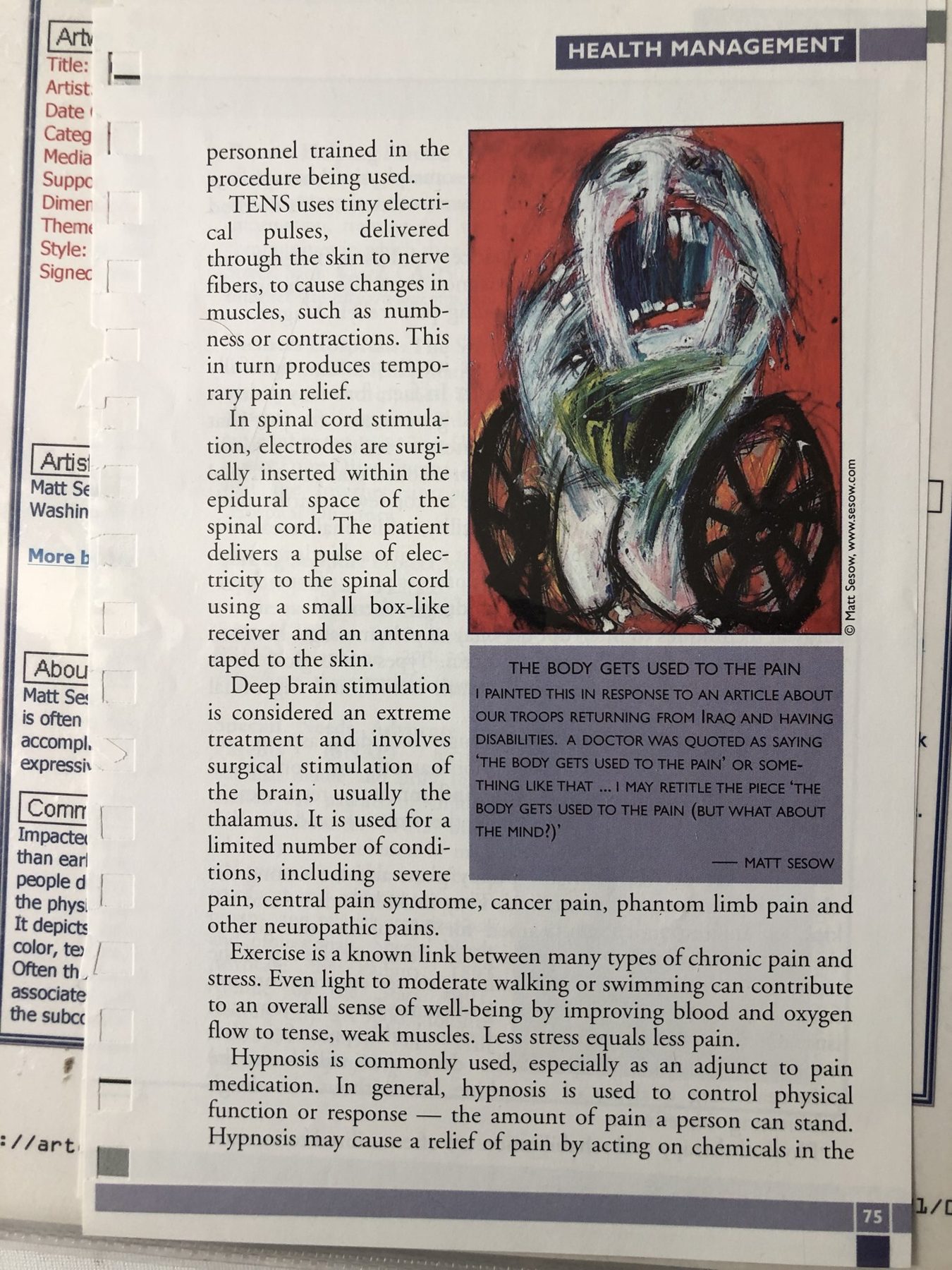
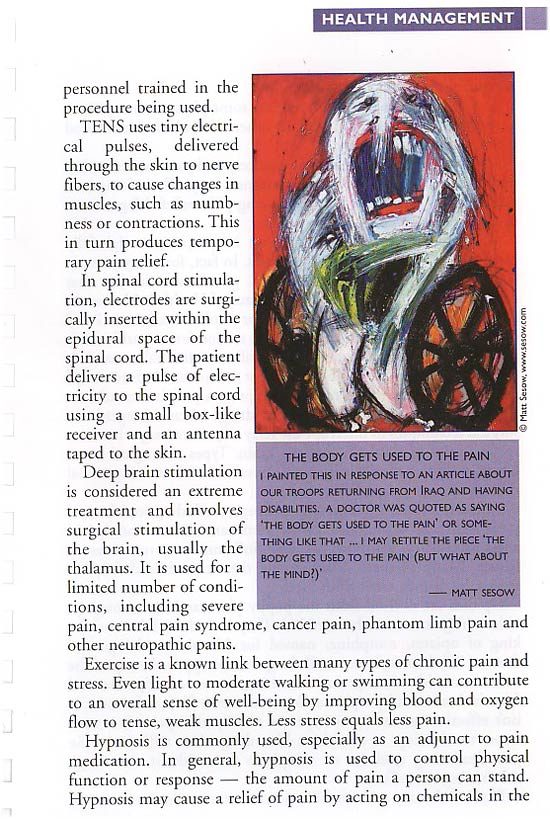
in spinal cord stimula- ony electrodes are surgi ely inserted within the epiduralivspace oh the spinal cord. The patient delivers a palse of elec: sriciey:t0-the: spinal cote! usinges Gnall, borlile reodiver and-ancantenna aS taped to the skin. THE BODY GETS USED TO THE PAIN
Deep brain stimulation ji tose eter is considered an extreme [QURTROOPS RETURNING FIOM IRAQ AND HAVING: treatment and involves | BISABIITIES, A DOCTOR WAS QUOTED AS SAYING surgical stimulation of [IHEBOO# Gets US 10 THE PAN! OR SoHE the brain, usually the JIERNG.UKE DRA UMay RETTTLETHS PeGe Tae thalamus. It is used for a BOOS tei TOUTE (AN GLU EA oa
limited number of condi- aaa tions, including. severe pain, central pain syndrome, cancer pain, p other neuropathic pains.
Exercise is a known link between many types of chronic pain and stress, Even light to moderate walking of swimming can contribute to an overall sense of well-being by improving blood and oxyge flow to tense, weak muscles Less stress equals less pain. Hypnosis is commonly used, especially as an adjunct to pain medication, In general, hypnosis is used to control physical function of response — the amount of pain a person can stand. Hypnosis may cause a relief of pain by acting on chemicals in the
MATT sesow,
hantom limb pain and