Saved copy · 4 pages
Click a page to open it — scroll or pinch to zoom, drag to move, arrow keys for the next page.
The full text of this page is printed above, under “Text of the original page”, with the machine-read text of its clippings.
Full text
Full text as published. Copyright remains with the original publisher; reproduced here for the historical record (machine-read pages may contain small errors — check the page images).
116126,7.03 AM ‘Sesow in the Christopher and Dana Reeve Paralysis Resource Guide , 2004 **
this page:
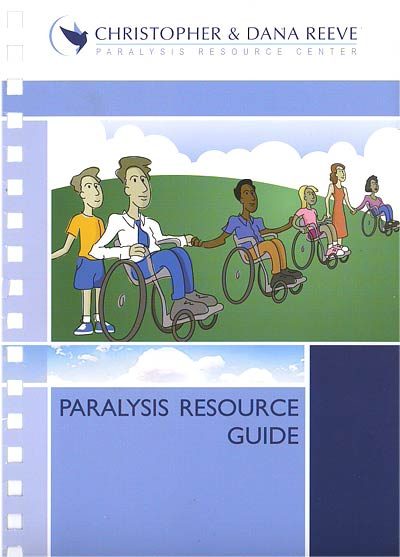
Christopher and Dana Reeve Paralysis Resource Guide
2004
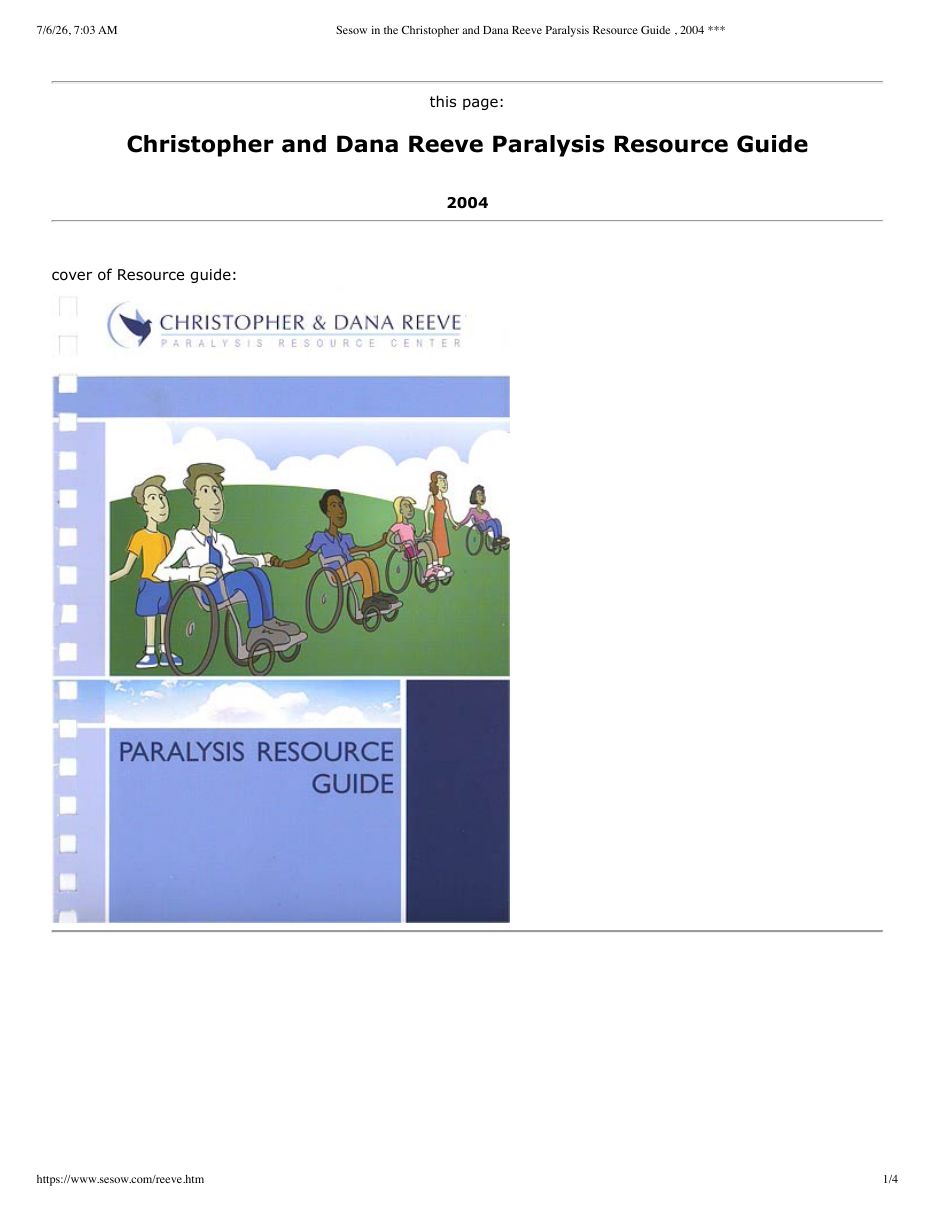
cover of Resource guide:
(yy CHRISTOPHER & DANA REEVE
bbups:/www.sesow.com/teeve him a
[page 1 machine-read (OCR) from the image]
116126,7.03 AM ‘Sesow in the Christopher and Dana Reeve Paralysis Resource Guide , 2004 +
i eae ia et EL =t lai
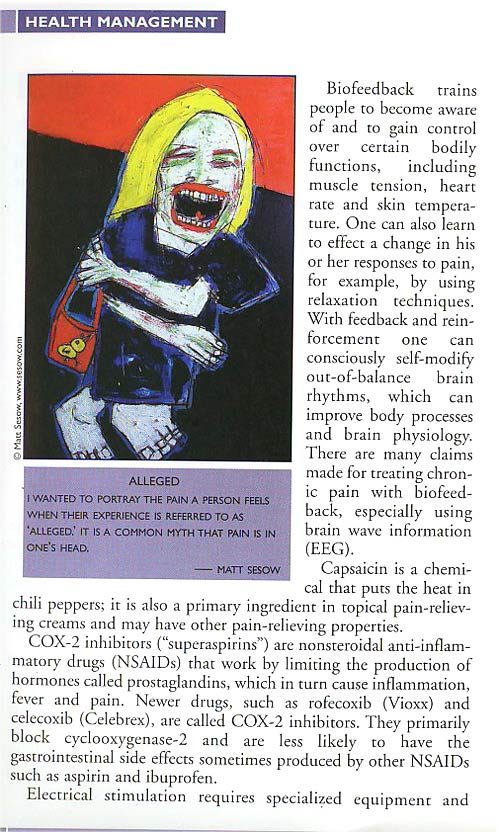
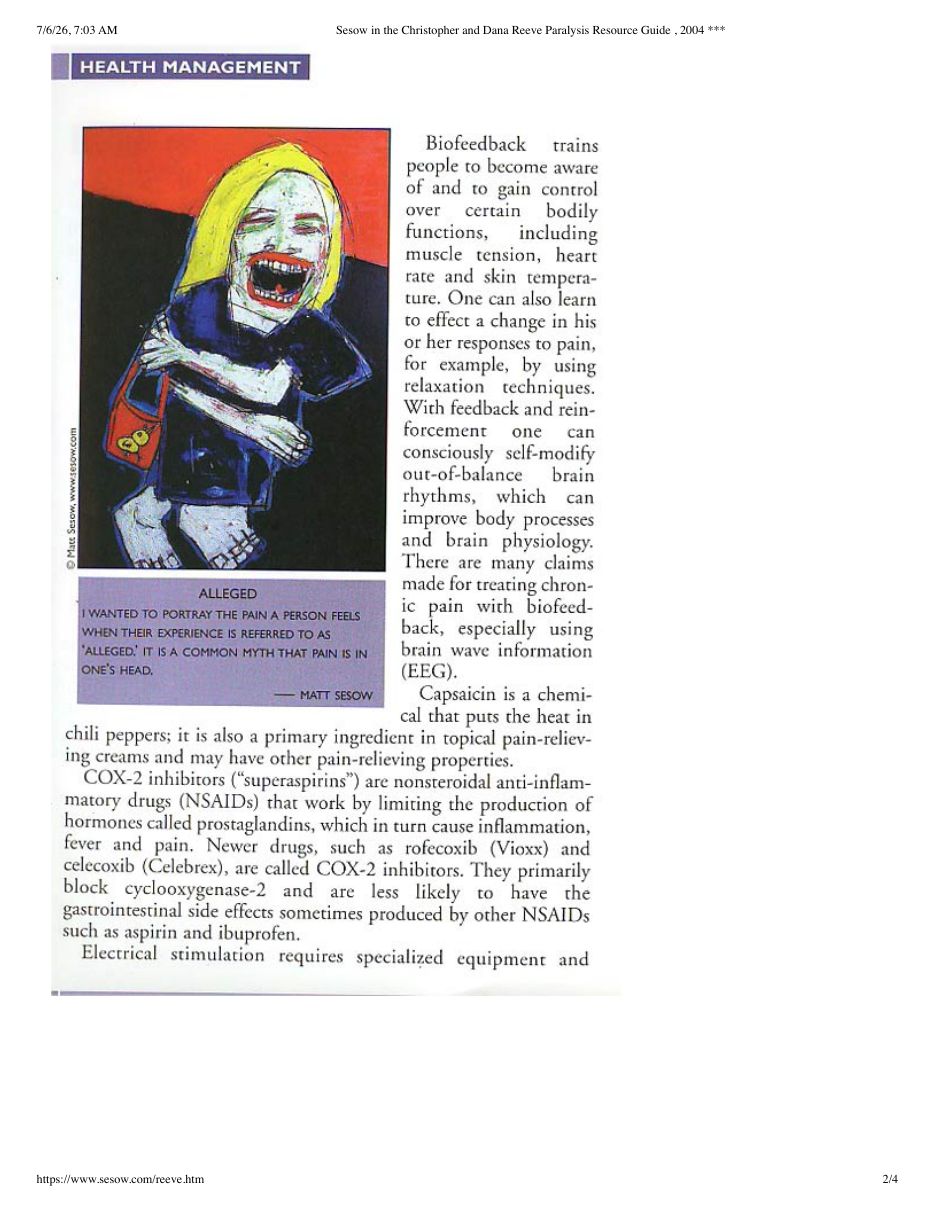
Biofeedback trains people to become aware of and to gain control over certain bodily functions, including muscle tension, heart rate and skin tempera ture, One can also learn to effect a change in his or her responses to pain, for example, by using relaxation techniques. With feedback and rein forcement one can consciously self-modify out-of-balance brain rhythms, which can improve body processes and brain physiology. There are many claims made for treating chron ic pain with biofeed back, especially using brain wave information
Mace Sesom, www sesow.corn
Capsaicin is a chemi cal that puts the heat in chili peppers; it is also a primary ingredient in topical pain-reliev ing creams and may have other pain-relieving properties.
COX-2 inhibitors (“superaspirins”) are nonsteroidal anti-inflam matory drugs (NSAIDs) that work by limiting the production of hormones called prostaglandins, which in turn cause inflammation, fever and pain. Newer drugs, such as rofecoxib (Vioxx) and celecoxib (Celebrex), are called COX-2 inhibitors. They primarily block cyclooxygenase-2 and are less likely to have the gastrointestinal side effects sometimes produced by other NSAIDs such as aspirin and ibuprofen.
Electrical stimulation requires spec
zed equipment and
24
bbups:/www.sesow.com/teeve him
[page 2 machine-read (OCR) from the image]
116126,7.03 AM ‘Sesow in the Christopher and Dana Reeve Paralysis Resource Guide , 2004 **
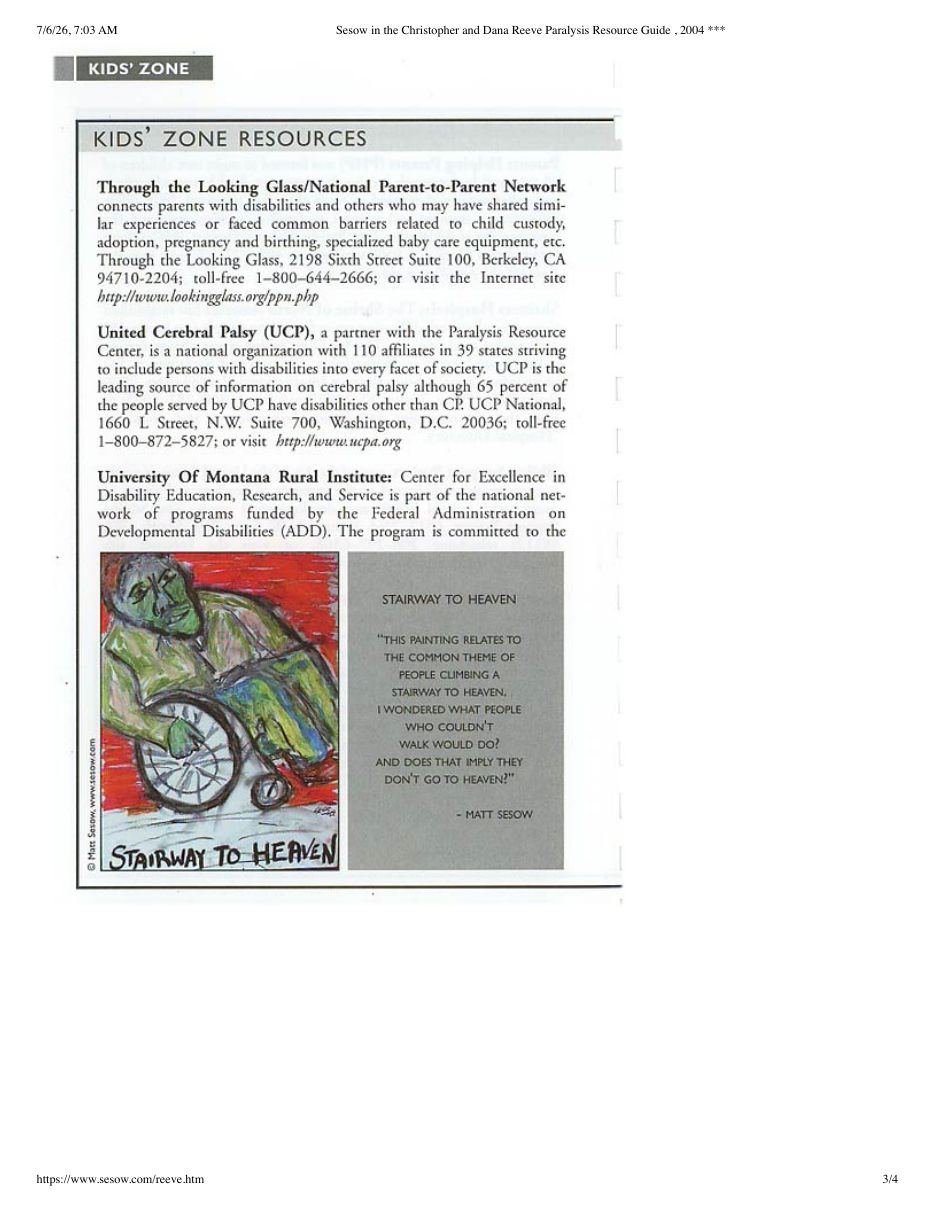
KIDS’ ZONE RESOURCES
Through the Looking Glass/National Parent-to-Parent Network connects parents with disabilities and others who may have shared simi lar experiences or faced common bartiets related to child custody, adoption, pregnancy and birthing, specialized baby care equipment, etc. Through the Looking Glass, 2198 Sixth Street Suite 100, Berkeley, CA 94710-2204; toll-free 1-800-644-2666; or visit the Internet site hip:lhowulookingglas.org/ppn.php
United Cerebral Palsy (UCP), a partner with the Paralysis Resource Center, is a national organization with 110 affiliates in 39 states striving to include persons with disabilities into every facet of society. UCP is the leading source of information on cerebral palsy although 65 percent of the people served by UCP have disabilities other than CP. UCP National, 1660 L Street, N.W. Suite 700, Washington, D.C. 20036; toll-free 1-800-872-5827; ot visie. buep:/hvwu.uepa.org
University Of Montana Rural Institute: Center for Excellence in Disability Education, Research, and Service is part of the national net work of programs funded by the Federal Administration on Developmental Disabilities (ADD). The program is committed to the
bbups:/www.sesow.com/teeve him 34
[page 3 machine-read (OCR) from the image]
116126,7.03 AM ‘Sesow in the Christopher and Dana Reeve Paralysis Resource Guide , 2004 +
HEALTH MANAGEME
personnel trained in the
procedure being used.
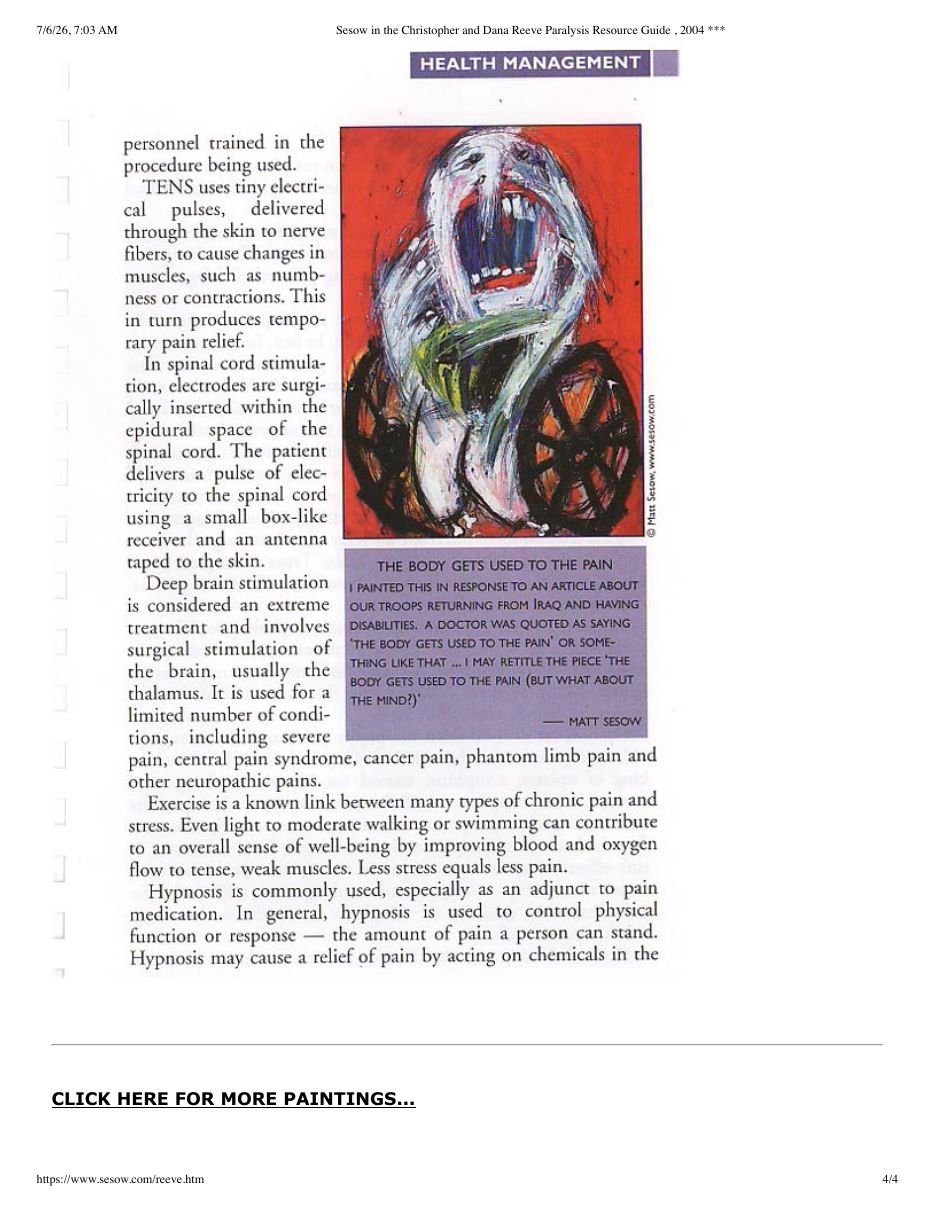
‘TENS uses tiny electri cal pulses, delivered through the skin to nerve fibers, to cause changes in muscles, such as numb ness or contractions. This in turn produces tempo rary pain relief.
In spinal cord stimula tion, electrodes are surgi cally inserted within the epidural space of the spinal cord. The patient delivers a pulse of elec tricity to the spinal cord using a small box-like receiver and an antenna taped to the skin.
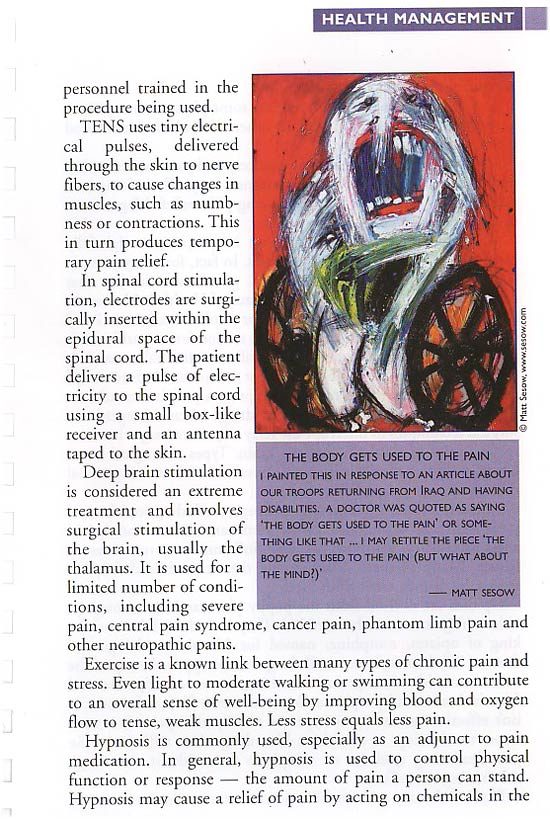
Deep brain stimulation is considered an extreme treatment and involves surgical stimulation of the brain, usually the thalamus. It is used for a limited number of condi tions, including severe pain, central pain syndrome, cancer pain, phantom limb pain and other neuropathic pains.
Exercise is a known link between many types of chronic pain and stress. Even light to moderate walking or swimming can contribute to an overall sense of well-being by improving blood and oxygen flow to tense, weak muscles. Less stress equals less pain.
Hypnosis is commonly used, especially as an adjunct to pain medication. In general, hypnosis is used to control physical function or response — the amount of pain a person can stand. Hypnosis may cause a relief of pain by acting on chemicals in the
CLICK HERE FOR MORE PAINTINGS...
bbups:/www.sesow.com/teeve him ala
[page 4 machine-read (OCR) from the image]