Full text of the clippings, machine-read from the scans (may contain small errors; check the images).
Corporate Giving: De-cloaking Stealth Philanthropy
by Rick Coen
¥ some estimates, less than half, maybe
not much more than a third, of corporate
philanthropic grantmaking flows through
‘corporate foundations. Corporate foun-
dations like other foundations file pub-
licky accessible 990PF's with the IRS, making their grantmaking relatively researchable,
But most corporate grantmaking travels below the radar screen, is inconsistently reported and revealed, sometimes not revealed at all, and fre~ quently gets used for some unusual purposes. Painting a complete picture of corporate grant making is daunting. In NCRP's past research on corporate philanthropy, efforts to get corporations without foundations to provide information on their grantmaking resulted in only 2 of 30 corpo- rations complying, An IRS review not all that long ‘ago found most corporate foundations requesting extensions, sometimes nearly a year or more, for filing their 990PFs, resulting in a significant time Jag on basic philanthropic disclosure.
You aren't going to find out much more from ‘corporate filings with the Securities and Exchange Commission, Even whileacknowledging technical difficulties in figuring out how to fashion a require- ‘ment for increased corporate disclosure, the SEC in May of 1999 reported widespread disparities in corporate reporting practices, particularly in their SHC filings, due to differing interpretations of which contributions warrant consideration as naterial to an investor's understanding of the company’s business or financial statements.”
Don't expect the information from corporate tax returns; corporate tax returns have the same privacy restrictions as individual taxpayers, and the charitable giving information in the returns is frequently lumped together, not detailed and explained,
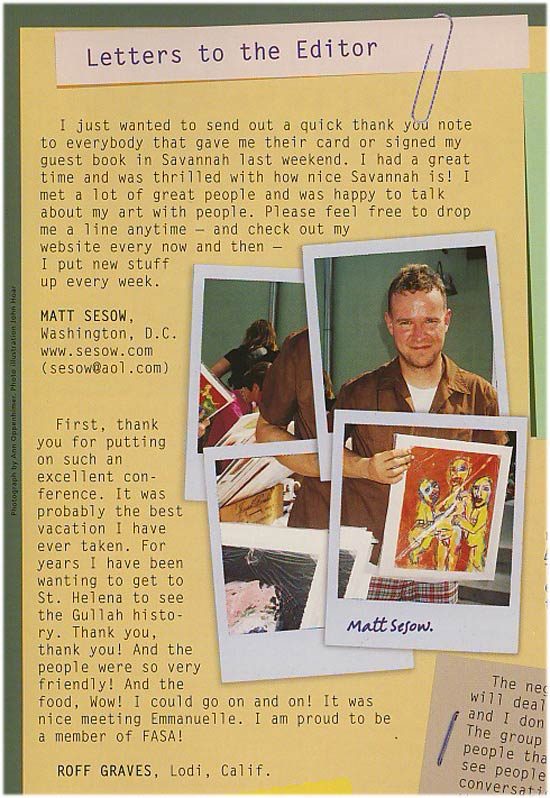
¢ ENRON ~ ARE SESON ,
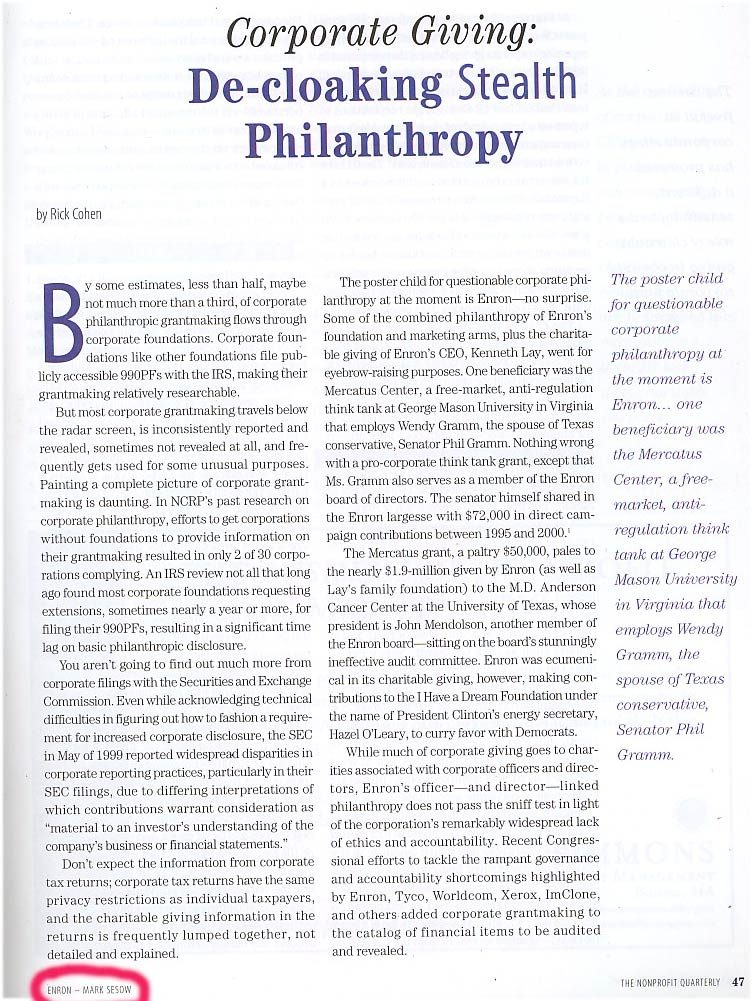
‘The poster child for questionable corporate phi- lanthropy at the moment is Enron—no surprise. Some of the combined philanthropy of Enron's Toundation and marketing arms, plus the charita- ble giving of Enron's CEO, Kenneth Lay, went for eyebrow-raising purposes. One beneficiary was the Mercatus Center, a free-market, anti-regulation think tank at George Mason University in Virginia that employs Wendy Gramm, the spouse of Texas conservative, Senator Phil Gramm. Nothing wrong ‘with a pro-corporate think tank grant, except that ‘Ms, Gramm also serves as a member of the Enron board of directors, The senator himself shared in the Enron largesse with $72,000 in direct cam- paign contributions between 1995 and 2000.
‘The Mercatus grant, a paltry $50,000, pales to the nearly $1.9-nuillion given by Enron (as well as Lay's family foundation) to the M.D. Anderson Cancer Center at the University of Texas, whose president is John Mendolson, another member of the Enron boarc—sitting on the board's stunningly ineffective audit committee. Enron was ecumeni= cal in its charitable giving, however, making con- ilions to the I Have a Dream Foundation under the name of President Clinton's energy secretary, Hazel O'Leary, to curry favor with Democrats.
While much of corporate giving goes to char ities associated with corporate officers and direc- tors, Enron’s officer—and directar—linked philanthropy does not pass the sniff test in light of the corporation's remarkably widespread lack of ethies and accountability. Recent Congres~ sional efforts to tackle the rampant governance and accountability shortcomings highlighted by Enron, Tyco, Worldcom, Xerox, ImClone, and others.added corporate grantmaking to the catalog of financial items to be audited andl revealed.
The poster child for questionable corporate philanthropy at the moment is Enron... one beneficiary was the Mercatus
Cente
a free market, anti regulation think tank at George Mason University in Virginia that employs Wendy Gramm, the spouse of Texas conservative, Senator Phil
Gramm.
Tconpnoger ouantemy 47