Press archive
The Pain Practitioner" Magazine
Full text of the clippings, machine-read from the scans (may contain small errors; check the images).
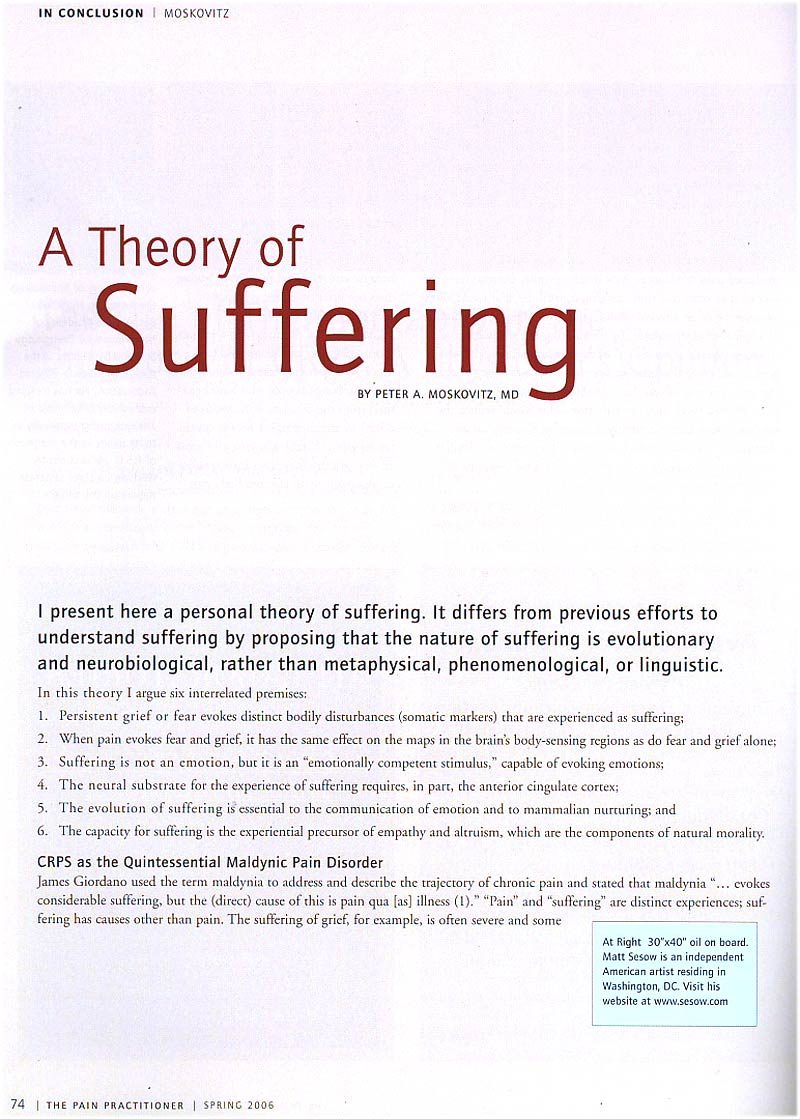
IN CONCLUSION | MOSKOVITZ
A Theory of
Suffering
BY PETER A, MOSKOVITZ, MD
| present here a personal theory of suffering. It differs from previous efforts to understand suffering by proposing that the nature of suffering is evolutionary and neurobiological, rather than metaphysical, phenomenological, or linguistic. In this theory I argue six interrelated premises:
1. Persistent grief or fear evokes distinct bodily disturbances (somatic markers) that are experienced as sufferings
When pain evokes fear and grief, ic has che same effect on the maps in the brain’s body-sensing regions as do fear and grief alone;
Suffering is noc an emotion, but ic is an “emotionally competent stimulus,” capable of evoking emotions; ‘The neural substrate for the experience of suffering requires, in part, che anterior cingulate cortex;
‘The evolution of suffering is essential to the communication of emotion and to mammalian nurcurings and
‘The capacity for suffering is the experiential precursor of empathy and aleruism, which are the components of natural morality.
CRPS as the Quintessential Maldynic Pain Disorder James Giordano used the term maldynia to address and describe the trajecto ‘considerable suffering, but the (direct) cause of shis is pain qua [as) illness (1 fering has causes other than pain. The suffering of grief, for example, is often severe and some
stated that maldynia *... evokes re distinee experiences; suf-
of chronic pain at
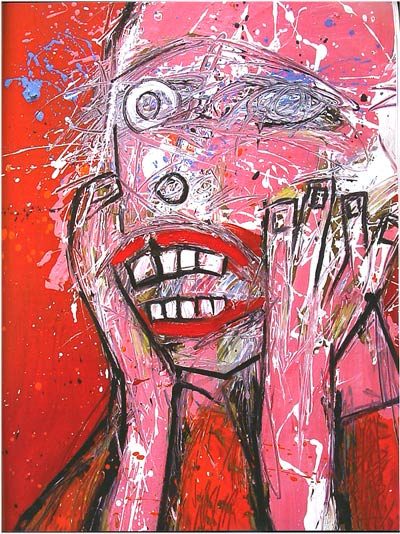
[At Right 30°40" oll on board. ‘Matt Sesow is an independent ‘American artist residing in Washington, OC. Visit his website at wwnvsesove.com
74 | THE PAIN PRACTITIONER | SPRING 2006