Matt SesowCareer history · 1966–2026
Surprise me
history.sesow.com/2003/press169 of 792
The clipping · click to enlarge
See all 25 pictures ↓

Press 2003

Coagula Magazine — review of Theatre of NOTE production

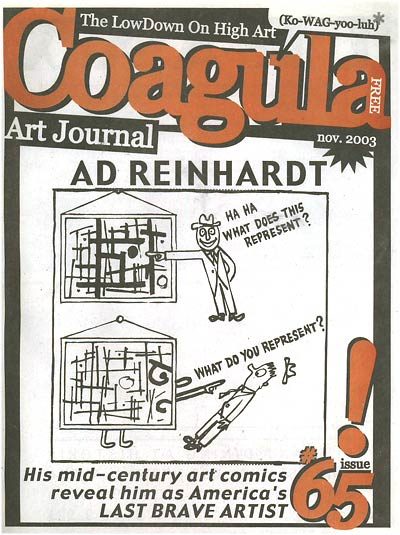
Coagula Art Journal No. 65 (Los Angeles, November 2003) — Shana Nys Dambrot’s review of the Theatre of NOTE production with Sesow’s painted set

Magazine article · 2003-11

Art & Wasps, or, The Head Is Where You Shrink It — By Shana Nys Dambrot

Coagula Art Journal

Art & Wasps, or, The Head Is Where You Shrink It — By Shana Nys Dambrot, page 1
Art & Wasps, or, The Head Is Where You Shrink It — By Shana Nys Dambrot

Click a page to open it — scroll or pinch to zoom, drag to move.

Full text

Photographed by Matt Sesow from his press packets, October 18, 2026; text transcribed from the photos by Claude.

The LowDown On High Art
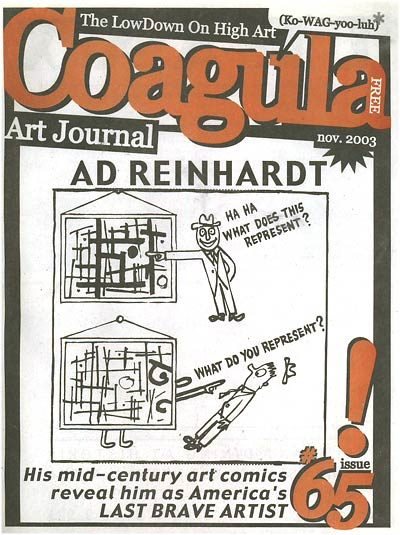
Coagula (Ko-WAG-yoo-luh) Art Journal — FREE — nov. 2003

Art & Wasps, or, The Head Is Where You Shrink It
By Shana Nys Dambrot

Didn't that seem strange to you at the time? Doesn't it seem rather obvious now?

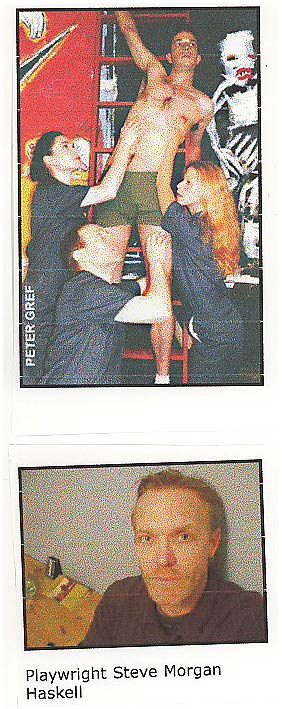
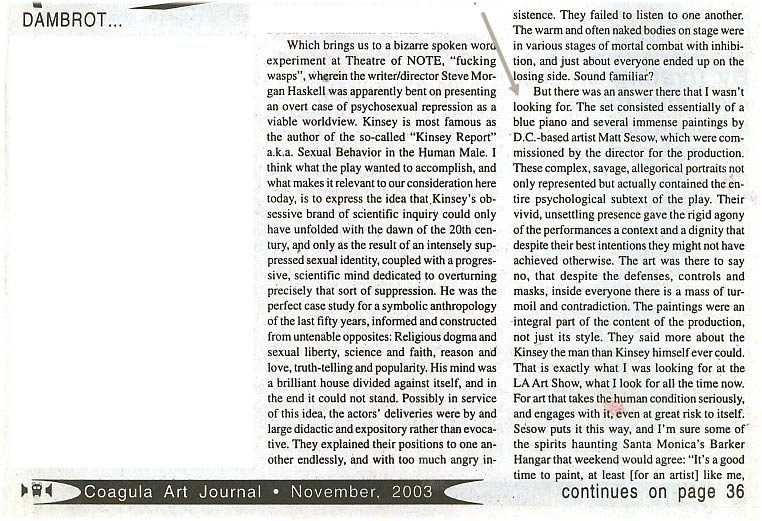
Which brings us to a bizarre spoken word experiment at Theatre of NOTE, "fucking wasps", wherein the writer/director Steve Morgan Haskell was apparently bent on presenting an overt case of psychosexual repression as a viable worldview. Kinsey is most famous as the author of the so-called "Kinsey Report" a.k.a. Sexual Behavior in the Human Male. I think what the play wanted to accomplish, and what makes it relevant to our consideration here today, is to express the idea that Kinsey's obsessive brand of scientific inquiry could only have unfolded with the dawn of the 20th century, and only as the result of an intensely suppressed sexual identity, coupled with a progressive, scientific mind dedicated to overturning precisely that sort of suppression. He was the perfect case study for a symbolic anthropology of the last fifty years, informed and constructed from untenable opposites: Religious dogma and sexual liberty, science and faith, reason and love, truth-telling and popularity. His mind was a brilliant house divided against itself, and in the end it could not stand. Possibly in service of this idea, the actors' deliveries were by and large didactic and expository rather than evocative. They explained their positions to one another endlessly, and with too much angry insistence. They failed to listen to one another. The warm and often naked bodies on stage were in various stages of mortal combat with inhibition, and just about everyone ended up on the losing side. Sound familiar?

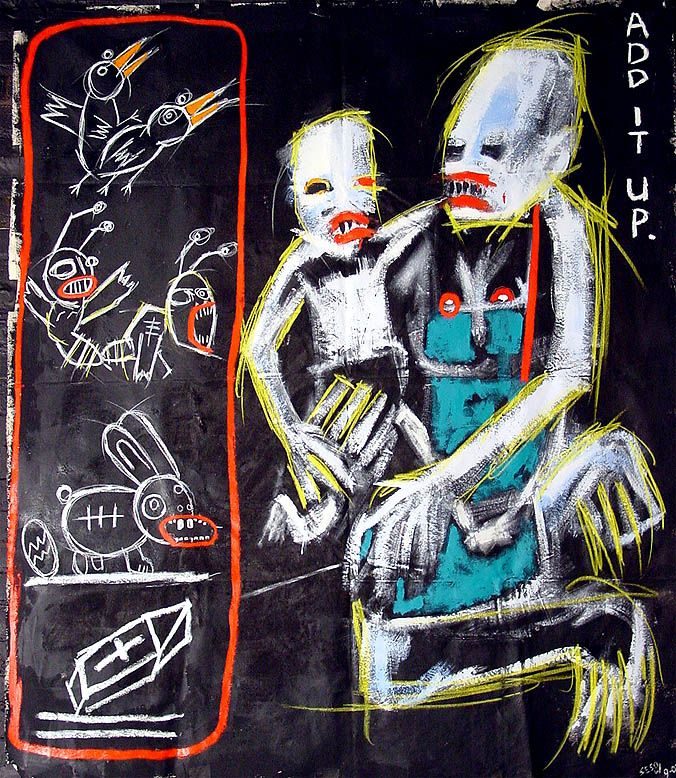
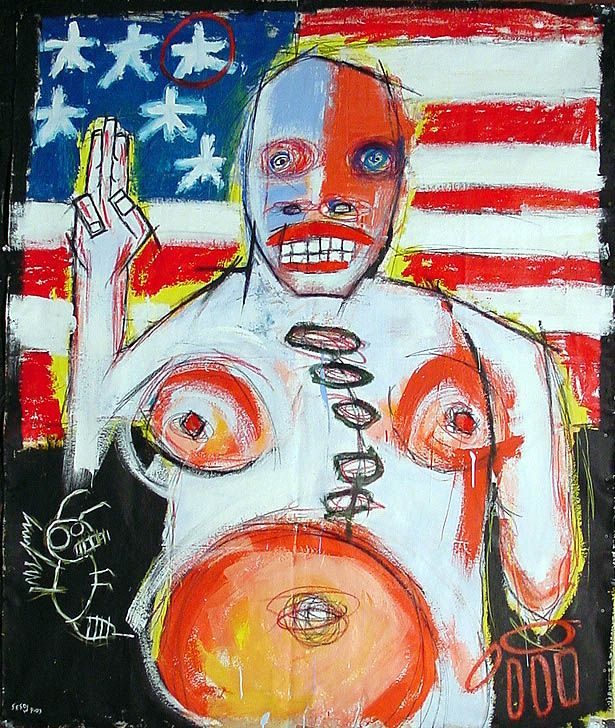
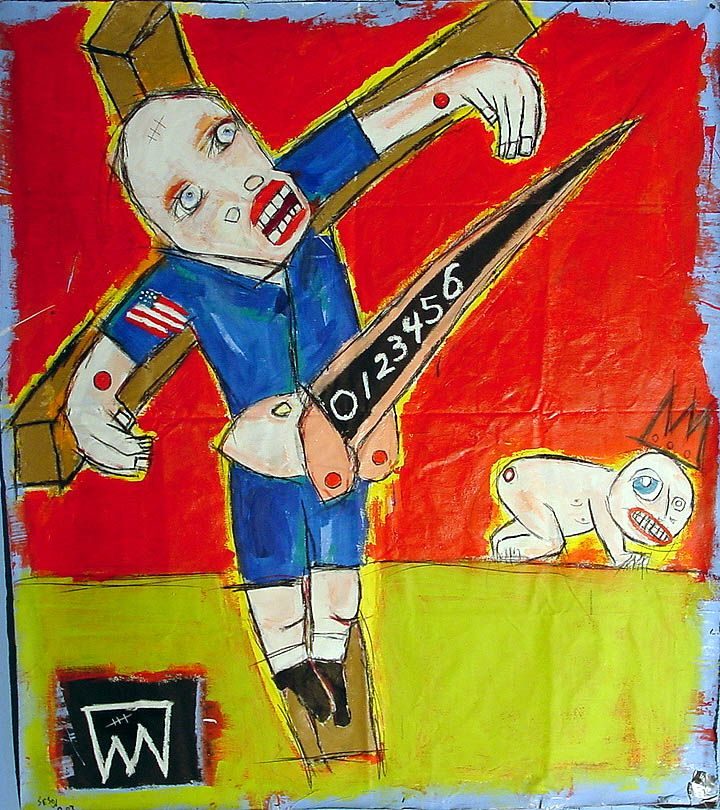
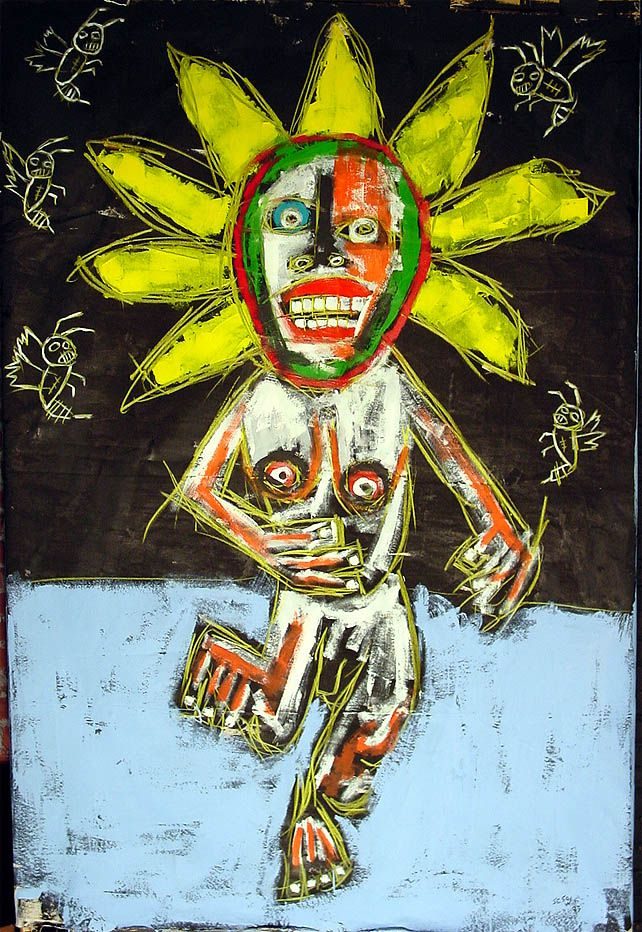
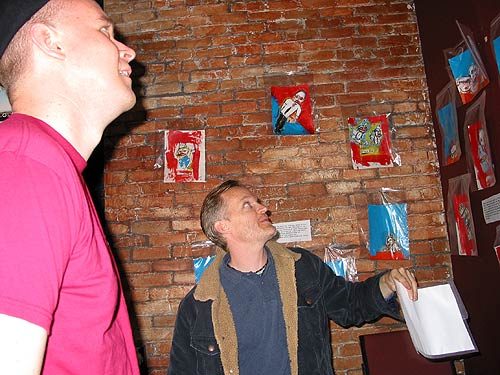
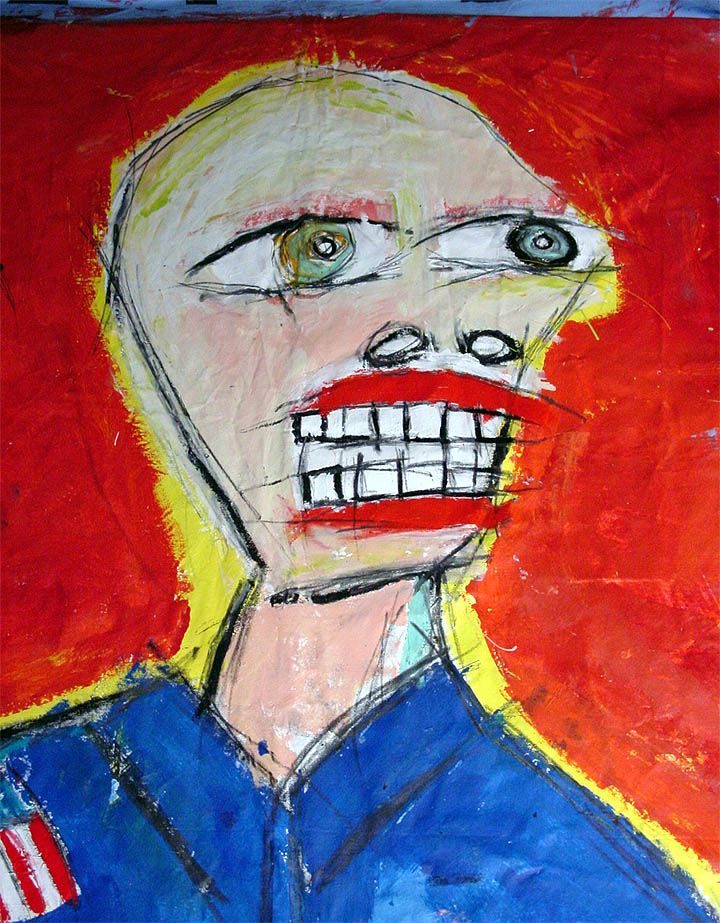
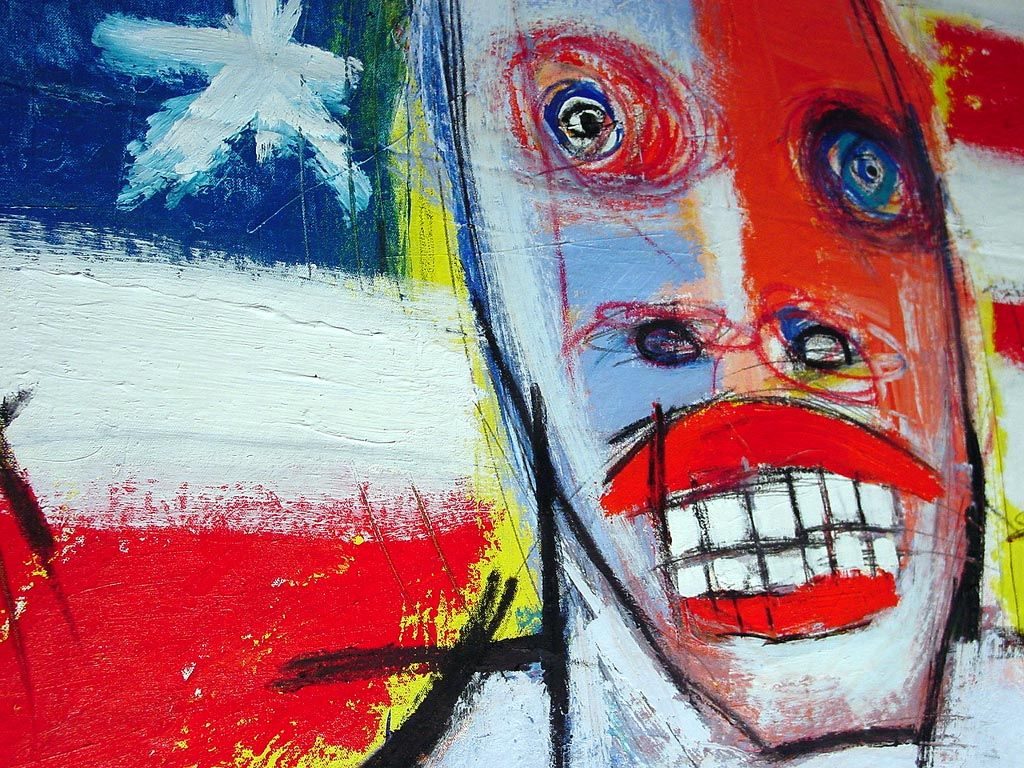
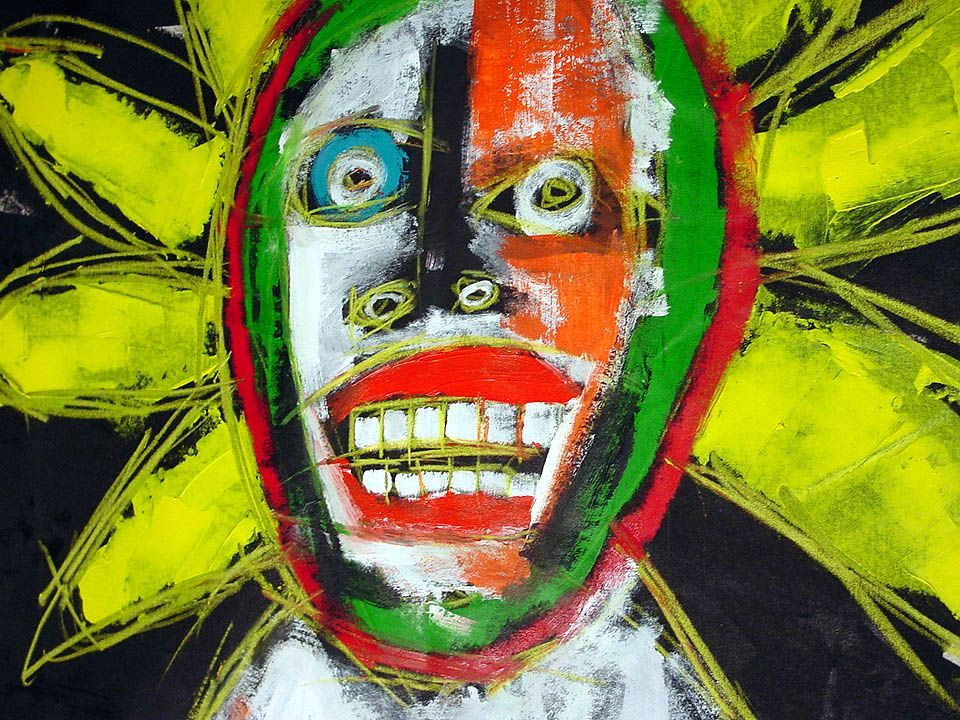
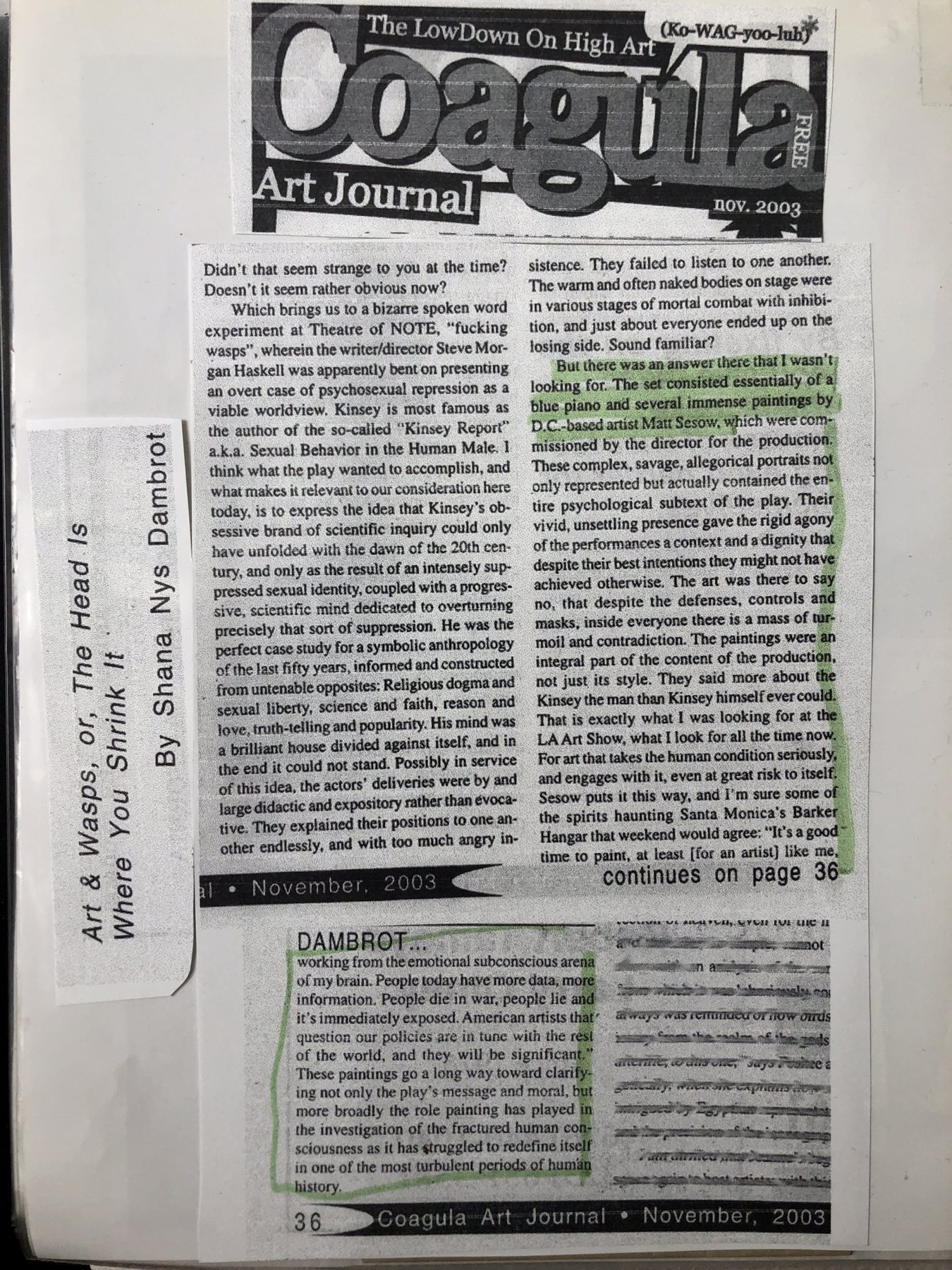
But there was an answer there that I wasn't looking for. The set consisted essentially of a blue piano and several immense paintings by D.C.-based artist Matt Sesow, which were commissioned by the director for the production. These complex, savage, allegorical portraits not only represented but actually contained the entire psychological subtext of the play. Their vivid, unsettling presence gave the rigid agony of the performances a context and a dignity that despite their best intentions they might not have achieved otherwise. The art was there to say no, that despite the defenses, controls and masks, inside everyone there is a mass of turmoil and contradiction. The paintings were an integral part of the content of the production, not just its style. They said more about the Kinsey the man than Kinsey himself ever could. That is exactly what I was looking for at the LA Art Show, what I look for all the time now. For art that takes the human condition seriously, and engages with it, even at great risk to itself. Sesow puts it this way, and I'm sure some of the spirits haunting Santa Monica's Barker Hangar that weekend would agree: "It's a good time to paint, at least [for an artist] like me,

[Coagula Art Journal • November, 2003 — continues on page 36]

DAMBROT...
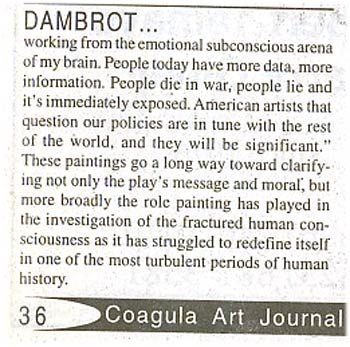
working from the emotional subconscious arena of my brain. People today have more data, more information. People die in war, people lie and it's immediately exposed. American artists that question our policies are in tune with the rest of the world, and they will be significant." These paintings go a long way toward clarifying not only the play's message and moral, but more broadly the role painting has played in the investigation of the fractured human consciousness as it has struggled to redefine itself in one of the most turbulent periods of human history.

36 Coagula Art Journal • November, 2003

From the press archive — full text

Press archive

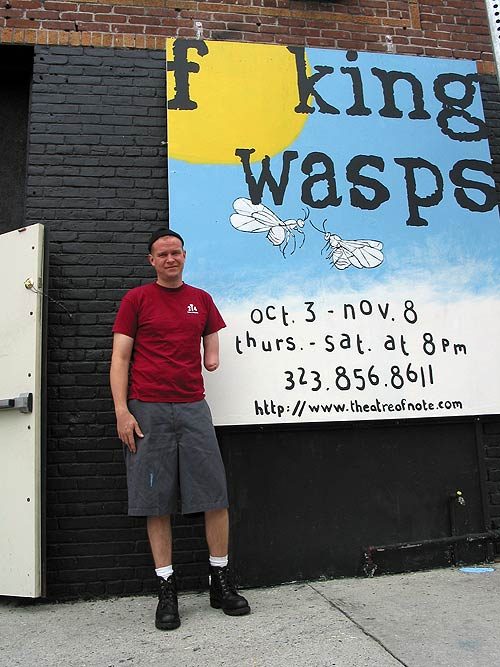
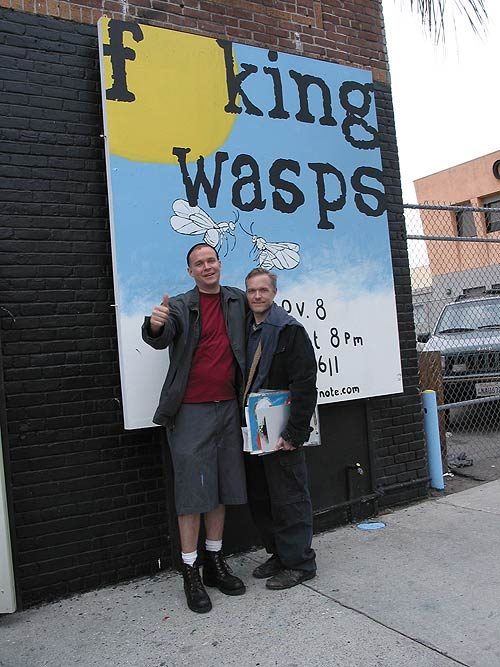
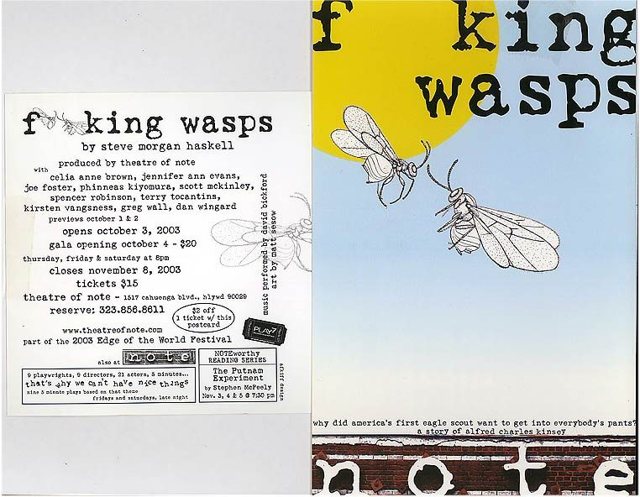
F**king Wasps
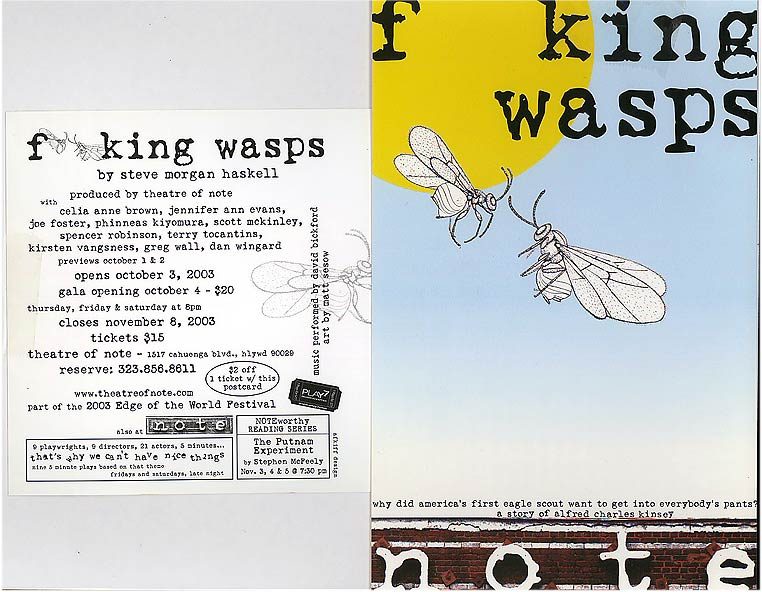
F**king Wasps, image 1F**king Wasps, image 2F**king Wasps, image 3F**king Wasps, image 4F**king Wasps, image 5F**king Wasps, image 6F**king Wasps, image 7F**king Wasps, image 8F**king Wasps, image 9F**king Wasps, image 10F**king Wasps, image 11F**king Wasps, image 12F**king Wasps, image 13F**king Wasps, image 14F**king Wasps, image 15F**king Wasps, image 16F**king Wasps, image 17F**king Wasps, image 18F**king Wasps, image 19F**king Wasps, image 20F**king Wasps, image 21

Full text of the clippings, machine-read from the scans (may contain small errors; check the images).

BACKSTAGE WEST- Critic's Choice (OCTOBER 8, 2003) FP*KING WASPS.

BACKSTAGE.COM

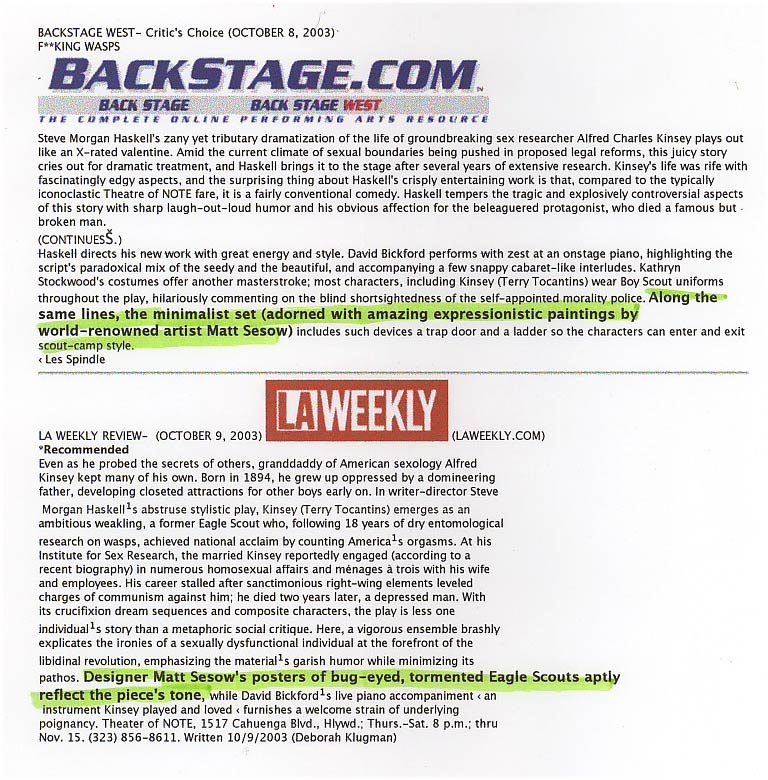
BACK STAGE BACK STAGE WEST THE COMPLETE GNLINE PERFORMING ARTS REBOURCE Steve Morgan Haskell's zany yet tributary dramatization of the life of groundbreaking sex researcher Alfred Charles Kinsey plays out like an X-rated valentine, Amid the current climate of sexual boundaries being pushed in proposed legal reforms, this juicy story ‘ties out for dramatic treatment, and Haskell brings it to the stage after several years of extensive research. Kinsey's life was rife with fascinatingly eday aspects, and the surprising thing about Haskell’ crisply entertaining work is that, compared to the typically Iconoclastic Theatre of NOTE fare, itis a fairly conventional comedy. Haskell tempers the tragic and explosively controversial aspects Of this story with sharp laugh-out-loud humor and his obvious affection for the beleaguered protagonist, who died a famous but broken man. (ConTiNuEss.) Haskell directs his new work with great energy and style. David Bickford performs with zest at an onstage piano, highlighting the script's paradoxical mix of the seedy and the beautiful, and accompanying a few snappy cabaret-like interludes. Kathryn ec tec eMC ACGCOC AI me Ea SE mG en eS ea Strowilouthe bing hatch <oupestia cule bles taal

LA WEEKLY REVIEW- (OCTOBER 9, 2003) *Recommended

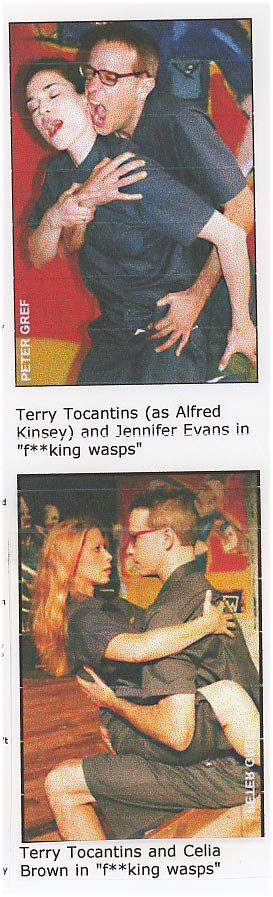
Even as he probed the secrets of others, granddaddy of American sexology Alfred Kinsey kept many of his own. Born in 1894, he grew up oppressed by a domineering father, developing closeted attractions for other boys early on. In writer-director Steve Morgan Haskell?s abstruse stylistic play, Kinsey (Terry Tocantins) emerges as an ambitious weakling, a former Eagle Scout who, following 18 years of dry entomological research on wasps, achieved national acclaim by counting Americas orgasms. At his Institute for Sex Research, the married Kinsey reportedly engaged (according to a recent biography) in numerous homosexual affairs and ménages a trois with his wife and employees. His career stalled after sanctimonious right-wing elements leveled charges of communism against him; he died two years later, a depressed man. With

its crucifixion dream sequences and composite characters, the play is less one

(LAWEEKLY.COM)

individuals story than a metaphoric social critique. Here, a vigorous ensemble brashly explicates the ironies of a sexually dysfunctional individual at the forefront of the

libidinal revolution, emphasizing the materials garish humor while minimizing its

insey played and loved « urrishes awalcome sai of underving poignancy. Theater of NOTE, 1517 Cahuenga Blvd., Hlywd.; Thurs.~Sat. 8 p.m.; thru

On The Stage

From Boy Scout to Sex Scholar: A new play explores the life of Alfred Charles Kinsey

Anne Kelly-Saxenmeyer Mirror drama critic

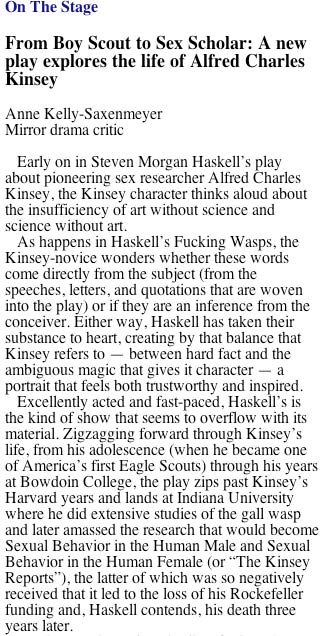
Early on in Steven Morgan Haskell’s play about pioneering sex researcher Alfred Charles Kinsey, the Kinsey character thinks aloud about the insufficiency of art without science and science without art.

As happens in Haskell’s Fucking Wasps, the Kinsey-novice wonders whether these words come directly from the subject (from the speeches, letters, and quotations that are woven into the play) or if they are an inference from the conceiver. Either way, Haskell has taken their substance to heart, creating by that balance that Kinsey refers to — between hard fact and the ambiguous magic that gives it character — a portrait that feels both trustworthy and inspired.

Excellently acted and fast-paced, Haskell’s is the kind of show that seems to overflow with its material. Zigzagging forward through Kins life, from his adolescence (when he became one of America’s first Eagle Scouts) through his years at Bowdoin College, the play zips past Kinsey’s Harvard years and lands at Indiana University where he did extensive studies of the gall wasp and later amassed the research that would become Sexual Behavior in the Human Male and Sexual Behavior in the Human Female (or “The Kinsey Reports”), the latter of which was so negatively received that it led to the loss of his Rockefeller funding and, Haskell contends, his death three ‘years later.

Much more than a laundry list of Kinsey's accomplishments, the play offers a compelling portrait of a fallible genius caught between a host of opposing forces. To this challenging role, Terry Tocantins brings humor, complexity, and physical grace, conjuring the magnetism and torment of a great man,

‘Atthe start of a lifelong struggle with the religious establishment, Kinsey breaks with his Methodist upbringing and his father (an imposing Greg Wall). In the academic world he’s driven by both pure-science idealism, embodied by his exuberant, high school biology classmate Alice Field (a delightfully odd Celia Anne Brown), and bare ambition, which he shares with star chemistry scholar and wife Clara Bracken McMillen Kinsey (the formidable Jennifer Ann Evans

Kinsey and the research team of Paul Gebhard, ‘Wardell Pomeroy, and Vincent Nowlis (a well-teamed Spencer Robinson, Joe Foster, and Dan Wingard) thrive and fall under the pressure of their sexuality research, becoming immersed in their data and in their own tangled relationships, and tom by public opinion, which alternately praises and condemns theit work.

If Haskell uses Kinsey's texts to capture the man’s mind, he locates his emotional life in music (Kinsey loved to play the piano), and on-stage pianist David Bickford adds an essential layer to the piece.

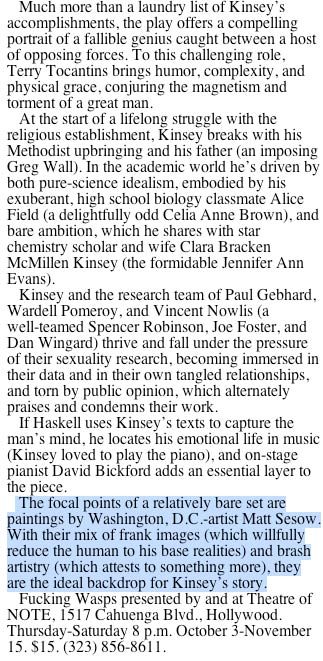
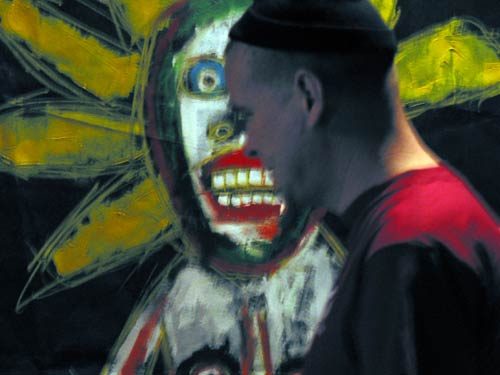
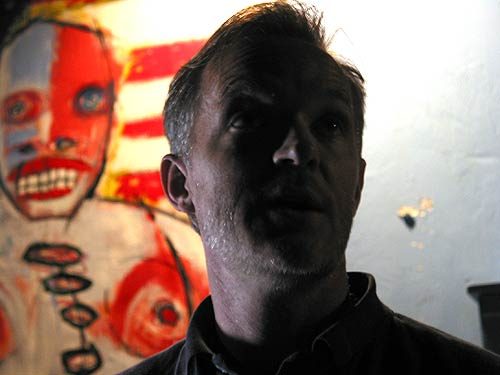
The focal points of a relatively bare set are paintings by Washington, D.C.-artist Matt Sesow. ‘With their mix of frank images (which willfully reduce the human to his base realities) and brash artistry (which attests to something more), they are the ideal backdrop for Kinsey's story.

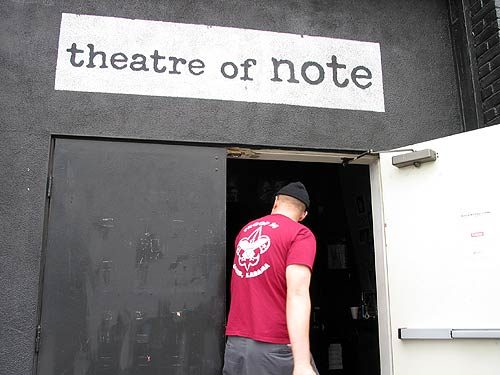
Fucking Wasps presented by and at Theatre of NOTE, 1517 Cahuenga Blvd., Hollywood. Thursday-Saturday 8 p.m. October 3-November

Matt’s original sesow.com page about it

Sesow paints for Hollywood play, 2003 at Theatre of Note

click image to visit sesow.com

BACKSTAGE WEST- Critic's Choice (OCTOBER 8, 2003)

Sesow creates backdrop paintings for play in Hollywood

("F**king Wasps")

2003

from the Santa Monica Mirror (October 2003):

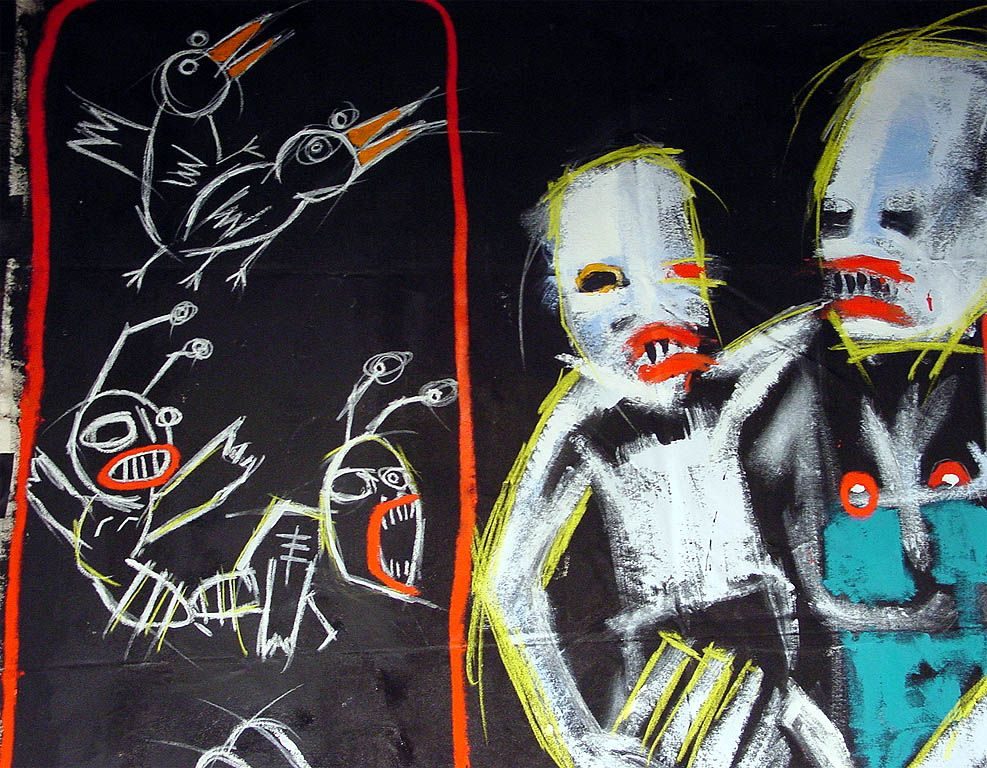
"Add it Up (with the birds,the bees and bunny)"

6 feet x 4 feet

acrylic/oil stick, lumber crayon on unstretched canvas

SOLD

PAINTING DETAIL

used for "f**king wasps" play in hollywood, california at 'theatre of note'

"Kinsey"

12 feet x 6 feet

acrylic/oil stick, lumber crayon on unstretched canvas

SOLD

PAINTING DETAIL

used for "f**king wasps" play in hollywood, california at 'theatre of note'

"Twisted Spine (with gall wasp)"

6 feet x 4 feet

acrylic/oil stick, lumber crayon on unstretched canvas

SOLD

PAINTING DETAIL

used for "f**king wasps" play in hollywood, california at 'theatre of note'

"Kinsey Crucifixion (with testicular stigmata)"

6 feet x 4 feet

acrylic/oil stick, lumber crayon on unstretched canvas

$2000

used for "f**king wasps" play in hollywood, california at 'theatre of note'

Coagula Magazine

(Los Angeles)

Review of Sesow's work

with Theater of Note

F**king Wasps

November 2003

"Gal Wasps (f**king wasps)"

12 feet x 6 feet

acrylic/oil stick, lumber crayon on unstretched canvas

SOLD

PAINTING DETAIL

used for "f**king wasps" play in hollywood, california at 'theatre of note'

BACKSTAGE WEST- Critic's Choice (OCTOBER 8, 2003)

F**KING WASPS

Steve Morgan Haskell's zany yet tributary dramatization of the

life of groundbreaking sex researcher Alfred Charles Kinsey plays out like an

X-rated valentine. Amid the current climate of sexual boundaries being pushed

in proposed legal reforms, this juicy story cries out for dramatic treatment,

and Haskell brings it to the stage after several years of extensive research.

Kinsey's life was rife with fascinatingly edgy aspects, and the surprising

thing about Haskell's crisply entertaining work is that, compared to the

typically iconoclastic Theatre of NOTE fare, it is a fairly conventional

comedy. Haskell tempers the tragic and explosively controversial aspects of this

story with sharp laugh-out-loud humor and his obvious affection for the

beleaguered protagonist, who died a famous but broken man.

(CONTINUES….)

Haskell directs his new work with great energy and style. David

Bickford performs with zest at an onstage piano, highlighting the script's

paradoxical mix of the seedy and the beautiful, and accompanying a few snappy

cabaret-like interludes. Kathryn Stockwood's costumes offer another
Press archive

Coagula Magazine

Coagula Magazine, image 1Coagula Magazine, image 2Coagula Magazine, image 3Coagula Magazine, image 4

Full text of the clippings, machine-read from the scans (may contain small errors; check the images).

DAMBROT...

‘Which brings us to a bizarre spoken word) experiment at Theatre of NOTE, “fucking ‘wasps", wherein the writer/director Steve Mor- ‘gan Haskell was apparently bent on presenting ‘an overt case of psychosexual repression as @ Viable worldview. Kinsey is most famous as the author of the so-called “Kinsey Report” aka. Sexual Behavior in the Human Male. 1 think what the play wanted to accomplish, and ‘what makes it relevant to our consideration here today, is to express the idea that, Kinsey's ob- sessive brand of scientific inquiry could only have unfolded with the dawn of the 20th cen- tury, and only as the result of an intensely sup- pressed sexual identity, coupled with a progres- sive, scientific mind dedicated to overturning precisely that sort of suppression. He was the perfect case study fora symbolic anthropology ofthe lat fifty years, informed and constructed from untenable opposites: Religious dogma and sexual liberty, science and faith, reason and Tove, teuth-telling and popularity, His mind was a brilliant house divided against itself, and in the end it could not stand, Possibly in service of this idea, the actors’ deliveries were by and large didactic and expository rather than evoca- tive. They explained their positions to one an- ‘other endlessly, and with too much angry in-

Coagula Art Journal «

sistence. They failed to listen to one another, ‘The warm and often naked bodies onstage were in various stages of mortal combat with inhibi- tion, and just about everyone ended up on the losing side. Sound familia?

But there was an answer there that I wasn't looking for. The set consisted essentially of a blue piano and several immense paintings by D.C.-based anist Mat Sesow, which were com- mmissioned by the director for the production ‘These complex, savage, allegorical portraits not ‘only represented bu actually contained the en- tire psychological subtext of the play. Their vivid, unsetting presence gave the rigid agony ofthe performances acontext and a dignity that despite their best intentions they might not have achieved otherwise. The art was there to say no, that despite the defenses, controls and masks, inside everyone thee is a mass of tur- oil and contradiction, The paintings were an integral part of the content of the production, not just its style. They said more about the Kinsey the man than Kinsey himself ever could ‘That is exactly what I was looking for at the LAArt Show, what look for all the time now. Forartthat takes the human condition seriously, and engages with it, even at great risk o itself. Scsow puts it this way, and I'm sure some of the spirits haunting Santa Monica's Barker Hangar that weekend would agree: “It's a good time to paint, at least [for an anst] like me,

continues on page 36

working from the emotional subconscious arena of my brain. People today have more data, more information. People die in war; people lie and it's immediately exposed. American artists that question our policies are in tune with the rest of the World, and they will be significant.” These paintings go a long way toward clarify- ing not only the play's message and moral’, but more broadly the role painting has played in the investigation of the fractured human con- sciousness as it has struggled to redefine itself in one of the most turbulent periods of human history,

36 Coagula Art Journal

Pictures · click to enlarge

F**king Wasps (2003), from Matt Sesow's press archive
From the press page “F**king Wasps” (2003)
F**king Wasps (2003), from Matt Sesow's press archive
From the press page “F**king Wasps” (2003)
F**king Wasps (2003), from Matt Sesow's press archive
From the press page “F**king Wasps” (2003)
F**king Wasps (2003), from Matt Sesow's press archive
From the press page “F**king Wasps” (2003)
F**king Wasps (2003), from Matt Sesow's press archive
From the press page “F**king Wasps” (2003)
F**king Wasps (2003), from Matt Sesow's press archive
From the press page “F**king Wasps” (2003)
F**king Wasps (2003), from Matt Sesow's press archive
From the press page “F**king Wasps” (2003)
F**king Wasps (2003), from Matt Sesow's press archive
From the press page “F**king Wasps” (2003)
F**king Wasps (2003), from Matt Sesow's press archive
From the press page “F**king Wasps” (2003)
F**king Wasps (2003), from Matt Sesow's press archive
From the press page “F**king Wasps” (2003)
F**king Wasps (2003), from Matt Sesow's press archive
From the press page “F**king Wasps” (2003)
F**king Wasps (2003), from Matt Sesow's press archive
From the press page “F**king Wasps” (2003)
F**king Wasps (2003), from Matt Sesow's press archive
From the press page “F**king Wasps” (2003)
F**king Wasps (2003), from Matt Sesow's press archive
From the press page “F**king Wasps” (2003)
F**king Wasps (2003), from Matt Sesow's press archive
From the press page “F**king Wasps” (2003)
F**king Wasps (2003), from Matt Sesow's press archive
From the press page “F**king Wasps” (2003)
F**king Wasps (2003), from Matt Sesow's press archive
From the press page “F**king Wasps” (2003)
F**king Wasps (2003), from Matt Sesow's press archive
From the press page “F**king Wasps” (2003)
F**king Wasps (2003), from Matt Sesow's press archive
From the press page “F**king Wasps” (2003)
F**king Wasps (2003), from Matt Sesow's press archive
From the press page “F**king Wasps” (2003)
F**king Wasps (2003), from Matt Sesow's press archive
From the press page “F**king Wasps” (2003)
Coagula Magazine (2003), from Matt Sesow's press archive
From the press page “Coagula Magazine” (2003)
Coagula Magazine (2003), from Matt Sesow's press archive
From the press page “Coagula Magazine” (2003)
Coagula Magazine (2003), from Matt Sesow's press archive
From the press page “Coagula Magazine” (2003)
Coagula Magazine (2003), from Matt Sesow's press archive
From the press page “Coagula Magazine” (2003)

From the press archive

Saved web pages and links

Research notes

Where this record comes from

Cite as: Sesow, Matt. “Coagula Magazine — review of Theatre of NOTE production.” Matt Sesow Career Chronicle, 2003. history.sesow.com/e/2003-coagula-magazine-los-angeles-review.html. Accessed [date].

Were you there? Do you have a photo, a clipping or a memory of this? Please write to sesow@sesow.com or use Ask Matt a question, and it will be added here.

Also in 2003

Exhibition (23)
Press (9)
Media (5)
Award (2)
Milestone (2)

← Back to this entry on the timeline