Press archive
Compass Magazine Article
Full text of the clippings, machine-read from the scans (may contain small errors; check the images).
In focus...
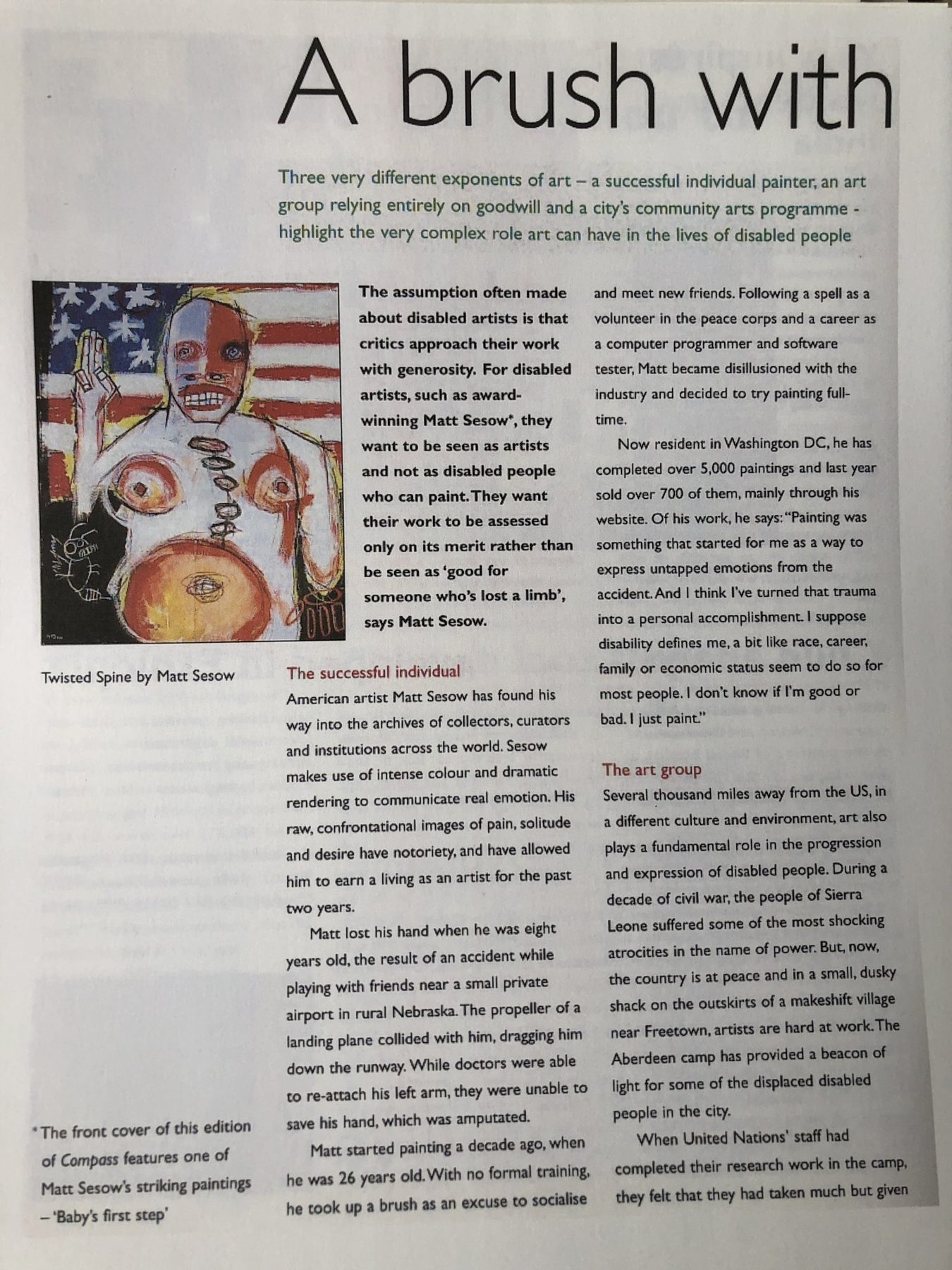
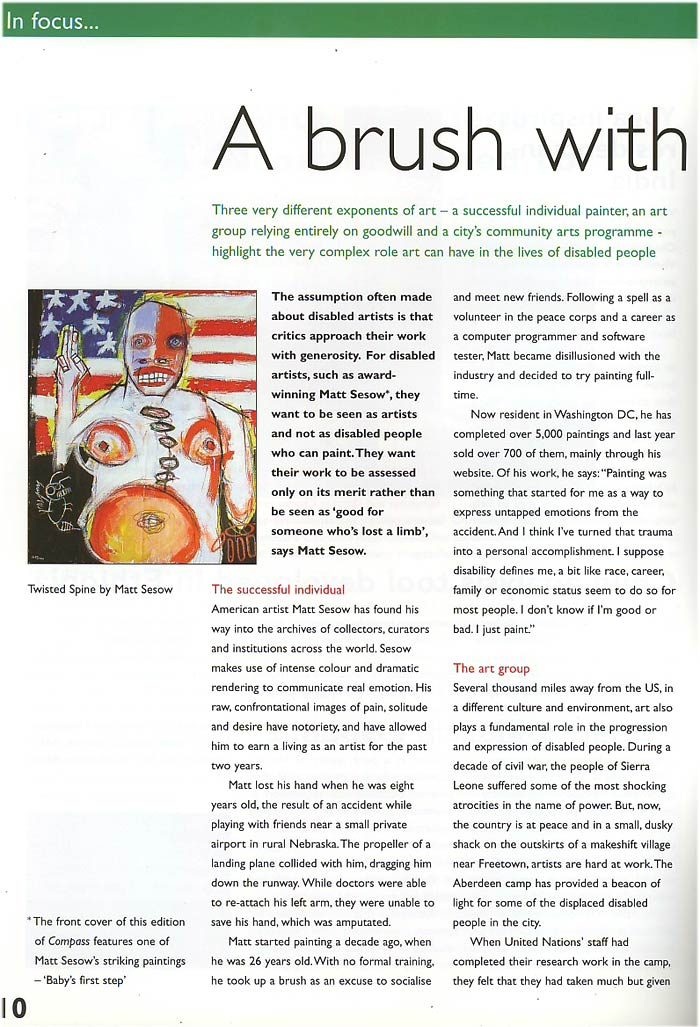
‘Twisted Spine by Mate Sesow
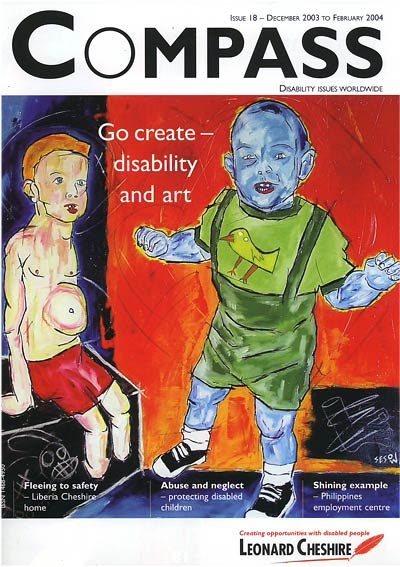
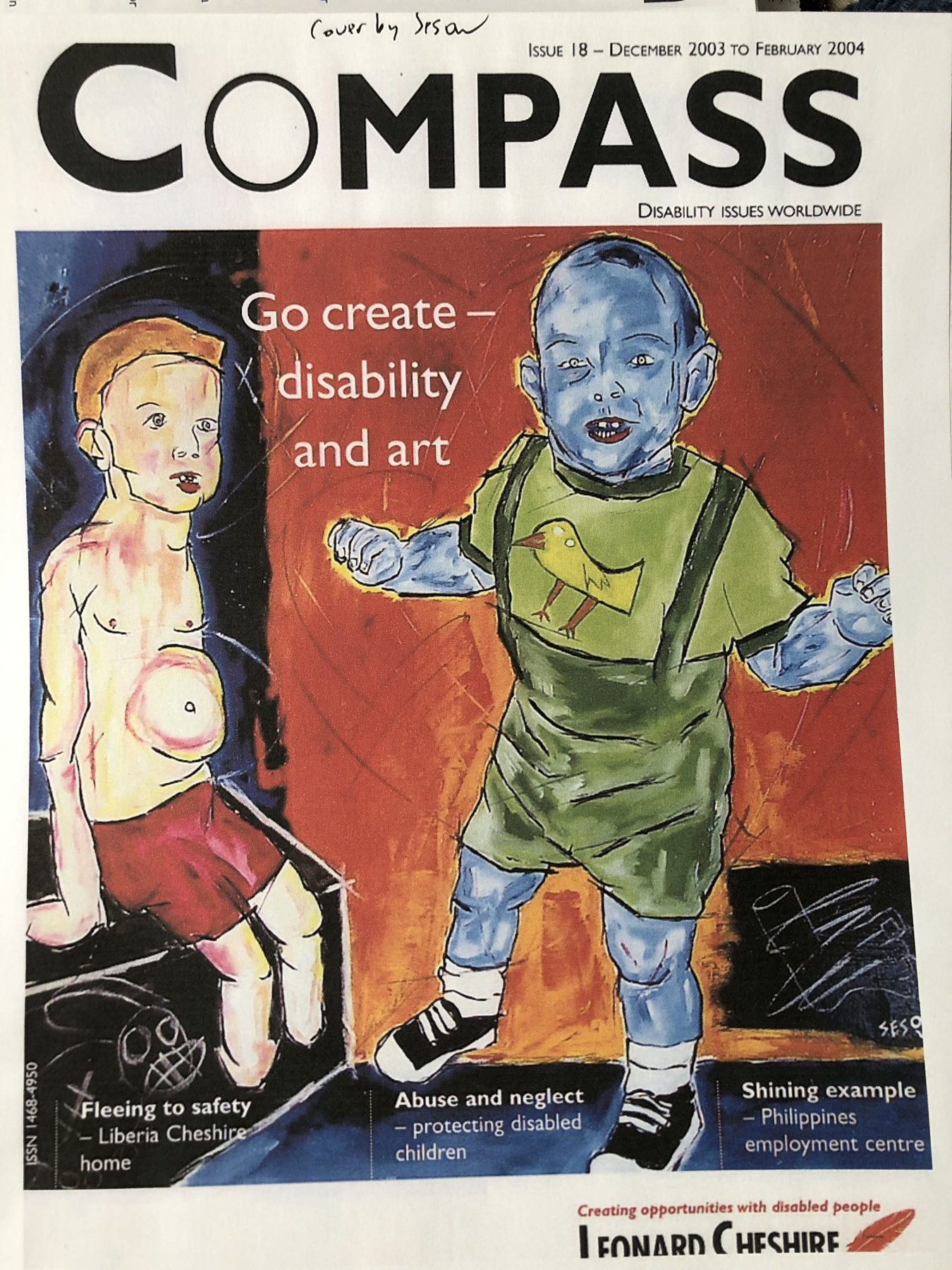
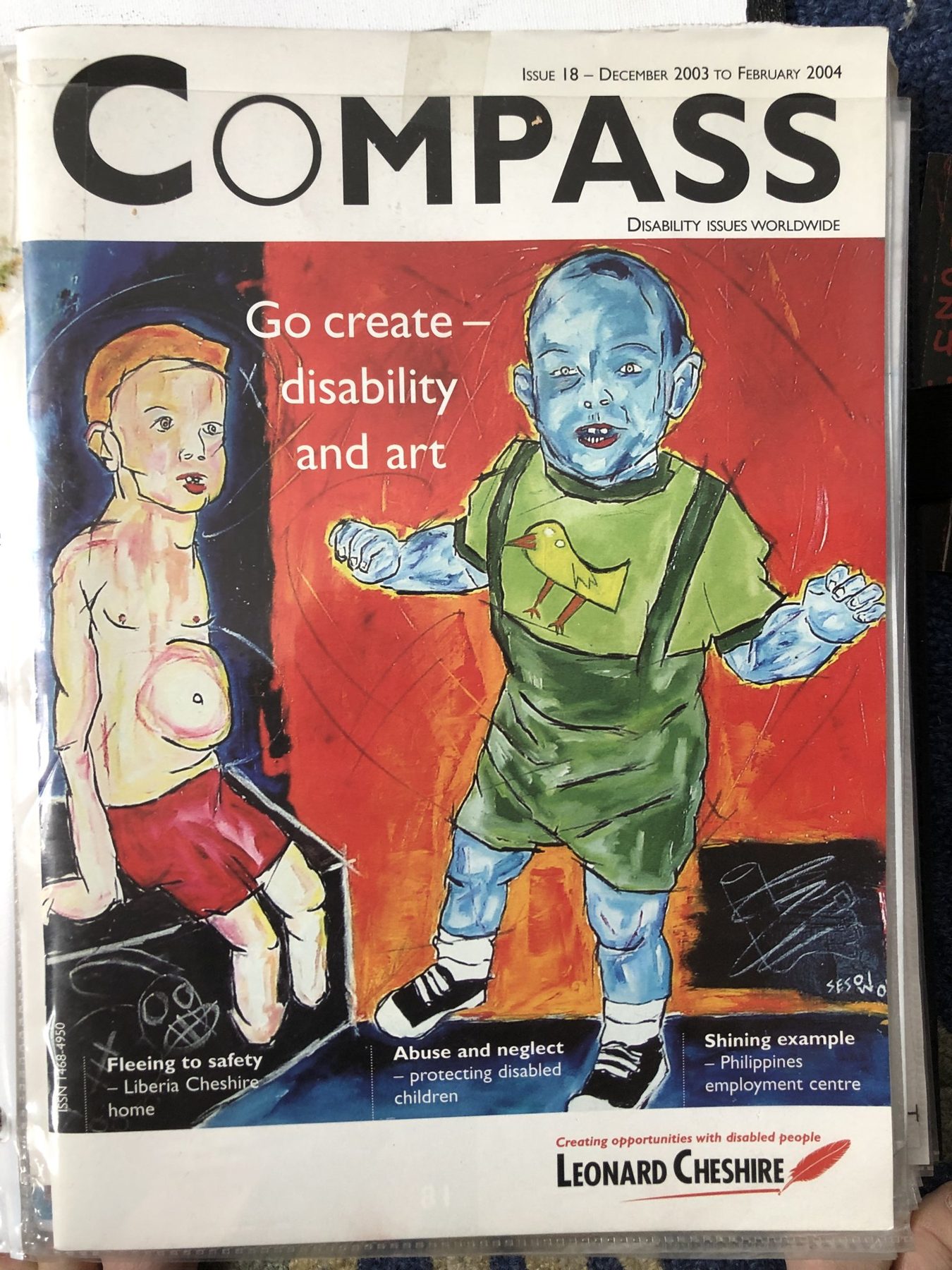
“The front cover of this edition of Compass features one of ‘Mace Sesow’s striking paintings "Baby's first step
A brush with
Three very different exponents of art — a successful individual painter, an art
group relying entirely on goodwill and a city’s community arts programme - highlight the very complex role art can have in the lives of disabled people
The assumption often made about disabled artists is that ics approach their work with generosity. For disabled artists, such as award-
winning Matt Sesow’, they want to be seen as artists and not as disabled people ‘who can paint. They want their work to be assessed only on its merit rather than be seen as ‘good for someone who’s lost a limb’, says Matt Sesow.
‘The successful individual ‘American artist Matt Sesow has found his ‘way into the archives of collectors, curators and institutions across the world, Sesow makes use of intense colour and dramatic rendering to communicate real emotion. His raw, confrontational images of pain, solitude and desire have notoriety. and have allowed him co earn a living as an artist for the past ‘wo years,
Mate lost his hand when he was eight years old, the result of an accident while playing with friends near a small private airport in rural Nebraska. The propeller of a landing plane collided with him, dragging him down the runway. While doctors were able to re-attach his lef arm, they were unable to save his hand, which was amputated.
Mate started painting a decade ago, when, he was 26 years old. With no formal training, he took up a brush as an excuse to socialise
and meet new friends. Following a spell as 2 volunteer in the peace corps and a career as a computer programmer and sofware tester, Matt became disillusioned with the Industry and decided to try painting full. time.
‘Now resident in Washington DC, he has completed over 5,000 paintings and last year sold over 700 of them, mainly through his ‘website. OF his work, he says:"Painting was something that started for me as a way to ‘express untapped emotions from the accident. And | think I've turned that trauma into a personal accomplishment. | suppose disability defines me,a bit ike race, career, family or economic status seem to do so for most people. | don't know if 'm good or bad. just paine”
‘The art group Several thousand miles away feom the US, in a different culture and environment, art also plays a fundamental role in the progression and expression of disabled people. During a decade of civil war, che people of Sierra Leone suffered some of the most shocking atrocities in the name of power: But, now, the country is at peace and in a small, dusky shack on the outskirts of a makeshif village near Freetown, artists are hard at work. The ‘Aberdeen camp has provided a beacon of light for some of the displaced disabled people in che city.
‘When United Nations’ staff had ‘completed their research work in the camp, they fele that they had taken much bue given
In focus.
BUCCESS
very litte back to the community. Ie was at this point that Hilary Ravenscroft arrived.
A teacher by profession and an artist in her spare time, she took on the challenge for the frustrated UN staff and an art project was born, Its impact during the short time it has been operational has been remarkable, believes Hilary.
“Local businesses were approached to provide bits of material for the artists, the nearby print shop donates reams of paper and a local manufacturer supplies the paint,” says Hilary. "Although the wounds from lost limbs visibly heal over, internal wounds can take longer to heal In this respect, participation in the arts and creative media can increase individual confidence and self ‘esteem. But the painting is not just ‘therapeutic eis also lucrative.”
Within the first three months, 50 people had joined the group and more than 500 pieces of work were created all of which ‘were sold at an exhibition held at the UN headquarters in Freetown. The income gained has made a significant difference to the lives of the disabled people and their families.
‘Thie community art programme Returning to the United States, in ‘Washington DC the WSA Arts Connection is a far more established programme, that has been thriving for two decades. The WVSA serves disabled young people and combines both art and education, providing tools for success in school, adulthood and lie in general
From modest beginnings, in the basement of a local college with only a few part-time staff and one annual arts festival, WVSA has
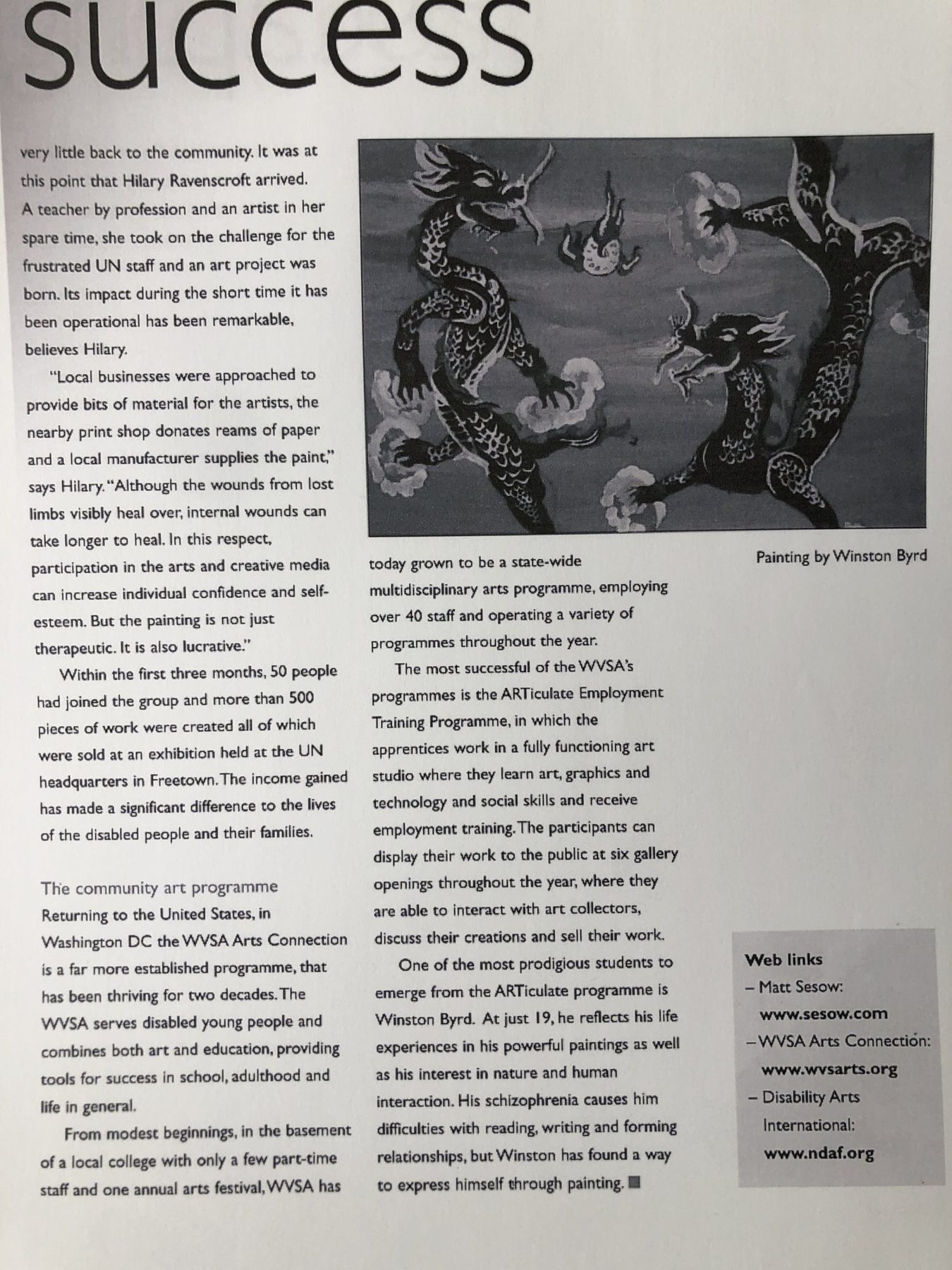
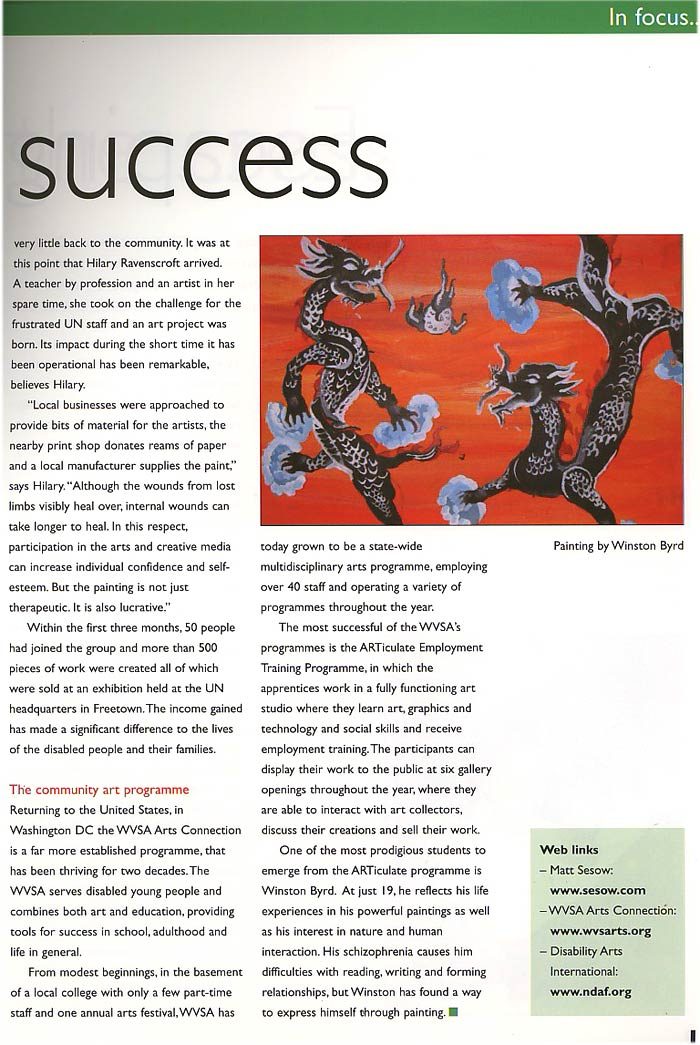
Painting by Winston Byrd
today grown to be a state-wide ‘multidisciplinary arts programme, employing cover 40 staff and operating a variety of programmes throughout the year
“The most successful of the WVSA's programmes is the ARTiculate Employment “Training Programme, in which the apprentices work in a fully functioning art studio where they learn art, graphies and technology and social skills and receive employment training. The participants can display their work to the public at six gallery openings throughout the year, where they are able to interact with art collectors, discuss their creations and sell their work.
‘One of the most prodigious students to Web links emerge from the ARTiculate programme is = Matt Sesow: Winston Byrd. At just 19, he reflects his life ‘wwrw.sesow.com experiences in his powerful paintings as well =WYSA Arts Connection: as his interest in nature and hurnan www.wysarts.org, interaction. His schizophrenia causes him = Disability Ares dificulties with reading, writing and forming International: relationships, but Winston has found a way www.ndaforg
‘to express himself through painting. lI